* **TurtleBot3(ROS1)-Noetic 中文線上手冊**
===
- 20231124 中譯發布,不會即時修正,內容如有差異不同,請以 [**英文線上手冊**](https://emanual.robotis.com/docs/en/platform/turtlebot3/quick-start/) 的 Noetic 內容為主
O : 可支援
∆ : 需要確認
X : 不支援,自行開發
| 特色 | Kinetic | Melodic | Noetic | Dashing | Foxy | Galactic | Humble |
| --- | --- | --- | --- | --- | --- | --- | --- |
| 遙控 | O | O | O | O | O | O | O |
| SLAM | O | O | O | O | O | O | O |
| 導航 | O | O | O | O | O | O | O |
| 模擬 | O | O | O | O | O | O | O |
| 機器手臂 | O | O | O | O | O | ∆ | O |
| Home Service Challenge | O | O | O | X | X | X | X |
| 自動駕駛挑戰賽 | O | X | O | X | X | X | X |
| 機器學習 | O | O | X | O | X | X | X |
| 範例 | Kinetic | Melodic | Noetic | Dashing | Foxy | Galactic | Humble |
| --- | --- | --- | --- | --- | --- | --- | --- |
| Interactive Markers | O | X | X | X | X | X | X |
| Obstacle Detection | O | X | X | O | X | X | X |
| Position Control | O | X | X | O | X | X | X |
| Point Operation | O | X | X | O | X | X | X |
| Patrol | O | X | X | O | X | X | X |
| Follower | O | X | X | X | X | X | X |
| Panorama | O | X | X | X | X | X | X |
| Auto Parking | O | X | X | O | X | X | X |
| Auto Parking(Vision) | O | X | X | X | X | X | X |
| Multi TurtleBot3 | O | X | X | X | X | X | X |
# **3. TB3 快速入門指南**
---
{%youtube ji2kQXgCjeM %}
## 3.1 Remote PC(桌電/筆電) 設定
:::warning
警告: 以下介紹的內容是用來設定 Remote PC (也就是你的桌電或筆電),以便來遠端控制 TurtleBot3 用。千萬不要使用在 TurtleBot3 的 SBC 單板電腦上。
:::
:::danger
**相容性警示**
- Jetson Nano 不支援原生的 Ubuntu 20.04。請參考 [NVIDIA Developer forum](https://forums.developer.nvidia.com/t/when-will-jetpack-move-to-ubuntu-20-04/142517) 來詳細了解。
:::
:::info
備註: 操作的內容已在Ubuntu 20.04 及 ROS1 Noetic Ninjemys 版本上測試過。
:::
### 3.1.1. 在 Remote PC 下載及安裝 Ubuntu
首先要在 Remote PC(你的桌電或是筆電)上安裝 Ubuntu(一種 Linux 作業系統). 請先下載 Ubuntu 20.04 LTS Desktop 版及參考安裝步驟進行安裝.
- [Ubuntu 20.04 LTS Desktop image 64-bit 下載點](https://releases.ubuntu.com/20.04/)
- [Ubuntu Desktop 安裝步驟](https://www.ubuntu.com/download/desktop/install-ubuntu-desktop)
### 3.1.2. 在 Remote PC 安裝 ROS
Ctrl+Alt+T 開啟 terminal 視窗,輸入以下指令,一次一行
- 請先參考這個 [**安裝腳本 script 檔**](https://raw.githubusercontent.com/ROBOTIS-GIT/robotis_tools/master/install_ros_noetic.sh)
[Remote PC]
```
$ sudo apt update
$ sudo apt upgrade
$ wget https://raw.githubusercontent.com/ROBOTIS-GIT/robotis_tools/master/install_ros_noetic.sh
$ chmod 755 ./install_ros_noetic.sh
$ bash ./install_ros_noetic.sh
```
- 如果安裝失敗,請參考[**官方 ROS1 Noetic 安裝指南**](http://wiki.ros.org/noetic/Installation/Ubuntu)
### 3.1.3. 安裝相關 ROS Packages
[Remote PC]
```
$ sudo apt-get install ros-noetic-joy ros-noetic-teleop-twist-joy \
ros-noetic-teleop-twist-keyboard ros-noetic-laser-proc \
ros-noetic-rgbd-launch ros-noetic-rosserial-arduino \
ros-noetic-rosserial-python ros-noetic-rosserial-client \
ros-noetic-rosserial-msgs ros-noetic-amcl ros-noetic-map-server \
ros-noetic-move-base ros-noetic-urdf ros-noetic-xacro \
ros-noetic-compressed-image-transport ros-noetic-rqt* ros-noetic-rviz \
ros-noetic-gmapping ros-noetic-navigation ros-noetic-interactive-markers
```
### 3.1.4. 安裝 TurtleBot3 Packages
安裝所需的 TurtleBot3 Debian Packages
[Remote PC]
```
$ sudo apt install ros-noetic-dynamixel-sdk
$ sudo apt install ros-noetic-turtlebot3-msgs
$ sudo apt install ros-noetic-turtlebot3
```
補充資料
- 如果需要用原始碼來 build TurtleBot3 Packages,可參照下列指令,如已有同名的套件,請先移除。
[Remote PC]
```
$ sudo apt remove ros-noetic-dynamixel-sdk
$ sudo apt remove ros-noetic-turtlebot3-msgs
$ sudo apt remove ros-noetic-turtlebot3
```
如果需要下載原始碼,以便自己 build package,請使用下列指令
[Remote PC]
```
$ mkdir -p ~/catkin_ws/src
$ cd ~/catkin_ws/src/
$ git clone -b noetic https://github.com/ROBOTIS-GIT/DynamixelSDK.git
$ git clone -b noetic https://github.com/ROBOTIS-GIT/turtlebot3_msgs.git
$ git clone -b noetic https://github.com/ROBOTIS-GIT/turtlebot3.git
$ cd ~/catkin_ws && catkin_make
$ echo "source ~/catkin_ws/devel/setup.bash" >> ~/.bashrc
```
### 3.1.5. 網路設定

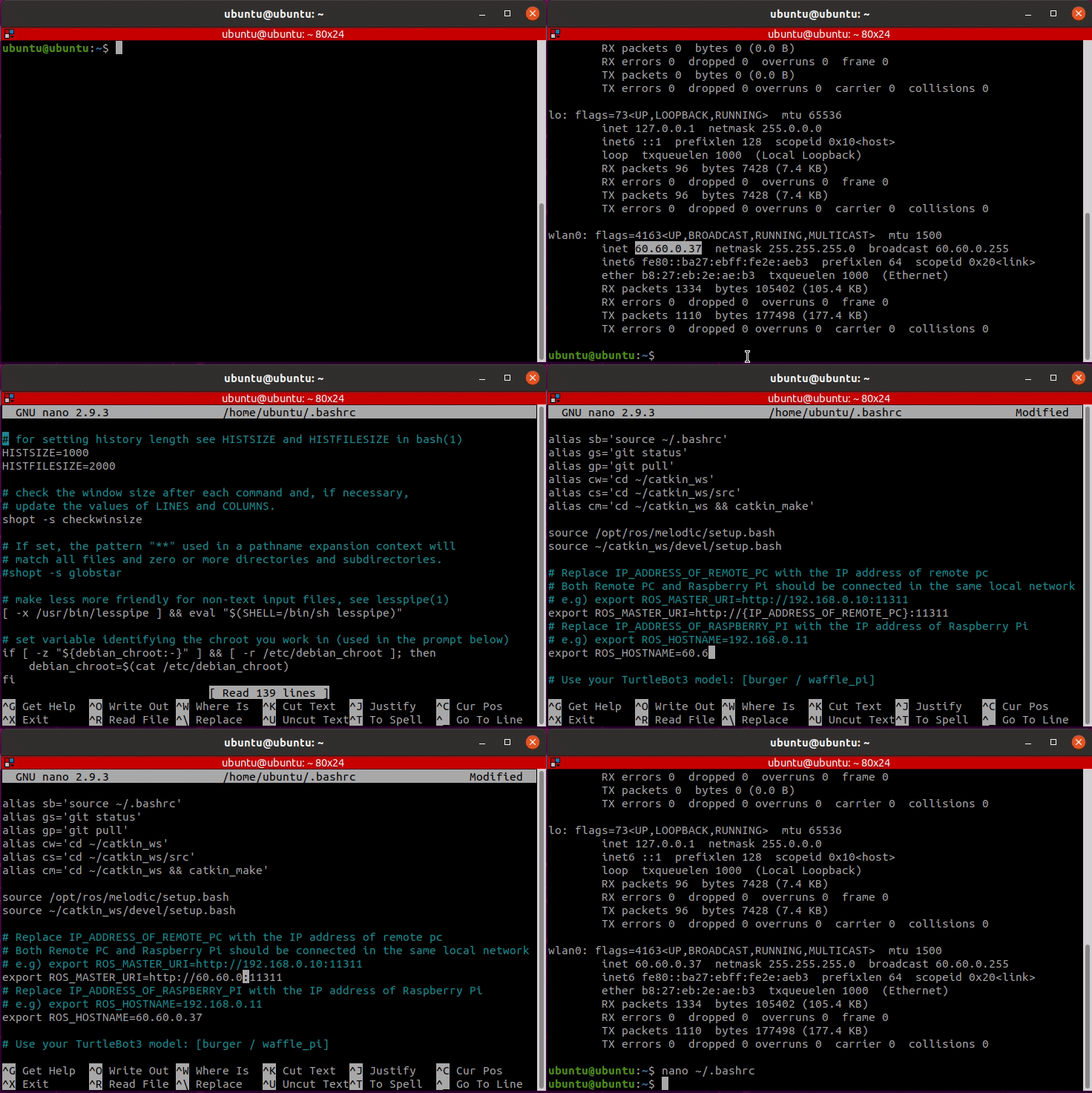
1. 將 PC 連上 WiFi,在 terminal 視窗輸入下方指令來找出 remote PC 的 IP 位址
[Remote PC]
```
$ ifconfig
```
下圖紅色方框內, 顯示的是 remote PC 的 IP 位址

2. 開啟檔案,使用以下指令來更新 ROS IP 設定
[Remote PC]
```
$ nano ~/.bashrc
```
3. 按 Ctrl + END 或 Alt + / 移動游標到最後一行。然後將檔案內的 ROS_MASTER_URI 的 localhost 以及 ROS_HOSTNAME 後面接的 IP 位址,更改為上面所得到的 remote PC(桌電/筆電) 的 IP 位址,如下圖所示。

4. Source bashrc 檔的指令
[Remote PC]
```
$ source ~/.bashrc
```
## 3.2 SBC 單板電腦設定
:::warning
- 安裝時需要供電及時間較久,不適合使用電池,建議使用 TB3 內附的 SMPS 電源線接市電來供電。
- 需另備 HDMI 螢幕、鍵盤、滑鼠以完成設定
:::
### 3.2.1. 準備 microSD 卡及讀卡機
如果 PC 沒有 microSD 槽,請改用 microSD 讀卡機來燒錄映像檔。

### 3.2.2. 下載 TB3 SBC OS image 映像檔
下載對應 SBC 的 ROS 版本。Noetic 版本的映像檔是基於 Ubuntu 20.04 產生。
- 下載 [Raspberry Pi 3B+ ROS Noetic image](https://www.robotis.com/service/download.php?no=2008)
- SHA256 : a7c57e20f2ee4204c95315866f4a274886094f7c63ed390b6d06d95074830309
- 下載 [Raspberry Pi 4B (2GB or 4GB) ROS Noetic image](https://www.robotis.com/service/download.php?no=2066)
- SHA256 : 9d48925a78381885916a6f3bb77891adbfae2b271b05fe2ae9a9b7ebd12c46cc
- 此映像檔跟 Raspberry Pi 4B with 8GB RAM 不相容
:::info
- recovery 映像檔如有修改,不會預先通知
:::
### 3.2.3. 解壓縮 image
將下載的 .img 檔解壓縮存到本地硬碟
### 3.2.4. 燒錄 image
可使用不同的映像檔燒錄工具,如 Raspberry Pi Imager 或 Linux Disks utility
#### 3.2.4.1. 使用 Raspberry Pi Imager
- 從樹莓派官網下載燒錄工具 [**Raspberry Pi Imager**](https://www.raspberrypi.org/software/)
- 可參考 [Raspberry Pi Imager 詳細文件](https://www.raspberrypi.org/blog/raspberry-pi-imager-imaging-utility/)
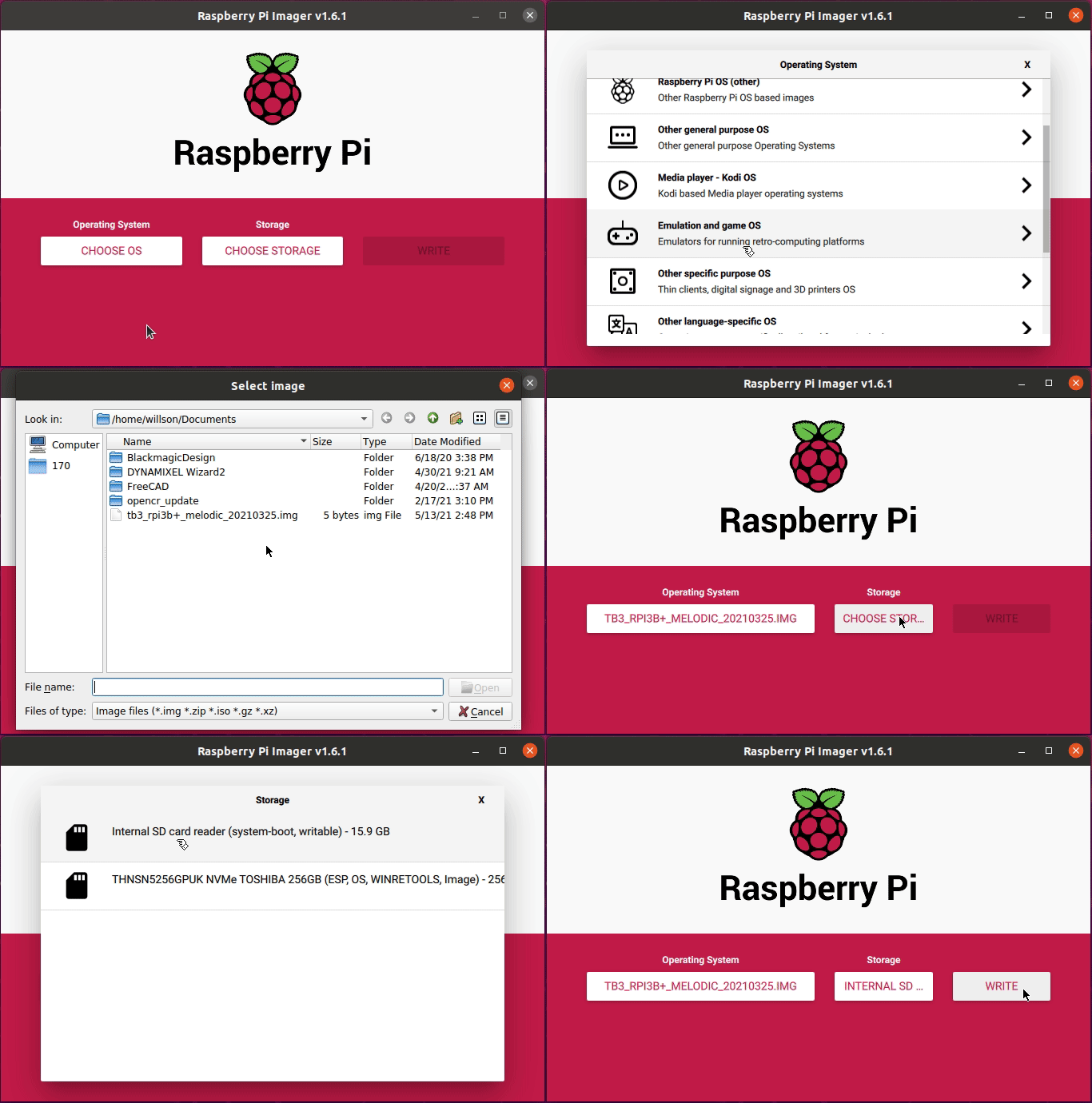
如果使用 .deb 安裝 imager 出現 dependency error,請改用 snap install 方式安裝。(此版本非最新,可跟以下的操作畫面有所不同)
[Remote PC]
```
$ sudo snap install rpi-imager
$ rpi-imager
```
步驟
1. 按 CHOOSE OS
2. 按 Use Custom 選擇儲存於硬碟的 .img 映像檔
3. 按 CHOOSE STORAGE 選擇 microSD
4. 按 WRITE 開始燒錄映像檔
#### 3.2.4.2. 使用 Disks Utility
Disks utility 工具程式已經內含在 Ubuntu Desktop 版內,搜尋 Disks 就可找到開啟此程式。
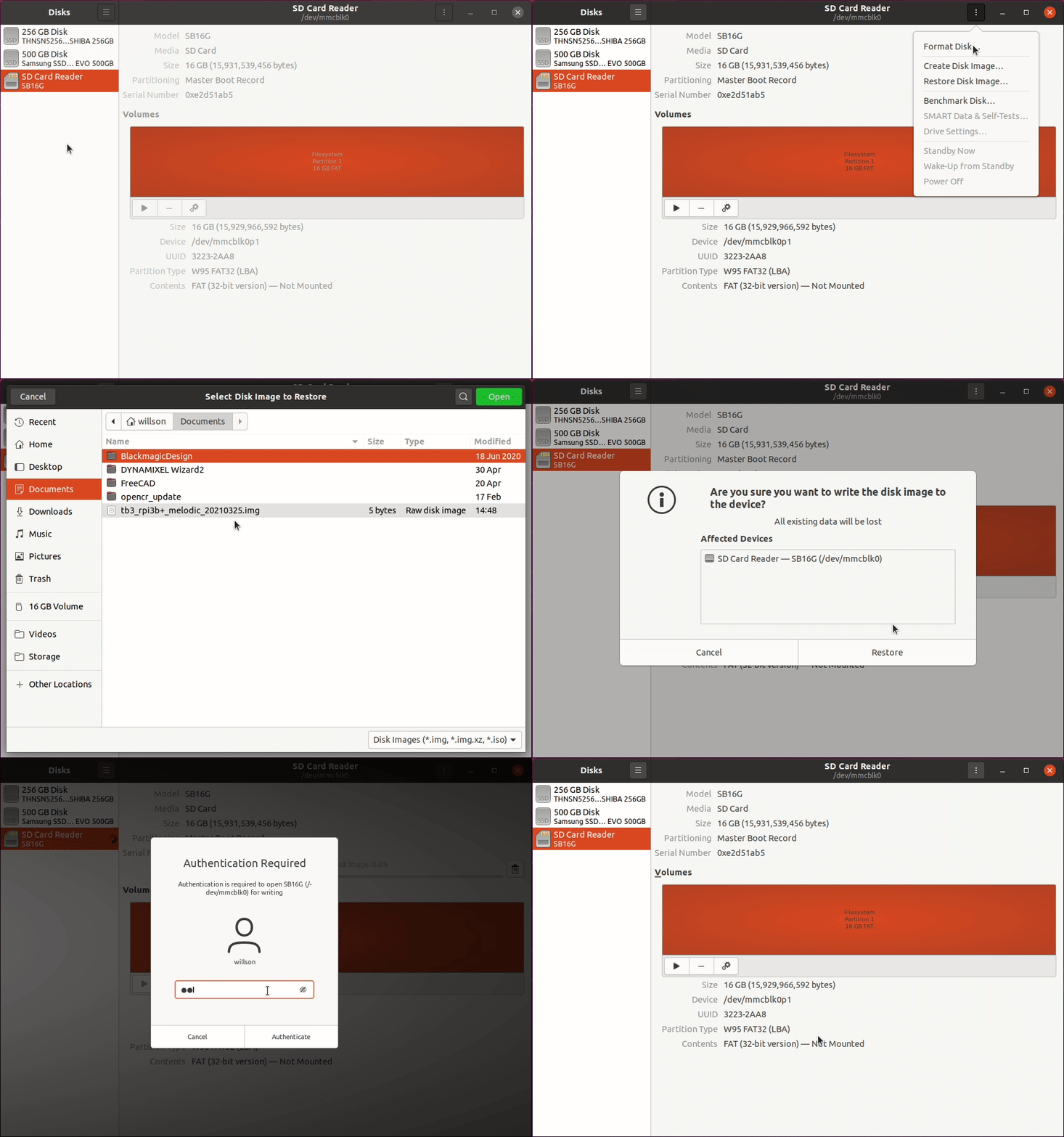
步驟
1. 在左邊控制面板選擇 microSD
2. 選擇 Restore Disk Image 選項
3. 開啟存在硬碟內的 .img 映像檔
4. 按 Start Restoring... > Restore 按鍵
### 3.2.5. Resize the Partition 調整分區大小
為了減少 recovery 映像檔的大小並減少將映像檔燒錄到 microSD 上的時間,recovery 檔的 partition 分區要被最小化。請調整分區大小以便使用未分配的空間。
:::warning
**請注意不要選擇錯誤的磁碟或分區。對 PC 的系統碟進行分區,可能會導致嚴重的系統故障。**
:::
- [下載安裝 GParted GUI tool](https://gparted.org/download.php)
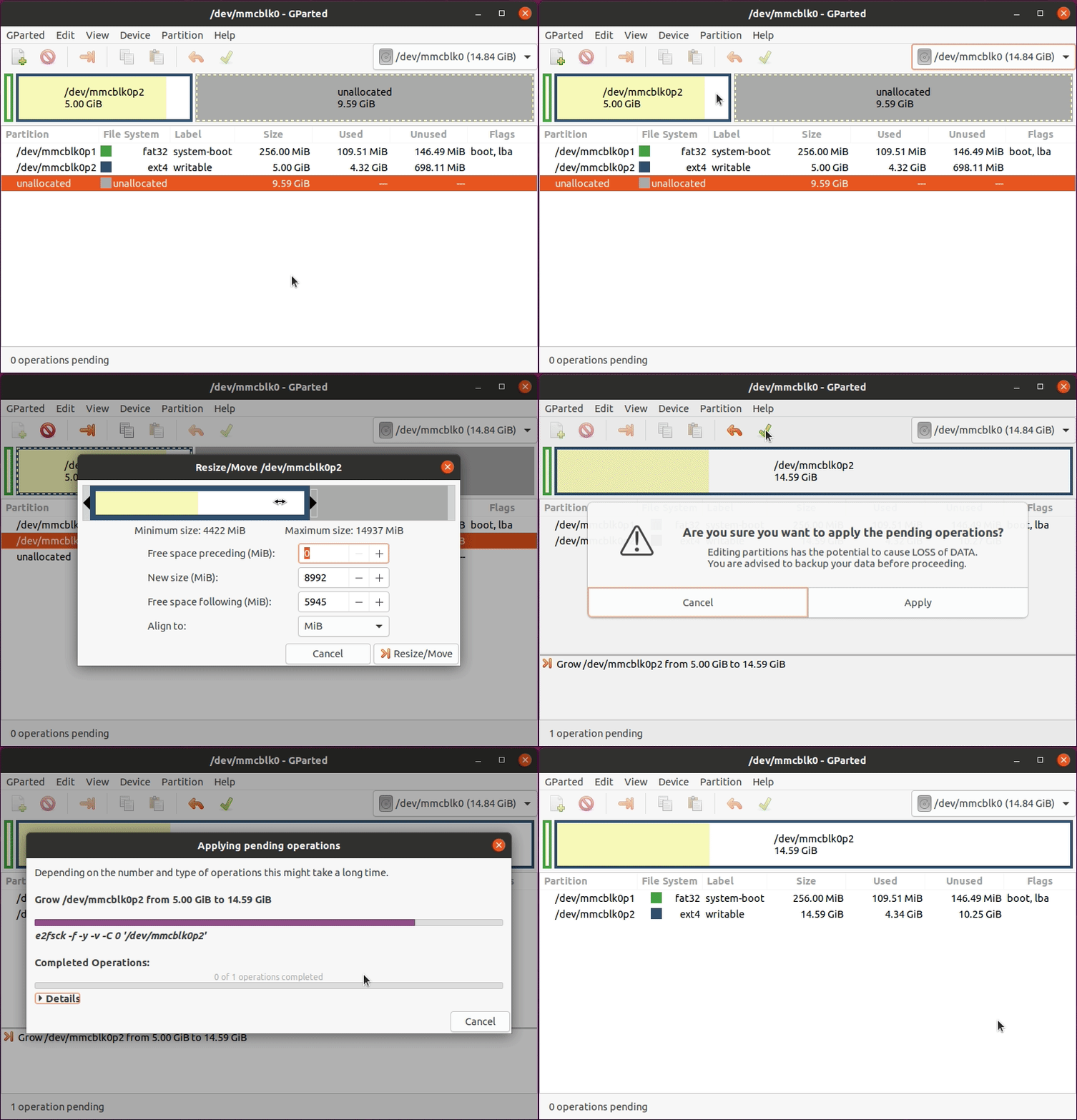
步驟
1. 從選單選擇 microSD 卡(mount 的位置會依系統而異)
2. 右鍵單擊黃色分區
3. 選擇 Resize/Move 選項
4. 拖拉分區的右方邊界,一直到最右方
5. 點擊 Resize/Move 按鍵
6. 點擊上方的 Apply All Operations 綠色的勾選 V 鍵
### 3.2.6. 設置 WiFi 網路設定
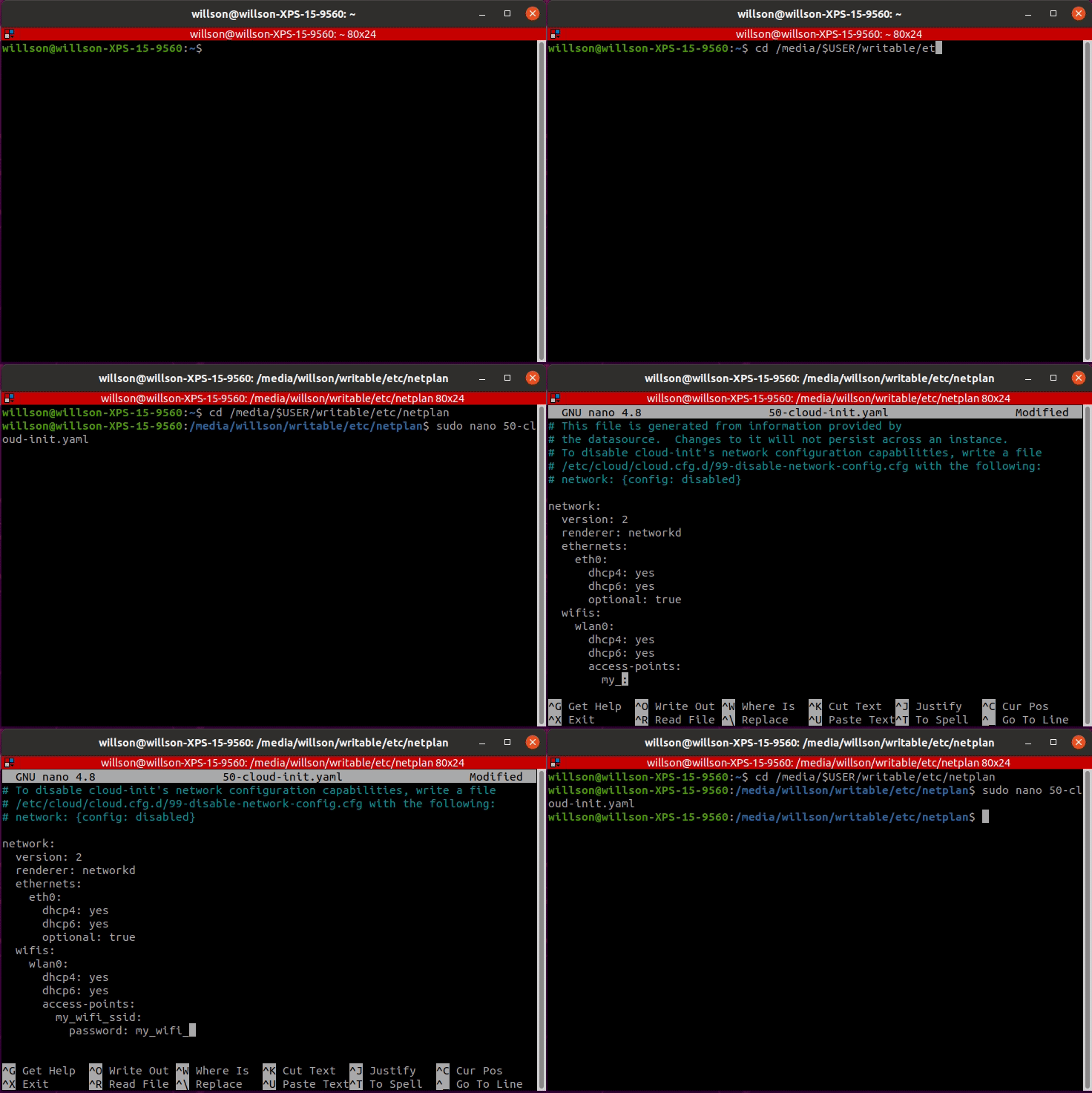
1. 開新的 terminal(Ctrl + Alt + T),到 microSD 卡內的 netplan 目錄。
使用 superuser 權限 sudo 來編輯 50-cloud-init.yaml 檔
[Remote PC]
```
$ cd /media/$USER/writable/etc/netplan
$ sudo nano 50-cloud-init.yaml
```
檔案開啟後,把你的 wifi SSID 及密碼替換到 WIFI_SSID 及 WIFI_PASSWORD。

Ctrl + S 儲存檔案後,Ctrl + X 結束 nano editor
:::info
如果出現 “No such file or directory” 訊息,請確認 microSD 卡已經 mount 到系統上
:::
之後
1. 樹莓派開機
a. 連接 HDMI 螢幕到樹莓派的 HDMI port
b. 連接鍵盤跟滑鼠到樹莓派的 USB port
c. 插入 microSD 卡
d. 連接電源(透過USB or OpenCR)讓樹莓派開機
e. 登入 ID: ubuntu,密碼: turtlebot
:::info
HDMI 螢幕必須在開機前就接上樹莓派,要不然樹莓派的 HDMI port 會 disable 停用
:::
### 3.2.7. ROS 網路設置
:::info
Note: 如果碰到有關 ROS GPG Key 的 apt failures(因為當前的 GPG key 已過期),你需要去更新 GPG Key。請參照 [ROS GPG Key Expiration Incident](https://emanual.robotis.com/docs/en/platform/turtlebot3/sbc_setup/#https://discourse.ros.org/t/ros-gpg-key-expiration-incident/20669) 所提供的解決方案來處理。
:::
請在 SBC(樹莓派) 操作以下步驟
1. 確認 WiFi IP address
[Turtlebot3 SBC]
```
$ ifconfig
```
2. 編輯 .bashrc 檔
[Turtlebot3 SBC]
```
$ nano ~/.bashrc
```
3. 找到 ROS_MASTER_URI 及 ROS_HOSTNAME 設定頁面,修改對應的 IP address
[Turtlebot3 SBC]
```
export ROS_MASTER_URI=http://{IP_ADDRESS_OF_REMOTE_PC}:11311
export ROS_HOSTNAME={IP_ADDRESS_OF_RASPBERRY_PI_3}
```
4. Ctrl + S 存檔,Ctrl + X 結束 nano editor
5. 套用所有變更
[Turtlebot3 SBC]
```
$ source ~/.bashrc
```
### 3.2.8. 新光達 LDS-02 的設定
| LDS-01 | LDS-02 |
|:------------------------------------:|:------------------------------------:|
|  |  |
2022 年版 TurtleBot3 標配的光達已經改為 LDS-02。請使用下列指令在 SBC(樹莓派) 上來設定 LDS-02 光達。
1. 安裝 LDS-02 driver 及更新 TB3 package
[Turtlebot3 SBC]
```
$ sudo apt update
$ sudo apt install libudev-dev
$ cd ~/catkin_ws/src
$ git clone -b develop https://github.com/ROBOTIS-GIT/ld08_driver.git
$ cd ~/catkin_ws/src/turtlebot3 && git pull
$ rm -r turtlebot3_description/ turtlebot3_teleop/ turtlebot3_navigation/ turtlebot3_slam/ turtlebot3_example/
$ cd ~/catkin_ws && catkin_make
```
2. Export LDS_MODEL to bashrc 檔。LDS model 可以是 LDS-01 或 LDS-02。
[Turtlebot3 SBC]
```
$ echo 'export LDS_MODEL=LDS-01' >> ~/.bashrc
$ source ~/.bashrc
```
以上完成 SBC 的設定
補充資料
### 3.2.補. 使用手動方式設定 SBC 單板電腦
手動安裝會比由 recovery 映像檔安裝,花更多時間,但可以更有彈性的安裝需要的 packages。**手動方式不建議初學者採用**
1. 下載 Ubuntu 20.04.1(Focal) Preinstalled Server 映像檔
- [Ubuntu 20.04.1(Focal) Preinstalled Server for Raspberry Pi 3(arm64)](http://cdimage.ubuntu.com/ubuntu-server/focal/daily-preinstalled/current/)
2. 解壓縮 image
3. 燒錄 image 到 microSD 卡。可使用不同的映像檔燒錄工具,如 Raspberry Pi Imager 或 Linux Disks utility。

a. 按 CHOOSE OS
b. 按 Use Custom 選擇儲存於硬碟的 .img 映像檔
c. 按 CHOOSE STORAGE 選擇 microSD
d. 按 WRITE 開始燒錄映像檔
4. 樹莓派開機
a. 連接 HDMI 螢幕到樹莓派的 HDMI port
b. 連接鍵盤跟滑鼠到樹莓派的 USB port
c. 插入 microSD 卡
d. 連接電源(透過USB or OpenCR)讓樹莓派開機
5. 設置樹莓派
a. 登入 ID: ubuntu,密碼: ubuntu,登入後會要求更改密碼
b. 打開自動更新檔
```
$ sudo nano /etc/apt/apt.conf.d/20auto-upgrades
```
6. 變更自動更新設定
```
APT::Periodic::Update-Package-Lists "0";
APT::Periodic::Unattended-Upgrade "0";
```
a. Ctrl + S 儲存檔案,Ctrl + X 結束
7. 輸入指令設定 WiFi 網路
```
$ sudoedit /etc/netplan/50-cloud-init.yaml
```
8. 檔案開啟後,將下列內容添加到檔案的最後。然後將 WIFI_SSID 及 WIFI_PASSWORD 內容替換為你的 Wifi ID 及密碼,之後 Ctrl + S 儲存檔案,Ctrl + X 結束

9. SBC 重開機
```
$ sudo reboot
```
10. 設定 systemd 避免無網路時會開機延遲,需要以下指令來 mask systemd 程序。
```
$ systemctl mask systemd-networkd-wait-online.service
```
11. Disable Suspend 及 Hilbernation
```
$ sudo systemctl mask sleep.target suspend.target hibernate.target hybrid-sleep.target
```
12. 樹莓派重開機後,如果要在 Remote PC 上使用 SSH 連上樹莓派工作,則在 Remote PC 的 terminal 輸入以下指令,預設密碼是 ubuntu 或使用新密碼
```
$ ssh ubuntu@{IP Address of Raspberry PI}
```
13. 安裝 ROS Noetic 版
在 SBC terminal 輸入下列指令,一次一行
也可參考此腳本 [script 檔](https://raw.githubusercontent.com/ROBOTIS-GIT/robotis_tools/master/install_ros_noetic_rpi.sh),來了解安裝的細節
```
$ sudo apt-get update
$ sudo apt-get upgrade
$ wget https://raw.githubusercontent.com/ROBOTIS-GIT/robotis_tools/master/install_ros_noetic_rpi.sh
$ chmod 755 ./install_ros_noetic_rpi.sh
$ bash ./install_ros_noetic_rpi.sh
```
以上安裝如果失敗,可參考官方 [official ROS Noetic installation guide](http://wiki.ros.org/noetic/Installation/Ubuntu) 來處理。
14. 安裝及 Build ROS Packages
```
$ sudo apt install ros-noetic-rosserial-python ros-noetic-tf
$ sudo apt install ros-noetic-hls-lfcd-lds-driver
$ sudo apt install ros-noetic-turtlebot3-msgs
$ sudo apt install ros-noetic-dynamixel-sdk
$ cd ~/catkin_ws/src
$ git clone -b noetic-devel https://github.com/ROBOTIS-GIT/turtlebot3.git
$ cd ~/catkin_ws/src/turtlebot3
$ rm -r turtlebot3_description/ turtlebot3_teleop/ turtlebot3_navigation/ turtlebot3_slam/ turtlebot3_example/
$ cd ~/catkin_ws/
$ catkin_make -j1
$ source ~/.bashrc
```
15. 設定 OpenCR 的 USB port
```
$ rosrun turtlebot3_bringup create_udev_rules
```
16. 編輯 .bashrc 檔要確認 ROS 網路設置
```
$ nano ~/.bashrc
```
17. 修改 ROS_MASTER_URI 的 IP 及 ROS_HOSTNAME
```
export ROS_MASTER_URI=http://{IP_ADDRESS_OF_REMOTE_PC}:11311
export ROS_HOSTNAME={IP_ADDRESS_OF_RASPBERRY_PI_3}
```
18. 存檔及結束 nano editor
19. 2022 年版 TurtleBot3 標配的光達已經改為 LDS-02。請使用下列指令在 SBC(樹莓派) 上來設定 LDS-02 光達。
安裝 LDS-02 driver 及更新 TB3 package
[Turtlebot3 SBC]
```
$ sudo apt update
$ sudo apt install libudev-dev
$ cd ~/catkin_ws/src
$ git clone -b develop https://github.com/ROBOTIS-GIT/ld08_driver.git
$ cd ~/catkin_ws && catkin_make
```
20. Export LDS_MODEL to bashrc 檔。LDS model 可以是 LDS-01 或 LDS-02。
```
$ echo 'export LDS_MODEL=LDS-02' >> ~/.bashrc
$ source ~/.bashrc
```
21. 套用所有變更
```
$ source ~/.bashrc
```
可參照下列 Ubuntu Blog 來取得更詳細資訊
- [Improving Security with Ubuntu](https://ubuntu.com/blog/steps-to-maximise-robotics-security-with-ubuntu)
- [Improving User Experience of TurtleBot3 Waffle Pi](https://ubuntu.com/blog/building-a-better-turtlebot3)
- [How to set up TurtleBot3 Waffle Pi in minutes with Snaps](https://ubuntu.com/blog/how-to-set-up-turtlebot3-in-minutes-with-snaps)
## 3.3. OpenCR 控制板設定
1. 使用 microUSB 連接線連接樹莓派及 OpenCR
2. 樹莓派安裝所需套件以便上傳 OpenCR 韌體
[TurtleBot3 SBC]
```
$ sudo dpkg --add-architecture armhf
$ sudo apt-get update
$ sudo apt-get install libc6:armhf
```
3. 依照 TB3 的款式,設定 OpenCR_MODEL 參數為 burger 或 waffle
[TurtleBot3 SBC]
```
$ export OPENCR_PORT=/dev/ttyACM0
$ export OPENCR_MODEL=burger_noetic
$ rm -rf ./opencr_update.tar.bz2
```
4. 下載韌體解壓縮
[TurtleBot3 SBC]
```
$ wget https://github.com/ROBOTIS-GIT/OpenCR-Binaries/raw/master/turtlebot3/ROS1/latest/opencr_update.tar.bz2
$ tar -xvf opencr_update.tar.bz2
```
5. 上傳韌體到 OpenCR
[TurtleBot3 SBC]
```
$ cd ./opencr_update
$ ./update.sh $OPENCR_PORT $OPENCR_MODEL.opencr
```
6. Burger 如果成功上傳韌體,會出現下列資訊

7. 如果上傳失敗,可以嘗試在 recovery mode 下重新上傳韌體。OpenCR 的 recovery mode 啟動順序如下。在 recovery mode 時,OpenCR 的 STATUS led 燈會定時的閃爍。
- 按住 PUSH SW2 鍵
- 按一下 Reset 鍵
- 然後鬆開 Reset 鍵
- 再鬆開 PUSH SW2 鍵

**補充資料: 使用 Arduino IDE 來上傳韌體步驟**
:::info
OpenCR board manager 並不支援在 ARM based SBC 上的 Arduino IDE,如樹莓派 或 NVidia Jetson。
請在 PC 上用 Arduino IDE 來上傳韌體。
:::
1. 如 PC 的 OS 是 Linux,下列指令設定 USB ports 給 OpenCR 使用。如果是其他 OS(OSX or Windows),可跳過此步驟。
```
$ wget https://raw.githubusercontent.com/ROBOTIS-GIT/OpenCR/master/99-opencr-cdc.rules
$ sudo cp ./99-opencr-cdc.rules /etc/udev/rules.d/
$ sudo udevadm control --reload-rules
$ sudo udevadm trigger
$ sudo apt install libncurses5-dev:i386
```
2. 安裝 Arduino IDE
- [下載最新的 Arduino IDE](https://www.arduino.cc/en/software)
3. 安裝好後,執行 Arduino IDE
4. 按 Ctrl + , 來打開 Preferences menu
5. 在 Additional Boards Manager URLs 輸入下列位址
```
https://raw.githubusercontent.com/ROBOTIS-GIT/OpenCR/master/arduino/opencr_release/package_opencr_index.json
```

6. 打開 TurtleBot3 韌體。因你的平台選擇對應的韌體。
- **Burger**: File > Examples > turtlebot3 > turtlebot3_burger > turtlebot3_core
- **Waffle/Waffle Pi**: File > Examples > turtlebot3 > turtlebot3_waffle > turtlebot3_core
7. 打開 turtlebot3_core_config.h 檔,在 Line 21 行,去掉 NOETIC_SUPPORT defintion 註釋
8. 連接 OpenCR 板到 PC 上,從 Tools > Board 選單選擇 OpenCR > OpenCR Board
9. 從 Tools > Port 選單中,選擇連接 OpenCR 的 USB port
10. upload 圖示或 Ctrl+U 來上傳韌體


11. 如果上傳失敗,可以嘗試在 recovery mode 下重新上傳韌體。OpenCR 的 recovery mode 啟動順序如下。在 recovery mode 時,OpenCR 的 STATUS led 燈會定時的閃爍。
- 按住 PUSH SW2 鍵
- 按一下 Reset 鍵
- 然後鬆開 Reset 鍵
- 再鬆開 PUSH SW2 鍵

### 3.3.1. OpenCR 測試
:::info
Note: 如果測試後,輪子並沒有照設定的移動,請參照章節 14 FAQ 的 14.3. “Setup DYNAMIXELs for TurtleBot3” 重新設定智能馬達。
:::
你可以使用 PUSH SW1 及 PUSH SW2 按鍵,來檢查 TB3 是否正確組裝。這個流程是測試左右兩個 Dynamixel 智能馬達及 OpenCR 控制板。

1. 在組裝好 TB3 後,將電池連上 OpenCR,打開電源開關,應會看到 OpenCR 板上的 Power LED 燈亮起
2. 將 TB3 放在平面地板上。為安全起見,建議空間的安全半徑為 1m。
3. 按住 PUSH SW1 鍵幾秒鐘,會讓 TB3 往前直行 30cm。
4. 按住 PUSH SW2 鍵幾秒鐘,會讓 TB3 原地旋轉 180 度。
## 3.4. 硬體組裝

### 3.4.1. 組裝手冊
TB3 出貨時是盒裝,零配件是未組裝狀態。請下載相對應的 PDF 來組裝
- [**TB3 Burger 漢堡款組裝手冊下載**](http://www.robotis.com/service/download.php?no=748)
- [**TB3 Waffle 鬆餅款組裝手冊下載**](http://www.robotis.com/service/download.php?no=749)
- [**TB3 Waffle Pi 鬆餅 Pi 款組裝手冊下載**](http://www.robotis.com/service/download.php?no=750)
### 3.4.2. TB3 組裝影片
如果難以由 PDF 手冊進行組裝,請參考以下 Youtube 組裝影片。(PS: 採智科技可以提供 TB3 組裝服務,請你在訂購時先跟我們的業務確認。)
- TB3 Burger 組裝影片 1
{%youtube rvm-m2ogrLA %}
- TB3 Burger 組裝影片 2
{%youtube 5D9S_tcenL4 %}
- TB3 Waffle 組裝影片
{%youtube 1nTMyr4ybi0 %}
## 3.5. Bringup 開始啟用 TB3
### 3.5.1. 執行 roscore
**Remote PC** 開新 terminal
[Remote PC]
```
$ roscore
```
### 3.5.2. Bringup 啟動 TB3
:::info
TIP: 在執行指令前,TURTLEBOT3_MODEL的參數 ${TB3_MODEL},需依照 TB3 的款式,更改為正確的參數- burger, waffle, 或 waffle_pi
:::
1. 在 remote PC 上 Ctrl + Alt + T 開新 terminal,使用 SSH 連上樹莓派的 IP address。使用預設的密碼 turtlebot
[Remote PC]
```
$ ssh ubuntu@{IP_ADDRESS_OF_RASPBERRY_PI}
```
2. 啟動基礎套件開始 TB3 應用。${TB3_MODEL} 名稱需要置換為 burger,waffle,or waffle_pi
[Turtlebot3 SBC]
```
$ export TURTLEBOT3_MODEL=${TB3_MODEL}
$ roslaunch turtlebot3_bringup turtlebot3_robot.launch
```
3. 如果使用的 TB3 是 burger,視窗會出現訊息
[Turtlebot3 SBC]
```
SUMMARY
========
PARAMETERS
* /rosdistro: noetic
* /rosversion: 1.15.8
* /turtlebot3_core/baud: 115200
* /turtlebot3_core/port: /dev/ttyACM0
* /turtlebot3_core/tf_prefix:
* /turtlebot3_lds/frame_id: base_scan
* /turtlebot3_lds/port: /dev/ttyUSB0
NODES
/
turtlebot3_core (rosserial_python/serial_node.py)
turtlebot3_diagnostics (turtlebot3_bringup/turtlebot3_diagnostics)
turtlebot3_lds (hls_lfcd_lds_driver/hlds_laser_publisher)
ROS_MASTER_URI=http://192.168.1.2:11311
process[turtlebot3_core-1]: started with pid [14198]
process[turtlebot3_lds-2]: started with pid [14199]
process[turtlebot3_diagnostics-3]: started with pid [14200]
[INFO] [1531306690.947198]: ROS Serial Python Node
[INFO] [1531306691.000143]: Connecting to /dev/ttyACM0 at 115200 baud
[INFO] [1531306693.522019]: Note: publish buffer size is 1024 bytes
[INFO] [1531306693.525615]: Setup publisher on sensor_state [turtlebot3_msgs/SensorState]
[INFO] [1531306693.544159]: Setup publisher on version_info [turtlebot3_msgs/VersionInfo]
[INFO] [1531306693.620722]: Setup publisher on imu [sensor_msgs/Imu]
[INFO] [1531306693.642319]: Setup publisher on cmd_vel_rc100 [geometry_msgs/Twist]
[INFO] [1531306693.687786]: Setup publisher on odom [nav_msgs/Odometry]
[INFO] [1531306693.706260]: Setup publisher on joint_states [sensor_msgs/JointState]
[INFO] [1531306693.722754]: Setup publisher on battery_state [sensor_msgs/BatteryState]
[INFO] [1531306693.759059]: Setup publisher on magnetic_field [sensor_msgs/MagneticField]
[INFO] [1531306695.979057]: Setup publisher on /tf [tf/tfMessage]
[INFO] [1531306696.007135]: Note: subscribe buffer size is 1024 bytes
[INFO] [1531306696.009083]: Setup subscriber on cmd_vel [geometry_msgs/Twist]
[INFO] [1531306696.040047]: Setup subscriber on sound [turtlebot3_msgs/Sound]
[INFO] [1531306696.069571]: Setup subscriber on motor_power [std_msgs/Bool]
[INFO] [1531306696.096364]: Setup subscriber on reset [std_msgs/Empty]
[INFO] [1531306696.390979]: Setup TF on Odometry [odom]
[INFO] [1531306696.394314]: Setup TF on IMU [imu_link]
[INFO] [1531306696.397498]: Setup TF on MagneticField [mag_link]
[INFO] [1531306696.400537]: Setup TF on JointState [base_link]
[INFO] [1531306696.407813]: --------------------------
[INFO] [1531306696.411412]: Connected to OpenCR board!
[INFO] [1531306696.415140]: This core(v1.2.1) is compatible with TB3 Burger
[INFO] [1531306696.418398]: --------------------------
[INFO] [1531306696.421749]: Start Calibration of Gyro
[INFO] [1531306698.953226]: Calibration End
```
補充資料
### 3.5.3. 在 RViz 載入 TurtleBot3
1. Remote PC 開新的 terminal,啟動 robot state publisher
[Remote PC]
```
$ roslaunch turtlebot3_bringup turtlebot3_remote.launch
```
2. Remote PC 開新的 terminal,啟動 RViz。
- 如果使用 apt 方式安裝 TB3 packages, 可輸入下列指令
[Remote PC]
```
$ rosrun rviz rviz -d `rospack find turtlebot3_description`/rviz/model.rviz
```
- 如果使用 git clone 方式安裝 TB3 packages,可輸入下列指令。model name 需置換為 burger or waffle_pi
```
$ rosrun rviz rviz -d `rospack find turtlebot3_description`/rviz/{burger, waffle_pi}.rviz
```

## 3.6. 基本操作
### 3.6.1. Teleoperation 遙控
:::warning
**警示**:在執行遙控前,請先從 SBC 啟動 TB3,且在桌上測試 TB3 時須注意以防掉落桌面。
:::
TurtleBot3 可用不同的設備來遙控。只要先確認 SBC 及 ROS 版本都有支援對應的 ROS packages。
{%youtube Z4s18hlazb4 %}
:::info
**備註**: 手冊中的影片內容可能隨時更新,恕不另行通知。
:::
#### 3.6.1.1. 鍵盤控制
:::info
TIP: 在執行指令前,TURTLEBOT3_MODEL的參數 ${TB3_MODEL},需依照 TB3 的款式,更改為正確的參數- burger, waffle,或 waffle_pi
:::
1. 在 Remote PC 上新開 terminal,執行 turtlebot3_teleop_key。如 TURTLEBOT3_MODEL 參數未指定,請替換 ${TB3_MODEL} 為 burger 或 waffle 或 waffle_pi
[Remote PC]
```
$ export TURTLEBOT3_MODEL=${TB3_MODEL}
$ roslaunch turtlebot3_teleop turtlebot3_teleop_key.launch
```
2. 如果所需節點都開啟成功,terminal 會顯示操作訊息
[Remote PC]
```
Control Your Turtlebot3
Moving around
w
a s d
x
w/x : increase/decrease linear velocity
a/d : increase/decrease angular velocity
space key, s : force stop
CTRL-C to quit
```
補充資料
:::info
**如何預先定義好 TURTLEBOT3_MODEL**
如果 TURTLEBOT3_MODEL 參數已經預先定義在 .bashrc 檔內,則 export TURTLEBOT3_MODEL=${TB3_MODEL} 指令可以省略。當新的 terminal 開啟時,.bashrc 檔會自動載入
- 定義 TurtleBot3 Burger 為預設 model 範例
```
$ echo 'export TURTLEBOT3_MODEL=burger' >> ~/.bashrc
$ source ~/.bashrc
```
- 定義 TurtleBot3 Waffle Pi 為預設 model 範例
```
$ echo 'export TURTLEBOT3_MODEL=waffle_pi' >> ~/.bashrc
$ source ~/.bashrc
```
:::
#### 3.6.1.2. RC-100 遙控器
ROBOTIS RC-100B 遙控器已經預設在 TB3 OpenCR 控制板的韌體內。此遙控器須配合 BT-410 藍芽模組一起使用。TB3 Waffle Pi 款已經內含 RC-100B 遙控器及 BT-410 藍芽模組。當使用 RC-100 時,不需要執行任何特定節點,因為 turtlebot_core node 節點會產生所需的 /cmd_vel topic,直接連接到 OpenCR 控制板。

1. 連接 BT-410 到 OpenCR 的 UART1 port。參考 chap 13.1.2. OpenCR 1.0
2. 使用 RC-100 遙控 TB3
- Up / Down: 直線加速或減速
- Left / Right: 角速度加速或減速
#### 3.6.1.3. PS3 搖桿
1. 將 PS3 搖桿, 透過藍芽或是 USB 線連到 remote PC(桌電或筆電)
2. 安裝使用 PS3 搖桿的 teleoperation packages
[Remote PC]
```
$ sudo apt install ros-noetic-joy ros-noetic-joystick-drivers ros-noetic-teleop-twist-joy
```
3. 啟動 teleoperation node 遙控模式
[Remote PC]
```
$ roslaunch teleop_twist_joy teleop.launch
```
#### 3.6.1.4. XBOX 360 搖桿
1. 將 XBOX 360 搖桿, 透過無線連接器或是 USB 線連到 remote PC
2. 安裝使用 XBOX 360 搖桿所需的 teleoperation packages
[Remote PC]
```
$ sudo apt install xboxdrv ros-noetic-joy ros-noetic-joystick-drivers ros-noetic-teleop-twist-joy
```
3. 啟動 XBOX 360 搖桿 teleoperation node
[Remote PC]
```
$ sudo xboxdrv --silent
$ roslaunch teleop_twist_joy teleop.launch
```
#### 3.6.1.5. Wii Remote
1. 將 Wii Remote 搖桿, 透過藍芽連到 remote PC
2. 安裝使用 Wii Remote 搖桿的 teleoperation packages
[Remote PC]
```
$ sudo apt install ros-noetic-wiimote libbluetooth-dev libcwiid-dev
$ cd ~/catkin_ws/src
$ git clone https://github.com/ros-drivers/joystick_drivers.git
$ cd ~/catkin_ws && catkin_make
```
3. 啟動 Wii remote teleoperation node
[Remote PC]
```
$ rosrun wiimote wiimote_node
$ rosrun wiimote teleop_wiimote
```
### 3.6.2. Topic Monitor
:::info
要檢視 TB3 的 topics,可使用 ROS 提供的 [**rqt**](http://wiki.ros.org/rqt),它是 Qt-based 框架用做 ROS GUI 圖形使用開發。它是一個工具,可以在 GUI 圖形介面內單一的 topic list 上,顯示 TB3 所有 topics,包含 topic name,type,bandwidth,Hz,value 等資訊
:::
1. 從 PC 下指令執行 rqt。如果 topic monitor 視窗沒有出現,可以選擇 plugin -> Topics -> Topic Monitor.
```
$ rqt
```

2. 當 topic monitor 載入後,預設 topic values 是沒有監控的。點擊每個 topic 前的 checkbox 方塊框打 V 來開始監控。

3. 點擊 checkbox 前的 ▶ 三角箭號圖示,來查看詳細的 topic 資訊

- /battery_state 顯示電池狀態的有關資訊,如當下的電壓,尚有電池容量。

- /diagnostics 顯示連接到 TB3 的各種零組件狀態,如 MPU9250、Dynamixel X 智能馬達、HLS-LFCD-LDS 光達、電池及 OpenCR 控制板

- /odom 顯示 TB3 的測距訊息。Topic 有 encoder 數據的方向及位置資料。

- /sensor_state 顯示 encoder 數值、電池、扭力等訊息

- /scan 顯示所有 LDS 光達的數據訊息,如 angle_max and min, range_max and min, indicates, ranges 等

此外,只要添加了新的 topics,你就可以通過 rqt 程式來監控 topics 資訊。
# **4. SLAM 地圖定位**
---
:::info
Note:
- 請在 Remote PC 上執行 SLAM
- 在執行任何操作前,請務必先執行章節 Bringup 啟動 TB3
:::
**SLAM(Simultaneous Localization and Mapping)** 即時定位與地圖構建, 是一種繪製地圖的技術,可在任一空間中估算當前的位置. 以下的影片展示 TurtleBot3, 如何使用 SLAM 技術,來精確的繪製地圖.
{%youtube lkW4-dG2BCY %}
影片說明:
- 機器人: TurtleBot3 Burger
- 感測器: LiDAR 光達(Laser Distance Sensor)
- ROS 套件: Gmapping / Cartographer
- 地點: ROBOTIS 實驗室及總部 15 樓走廊
- 時間長: 55 分
- 距離: 共計 351 公尺
**Youtube TB3 SLAM 影片 2**
{%youtube 7mEKrT_cKWI %}
影片2 說明:
* 機器人: TurtleBot3 Burger and Waffle
* 感測器: LiDAR 光達(Laser Distance Sensor, LDS-01)
* ROS 套件: Gmapping
* 地點: ROBOTIS 總部教室
* 時間長: 約 4 分
* 距離: 共計 15 公尺
**備註**: 手冊中的影片內容可能隨時更新,恕不另行通知。
## 4.1. 執行 SLAM node
1. 從 Remote PC 執行 roscore
[Remote PC]
```
$ roscore
```
2. TB3 SBC 執行(Bringup)基本套件來開始 TB3 應用。如已執行可跳過此步驟
- 在 Remote PC 開新的 terminal (Ctrl + Alt + T),連上 SBC 的 IP address。預設密碼是 turtlebot
- TURTLEBOT3_MODEL 的參數需設定 burger, waffle, 或 waffle_pi。
[Remote PC]
```
$ ssh pi@{IP_ADDRESS_OF_RASPBERRY_PI}
$ export TURTLEBOT3_MODEL=${TB3_MODEL}
$ roslaunch turtlebot3_bringup turtlebot3_robot.launch
```
3. 在 Remote PC 開新的 terminal, 啟動 SLAM 節點。GMapping 是預設的 SLAM 方法。另外 TURTLEBOT3_MODEL 的參數需設定 burger, waffle, 或 waffle_pi。
[Remote PC]
```
$ export TURTLEBOT3_MODEL=burger
$ roslaunch turtlebot3_slam turtlebot3_slam.launch
```
補充資料
:::info
**如何儲存 TURTLEBOT3_MODEL 參數?**
如果在 .bashrc 檔內 TURTLEBOT3_MODEL 參數已預設好,那 $ export TURTLEBOT3_MODEL=${TB3_MODEL} 指令可以忽略。
開新的 terminal 時, .bashrc 檔會自動載入
- 定義 TB3 Burger 為預設模型
[Remote PC]
```
$ echo 'export TURTLEBOT3_MODEL=burger' >> ~/.bashrc
$ source ~/.bashrc
```
- 定義 TB3 Waffle Pi 為預設模型
[Remote PC]
```
$ echo 'export TURTLEBOT3_MODEL=waffle_pi' >> ~/.bashrc
$ source ~/.bashrc
```
:::
補充資料
:::info
**使用其他的 SLAM 方法**
- **GMapping** ([ROS Wiki](http://wiki.ros.org/gmapping),[Github](https://github.com/ros-perception/slam_gmapping))
1. 在 Remote PC 安裝相關套件。(跟 Gampping 相關的套件,在章節 3.1. PC Setup 時,就已經安裝好)
2. 執行 Gmapping SLAM node
[Remote PC]
```
$ roslaunch turtlebot3_slam turtlebot3_slam.launch slam_methods:=gmapping
```
- **Cartographer** ([ROS Wiki](http://wiki.ros.org/cartographer),[Github](https://github.com/googlecartographer/cartographer))
1. 在 Remote PC 下載及 build 相關套件。
Cartographer 套件由 Google 開發,但目前並沒有支援 ROS1 Noetic 的 binary 安裝檔。如要在 Noetic 使用本套件,你應該下載原始碼後 build 此套件。詳情可參考[官方 wiki 頁面](https://google-cartographer-ros.readthedocs.io/en/latest/#building-installation)。
[Remote PC]
```
$ sudo apt update
$ sudo apt install -y python3-wstool python3-rosdep ninja-build stow
$ cd ~/catkin_ws/src
$ wstool init src
$ wstool merge -t src https://raw.githubusercontent.com/cartographer-project/cartographer_ros/master/cartographer_ros.rosinstall
$ wstool update -t src
$ sudo rosdep init
$ rosdep update
$ rosdep install --from-paths src --ignore-src --rosdistro=noetic -y
$ src/cartographer/scripts/install_abseil.sh
$ sudo apt remove ros-noetic-abseil-cpp
$ catkin_make_isolated --install --use-ninja
```
2. 啟動 Cartographer SLAM node
[Remote PC]
```
$ source ~/catkin_ws/install_isolated/setup.bash
$ roslaunch turtlebot3_slam turtlebot3_slam.launch slam_methods:=cartographer
```
- **Karto** ([ROS Wiki](http://wiki.ros.org/slam_karto),[Github](https://github.com/ros-perception/slam_karto))
1. 在 Remote PC 安裝相關套件。
[Remote PC]
```
$ sudo apt install ros-noetic-slam-karto
```
2. 啟動 Karto SLAM node
[Remote PC]
```
$ roslaunch turtlebot3_slam turtlebot3_slam.launch slam_methods:=karto
```
:::
## 4.2. 執行遙控 Teleoperation Node
一旦 SLAM node 成功執行,TB3 就可使用遙控 teleoperation,開始對未知區域繪製地圖。此時避免機器人做出劇烈的移動很重要,比如直線速度變化太快,或旋轉太快。使用機器人繪製地圖時,機器人最好能掃描,地圖環境內的每個角落。它需要一些經驗來建立一個乾淨的地圖,所以我們需要多次練習 SLAM,以學習建圖技巧。
1. 在 Remote PC 開新 terminal 執行 teleoperation node。TURTLEBOT3_MODEL 參數需對應好 - burger,waffle,waffle_pi
[Remote PC]
```
$ export TURTLEBOT3_MODEL=burger
$ roslaunch turtlebot3_teleop turtlebot3_teleop_key.launch
Control Your TurtleBot3!
---------------------------
Moving around:
w
a s d
x
w/x : increase/decrease linear velocity
a/d : increase/decrease angular velocity
space key, s : force stop
CTRL-C to quit
```
2. 開始探索及繪製地圖

## 4.3. 微調指南
對不同的環境,Gmapping 可有許多參數來改變其效能。你可以在 [ROS Wiki](http://wiki.ros.org/gmapping) 網頁了解全部的參數,或參考 ROS Robot Programming 書的 Chapter 11 章。
本節微調指南會提供一些提示,供你配置一些重要參數。如果你想改變 SLAM 效能則會取決於你的環境,這些提示可能會幫助你並節省你的時間。
以下參數定義於 turtlebot3_slam/config/gmapping_params.yaml 檔內
### 4.3.1. **maxUrange**
此參數設定光達最大可用範圍
### 4.3.2. **map_update_interval**
此參數定義地圖更新的時間(以秒為單位)。如果此值設置越小,地圖更新頻率會更頻繁,此時電腦就需要更大的計算量。設置這個參數取決於你的環境。

### 4.3.3. **minimumScore**
此參數設定感測器掃描數據匹配結果,是成功或失敗的最小分數值。這可以減少機器人在大區域範圍內的預期位置的誤差。如果設置適當,可以看到以下類似資訊。
```
Average Scan Matching Score=278.965
neff= 100
Registering Scans:Done
update frame 6
update ld=2.95935e-05 ad=0.000302522
Laser Pose= -0.0320253 -5.36882e-06 -3.14142
```
如果設置太高,則會看到下列警示
```
Scan Matching Failed, using odometry. Likelihood=0
lp:-0.0306155 5.75314e-06 -3.14151
op:-0.0306156 5.90277e-06 -3.14151
```
### 4.3.4. **linearUpdate**
當機器人移動多遠掃描一次
### 4.3.5. **angularUpdate**
當機器人轉動多大時掃描一次。最好設數值小於 linearUpdate 較佳。
## 4.4. 儲存地圖
地圖會根據機器人移動時的 odometry 測距數據,tf,及感測器掃描的資訊來建圖。當 TB3 移動時,地圖數據會呈現在 RViz 視窗。在建好所需區域的完整地圖後,將地圖資料儲存在硬碟以備後續使用。
1. 啟用在 map_server package 中的 map_saver node 來產生地圖檔。地圖檔會儲存在 map_saver node 所在的資料夾。除非另外命名,map 是預設的地圖檔名,會產生 map.pgm 及 map.yaml 兩個檔。
[Remote PC]
```
$ rosrun map_server map_saver -f ~/map
```
: -f 選項是用來指定資料夾位置以及要儲存的檔名。以上的指令是指 map.pgm 及 map.yaml 檔,會被儲存在 home 資料夾 ~/ (e.g., /home/${username}).
## 4.5. 地圖
地圖是 ROS 社群中常用的二維 **Occupancy Grid Map(OGM)** 地圖。儲存的地圖大略如下圖所示,**白色**是機器人可以移動的空白區域,**黑色**是機器人不能移動的佔用區域,**灰色**則是未知區域。地圖可在 Chap.5 Navigation 導航中使用。

下圖顯示了使用 TurtleBot3 創建大型地圖的結果。花了大約一個小時才製作出一幅移動距離約為 350 公尺的地圖。

# **5. Navigation 導航**
---
:::warning
**警示**:此節 TB3 執行指令後會移動及旋轉,請將機器人放置在安全的地面
:::
:::info
**備註**:
- 請在 Remote PC 執行 Navigation。
- 在執行任何操作前,請先 Bringup 啟動 TB3。
- 導航需要使用 SLAM 產生的地圖。請確認有地圖數據。
:::
**Navigation 導航**可以在一個給定的環境中,將機器人從一個位置移動到指定目的地。為此,地圖必需要包含給定環境中的家具,物體和牆壁的幾何信息。如前面的 SLAM 章節所述,地圖則是由感測器得到的距離訊息,和機器人本身的方位訊息來創建。
Navigation 導航功能讓機器人能夠通過使用圖資、機器人編碼器、IMU 感測器、和距離感測器等,從當前的方位,移動到地圖上指定的目標方位。執行此任務的過程如下節所述。
## 5.1. 執行 Navigation node
1. 從 Remote PC 執行 roscore。如已執行可跳過此步驟。
[Remote PC]
```
$ roscore
```
2. TB3 SBC 執行(Bringup)基本套件來開始 TB3 應用。如以執行可跳過此步驟
- 在 Remote PC 開新的 terminal (Ctrl + Alt + T),連上 SBC 的 IP address。預設密碼是 turtlebot
- TURTLEBOT3_MODEL 的參數需設定 burger, waffle, 或 waffle_pi。
[Remote PC]
```
$ ssh ubuntu@{IP_ADDRESS_OF_RASPBERRY_PI}
$ export TURTLEBOT3_MODEL=${TB3_MODEL}
$ roslaunch turtlebot3_bringup turtlebot3_robot.launch
```
3. 啟動 Navigation 節點。
[Remote PC]
```
$ export TURTLEBOT3_MODEL=burger
$ roslaunch turtlebot3_navigation turtlebot3_navigation.launch map_file:=$HOME/map.yaml
```
補充資料
:::info
**如何儲存 TURTLEBOT3_MODEL 參數?**
如果在 .bashrc 檔內 TURTLEBOT3_MODEL 參數已預設好,那 $ export TURTLEBOT3_MODEL=${TB3_MODEL} 指令可以忽略。
開新的 terminal 時, .bashrc 檔會自動載入
- 定義 TB3 Burger 為預設模型
```
$ echo 'export TURTLEBOT3_MODEL=burger' >> ~/.bashrc
$ source ~/.bashrc
```
- 定義 TB3 Waffle Pi 為預設模型
```
$ echo 'export TURTLEBOT3_MODEL=waffle_pi' >> ~/.bashrc
$ source ~/.bashrc
```
:::
## 5.2. 估計 Initial Pose 初始方位
**Initial Pose Estimation** 必須在跑 Navigation 之前就執行,因為這個程序會初始化 AMCL 參數,這在進行 Navigation 時很重要。TurtleBot3 必須正確定位在地圖上,LDS 感測器數據要與顯示的地圖正確地重疊。
1. 點擊 RViz 選單的 2D Pose Estimate 鍵

2. 在地圖上點擊真正機器人的所在位置,拉出大的綠色箭號指向機器人正面的方向。
3. 重複步驟 1 跟 2,直到 LDS 感測器的數據跟儲存地圖正確的重疊。

4. 啟動 keyboard teleoperation node 以便準確定位在地圖上的機器人位置
[Remote PC]
```
$ roslaunch turtlebot3_teleop turtlebot3_teleop_key.launch
```
5. 來回一點一點移動機器人,以收集周圍環境資訊,來縮小 TurtleBot3 在地圖上的估計位置,地圖上是以小的綠色箭頭來顯示 TB3。


6. 按 Ctrl + C 來結束 keyboard teleoperation node,這可以防止在導航期間,從多個節點發布不同的 cmd_vel 值。
## 5.3. Set Navigation Goal 設定導航目標
1. 在 RViz 選單點擊 2D Nav Goal 鍵

2. 在地圖上點擊來設定機器人的目的地,並拉出綠色箭號,作為機器人抵達目的地後要面對的方向
- 綠色箭號是一個 marker 標記,是指定機器人的目的地
- 箭頭的根部是機器人目的地的 x 和 y 座標位置,箭頭指向的方位,則決定機器人的 theta (θ) 角度。
- 當 x, y, θ 都決定後,TB3 就會開始往目的地移動。

{%youtube VYlMywwYALU %}
:::info
**備註**: 手冊中的影片內容可能隨時更新,恕不另行通知。
:::
補充資料
:::info
有關 **Navigation**的詳細資訊
- 機器人會依據 global path planner 產生到達 Navigation Goal 目的地的路徑,並依路徑移動。如果路徑上碰到障礙物,Navigation 會使用 local path planner 來避開障礙物。
- 如果不能產生到達 Navigation Goal 目的地的路徑時,則會造成 Navigation Goal 設定失敗。如果在機器人到達目的地前,要停止機器人移動,可以將 TB3 當前位置設為 Navigation Goal 即可。
- [官方 ROS Navigation Wiki](http://wiki.ros.org/navigation)
:::
## 5.4. Tuning 微調指南
對不同的機器人,Navigation 程序內有許多參數可用來改變其效能。
你可以在 [ROS Navigation Wiki 網頁](http://wiki.ros.org/navigation),[Basic Navigation Tuning Guide](http://wiki.ros.org/navigation/Tutorials/Navigation%20Tuning%20Guide),[ROS Navigation Tuning Guide by Kaiyu Zheng](http://kaiyuzheng.me/documents/navguide.pdf) 了解全部的參數,或參考 ROS Robot Programming 書的 Chapter 11 章。
本微調指南提供一些提示,供你配置重要參數。如果你想改變效能則會取決於你的環境,這些提示可能會幫助你並節省你的時間。
### 5.4.1. **inflation_radius**
- 定義於 turtlebot3_navigation/param/costmap_common_param_${TB3_MODEL}.yaml
- 這個參數可把障礙物,放大為一個膨脹區域,而在規劃路徑時,機器人不會穿過此膨脹區域。將此值設置為比機器人半徑大是比較保險的。要了解更多訊息,請參閱[costmap_2d wiki 網頁](http://wiki.ros.org/costmap_2d#Inflation)。

### 5.4.2. **cost_scaling_factor**
- 定義於 turtlebot3_navigation/param/costmap_common_param_${TB3_MODEL}.yaml
- 此因子是一個反比的參數,會用來乘以 cost 值。所以如這個參數增加,所產生的 cost 值就會降低。

最好的路徑是讓機器人穿過障礙物之間的中心處。可將此因子設置的比較小,以遠離障礙物。
### 5.4.3. **max_vel_x**
- 定義於 turtlebot3_navigation/param/dwa_local_planner_params_${TB3_MODEL}.yaml
- 此因子被設定為平移速度的最大值。
### 5.4.4. **min_vel_x**
- 定義於 turtlebot3_navigation/param/dwa_local_planner_params_${TB3_MODEL}.yaml
- 此因子被設定為平移速度的最小值。如果設為負值,機器人可以向後移動。
### 5.4.5 **max_trans_vel**
- 定義於 turtlebot3_navigation/param/dwa_local_planner_params_${TB3_MODEL}.yaml
- 最大平移速度的允許值。機器人不能快於此值。
### 5.4.6. **min_trans_vel**
- 定義於 turtlebot3_navigation/param/dwa_local_planner_params_${TB3_MODEL}.yaml
- 最小平移速度的允許值。機器人不能慢於此值。
### 5.4.7. **max_rot_vel**
- 定義於 turtlebot3_navigation/param/dwa_local_planner_params_${TB3_MODEL}.yaml
- 最大旋轉速度的允許值。機器人旋轉不能快於此值。
### 5.4.8. **min_rot_vel**
- 定義於 turtlebot3_navigation/param/dwa_local_planner_params_${TB3_MODEL}.yaml
- 最小旋轉速度的允許值。機器人旋轉不能慢於此值。
### 5.4.9. **acc_lim_x**
- 定義於 turtlebot3_navigation/param/dwa_local_planner_params_${TB3_MODEL}.yaml
- 平移加速度的限制值。
### 5.4.10. **acc_lim_theta**
- 定義於 turtlebot3_navigation/param/dwa_local_planner_params_${TB3_MODEL}.yaml
- 旋轉加速度的限制值。
### 5.4.11. **xy_goal_tolerance**
- 定義於 turtlebot3_navigation/param/dwa_local_planner_params_${TB3_MODEL}.yaml
- 當機器人到達目標方位時,所允許的 x,y 距離誤差。
### 5.4.12. **yaw_goal_tolerance**
- 定義於 turtlebot3_navigation/param/dwa_local_planner_params_${TB3_MODEL}.yaml
- 當機器人達到其目標方位時,所允許的 yaw 偏航角度誤差。
### 5.4.13. **sim_time**
- 定義於 turtlebot3_navigation/param/dwa_local_planner_params_${TB3_MODEL}.yaml
- 此因子是以秒為單位,設定前向模擬時間(forward simulation)。值設太低,機器人會不容易通過狹窄地區。值設太高則會限制動態轉向。你可以在下圖中看到,黃色線所代表模擬路徑的差異。

# **6. Simulation 模擬**
---
:::info
Note:
- 請在 Remote PC 上跑 Simulation
- 第一次跑 Simulation 時,會花比較長的時間來設定環境
:::
補充資料
:::success
TurtleBot3 支持模擬開發環境,可以在模擬中使用虛擬機器人進行編程開發。有兩種開發環境可以做到這一點,一種是使用**帶有 3D 可視化工具 RViz 的假節點 fake node**;另一種是使用 **3D 機器人模擬器 Gazebo**。
- **假節點 fake node** 適合用來測試機器人模型和移動,但它不支援感測器。
- 如果需要執行 SLAM 或 Navigation,**Gazebo** 會是一個可行的解決方案,因為它支持 IMU、LDS 和攝影機等感測器。
在本教程中,將主要介紹在 ROS 開發人員中使用最廣泛的 Gazebo 模擬器。
- [**Gazebo 教學**](http://gazebosim.org/tutorials)
:::
## 6.1. Gazebo Simulation
{%youtube UzOoJ6a_mOg %}
:::info
**備註**: 手冊中的影片內容可能隨時更新,恕不另行通知。
:::
Gazebo Simulation 使用 ROS Gazebo package,因此必須事先安裝支援 ROS1 Noetic 的 Gazebo 版本。
### 6.1.1. 安裝 Simulation Package
**TurtleBot3 Simulation Package** 需要 turtlebot3 及 turtlebot3_msgs packages 為先決條件。沒有這兩個 packages,無法啟動 Simulation。
如果還沒有安裝所需 packages,可參照 Remote PC 設定章節來安裝。
[Remote PC]
```
$ cd ~/catkin_ws/src/
$ git clone -b noetic-devel https://github.com/ROBOTIS-GIT/turtlebot3_simulations.git
$ cd ~/catkin_ws && catkin_make
```
### 6.1.2. 啟動 Simulation World 世界地圖
TB3 有三種模擬的世界地圖可選擇。啟動 Gazebo 時可以任選其一。
:::info
啟動一個新的世界地圖前,需確認完全關閉前一個地圖
:::
1. Empty World 空白世界地圖

[Remote PC]
```
$ export TURTLEBOT3_MODEL=burger
$ roslaunch turtlebot3_gazebo turtlebot3_empty_world.launch
```
2. TurtleBot3 World TB3 世界地圖

[Remote PC]
```
$ export TURTLEBOT3_MODEL=waffle
$ roslaunch turtlebot3_gazebo turtlebot3_world.launch
```
3. TurtleBot3 House 房屋地圖

[Remote PC]
```
$ export TURTLEBOT3_MODEL=waffle_pi
$ roslaunch turtlebot3_gazebo turtlebot3_house.launch
```
:::info
**備註**: 如果首次執行 TurtleBot3 House 房屋地圖,則下載地圖文件需要幾分鐘或更長時間,具體取決於網路速度
:::
### 6.1.3. 操作 TB3
要使用鍵盤來控制 TB3,需在新的 terminal 啟動 teleoperation node
[Remote PC]
```
$ roslaunch turtlebot3_teleop turtlebot3_teleop_key.launch
```
補充資料
:::success
**如何執行自動避障**
在 TB3 packages 中已包含一個簡單的 collision avoidance node,來讓機器人與障礙物保持安全距離,並轉向避免碰撞。
要在 TurtleBot3 World 世界地圖模擬內自動駕駛 TB3,請依照以下說明操作
1. Ctrl + C 結束 turtlebot3_teleop_key node,關閉 teleop node
2. 在 terminal 輸入指令
[Remote PC]
```
$ roslaunch turtlebot3_gazebo turtlebot3_simulation.launch
```
:::
:::success
**如何可視化 Simulation data(RViz)?**
當 simulation 進行時,RViz 可以看到已公布的 topics。在新的 terminal 啟動 RViz。
[Remote PC]
```
$ roslaunch turtlebot3_gazebo turtlebot3_gazebo_rviz.launch
```

:::
## 6.2. SLAM 模擬
執行 Gazebo 模擬器,可在世界地圖中用虛擬機器人來進行 SLAM 模擬,而無須使用實體的機器人來實作。在 Gazebo 中,你可以選擇上面提到的各種地圖環境,和不同的機器人模型來進行模擬,用 SLAM 模擬跟用 TB3 實作 SLAM 會很相似。
下列操作會需要之前章節為先決條件,請回看 Simulation 章節內容。
### 6.2.1. 開啟 Simulation World 世界地圖
Gazebo 有三個地圖可開啟,但因要 SLAM 來建地圖,建議使用 **TurtleBot3 World** 或 **TurtleBot3 House** 地圖。
使用下列指令來開啟地圖,此範例載入 TurtleBot3 World 世界地圖。也需注意 TURTLEBOT3_MODEL 所對應的參數 burger, waffle, waffle_pi
[Remote PC]
```
$ export TURTLEBOT3_MODEL=burger
$ roslaunch turtlebot3_gazebo turtlebot3_world.launch
```
補充資料
:::success
**如何載入 TurtleBot3 House 地圖**
```
$ export TURTLEBOT3_MODEL=burger
$ roslaunch turtlebot3_gazebo turtlebot3_house.launch
```
:::
### 6.2.2. 執行 SLAM Node
在 Remote PC 開新 terminal(Ctrl + Alt + T) 並跑 SLAM node。預設是使用 Gmapping SLAM 方法。也需注意 TURTLEBOT3_MODEL 所對應的參數 burger, waffle, waffle_pi
[Remote PC]
```
$ export TURTLEBOT3_MODEL=burger
$ roslaunch turtlebot3_slam turtlebot3_slam.launch slam_methods:=gmapping
```
### 6.2.3. 執行 Teleoperation Node
在 Remote PC 開新 terminal(Ctrl + Alt + T) 並跑 teleoperation node。也需注意 TURTLEBOT3_MODEL 所對應的參數 burger, waffle, waffle_pi
[Remote PC]
```
$ export TURTLEBOT3_MODEL=burger
$ roslaunch turtlebot3_teleop turtlebot3_teleop_key.launch
Control Your TurtleBot3!
---------------------------
Moving around:
w
a s d
x
w/x : increase/decrease linear velocity
a/d : increase/decrease angular velocity
space key, s : force stop
CTRL-C to quit
```
### 6.2.4. 儲存地圖
當地圖成功產生後,在 Remote PC 開新 terminal(Ctrl + Alt + T) 並儲存地圖

[Remote PC]
```
$ rosrun map_server map_saver -f ~/map
```

所儲存的 map.pgm 檔
## 6.3. Navigation Simulation 模擬導航
就如在 Gazebo 模擬器跑虛擬 SLAM,你也可以進行虛擬導航 virtual Navigation,而無須使用實體的機器人來實作。當然在跑 virtual Navigation 前,必須準備好合適的地圖環境。虛擬導航跟實作會很相似。
### 6.3.1. 開啟模擬的世界地圖
:::info
Ctrl + C 來結束之前章節開啟的全部應用
:::
在之前 SLAM 章節使用 TurtleBot3 World 地圖來建地圖。相同的 Gazebo 環境也被用在模擬 Navigation。一樣要注意所使用的 TURTLEBOT3_MODEL 參數- burger, waffle, waffle_pi。
[Remote PC]
```
$ export TURTLEBOT3_MODEL=burger
$ roslaunch turtlebot3_gazebo turtlebot3_world.launch
```
補充資料
:::success
**如何載入 TurtleBot3 House 地圖**
[Remote PC]
```
$ export TURTLEBOT3_MODEL=burger
$ roslaunch turtlebot3_gazebo turtlebot3_house.launch
```
:::
### 6.3.2. 執行 Navigation Node
在 Remote PC 開新 terminal(Ctrl + Alt + T) 並跑 Navigation node。
[Remote PC]
```
$ export TURTLEBOT3_MODEL=burger
$ roslaunch turtlebot3_navigation turtlebot3_navigation.launch map_file:=$HOME/map.yaml
```
### 6.3.3. 估計 Initial Pose 初始方位
**Initial Pose Estimation**必須在跑 Navigation 之前就執行,因為這個程序會初始化 AMCL 參數,這些參數對進行正確的 Navigation 很重要。TurtleBot3 必須正確定位在地圖上,LDS 光達數據需與顯示的地圖要整齊地重疊。
1. 點擊 RViz 選單的 2D Pose Estimate 鍵

2. 在地圖上點擊真正機器人的所在位置,拉出大的綠色箭號指向機器人正面的方向。
3. 重複步驟 1 跟 2,直到 LDS 感測器的數據跟儲存地圖正確的重疊。

4. 啟動 keyboard teleoperation node,以便準確定位在地圖上的機器人位置
[Remote PC]
```
$ roslaunch turtlebot3_teleop turtlebot3_teleop_key.launch
```
5. 一點一點來回移動機器人,以收集周圍環境資訊,來縮小 TurtleBot3 在地圖上的估計位置,在地圖上是以微小的綠色箭頭顯示 TB3。


6. 在 teleop node terminal 上按 Ctrl + C 來結束 keyboard teleoperation node,這可以防止在導航期間,從多個節點發布不同的 cmd_vel 值。
### 6.3.4. Set Navigation Goal 設定導航目標
1. 在 RViz 選單點擊 2D Nav Goal 鍵

2. 在地圖上點擊來設定機器人的目的地,並拉出綠色箭號,其指向則是機器人抵達目的地後要面對的方向
- 綠色箭號是指定機器人目的地的一個標記
- 箭頭的根部是機器人目的地的 x 和 y 座標位置,箭頭指向的方位決定機器人的 theta (θ) 角。
- 當 x, y, θ 都決定後,TB3 就會開始往目的地移動。

{%youtube VYlMywwYALU %}
:::info
**備註**: 手冊中的影片內容可能隨時更新,恕不另行通知。
:::
## 6.4. Fake Node Simulation
{%youtube iHXZSLBJHMg %}
:::info
**備註**: 手冊中的影片內容可能隨時更新,恕不另行通知。
:::
要使用 turtlebot3_fake_node,你需要安裝 turtlebot3_simulation 套件。按照以下指示安裝套件。
:::success
**提示**:Ubuntu 的 Terminal (終端機)可以在螢幕左上方的 Search 圖示找到. 快捷鍵可以使用 Ctrl-Alt-T.
:::
:::info
**備註**:turtlebot3_simulation 套件需要事先安裝 turtlebot3 套件和 turtlebot3_msgs 套件作為先決條件。如果你沒有在 PC Setup 設定章節中安裝先決套件,請先安裝此 2 個先決套件。
:::
[Remote PC]
```
$ cd ~/catkin_ws/src/
$ git clone -b noetic-devel https://github.com/ROBOTIS-GIT/turtlebot3_simulations.git
$ cd ~/catkin_ws && catkin_make
```
要啟動虛擬機器人,請執行 turtlebot3_fake 套件中的 turtlebot3_fake.launch 檔,如下所示。 turtlebot3_fake 是一個非常簡單的模擬節點,可以在沒有實體機器人的情況下,來模擬機器人運行。你甚至可以在 RViz 工具中,用 teleoperation node 遙控節點來遙控虛擬的 TurtleBot3 機器人。
須注意對應的 TURTLEBOT3_MODEL 參數- burger, waffle, waffle_pi
[Remote PC]
```
$ export TURTLEBOT3_MODEL=burger
$ roslaunch turtlebot3_fake turtlebot3_fake.launch
```
[Remote PC]
```
$ export TURTLEBOT3_MODEL=burger
$ roslaunch turtlebot3_teleop turtlebot3_teleop_key.launch
```
## 6.5. 單獨的 Gazebo 模擬
:::info
此特色只支援 Kinetic 版
:::
# **7. Manipulation 機器手臂**
---
:::info
**備註**:
- 操作的內容已在 Ubuntu 20.04 及 ROS1 Noetic Ninjemys 版本上測試過。
- 如要了解更多 OpenManipulator-X 機器手臂資訊,請參考 [OpenManipulator-X 線上手冊(英)](https://emanual.robotis.com/docs/en/platform/openmanipulator_x/overview/)
:::
:::warning
- 此手冊內容如有更新變動,不會預先通知。
:::
:::success
**提示**:Ubuntu 的 Terminal (終端機)可以在螢幕左上方的 Search 圖示找到. 快捷鍵可以使用 Ctrl-Alt-T.
:::
## 7.1. TurtleBot3 跟 OpenManipulator-X 機器手臂
跟 Kinetic 相同,請參考 Kinetic 內容
## 7.2. 手臂軟體設定
:::info
**備註**:在安裝 turtlebot3_manipulation 套件之前,請確認先前已經在 RemotePC(桌電或筆電),安裝了 turtlebot3 和 open_manipulator 套件。
:::
1. 在 Remote PC 上下載,build OpenManipulator 相關套件,以便後續手臂組裝後使用
[Remote PC]
```
$ cd ~/catkin_ws/src/
$ git clone https://github.com/ROBOTIS-GIT/turtlebot3_manipulation.git
$ git clone https://github.com/ROBOTIS-GIT/turtlebot3_manipulation_simulations.git
$ git clone https://github.com/ROBOTIS-GIT/open_manipulator_dependencies.git
$ sudo apt install ros-noetic-ros-control* ros-noetic-control* ros-noetic-moveit*
$ cd ~/catkin_ws && catkin_make
```
- 如果 catkin_make 完成沒有錯誤,OpenManipulator 套件就安裝成功。你就可以在 RViz 載入搭載有 OpenManipulator-X 手臂的 TB3 Waffle or TB3 Waffle Pi 模型。
```
$ cd ~/catkin_ws && catkin_make
$ cd ~/catkin_ws/src/
$ git clone https://github.com/ROBOTIS-GIT/open_manipulator_with_tb3.git
$ git clone https://github.com/ROBOTIS-GIT/open_manipulator_with_tb3_msgs.git
$ git clone https://github.com/ROBOTIS-GIT/open_manipulator_with_tb3_simulations.git
$ git clone https://github.com/ROBOTIS-GIT/open_manipulator_perceptions.git
$ sudo apt-get install ros-melodic-smach* ros-melodic-ar-track-alvar ros-melodic-ar-track-alvar-msgs
$ cd ~/catkin_ws && catkin_make
```
## 7.3. 手臂硬體組裝
- [CAD 檔](http://www.robotis.com/service/download.php?no=767) for (TurtleBot3 Waffle Pi + OpenMANIPULATOR)

- 首先拆下 LDS-01 or LDS-02 光達並將其移到 TurtleBot3 的前半部(紅圈代表螺絲的建議位置)。
- 接著在 TurtleBot3 上安裝 OpenManipulator-X 手臂(黃色圓圈表示螺絲的建議位置)。


TurtleBot3 Waffle Pi + OpenMANIPULATOR-X 組合示意圖
## 7.4. OpenCR 控制板設定
:::info
**備註**:要使用 OpenManipulator-X 機器手臂,需要先上傳韌體到 OpenCR,你可以選擇任一種上傳韌體的方法(shell script 或 Arduino IDE)。但我們強烈建議使用 **shell script 腳本**。 如果需要修改 TurtleBot3 的韌體,則可以使用第二種方法。
- 方法 1:[Shell script 腳本](https://emanual.robotis.com/docs/en/platform/turtlebot3/manipulation/#shell-script),使用 shell script 腳本上傳預建好的二進位檔。
- 方法 2:[Arduino IDE](https://emanual.robotis.com/docs/en/platform/turtlebot3/manipulation/#arduino-ide),build 原始碼並使用 Arduino IDE 上傳生成的二進位檔。
OpenCR Arduino board manager 不支援 Arm-based 的處理器,如 Raspberry or Jetson Nano。故建議在 PC 上操作。
:::
:::warning
**警示**:在進行上傳韌體到 OpenCR 前,請確保所有 DYNAMIXEL 智能馬達都已連接到 OpenCR 控制板。 否則,樹莓派可能會出現意外問題。
:::
將 OpenManipulator-X 手臂安裝到 TB3 後,需要上傳控制手臂馬達的韌體到 OpenCR 板,請依照下列步驟。
1. TB3 SBC 端: 下載 OpenCR 韌體到 SBC 樹莓派,及用下列指令上傳正確的韌體
[TurtleBot3 SBC]
```
$ export OPENCR_PORT=/dev/ttyACM0
$ export OPENCR_MODEL=om_with_tb3_noetic
$ rm -rf ./opencr_update.tar.bz2
$ wget https://github.com/ROBOTIS-GIT/OpenCR-Binaries/raw/master/turtlebot3/ROS1/latest/opencr_update.tar.bz2
$ tar -xvf opencr_update.tar.bz2
$ cd ./opencr_update
$ ./update.sh $OPENCR_PORT $OPENCR_MODEL.opencr
```
2. 當上傳完成,你會看到 terminal 上出現 **jump_to_fw** 的字串。
:::danger
**注意身體位置,以防止被關節夾傷**
當韌體上傳成功,OpenCR 板會重開機,OpenManipulator-X 手臂會移動到初始姿態。建議你將手臂先擺放跟下圖類似的姿態,避免手臂初始化時,會跟身體部位做碰觸。

:::
### 7.4.1. 使用 Arduino IDE 來上傳韌體
:::info
OpenCR board manager 並不支援 ARM based SBC 的 Arduino IDE,如樹莓派 或 NVidia Jetson。
請在 PC 上用 Arduino IDE 來上傳韌體。
:::
補充資料
使用 Arduino IDE 來上傳韌體的細節
1. 如 PC 的 OS 是 Linux,下列指令設定 OpenCR 的 USB port。如果其他 OS(OSX or Windows),可跳過此步驟。
```
$ wget https://raw.githubusercontent.com/ROBOTIS-GIT/OpenCR/master/99-opencr-cdc.rules
$ sudo cp ./99-opencr-cdc.rules /etc/udev/rules.d/
$ sudo udevadm control --reload-rules
$ sudo udevadm trigger
$ sudo apt install libncurses5-dev:i386
```
2. 安裝 Arduino IDE
- [下載最新的 Arduino IDE](https://www.arduino.cc/en/software)
3. 安裝好後,執行 Arduino IDE
4. 按 Ctrl + , 來打開 Preferences menu
5. 在 Additional Boards Manager URLs 輸入下列位址
```
https://raw.githubusercontent.com/ROBOTIS-GIT/OpenCR/master/arduino/opencr_release/package_opencr_index.json
```

6. 打開 TurtleBot3 with OpenMANIPULATOR 韌體。因你的平台選擇對應的韌體。
- TurtleBot3 with OpenMANIPULATOR : **File > Examples > turtlebot3 > turtlebot3_with_open_manipulator > turtlebot3_with_open_manipulator_core**
7. 在 turtlebot3_with_open_manipulator_core.h 檔案內,取消 #define NOETIC_SUPPORT 的註釋,然後儲存為不同檔名
8. 連接 OpenCR 板到 PC 上,從 Tools > Board 選單選擇 OpenCR > OpenCR Board
9. 從 Tools > Port 選單中選擇連接 OpenCR 的 USB port
10. upload 圖示或 Ctrl+U 來上傳韌體


10. 如果上傳失敗,可以嘗試在 recovery mode 下重新上傳韌體。OpenCR 的 recovery mode 啟動順序如下。在 recovery mode 時,OpenCR 的 STATUS led 燈會定時的閃爍。
- 按住 PUSH SW2 鍵
- 按一下 Reset 鍵
- 然後鬆開 Reset 鍵
- 再鬆開 PUSH SW2 鍵

## 7.5. Bringup 啟動 TB3 與機器手臂
:::info
**備註**:請先確認 [turtlebot3_core.launch](https://github.com/ROBOTIS-GIT/turtlebot3/blob/467c76bc4fa2e34162f57107388839d82d3bcc0e/turtlebot3_bringup/launch/turtlebot3_core.launch#L5) 檔內的 OpenCR usb port name,已正確指派給 PC
:::
### 7.5.1. 執行 roscore
在 Remote PC 新開 terminal 執行 roscore
[Remote PC]
```
$ roscore
```
### 7.5.2. 定義 TurtleBot3 Model
在 TB3 SBC 新開 terminal,輸出 TURTLEBOT3_MODEL 參數,waffle or waffle_pi 到 .bashrc 檔內
[TurtleBot3 SBC]
```
$ export TURTLEBOT3_MODEL=waffle_pi
```
### 7.5.3. 啟動 TB3
在 TB3 SBC,啟動 TB3,開始 rosserial 及 LDS sensor
[TurtleBot3 SBC]
```
$ roslaunch turtlebot3_bringup turtlebot3_robot.launch
```
## 7.6. 模擬
此節使用 Gazebo 模擬器來模擬 TB3 與機器手臂
### 7.6.1. 執行 Gazebo
在 Gazebo 模擬器內載入 TB3 with OpenManipulator-X 的檔案
[Remote PC]
```
$ roslaunch turtlebot3_manipulation_gazebo turtlebot3_manipulation_gazebo.launch
```

### 7.6.2. 執行 move_group node
要能夠使用 Moveit 功能,需啟動 move_group node。使用下列指令開啟 Gazebo,點擊 [▶] 鍵來開始模擬。如果啟動成功,會出現 “You can start planning now!” 訊息。
[Remote PC]
```
$ roslaunch turtlebot3_manipulation_moveit_config move_group.launch
```
### 7.6.3. 執行 RViz
讀取 moveit.rviz 檔後,就可以在 RViz 內使用 MoveIt 功能。moveit.rviz 檔是用來設置 MoveIt 環境。
你可以使用 interactive marker 來控制已安裝的機器手臂,並模擬手臂移動到 goal position,這有助於通過事前的手臂模擬移動,來防止可能的實際性接觸。
[Remote PC]
```
$ roslaunch turtlebot3_manipulation_moveit_config moveit_rviz.launch
```

### 7.6.4. 執行 ROBOTIS GUI Controller 圖形介面控制器
你也可以使用 ROBOTIS GUI 圖形介面在 Gazebo 內控制 OpenManipulator-X 機器手臂。GUI controller 支援 **Task Space Control** 及 **Joint Space Control** 兩種方式由你選擇。
- Task Space Control: 基於 OpenMANIPULATOR-X 末端執行器的有效夾取位置(表示為爪手之間的小紅色立方體)進行控制。
- Joint Space Control: 根據每個關節角度進行控制。
[Remote PC]
```
$ roslaunch turtlebot3_manipulation_gui turtlebot3_manipulation_gui.launch
```

## 7.7. 操作實體的 OpenManipulator-X 手臂
請依照下列指示來操作
### 7.7.1. 執行 roscore
在 ROS1 執行 roscore
[Remote PC]
```
$ roscore
```
### 7.7.2. 執行 Bringup 啟動
1. 在 TB3 SBC,執行 Bringup node 啟動 TB3,開始 rosserial 及 LDS sensor
[TurtleBot3 SBC]
```
$ roslaunch turtlebot3_bringup turtlebot3_robot.launch
```
在 TB3 執行 OpenManipulator-X 的 Bringup 啟動套件
[Remote PC]
```
$ roslaunch turtlebot3_manipulation_bringup turtlebot3_manipulation_bringup.launch
```
### 7.7.3. 執行 move_group node
[Remote PC]
```
$ roslaunch turtlebot3_manipulation_moveit_config move_group.launch
```
### 7.7.4. 執行 RViz
執行 RViz 來可視化觀看數據,及使用 interactive marker
[Remote PC]
```
$ roslaunch turtlebot3_manipulation_moveit_config moveit_rviz.launch
```
### 7.7.5. 執行 ROBOTIS GUI Controller
使用 ROBOTIS GUI Controller 取代 RViz tool 來控制機器手臂
[Remote PC]
```
$ roslaunch turtlebot3_manipulation_gui turtlebot3_manipulation_gui.launch
```
## 7.8. SLAM
:::info
與 Kinetic 版本相同
:::
## 7.9. Navigation 導航
:::info
與 Kinetic 版本相同
:::
## 7.10. TurtleBot3 Home Service Challenge 居家服務挑戰賽
:::info
備註:
- 操作的內容已在Ubuntu 20.04 及 ROS1 Noetic Ninjemys 版本上測試過。
- 詳細資訊可參考 [OpenMANIPULATOR e-Manual](https://emanual.robotis.com/docs/en/platform/openmanipulator/) and [ROS1 Turtlebot3 Manipulation](https://emanual.robotis.com/docs/en/platform/turtlebot3/manipulation)
- Home Service Challenge Noetic package 只在 Gazebo 模擬器模擬測試過
- 以後才會做實際 TB3 的測試
:::

居家服務挑戰賽場館及物品
{%youtube 3aZXpVsEi0c %}
宣傳影片
### 7.10.1. 入門
:::warning
Note: 在安裝 Home Service Challenge package 前務必先完成下列動作
- [TurtleBot3 PC Set up](https://emanual.robotis.com/docs/en/platform/turtlebot3/quick-start/#pc-setup)
- [TurtleBot3 SBC Set up](https://emanual.robotis.com/docs/en/platform/turtlebot3/sbc_setup/#sbc-setup)
- [OpenMANIPULATOR-X packages](https://emanual.robotis.com/docs/en/platform/openmanipulator_x/quick_start_guide/#install-ros-packages)
:::
#### 7.10.1.1. 先決條件
要參加此挑戰賽,需具有
- Remote PC
- 在筆電或桌電安裝 ROS1 Noetic
- 這個指南是基於 Gazebo 模擬,非實體操作
#### 7.10.1.2. Remote PC setup
1. 安裝 Home Service Challenge packages
```
$ cd ~/catkin_ws/src/
$ git clone -b noetic-devel https://github.com/ROBOTIS-GIT/turtlebot3_home_service_challenge.git
$ git clone -b noetic-devel https://github.com/machinekoder/ar_track_alvar
$ cd ~/catkin_ws && catkin_make
```
2. 在 RViz 載入 TB3 Waffle(or Waffle Pi) with OpenManipulator-X 手臂
```
$ export TURTLEBOT3_MODEL=${TB3_MODEL}
$ roslaunch turtlebot3_manipulation_description turtlebot3_manipulation_view.launch use_gui:=true
```
:::info
Note: ${TB3_MODEL} 可設為 waffle or waffle_pi
:::

RViz 視窗,${TB3_MODEL} 設為 waffle_pi
### 7.10.2. Camera Calibration 攝影機校準
:::info
此節是操作於實體機器人,Gazebo 不需要
:::
### 7.10.3. SLAM
:::info
此節是操作於實體機器人,Gazebo 不需要
:::
### 7.10.4. Missions 任務
#### 7.10.4.1. 執行 demo and manager package
1. [**Remote PC**] 執行 Gazebo simulation
```
$ roslaunch turtlebot3_home_service_challenge_simulation competition.launch
```
2. [**Remote PC**] 在 Gazebo 執行 simulation demo
```
$ roslaunch turtlebot3_home_service_challenge_tools turtlebot3_home_service_challenge_demo_simulation.launch
```

3. [**Remote PC**] 執行 manager package,是用來進行 Home Service 挑戰賽的任務
```
$ roslaunch turtlebot3_home_service_challenge_manager manager.launch
```
#### 7.10.4.2. 指令
[**Remote PC**] 在挑戰賽時使用下列指令
- **Ready**: TB3 將準備開始一項任務
```
$ rostopic pub -1 /tb3_hsc/command std_msgs/String ready_mission
```
- **Start**: TB3 將開始任務
```
$ rostopic pub -1 /tb3_hsc/command std_msgs/String start_mission
```
- **Stop**: TB3 將停止執行任務
```
$ rostopic pub -1 /tb3_hsc/command std_msgs/String stop_mission
```
- **Restart**: TB3 將在給定的 scenario 情境下,重新開始任務
```
$ rostopic pub -1 /tb3_hsc/command std_msgs/String restart_mission:SCENARIO_NAME
```
:::info
當使用指令時,必須從 scenario.yaml 內包含一個情境。有關詳細 scenario 情境,可參考下面的 Configuration 設置章節
:::
#### 7.10.4.3. Operation Test 操作測試
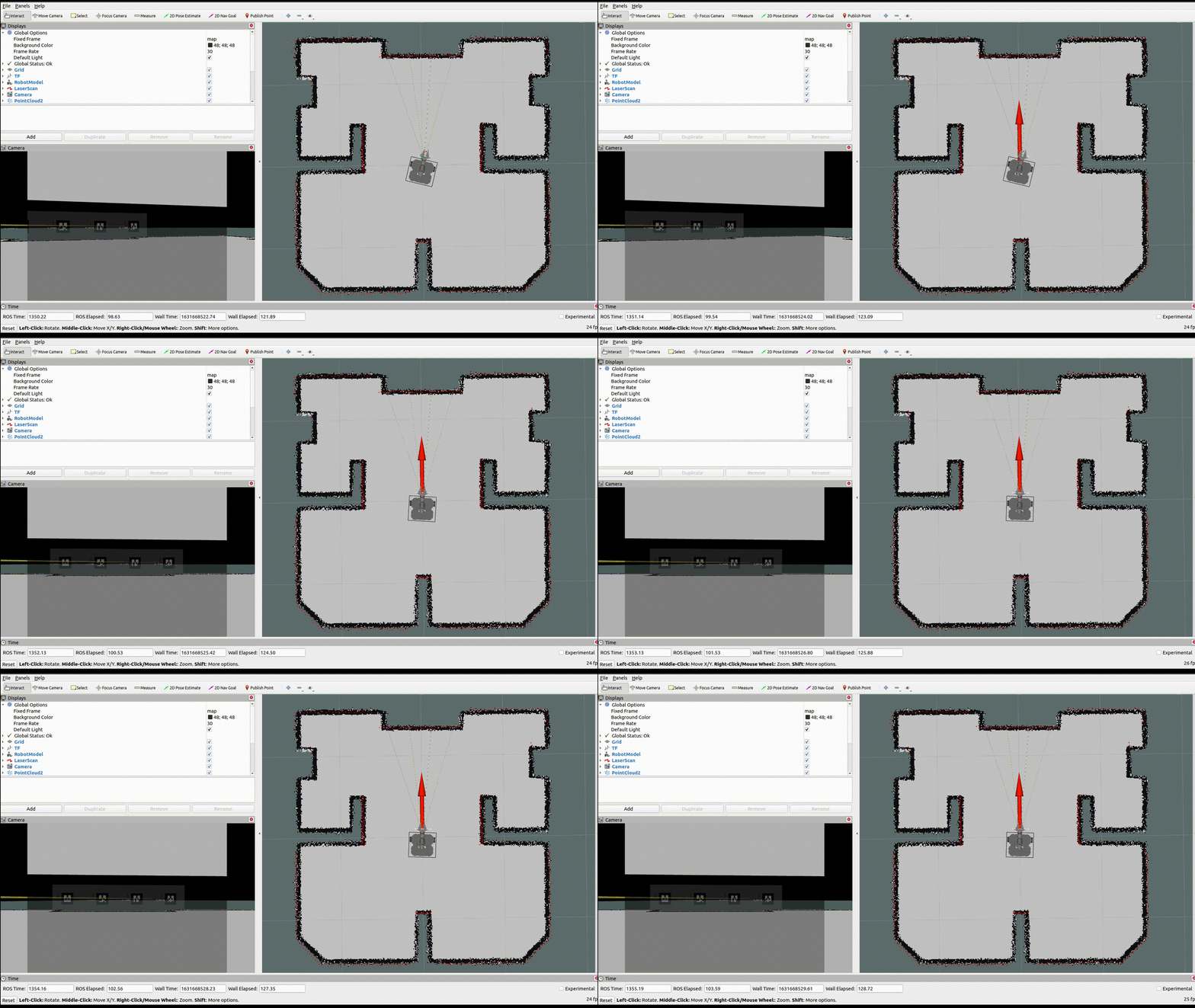
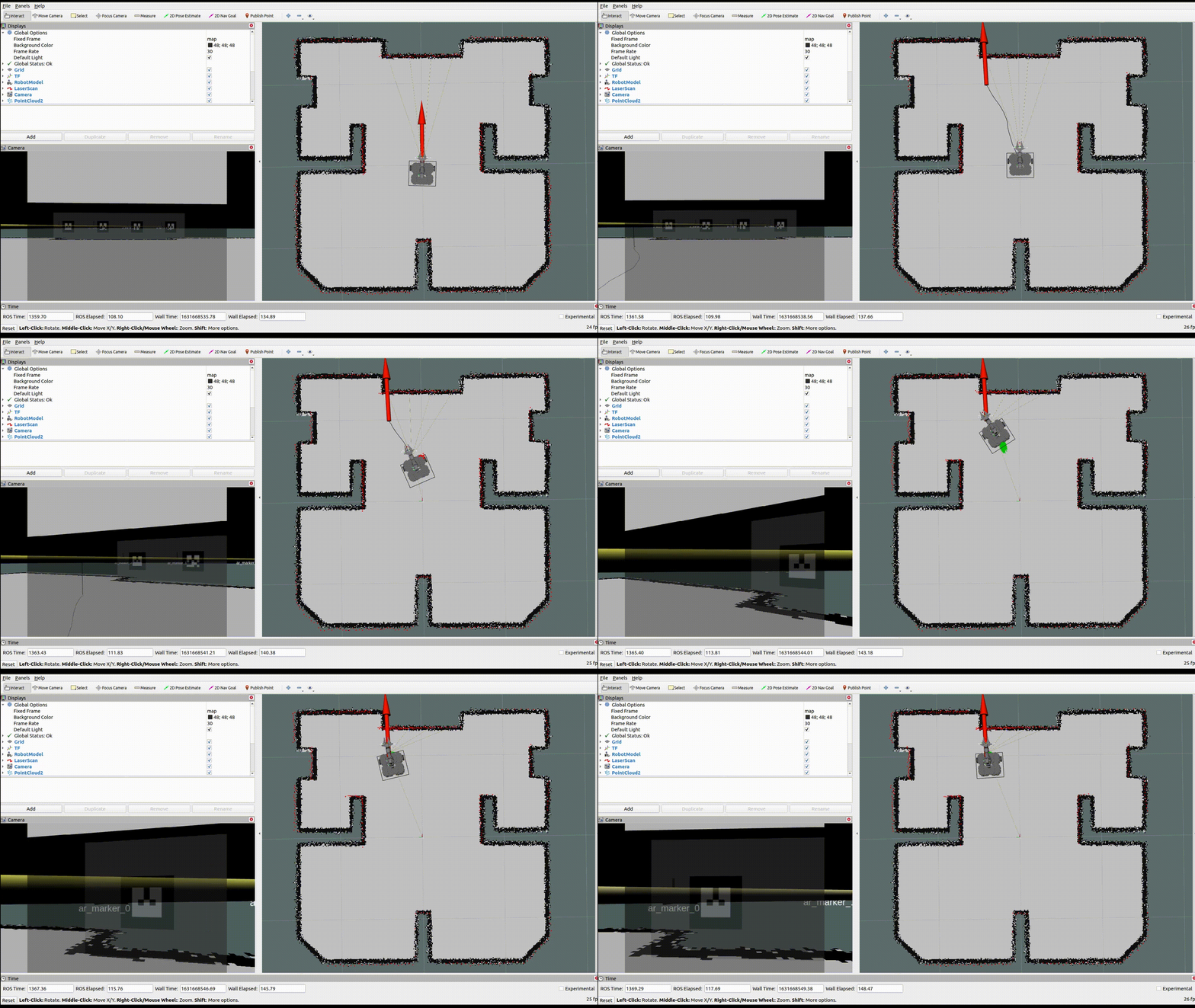
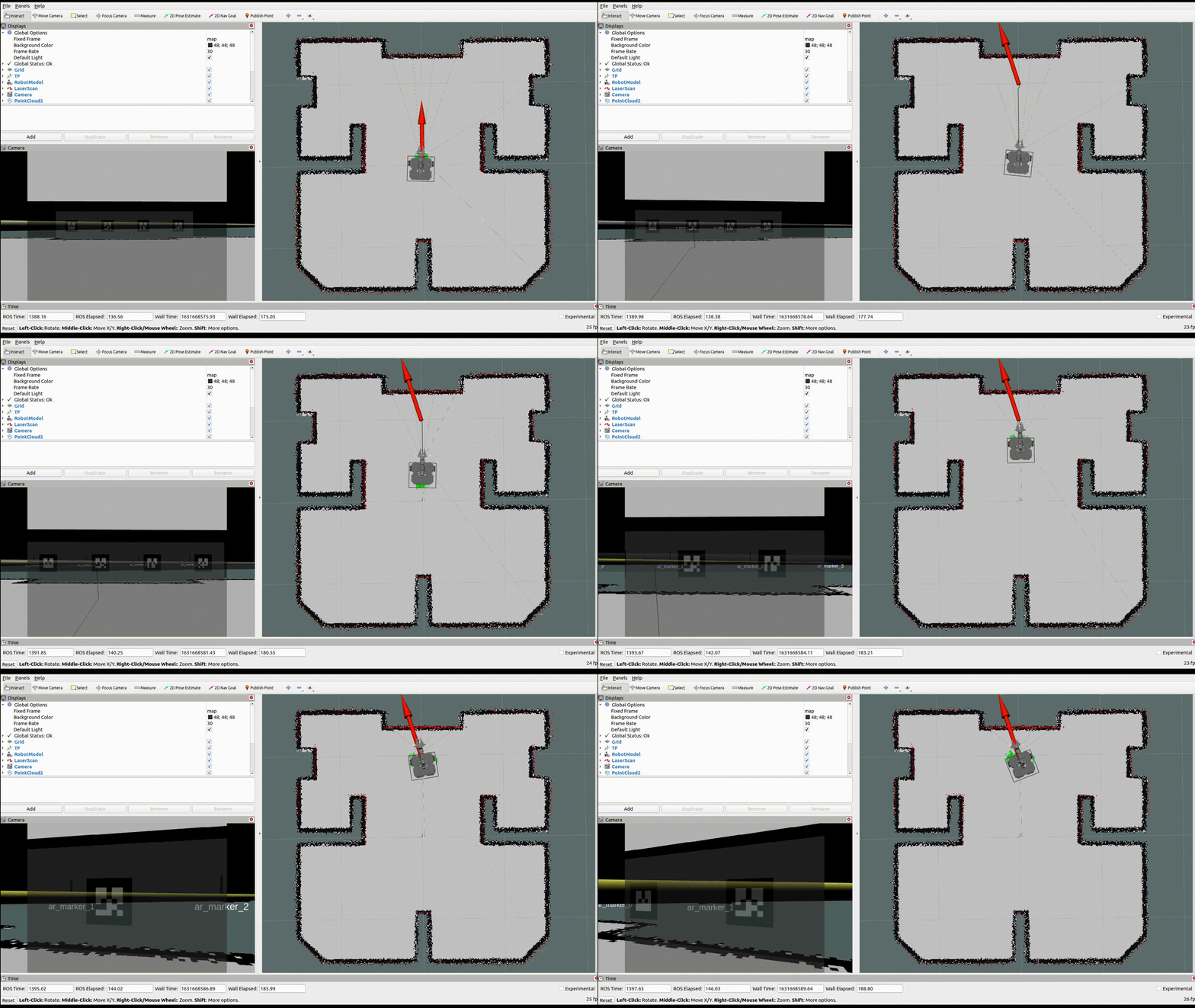
[**Remote PC**] 發布下列 topics 來測試 navigation 導航跟 manipulation 機器手臂功能
- Navigation
```
$ rostopic pub -1 /tb3_hsc/command std_msgs/String nav_start
```
```
$ rostopic pub -1 /tb3_hsc/command std_msgs/String nav_ar_marker_0
```
```
$ rostopic pub -1 /tb3_hsc/command std_msgs/String nav_ar_marker_1
```
```
$ rostopic pub -1 /tb3_hsc/command std_msgs/String nav_ar_marker_2
```
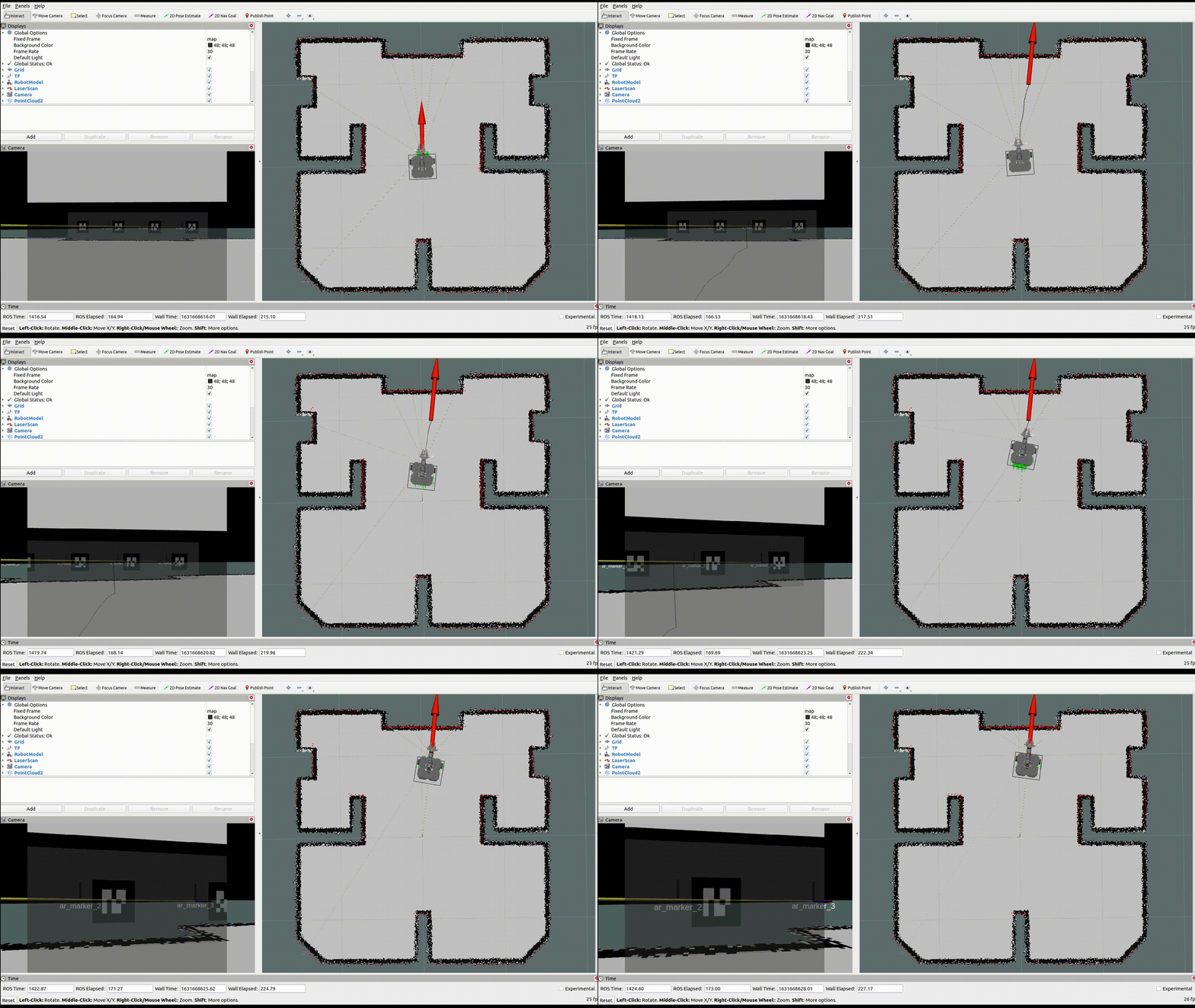
```
$ rostopic pub -1 /tb3_hsc/command std_msgs/String nav_ar_marker_3
```
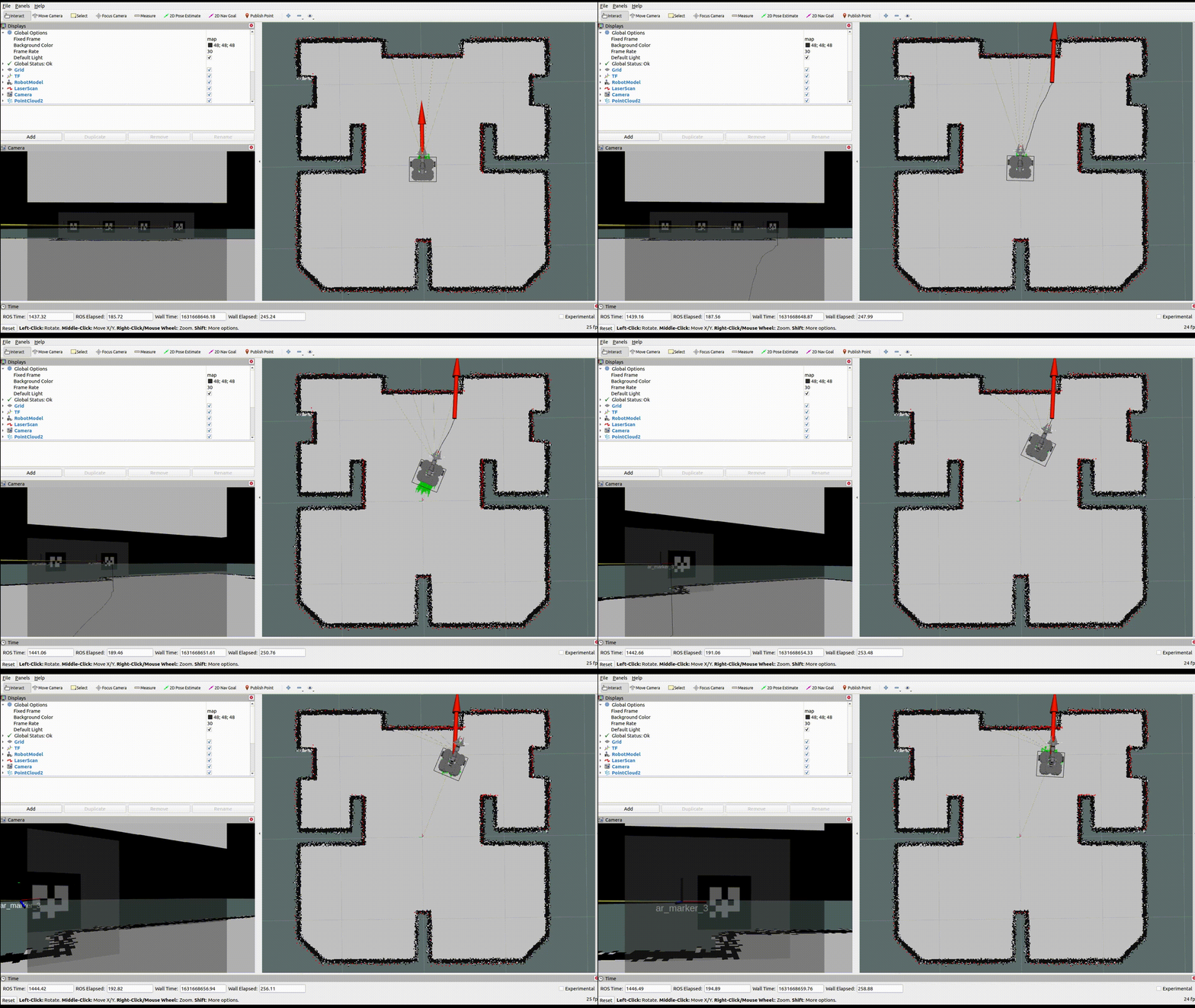
- Manipulation
```
$ rostopic pub -1 /tb3_hsc/command std_msgs/String arm_home
```
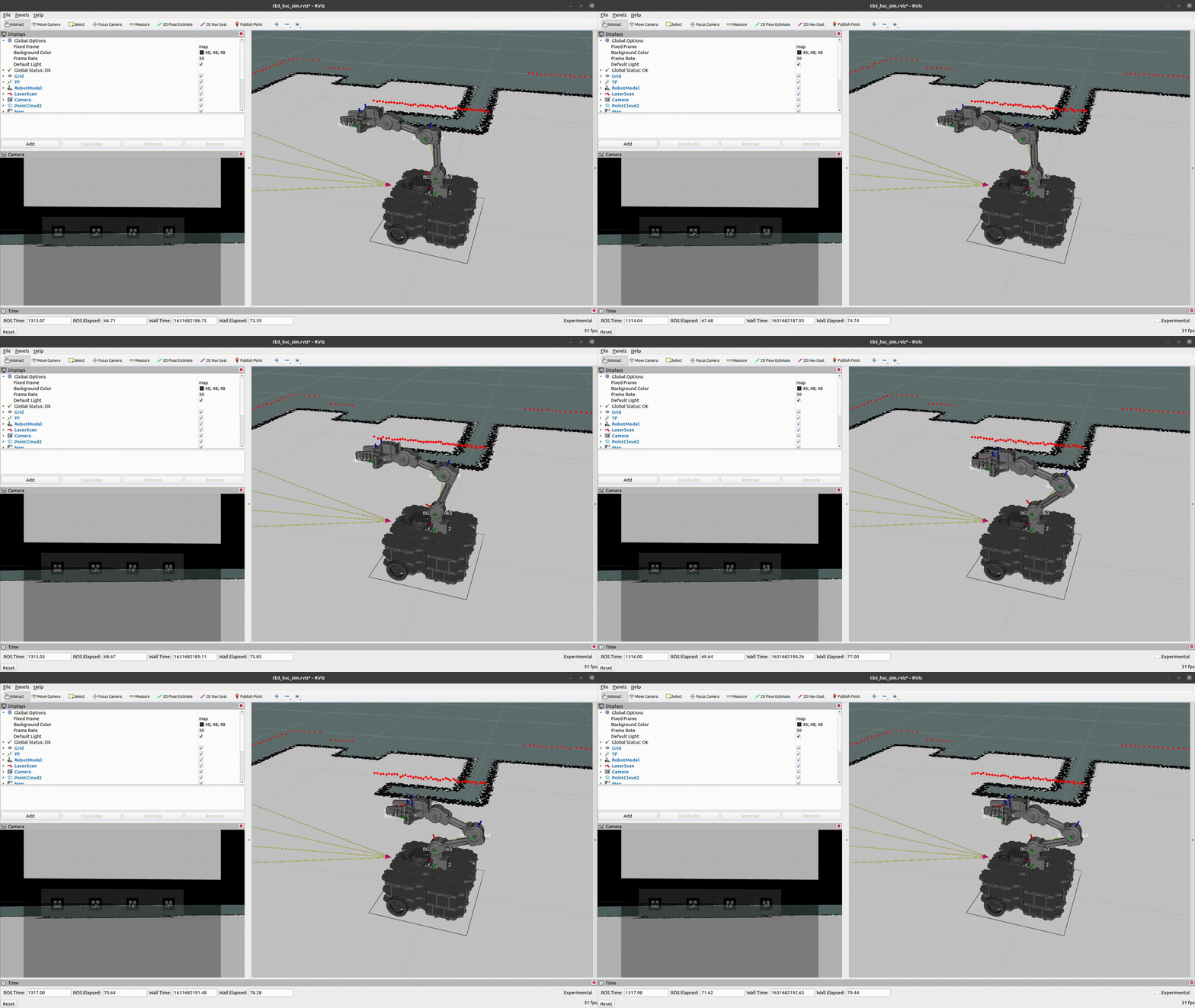
```
$ rostopic pub -1 /tb3_hsc/command std_msgs/String arm_joint
```
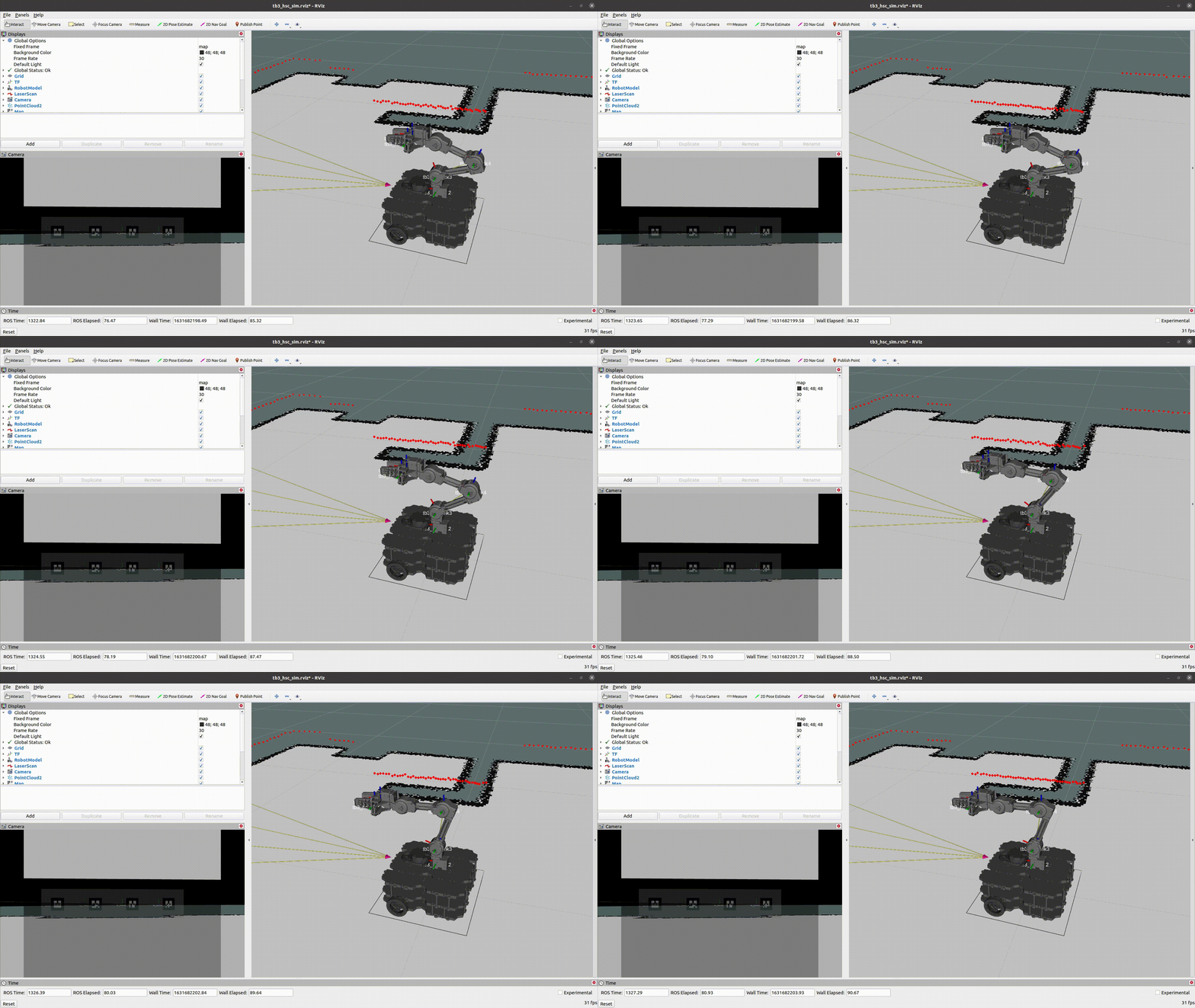
```
$ rostopic pub -1 /tb3_hsc/command std_msgs/String arm_task
```
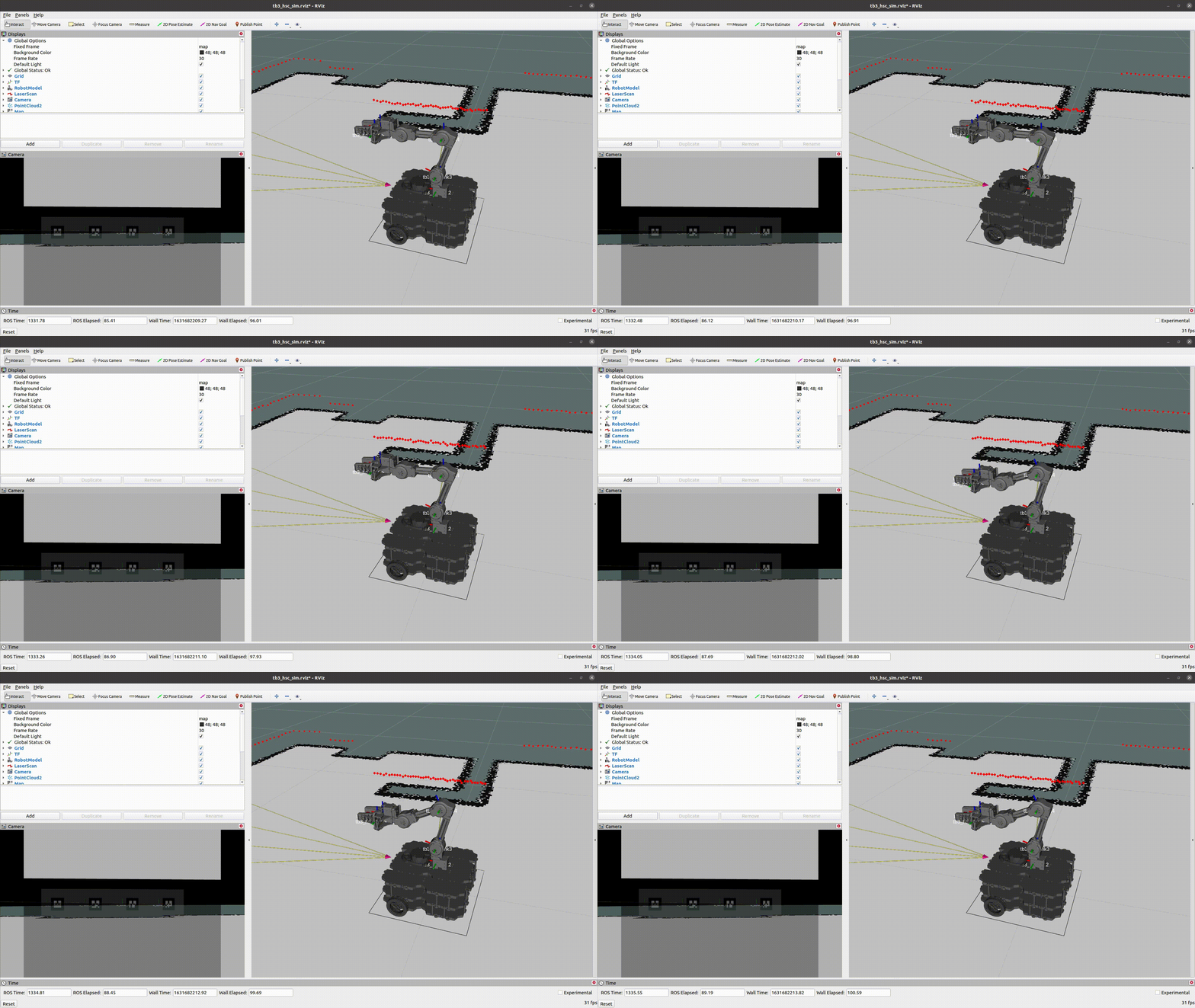
```
$ rostopic pub -1 /tb3_hsc/command std_msgs/String open_gripper
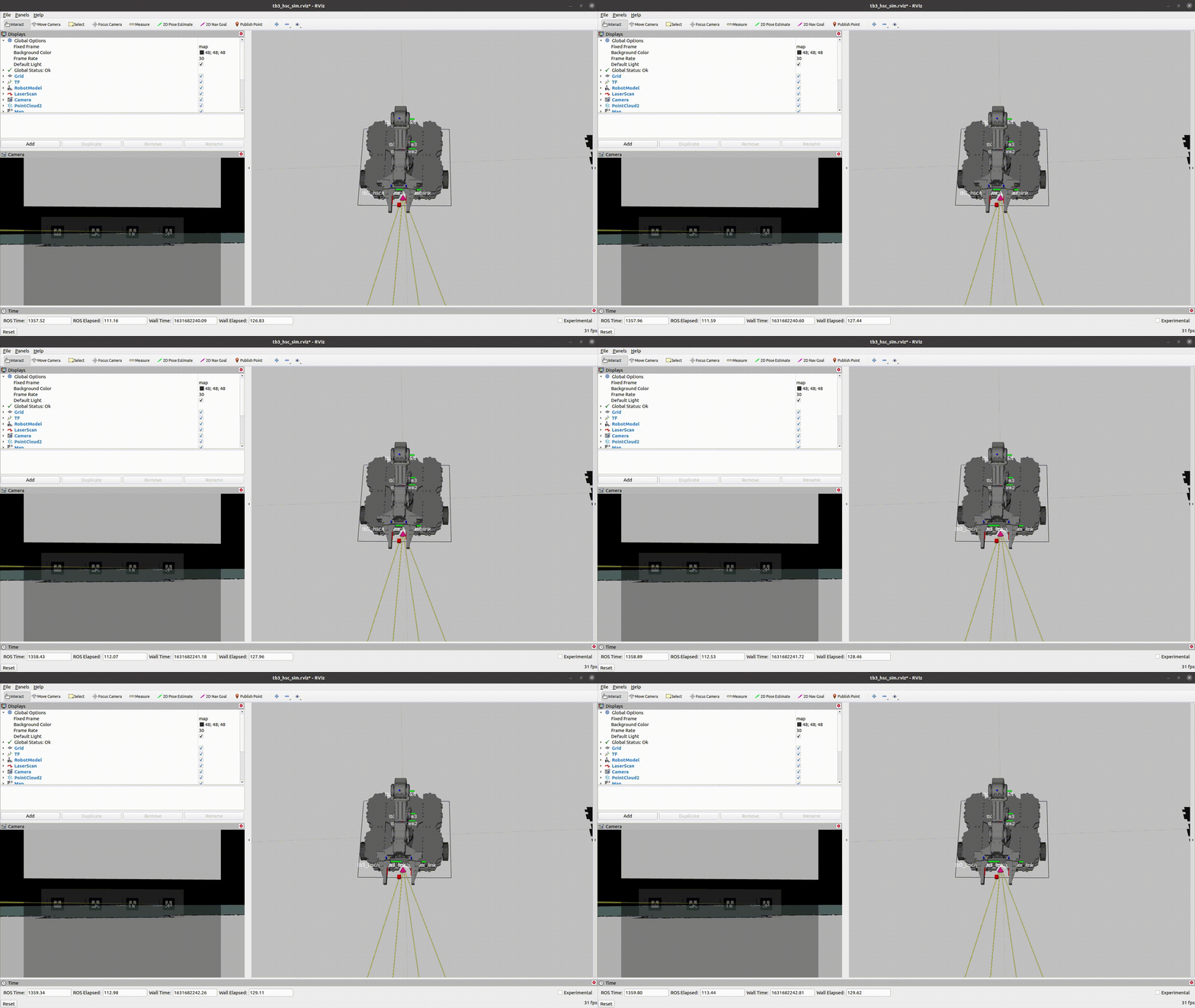
```
```
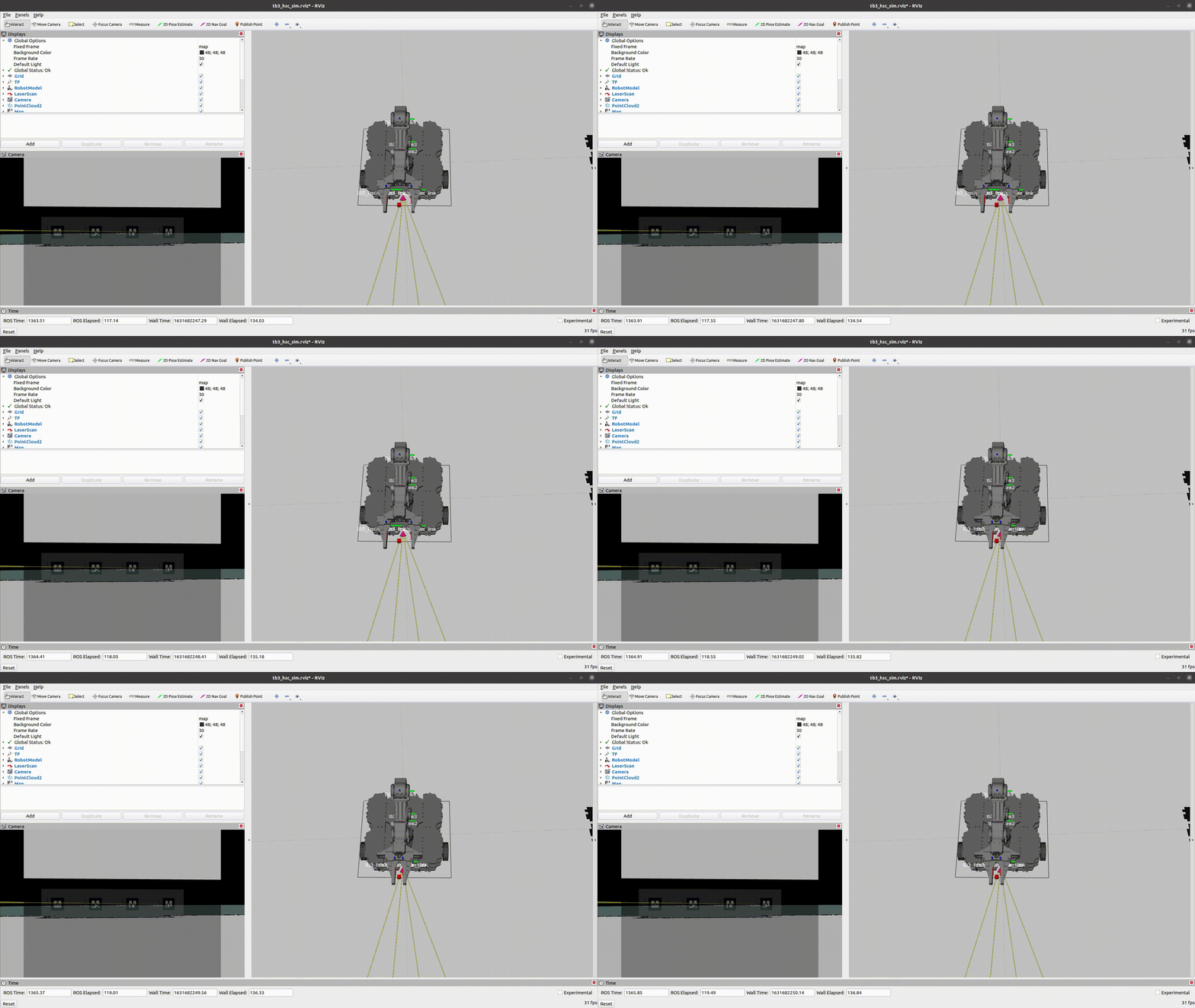
$ rostopic pub -1 /tb3_hsc/command std_msgs/String close_gripper
```
#### 7.10.4.4. Configuration 設置
[**Remote PC**] 依據所給的環境,可修改設置檔內的資料
- scenario.yaml: 此檔案包含 scenario 情境資料
- 檔案路徑: /turtlebot3_home_service_challenge_manager/script/scenario.yaml
- 腳本 script
```
SCENARIO_NAME: # start - scenario - finish
task: TASK_NAME
args: [0, 1, 2]
timeout: 10 #sec, 0 : no time out
next_scenario: find_object
scenario_on_failure: standby
retry_times: 0 #times, 0 : no retry
```
- room.yaml: 此檔案包含 Home Service 挑戰賽場地資訊
- 檔案路徑: /turtlebot3_home_service_challenge_manager/config/room.yaml
- 腳本 script
```
room_1:
name: toilet
object:
marker: ar_marker_0
position: [0.25, 0, 0.15]
target:
marker: ar_marker_4
position: [0.25, 0, 0.15]
x: [1.5, 0.6]
y: [1.5, 0.2]
```
- config.yaml: 此設定檔案包含 manager package 的資料
- 檔案路徑: /turtlebot3_home_service_challenge_manager/config/config.yaml
#### 7.10.4.5. Home Service 挑戰賽任務細節
居家服務挑戰賽的目標,是按照給定的規則,將四個不同的物體,從客廳移動到特定的地方,然後返回起點。
使用 demo package,在挑戰賽中移動物體的流程如下:
1. 導航到客廳的一個目標
- 找到目標,然後使用 Navigation package 抵達目標

2. 接近目標
- 為了精確接近目標,TurtleBot3 輪子直接通過 AR marker 計算目標位置來控制。(使用的 topic: /tb3_hsc/cmd_vel)。為了產生可靠的效能,Closed-loop 和控制系統可以使用指定的次數。

3. 使用 OpenManipulator-X 爪夾抓取目標處物件
- 使用 moveit package 來抓取物件(Joint space control, Task space control 及 Gripper control)

moveit 流程圖
4. 離開到下個房間放置物件(使用的 topic: /tb3_hsc/cmd_vel)
- 當從目標處往回走時,輪子由 mamager 程式使用 /tb3_hsc/cmd_vel topic 直接控制
5. 導航到要安置物件的目標處
- 找下一個目標,使用 Navigation package 抵達目標處

6. 接近目標
7. 使用爪手放置物件
8. 使用 Navigation package 回到起始點

### 7.10.5. 模擬
在 Gazebo 模擬器模擬 TB3附OpenManipulator-X
1. [**Remote PC**] 執行 Gazebo
```
$ roslaunch turtlebot3_home_service_challenge_simulation competition.launch
```

2. [**Remote PC**] 在 Gazebo 跑 simulation demo
```
$ roslaunch turtlebot3_home_service_challenge_tools turtlebot3_home_service_challenge_demo_simulation.launch
```

3. [**Remote PC**] 執行 Home Service Manager
```
$ roslaunch turtlebot3_home_service_challenge_manager manager.launch
```
4. 使用 Home Service Manager 指令(參考 7.10.4.2.)
# **8. [ROS1] Automonous Driving 自駕車挑戰賽**
---

AutoRace 是一個自動駕駛機器人平台的競賽。
## 8.1. 開始準備
:::warning
**備註**:
- AutoRace package 主要是在 Ubuntu 20.04 及 ROS1 Noetic Ninjemys 版本上開發。
- AutoRace package 主要在 Gazebo 模擬器上模擬
- 要順利的模擬給定的範例,請看完 6. Simulation
:::
:::info
Tips: 如果有實體 TB3,你可以從 Autonomous Driving package 實作到 Lane Detection。細節可以參考每節後的'**補充資料**'內敘述。
:::
:::info
**備註**: 手冊中的內容可能隨時更新,恕不另行通知。
:::
### 8.1.1. 先決條件?
**Remote PC 筆電/桌電**
- 安裝 ROS1 Noetic
- 本節內容主要是基於 Gazebo 模擬,故只需要電腦,但可以移植到實體 TB3 上實作
:::success
補充資料:
### 8.1.2. 要參加實體比賽需要的準備?
**1. TurtleBot3 Burger 漢堡款**
- 使用 AutoRace 套件包在 ROS 上進行自動駕駛的基礎款。
- AutoRace 套件包的開源碼是基於 TurtleBot3 Burger 開發的
**2. Remote PC 筆電/桌電**
- 跟 TB3 的 SBC 單板電腦溝通
- 安裝 ROS 1 的筆電,桌電,或其他裝置
**3. Raspberry Pi 攝像機及固定架**
- 你可以更換不同 camera 只要有支援 ROS
- 用來校準 camera 的原始碼,是基於 [Fisheye Lens 魚眼鏡頭](https://www.waveshare.com/rpi-camera-g.htm)模組來開發
**4. AutoRace 比賽軌道及相關所需物件**
- 從 [ROBOTIS_GIT / autorace](https://github.com/ROBOTIS-GIT/autorace_track) 下載 3D CAD 檔案用於製作 AutoRace 軌道,交通標誌,交通信號燈和其他物件。
- 從 [ROBOTIS-GIT/autorace_referee](https://github.com/ROBOTIS-GIT/autorace_referee) 下載裁判程式原始碼
:::
### 8.1.3. 安裝 Autorace Package 套件包
1. [**Remote PC**] 安裝 AutoRace 2020 meta packages
```
$ cd ~/catkin_ws/src/
$ git clone -b noetic-devel https://github.com/ROBOTIS-GIT/turtlebot3_autorace_2020.git
$ cd ~/catkin_ws && catkin_make
```
2. [**Remote PC**] 安裝額外的相關套件
```
$ sudo apt install ros-noetic-image-transport ros-noetic-cv-bridge ros-noetic-vision-opencv python3-opencv libopencv-dev ros-noetic-image-proc
```
:::success
補充資料:
**在實體 TB3 安裝 Autorace Package**
以下步驟說明如何安裝 package 及校準 camera
1. 在 Remote PC 及 SBC 安裝 AutoRace 套件包
```
$ cd ~/catkin_ws/src/
$ git clone -b feature-raspicam https://github.com/ROBOTIS-GIT/turtlebot3_autorace_2020.git
$ cd ~/catkin_ws && catkin_make
```
2. 在 SBC 安裝額外的相關套件
- 新增 swap 檔以防止 build OpenCV 時記憶體不足
```
$ sudo fallocate -l 4G /swapfile
$ sudo chmod 600 /swapfile
$ sudo mkswap /swapfile
$ sudo swapon /swapfile
```
- 安裝相關套件
```
$ sudo apt-get update
$ sudo apt-get install build-essential cmake gcc g++ git unzip pkg-config
$ sudo apt-get install libjpeg-dev libpng-dev libtiff-dev libavcodec-dev libavformat-dev libswscale-dev libgtk2.0-dev libcanberra-gtk* libxvidcore-dev libx264-dev python3-dev python3-numpy python3-pip libtbb2 libtbb-dev libdc1394-22-dev libv4l-dev v4l-utils libopenblas-dev libatlas-base-dev libblas-dev liblapack-dev gfortran libhdf5-dev libprotobuf-dev libgoogle-glog-dev libgflags-dev protobuf-compiler
```
- build with opencv 及 opencv_contrib
```
$ cd ~
$ wget -O opencv.zip https://github.com/opencv/opencv/archive/4.5.0.zip
$ wget -O opencv_contrib.zip https://github.com/opencv/opencv_contrib/archive/4.5.0.zip
$ unzip opencv.zip
$ unzip opencv_contrib.zip
$ mv opencv-4.5.0 opencv
$ mv opencv_contrib-4.5.0 opencv_contrib
```
- 產生 cmake 檔
```
$ cd opencv
$ mkdir build
$ cd build
$ cmake -D CMAKE_BUILD_TYPE=RELEASE \
-D CMAKE_INSTALL_PREFIX=/usr/local \
-D OPENCV_EXTRA_MODULES_PATH=~/opencv_contrib/modules \
-D ENABLE_NEON=ON \
-D BUILD_TIFF=ON \
-D WITH_FFMPEG=ON \
-D WITH_GSTREAMER=ON \
-D WITH_TBB=ON \
-D BUILD_TBB=ON \
-D BUILD_TESTS=OFF \
-D WITH_EIGEN=OFF \
-D WITH_V4L=ON \
-D WITH_LIBV4L=ON \
-D WITH_VTK=OFF \
-D OPENCV_ENABLE_NONFREE=ON \
-D INSTALL_C_EXAMPLES=OFF \
-D INSTALL_PYTHON_EXAMPLES=OFF \
-D BUILD_NEW_PYTHON_SUPPORT=ON \
-D BUILD_opencv_python3=TRUE \
-D OPENCV_GENERATE_PKGCONFIG=ON \
-D BUILD_EXAMPLES=OFF ..
```
- 會花 1-2 hrs 來 build
```
$ cd ~/opencv/build
$ make -j4
$ sudo make install
$ sudo ldconfig
$ make clean
$ sudo apt-get update
```
- SBC 樹莓派關機,取出 microSD 卡,編輯在 system-boot section 的 config.txt,在 enable_uart=1 行之前加入 start_x=1
```
$ sudo apt install ffmpeg
$ ffmpeg -f video4linux2 -s 640x480 -i /dev/video0 -ss 0:0:2 -frames 1 capture_test.jpg
```
- 再安裝額外相依套件
```
$ sudo apt install ros-noetic-cv-camera
```
3. [**Remote PC**] 安裝額外相依套件
```
$ sudo apt install ros-noetic-image-transport ros-noetic-image-transport-plugins ros-noetic-cv-bridge ros-noetic-vision-opencv python3-opencv libopencv-dev ros-noetic-image-proc ros-noetic-cv-camera ros-noetic-camera-calibration
```
:::
## 8.2. 攝影機校準 Calibration
校準 camera 是自動駕駛很重要的步驟,以下介紹如何簡單地逐步校準 camera。
### 8.2.1. 攝影機影像校準
在 Gazebo 模擬不需要校準攝影機
:::success
補充資料:
**在實體 TurtleBot3 上校準攝影機影像**
1. 在 Remote PC 啟動 roscore
```
$ roscore
```
2. 在 SBC 啟用 camera
```
$ roslaunch turtlebot3_autorace_camera raspberry_pi_camera_publish.launch
```
3. 在 Remote PC 上執行 rqt_image_view
```
$ rqt_image_view
```

rqt 的影像視角
:::
### 8.2.2. 攝影機內部參數校準
在 Gazebo 模擬不需要校準內部攝影機參數
:::success
補充資料:
**如何在實體 TB3 做攝影機內部參數校準**
在 A4 尺寸的紙張上印出用於 Camera 內部參數校準的棋盤。
- 棋盤檔位於 turtlebot3_autorace_camera/data/checkerboard_for_calibration.pdf。
- 修改 turtlebot3_autorace_camera/launch/turtlebot3_autorace_intrinsic_camera_calibration.launch 內的參數值。
- camera 校準的詳細資訊,可參考 ROS Wiki 的 [Camera Calibration 手冊](http://wiki.ros.org/camera_calibration) \
 \
棋盤檔
1. 在 Remote PC 啟動 roscore
```
$ roscore
```
2. 在 SBC 啟用 camera
```
$ roslaunch turtlebot3_autorace_camera raspberry_pi_camera_publish.launch
```
3. 在 Remote PC 執行 camera 內部校準啟動檔
```
$ roslaunch turtlebot3_autorace_camera intrinsic_camera_calibration.launch mode:=calibration
```
4. 使用棋盤紙來校準 camera,點擊 CALIBRATE

5. 點擊 SAVE 來儲存校準後的資料

6. 在 /tmp 資料夾下會新增一個 calibrationdata.tar.gz 資料夾

7. 從 calibrationdata.tar.gz 內抽取出 ost.yaml 檔

ost.yaml

在 ost.yaml 檔的內部參數校準數據
8. 從 ost.yaml 內複製數據,貼上 camerav2_320x240_30fps.yaml 檔

camerav2_320x240_30fps.yaml

在 camerav2_320x240_30fps.yaml 內的內部參數校準數據
:::
### 8.2.3. camera 外部參數校準
1. 在 Remote PC 開新的 terminal 啟動 Gazebo
```
$ roslaunch turtlebot3_gazebo turtlebot3_autorace_2020.launch
```
2. 開新的 terminal 啟動內部攝影機校準節點
```
$ roslaunch turtlebot3_autorace_camera intrinsic_camera_calibration.launch
```
3. 開新的 terminal 啟動外部攝影機校準節點
```
$ roslaunch turtlebot3_autorace_camera extrinsic_camera_calibration.launch mode:=calibration
```
4. 在 Remote PC 執行 rqt
```
$ rqt
```
5. 點擊 plugins > visualization > Image view,新增二個攝影機視角圖的視窗
6. 在兩個視窗分別選擇 /camera/image_extrinsic_calib/compressed topic 及 /camera/image_projected_compensated topic
- 兩個視窗其中一個將顯示紅色梯形影像,另一個將顯示地面投影視圖(鳥瞰視圖)。

左圖 ..compressed topic,右圖 ..compensated topic
7. 在 Remote PC 上執行 rqt_reconfigure
```
$ rosrun rqt_reconfigure rqt_reconfigure
```
8. 調整在 /camera/image_projection 和 /camera/image_compensation_projection 的參數
- 更改 /camera/image_projection 的參數,會影響 /camera/image_extrinsic_calib/compressed topic
- 內部攝影機校準將會轉換被紅色梯形所包圍的影像

rqt_reconfigure
9. 之後覆寫調整的數值到 yaml 檔,位於 turtlebot3_autorace_camera/calibration/extrinsic_calibration/ 目錄下。這會儲存現有教準參數,以備之後載入。

turtlebot3_autorace_camera/calibration/extrinsic_calibration/compensation.yaml 檔

turtlebot3_autorace_camera/calibration/extrinsic_calibration/projection.yaml 檔
:::success
補充資料:
**如何在實體 TB3 做攝影機外部參數校準**
1. 在 Remote PC 啟動 roscore
```
$ roscore
```
2. 在 SBC 啟用 camera
```
$ roslaunch turtlebot3_autorace_camera raspberry_pi_camera_publish.launch
```
3. 在 Remote PC 輸入指令
```
$ roslaunch turtlebot3_autorace_camera intrinsic_camera_calibration.launch mode:=action
```
4. 在 Remote PC 執行 camera 外部校準啟動檔
```
$ roslaunch turtlebot3_autorace_camera extrinsic_camera_calibration.launch mode:=calibration
```
5. 在 Remote PC 執行 rqt
```
$ rqt
```
6. 點擊 plugins > visualization > Image view,可以新增多個攝影機視角圖的視窗
7. 在兩個視窗分別選擇 /camera/image_extrinsic_calib/compressed topic 及 /camera/image_projected_compensated topic
- 兩個視窗其中一個將顯示紅色矩形影像,另一個將顯示地面投影視圖(鳥瞰視圖)。

左圖 ..compressed topic,右圖 ..compensated topic
8. 在 Remote PC 上執行 rqt_reconfigure
```
$ rosrun rqt_reconfigure rqt_reconfigure
```
9. 調整在 /camera/image_projection 和 /camera/image_compensation_projection 的參數
- 更改 /camera/image_projection 的參數,會影響 /camera/image_extrinsic_calib/compressed topic
- 內部攝影機校準將會轉換被紅色矩形所包圍的影像,並顯示從車道上方所看到的影像

rqt_reconfigure

參數修改後的結果
:::
### 8.2.4. 檢查校準的結果
在完成所有校準後,請在 Remote PC 逐步的執行以下指令,來檢查校準結果。
[**Remote PC**]
1. 關閉全部 terminal
2. 開新的 terminal 執行 Autorace Gazebo simulation。roscore會在 roslaunch 指令啟動時自動執行
```
$ roslaunch turtlebot3_gazebo turtlebot3_autorace_2020.launch
```
3. 開新的 terminal 啟動內部攝影機校準節點
```
$ roslaunch turtlebot3_autorace_camera intrinsic_camera_calibration.launch
```
4. 開新的 terminal 啟動外部攝影機校準節點
```
$ roslaunch turtlebot3_autorace_camera extrinsic_camera_calibration.launch
```
5. 開新的 terminal 執行 rqt_image_viewer
```
$ rqt_image_view
```
6. 如校準設定成功,則選擇 /camera/image_projected_compensated topic 時,鳥瞰視野會出現如下圖。

:::success
補充資料:
**如何在實體 TB3 檢查校準結果**
當完成了全部 camera 校準過程(camera 影像校準、內部參數校準、外部參數校準)後,**請確認校準結果都已經套用在 camera。**
以下過程敘述影像辨識的設定。
1. 在 Remote PC 啟動 roscore
```
$ roscore
```
2. 在 SBC 啟用 camera
```
$ roslaunch turtlebot3_autorace_camera raspberry_pi_camera_publish.launch
```
3. 在 Remote PC 執行 camera 內部校準啟動檔
```
$ roslaunch turtlebot3_autorace_camera intrinsic_camera_calibration.launch mode:=action
```
4. 在 Remote PC 開新 terminal,下指令
```
$ roslaunch turtlebot3_autorace_camera extrinsic_camera_calibration.launch mode:=action
```
5. 在 Remote PC 執行 rqt
```
$ rqt
```

rqt_reconfigure
現在,以下的說明將主要用來調整物體辨識的 feature detector / color filter (特徵檢測器/濾色器)。之後的每一次調整都是相互獨立的。不過如果要對每個參數一個一個做調整,請確認先做好當下這個參數的調整後,然後再繼續下一個參數調整。
:::
## 8.3. Lane Detection 賽道偵測
Lane detection package 在 Remote PC 執行,它接收從 (1)TB3攝影機,或是 (2)Gazebo 模擬,傳來的影像,做賽道偵測後,讓 TB3 沿賽道行駛。以下指令說明如何透過 rqt 做賽道偵測及校準。
1. 將 TB3 放到賽道上,在黃色及白色的車道線之間.
:::info
備註: Lane detection filter 是黃色在左,白色在右。故要確認黃色車道線在 TB3 左側,白色車道線在右側。
:::
2. 開新的 terminal 執行 Autorace Gazebo simulation。roscore會在 roslaunch 指令啟動時自動執行
```
$ roslaunch turtlebot3_gazebo turtlebot3_autorace_2020.launch
```
3. 開新的 terminal 啟動內部攝影機校準節點
```
$ roslaunch turtlebot3_autorace_camera intrinsic_camera_calibration.launch
```
4. 開新的 terminal 啟動外部攝影機校準節點
```
$ roslaunch turtlebot3_autorace_camera extrinsic_camera_calibration.launch
```
5. 開新的 terminal 啟動 lane detection calibration 節點
```
$ roslaunch turtlebot3_autorace_detect detect_lane.launch mode:=calibration
```
6. 開新的 terminal 執行 rqt
```
$ rqt
```
7. 選擇 Plugins > Cisualization > Image view,啟動 rqt image viewer,可同時啟用多個 rqt plugin
8. 在每個 image viewer 分別顯示三個 topics
- /detect/image_lane/compressed

- /detect/image_yellow_lane_marker/compressed: 左邊車道黃色的影像過濾圖

- /detect/image_white_lane_marker/compressed: 右邊車道白色的影像過濾圖

9. 開新的 terminal 執行 rqt_reconfigure
```
$ rosrun rqt_reconfigure rqt_reconfigure
```
10. 點擊 detect Lane,然後調整參數來做車道線的顏色過濾

:::info
**TIPS**:由於你的實際環境(包括房間內的光線亮度等)的影響,車道線顏色過濾的校準過程有時會非常困難。因此,你應該有耐心地執行此過程。要快速完成所有操作,請將位於 turtlebot3_auatorace_detect/param/lane/ 內 lane.yaml 的值輸入到 reconfiguration 參數上,然後開始校準。
- 首先校準 hue(色調) low – high 值。(1) Hue(色調)值表示顏色,每種顏色(如黃色,白色)都有自己的色調值區域(請參閱 hsv map)。
- 然後校準 saturation(飽和度) low – high值。(2) 每種顏色也有其自己的飽和範圍。
- 最後,校準 lightness(亮度)的 low – high 值。(3)然而在原始碼中,因具有自動調整功能,因此校準 lightness(亮度)的 low 值是沒有意義的。只需將 lightness(亮度)的 high 值設置為 255 即可。清晰的過濾後的車道線影像,會給你提供清晰的車道效果。
:::
11. 開啟在 turtlebot3_autorace_detect/param/lane/ 下的 lane.yaml 檔。你需要將修改後的值覆寫到此檔內。這會使 camera 在下次啟動時,就會使用你所修改的參數。

修改後的 lane.yaml 檔
12. Ctrl + C 關閉所有 terminal 包含 rqt_reconfigure 及 detect_lane terminal
13. 開新的 terminal 啟動 lane detect node 不用加 calibration 選項
```
$ roslaunch turtlebot3_autorace_detect detect_lane.launch
```
14. 開新的 terminal 啟動節電來開始 lane following
```
$ roslaunch turtlebot3_autorace_driving turtlebot3_autorace_control_lane.launch
```
:::success
補充資料:
**在實體 TB3 上執行賽道偵測 Lane Detection**
賽道偵測套件可讓 TB3 不受外部干擾,在兩條車道線內行走。
以下的步驟描述,如何使用 lane detection 賽道偵測功能及透過 rqt 來校準 camera.
1. 將 TB3 放到賽道上,在黃色及白色的車道線之間.
- 請確認黃色車道線在 TB3 左側,白色車道線在右側。
2. 在 Remote PC 啟動 roscore
```
$ roscore
```
3. 在 SBC 啟用 camera
```
$ roslaunch turtlebot3_autorace_camera raspberry_pi_camera_publish.launch
```
4. 在 Remote PC 執行 camera 內部校準啟動檔
```
$ roslaunch turtlebot3_autorace_camera intrinsic_camera_calibration.launch mode:=action
```
5. 在 Remote PC 執行 camera 外部校準啟動檔
```
$ roslaunch turtlebot3_autorace_camera extrinsic_camera_calibration.launch mode:=action
```
6. 在 Remote PC 執行 lane detection launch 檔
```
$ roslaunch turtlebot3_autorace_detect detect_lane.launch mode:=calibration
```
7. 在 Remote PC 執行 rqt
```
$ rqt
```
8. 點擊 plugins > visualization > Image view,可以新增多個攝影機視角圖的視窗
9. 在新增的三個視窗分別選擇 topics: /detect/image_yellow_lane_marker/compressed, /detect/image_lane/compressed, /detect/image_white_lane_marker/compressed
- 左側(黃線)及右側(白線)視窗,會顯示過濾後的影像。中間則是TB3的鳥瞰圖

左圖 黃色,中圖 白色,右圖 鳥瞰影像
10. 在 Remote PC 執行 rqt_reconfigure
```
$ rosrun rqt_reconfigure rqt_reconfigure
```
11. 點擊 Detect Lane,然後調整參數來做車道線的顏色過濾

Detect Lane 參數列表

在 rqt_reconfigure 經過參數調整後的過濾影像
- **TIPS**:由於你的實際環境(包括房間內的光線亮度等)的影響,車道線顏色過濾的校準過程有時會非常困難。因此,你應該有耐心地執行此過程。要快速完成所有操作,請將位於 turtlebot3autorace[Autorace_Misson]_detect/param/lane/ 內 lane.yaml 的值輸入到 reconfiguration 參數上,然後開始校準。
- 首先校準 hue(色調) low – high 值。(1) Hue(色調)值表示顏色,每種顏色(如黃色,白色)都有自己的色調值區域(請參閱 hsv map)。
- 然後校準 saturation(飽和度) low – high值。(2) 每種顏色也有其自己的飽和範圍。
- 最後,校準 lightness(亮度)的 low – high 值。(3)然而在原始碼中,因具有自動調整功能,因此校準 lightness(亮度)的 low 值是沒有意義的。只需將 lightness(亮度)的 high 值設置為 255 即可。清晰的過濾後的車道線影像,會給你提供清晰的車道效果。
12. 開啟在 turtlebot3_autorace_detect/param/lane/ 下的 lane.yaml 檔。你需要將修改後的值覆寫到此檔內。這會使 camera 在下次啟動時,就會使用你所設置的參數。

修改後的 lane.yaml 檔
13. 結束 rqt_rconfigure 及 turtlebot3_autorace_detect_lane 程序
14. 在 Remote PC 開新 terminal 輸入
```
$ roslaunch turtlebot3_autorace_detect detect_lane.launch mode:=action
```
15. 檢查輸出的結果是否正確
- 在 Remote PC 開新 terminal 輸入
```
$ roslaunch turtlebot3_autorace_driving turtlebot3_autorace_control_lane.launch
```
- 在 Remote PC 開新 terminal 輸入
```
$ roslaunch turtlebot3_bringup turtlebot3_robot.launch
```
16. 輸入這些指令後,TB3 會啟動開始運行
:::
## 8.4. 交通號誌 Traffic Sign 偵測
TB3 的 node 使用 SIFT algorithm 演算法來偵測交通號誌,比較原始影像跟攝影機影像。當 TB3 在賽道上行駛時,會執行已編程好的程序。請遵照下列步驟來使用 Traffic sign detection。
:::info
**備註**: 如交通號誌中有更多邊線(edge),SIFT 演算法就可以提供更好的辨識結果。請參考以下連結:
- https://docs.opencv.org/master/da/df5/tutorial_py_sift_intro.html
:::
1. 開新的 terminal 執行 Autorace Gazebo simulation。roscore會在 roslaunch 指令啟動時自動執行
```
$ roslaunch turtlebot3_gazebo turtlebot3_autorace_2020.launch
```
2. 開新的 terminal 執行 teleoperation node,將 TB3 沿賽道行駛,到攝影機能夠清楚看到交通號誌的地方停止。
```
$ roslaunch turtlebot3_teleop turtlebot3_teleop_key.launch
```
3. 開新的 terminal 執行 rqt_image_view
```
$ rqt_image_view
```
4. 選擇 /camera/image_compensated 來顯示攝影機影像
5. 從 rqt_image_view 抓取每個交通號誌影像,切掉無用的影像部分。為了最好的效果,建議使用原始的交通號誌影像檔。
6. 儲存影像到 turtlebot3_autorace_detect package 的 /turtlebot3_autorace_2020/turtlebot3_autorace_detect/image/,記住檔名要跟原始碼用的檔名要一樣。
- 預設檔名: construction.png, intersection.png, left.png, right.png, parking.png, stop.png, tunnel.png
7. 開新的 terminal 執行 camera 內部校準啟動檔
```
$ roslaunch turtlebot3_autorace_camera intrinsic_camera_calibration.launch
```
8. 開新的 terminal 執行 camera 外部校準啟動檔
```
$ roslaunch turtlebot3_autorace_camera extrinsic_camera_calibration.launch
```
9. 開新的 terminal 執行 traffic sign detection node
- 在 mission 引數部分需要輸入對應的任務名稱,有 intersection, construction, parking, level_crossing, tunnel。
- 取代 SELECT_MISSION 關鍵字為上面的任務名稱之一
```
$ roslaunch turtlebot3_autorace_detect detect_sign.launch mission:=SELECT_MISSION
```
10. 開新的 terminal 執行 rqt image view plugin
```
$ rqt_image_view
```
11. 從下拉選單選擇 /detect/image_traffic_sign/compressed。螢幕會顯示交通號誌偵測結果。

當 mission:=intersection 時的偵測 T 字路號誌結果

當 mission:=intersection 時的偵測向左轉號誌結果

當 mission:=intersection 時的偵測向右轉號誌結果

當 mission:=construction 時偵測施工號誌的結果

當 mission:=parking 時偵測停車號誌的結果

當 m 時偵測到停止號誌 mission:=level_crossing 時偵測到停止號誌

當 mission:=tunnel 時偵測到隧道號誌的結果
## 8.5. TurtleBot3 AutoRace 自駕車競賽的任務詳解
AutoRace 是給自動駕駛機器人平台的一個比賽。
為了能給機器人應用程式的開發,提供不同情境,比賽會盡可能減少硬性的規定。整個比賽內容完全是開源的,基於 ROS 來運行,包含全部的軟體(裁判系統的原始碼)和全部的硬體(比賽地圖的 stp / dwg 檔案)。內容會持續的更新,請參與比賽,展現你的技術。
:::warning
**警示**: 如要參加比賽,請務必閱讀完本章節 Autonomous Driving。
:::
### 8.5.1. 第一關: Traffic Light 紅綠燈
AutoRace 第一關是 Traffic Light 紅綠燈。TB3 要判斷紅綠燈後開始比賽。
{%youtube d2cP8OTMbwI %}
#### 8.5.1.1. 紅綠燈偵測
:::info
NOTE: 為了能在 Gazebo 內固定紅綠燈為特定色,你可以修改 core_node_mission 檔內的 controlMission 方法,位於 turtlebot3_autorace_2020/turtlebot3_autorace_core/nodes/ 目錄內。
:::
1. 開新的 terminal 執行 Autorace Gazebo simulation。roscore會在 roslaunch 指令啟動時自動執行
```
$ roslaunch turtlebot3_gazebo turtlebot3_autorace_2020.launch
```
2. 開新的 terminal 啟動內部攝影機校準節點
```
$ roslaunch turtlebot3_autorace_camera intrinsic_camera_calibration.launch
```
3. 開新的 terminal 啟動外部攝影機校準節點
```
$ roslaunch turtlebot3_autorace_camera extrinsic_camera_calibration.launch
```
4. 開新的 terminal 啟動 traffic light detection node 要加上 calibration 選項
```
$ roslaunch turtlebot3_autorace_detect detect_traffic_light.launch mode:=calibration
```
5. 開新的 terminal 執行 rqt,開四個 rqt_image_view plugin
```
$ rqt
```
6. 選擇四個 topics: /detect/image_red_light, /detect/image_yellow_light, /detect/image_green_light, /detect/image_traffic_light

偵測綠燈。右邊圖是 ..green_light topic

偵測黃燈。右邊圖是 ..yellow_light topic

偵測紅燈。右邊圖是 ..red_light topic
7. 開新的 terminal 執行 rqt_reconfigure
```
$ rosrun rqt_reconfigure rqt_reconfigure
```
8. 在左邊區域選擇 detect_traffic_light,調整參數以便紅綠燈顏色可以清楚分辨。

Traffic light reconfigure
9. 開啟 traffic_light.yaml 檔,位於 turtlebot3_autorace_detect/param/traffic_light/

10. 將調整後的數值覆寫,然後存檔
#### 8.5.1.2. 測試紅綠燈偵測
1. Ctrl + C 關閉所有 terminal
2. 開新的 terminal 執行 Autorace Gazebo simulation。roscore會在 roslaunch 指令啟動時自動執行
```
$ roslaunch turtlebot3_gazebo turtlebot3_autorace_2020.launch
```
3. 開新的 terminal 啟動內部攝影機校準節點
```
$ roslaunch turtlebot3_autorace_camera intrinsic_camera_calibration.launch
```
4. 開新的 terminal 啟動外部攝影機校準節點
```
$ roslaunch turtlebot3_autorace_camera extrinsic_camera_calibration.launch
```
5. 開新的 terminal 啟動 traffic light detection node
```
$ roslaunch turtlebot3_autorace_detect detect_traffic_light.launch
```
6. 開新的 terminal 執行 rqt_image_view
```
$ rqt_image_view
```
7. 檢查 topics: /detect/image_red_light, /detect/image_yellow_light, /detect/image_green_light
#### 8.5.1.3. 如何進行紅綠燈任務
:::info
在跑此任務之前,請務必遵照上節 紅綠燈偵測 的敘述來校準顏色
:::
1. Ctrl + C 關閉所有 terminal
2. 開新的 terminal 執行 Autorace Gazebo simulation。roscore會在 roslaunch 指令啟動時自動執行
```
$ roslaunch turtlebot3_gazebo turtlebot3_autorace_2020.launch
```
3. 開新的 terminal 啟動內部攝影機校準節點
```
$ roslaunch turtlebot3_autorace_camera intrinsic_camera_calibration.launch
```
4. 開新的 terminal 啟動 autorace core node 要加上任務名稱
```
$ roslaunch turtlebot3_autorace_core turtlebot3_autorace_core.launch mission:=traffic_light
```
5. 開新的 terminal 輸入以下指令。這會讓準備跑 traffic light 任務設為 decided_mode 為 3。
```
$ rostopic pub -1 /core/decided_mode std_msgs/UInt8 "data: 3"
```
6. 啟動 Gazebo mission node
```
$ roslaunch turtlebot3_autorace_core turtlebot3_autorace_mission.launch
```
### 8.5.2. 第二關: Intersection 十字路口
AutoRace 第 2 關是 Intersection 十字路口。TB3 在十字路口,要辨識特定的轉彎號誌(左轉或右轉),依照指示轉向。
{%youtube F101PDx20nc %}
#### 8.5.2.1. 如何進行 Intersection 任務
1. Ctrl + C 關閉所有 terminal
2. 開新的 terminal 執行 Autorace Gazebo simulation。roscore會在 roslaunch 指令啟動時自動執行
```
$ roslaunch turtlebot3_gazebo turtlebot3_autorace_2020.launch
```
3. 開新的 terminal 啟動內部攝影機校準節點
```
$ roslaunch turtlebot3_autorace_camera intrinsic_camera_calibration.launch
```
4. 開新的 terminal 啟動 keyboard teleoperation node
控制 TB3 沿賽道行駛到十字路口號誌前停下來
```
$ roslaunch turtlebot3_teleop turtlebot3_teleop_key.launch
```
5. 開新的 terminal 啟動 autorace core node 要加上任務名稱
```
$ roslaunch turtlebot3_autorace_core turtlebot3_autorace_core.launch mission:=intersection
```
6. 開新的 terminal 啟動 Gazebo mission node
```
$ roslaunch turtlebot3_autorace_core turtlebot3_autorace_mission.launch
```
7. 開新的 terminal 輸入以下指令。這會讓準備跑 intersection 任務設為 decided_mode 為 2。
```
$ rostopic pub -1 /core/decided_mode std_msgs/UInt8 "data: 2"
```
### 8.5.3. 第三關: Construction 避障
AutoRace 第三關 Construction 避障。TB3 行駛時須避開賽道上的施工障礙物。
{%youtube pO9SXz7ad7M %}
#### 8.5.3.1. 如何進行 Construction 避障任務
1. Ctrl + C 關閉所有 terminal
2. 開新的 terminal 執行 Autorace Gazebo simulation。roscore會在 roslaunch 指令啟動時自動執行
```
$ roslaunch turtlebot3_gazebo turtlebot3_autorace_2020.launch
```
3. 開新的 terminal 啟動內部攝影機校準節點
```
$ roslaunch turtlebot3_autorace_camera intrinsic_camera_calibration.launch
```
4. 開新的 terminal 啟動 keyboard teleoperation node
控制 TB3 沿賽道行駛到 Construction 施工號誌前停下來
```
$ roslaunch turtlebot3_teleop turtlebot3_teleop_key.launch
```
5. 開新的 terminal 啟動 autorace core node 要加上任務名稱
```
$ roslaunch turtlebot3_autorace_core turtlebot3_autorace_core.launch mission:=construction
```
6. 開新的 terminal 輸入以下指令。這會讓準備跑 construction 任務設為 decided_mode 為 2。
```
$ rostopic pub -1 /core/decided_mode std_msgs/UInt8 "data: 2"
```
### 8.5.4. 第四關: Parking 停車
AutoRace 第四關 Parking 停車。TB3 偵測停車號誌,自行開入空置的停車格內。
{%youtube ZRuX_nYwohI %}
#### 8.5.4.1. 如何執行 Parking 停車任務
1. Ctrl + C 關閉所有 terminal
2. 開新的 terminal 執行 Autorace Gazebo simulation。roscore會在 roslaunch 指令啟動時自動執行
```
$ roslaunch turtlebot3_gazebo turtlebot3_autorace_2020.launch
```
3. 開新的 terminal 啟動內部攝影機校準節點
```
$ roslaunch turtlebot3_autorace_camera intrinsic_camera_calibration.launch
```
4. 開新的 terminal 啟動 keyboard teleoperation node
控制 TB3 沿賽道行駛到停車號誌前停下來
```
$ roslaunch turtlebot3_teleop turtlebot3_teleop_key.launch
```
5. 開新的 terminal 啟動 autorace core node 要加上任務名稱
```
$ roslaunch turtlebot3_autorace_core turtlebot3_autorace_core.launch mission:=parking
```
6. 開新的 terminal 啟動 Gazebo mission node
```
$ roslaunch turtlebot3_autorace_core turtlebot3_autorace_mission.launch
```
7. 開新的 terminal 輸入以下指令。這會讓準備跑 parking 任務設為 decided_mode 為 2。
```
$ rostopic pub -1 /core/decided_mode std_msgs/UInt8 "data: 2"
```
### 8.5.5. 第五關: Level Crossing 柵欄
AutoRace 第五關 Level Crossing 柵欄。TB3 前方有柵欄,當柵欄放下時停止等待,柵欄升起時通過。
{%youtube PMOYhx9kiDk %}
#### 8.5.5.1. 柵欄升降偵測 Level Crossing Detection
1. Ctrl + C 關閉所有 terminal
2. 開新的 terminal 執行 Autorace Gazebo simulation。roscore會在 roslaunch 指令啟動時自動執行
```
$ roslaunch turtlebot3_gazebo turtlebot3_autorace_2020.launch
```
3. 開新的 terminal 啟動內部攝影機校準節點
```
$ roslaunch turtlebot3_autorace_camera intrinsic_camera_calibration.launch
```
4. 開新的 terminal 啟動外部攝影機校準節點
```
$ roslaunch turtlebot3_autorace_camera extrinsic_camera_calibration.launch
```
5. 開新的 terminal 啟動 level crossing detection node 要加上 calibration 選項
```
$ roslaunch turtlebot3_autorace_detect detect_level_crossing.launch mode:=calibration
```
6. 開新的 terminal 執行 rqt,開二個 rqt_image_view plugin
```
$ rqt
```
7. 選擇二個 topics: /detect/image_level_color_filtered/compressed, /detect/image_level/compressed

8. 開新的 terminal 執行 rqt_reconfigure
```
$ rosrun rqt_reconfigure rqt_reconfigure
```
9. 在左邊區域選擇 detect_level_crossing,調整參數以便增強柵欄偵測。

10. 開啟 level.yaml 檔,位於 turtlebot3_autorace_detect/param/level/

11. 將調整後的數值覆寫,然後存檔
#### 8.5.5.2. 測試 柵欄升降偵測
1. Ctrl + C 關閉所有 terminal
2. 開新的 terminal 執行 Autorace Gazebo simulation。roscore會在 roslaunch 指令啟動時自動執行
```
$ roslaunch turtlebot3_gazebo turtlebot3_autorace_2020.launch
```
3. 開新的 terminal 啟動內部攝影機校準節點
```
$ roslaunch turtlebot3_autorace_camera intrinsic_camera_calibration.launch
```
4. 開新的 terminal 啟動外部攝影機校準節點
```
$ roslaunch turtlebot3_autorace_camera extrinsic_camera_calibration.launch
```
5. 開新的 terminal 啟動 level crossing detection
```
$ roslaunch turtlebot3_autorace_detect detect_level_crossing.launch
```
6. 開新的 terminal 執行 rqt_image_view
```
$ rqt_image_view
```
7. 檢查 topics: /detect/image_level/compressed
#### 8.5.5.3. 如何進行 Level Crossing 柵欄任務
1. Ctrl + C 關閉所有 terminal
2. 開新的 terminal 執行 Autorace Gazebo simulation。roscore會在 roslaunch 指令啟動時自動執行
```
$ roslaunch turtlebot3_gazebo turtlebot3_autorace_2020.launch
```
3. 開新的 terminal 啟動內部攝影機校準節點
```
$ roslaunch turtlebot3_autorace_camera intrinsic_camera_calibration.launch
```
4. 開新的 terminal 啟動 keyboard teleoperation node
控制 TB3 沿賽道行駛到停止號誌前停下來
```
$ roslaunch turtlebot3_teleop turtlebot3_teleop_key.launch
```
5. 開新的 terminal 啟動 autorace core node 要加上任務名稱
```
$ roslaunch turtlebot3_autorace_core turtlebot3_autorace_core.launch mission:=level_crossing
```
6. 開新的 terminal 啟動 Gazebo mission node
```
$ roslaunch turtlebot3_autorace_core turtlebot3_autorace_mission.launch
```
7. 開新的 terminal 輸入以下指令。這會讓準備跑 level crossing 任務設為 decided_mode 為 2。
```
$ rostopic pub -1 /core/decided_mode std_msgs/UInt8 "data: 2"
```
### 8.5.6. 第六關: Tunnel 隧道
AutoRace 第六關 Tunnel 隧道。TB3 需避開障礙物,成功的從隧道出口駛出。
{%youtube Qx3vbgoSNO8 %}
#### 8.5.6.1. 如何進行 Tunnel 隧道任務
:::info
NOTE: 更改 turtlebot3/turtlebot3_navigation/param/ 文件中的導航參數。如果 SLAM 產生新地圖,請將新地圖放置到 turtlebot3_autorace package 存放的 /turtlebot3_autorace/turtlebot3_autorace_driving/maps/ 目錄下
:::
1. Ctrl + C 關閉所有 terminal
2. 開新的 terminal 執行 Autorace Gazebo simulation。roscore會在 roslaunch 指令啟動時自動執行
```
$ roslaunch turtlebot3_gazebo turtlebot3_autorace_2020.launch
```
3. 開新的 terminal 啟動內部攝影機校準節點
```
$ roslaunch turtlebot3_autorace_camera intrinsic_camera_calibration.launch
```
4. 開新的 terminal 啟動 keyboard teleoperation node
控制 TB3 沿賽道行駛到 Tunnel 隧道號誌前停下來
```
$ roslaunch turtlebot3_teleop turtlebot3_teleop_key.launch
```
5. 開新的 terminal 啟動 autorace core node 要加上任務名稱
```
$ roslaunch turtlebot3_autorace_core turtlebot3_autorace_core.launch mission:=tunnel
```
6. 開新的 terminal 輸入以下指令。這會讓準備跑 construction 任務設為 decided_mode 為 2。
```
$ rostopic pub -1 /core/decided_mode std_msgs/UInt8 "data: 2"
```
## 8.6. TurtleBot3 AutoRace 的過去
AutoRace 過去已經舉辦多屆,內容暫不翻譯。
# **9. [ROS 1] Machine Learning 機器學習**
---
:::info
Note: 此功能目前支援 ROS Kinetic and Melodic, and ROS2 Dashing.
:::
# **10. [ROS 1] 實作 TB3 的不同應用程式**
---
:::info
Note: 此特色只支援 ROS1 Kinetic 及 ROS2 Dashing 版
:::
# **11. Locomotion 各種 TB3 改裝運動造型**
---
跟 Melodic 相同,請參考 Melodic 內容
**TurtleBot3 Friends 改裝造型列表(locomotion list)**
- TurtleBot3 Friends: Car 小車
- TurtleBot3 Friends: OpenManipulator 機器手臂
- TurtleBot3 Friends: Segway 賽格威二輪平衡
- TurtleBot3 Friends: Conveyor 輸送車
- TurtleBot3 Friends: Monster 怪獸四驅車
- TurtleBot3 Friends: Tank 履帶車
- TurtleBot3 Friends: Omni 全向輪
- TurtleBot3 Friends: Mecanum 萬象輪
- TurtleBot3 Friends: Bike 三輪車
- TurtleBot3 Friends: Road Train 聯結車
- TurtleBot3 Friends: Real TurtleBot 真烏龜
- TurtleBot3 Friends: Carrier 多層運送車
# **12. Learn 學習資源課程**
---
跟 Melodic 相同,請參考 Melodic 內容
## 12.1. Amazon AWS RoboMaker 使用 TurtleBot3
跟 Melodic 相同,請參考 Melodic 內容
### 12.1.1. AWS RoboMaker 範例使用 TB3
### 12.1.2. AWS RoboMaker 強化學習範例使用 TB3
## 12.2 透過 Matlab 蒐集數據
跟 Melodic 相同,請參考 Melodic 內容
## 12.3. The Construct 線上教學網站
跟 Melodic 相同,請參考 Melodic 內容
### 12.3.1. MASTER WITH ROS: TurtleBot3 (英文課程)
### 12.3.2. 使用 RDS v2.0 在 5 分鐘內進行 TurtleBot3 模擬
### 12.3.3. TurtleBot3 光達掃描的訂閱
## 12.4. TurtleBot3 Blockly
跟 Melodic 相同,請參考 Melodic 內容
## 12.5. TurtleBot3 Simulation on ROS Indigo
跟 Melodic 相同,請參考 Melodic 內容
## 12.6. Youtube 影片課程
跟 Melodic 相同,請參考 Melodic 內容
## 12.7. 實體書
## 12.7. TurtleBot3 影片分享
跟 Melodic 相同,請參考 Melodic 內容
### 12.7.1. Open Source Team 的 TB3 影片
### 12.7.2. ROBOTIS Channel 的 TB3 影片
### 12.7.3. TB3 的一些有趣專案項目介紹
# **13. 更多產品資訊**
---
跟 Melodic 相同,請參考 Melodic 內容
## 13.1. 附錄 - TB3 主要零件補充說明
跟 Melodic 相同,請參考 Melodic 內容
### 13.1.1. Dynamixel 智能馬達
### 13.1.2. OpenCR 1.0 控制板
### 13.1.3. LDS-01 光達
### 13.1.4. LDS-02 光達
### 13.1.5. Intel RealSense R200 深度攝影機
### 13.1.6. Raspberry Pi camera v2 樹莓派攝影機
## 13.2. 相容之第三方設備
跟 Melodic 相同,請參考 Melodic 內容
### 13.2.1. Computer
### 13.2.2. 感測器
## 13.3. 添加新感測器到 TB3 OpenCR 板
跟 Melodic 相同,請參考 Melodic 內容
### 13.3.1. Bumper 碰觸感測器
### 13.3.2. IR 感測器
### 13.3.3. Ultrasonic 超音波
### 13.3.4. Illumination 照明
### 13.3.5. LED
## 13.4. 開源資源下載及授權
跟 Melodic 相同,請參考 Melodic 內容
### 13.4.1. TB3 開源軟體下載
### 13.4.2. 開源硬體下載
### 13.4.3. 軟體授權
### 13.4.4. 硬體授權
### 13.4.5. 文件授權
# **14. 常見問題 FAQ**
---
跟 Melodic 相同,請參考 Melodic 內容
**常見問題**:
1. 如何在 Raspberry Pi 樹莓派啟動 SSH Server
2. 如何在 TB3 及 Remote PC 間同步時間
3. 設定 TB3 上的 Dynamixel 智能馬達
4. 當電池連接在 TB3 時,可以充電嗎?
5. 如何下載 TB3 的 3D 列印 STL 檔案
6. Intel Joule 深度攝影機 USB-C Port 在 Win 10 不能辨識
7. Intel Joule 深度攝影機在開機/安裝時凍結
8. 如何更新軟體
9. 如何更新韌體
# **15. 聯絡採智科技**
---


採智科技是 [**TurtleBot3 台灣唯一官方授權代理商**](https://www.turtlebot.com/partners/),如有產品需求,使用,技術或維修上的問題,請聯絡我們。
**採智科技股份有限公司**
台北市11076信義區松德路12號10F
Tel: +886-2-2345-7799
Fax: +886-2-2345-0867
mail: info(at)idminer.com.tw
採智科技網站: http://www.idminer.com.tw/
** **下載 "ROS 機器人編程" 簡中版** (使用 TurtleBot3 為 ROS 1 實作平台)
- [**ROS 機器人編程- 簡中 PDF**](https://www.dropbox.com/s/5cqhl5f17e2p1b5/ROS_Robot_Programming_CN.pdf?dl=0)
- [**ROS Robot Programming- 英文 PDF**](https://www.dropbox.com/s/x1bj7u878p2hgtq/ROS_Robot_Programming_EN.pdf?dl=0)

| **簡中版章節列表** | | |
|:--------------------- |:----------------------- | --------------- |
| 1. 機器人軟件平台 | 6. ROS 工具 | 11. SLAM 和導航 |
| 2. 機器人操作系統 ROS | 7. ROS 編程基礎 | 12. 服務機器人 |
| 3. 搭建 ROS 開發環境 | 8. 機器人、傳感器和電機 | 13. 機械手臂 |
| 4. ROS 的重要概念 | 9. 嵌入式系統 | |
| 5. ROS 命令 | 10. 移動機器人 | |
###### tags: `TurtleBot3(ROS1)`
 Google Drive
Gist
Clipboard
Google Drive
Gist
Clipboard
 Sign in with Wallet






