Flora Chen
    • Create new note
    • Create a note from template
      • Sharing URL Link copied
      • /edit
      • View mode
        • Edit mode
        • View mode
        • Book mode
        • Slide mode
        Edit mode View mode Book mode Slide mode
      • Customize slides
      • Note Permission
      • Read
        • Only me
        • Signed-in users
        • Everyone
        Only me Signed-in users Everyone
      • Write
        • Only me
        • Signed-in users
        • Everyone
        Only me Signed-in users Everyone
      • Engagement control Commenting, Suggest edit, Emoji Reply
    • Invite by email
      Invitee

      This note has no invitees

    • Publish Note

      Share your work with the world Congratulations! 🎉 Your note is out in the world Publish Note No publishing access yet

      Your note will be visible on your profile and discoverable by anyone.
      Your note is now live.
      This note is visible on your profile and discoverable online.
      Everyone on the web can find and read all notes of this public team.

      Your account was recently created. Publishing will be available soon, allowing you to share notes on your public page and in search results.

      Your team account was recently created. Publishing will be available soon, allowing you to share notes on your public page and in search results.

      Explore these features while you wait
      Complete general settings
      Bookmark and like published notes
      Write a few more notes
      Complete general settings
      Write a few more notes
      See published notes
      Unpublish note
      Please check the box to agree to the Community Guidelines.
      View profile
    • Commenting
      Permission
      Disabled Forbidden Owners Signed-in users Everyone
    • Enable
    • Permission
      • Forbidden
      • Owners
      • Signed-in users
      • Everyone
    • Suggest edit
      Permission
      Disabled Forbidden Owners Signed-in users Everyone
    • Enable
    • Permission
      • Forbidden
      • Owners
      • Signed-in users
    • Emoji Reply
    • Enable
    • Versions and GitHub Sync
    • Note settings
    • Note Insights New
    • Engagement control
    • Make a copy
    • Transfer ownership
    • Delete this note
    • Save as template
    • Insert from template
    • Import from
      • Dropbox
      • Google Drive
      • Gist
      • Clipboard
    • Export to
      • Dropbox
      • Google Drive
      • Gist
    • Download
      • Markdown
      • HTML
      • Raw HTML
Menu Note settings Note Insights Versions and GitHub Sync Sharing URL Create Help
Create Create new note Create a note from template
Menu
Options
Engagement control Make a copy Transfer ownership Delete this note
Import from
Dropbox Google Drive Gist Clipboard
Export to
Dropbox Google Drive Gist
Download
Markdown HTML Raw HTML
Back
Sharing URL Link copied
/edit
View mode
  • Edit mode
  • View mode
  • Book mode
  • Slide mode
Edit mode View mode Book mode Slide mode
Customize slides
Note Permission
Read
Only me
  • Only me
  • Signed-in users
  • Everyone
Only me Signed-in users Everyone
Write
Only me
  • Only me
  • Signed-in users
  • Everyone
Only me Signed-in users Everyone
Engagement control Commenting, Suggest edit, Emoji Reply
  • Invite by email
    Invitee

    This note has no invitees

  • Publish Note

    Share your work with the world Congratulations! 🎉 Your note is out in the world Publish Note No publishing access yet

    Your note will be visible on your profile and discoverable by anyone.
    Your note is now live.
    This note is visible on your profile and discoverable online.
    Everyone on the web can find and read all notes of this public team.

    Your account was recently created. Publishing will be available soon, allowing you to share notes on your public page and in search results.

    Your team account was recently created. Publishing will be available soon, allowing you to share notes on your public page and in search results.

    Explore these features while you wait
    Complete general settings
    Bookmark and like published notes
    Write a few more notes
    Complete general settings
    Write a few more notes
    See published notes
    Unpublish note
    Please check the box to agree to the Community Guidelines.
    View profile
    Engagement control
    Commenting
    Permission
    Disabled Forbidden Owners Signed-in users Everyone
    Enable
    Permission
    • Forbidden
    • Owners
    • Signed-in users
    • Everyone
    Suggest edit
    Permission
    Disabled Forbidden Owners Signed-in users Everyone
    Enable
    Permission
    • Forbidden
    • Owners
    • Signed-in users
    Emoji Reply
    Enable
    Import from Dropbox Google Drive Gist Clipboard
       Owned this note    Owned this note      
    Published Linked with GitHub
    2
    • Any changes
      Be notified of any changes
    • Mention me
      Be notified of mention me
    • Unsubscribe
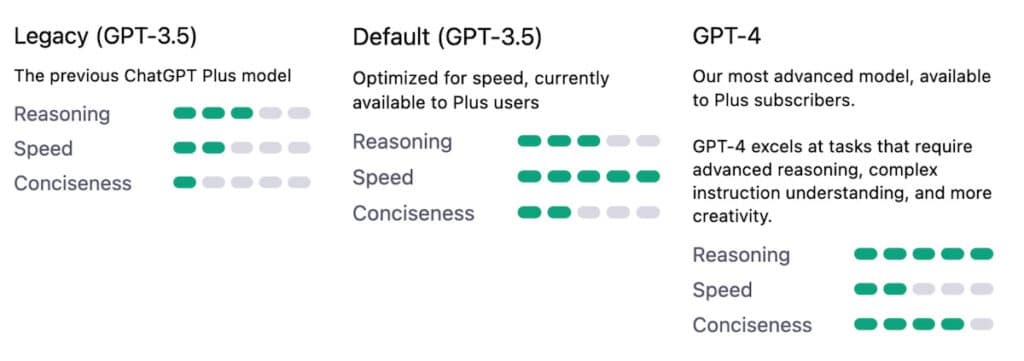
    # ChatGpt比較:費用、概念、模型與使用介紹 ## 如何註冊使用Chatgpt 1. 前往OpenAI chatgpt的網站:https://chat.openai.com/auth/login 2. 點擊sign up按鈕,進入註冊頁面 3. 填寫註冊信息,包括電子郵件地址和密碼或是可以使用Google第三方登入 4. 收完驗證信或是綁定後要輸入姓名生日及手機 ## 什麼是Chatgpt? ![](https://i.imgur.com/ehjD8Ua.png) 由預訓練(自督導學習)的gpt(基石模型)微調後繼續訓練增強學習 ![](https://i.imgur.com/Tg1BVT0.png) 投影片來源: [2023機器學習 -李宏毅](https://www.youtube.com/watch?v=yiY4nPOzJEg&list=PLJV_el3uVTsOePyfmkfivYZ7Rqr2nMk3W) (超推老師的教學,有空可以去聽聽) :::spoiler ChatGPT? - ChatGPT 是 OpenAI 針對對話生成式預訓練的 GPT(Generative Pre-trained Transformer)模型家族的其中一員,它是一種基於Transformer模型架構的深度學習模型,目前是基於GPT-3.5模型的大型語言模型。 - ChatGPT 通過在大型文本語料庫上進行無監督的訓練,學習了自然語言的潛在模式和規律,能夠根據輸入的文本生成自然流暢、上下文相關的語言回應,因此被廣泛應用於自然語言處理任務中,例如聊天機器人、問答系統、文本摘要、翻譯等。 >白話文:預訓練:大量餵文本資料 >運用上一句話去接下一句話(文字接龍) ::: >KEYWORDS:自然語言處理(Natural language processing)、Language modeling(LM)、Deep learning、Transformer architecture、無監督學習 :::spoiler Language modeling(LM) 建立一個模型來預測文本序列中的下一個詞語。 (怎樣算一句人話,如何建立一句人話) ::: :::spoiler Deep learning Deep learning 是一種機器學習技術,旨在模仿人類大腦的神經網絡,通過層次化的方式來進行高效的特徵提取和學習。Deep learning 中使用的神經網絡通常由多層神經元組成,稱為深度神經網絡(deep neural network,DNN),因此也被稱為深度學習。 相比於傳統的機器學習技術,Deep learning 的主要優勢在於它能夠自動學習高級抽象特徵,並在處理複雜問題時具有更好的表現能力。例如,在圖像識別問題中,傳統的機器學習算法通常需要人工設計特徵,而 Deep learning 能夠自動學習圖像的特徵,並且在圖像識別準確率上表現更好。 ::: :::spoiler 自然語言處理(Natural language processing) NLP 的核心技術包括語言分析、語言生成、知識表示和機器學習等。其中,語言分析包括詞法分析、句法分析、語義分析和語用分析等,而語言生成則包括文本生成、語音合成等。知識表示方面,NLP 通常采用符號邏輯和語義網絡等形式進行表示。而機器學習方面,NLP 通常使用深度學習模型,如循環神經網絡(RNN)、卷積神經網絡(CNN)和 Transformer 等。 ::: :::spoiler 無監督學習 是一種機器學習的方法,它是一種無需標籤數據的學習方式,從未經標記的數據中發現潛在的結構、模式和規律。在無監督學習中,算法需要自主地學習,通過探索數據中的相似性和差異性來進行分類、分群、降維等任務,從而發現數據中的潛在結構。 ::: :::spoiler Transformer architecture 主要特點是完全基於注意力機制(self-attention mechanism)來捕捉輸入序列中的關係和依賴關係。相比於傳統的循環神經網絡(RNN)或卷積神經網絡(CNN),Transformer 能夠更好地捕捉長距離依賴關係,並且能夠並行處理輸入序列中的信息,從而大大加快模型的訓練速度。 ::: ## Chatgpt4 vs Chatgpt 3.5 ### 1. 比較表格: | 項目 | ChatGpt-4 |ChatGpt-3.5| | ---- | ---- |---| | Year |2023 |2022| | Price | $20 usd |Free| | Trained | 100萬億(100-trillion ) |1750億| | 資料輸入 | text&images data |only text data| | 回答長度限制 | 25,000 |700| | 考試能力 | top 10% | lowest 10%| | English | proficiency 85% | proficiency 70%| | Token Limits |8,192 |2,049| | Prompt |requires lesser context to provide the same answers.| ![Key Differences Between GPT-3.5 and GPT-4 | CitiMuzik](https://cdn.appuals.com/wp-content/uploads/2023/03/GPT-3-vs-GPt-4.jpg) >圖片來源Key Differences Between GPT-3.5 and GPT-4 | CitiMuzik* >參考文章:https://appuals.com/gpt-3-5-vs-gpt-4/ ### 2. 模型對應詳細價格表(資料製作時間:2023/4) | Model | Context |Prompt price/1k tokens|Completion price/1K tokens | ---- | ---- |---|---| | text-davinci-003|4k |$0.02|$0.02| | gpt-3.5-turbo | 4k |$0.002|$0.002| | gpt-4 | 8k |$0.03|$0.06| | gpt-4-32k | 32k |$0.06|$0.12| 備註:token怎麼算? | |繁體中文| 英文| |---|---|---| |每個字耗費的平均token數|2.03|1.25| >官方的計算token的測試工具:https://platform.openai.com/tokenizer ## Chatgpt模型原理介紹 ### 語言模型(LM): 語言模型就是告訴我們一句話是不是人話。 註:LLM:Large Language Model(大型語言模型) #### 以學習目標分類的語言模型 - Autoregressive Language Models:當前我們可以以GPT為代表。 - Autoencoder Language Models:以Google(BERT)為代表。 #### 以技術原理區分的語言模型: ##### 1. Statistical Language Models:主要是使用傳統的統計技術, N-Gram, HMM以及部分語言學規則來學習序列的概率分佈。 給定一句話: “I love eating apples.” N表示我們在建模的時候要看幾個單詞,unigram(1-gram)表示一次就看一個單詞,2-gram (or bigram)表示一次看兩個,以此類推。 - unigram:最簡單最直接的一種建模思路,我們直接統計每個詞出現的頻率,然後作為概率來計算。 - Bigram/Trigram:N-gram語言模型學習的目標是給定一個條件(前序word(s)),給出後面接不同詞語的概率(鍊式法則),對於bigram來說,會這樣建 ``` p(I love eating apples) = p(I) * p(love| I) * p(eating| love) * p(apples| eating) ``` :::spoiler python示範 ```python n_gram_sents = [i.strip().split(' ') for i in data_text.strip().split('\n') if i] # from nltk.corpus import reuters from nltk import bigrams, trigrams from collections import Counter, defaultdict # Create a placeholder for model model = defaultdict(lambda: defaultdict(lambda: 0)) list(trigrams(n_gram_sents[0], pad_right=True, pad_left=True)) # 观察一下 # Count frequency of co-occurance # 统计共现的频率。trigrams将sentence变成了三元组。举例来说,The unanimous一起存在的时候,Declaration出现的次数 for sentence in n_gram_sents: for w1, w2, w3 in trigrams(sentence, pad_right=True, pad_left=True): model[(w1, w2)][w3] += 1 # Let's transform the counts to probabilities # 统计分母,举例来说,The unanimous一起存在过多少次,全部加起来就是;后面跟过的每一个词出现的次数,除以The unanimous一起存在的次数即可。 for w1_w2 in model: total_count = float(sum(model[w1_w2].values())) for w3 in model[w1_w2]: model[w1_w2][w3] /= total_count ``` >程式碼來源: https://zhuanlan.zhihu.com/p/608047052 例如:model['in','the']利用這個模型計算in the之後要接什麼詞,defaultdict會返回{'Course':0.25,'Name':0.125} ::: ##### 2. Neural Language Models:主要是使用NN來學習序列的概率分佈。 - Neural Probabilistic Language Mode(NPLM) 利用NN學習了概率語言模型,本身是在優化n-gram的學習問題,輸入是上下文單詞的one-hot編碼或者是對應的詞向量,輸出是下一個單詞的概率分布。NPLM使用的是靜態的詞向量表示。 - Word Embedding:Word2vec: (Mikolov et al. 2013) is a framework for learning word vectors。 - Embedding from Language Models(ELMO) ELMo 使用深度學習神經網絡來訓練語言模型,該模型可以學習單詞在上下文中的含義和語法。與傳統的詞向量不同,ELMo 的向量是動態生成的,這意味著每個單詞的向量表示會隨著上下文的變化而變化。 ### 關於聊天機器人Chatbot #### 1. 分類: - 技術分類: pipeline形式(rasa)vs.end2end形式(chatgpt) - 對話形式: 單輪(即問答,QA類型) vs. 多輪(可以基於之前的回答,進行當前的回答) - 任務類型 Task-oriented vs. Open domain >chatgpt可以定義為是一個多輪對話的end2end open domain對話系統。 #### 2. 學習路徑 模型的學習路徑是這樣的,首先訓練一個好的LM(GPT系列),然後通過Reinforcement Learning from Human Feedback (RLHF)進行訓練,接著構建對話學習chatgpt。 ![](https://cdn.appuals.com/wp-content/uploads/2023/03/Screenshot-2023-03-25-at-11.03.32-AM-2048x1215.png) 備註: :::spoiler 微調(Fine-tune) 是指在預訓練好的模型基礎上,進一步針對特定任務進行微調的過程。在機器學習領域中,這個過程通常稱為遷移學習。 在自然語言處理中,預訓練語言模型(如BERT、GPT等)通常使用大規模文本數據進行訓練,以學習單詞和語言結構的含義和規律。這些預訓練模型可以通過微調來適應特定的下遊任務,如文本分類、命名實體識別、語言翻譯等。 在微調過程中,我們會把預訓練模型的參數作為初始值,並通過在特定任務上的反向傳播來微調參數,以最小化損失函數。通過微調,預訓練模型可以學習到任務特定的語言表達方式和特征,從而提高模型在該任務上的性能。 * 反向傳播(Backpropagation)最主要的概念,就是將誤差值往回傳遞資訊,使權重可以利用這樣的資訊進行梯度下降法來更新權重,進一步的降低誤差。 ::: ## 使用Chatgpt讀取即時/私人/公司數據並回答相關訊息要怎麼做? ### 1. 直接餵處理好的資料 1.直接爬現有網站的資料web scraping or現有data(例如價格商品介紹等) 2.對資料用python進行處理( chunk embedding等) 3.使chatgpt讀資料並儲存那些詞向量與數據 4.前端使用者輸入問題,連接讀過資料的chatgpt後端 >官方說明文件:https://platform.openai.com/docs/tutorials/web-qa-embeddings 備註:使用開源組合llama+langchain來讀取並處理資料 llama-index操作實例:https://zhuanlan.zhihu.com/p/613155165 langchain, llama-index介紹:[langchain+ llama-index 到底是什麼?](https://hackmd.io/@flora8411/langchain-llama-index) ### 2.Chat plugins 1.可以直接提供定義好的api文件及說明 2.只有ChatGPT Plus 須申請加入waitlist的人可以使用 3.unverified的plugin只能被最多15個人安裝使用 >官方說明文件:https://platform.openai.com/docs/plugins/getting-started 備註: 如果不是提供api文件也可以使用這個: https://github.com/openai/chatgpt-retrieval-plugin#chatgpt-retrieval-plugin ----------------------- ### 關於第一種方式補充說明: 透過OpenAI的embedding模型和自己的database,先在本地搜索data獲得上下文,然後在調用ChatGPT的API的時候,加上本地數據庫中的相關內容,這樣就可以讓ChatGPT從你自己的數據集獲得了上下文,再結合ChatGPT自己龐大的數據集給出一個更相關的理想結果。 具體解釋一下它的實現原理(參考圖)。 ![](https://i.imgur.com/ZNQ6XBM.jpg) 1. 首先準備好要用來學習的文本資料,把它變成CSV或者Json這樣易於處理的格式,並且分成小塊(chunks),每塊不要超過8191個Tokens,因為這是OpenAI embeddings模型的輸入長度限制 2. 然後用一個程序,分批調用OpenAI embedding的API,目前最新的模式是text-embedding-ada-002,將文本塊變成文本向量。 簡單解釋,對於OpenAI來說,要判斷兩段文本的相似度,它需要先將兩段文本變成數字向量(vector embeddings),就像一堆坐標軸數字,然後通過數字比較可以得出一個0-1之間的小數,數字越接近1相似度越高。 ![](https://i.imgur.com/O6grTk5.jpg) 3. 需要將轉換後的結果保存到本地數據庫。注意一般的關系型數據庫是不支持這種向量數據的,必須用特別的數據庫,比如Pinecone數據庫,比如Postgres數據庫(需要 pgvector 擴展)。 當然保存的時候,需要把原始的文本塊和數字向量一起存儲,這樣才能根據數字向量反向獲得原始文本。(類似於全文索引中給數據建索引) (參考圖一從Script到DB的步驟) 4. 等需要搜索的時候,先將你的搜索關鍵字,調用OpenAI embedding的API把關鍵字變成數字向量。 (參考圖一 Search App到OpenAI) 拿到這個數字向量後,再去自己的數據庫進行檢索,那麽就可以得到一個結果集,這個結果集會根據匹配的相似度有個打分,分越高說明越匹配,這樣就可以按照匹配度倒序返回一個相關結果。 (參考圖一 Search App到DB的步驟) 5. 聊天問答的實現要稍微覆雜一點 當用戶提問後,需要先根據提問內容去本地數據庫中搜索到一個相關結果集。 (參考圖一中Chat App到Search App的步驟) 然後根據拿到的結果集,將結果集加入到請求ChatGPT的prompt中。 (參考圖一中Chat App到OpenAI的步驟) 比如說用戶提了一個問題:“What's the makers's schedule?”,從數據庫中檢索到相關的文字段落是:“What I worked on...”和"Taste for Makers...",那麽最終的prompt看起來就像這樣: ```js [ { role: "system", content: "You are a helpful assistant that accurately answers queries using Paul Graham's essays. Use the text provided to form your answer, but avoid copying word-for-word from the essays. Try to use your own words when possible. Keep your answer under 5 sentences. Be accurate, helpful, concise, and clear." }, { role: "user", content: `Use the following passages to provide an answer to the query: "What's the makers's schedule?" 1. What I worked on... 2. Taste for Makers...` } ] ``` (LlamaIndex就是實現了這個原理) >本段落程式碼參考專案:https://github.com/mckaywrigley/paul-graham-gpt >paul-graham-gpt作者有提供youtube教學影片:https://www.youtube.com/watch?v=RM-v7zoYQo0&t=4085s >本段落文章參考來源:https://m.weibo.cn/status/4875446737175262 ## 其他新誕生的結合的AI project #### - AgentGPT https://agentgpt.reworkd.ai/ ---> AutoGPT: 將任務分解為多個步驟,然後對每個步驟進行分析和決策的過程可以參考以下步驟: 1. 理解任務:Auto-GPT首先通過自然語言理解技術,將輸入的任務語句轉換為可以處理的結構化數據。 2. 分解任務:Auto-GPT將任務分解成多個步驟。這個過程類似於將大型項目分解成更小的任務或子任務。每個子任務應該是具有明確目標的小步驟。 3. 生成解決方案:對於每個子任務,Auto-GPT將利用其學習到的知識和經驗,生成可以解決該任務的解決方案。解決方案可以是一系列指令、操作或決策。 4. 執行方案:一旦生成了解決方案,Auto-GPT將自動執行指令、操作或決策,以完成指定任務的每個子任務。 5. 監控進度:Auto-GPT還將監控任務執行的進度,並在必要時進行調整。如果存在異常情況或錯誤,它將重新分析任務,並生成新的解決方案,以確保任務完成。 可參考:https://www.zhihu.com/question/595359852 #### - 整理新推出的各種開源專案網站 https://theresanaiforthat.com/timeline/#switch

    Import from clipboard

    Paste your markdown or webpage here...

    Advanced permission required

    Your current role can only read. Ask the system administrator to acquire write and comment permission.

    This team is disabled

    Sorry, this team is disabled. You can't edit this note.

    This note is locked

    Sorry, only owner can edit this note.

    Reach the limit

    Sorry, you've reached the max length this note can be.
    Please reduce the content or divide it to more notes, thank you!

    Import from Gist

    Import from Snippet

    or

    Export to Snippet

    Are you sure?

    Do you really want to delete this note?
    All users will lose their connection.

    Create a note from template

    Create a note from template

    Oops...
    This template has been removed or transferred.
    Upgrade
    All
    • All
    • Team
    No template.

    Create a template

    Upgrade

    Delete template

    Do you really want to delete this template?
    Turn this template into a regular note and keep its content, versions, and comments.

    This page need refresh

    You have an incompatible client version.
    Refresh to update.
    New version available!
    See releases notes here
    Refresh to enjoy new features.
    Your user state has changed.
    Refresh to load new user state.

    Sign in

    Forgot password
    or
    Sign in via Facebook Sign in via X(Twitter) Sign in via GitHub Sign in via Dropbox Sign in with Wallet
    Wallet ( )
    Connect another wallet

    New to HackMD? Sign up

    By signing in, you agree to our terms of service.

    Help

    • English
    • 中文
    • Français
    • Deutsch
    • 日本語
    • Español
    • Català
    • Ελληνικά
    • Português
    • italiano
    • Türkçe
    • Русский
    • Nederlands
    • hrvatski jezik
    • język polski
    • Українська
    • हिन्दी
    • svenska
    • Esperanto
    • dansk

    Documents

    Help & Tutorial

    How to use Book mode

    Slide Example

    API Docs

    Edit in VSCode

    Install browser extension

    Contacts

    Feedback

    Discord

    Send us email

    Resources

    Releases

    Pricing

    Blog

    Policy

    Terms

    Privacy

    Cheatsheet

    Syntax Example Reference
    # Header Header 基本排版
    - Unordered List
    • Unordered List
    1. Ordered List
    1. Ordered List
    - [ ] Todo List
    • Todo List
    > Blockquote
    Blockquote
    **Bold font** Bold font
    *Italics font* Italics font
    ~~Strikethrough~~ Strikethrough
    19^th^ 19th
    H~2~O H2O
    ++Inserted text++ Inserted text
    ==Marked text== Marked text
    [link text](https:// "title") Link
    ![image alt](https:// "title") Image
    `Code` Code 在筆記中貼入程式碼
    ```javascript
    var i = 0;
    ```
    var i = 0;
    :smile: :smile: Emoji list
    {%youtube youtube_id %} Externals
    $L^aT_eX$ LaTeX
    :::info
    This is a alert area.
    :::

    This is a alert area.

    Versions and GitHub Sync
    Get Full History Access

    • Edit version name
    • Delete

    revision author avatar     named on  

    More Less

    Note content is identical to the latest version.
    Compare
      Choose a version
      No search result
      Version not found
    Sign in to link this note to GitHub
    Learn more
    This note is not linked with GitHub
     

    Feedback

    Submission failed, please try again

    Thanks for your support.

    On a scale of 0-10, how likely is it that you would recommend HackMD to your friends, family or business associates?

    Please give us some advice and help us improve HackMD.


    Thanks for your feedback

    Remove version name

    Do you want to remove this version name and description?

    Transfer ownership

    Transfer to
      Warning: is a public team. If you transfer note to this team, everyone on the web can find and read this note.

        Link with GitHub

        Please authorize HackMD on GitHub
        • Please sign in to GitHub and install the HackMD app on your GitHub repo.
        • HackMD links with GitHub through a GitHub App. You can choose which repo to install our App.
        Learn more  Sign in to GitHub

        Push the note to GitHub Push to GitHub Pull a file from GitHub

          Authorize again
         

        Choose which file to push to

        Select repo
        Refresh Authorize more repos
        Select branch
        Select file
        Select branch
        Choose version(s) to push
        • Save a new version and push
        • Choose from existing versions
        Include title and tags
        Available push count

        Pull from GitHub

         
        File from GitHub
        File from HackMD

        GitHub Link Settings

        File linked

        Linked by
        File path
        Last synced branch
        Available push count

        Danger Zone

        Unlink
        You will no longer receive notification when GitHub file changes after unlink.

        Syncing

        Push failed

        Push successfully

