蔣汶儒
  • NEW!
    NEW!  Connect Ideas Across Notes
    Save time and share insights. With Paragraph Citation, you can quote others’ work with source info built in. If someone cites your note, you’ll see a card showing where it’s used—bringing notes closer together.
    Got it
      • Create new note
      • Create a note from template
        • Sharing URL Link copied
        • /edit
        • View mode
          • Edit mode
          • View mode
          • Book mode
          • Slide mode
          Edit mode View mode Book mode Slide mode
        • Customize slides
        • Note Permission
        • Read
          • Only me
          • Signed-in users
          • Everyone
          Only me Signed-in users Everyone
        • Write
          • Only me
          • Signed-in users
          • Everyone
          Only me Signed-in users Everyone
        • Engagement control Commenting, Suggest edit, Emoji Reply
      • Invite by email
        Invitee

        This note has no invitees

      • Publish Note

        Share your work with the world Congratulations! 🎉 Your note is out in the world Publish Note No publishing access yet

        Your note will be visible on your profile and discoverable by anyone.
        Your note is now live.
        This note is visible on your profile and discoverable online.
        Everyone on the web can find and read all notes of this public team.

        Your account was recently created. Publishing will be available soon, allowing you to share notes on your public page and in search results.

        Your team account was recently created. Publishing will be available soon, allowing you to share notes on your public page and in search results.

        Explore these features while you wait
        Complete general settings
        Bookmark and like published notes
        Write a few more notes
        Complete general settings
        Write a few more notes
        See published notes
        Unpublish note
        Please check the box to agree to the Community Guidelines.
        View profile
      • Commenting
        Permission
        Disabled Forbidden Owners Signed-in users Everyone
      • Enable
      • Permission
        • Forbidden
        • Owners
        • Signed-in users
        • Everyone
      • Suggest edit
        Permission
        Disabled Forbidden Owners Signed-in users Everyone
      • Enable
      • Permission
        • Forbidden
        • Owners
        • Signed-in users
      • Emoji Reply
      • Enable
      • Versions and GitHub Sync
      • Note settings
      • Note Insights New
      • Engagement control
      • Make a copy
      • Transfer ownership
      • Delete this note
      • Save as template
      • Insert from template
      • Import from
        • Dropbox
        • Google Drive
        • Gist
        • Clipboard
      • Export to
        • Dropbox
        • Google Drive
        • Gist
      • Download
        • Markdown
        • HTML
        • Raw HTML
    Menu Note settings Note Insights Versions and GitHub Sync Sharing URL Create Help
    Create Create new note Create a note from template
    Menu
    Options
    Engagement control Make a copy Transfer ownership Delete this note
    Import from
    Dropbox Google Drive Gist Clipboard
    Export to
    Dropbox Google Drive Gist
    Download
    Markdown HTML Raw HTML
    Back
    Sharing URL Link copied
    /edit
    View mode
    • Edit mode
    • View mode
    • Book mode
    • Slide mode
    Edit mode View mode Book mode Slide mode
    Customize slides
    Note Permission
    Read
    Only me
    • Only me
    • Signed-in users
    • Everyone
    Only me Signed-in users Everyone
    Write
    Only me
    • Only me
    • Signed-in users
    • Everyone
    Only me Signed-in users Everyone
    Engagement control Commenting, Suggest edit, Emoji Reply
  • Invite by email
    Invitee

    This note has no invitees

  • Publish Note

    Share your work with the world Congratulations! 🎉 Your note is out in the world Publish Note No publishing access yet

    Your note will be visible on your profile and discoverable by anyone.
    Your note is now live.
    This note is visible on your profile and discoverable online.
    Everyone on the web can find and read all notes of this public team.

    Your account was recently created. Publishing will be available soon, allowing you to share notes on your public page and in search results.

    Your team account was recently created. Publishing will be available soon, allowing you to share notes on your public page and in search results.

    Explore these features while you wait
    Complete general settings
    Bookmark and like published notes
    Write a few more notes
    Complete general settings
    Write a few more notes
    See published notes
    Unpublish note
    Please check the box to agree to the Community Guidelines.
    View profile
    Engagement control
    Commenting
    Permission
    Disabled Forbidden Owners Signed-in users Everyone
    Enable
    Permission
    • Forbidden
    • Owners
    • Signed-in users
    • Everyone
    Suggest edit
    Permission
    Disabled Forbidden Owners Signed-in users Everyone
    Enable
    Permission
    • Forbidden
    • Owners
    • Signed-in users
    Emoji Reply
    Enable
    Import from Dropbox Google Drive Gist Clipboard
       Owned this note    Owned this note      
    Published Linked with GitHub
    • Any changes
      Be notified of any changes
    • Mention me
      Be notified of mention me
    • Unsubscribe
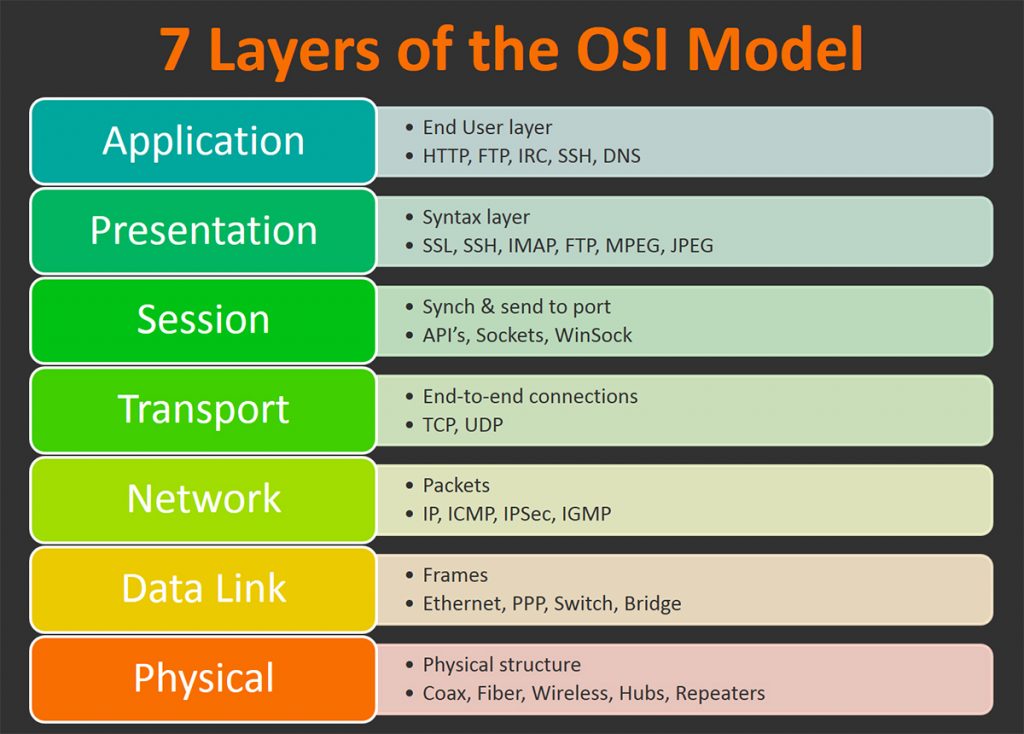
    --- tags: Communication System Design, ss, ncu author: N0-Ball title: Introduction GA: UA-208228992-1 --- [ToC] # Preknowledge ## Baseband Signals - Analog baseband signals re message signals that are generated or sensed by hummans, such as speech, music, video images... - Contains frequencies close to 0 ## Radio Frequency Signals - RF signals carry messages, but the message cannot be sensed directly by humans ## Radio Spectrum ![](https://www.nasa.gov/sites/default/files/styles/full_width/public/thumbnails/image/spectrum_radio_graphic_web.png) UHF : Ultra High Frequency VHF : Very High Frequency ### Band EHF, SHF - L-band - S-band - X-band ## Geostationary-orbit (GEO) - Always available wthin its service area - Appears stationary in sky ### Geostationary satelllite ![](https://i.imgur.com/xJTk6DW.png) - Links can be established quickly - from anywhere to anywhere - Boardcasting - Direct to home TV - Signals received at the satellite are always week - 10^-12^ W - Very **low noise** receivers are needed - Operate in C, Ku, Ka band - Covers **no man's land** - no internet connection at certain area - e.g. Antartica - Limited bandwidth for Space - ![](https://i.imgur.com/3G7OwLL.png) ## Dynamic Range - the ratio of the largest to the smallest signal - usually in dBs - Communication systems ofthen cannot carry the full dynamic range of signals - Compression may be applied to the signal before transmission - Expansion in receiver ensures linearity - The process together is known as Companding - Humans have sensing systems with wide dynamic range - Eyes (24 f-stops, + brains) - Cameras (14.4 f-stops) - Ears (~140dB) - CDs (96dBs) ![](https://i.imgur.com/9dsYVyn.png) :::info While camera is either left or middle, human eye can be left due to dynamic range. ::: ## Decibel dB : A **relative** unit of measurement : A logarithmic way of describing a ratio of a power or root-meansquare quantity : Used in electronics, signals, and communication : $10 \times log_{10}(\frac{P_2}{P_1})$ ### Rule of thumb $\pm 10$ dB difference : An order of magnitude difference ## OSI model ![](https://s7280.pcdn.co/wp-content/uploads/2018/06/osi-model-7-layers-1024x734.jpg) - Physical layer is where message signals are transmitted and received - Some aspects are grouped in the data link layer - error control - type definition ## Frequency Bands ![](https://upload.wikimedia.org/wikipedia/commons/thumb/c/c7/United_States_Frequency_Allocations_Chart_2016_-_The_Radio_Spectrum.pdf/page1-1200px-United_States_Frequency_Allocations_Chart_2016_-_The_Radio_Spectrum.pdf.jpg) [中華民國頻率分配表](https://freqdbo.ncc.gov.tw/upload/FILESAVE/080724081215.pdf) ![](https://i.imgur.com/Sx7eQB9.png) - avoid interference - radios that allocates at same location means that they can live together ## Modulations :::info makes carrier able to carry a message and transmit for distant users ::: - It is used to shift the spectral content of a message signal so that it lies inside the operating frequency band - It provides a mechanism for putting the information content into a form that may be less vulnerable to noise or interference - It permits the use of multiple-access techniques Demodulation : the opposite process Modulating signal : the message signal Modulated signal : the output of the modulation process Modulator : the device used for modulation Demodulator : the device used for demodulation # Communication Systems - Message Signal - Generate a **message signal** - Symbols - Represeent the message signal as a sequence of **symbols** - Encode - **Encode** the symbols - Transmit - **Transmit** the encoded symbol sequence - Receive - **Receive** the encoded symbol sequence - Decode - **Decode** the received signal and recover original symbols - Original Message - Output the **original message** ![](https://i.imgur.com/pXW7PaB.png) ## Morse Code (Sample of Communication Systems) ![](https://miro.medium.com/max/1400/1*KcX4BbwOHK5W6JJFJsJv3w.jpeg) ![](https://upload.wikimedia.org/wikipedia/commons/thumb/1/19/Morse-code-tree.svg/1280px-Morse-code-tree.svg.png) - Most Commonly use to Least Commonly use Origin Message -> MorseCode -> Origin Message > History: Fast data transmittion ## Objective - The message signal should not be degraded by the transmission process ## Reality - The message will suffer some degradation - better controlled in a digital transmission system than an analog system - The performance of the communication system defines how much degradation may occur ## Type Point to Point : One to one communicaion Broadcast (point to multi-point) : One transmitter, many receivers # Performance :::info All new communication system are digital ::: ## Potential Impairments - Noise - Random Occurance - Thermal or random noise - Interference - Certain Occurance - Possible occurance - Time - Frequency - Sometimes treat as noise - CDMA spread spectrum system - Unwanted signals ## Performance Checks - Limited resources - Channel bandwidth - Transmitter power - Links may be bandwidth limited or power limited - Performance measure is carrier power to noise power ratio (C/N) at input of receiver - C/N sets S/N at baseband (analog signal) or bit error rate (BER) (digital signal) :::warning **BER** is probability of bit error not a rate ::: ## Objective - **C/N ratio** must typicaly **exceed 10 ( or 10 dB )** at input of receiver - **S/N** ratio in baseband of analog signal should be **above 50 dB** - **BER** shold be lower than **10^-6^** - Performance may be permitted to degrade for short periods of time ## In practice - Thermal noise, cannot be removed, is usually the limitation on radio links - Noise cannot be removed (easily) from an analog signal - Error can be removed from a (well-designed) digital signal # Transport ![](https://i.imgur.com/zt6bJ5L.png) - Earth is curve - repeater are needed for microwave (VHF, UHF) communication systems to get around curved Earth - Reflect radio waves from the ionosphere - Narrowband communicationL 0-30 Mhz RF ## Satellite - Geostationary (3800km) satellite can see 1/3 Earth ![](https://i.imgur.com/2NJBqwO.png) ## Fiber - Optical fiber communication can be considered as a form of RF (at 300 GHz) communications - The carrier is an infrared light wave with wavelength of 1.55 μm - Frequency of carrier is 2 x 10¹⁴ Hz = 200 THz - Modulation is ASK (or OOK, On-Off Keying) - Bandwidth is huge: 1013 Hz theoretically - Wavelength division multiplexing allows 100 Gbps per fiber - Optical fibers go from point to point - Fiber has very low loss (0.1 dB/km). Amplifier can be >100 km apart. - Good for interconnecting cities - Not so good for broadcasting - Fibers are never laid singly – a fiber cable has many individual fibers # Signal Characeristics ## Analog Bandwidth - Speech: 100 Hz - 10k Hz - Telephone sstem bandwidth - US: 300 - 3100 Hz - ITU-T: 300 - 3400 Hz - Music: 50 Hz - 20 kHz (human hearing range) - NTSC video: 25 Hz - 4.2 MHz - US, Japan, Taiwan ... - Taiwan stopped using NTSC in 2012 - PAL video: 25 Hz - 5.5 MHz - Europe, Australia ... ## Digital Bit rates - PCM Speech: 64kbps - CD replay: 3.4 Mbps - Raw digitized video: 80 Mbps - MPEG-2 videos: 5-80Mbps - MPEG-4 videos: 60kps - 8 Mbps ## Mobile Network in Taiwan - 2G - GSM 900 - GSM 1800 - 3G - UMTS 2100 - CDMA 800 - 4G - LTE 700 - LTE 900 - LTE 1800 - 5G - 5G 3500 (78) - 28 (257) # Analog Sound Recording and Replay ![](https://i.imgur.com/n4ZZ1P5.png) ## Cassette 1. Change in air pressure on microphone (sound wave) creates voltage waveform 2. Amplified and applied to recording head 3. Iron oxide particles on tape are magnetized in patterns created by voltage waveform 4. Magnetic fields passing replay head create voltage waveform 5. Power amplifier drives current into speaker coil and creates sound wave in air 6. Ideally, output into air by speaker is identical to input into microphone ## CD ![](https://i.imgur.com/IcNb28A.png) 1. Analog signals are filtered 2. converted to digital signals by an Analog-to-Digital Converter (ADC) 3. Digitized signals are multiplxed, modulated, or synchronized. 4. Laser beam records such signals as pits 5. bumps pits on the CD surface. # Designing Satellite Downlinks 1. Calculate the availability of the link 2. LNAs are important for ground receivers 3. weather effects sky noise 4. link margin allows C/N to fall in rain - Find C/N in clear air and C/N threshold - Calculate path attenuation and sky temperature(T~a~') - check percentage of outage -> availability # History ## First communication satellite Sputnik 1 : Radio transmitter onboard launched in 1957 ## 1960 oversea telephone - 550 overseas telephone lines - US $1.00 per min - Average wage US $1.50 per hour - 40 min of work per call minute ## Passive relay - Moon in 1955 - Reflection ## 2004 oversea telephone - US $0.09 per min - Average wage US $5.20 per hour - ~1 min of work per call minute ## 2021 oversea telephone - Too cheap that we stop care ## 2021 satellite telephone ![](https://i.imgur.com/Eq8em9W.png) * [Reference](https://satellitephonestore.com/iridium-services)

    Import from clipboard

    Paste your markdown or webpage here...

    Advanced permission required

    Your current role can only read. Ask the system administrator to acquire write and comment permission.

    This team is disabled

    Sorry, this team is disabled. You can't edit this note.

    This note is locked

    Sorry, only owner can edit this note.

    Reach the limit

    Sorry, you've reached the max length this note can be.
    Please reduce the content or divide it to more notes, thank you!

    Import from Gist

    Import from Snippet

    or

    Export to Snippet

    Are you sure?

    Do you really want to delete this note?
    All users will lose their connection.

    Create a note from template

    Create a note from template

    Oops...
    This template has been removed or transferred.
    Upgrade
    All
    • All
    • Team
    No template.

    Create a template

    Upgrade

    Delete template

    Do you really want to delete this template?
    Turn this template into a regular note and keep its content, versions, and comments.

    This page need refresh

    You have an incompatible client version.
    Refresh to update.
    New version available!
    See releases notes here
    Refresh to enjoy new features.
    Your user state has changed.
    Refresh to load new user state.

    Sign in

    Forgot password
    or
    Sign in via Google Sign in via Facebook Sign in via X(Twitter) Sign in via GitHub Sign in via Dropbox Sign in with Wallet
    Wallet ( )
    Connect another wallet

    New to HackMD? Sign up

    By signing in, you agree to our terms of service.

    Help

    • English
    • 中文
    • Français
    • Deutsch
    • 日本語
    • Español
    • Català
    • Ελληνικά
    • Português
    • italiano
    • Türkçe
    • Русский
    • Nederlands
    • hrvatski jezik
    • język polski
    • Українська
    • हिन्दी
    • svenska
    • Esperanto
    • dansk

    Documents

    Help & Tutorial

    How to use Book mode

    Slide Example

    API Docs

    Edit in VSCode

    Install browser extension

    Contacts

    Feedback

    Discord

    Send us email

    Resources

    Releases

    Pricing

    Blog

    Policy

    Terms

    Privacy

    Cheatsheet

    Syntax Example Reference
    # Header Header 基本排版
    - Unordered List
    • Unordered List
    1. Ordered List
    1. Ordered List
    - [ ] Todo List
    • Todo List
    > Blockquote
    Blockquote
    **Bold font** Bold font
    *Italics font* Italics font
    ~~Strikethrough~~ Strikethrough
    19^th^ 19th
    H~2~O H2O
    ++Inserted text++ Inserted text
    ==Marked text== Marked text
    [link text](https:// "title") Link
    ![image alt](https:// "title") Image
    `Code` Code 在筆記中貼入程式碼
    ```javascript
    var i = 0;
    ```
    var i = 0;
    :smile: :smile: Emoji list
    {%youtube youtube_id %} Externals
    $L^aT_eX$ LaTeX
    :::info
    This is a alert area.
    :::

    This is a alert area.

    Versions and GitHub Sync
    Get Full History Access

    • Edit version name
    • Delete

    revision author avatar     named on  

    More Less

    Note content is identical to the latest version.
    Compare
      Choose a version
      No search result
      Version not found
    Sign in to link this note to GitHub
    Learn more
    This note is not linked with GitHub
     

    Feedback

    Submission failed, please try again

    Thanks for your support.

    On a scale of 0-10, how likely is it that you would recommend HackMD to your friends, family or business associates?

    Please give us some advice and help us improve HackMD.


    Thanks for your feedback

    Remove version name

    Do you want to remove this version name and description?

    Transfer ownership

    Transfer to
      Warning: is a public team. If you transfer note to this team, everyone on the web can find and read this note.

        Link with GitHub

        Please authorize HackMD on GitHub
        • Please sign in to GitHub and install the HackMD app on your GitHub repo.
        • HackMD links with GitHub through a GitHub App. You can choose which repo to install our App.
        Learn more  Sign in to GitHub

        Push the note to GitHub Push to GitHub Pull a file from GitHub

          Authorize again
         

        Choose which file to push to

        Select repo
        Refresh Authorize more repos
        Select branch
        Select file
        Select branch
        Choose version(s) to push
        • Save a new version and push
        • Choose from existing versions
        Include title and tags
        Available push count

        Pull from GitHub

         
        File from GitHub
        File from HackMD

        GitHub Link Settings

        File linked

        Linked by
        File path
        Last synced branch
        Available push count

        Danger Zone

        Unlink
        You will no longer receive notification when GitHub file changes after unlink.

        Syncing

        Push failed

        Push successfully

