---
tags: Teaching, DC
title: 'Digital Culture 2020 - notes'
description: View the slide with "Slide Mode".
link: https://hackmd.io/@siusoon/dc2020-notes
slideOptions:
theme: serif
transition: 'fade'
---
## Digital Culture #11
Automated and predictive culture
Agenda:
- Why search engine?
- Based on MX016, and then follow up on the questions (2->4->1->3->5->2) and make a response on hackmd
- Wrap up for all blocks
- Synopsis + Exam
- Presentation by Nynne Lucca Christiansen
----
## Why search engine?
- more than 3 billion search queries a day (Ridgway 2017)
- knowledge base - personalization - information monopolies (Noble 2018) - implications of power - "digital inequality" (Noble 2018)
- approach: black feminist perspective - intersectional power analysis - (race & identity in feminist theories of technology)
- the illusion of the 'truth' - "information assumed to be 'fact'"
- rethink alternative?
- Example: [Unerasable Images](http://siusoon.net/unerasable-images/) (2018)
- check privileges - building empathy
----
## MX016
- Based on MX016, and then follow up on the questions (2->4->1->3->5->2) and discuss
----
## Wrapping up
- 4 blocks
- data culture (digital - data - specific: cookies)
- internet art & culture (web design, Vernacular Web, tactical qualities, archives)
- commons & floss (community, resources, comoning, control, etc )
- automated and predictive culture (ML, search, knowledge, algorithms, bias)
----
## Practice
Practice - critical making - doing - not just art - tactical qualities
- The book critical making: (available free online: https://networkcultures.org/blog/publication/the-critical-makers-reader-unlearning-technology/)
- Ratto, Matt & Hertz, Garnet, “Critical Making and Interdisciplinary Learning: Making as a Bridge between Art, Science, Engineering and Social Interventions”
- Golline, Krystin & Browning, Abigail, “Towards an Intersectional Feminist Critical Making”
- Agre, Philip. (1997). “Toward a critical technical practice: Lessons learned in trying to reform AI” in Bowker. G., Star, S., Turner, W., and Gasser, L., eds, Social Science, Technical Systems and Cooperative Work: Beyond the Great Divide, Erlbaum.
- Galloway, Alexander R (2004). “Internet Art” in Protocol: How Control Exists after Decentralization. Leonardo. Cambridge, Mass: MIT Press, pp. 208-238
----
## Next
==MX018/individual:==
Submit the draft of the synopsis by 25 Nov (Wed noon) + peer feedback on the supervision date
- update the new supervision group by 27 Nov COB
- no class next week
- supervision: 30 Nov and 1 Dec
- Final submission: 7 Dec 2020 (submit on digital exam)
- Exam: 30 minutes incl. assessment (14-16 Dec 2020)
---
## Digital Culture #10
Agenda:
- Revisit block 3: workshop/lecture/assignment
- Introducing block 4 - Automated and Predictive culture + assignment
- ML workshop
- Revisit MX014 - glossary
----
## Revisit block 3: Commons + F/LOSS
- Individual Brain-Dumping (5 mins on hackmd - writing and reflecting)
- complexity: free (cost/freedom) - control - open source/accessibility/power dynamics - licenses - commercial/capitalist economy - care/feminist perspective
- ==MX017/Group== - Follow this group feedback sequence (2->4->1->3->5->2), provide a peer feedback of block assignment 3 (comment on their hackmd)
----
## Automated and Predictive culture + assignment
- machine learning (pattern recognition)
- predictive culture
- data-driven culture
- Block 4 [assignment](https://hackmd.io/Pv5KxGtCQOOK7PFLpW5UPw?view#%F0%9F%94%A5Block-4-Automated-and-Predictive-Culture)
----
## ML workshop
Focus on data processing (input/output)
<img src='https://gitlab.com/siusoon/Aesthetic_Programming_Book/-/raw/master/source/10-MachineUnlearning/ch10_2.png' width="500">
Teachable Machine: https://teachablemachine.withgoogle.com/v1/
source code: https://github.com/googlecreativelab/teachable-machine-v1
----
## Activity: Cont'
- Prepare three set of gestures that can be captured by the web camera.
- Each gesture has to be repeatedly trained by long-pressing the colored "TRAIN" button
- when there is a new image input (a so-called "test dataset"), the learning/teachable machine can classify those gestures with various confidence levels, and then predict the corresponding output results.
<p>
</p>
1. Train the machine using **three different sets of gestures/facial expressions**, then observe the predictive results shown as various outputs.
2. Test the **boundaries** of recognition or classification problems, such as having a different test dataset, or under different conditions such as variable lighting. What can, and cannot, be recognized?
3. What happens when you only use a few images? How does this amount of training input change the machine's predictions?
----
## ==MX015/group==
- By trying out Teachable Machine version 1 (https://teachablemachine.withgoogle.com/v1/), discuss what is your understanding of machine learning, what interest you during the tinkering processes? Reflect on possible critical questions/angles that we can raise.
----
## What's learning here
<img src="https://3.bp.blogspot.com/-jYGbp0Ow1Cc/WA6oWw63F7I/AAAAAAAABWc/8_E5A1dbPP4xeo1GuIGTsYvG6TuXIfmoQCLcB/s1600/image06.png" width="520">
> "In machine learning, it is commonly understood that the style is learnt from training datasets through techniques to process and analyze large amounts of (natural language) data. As such, machine learning techniques such as "style transfer" rely on a process of generalization in order to identify patterns." - Soon & Cox, forthcoming
----
## Neutrality
> 'this "pattern recognition" is clearly not a neutral process as it involves the identification of input data, and the "discrimination" of information. It is clear that there is other kinds of discrimination in such processes, such as inherent stereotypes in voice assistants or in online translation tools, and other examples that might include the AI chatbot Tay that was regarded as racist, or how facial recognition in Amazon software, and other smart systems demonstrate gender and racial bias. Understood this way, pattern recognition is not only about smoothing tasks and making accurate predictions in terms of technical operations but also political ones as it creates "subjects and subjection, knowledge, authority" as well as classification and categorization.' <br>- Soon & Cox, forthcoming
----
## What's learning in machine learning?
- Where is the data
- How do they learn
- How do they identify pattern
- How do they make prediction
----
## Learning algorithms #1
Supervised learning- This model is based on a training dataset with input/output pairs as expected answers. (binary/multi classification)

Kittydar (Kitty Radar)
http://harthur.github.io/kittydar/
----
## Learning algorithms #1 - cont'
ImageNet (2009) by Fei-Fei Li: http://www.image-net.org/
[12 hours of ImageNet](https://thephotographersgallery.org.uk/whats-on/digital-project/exhibiting-imagenet) (2019) by Nicolas Malevé Nicolas Malevé
Scaling/labeling/labour issues:
- a dataset of 14,197,122 photographs from ImageNet.
- organised into 21,841 synsets (categories), taken from a lexical database called WordNet.
- at a speed of 90 milliseconds per image
- traversing the entire dataset in a period of two months
----
## Learning algorithms #2
- Unsupervised learning - One of the common tasks is "clustering" (algorithms such as K-means and Hierarchical Clustering). The goal of this technique is to find similarities, providing insights into underlying patterns, and relationships of different groups in a dataset using exploratory and cluster analysis.
<img src="https://gitlab.com/siusoon/Aesthetic_Programming_Book/-/raw/master/source/10-MachineUnlearning/ch10_4.gif" width="400">
----
## Learning algorithms #2 - cont'
<img src="https://gitlab.com/siusoon/Aesthetic_Programming_Book/-/raw/master/source/10-MachineUnlearning/ch10_4.png" width="600">
The clustering of images based on "cuteness" and "curliness" in the Anatomies of Intelligence workshop by Joana Chicau and Jonathan Reus.
----
## Learning ?????
- What could we learn about learning from the dynamics of machine learning?
- how can we think productively about the fact that a generation of humans and algorithms are learning together to look at data (such as images)?
- How does machine learning change our ways of understanding/seeing things?
- Will our thinking and creativity be automated? and that our ability to determine our potential futures will become compromised by predictive algorithms?
----
## Text reading 1
Mackenzie, Adrian . (2017). “Introduction: Into the Data” in Machine Learners: Archaeology of a Data Practice, Cambridge, Mass.: MIT Press, pp. 1-19
https://i.imgur.com/QEwKW9D.png
1. Q0. What are the things interest you in this section? and why?
2. Q1. what's the problem statement in the section?
----
## Text reading 2
> Computer vision algorithms are not mere technical improvements but intervene in the common understanding of what an image is, what it can do and whether it can be trusted. These developments have been achieved by emulating algorithmically the ways humans see, interpret and produce images.
1. Q0. What is an image?
2. Q1. Why the understanding of image is changed with computer vision algorithms/technologies? What's Malevéan's point of view?
----
## Revisit MX014 - glossary
https://hackmd.io/@siusoon/dc2020-discussion
---
## Digital Culture #8
Agenda:
- block 2 assignment feedback
- discussion of the text (in relation to MX013)
- Case study: Be Water by Hong Kongers (Ars Electronica 2020 - Golden Nica in the Digital Communities category to a movement of anonymous citizens for its innovative and creative digital activism), Eric Siu & Joel Kwong
----
## Discussion of the assigned readings #1
- Depart from commons: community - resources- commoning
> warm up (5 mins): MX013- Simply read the assigned reading, and try to understand the cultural phenomena of FLOSS. What kind of free and open source software that you like? Why? If you have to choose to discuss one aspects of FLOSS, how would you approach this?
Post: https://padlet.com/siusoon/dc
----
## Discussion of the assigned readings #2
> Forms of Ongoingness, interview with Femke Snelting and Spideralex (2019),https://vimeo.com/302087898
Post: https://padlet.com/siusoon/dc
- How do technology produces norms?
- What's (feminist) infrastructure? (what's the characteristics?)
----
## Discussion of the assigned readings #3
> Mansoux, Aymeric. (2017).“In Search of Pluralism” in Sandbox Culture: A Study of the Application of Free and Open Source Software Licensing Ideas to Art and Cultural Production, pp. 76-112, available at:
https://www.bleu255.com/~aymeric/dump/aymeric_mansoux-sandbox_culture_phd_thesis-2017.pdf
Post: https://padlet.com/siusoon/dc
- What are the difference licensing types of CC? (https://creativecommons.org/share-your-work/)
- What's the issues of creative commons? (p. 95-96) (https://i.imgur.com/lm45kXD.png)
----
## Case study of Commons/FLOSS: Be Water by Hong Kongers
<img src="https://i.imgur.com/CqIpe5n.png" width="700">
https://www.bewater.digital/
----
## Background statement #1
<img src="https://external-preview.redd.it/7Yq5FF34mHo3-uXnzkb8C43b-rvMV042Tx_712ap2Vc.jpg?auto=webp&s=9a759f32ca39727be046ff8d588d44eb25968a6a" width="400">
> "Be Water” is a famous saying of martial arts star Bruce Lee: to be shapeless, formless and able to adapt to any situation. This philosophy has recently been embraced by the protest movement in Hong Kong. The latest wave of protests began in 2019 in response to an extradition bill that threatened the territory’s judicial independence. The protests have now become a case study in the use of digital activism to safeguard democratic freedoms.
----
## Background statement #2
<img src="https://cdn1.i-scmp.com/sites/default/files/styles/1200x800/public/2013/06/04/6.jpg?itok=88UXqLz6" width="320">
> Hong Kong, a former British colony, was returned to mainland China in 1997. Since then, Hong Kong has been governed by the constitutional principle of “One Country, Two Systems”. Under this principle, Hong Kong continued to have its own governmental systems and legal, economic and financial affairs, including trade relations with other countries, all of which are independent from those of mainland China. However, the interpretation of this principle has occasionally caused tensions to erupt.
----
## Background statement #3
> In the summer of 2019, 22 years after the handover, a tremendous political movement emerged to protest an extradition bill that would allow criminal suspects to be extradited to mainland China under certain circumstances. Dissenting voices claimed this would risk exposing citizens to unfair trials and treatment, further eroding political freedoms in Hong Kong. Hundreds of thousands of Hong Kongers (as they now refer to themselves) took to the streets, and weeks of protests and civil disobedience followed, which helped to bring the movement to global attention. While the controversial bill was withdrawn in September 2019, the movement doesn’t stop but continues with a broader set of demands, including a full inquiry into alleged police brutality.
----
## Background statement #4
> Digital technology plays a key role in the whole movement, and the use of technology is creative, innovative and pervasive. Digital community functions range from front-line support and crowdsourcing campaigns to protest art, social media (fact-checking and reporting), online petitions, political education, and so on. Protesters use multiple platforms including live-streaming, forums and apps, e-commerce, websites, music, and whatever else seems appropriate in the moment, a perfect expression of the “Be Water” philosophy. The protest movement is leaderless, and this decentralization results in massive online and organic tactics using platforms like LIHKG – a local, lo-fi version of Reddit where users can communicate and vote on posts – or AirDrop to share campaign messages. The protests have unleashed a wave of digital activism in which everything is new and creative.
----
## Jury statement #5
<img src="https://i.imgur.com/7LQBMR7.jpg" width="250">
<img src="https://i.imgur.com/UYjrVqx.jpg" width="113">
> This year, the Golden Nica went for the first time to an anonymous group: the citizens of Hong Kong who organized the pro-democracy protests of 2019. Their decentralized, leaderless, and technologically sophisticated organization continues the line of recent protest movements[...]. Through the exchange of knowledge, tactics, and tools, each collective has learned from past experiences and documented its lessons for the future. The modes of collective action in Hong Kong are, in many ways, exemplary for the notion of a digital community, but with important qualifications. The demonstrators did not organize around a particular technology but used digital media as one of many means to organize, communicate, document, and evade surveillance.
----
## Exercise
https://www.bewater.digital/
Q: Can you locate commons/values of FLOSS in this case study?
Some of my favorites:
* "Open source" protest - https://www.newstatesman.com/world/2019/08/be-water-seven-tactics-are-winning-hong-kongs-democracy-revolution
* https://www.bewater.digital/items/466
* https://www.bewater.digital/items/485
* https://www.bewater.digital/items/580
* https://www.bewater.digital/items/474
---
## Digital Culture #7
- Contexualization of the theme: Commons + Free Open Source Software Culture
- Commons: authorship, ownership, collaboration, collective ways of dealing with resources, maintenance, technologies, open space (diversity, safe, community building)
- FLOSS - open design - freedom vs free cost - values
- Guest lecture and workshop (online): implement the floss and rethink infrastructure
- [Walkthrough the final project](https://hackmd.io/Pv5KxGtCQOOK7PFLpW5UPw?view#Basics)
- ==homework as a group==: discuss other group's work on block assignment 2, and prepare a short response in the class. (5->4->3->2->1->5)
- how does the group address the theme/brief?
- Which part do you like the most, and why?
- how do they use the literature (in the curriculum?)
- how's the link (sense-makinng) between theory and practice?
---
## Digital Culture #6
- Group 5 presentation (+ text discussion)
- The web that is(was): Archival practices/methods
- Studio time (working on block 2 assignment)
----
## archives - digital data funeral
Audrey Samson: https://digitaldatafunerals.com/
https://esc.mur.at/en/node/2287
----
## Highlight #1:
touch on (im)materiality:
> "it would be a mistake to decribe the expansion of networked storage, as simply a shift from 'material archive-systems' to 'immaterial information-banks" - Sluis 2017, p. 28
> "As the archive is re-invented as the cloud, it is important to consider digital memories as not just vaporous, immaterial, streams of data - but as data which is embedded in the material structures of hardware and software" - Sluis 2017, p. 37
----
## Highlight #2:
database fever/memory:
> "increasingly linked to the industrial processing of information and the performativity of software"
> "the digital archives that characterize web culture today, it is no longer in the content of the ephemeral or visual limitlessness of cyberspace, but rather the contingent and specific economies of the server farm or database scheme." - Sluis 2017, p. 29
----
## Archival tool #1

WayBack Machine by Internet Archive: https://archive.org/web/web.php
----
## Archival tool #2
<img src="https://i.imgur.com/49N6X42.png" width="500">
Conifer (Webrecorder) by Rhizome:
* site: https://webrecorder.io/
* faq: https://conifer.rhizome.org/_faq
* capturing: https://guide.conifer.rhizome.org/docs/capture-approaches/capture-browsers/
"Network perservation" - Rossenova 2020
----
## Archival tool #3
Screenshots
- think about Rossenova's text: recording vs saving web -> original environment; object description vs performativity
----
## Archival tool #4
<img src="https://i.imgur.com/kcrA8id.png" width="600">
- The use of emulator in Rhizome such as The Web Stalker:
- https://anthology.rhizome.org/the-web-stalker
- https://anthology.rhizome.org/
"Software perservation" - Rossenova 2020
----
## Archival tool #5
<img src="http://media.rhizome.org/blog/9249/Arcangel-Fresh-Buzz-www.subway.com.jpg" width="500">
Freshbuzz (subway.com) by Cory Arcangel
- https://www.instagram.com/p/B_FijgNAwJ5/
- https://rhizome.org/editorial/2014/may/15/surf-session-cory-arcangel/
----
## Question for discussion:
==MX011==/group- each person in your group look at one archival method/technique/tool and reflect upon the assigned readings. Together as a group, what are the issues and cultural phenomenon that the archival techniques are addressing? What is an archive? What are they archiving? What are the potential and limitation of these techniques? How do these techniques allow you to think about internet culture differently?
Make a response at hackmd (use the text that you have read before)
----
## wrapping up for this block: Internet Art + Culture
- internet art - tactical qualities
- critical making - tactical qualities + interface detourement
- specific analysis of an artefact (fuller's text) / archive (Rossenova - Artbase archive)
- art + culture
- Web: 1.0, 2.0, Vernacular web - platform - database
- (im)materiality
- archives (general)- archival web (micro: particular problem) - web culture
----
## Block 2 assignment: Studio time
https://hackmd.io/Pv5KxGtCQOOK7PFLpW5UPw?view#%F0%9F%94%A5Block-2-Internet-Art-amp-Culture
just a thought - May be you can use the material from the archival methods to act as your materials to make an internet art?
----
## What's next
Guest lecture - Magda Tyzlik-Carver on "Posthuman Commons"
---
## Digital Culture #4
- note: https://fermentingdata.net/blogCollection/WorkshopInvite/
- Revisit Block 1 - data + culture
- Introduce/contextualize Block 2 - Internet Art + culture
- Group 3 presentation
- About the 2x readings
- JODI + Net art
- Class activity
----
## Revisit Block 1 - data + culture
* **Reading + commenting** (10 mins): 1 -> 2 -> 3 -> 4 -> 5 -> 1 (logic gate, cookies, visualization, 3d elements)
* **Discuss** in your group, and make a reflection regarding your learning, and seeing other people work as part of learning (the workload, the format, the theme, theory/practice elements, delve into the subject matter, thinking towards digital culture, does it facilitate your reflection and thinking, etc)
----
## Contexualizing: Block 2 - Internet Art + Culture
* From data to Internet/Web (also heavily relate to information technologies e.g protocols, links, organizational structure)
* Focus on **cultural practices** (e.g internet art, web design/practice, archives)
* internet: "a **global system of interconnected computer networks** that uses the Internet protocol suite to communicate between networks and devices." - wiki
* methodologies:
* tacticle media - artefact analysis (with making)
* interface/cultural analysis
* archives as materials for investigation
* Artist/Designer/Researcher
----
## Block 2 - Assignment
* Make a piece of Internet art. Try to frame your work under a problem statement with a research question that addresses internet culture (the problem should be a conceptual problem not a practical problem): 1) Put the problem in a context (what do we already know?) 2) Describe the precise issue that the research will address (what do we need to know?) 3) Show the relevance of the problem (why do we need to know it?)
Deliverable (deadline: 18 Oct 11.59)
Write on your group’s page (hackmd.io)
Max 6000 characters
Screenshots/video and/or URL (how can we experience that?)
----
## Group 3 presentation
* ==MX006/Individual or group==- Read the assigned reading, and locate the tactical qualities (as described in both text) of Internet art that you found in any one of the Internet artworks (i.e artefact analysis by using the perspective of tactical qualities). To what extent the artist is using the approach of critical making? What’s the link between critical making and tactical media? Initiate 1-2 questions for further discussion in the class
* linking themes: tactical qualities - critical making
* setting the agenda: how to make an internet art, and incoporate the self-made artefact as part of the analysis to unfold the critique and cultural phenomena.
----
## Web Stalker by I/O/D
https://anthology.rhizome.org/the-web-stalker
* ideas were based on "as a stream of data. This data can be formatted for use in any of a wide variety of configurations" (p. 52)
p. 53:
> "What are the conditios that produce this particular sort of reception facility?" <br>
> "What produces and reinforces browsing?" <br>
> "What determines the development of this software?"
* artwork + "not just art" (p. 62) + crtique technique (p. 61) -> speculative and interventional mode of production
----
## The assigned readings:
> p. 299: critcal making methods: "computer crashes, technical glitches, corrupted code, and otherwise degraded aesthetics are the key to this disengagement. " + hacking as a form of cultural practices
> p. 227 -> from internet art to software art (driven by a commercial interest of software)
----
## JODI's works
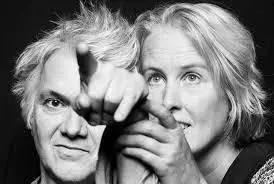
Joan Heemskerk (1968, Kaatsheuvel) and Dirk Paesmans (1965, Brussels)
* net.art exhibition: https://vimeo.com/19571917
* Net Art at the Whitney Museum: https://www.youtube.com/watch?v=e1ehF1tOoaA
1. GEO GOO: http://globalmove.us
2. %Location: http://wwwwwwwww.jodi.org/
3. See also no.1 Buddies: https://hackmd.io/WytPrdhrSY2UakqM-mwKBg
----
## Net Art - written by Søren Pold
Pandemic situation
- kunsten.nu
- TEMA: Netkunst
> Læs om kunst, der er udviklet til at eksistere online, og som bruger nettet som sit ‘materiale’.
https://kunsten.nu/journal/featured-categories/tema-netkunst/
**Group Activity (15 mins):** select one of the list and take a look, and how are these different from, or similar to how Galloway describes the "Internet Art".
----
## class activity
* ==MX007==/group: Recalling/expanding Fuller's text on how he describes internet art as "not just art" (p. 62). What's the relationship between art and culture? How can art enable us to see things, especially technological objects in the context of digital culture, differently? Can you give an artwork example to illustrate that? (You may consider to look into one of the artworks that have been discussed in the text Internet Art or in the [kunsten.nu](https://kunsten.nu/journal/featured-categories/tema-netkunst/)
**Deliverable: a graphical/mapping response on hackmd**
---
## Digital Culture #3
What if we take spam/cookies as cultural text/artefact/object.
https://files.eric.ed.gov/fulltext/ED544487.pdf
The circuit of culture (Du Gay et al. 1977)
<img src="https://culturalstudies101.files.wordpress.com/2013/02/hall-the-circuit-of-culture.jpg" width="500">
----
### Regulative perspective
- **soft-law approach (methods):** analyze technical (IETF) + legal (EU Articles) documents
> delegate authority to commercial companies/actors
- **Implications:** reveals the politics of power behind standardizing and controlling behaviors on the Internet
- **Aims:** challenge our common sense notions towards spams and cookies
----
### What's interesting to me
* p. 290: institutionalizing cookies and illegalizing spam

* p. 299: personal data
> "any information relating to an identified or identifiable natural person ('data subject'); an identifiable person is one who can be identified, directly or indirectly, in partuclar by reference to an identification number or to one or more factors specific to his physical, physiological, mental, economic, cultural or social identity."
----
### Critical Making: spam/cookies/caches examples
1) Browser extension: Consent-O-Matic by Midas Nouwens + Clements Nylandsted Klokmose + Janus Bager Kristensen + Rolf Bagge
- https://www.youtube.com/watch?v=QaRiYFhOKZQ&start=7836
- What counts as consent:
https://twitter.com/MidasNouwens/status/1209460225293606912
- firefox: https://addons.mozilla.org/en-US/firefox/addon/consent-o-matic/
2) spam poetry: readme.SpamPoem ; send an email to readme.spampoem@gmail.com with any subject line, and you will receive a poem based on spam
http://siusoon.net/readme-spampoem/ -> also hello zombies: http://siusoon.net/hello-zombies/ (zombies as a cultural phenomenon), detailed article: https://aprja.net//article/view/116106
----
### Critical Making:
- p. 19: the importance of the material in conceptual and analystic process
- "emphasize the value of material production itself as a site for critical reflection"
- p. 21: Critical Technical Practice: aim to trouble and contextualize the instrumental logics associated with computer science and engineering.
- hard skills of technology + criticality in conceptual thinking
- what is critical: questions about the design, purpose, and cultural value of created things are important next steps in the process of making.
----
### Critical Making: reflection
Discuss within your group:
Reflect on the logic gate workshop via the lens of critical making (e.g material engagement as a site for reflection)
----
### Class activity: JavaScript
<img src="https://i.imgur.com/e8Chttb.png" width="500">
Learning cookie via Aesthetic Programing: https://hackmd.io/@siusoon/webCookie
- Copy the code and save the file
- Run that on your own computer with your web console open
- Check "storage inspector" (shift + f9)
- Decode
----
### class activity: MX005
==MX005/small group==:
- Create a small piece of JavaScript that can store data as web cookies. How would you apply the concept of critical making in writing a small piece of JavaScrpt?
- Deliverable: Post your code (and we can run it on our machine) + a written reflection on hackmd
----
### MX
Block: Data + Culture
- Construct/create a computational prototype (processing/p5/unity/3d/physical computing, etc) that helps you to think through/explore the notion of data (or dataset/data processing). Using critical making approaches, how have you explored data materiality and how that processes inform your reflective thinking (address this: a description of the topic and the method(s), an indication of the main points of discussion).
- Deliverable (deadline: 20 Sep 11.59)
- Write on your group’s page (hackmd.io)
- Max 5000 characters
- With screenshots/images
----
### Wrapping up
- Object of study: binary data, scientific data, spam/cookies
- approaches to get close to material-conceptual reflexivity: Critical making- wiring/physical computing, data visualization, programming
- framework: circuit of culture, feminist perspective
- Concepts: materiality - digitality - data feminism - embodiment - assemblages - public space / private activity, etc....
---
## Digital Culture #1
What is culture and digital culture
- Sharing - Remix - expressivity - social/multiple identities - storage/memory - participatory contribution - DIY (search & learning) - Nomadism - measurement/metrics
- A broad subject...how to give a perspective?
----
### Keywords
- The concept of keywords (reference back to [Raymond Williams](https://en.wikipedia.org/wiki/Keywords:_A_Vocabulary_of_Culture_and_Society), 1976) - [Software Studies: A Lexicon](https://mitpress.mit.edu/books/software-studies)
- Keywords is a language (not a neutral review of meanings)
- Many other keywords: algorithms, information, hackers, ...
- keywords - search - ad keywords
----
### Keywords continues...
human subjects (e.g hacker) to nonhuman actors (e.g algorithm, meme), and further to lively objects (e.g cloud, archives, memory) and actions (e.g personaliztion, sharing, gaming)
> "How does language condition the ways we can be in the world?" (p. xx)
### Digital
- digital conditions vs digits only computationally (p. 95)
> "how digits have long functioned not only as symbolic counters (computers) but also as real pointers (indexes) and social manipulators"
----
### Culture
- the seperation of culture and technology (p. 71)
- culture - computation (p. 76)
- another way of categorization (p. 72):

----
### Circuit of Culture
- The circuit of culture > a theory/framework to analyze cultural text/artefact (Du Gay et al. 1977)
<img src="https://culturalstudies101.files.wordpress.com/2013/02/hall-the-circuit-of-culture.jpg" width="600">
(ref: du Gay et al. (1997) Doing Cultural Studies: The story of the Sony Walkman Milton Keynes: Open University; Thousand Oaks, CA: Sage.)
----
### Hayles (2005):
acknowledge the important of embodiment
A framework:
- making (through language and code)
- storing (as print and electronic text)
- transmitting (through analog and digital encoding)
----
### The Secret History of the ENIAC Women
Kathy Kleiman:
<iframe width="560" height="315" src="https://www.youtube.com/embed/Zevt2blQyVs" frameborder="0" allow="accelerometer; autoplay; encrypted-media; gyroscope; picture-in-picture" allowfullscreen></iframe>
----
### Thinking
**Follow up actions:**
formulate interesting cultural questions to discuss, and how is this related to culture and IT issues?
**Example of practice**
webmachine: https://digital-power.siggraph.org/piece/webmachine/
<style>
.reveal {
font-size: 25px;
font-family: Mono, monospace, sans-serif;
}
blockquote {
border-left: 3px solid #ffff00;
font-size: 18px;
font-style: italic;
line-height: 1.8em;
margin: 1.1em -4em;
padding: 1em 2em;
position: relative;
transition: 0.2s border ease-in-out;
}
.reveal h2 {
font-size: 38px;
font-weight: bold;
color: #003399;
}
pre code .wrapper { font-size:17px;line-height: 1.1em;}
pre code .gutter.linenumber { border-right: 3px solid #ffff00 !important; }
</style>
 Google Drive
Gist
Clipboard
Google Drive
Gist
Clipboard
 Sign in with Wallet






