# Chaitanya's Reading Responses 2
## Response 1
### How ads follow you around the internet
Ads have become the new type of shadow. You can never be unknow on any random website.
Today, cookies have become a very integral part of the internet and has become the biggest way of communicating information about the user. The video talks about how it works and how it has evolved from the initial stages.
Lou in his interview (in the [video](https://www.youtube.com/watch?v=HFyaW50GFOs)) talks about how he created cookies just to make it easier for users to surf the websites they already visited. This was the initial stage of cookies. These cookies basically store data of the users and use it to remember the choices user made earlier.
These cookies are now being used in the feild of ads and become an integral source of information. Vox (page that interviewed Lou) gives an example of how when she searched for swade boots, her social media was filled with these types of shoes.
Ads are now one of the biggest source of income for social media apps and such online platforms. These ads are being controlled by or are working based on cookies. They manage the ads according to what the users are looking for and what they have in their wishlist.
Now these social media platforms have their own domain and they manage their own cookies on different websites. These are called third party cookies that help websites with their ads in different sectors. This is also called tracking where people get access to large number of data with less visits.
Many websites don’t like these cookies and block these third party cookies and infact many browsers give the users option to block these third party cookies. Luo gives an insight that it is wrong in a way for these websites to share all the data and have access to more through these resources. It is disturbing the internet flow and the user experience.

...
## Response 2
### I tweet honestly, I tweet passionately: Twitter users, context collapse, and the imagined audience
Who are you? Are you for real? Are you the same person?
Some questions we ask in mind when people are very different online and have a completely different personality in person.
Alice and Danah talk about how people change their way of presentation according to the audience they are in front of. They present themselves based on technological affordances and the immediate social context of the target audience. They plan to shed light on the fact that due to the increasing collapse of social media platforms, it is being difficult for people to keep their variable self-presentations different for different audiences. It has become easy for audiences to collapse from various platforms.
Alice and Danah explain how audiences work and how they have been changing with the development of technology. ([Article](http://www.tiara.org/wp-content/uploads/2018/05/Marwick_boyd_TweetHonestly.pdf), 2010) *"Technology complicates our metaphors of space and place, including the belief that audiences are separate
from each other"*. This talks about how people try to still consider that the audience is bounded. There are many categories you have to consider in today's world before you bound your audience like language, culture, identity, etc.
There is a difference between social media posts and personal blogs or personal homepages. This is also discussed in the article and they explain how audiences matter on a different level on these platforms and that in blogs and personal pages, there is a constructed audience and that in social media audience cannot be expected.
Blog:

Social Media Post:
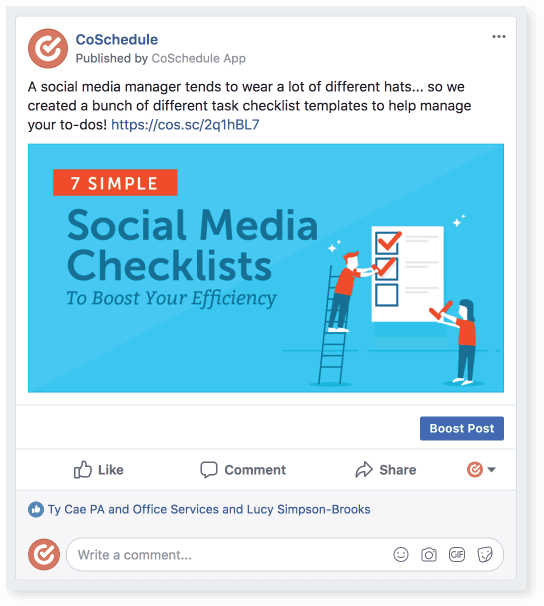
(As you can see, different types of people have liked the social media post. Shows how the audience is wide spread)
The concept of Twitter is explained. It is a microblogging platform. The platform expects itself to be regularly updated and the users to have an updated profile. It also uses the friendship model where the user can choose whom to follow and who's content to read or watch. Twitter grew by 1448 percent in a year! This link shows the statistics of the growth of the platform: https://www.businessofapps.com/data/twitter-statistics/

Twitter has a different way of communicating with its audience. There are different ways to communicate on the platform that include personal DM's and public tweets. There are public and private accounts that help people control their audience. The one thing that might hinder the use of it that the public accounts can be viewed through third-party platforms as well. The viewers don't have to have Twitter accounts. The audience further widens when people repost or retweet the tweets and or mention someone especially by using "@". All of this shows how it is difficult for account owners to predict their audience.
Alice and Danah went straight to Twitter to ask people what kind of audience do they expect and what are ways they describe the authenticity of a tweet. Many tweets that they received imposed that they tweet for "friends". "friends" is being used as a wide term in today's social media age. Some mean to talk about their real-life friends and some talk about the people they follow. Some people also write for themselves. *"I don’t tweet to anybody; I just do it to do it."*(Article, p.g. 6, 2010).
People tend to believe that being cautious with what you tweet is 'inauthentic'. They believe 'personality branding' is possible when you run counter to what they value. While building your brand, people can lose themselves self. They might try to tweet and write about things that are accepted by a majority of their followers or targeted audience. These all audiences fall under imagined audience.
There is also the "strategic audience" where the users plan and keep a constant relation with their audience for a cause. There is a community feel or people with alike thoughts. This type of interaction is also called "micro-celebrity" - users with 1000+ (the number may vary) followers who try to grow their community.
Navigating multiple audiences: it is very common in today's world for 'context collapse to occur and to counter this, users tend to make fake accounts, use multiple accounts or use nicknames.
They try to portray their authentic self as well as the interesting self for all types of audiences. As Erving Goffman explains in *[The Presentation
of Self in Everyday Life (1959)](https://www.amazon.com/Presentation-Self-Everyday-Life/dp/0385094027)* how identity is a continuous performance. People are actors who try to tailor their identities all the time.
Balancing expectations with authenticity: people must maintain equilibrium between a contextual social norm of personal authenticity that encourages information-sharing and phatic communication with the need to keep
information private, or at least concealed from certain audiences. Users who aren't even active have to sometimes choose from the ongoing discussions wisely to have a positive impact on the target as well as seem to be authentic and real. This is how they balance between the two.
All the different types of audiences include the "Writer", Broadcast" and "Network" types. The broadcast audience is always imaginary and is to serve the needs of media institutions whereas, the writer's audience services his/her thoughts. These are also imaginary in a way as the writer relates them to his/her style and cues of writing. The network audience is a mixture of both and is more realistic. It is more related to digital media and can be predicted using data and the needs of the audience.
An article that talks all about authenticity on social media: https://buffer.com/resources/authenticity-on-social-media/
<iframe width="560" height="315" src="https://www.youtube.com/embed/YJ8atlAZCUU" title="YouTube video player" frameborder="0" allow="accelerometer; autoplay; clipboard-write; encrypted-media; gyroscope; picture-in-picture" allowfullscreen></iframe>
...
## Reading Response 3
### Rising Instagram Stars Are Posting Fake Sponsored Content
Are you being paid or, are we being played? A question that suites the current scenario of social media promotions. Influencers today are pretending to be sponsored by many different brands to get fame and attention. And most of them do not even hesitate to say it out loud. It is a new trend that has going on, that is "fake it till you make it".
Doing such sponcon seems ridiculous but the customers and users do fall for it. It has also helped a lot of influencers to achieve their dreams and has sometimes helped brands indirectly to gain fame without paying for it. Monica Ahanonu, an illustrator and Instagram influencer with nearly 12,000 followers, said that fake ads have become so common that she’s not even sure who is sponsored and who is pretending. She practiced this and promoted a Channel cosmetic set to gain fame, and she did!
Some of these influencers have become so good at it, it has become very difficult for anyone to identify who is real and who is faking it. Due to all these con practices, some brands have gotten negative branding as well, as not all the influencers are good or liked by the users. Some of them now try to keep their identities secure. Samantha Leibowitz-Bienstock, a lifestyle influencer who posts under the name Trendy Ambitious Blonde, posted a photo of herself with a Betsey Johnson bag she purchased with her own money and tagged the company, she was featured on its website. She wasn’t paid, but she considered it a win for her brand. But this happens very rarely, and this shouldn’t help promote the con practices.
A coin always has two sides, likely this practice also has its negative impacts. The authenticity of the influencers has decreased affecting the pay by the companies. Today, people are paying one-tenth of the previous amounts for their brand's promotion. Today the deals have just become a "verification badge" for them. Still, many people like Vingan Klein believe that it is not the influencer's fault. These influencers have understood that there can be shortcuts and middle ways to get to the top of the hierarchy. I do not believe in shortcuts; it might get you to fame in less time, but it can also make you fall faster, and this is disrupting the working of nature. There is always a way and a time for everything; they can be multiple in numbers but there are.
...
## Reading Response 4
### How To Be The Best 'Instagram Husband' You Can Be
Hey, can you please click a picture of mine? It gets very awkward for people active on Instagram to always ask random people or for the matter of fact their colleagues as well to click their pictures all the time. And as obvious, they can't take weird selfies and close-ups all the time, so they need some help.
Instagram husbands - a term used for people behind the cameras. People who always take photos of the subject with the background for their social media accounts. This is exactly what the people mentioned above need. There are many tips and tricks to become a great "IG husband" and all of them include some level of good photography. It is also important to have a good sense of background so that when they see one, they can suggest their subjects to click a photo with it. Many big celebrities have started recognizing this trend and now do not hesitate to mention who is behind the camera.
Many people have become IG husbands be it wives, husbands, or anyone. They have considered it as an opportunity to get closer to their partner and have something more in common to discuss and make memories about.
It seems like one of the things that have no negative impacts as it is a good initiative to recognize the person behind the camera and also if this is helping people build a relationship.
...
## Reading Response 5
### Pushback: The Growth of Expressions of Resistance to Constant Online Connectivity
The increasing connectivity and availability of internet is forcing people to be connected and on their devices all the time. Today there are so many portable devices making it even easier to be connected and be updated about everything. With all the mental health awareness and internet flaws, people and constant internet users have started to 'pushback'. Pushback is basically when these people try to disconnect themselves from the internet and try not to be on their devices all the time. This concept is also being promoted a lot on social press, blogs, and academic studies. People claim on being affected with overload of information, addiction and many more effects of the internet. They are trying to push back and restore personal life balance.
This study examines literatures in which they identified five primary *motivations* and five primary *behaviours* related to pushback by communication technology users.
Primary motivations include:
1. Emotional dissatisfaction: it basically talks about disappointment - users not always get what they expect from the internet.
2. External values: Pushing back due to religious, political, or moral beliefs.
3. Taking control: Regaining control to increase productivity and save time.
4. Addiction: To save themselves from getting addicted or getting out of it.
5. Privacy: Pushing back to keep their privacy intact and safe.
Primary pushback behaviours are:
1. Behaviour adaptation: Managing different aspects of technology to have a productive day and life.
2. Social agreement: A group instead of an individual takes steps to reduce dependency and addiction to the internet.
3. Tech solution: Trusting tech to help control the use of tech and internet; like restricting the use by time.
4. Back to the woods: Leaving technology altogether at least for a time being.
5. No problem: Some people go against the behaviour and accept the way that technology is taking over their life.
 Google Drive
Gist
Clipboard
Google Drive
Gist
Clipboard
 Sign in with Wallet






