## [110\. Balanced Binary Tree](https://leetcode.com/problems/balanced-binary-tree/)
Given a binary tree, determine if it is **height-balanced**.
**Example 1:**
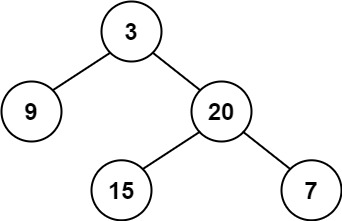
**Input:** root = \[3,9,20,null,null,15,7\]
**Output:** true
**Example 2:**
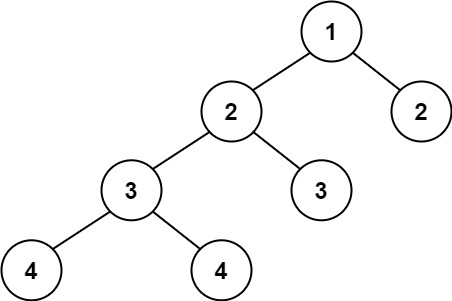
**Input:** root = \[1,2,2,3,3,null,null,4,4\]
**Output:** false
**Example 3:**
**Input:** root = \[\]
**Output:** true
**Constraints:**
- The number of nodes in the tree is in the range `[0, 5000]`.
- `-104 <= Node.val <= 104`
根據題意,左側樹高和右側樹高的差如果大於 1 即沒有平衡,使用遞迴解。
```cpp
/**
* Definition for a binary tree node.
* struct TreeNode {
* int val;
* TreeNode *left;
* TreeNode *right;
* TreeNode() : val(0), left(nullptr), right(nullptr) {}
* TreeNode(int x) : val(x), left(nullptr), right(nullptr) {}
* TreeNode(int x, TreeNode *left, TreeNode *right) : val(x), left(left), right(right) {}
* };
*/
class Solution {
public:
bool isBalanced(TreeNode* root) {
if(!root) return true;
// 走訪左邊的樹
int left = getHeight(root->left);
// 走訪右邊的樹
int right = getHeight(root->right);
return abs(right - left) < 2 && isBalanced(root->left) && isBalanced(root->right);
}
int getHeight(TreeNode* root) {
if(!root) return -1;
// 每遞迴一次,height + 1
return 1 + max(getHeight(root->left), getHeight(root->right));
}
};
```
:::success
- 時間複雜度:$O(N)$
- 空間複雜度:$O(N)$
:::
 Sign in with Wallet
Connect another wallet
Sign in with Wallet
Connect another wallet