goodluckwoha
    • Create new note
    • Create a note from template
      • Sharing URL Link copied
      • /edit
      • View mode
        • Edit mode
        • View mode
        • Book mode
        • Slide mode
        Edit mode View mode Book mode Slide mode
      • Customize slides
      • Note Permission
      • Read
        • Only me
        • Signed-in users
        • Everyone
        Only me Signed-in users Everyone
      • Write
        • Only me
        • Signed-in users
        • Everyone
        Only me Signed-in users Everyone
      • Engagement control Commenting, Suggest edit, Emoji Reply
    • Invite by email
      Invitee

      This note has no invitees

    • Publish Note

      Share your work with the world Congratulations! 🎉 Your note is out in the world Publish Note

      Your note will be visible on your profile and discoverable by anyone.
      Your note is now live.
      This note is visible on your profile and discoverable online.
      Everyone on the web can find and read all notes of this public team.
      See published notes
      Unpublish note
      Please check the box to agree to the Community Guidelines.
      View profile
    • Commenting
      Permission
      Disabled Forbidden Owners Signed-in users Everyone
    • Enable
    • Permission
      • Forbidden
      • Owners
      • Signed-in users
      • Everyone
    • Suggest edit
      Permission
      Disabled Forbidden Owners Signed-in users Everyone
    • Enable
    • Permission
      • Forbidden
      • Owners
      • Signed-in users
    • Emoji Reply
    • Enable
    • Versions and GitHub Sync
    • Note settings
    • Note Insights New
    • Engagement control
    • Make a copy
    • Transfer ownership
    • Delete this note
    • Save as template
    • Insert from template
    • Import from
      • Dropbox
      • Google Drive
      • Gist
      • Clipboard
    • Export to
      • Dropbox
      • Google Drive
      • Gist
    • Download
      • Markdown
      • HTML
      • Raw HTML
Menu Note settings Note Insights Versions and GitHub Sync Sharing URL Create Help
Create Create new note Create a note from template
Menu
Options
Engagement control Make a copy Transfer ownership Delete this note
Import from
Dropbox Google Drive Gist Clipboard
Export to
Dropbox Google Drive Gist
Download
Markdown HTML Raw HTML
Back
Sharing URL Link copied
/edit
View mode
  • Edit mode
  • View mode
  • Book mode
  • Slide mode
Edit mode View mode Book mode Slide mode
Customize slides
Note Permission
Read
Only me
  • Only me
  • Signed-in users
  • Everyone
Only me Signed-in users Everyone
Write
Only me
  • Only me
  • Signed-in users
  • Everyone
Only me Signed-in users Everyone
Engagement control Commenting, Suggest edit, Emoji Reply
  • Invite by email
    Invitee

    This note has no invitees

  • Publish Note

    Share your work with the world Congratulations! 🎉 Your note is out in the world Publish Note

    Your note will be visible on your profile and discoverable by anyone.
    Your note is now live.
    This note is visible on your profile and discoverable online.
    Everyone on the web can find and read all notes of this public team.
    See published notes
    Unpublish note
    Please check the box to agree to the Community Guidelines.
    View profile
    Engagement control
    Commenting
    Permission
    Disabled Forbidden Owners Signed-in users Everyone
    Enable
    Permission
    • Forbidden
    • Owners
    • Signed-in users
    • Everyone
    Suggest edit
    Permission
    Disabled Forbidden Owners Signed-in users Everyone
    Enable
    Permission
    • Forbidden
    • Owners
    • Signed-in users
    Emoji Reply
    Enable
    Import from Dropbox Google Drive Gist Clipboard
       Owned this note    Owned this note      
    Published Linked with GitHub
    • Any changes
      Be notified of any changes
    • Mention me
      Be notified of mention me
    • Unsubscribe
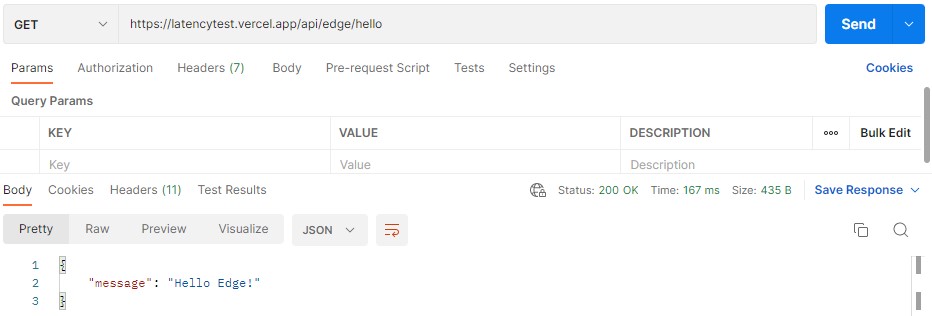
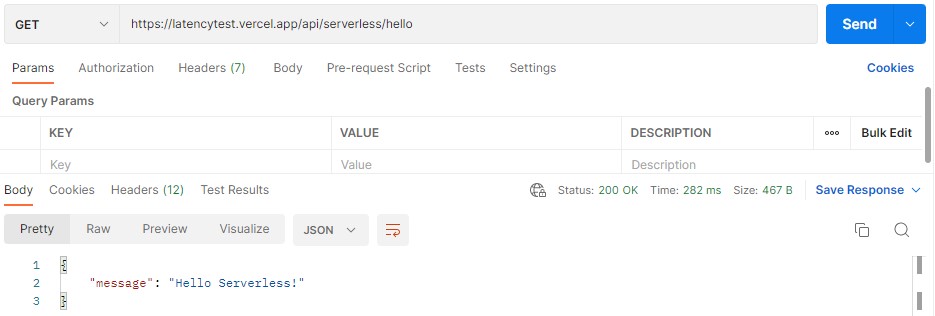
    # Serverless vs Edge Functions In this comparison article, we'll take a deep look into the strengths and weaknesses of serverless and edge functions for web development. For a long time, serverless functions have been the norm for developers to write programmatic functions on a server without managing anything related to the server it is running on. Then came Edge functions in 2019, a newer version of serverless functions run at the edge. When we say "run at the edge," we mean that these functions are run at a server closest to the function caller. A serverless function is a type of cloud computing service that allows a developer to run code without managing or maintaining a server's underlying infrastructure. It is an alternative to a traditional server-side application and is typically invoked in response to an event, such as a user action. An edge function is another type of serverless function, but its code is run closer to the end user. It operates on the edge of the cloud and utilizes the computing power of connected devices or services within the cloud. Edge functions are designed to provide faster and more efficient computing operations by allowing data processing and analysis to happen where the data is generated, rather than sending the data to the cloud for processing. Serverless and edge functions are both supported by cloud platforms such as [Amazon Web Services(AWS)](https://aws.amazon.com), [Microsoft Azure](https://azure.microsoft.com), [IBM Cloud](https://cloud.ibm.com), [Google Cloud](https://cloud.google.com), [Oracle Cloud](https://oracle.com), and more. Edge functions claim to have lower latency and improved performance compared to traditional serverless functions. Today, we're going to find out if there is actually truth to these claims. ## Use Cases Serverless and edge functions offer similar use cases, such as the IoT, image and video processing, real-time data analytics, backend for mobile and web apps, and chatbots. However, specific scenarios exist in which each technology excels against the other. Serverless functions are best suited for event-driven applications that require rapid scaling and minimal infrastructure management. This makes it popular for applications such as image and video processing, IoT, and real-time data analytics. On the other hand, edge functions are ideal for applications that require low latency and high bandwidth, such as gaming, augmented reality, and live streaming. They are also useful for applications that involve working with sensitive data, as they allow for data processing to take place closer to the source, reducing the need for data transfer. ## Scalability Serverless functions take the lead in terms of scalability because most like AWS Lambda, Azure Functions, and Google Cloud Functions run on a cloud-based infrastructure with a large number of servers that allow them to automatically scale up and down based on their given workload. Edge functions run on edge devices like gateways, routers, or IoT devices, which are limited in number and resources. Unlike serverless functions, which automatically scale up and down based on the workload, scaling edge functions requires manual intervention. ## Latency Speeds In this section, we'll put both functions' latency speeds to the test using [Postman](https://postman.com) and [APImetrics](https://apimetrics.io). Postman is an API platform that can easily be used to build and test APIs. When testing with Postman, it will tell us the exact time it took for our call to get to the function and back to our local computer. Since your application will likely be used by people worldwide, we'll also make calls with APImetrics to better benchmark the latency speeds in other countries. I have a [NextJS](https://nextjs.org) project created with two folders named “serverless” and “edge” in NEXT's default api folder. Each contains their respective function type. ``` latencytest ├── pages │ └── api │ └── serverless │ └── hello.js │ └── edge │ └── hello.js ``` NEXT is a popular React framework for deploying server-side rendered applications. It is well known that files in its api folders are deployed as serverless functions. However, NEXT has added a new runtime feature that allows functions in the api folder to be deployed on the edge. Inside the hello.js of the serverless folder is the following code: export default function handler(req, res) { res.status(200).json({ message: "Hello Serverless!" }); } And inside the hello.js of the edge folder is: ``` import { NextResponse } from "next/server"; export default async function handler() { return NextResponse.json({ message: "Hello Edge!" }); } export const config = { runtime: "experimental-edge", }; ``` After deploying both functions with `vercel deploy`, the latency speed of the serverless function was around 287 ms and the latency speed of the edge function was around 167 ms from my local computer. ![SERVERLESS: “latencytest.vercel.app/api/serverless/hello”](https://paper-attachments.dropboxusercontent.com/s_2486868F10C02FEFDFF4F192FE520D8967272EC4F5255FC1C64B496FE995E286_1674157507065_Screenshot+2023-01-19+175516.jpg) ![EDGE: “latencytest.vercel.app/api/edge/hello”](https://paper-attachments.dropboxusercontent.com/s_2486868F10C02FEFDFF4F192FE520D8967272EC4F5255FC1C64B496FE995E286_1674157370306_Screenshot+2023-01-19+180241.jpg) Let's see how both functions perform when called from different countries. The results shown below were derived with [APImetrics](https://apimetrics.io): | **Country** | **Serverless** | **Edge** | | ------------- | -------------- | -------- | | United States | 111 ms | 93 ms | | Japan | 96 ms | 86 ms | | Singapore | 95 ms | 90 ms | | Australia | 101 ms | 89 ms | | South Africa | 119 ms | 62 ms | Edge functions definitely have the advantage in terms of latency speed. Edge functions are also less likely to experience the “cold start” issue common with serverless functions that lead to delayed api responses. ## Integration with other Tech Stacks When it comes to integrating with other tech stacks, both serverless and edge functions have their own set of advantages and limitations. Edge functions are designed to run on specific edge devices like gateways for example. As a result, edge functions are tightly integrated with the underlying hardware and are challenging to integrate with other technologies. However, they can be integrated with CDNs, DNS, and Firewalls as long as they running on the same edge devices. Serverless functions are designed to be platform-agnostic and can easily integrate with a wider range of other technologies, such as databases, messaging queues, and other cloud services. This makes them a good fit for organizations with various tech stacks that need to integrate with multiple systems. Overall, serverless functions are more flexible when integrating with other technologies. ## Development and Deployment Serverless functions offer a more streamlined development process. This is because they abstract away more of the underlying server infrastructure. When working with edge functions, developers need to consider the constraint and limitations of the edge devices running the function because edge functions often require more manual intervention and configuration for deployment. ## Final Verdict While edge functions do, in fact, offer lower latency and improved performance, serverless functions provide greater scalability, easier integration, and development experience than edge functions. Edge functions are best suited for applications that require low latency and high bandwidth. If you need a more scalable solution with more out-of-the-box integrations, serverless functions might be the way to go. On the other hand, if you need low latency and high bandwidth for your application, edge functions are a better option. You can have the best of both worlds by creating a hybrid serverless application. For example, both functions can be used for an e-commerce site. Serverless functions can handle the payment processing while edge functions can handle real-time inventory management and delivery tracking. Another example is an online game that uses edge functions for its game logic and physics simulations while utilizing serverless functions for user account management and leaderboard functionality.

    Import from clipboard

    Paste your markdown or webpage here...

    Advanced permission required

    Your current role can only read. Ask the system administrator to acquire write and comment permission.

    This team is disabled

    Sorry, this team is disabled. You can't edit this note.

    This note is locked

    Sorry, only owner can edit this note.

    Reach the limit

    Sorry, you've reached the max length this note can be.
    Please reduce the content or divide it to more notes, thank you!

    Import from Gist

    Import from Snippet

    or

    Export to Snippet

    Are you sure?

    Do you really want to delete this note?
    All users will lose their connection.

    Create a note from template

    Create a note from template

    Oops...
    This template has been removed or transferred.
    Upgrade
    All
    • All
    • Team
    No template.

    Create a template

    Upgrade

    Delete template

    Do you really want to delete this template?
    Turn this template into a regular note and keep its content, versions, and comments.

    This page need refresh

    You have an incompatible client version.
    Refresh to update.
    New version available!
    See releases notes here
    Refresh to enjoy new features.
    Your user state has changed.
    Refresh to load new user state.

    Sign in

    Forgot password

    or

    By clicking below, you agree to our terms of service.

    Sign in via Facebook Sign in via Twitter Sign in via GitHub Sign in via Dropbox Sign in with Wallet
    Wallet ( )
    Connect another wallet

    New to HackMD? Sign up

    Help

    • English
    • 中文
    • Français
    • Deutsch
    • 日本語
    • Español
    • Català
    • Ελληνικά
    • Português
    • italiano
    • Türkçe
    • Русский
    • Nederlands
    • hrvatski jezik
    • język polski
    • Українська
    • हिन्दी
    • svenska
    • Esperanto
    • dansk

    Documents

    Help & Tutorial

    How to use Book mode

    Slide Example

    API Docs

    Edit in VSCode

    Install browser extension

    Contacts

    Feedback

    Discord

    Send us email

    Resources

    Releases

    Pricing

    Blog

    Policy

    Terms

    Privacy

    Cheatsheet

    Syntax Example Reference
    # Header Header 基本排版
    - Unordered List
    • Unordered List
    1. Ordered List
    1. Ordered List
    - [ ] Todo List
    • Todo List
    > Blockquote
    Blockquote
    **Bold font** Bold font
    *Italics font* Italics font
    ~~Strikethrough~~ Strikethrough
    19^th^ 19th
    H~2~O H2O
    ++Inserted text++ Inserted text
    ==Marked text== Marked text
    [link text](https:// "title") Link
    ![image alt](https:// "title") Image
    `Code` Code 在筆記中貼入程式碼
    ```javascript
    var i = 0;
    ```
    var i = 0;
    :smile: :smile: Emoji list
    {%youtube youtube_id %} Externals
    $L^aT_eX$ LaTeX
    :::info
    This is a alert area.
    :::

    This is a alert area.

    Versions and GitHub Sync
    Get Full History Access

    • Edit version name
    • Delete

    revision author avatar     named on  

    More Less

    Note content is identical to the latest version.
    Compare
      Choose a version
      No search result
      Version not found
    Sign in to link this note to GitHub
    Learn more
    This note is not linked with GitHub
     

    Feedback

    Submission failed, please try again

    Thanks for your support.

    On a scale of 0-10, how likely is it that you would recommend HackMD to your friends, family or business associates?

    Please give us some advice and help us improve HackMD.


    Thanks for your feedback

    Remove version name

    Do you want to remove this version name and description?

    Transfer ownership

    Transfer to
      Warning: is a public team. If you transfer note to this team, everyone on the web can find and read this note.

        Link with GitHub

        Please authorize HackMD on GitHub
        • Please sign in to GitHub and install the HackMD app on your GitHub repo.
        • HackMD links with GitHub through a GitHub App. You can choose which repo to install our App.
        Learn more  Sign in to GitHub

        Push the note to GitHub Push to GitHub Pull a file from GitHub

          Authorize again
         

        Choose which file to push to

        Select repo
        Refresh Authorize more repos
        Select branch
        Select file
        Select branch
        Choose version(s) to push
        • Save a new version and push
        • Choose from existing versions
        Include title and tags
        Available push count

        Pull from GitHub

         
        File from GitHub
        File from HackMD

        GitHub Link Settings

        File linked

        Linked by
        File path
        Last synced branch
        Available push count

        Danger Zone

        Unlink
        You will no longer receive notification when GitHub file changes after unlink.

        Syncing

        Push failed

        Push successfully