# Pitch: Project XDev
What follows is a proposal for a two-part experiment in which engineers would work with Herb to build something new.
The purposes of the experiment are to:
- Begin to put some of our resources towards our next product, whatever that is.
- Get engineers familiar with the next tech stack, including the local-first frameworks Herb's been working on.
- Lay the foundation for building a suite of "just-right" internal tools.
### Deciding what to build
The idea is to build and dogfood the smallest, simplest possible thing that fills an actual need that we have as a team. We’re looking for something that most people would touch on a weekly basis at minimum, BUT that wouldn’t involve any mission-critical processes (yet). And we want to *replace* bits of existing tooling for processes we already have, rather than create new processes.
### Deliverable 1: Weekly updates
The first deliverable would replace the **team updates section of the weekly meeting agenda** with a bare-bones [iDoneThis](https://www.idonethis.com/) clone.
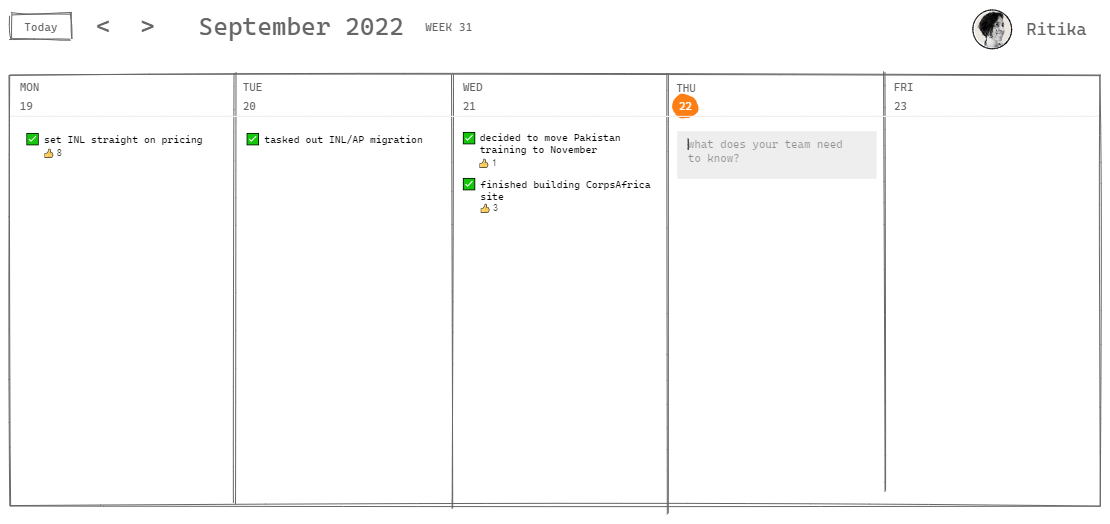
During study hall, we’d review a weekly summary like this:
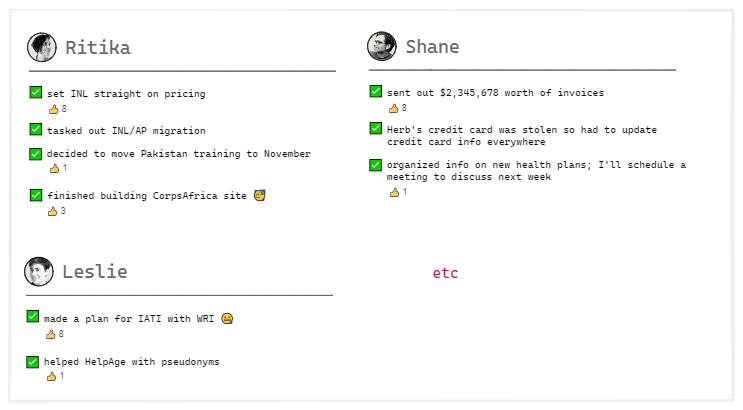
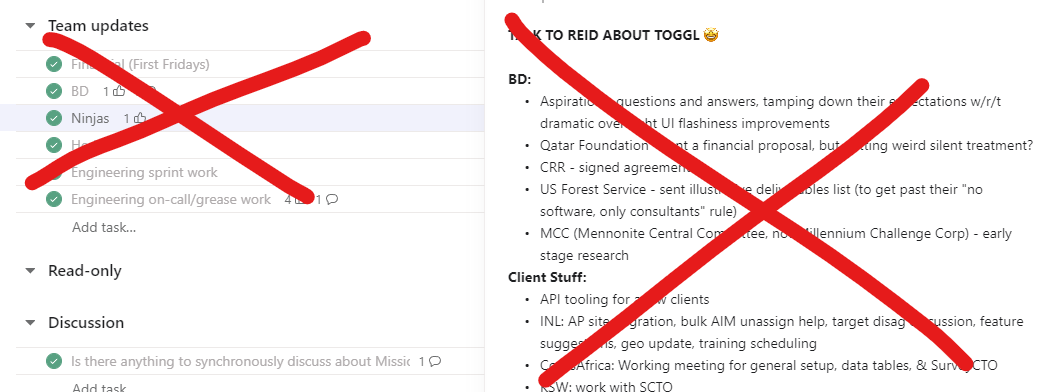
The purpose of the existing team updates process is to give us a way to communicate our achievements during the week, along with anything else our teammates should know about (status of projects; decisions; conversations with clients; etc). This tool would provide a dedicated space to the same thing (at the individual level rather than at the team level).
### Deliverable 2: Hours reporting
The second deliverable would replace the **hours spreadsheet** with a flexible, lightweight interface for collecting the same data.
This would be built on top of the weekly updates tool described above. An integrated tool would provide a single place for recording and communicating **what I did today** as well as **what the team needs to know**.
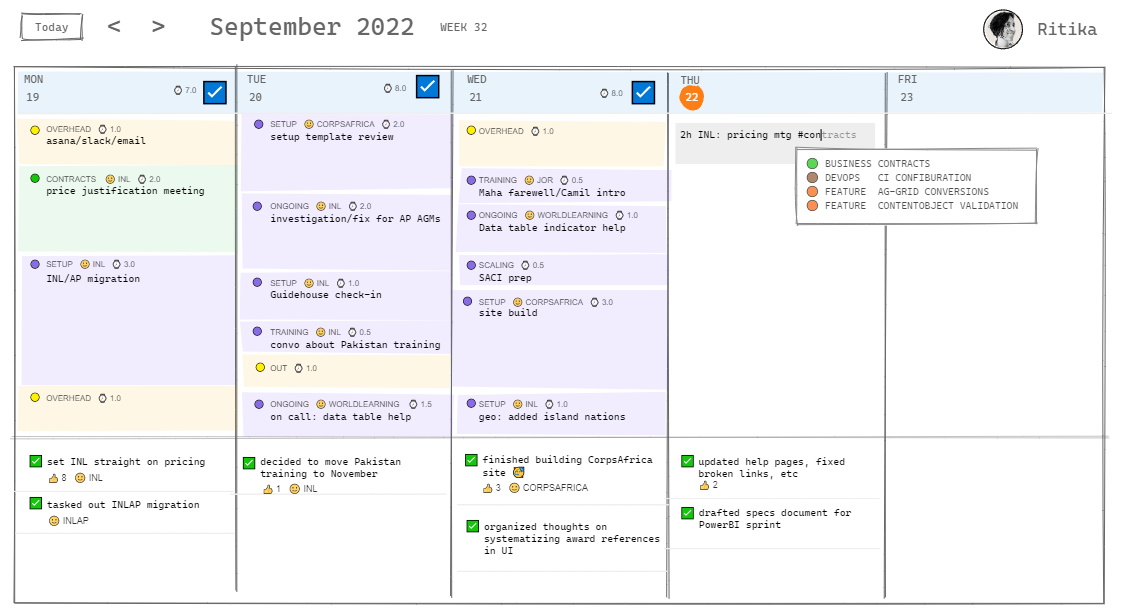
Note that this wouldn’t necessarily replace Toggl, Google Calendar, notepad, or other things we’re using in our individual time-tracking workflows. We could paste in our information from any of those sources, as we’re doing now, and regardless of the source it would be parsed into structured information.
But it would also be designed to reduce data-entry friction to a minimum — with good keyboard support, autocomplete for projects and clients, etc. — and with a UI that makes it clear where the gaps are. So you *could* use it as your only tool if you wanted. Here are some ideas about how direct input might work:
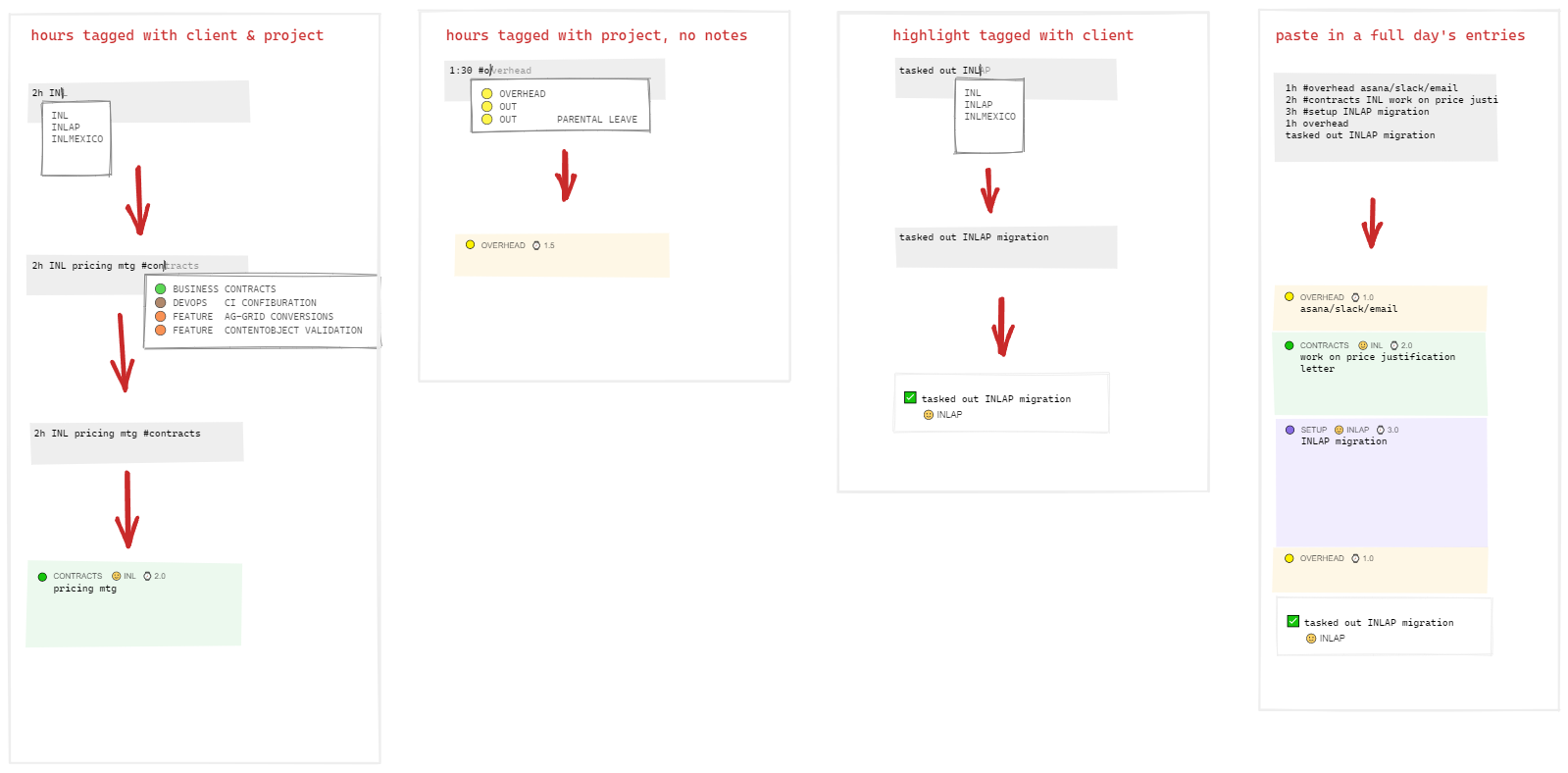
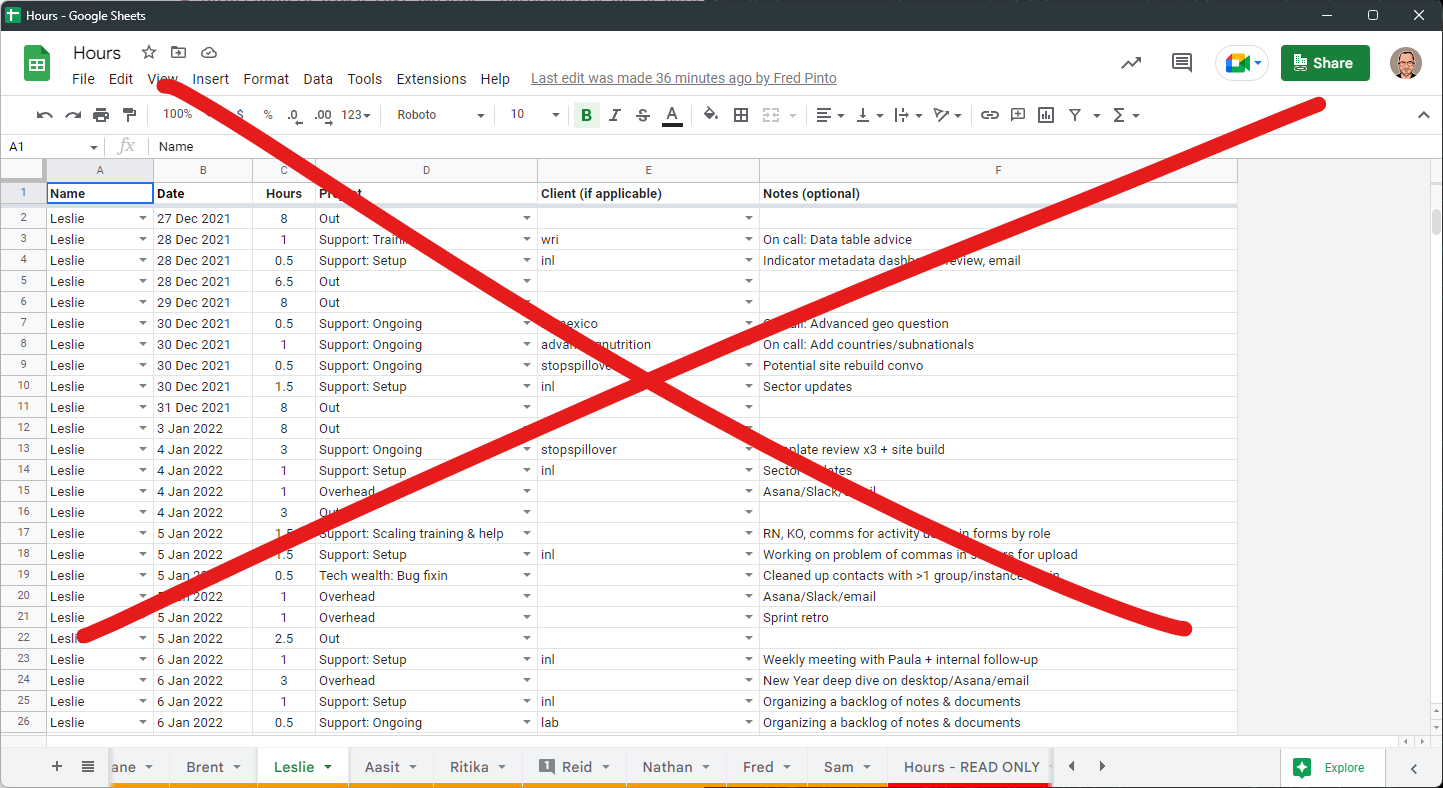
Again, this is a process we already have, and the new tool would replace an existing one (the team-wide Hours spreadsheet) altogether.
### Directions for subsequent work
This initial system would provide a solid foundation for incrementally adding useful funct
internal processes that we're solving in a suboptimal way:
| need | current janky tooling |
| ------------------------------------------------------------ | --------------------------------------------------- |
| source of truth on POTENTIAL customers | tried CRMs (Pipedrive, FreshSales); currently Asana |
| source of truth on CURRENT customers and instances | tried CRMs; currently spreadsheet & elsewhere |
| team updates | weekly meeting agenda in Asana |
| hours tracking & analysis | Toggl, calendar, etc. 🡒 spreadsheet |
| cash planning | spreadsheet |
| financial dashboard | QuickBooks 🡒 spreadsheet |
| recurring billing | spreadsheet |
| basic staff info | spreadsheet, QuickBooks, elsewhere |
| cadence (on-call, sprints, etc) | spreadsheet |
| out-of-office information | calendar, cadence spreadsheet |
| general project management, tasks (sprints, proposals, retreats) | Asana, calendar |
###
 Google Drive
Gist
Clipboard
Google Drive
Gist
Clipboard
 Sign in with Wallet






