---
tags: report
---
# Media & Design Fellow in Comparative Literature: Lara Norgaard
Media & Design Fellows support innovative course development, partnering with faculty and Learning Lab staff to design a variety of digital tools, course materials and content, and assignments for undergraduate courses and their departments. MDFs design interactive, technically complex learning experiences for students that help them grasp the affordances of different media, and they develop workshops and other forms of guidance that help students succeed in using new media to convey their ideas and demonstrate subject-matter expertise.
In this report, you can read about:
* The **training with the Learning Lab** Lara did to get ready to support projects in CompLit
* The **courses** Lara supported this year
* The **departmental support** Lara provided
## Learning Lab Training
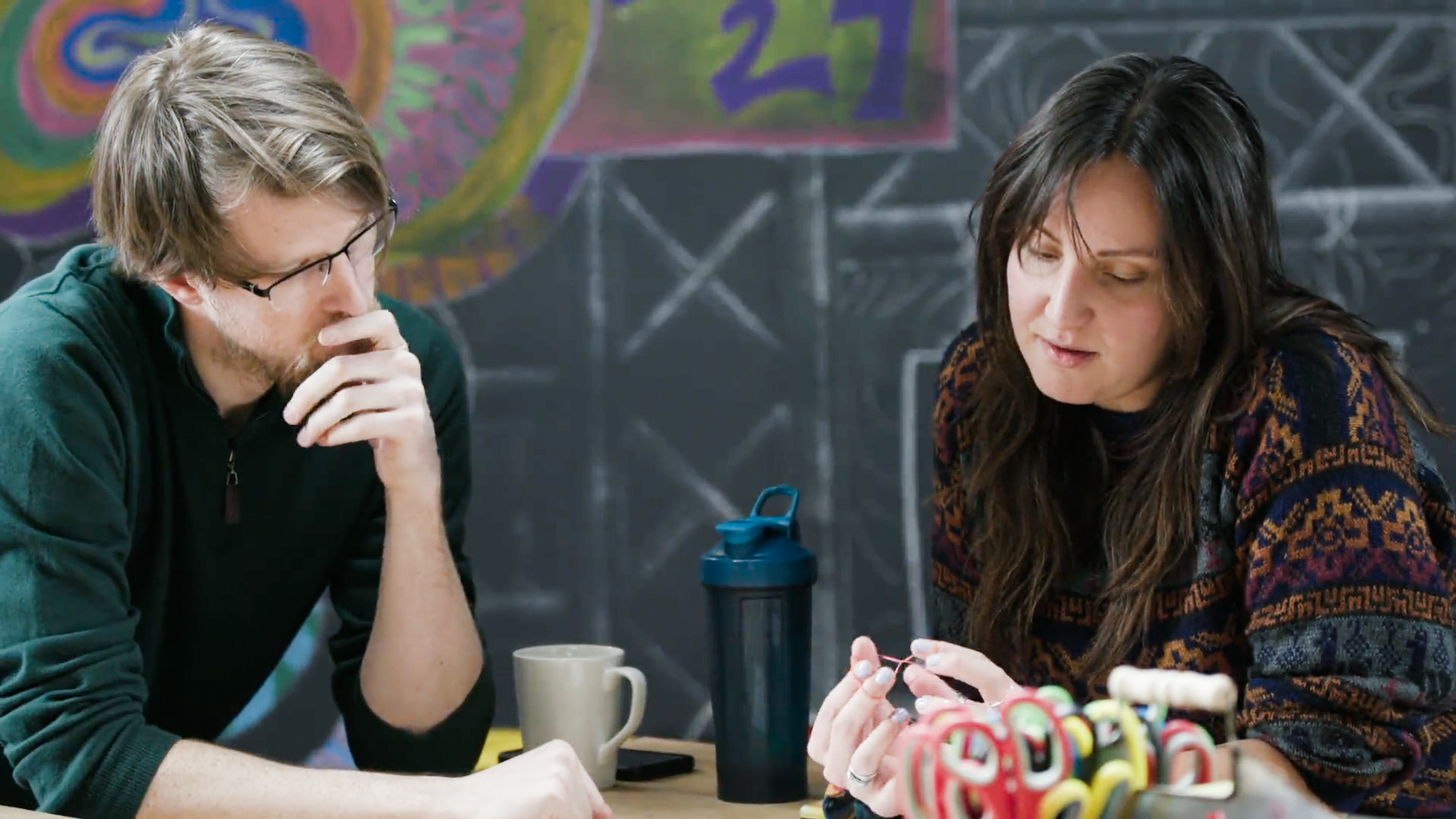
To prepare to support courses and to develop their multimodal pedagogy, MDFs join a lab. In these labs, MDFs learn the media skills that they need to complete their projects. They undertake an initial learning project that teaches them the core competencies required for their departmental projects.
Lara joined avLab to build her skills in podcast production and audio editing. Lara has created podcasting resources that will support the new Translation Studies secondary field.

Throughout the year, MDFs develop their multimodal pedagogy, learning during orientation and at biweekly MDF meetings:
* how to design activities, prototype assignments, and create resources that help students in the particular courses they are supporting.
* how to develop their own style of multimodal pedagogy as they think through the specific media that align with their discipline’s methods and means of analyzing data.
* the affordances of different media and what students gain, intellectually and analytically, by engaging with those media forms
## Course Support
### ENGLISH 184CF: City Fictions Mapping Workshop
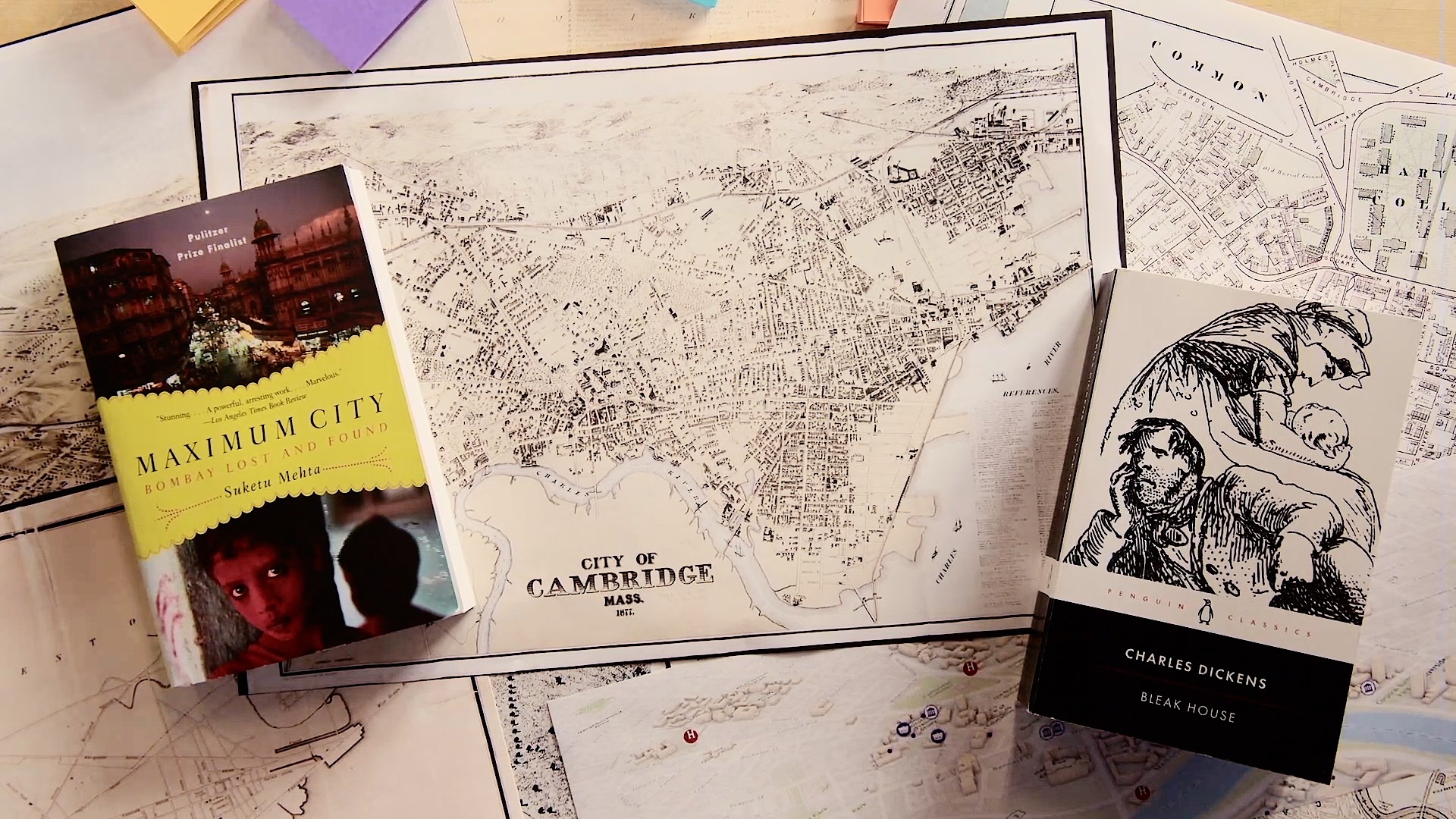
Students in ENGLISH 184CF: City Fictions create two maps of either London or Mumbai that, when viewed together, reveal something profound about the ways in which life is lived and experienced in that city. To help students learn about the conceptual work that maps can do--as well as to introduce them to the formal components of maps--Lara designed and facilitated a workshop at the Learning Lab that allowed students to quickly prototype maps and receive feedback on them. Lara had students choose from a series of themes (gender, age, religion, desire, species, mode of transport, time of day) and then create maps of Cambridge that reveal how that theme is articulated in space. Students used projections of maps, paper maps, and digital mapping tools to create quick prototypes of these maps, reflecting in the process on the viability of their project (e.g., the challenge of collecting data, how significant the insight is, how to visualize this insight).
### TS260: Literary Translation Advanced Workshop Introduction to Translation Podcasts
The work of a literary translator does not end with a finished manuscript or a contract with a publishing house. Translators, like authors, advocate for their work as active participants in a literary scene, which involves speaking in a range of public-facing settings. Lara designed a workshop that will allow students to experiment with different modes of public communication about literary translation. How can you modulate the way you read your translation depending on if the setting is live or recorded? In what ways can you frame your author for an audience unfamiliar with the source literary tradition? What is your theoretical framework for selecting and translating literary works, and how will you use that framework to express an engaging, critical narrative about your trajectory as an emerging translator? In the first half of the workshop, students experimented with reading their work in live and recorded settings and then interviewed each other in a professional podcasting studio. In the second half, the class was introduced to the basics of podcast script-writing, which gave them the opportunity to turn their own interview transcripts into concise and effective narratives.
### COMPLIT 145: Prize-Winning Translations, 2010-2020
For their final project, students in Prize-Winning Translations imagine themselves as members of a literary prize committee to make a case for why a particular shortlisted novel should win the award. Lara first helped Professor Leafgren expand this assignment to include an audio modality. In this part of the assignment, students would record a conversation in small groups, debating why either the same or different novels should win the award. Rather than submitting raw audio from their discussions, students were also tasked with scripting the conversation (similar to a podcast) and performing some basic audio editing. The educational objectives were for students to be able to articulate arguments about literary texts in a public-facing format and to explore how to construct those arguments not through a traditional academic essay, but through audio or a podcast.
Through the Learning Lab, Lara provided course support through two workshops. The first workshop was more conceptual and focused on how to argue about literature within the context of a prize committee (what kinds of value judgments are appropriate in that context? How do they compare to the arguments made in academic literary analysis? how can you develop interview questions that help propel an engaging discussion about the novels?), identifying a target audience, analyzing and evaluating translations alongside the original, and exploring how the audio form could amplify those arguments. The second workshop Lara organized was aimed at developing podcast scripts from a recorded conversation. This workshop had demonstrated to students how audio formats require editing and production that allow listeners to focus on specific ideas and arguments.
### COMPLIT 343: Professing Literature
In support Comparative Literature's professional development seminar, Lara designed two sessions that would help graduate students consider multimodal assignment design and the range of forms they might use to communicate their own research. To address the former, Lara hosted a session about two of the more common multimodal assignment forms: podcasts and video essays. She led the group in an close-listening/close-viewing exercise to help folks unpack the different parts of these "machines" and to think about how each component of a podcast or video essay plays a particular functional role (rather than being merely aesthetic). Lara then led a discussion about assessing these assignments, followed by a discussion about the uses of AI in the classroom. Later in the term, Lara organized a multi-department graduate student mixer to introduce folks to the types of digital, a/v, and AI tools they might use to communicate their research, encouraging participants to think critically about why they might use one form as opposed to another (e.g., given what they research, why might they consider video instead of sound). The mixer also allowed students to get started on projects (such as making a personal website) and ask current MDFs specific questions related to their interests.
### COMPLIT 200: Computing Fantasy
Lara supported COMPLIT 200: Computing Fantasy, a course where the students have the ability to use AI to generate their own folktales based on what they had learned in the course. Students studied many theories of folktales and many modernist authors that used various sorts of algorithmic ways of generating literary content. Lara consulted with students as they worked on their final group projects, which integrated a range of media forms and digital and physical tools.
### GENED 1001: Stories from the End of the World
This course explores how stories from "the end of the world" are portrayed in various world religions and how those concepts travel to contemporary art and pop cultural forms, including film and anime and literature. To help students prepare for their final creative projects Lara helped design a workshop about world building in different media forms. For the final project, students need to create their own creative version of an apocalypse. This could take the form of writing or multi-modal forms like podcasts or video, painting, song composition, whatever they think will express best their idea. It was important to the course team for students to learn about the affordances of each medium, as well as their limitations. Lara helped develop prompts related to the course material, and then had students work with this prompt through three different types of mediums: creative writing, sound, and video. Students needed to create a particular type of apocalypse in each of these three forms, reflecting along the way about what each medium enabled them to do and what constraints the medium posed.
## Department Support
### Comparative Literature Website Development
Lara hosted a graduate student-facing event that helped graduate students integrate different media into short-form videos and other web content so that they can share their research with a broader public audience via the new Comparative Literature website. Lara will help graduate students identify public-facing, multi-modal forms of communication that best suit their research. She will also help them think strategically about how best to use the Comp Lit website as a platform for their research, works in progress, events, etc. while furthering the goals of the site itself.
### Faculty Course Trailers
To promote their spring courses and prepare for prior-term enrollment, Lara organized a session for faculty to be recorded on video speaking about their spring courses. Lara created a resource for faculty to help them prepare for these interviews, during which they are asked both about the courses they're teaching in the spring and what they think the discipline of comparative literature is.
### Translation Studies Podcast
Lara is helping the Translation Studies secondary in Comparative Literature develop Paraphrasis, a public-facing podcast. In addition to increasing Harvard's profile in literary translation and promoting work by emerging and professional translators, Lara's goal for this project is to help graduate students learn how to:
* Analyze popular translation podcasts for their analytical and production strategies
* Experiment with approaches to podcast production
* Interview emerging and professional translators with a public-facing audience in mind
* Develop podcast scripts from live interviews
* Experiment with sound recording techniques and play with how sound and music affects meaning
### MDF Showcase Project
As part of the MDF program's final showcase, Lara produced a standalone audio interview in which Christine D'Auria, director of the MDF program, speaks with her about what podcasting as a media format offers fields like Comparative Literature and Translation Studies. She discusses her practical work with Paraphrasis and her pedagogical uses of podcasting in the classroom. She mixed the audio for this 20-minute segment and plans to upload it to the Comp Lit website.
 Google Drive
Gist
Clipboard
Google Drive
Gist
Clipboard
 Sign in with Wallet






