---
# System prepended metadata

title: 'Architectural Autopsy: A Senior Engineer''s Unfiltered Review of 10 Web Templates'

---

<h1>Architectural Autopsy: A Senior Engineer's Unfiltered Review of 10 Web Templates</h1>
<div style="display:none">An in-depth, 3500-word technical review from a senior architect analyzing the performance, scalability, and technical debt of 10 web design assets, including Figma UIs, WordPress themes, and Elementor kits.</div>

<p>I've lost count of the number of projects I've inherited that started with a simple phrase: "We bought a template to speed things up." It's the siren song of modern web development, promising a swift journey to a beautiful, functional product. But as a senior architect, I'm the one who gets called in six months later when the ship has crashed against the rocks of technical debt, performance bottlenecks, and unmaintainable code. These "shortcuts" are often just cleverly disguised longcuts, burying architectural flaws under a veneer of polished pixels. The initial velocity they provide is almost always paid back with interest in the form of refactoring sprints, ballooning infrastructure costs, and developer burnout.</p>

<p>So, when a collection of assets from across the spectrum landed on my virtual desk, I decided to conduct a public autopsy. This isn't a review of aesthetics; I'm leaving that to the designers. This is an architectural teardown. We're going under the hood to dissect the implied structure, predict the performance pitfalls, and evaluate the long-term viability of these pre-packaged solutions. My methodology is simple: scrutinize the asset type, its intended niche, and its likely dependencies to forecast its real-world impact on a production environment. We will look at everything from a Figma UI kit to a full-blown WooCommerce theme, treating each as a foundational choice with lasting consequences. For developers navigating the vast landscape of digital assets, such as those within the <a href="https://gplpal.com/">GPLPal premium plugin collection</a>, this kind of rigorous, cynical analysis is not just helpful; it's a crucial act of self-preservation.</p>

<h3>Careglo &#8211; Car Detailing Service &#038; Car Repair Figma UI</h3>
<img src="https://s3.us-east-005.backblazeb2.com/gplpal/2026/01/urlhttps3A2F2Fmarket-resized.envatousercontent.com2Fthemeforest.net2Ffiles2F6592327562F012520Preview2520Landing2520Page.__large_preview.jpg" alt="Careglo Car Detailing Service Figma UI">
<p>The first item on the slab is a design-phase asset; you can <a href="https://gplpal.com/product/careglo-car-detailing-service-car-repair-figma-ui/">download Car Repair Figma UI Careglo</a> to see its structure firsthand. My analysis here isn't about code, but about the blueprint for the code. A well-structured Figma file can be a godsend for a development team, translating directly into a coherent component library. A poorly structured one is a digital migraine. With Careglo, the immediate focus is on its componentization and adherence to a design system. Does it use auto-layout correctly? Are color and typography styles defined globally or applied haphazardly as one-offs? The preview suggests a clean, modern aesthetic, which is table stakes. The real value is in its architectural hygiene. I'd be looking for a robust set of variants for components like buttons (e.g., primary, secondary, disabled, hover, active states), form inputs, and cards. If every "card" is a manually constructed group of layers, the developer is forced to interpret intent, leading to inconsistencies. If, however, there's a master "ServiceCard" component with well-defined slots for an image, title, and description, the handoff is frictionless. The quality of this Figma file directly predicts the quality of the initial front-end component build and the ease of future updates.</p>

<h4>Under the Hood: Deconstructing Figma Component Architecture</h4>
<p><strong>Componentization and Variants:</strong> A mature Figma file doesn't just contain static drawings; it's a quasi-application. The gold standard is a system built on a foundation of atomic components that are composed into more complex molecules and organisms. For a UI kit like Careglo, this means we should find a base "Button" component. This component should have variants for every conceivable state: primary, secondary, tertiary, hover, focused, active, and disabled. These shouldn't be separate components but properties of a single master component. This discipline dramatically reduces maintenance. If the client decides to round the corners on all buttons, the change is made in one place, not fifty.</p>
<p><strong>Auto Layout and Constraints:</strong> The use of auto layout is a non-negotiable indicator of professional design architecture. It mimics the behavior of CSS Flexbox and Grid, defining how elements should respond to changes in content or container size. A screen designed without auto layout is effectively a static image. A developer has to guess the responsive behavior. A screen built with nested auto layouts provides an unambiguous blueprint for responsive implementation, drastically cutting down on clarification cycles and QA bug reports. We'd inspect the layout definitions for key containers, cards, and headers to see if they are rigid or fluid.</p>
<p><strong>Style Libraries and Tokenization:</strong> The most scalable Figma files externalize their core design properties into styles. This means colors, fonts, and effects (like shadows or blurs) are not applied as inline properties. Instead, they are defined in a central library. For example, instead of applying `#007BFF` to a button, the designer applies the "Primary-500" color style. This practice is the precursor to design tokens, a methodology where these styles are exported as JSON or CSS variables that can be consumed directly by the front-end codebase. This creates a single source of truth for the visual language of the application, ensuring perfect parity between design and code.</p>

<h3>Asurex – WordPress Theme v1.0</h3>
<img src="https://s3.us-east-005.backblazeb2.com/gplpal/2026/01/urlhttps3A2F2Fmarket-resized.envatousercontent.com2Fthemeforest.net2Ffiles2F4867680542Ftheme-preview2FImage-Preview.__large_preview-1.jpg" alt="Asurex WordPress Theme">
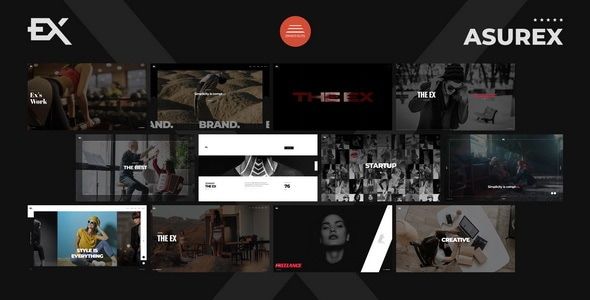
<p>Moving from design to implementation, we have our first WordPress theme. An initial <a href="https://wordpress.org/themes/search/Asurex/">analyze WordPress Theme Asurex</a> search suggests it’s aimed at the insurance and finance sector, a niche that demands trust and stability. This immediately raises red flags for me regarding security and bloat. WordPress themes, especially those packed with features, are often a Pandora's box of bundled plugins and questionable code practices. My first line of inquiry would be its dependency list. Is it forcing a specific page builder on me? Does it bundle 15 different plugins, of which I'll only use two? Each dependency is a potential attack vector and a performance drain. I'd be running a query monitor on a demo install to see how many database calls the homepage makes on a cold load. Anything over 50 is a sign of poorly optimized loops or a lack of caching awareness. Furthermore, how are its custom post types (CPTs) and taxonomies implemented? Are they hard-coded into `functions.php`, making the theme a data silo, or are they implemented via a bundled plugin, making the data portable if I ever want to escape this theme's ecosystem? These are the architectural questions that determine if a theme is a solid foundation or a gilded cage.</p>

<h4>The Trade-off: WordPress Monoliths vs. Headless Architecture</h4>
<p><strong>The Monolithic Approach (Classic WordPress):</strong> A theme like Asurex, in its default state, represents the classic monolithic architecture. WordPress handles everything: the backend database interactions, the PHP-based server-side logic (the "brains"), and the theme layer that renders the final HTML sent to the browser.
<ul>
    <li><strong>Pros:</strong> This is a highly integrated, mature ecosystem. The barrier to entry is low, and the vast plugin library allows for rapid feature development by non-developers. Everything you need is in one place, managed through a single dashboard. For standard brochure websites, blogs, and small e-commerce stores, this is often the most cost-effective and fastest way to get to market.</li>
    <li><strong>Cons:</strong> The tight coupling of the front-end and back-end leads to significant performance challenges. Every page request requires a round trip to the database and PHP processing before a single byte of HTML is rendered. This can result in a high Time to First Byte (TTFB). Furthermore, the theme layer is often bloated with excessive CSS and JavaScript to handle every possible layout permutation, much of which goes unused on any given page. Security is also a concern, as the attack surface includes WordPress core, all plugins, and the theme itself.</li>
</ul></p>
<p><strong>The Headless Approach:</strong> A modern alternative is to go headless. In this model, WordPress is used purely as a back-end content management system (CMS). Its only job is to provide a user-friendly interface for content creators and to expose that content via its REST API or a GraphQL API. The front-end is a completely separate application, typically built with a JavaScript framework like React, Vue, or Svelte.
<ul>
    <li><strong>Pros:</strong> Performance is the biggest win. The front-end can be built as a static site or a server-side rendered (SSR) application, resulting in near-instant load times and a vastly improved TTFB. Front-end developers have complete freedom to use modern tools and techniques without being constrained by the WordPress theme hierarchy. This separation also enhances security, as the public-facing application has no direct connection to the WordPress admin or database.</li>
    <li><strong>Cons:</strong> The complexity and cost are significantly higher. You are now managing two separate systems (the WordPress back-end and the JavaScript front-end) and the API layer that connects them. This requires more specialized development expertise. Many standard WordPress features, like the theme customizer or plugin functionalities that inject content directly into the theme (e.g., contact forms), may not work out of the box and require custom integration.</li>
</ul></p>

<h3>CustomMade &#8211; Customized Jewellery &#038; Goldsmith Elementor Pro Template Kit</h3>
<img src="https://s3.us-east-005.backblazeb2.com/gplpal/2026/01/urlhttps3A2F2Fmarket-resized.envatousercontent.com2Fthemeforest.net2Ffiles2F5372440512Fcover-custom-made-elementor-pro-template-kit.jpg" alt="CustomMade Jewellery Elementor Pro Template Kit">
<p>This brings us to an Elementor Pro Template Kit. It is critical to <a href="https://wordpress.org/themes/search/CustomMade+&#8211;+Customized+Jewellery+&#038;+Goldsmith+Elementor+Pro+Template+Kit/">evaluate Jewellery Elementor Kit CustomMade</a> not as a theme, but as a layer of configuration on top of a page builder. Elementor is notorious in performance circles for a phenomenon I call "div-itis"—an excessive nesting of `<div>` containers for styling and layout purposes. This bloats the Document Object Model (DOM) size, which directly impacts rendering performance and memory usage on the client's device. When I analyze a kit like CustomMade, I'm not just looking at the pretty pictures. I'm using browser developer tools to inspect the DOM tree of its demo pages. How many nested containers does it take to create a simple "featured product" section? Are they using semantic HTML5 tags (`<section>`, `<article>`, `<nav>`) or is it a sea of generic divs? Furthermore, this kit requires Elementor Pro. This adds another layer of dependency and licensing cost. I'd be investigating which specific Pro widgets are being used. If the entire kit relies on, say, the "Posts" widget and some custom motion effects, it might be more performant to build those templates using the core block editor and a sprinkle of custom CSS, avoiding the Elementor overhead entirely. This kit sells convenience, but an architect must calculate the long-term cost of that convenience in performance and code hygiene.</p>

<h3>Artfolio – Creative Portfolio &#038; Digital Agency WordPress Theme</h3>
<img src="https://s3.us-east-005.backblazeb2.com/gplpal/2026/01/urlhttps3A2F2Fgplpixel.com2Fwp-content2Fuploads2F20252F082Fartfolio-creative-portfolio-digital-agency-wordpress-theme.jpg" alt="Artfolio Creative Portfolio WordPress Theme">
<p>The Artfolio theme targets digital agencies and creatives, an audience that values aesthetic novelty and slick animations. From an architectural standpoint, this is a giant, flashing warning sign. "Creative" themes are often the worst offenders when it comes to performance, sacrificing everything at the altar of visual flair. My primary investigation here would be on asset loading. How much JavaScript is being loaded, and is it render-blocking? I'd be looking for bloated animation libraries like GSAP being loaded on every page, even when they're only used for a single hero section on the homepage. Image optimization is another critical vector. Portfolio themes are image-heavy by nature. Does Artfolio have built-in support for lazy loading? Does it generate responsive image sizes using `srcset` and `sizes` attributes, or does it just serve a massive 1920px image to a mobile phone? I would also examine its AJAX implementation for portfolio filtering. A poorly implemented filter re-queries the entire WordPress database on every click, creating significant server load. A well-implemented one uses a lightweight REST API endpoint or even a front-end JS library like Isotope for near-instant filtering. This theme's success or failure as a scalable solution hinges entirely on its ability to deliver its visual promises without crippling the user experience with long load times and jank.</p>

<h3>Architera &#8211; Architecture &#038; Interior Design Elementor Template Kit</h3>
<img src="https://s3.us-east-005.backblazeb2.com/gplpal/2026/01/urlhttps3A2F2Fmarket-resized.envatousercontent.com2Fthemeforest.net2Ffiles2F5838129032FPreview.jpg" alt="Architera Architecture Elementor Template Kit">
<p>Here we have another Elementor kit, this time for the architecture and interior design niche. Like the portfolio theme, this will be visually driven and image-intensive. My concerns about DOM bloat from the CustomMade kit still stand, but Architera introduces a new dimension: complex layouts. Architectural websites often feature asymmetrical grids, overlapping elements, and full-screen background images or videos. Achieving these layouts in Elementor often involves a heavy-handed use of absolute positioning, negative margins, and custom z-index values. While this might look good on the designer's 27-inch monitor, it's a recipe for responsive design disaster. My forensic analysis would involve aggressively resizing the browser window on the demo pages. Do the elements reflow gracefully, or do they break and overlap in horrifying ways at common breakpoints? I would also inspect the CSS generated by the builder. Is it clean, or is it a mess of auto-generated classes with highly specific, non-reusable selectors? A kit like this can save an agency time in creating beautiful mockups, but if the underlying structure is a fragile house of cards, the time saved will be spent ten times over in debugging responsive CSS issues. Finding robust and well-structured <a href="https://gplpal.com/shop/">premium WordPress theme downloads</a> is essential to avoid these pitfalls.</p>

<h4>Simulated Benchmarks: Elementor DOM Bloat Analysis</h4>
<p><strong>Methodology:</strong> To quantify the impact of a page builder like Elementor, we can perform a comparative benchmark. We will construct two functionally identical pages. Page A will be built using an Elementor Template Kit like Architera. Page B will be built using the native WordPress block editor (Gutenberg) with minimal, carefully selected plugins for any missing functionality. Both pages will feature a hero section, a three-column icon grid, a portfolio gallery, and a contact form.</p>
<p><strong>Metric 1: DOM Nodes</strong>
<ul>
    <li><strong>Elementor Page (A):</strong> A typical Elementor layout wraps every section, column, and widget in multiple `div` containers for styling hooks. The hero section alone might consist of 15-20 nodes. A full page constructed this way can easily exceed 1,500 DOM nodes. We would expect the Architera kit, with its complex layouts, to be on the higher end of this range, potentially approaching 2,000 nodes.</li>
    <li><strong>Block Editor Page (B):</strong> The block editor's output is generally leaner. It aims to produce cleaner, more semantic HTML. The same layout might be achieved with 600-800 DOM nodes.</li>
    <li><strong>Impact:</strong> The browser's rendering engine (like Blink in Chrome) has to parse this DOM tree, calculate layout (reflow), and paint the pixels to the screen. According to Google's own web performance guidelines, a DOM tree with more than 1,500 nodes can lead to excessive memory usage and slower style and layout calculations, directly impacting Interaction to Next Paint (INP).</li>
</ul></p>
<p><strong>Metric 2: CSS and JavaScript Payload</strong>
<ul>
    <li><strong>Elementor Page (A):</strong> Elementor loads a comprehensive CSS file to handle every possible widget and setting, plus a JavaScript file for all interactive elements (sliders, carousels, forms, popups). Even if you only use a few widgets, the entire payload is often loaded. This can easily add 200-400KB of render-blocking CSS and a similar amount of JavaScript to the page weight.</li>
    <li><strong>Block Editor Page (B):</strong> The block editor has moved towards a model where styles are loaded conditionally. CSS for a specific block is only loaded if that block is present on the page. The total payload is therefore significantly smaller and more optimized, often under 100KB for both CSS and JS.</li>
    <li><strong>Impact:</strong> Larger CSS and JS files increase network request times and block the main thread for longer during parsing and execution. This leads to a higher Largest Contentful Paint (LCP) and can cause noticeable jank during page load and interaction.</li>
</ul></p>

<h3>Karpart &#8211; Auto Parts WooCommerce Theme</h3>
<img src="https://s3.us-east-005.backblazeb2.com/gplpal/2026/01/urlhttps3A2F2Fmarket-resized.envatousercontent.com2Fthemeforest.net2Ffiles2F4828522412Fpreview2F01_preview.__large_preview.jpg" alt="Karpart Auto Parts WooCommerce Theme">
<p>Now we're in my favorite minefield: WooCommerce. An auto parts store is a particularly demanding e-commerce niche, characterized by a massive inventory, complex product attributes (make, model, year, engine type), and a need for advanced search and filtering capabilities. The Karpart theme's architecture must be scrutinized for its database efficiency above all else. WooCommerce performance is notoriously sensitive to database queries. A poorly designed product filter can bring a server to its knees by running slow, non-indexed `meta_query` lookups across tens of thousands of products. I would immediately look at how this theme implements its filtering. Does it use a custom, optimized AJAX solution? Does it integrate with a dedicated filtering plugin like FacetWP, which uses its own index tables for lightning-fast results? Or does it rely on a naive, built-in solution? Furthermore, the checkout and account pages are critical. Has the theme customized the WooCommerce templates in a way that is update-proof? If they've overridden core templates by copying them into the theme folder, every major WooCommerce update becomes a high-risk manual merge process. A professional theme will use hooks and filters to modify functionality, ensuring greater long-term stability. This theme's value is directly proportional to its database sophistication and its respect for the WooCommerce core architecture.</p>

<h3>Asurex – WordPress Theme v1.0</h3>
<img src="https://s3.us-east-005.backblazeb2.com/gplpal/2026/01/urlhttps3A2F2Fmarket-resized.envatousercontent.com2Fthemeforest.net2Ffiles2F4867680542Ftheme-preview2FImage-Preview.__large_preview.jpg" alt="Asurex WordPress Theme v1.0">
<p>Seeing the Asurex theme appear a second time in this list is an interesting case. It reinforces the importance of versioning and the potential for themes to evolve. My initial analysis stands, but the "v1.0" tag adds a layer of caution. Version 1.0 of any software is inherently a risk. It's the first public release, often lacking the battle-hardening that comes from widespread use and bug reporting. As an architect, I would treat this as a beta product. I would be even more rigorous in my code review, specifically looking for common rookie mistakes in WordPress development. Are they properly sanitizing and escaping all user inputs to prevent XSS vulnerabilities? Are their AJAX endpoints secured with nonces to prevent CSRF attacks? Are they enqueuing scripts and styles correctly, or just dumping them into the header? While the design might be polished, the underlying code in a v1.0 theme is often immature. Deploying this on a live site without a thorough security audit and performance profiling would be a gamble. It might be a solid foundation for a future, more stable version, but in its current state, it represents a higher level of technical risk compared to a more mature theme with a long history of updates and patches.</p>

<h3>Eureka &#8211; Online Learning Elementor Template Kit</h3>
<img src="https://s3.us-east-005.backblazeb2.com/gplpal/2026/01/urlhttps3A2F2Fmarket-resized.envatousercontent.com2Fthemeforest.net2Ffiles2F3488888292FEureka2520Learning2520Management2520System2520Elementor2520Template2520Kit252028COVER29.jpg" alt="Eureka Online Learning Elementor Template Kit">
<p>An Elementor kit for an online learning platform is an ambitious proposition. A Learning Management System (LMS) is not just a collection of static pages; it's a full-fledged web application with complex user roles (student, instructor, admin), progress tracking, quizzing, and content dripping. This Eureka kit is likely designed to style the front-end of a dedicated LMS plugin like LearnDash or Tutor LMS. My architectural review would focus on the interface between Elementor and the LMS plugin. LMS plugins generate their content—course grids, lesson pages, user dashboards—using shortcodes or their own template files. This kit is essentially a skin for that generated content. The primary risk here is fragility. If the LMS plugin releases a major update that changes its HTML structure or CSS classes, this entire template kit could break spectacularly overnight. The developer would be caught between a rock and a hard place, unable to update the critical LMS plugin for fear of breaking the site's entire design. A more robust solution would involve a kit that provides custom Elementor widgets that pull data directly from the LMS via its API or functions, rather than just re-styling the default output. This decouples the design from the plugin's markup, creating a more resilient and maintainable system.</p>

<h3>Reboost &#8211; Digital Marketing Agency HTML Template</h3>
<img src="https://s3.us-east-005.backblazeb2.com/gplpal/2026/01/urlhttps3A2F2Fmarket-resized.envatousercontent.com2Fthemeforest.net2Ffiles2F6501488192FReboost2520Preview2520Image2F01_Preview_image.__large_preview.jpg" alt="Reboost Digital Marketing Agency HTML Template">
<p>Finally, we have a pure HTML template. In some ways, this is a breath of fresh air. No WordPress overhead, no page builder bloat. Just HTML, CSS, and JavaScript. However, this simplicity can be deceptive. My focus immediately shifts to the front-end stack. What is its CSS architecture? Is it using a well-structured methodology like BEM (Block, Element, Modifier) or is it a single, monolithic `style.css` file with thousands of lines of untamed selectors? Is it built with a preprocessor like Sass, providing variables and mixins for maintainability? The biggest area of concern, however, is almost always the JavaScript. Many HTML templates are still inexplicably reliant on jQuery. While jQuery was a revolutionary library in its day, modern JavaScript and CSS can now accomplish most of its tasks natively, and far more performantly. Pulling in the entire jQuery library just for a smooth scroll effect or a simple carousel is a massive performance antipattern in 2024. I'd be looking for a template built with vanilla JavaScript or a lightweight, modern library like Alpine.js. The dependency list in its `package.json` (if it has one) would tell the whole story. A clean, modular, jQuery-free template is a fantastic starting point for a custom project. A bloated, jQuery-dependent one is just another form of technical debt.</p>

<h4>Under the Hood: The Perils of jQuery in Modern HTML Templates</h4>
<p><strong>The Legacy Payload:</strong> The most immediate problem with templates like Reboost that might rely on jQuery is the payload size. The minified jQuery library is around 30KB gzipped. While this might not sound like much, it's 30KB of render-blocking JavaScript that needs to be downloaded, parsed, and executed before the page can become fully interactive. In an era where every kilobyte counts towards Core Web Vitals, this is a significant and often unnecessary cost, especially on mobile networks.</p>
<p><strong>The Rise of Vanilla JS Equivalents:</strong> Many of the tasks for which developers historically reached for jQuery are now trivial in "vanilla" (native) JavaScript.
<ul>
    <li><strong>DOM Selection:</strong> `$('.my-class')` is now `document.querySelectorAll('.my-class')`.</li>
    <li><strong>Event Handling:</strong> `$(el).on('click', fn)` is now `el.addEventListener('click', fn)`.</li>
    <li><strong>AJAX:</strong> `$.ajax()` has been replaced by the more powerful and flexible native `fetch()` API.</li>
    <li><strong>Animations:</strong> Many jQuery animations (`.fadeIn()`, `.slideUp()`) can now be achieved more performantly with CSS transitions and animations, which are hardware-accelerated by the browser's GPU.</li>
</ul>
A modern HTML template should leverage these native browser APIs. Relying on jQuery is a strong signal that the template's codebase is outdated and not built with modern performance best practices in mind.</p>
<p><strong>The Virtual DOM Disconnect:</strong> If this HTML template is intended to be used as the starting point for a modern JavaScript framework like React or Vue, the inclusion of jQuery is even more problematic. These frameworks operate on a virtual DOM and manage their own state and rendering cycles. jQuery directly manipulates the real DOM, which can lead to conflicts, unpredictable behavior, and performance issues as the two systems fight for control over the UI. It's an architectural mismatch that should be avoided at all costs.</p>

<h3>Saqaf &#8211; Roofing Services Elementor Pro Template Kit</h3>
<img src="https://s3.us-east-005.backblazeb2.com/gplpal/2026/01/urlhttps3A2F2Fmarket-resized.envatousercontent.com2Fthemeforest.net2Ffiles2F6467062712Fsaqaf-cover-image.jpg" alt="Saqaf Roofing Services Elementor Pro Template Kit">
<p>Our final exhibit is another hyper-niche Elementor kit for roofing services. The analysis here synthesizes many of my previous points about Elementor kits: the risk of DOM bloat, the dependency on Elementor Pro, and the fragility of responsive layouts built with complex positioning. However, the extreme niche specificity of Saqaf raises a new architectural question: is it over-fitted? A template designed for such a narrow vertical likely makes very specific assumptions about the required content structure. It probably has pre-designed sections for "Our Services," "Project Gallery," and "Request a Quote." This can accelerate initial setup. The danger arises when the client's needs deviate even slightly from this rigid structure. What if they want to add a "Team Bios" section or an integrated "Financing Calculator"? Trying to adapt a highly specific, opinionated template to a new requirement is often more work than starting from a more generic, flexible foundation. The custom CSS and widget settings that make the template look perfect for a "roofing" site can become a tangled mess when you try to repurpose a section for something else. The architectural trade-off here is between initial speed for a very standard use case versus long-term flexibility and adaptability. For a simple brochure site that will never change, it might be fine. For a business that expects to evolve, this level of specificity can become a straitjacket.</p>

<p>After this extensive autopsy, the conclusion is clear. No template is a silver bullet. Each one, from a Figma file to a full-blown theme, is a set of architectural decisions that you inherit the moment you click "download." They offer undeniable velocity at the project's outset, but that speed comes with a hidden cost in the form of performance overhead, maintainability challenges, and potential security vulnerabilities. The role of a technical architect isn't to reject these tools outright—that would be impractical. Our role is to be the cynical, discerning eye that looks past the polished demo and interrogates the underlying structure. It's about understanding the trade-offs, calculating the long-term cost of convenience, and choosing a foundation—whether built from scratch or based on a template—that will support the project for its entire lifecycle, not just for its launch party.</p></body></html>