# First Team Meeting Worksheet
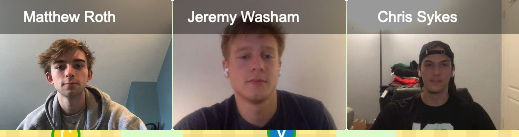
## Team Members Present
* Jeremy Washam
* Christopher Sykes
* Matthew Roth
## I. Identify a Common Vision
### Commonalities
*Who makes up your team? What are some common things you are interested in? Tell each other about the things you put down on the survey and expand on some of your passions.*
* Matthew:
* Loves music (and use Spotify)
* Like to plan before diving into code
* Not super familiar with using APIs but can learn quickly/work hard
* Like to start early
* Chris:
* Likes to listen to music
* Don't usually jump into code until having an idea of what needs to be done
* Prefer to start early
* Interested in web development
* Jeremy
* Loves listening to music
* Interested in tracking what I listen to / watch / read (i.e. Goodreads, Letterboxd, etc.)
* Interested in building web apps that are simple, pretty, and user friendly
* Also not famililar with APIs but interested in learning about them
* Arjun
### Inspiration
* General interest in music
* Spotify "Wrapped" End of the Year playlists
* Last.fm
* iTunes top songs and in-depth listening data
### Problems of Interest
* Spotify provides limited access to listening history and data beyond playlists of songs all jumbled together
* Hard to get insight into artists/genres/songs and general listening behavior
* Can be overly complicated on other sites
* Overall, people are interested in having their listening behavior summarized/analyzed (Spotify "wrapped" is super popular)
### Identify
Taking listening data and analyzing / presenting it in a way that's useful and compelling
## II. Narrow In
### Problem Statement
Spotify only provides "Wrapped" once a year and other than that provide little access to or analysis of listening behavior beyond the form of playlists.
Build a tool that provides better access to Spotify listening history and data by analyzing types of artists, genres, songs, and listening behavior over time.
### Rephrase
How we might we provide users with an interesting, useful tool to analyze their own listening history and behavior that is always available and up-to-date?
### Reframe
1. What types of users would find this service useful?
1. Why doesn't Spotify provide users with this type of analysis all the time?
1. What types of data would users find interesting?
1. What would be the best way to show users their data? Mobile, web, both?
1. Should we make this app social? (i.e. let users share their results)
### Choose
*Are any of the reframes more interesting? Choose one.*
#### Coolness
* Opportunity to provide people with insights into their own listening behavior
* Can make suggestions or help people to change their behavior
* Nostalgia!
#### Challenges
* Limits on what we can access through the Spotify api
* Presenting information in a compelling way
* Determining what data we want to use and making it simple/logical
* artists, genres, popularity of artists, etc.
#### Success
* Successful collaboration / workflow
* Build something that's well designed and useful
* Solve the problem! Provide people with better insight into the music they listen to
## III. Survey the State of the Art
*Do some research. Try to find what else is out there that is similar, either products, or technical papers that are related.*
### Similar Goals
* Spotify
* Last.fm
* Apple Music
### Differences
* Spotify does provide some insight in the form of playlists, a recently played tab, and "Wrapped" at the end of the year, but we want to go deeper than what they provide
* Last.fm lets you track your listening history, but the website is super messy and tries to provide music news, social features, and so on... ours aims to be cleaner, simpler, and more user friendly
* Apple Music Replay gives you a list of your top artists and songs, as well as a playlist of your top songs, but we want to go deeper
### Inspiration
* Letterboxd is an amazing website for tracking the movies you watch (like an online movie diary) - it's pretty different from what we would aim to do here, but to me it's the gold standard in tracking the content you consume and presenting it in a useful and interesting way.
* The Wrapped playlist itself is pretty great, I just wish they let you access the data more often than once a year.
## IV. Team Dynamics
### Schedule
* Zoom link - https://dartmouth.zoom.us/j/94736623244?pwd=SThvZ2lkTW1SSHlPWVFBek12TWc5dz09
* Password: cs52
We're all pretty flexible, aiming to meet most days in the afternoon, around 4PM. Arjun has a 2A and Chris lives in Hawaii so he's 6 hours behind, so this should be perfect.
### Responsiveness
*How often should team members be expected to check and respond on Slack?*
Check in often on Slack, at least a few times every day
### Group Decisions
*What types of decisions need to be discussed and approved by the entire group?*
* Schedule / deadlines
* Workflow / division of labor
* User experience
* Design
* Stack (what tools to use)
### Individual Decisions
*What types of decisions can be made by a single person?*
* Solving problems within an assigned task
* Putting together ideas / designs to share with the group
### Conflict Resolution
*There are three main types of conflict that tend to occur in group projects*
* *Creative differences: disagreement on any decisions related to the product*
* *Personal differences: friction between people due to manner or words said*
* *Ghosting: consistent missed deadlines or lack of contribution*
*Your group should decide on a plan of action to deal with each type of conflict. There can be multiple levels to each plan. Involving the TA's or instructor can be part of it. Try to be specific*
* Creative differences should be designed democratically - let anyone pitch any idea they feel passionately about then decide as a team what we want go with
* Personal differences hopefully won't come up, but if they do they should be handled between group members or as a group, only involving TA's or Tim if absolutely necessary
* Ghosting should be monitored with strict deadlines, handled as a group ideally and then potentially get Tim involved if it gets bad
 Sign in with Wallet
Connect another wallet
Sign in with Wallet
Connect another wallet