# Theatrical Blocking for Table Scapes
Theatrical blocking usually refers to set movement for an actor on a stage. While some of this blocking can be written into the script (aka stage directions), most blocking decisions are made by the director in rehearsals, and are often found through the actor's natural choices on stage.
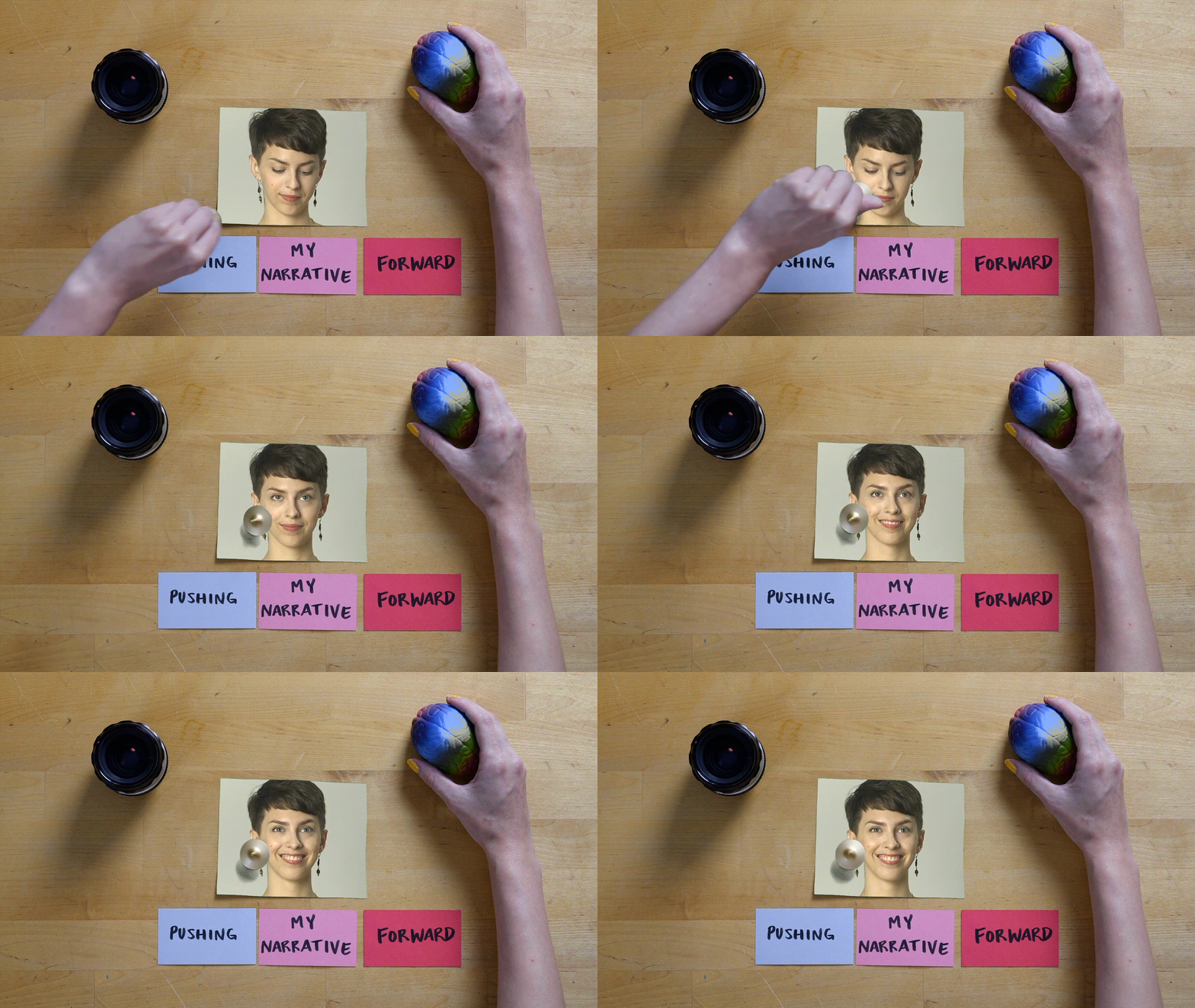
In creating your Intro Mission Sequence, you can think of the table setting as one of your stages, as it is the performance space for your set, props, and characters. Blocking your table stage involves making choices about the movement and presentation of your script. What choices can you make to push your narrative forward?
## Phase 1: Learn the Space
You can't set blocking without first knowing what is available to you. What are the possibilities of your space?
Phase 1 is intended for you to get a feel for using the space, props, and characters in a performance. In this phase you can use improvisation and play to break out of the literal and explore the movement of space. On a theatre stage, this might look like taking a walk around the space, moving set pieces, trying on different levels, etc...
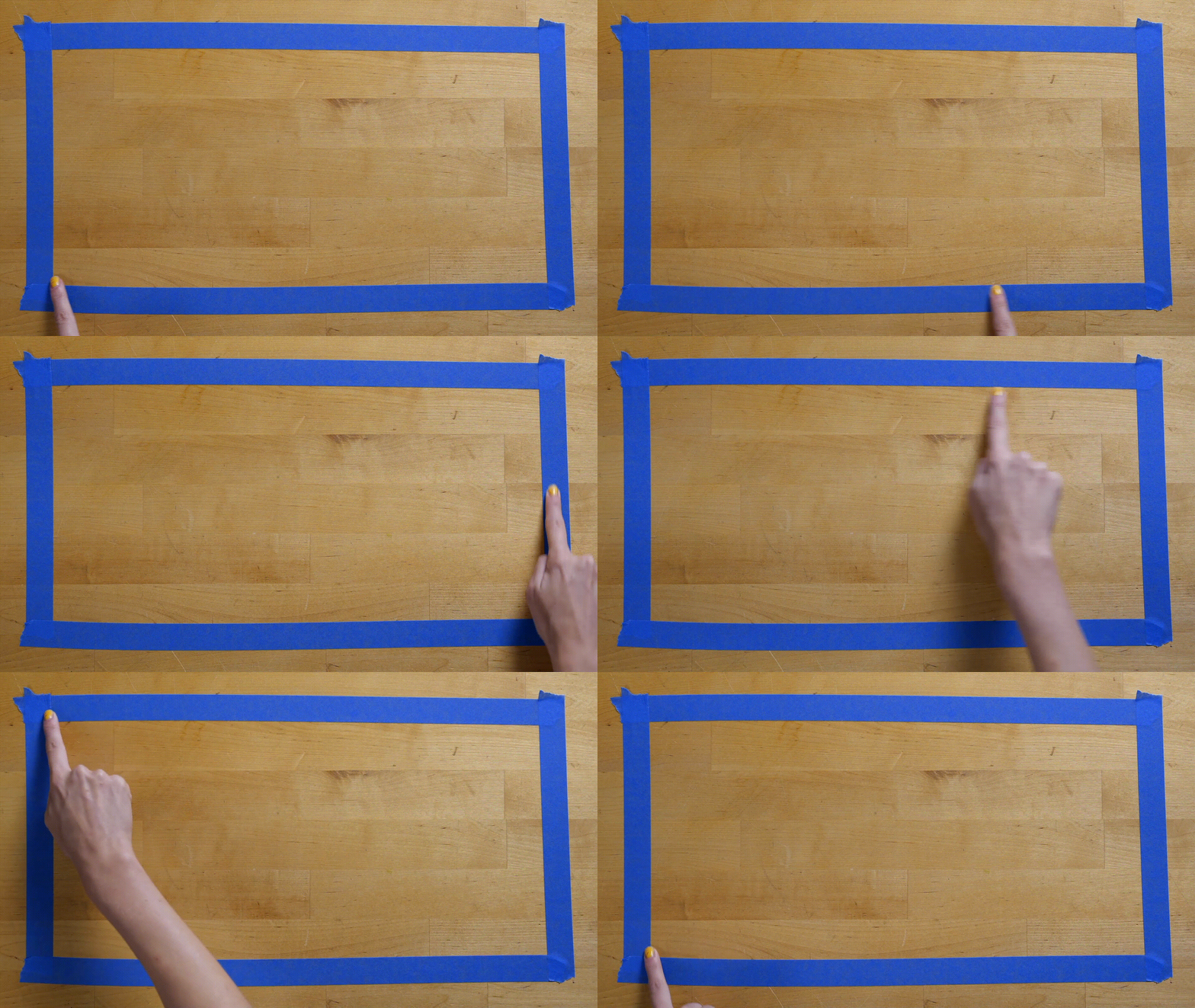
You might consider **setting the parameters of your stage** using tape or other non-permanant mediums. This parameter represents the edge of the camera shot, and outside of them is the "wings" that are not visible to your audience.
-
***Activity:***
**Choose three props in your space.** These could be as simple as three cards labeled 1,2,3, cut out shapes, or objects around the room. Spend some time improvising with these props in your stage while reading your script. Feel free to add in other props/characters. Consider the following prompts to play with:
* How little space can you take up?
* How much space can you take up?
* How fast can you bring your props on stage?
* How slow can you bring your props on stage?
* Can you enter your props without putting your hands on stage?
* Can you layer your props?
* Can you tell a story with a beginning/middle/end?
If you aren't working with a script, consider improvising with storytelling or using the following script:
| Greeting (Hello, Welcome!) |
| -------- |
| **Name** |
| **Describe your commute here today**
Don't forget the obvious characters -- yourself and your hands!
## Phase 2: Cast Your Show
After exploring the space and experimenting with what is possible, you're ready for stage 2, where you can start making choices about the key characters in your piece. Characters are the driving force in your content. They interact with external forces and can change over time.
***Activity:***
First, read through your script and circle all the key characters. Anything can be a character - a person, a concept, a place...
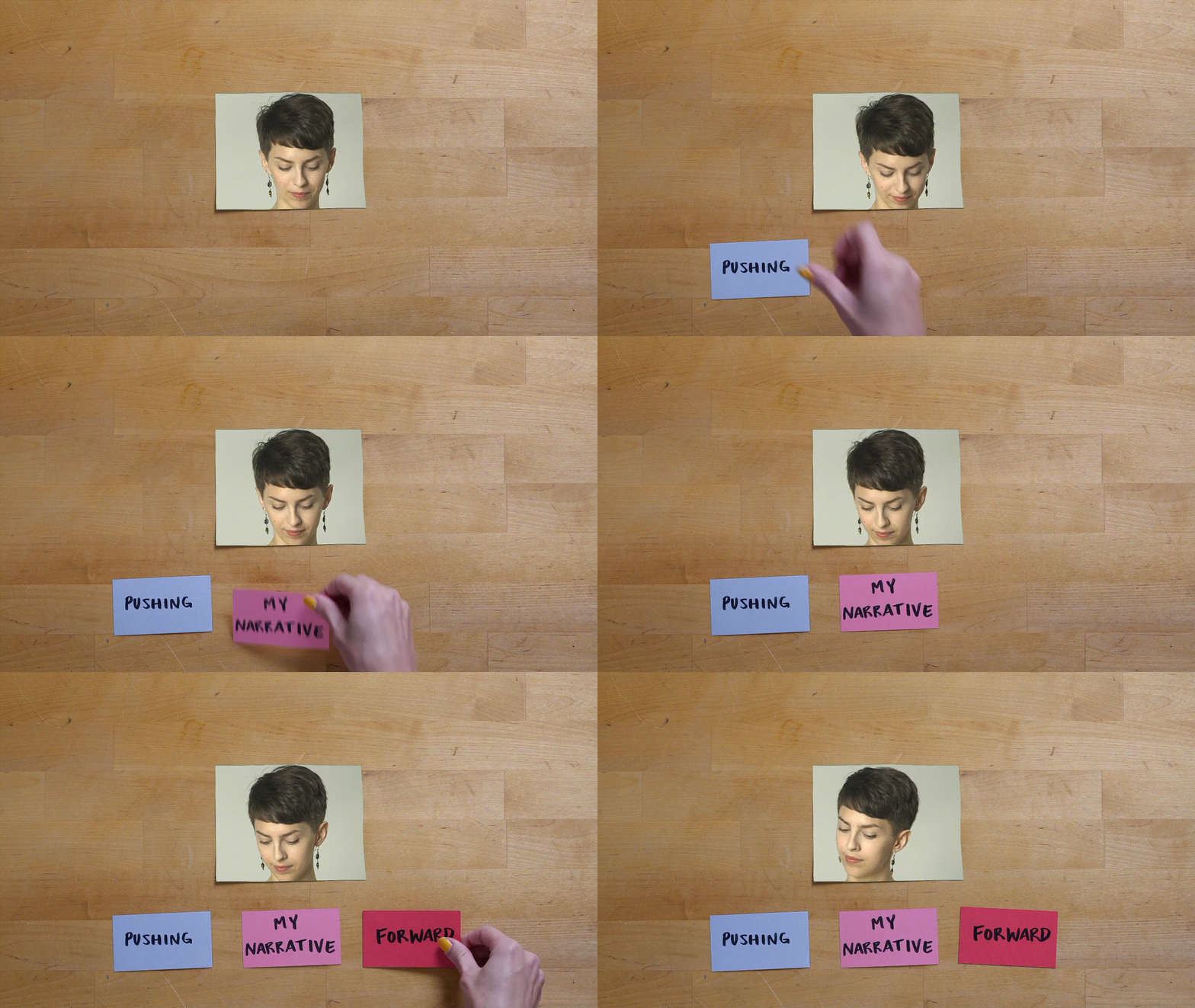
Next, cast who/what you want to play those characters. For example, you are likely to always be a key character in your piece, and so finding the objects/tools that will represent you on the stage might look like drawing a picture of yourself, your name written on a card, a video of you, an action figure...
## Phase 3: Blocking On Stage
Phase 3 is intended to help players begin building a bridge between the possibilities of their space and the specifics of their narrative. What are the different ways your tools, props, and characters can enhance your content? What will push your narrative forward?
**Activity:**
Improvising like we did in phase 1, now use your cast of key characters to be activated on the stage. Read through your script again, playing with how your characters enter and exit, as well as engage with one another on stage. When you find something that feels right, write it down!
Don't forget to think about your transitions and cuts. This might require you to include new props. Remember where your audience (the cameras) are! Play with different ways of giving perspective to them.
## Phase 4: Rehearse, Rehearse, Rehearse!
Once you've made choices about blocking, practice going through your script from start to finish! As you rehearse, you may find yourself needing to make adjustments or coming up with new ideas. Follow this curiosity until you find something you're really happy with. Try rehearsing in front of others and get feedback about your blocking. You might find an option available to you that you hadn't thought of before!
**Activity:** Invite players to hold an "open rehearsal" where they can practice performing their Intro Mission Sequence in front of others and recieve feedback.
 Sign in with Wallet
Connect another wallet
Sign in with Wallet
Connect another wallet