# TheatreLab Activities 9/14
## Warm-up
**Milling & Seething**:
1. Participants will mill about the room but must always pass through the center of the room and move toward the walls or corners. Look for and fill empty spaces
2. Notice breath, jaw, relaxation.
3. Notice others in a room -- make eye contact, say "hello," remember to avoid walking in a circle
4. Find something in the room that intrigues you today. Move close to it, notice something about it that you have never noticed before. Notice the color, shape. What does it remind you of? Where is it in relation to the things around it? Imagine the empty space.
5. Return to milling and seething, describe your object out loud, everything you can remember. If you run out of content, make something up.
## Crafting Introductions
Start in a circle, everyone gets a big sheet and some markers
Draft out your script for the day
1. Greeting (Hey there, Hello, Welcome, Howdy)
2. Your name
3. Working title of your LL project
4. Describe the project in 1-2 sentences, the best you can.
## Filmed Introductions
1. Choose a way to enter the frame
2. Greeting
3. Your name + Signature Gesture
5. My project is called "x"
6. Describe the project in one sentence, the best you can.
7. Choose a way to leave the frame
## Personalized Gesture
Gesture is "shape" with a beginning, middle and end
Beginning: Initiation point (Point A)
Middle: Pathway from A to B
End: Final (Point B)
**Behavioral Gestures:** Everyday gestures (waving goodbye, shrugging, pointing)
* Mill & Seeth, practice behavioral gestures (saying goodbye, grocery shoopping, at the park, driving, sick with a cold, telling someone to be quiet)
**Expressive Gestures:** show an inner emotional state, like a desire, idea, or value. It is abstract and symbolic.
* Mill & Seeth, practice expressive gestures (joy, fear, love, expansion, trust)
**Signature Gesture:**
Why should you create a signature gesture? For starters, it creates an interesting physical layer to your character. A signature gesture helps to identify your character from the others through their unique movement. It shows off your character’s personality.
* Create a gesture that represents your character in the Learning Lab.
* Start by identifying the shape you want your gesture to end in -- the lasting impression
* Identify an origin point. What part of the body initiates your gesture?
* Find a unique way to fill the space between the beginning and end of your gesture.
* Return to Milling and Seething, when you pass someone, stop and do your gesture to them
Side coaching: Play with speed of your gesture, heaviness, repetition, size
## Object Blocking
Find something in the room that you are curious about. Perhaps it is something you have used many times before, or soemthing you have not seen in some time. Go grab this object and bring it back to the circle.
Tell a story with your object that accompanies your script.
1. Have your object make an entrance
2. Have your object greet the audience
3. Have your object gesture with your name
4. Enter your second object as you introduce your title
5. Have your two objects interact during your description.
6. Find an ending for your two objects. Maybe an exit?
## Exits & Entrances
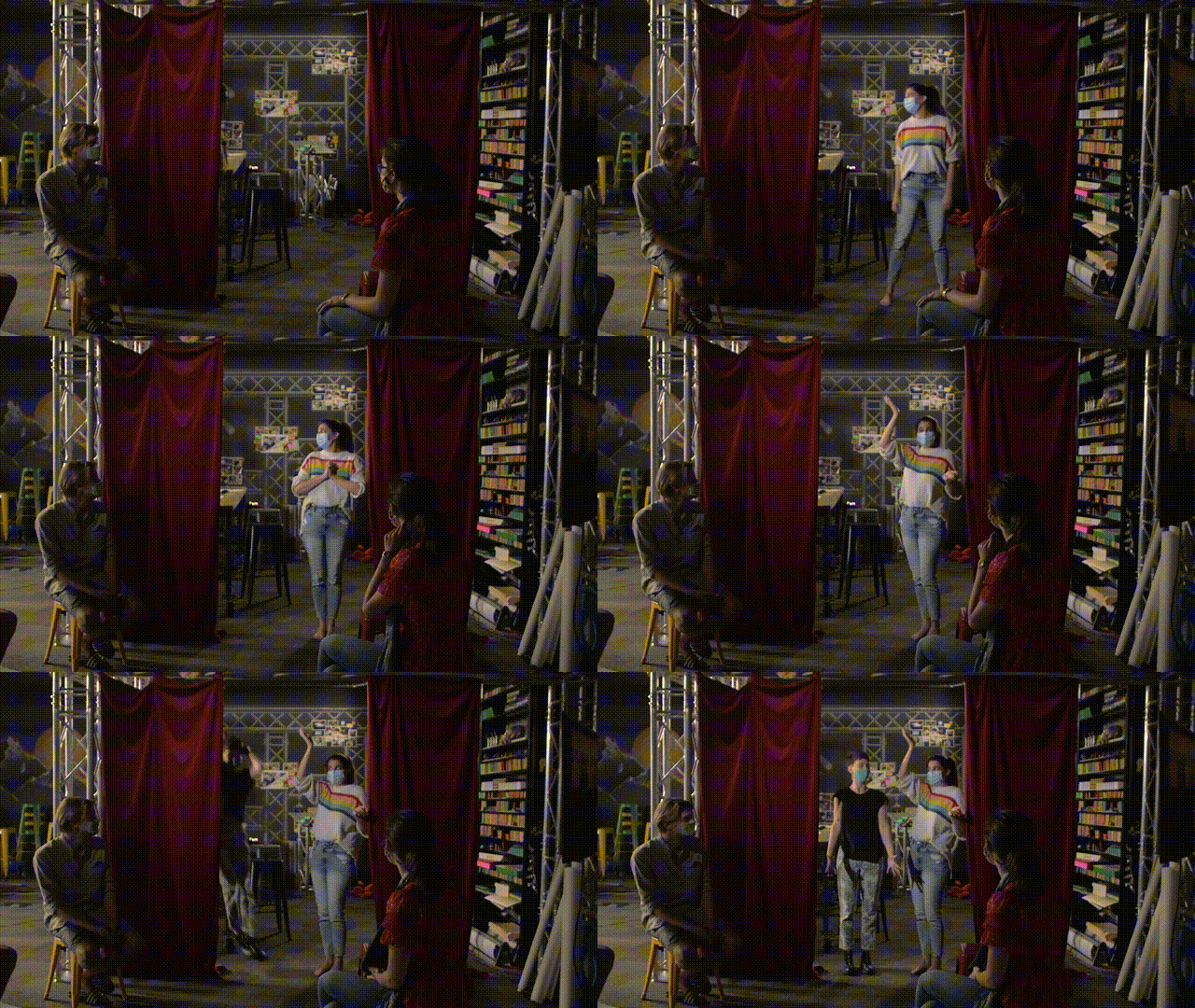
Characters don't just arrive onstage and say their lines; just like in real life, each character arrives to the scene coming from somewhere, or in a certain mood based on what is going on in their life. Each entrance conveys a different feeling.
Think gaze, orientation, posture, speed
* Practice different tones of entering (signature gesture) and exiting
* Nervous, Excited, Confused, Focused, Annoyed, Tired, Bored
* Duet: Person 1 enters with an exaggerated tone. They introduce themselves and their gesture. Person 2 comes on with a very different tone, and person 1 matches that person's tone, tells us what they do at the Learning Lab, then exits, maintaining that tone. Then Person 2 introduces themselves and their gesture. Next person comes on, so on and so forth.
## Filmed Introductions
1. Choose a way to enter the frame
2. Greeting
3. Your name + Signature Gesture
5. My project is called "x"
6. Describe the project in one sentence, the best you can.
7. Choose a way to leave the frame
 Sign in with Wallet
Connect another wallet
Sign in with Wallet
Connect another wallet