# On Gesture
A gesture is a form of non-verbal communication in which visible bodily actions communicate particular messages, either in place of, or in conjunction with, speech. There is debate within theatre and dance on where gesture ends and dance begins. Some say that gesture is movement of any body part that is not weight bearing while others are more liberal in their understanding of gesture as any movement that expresses something from the inner world.
## Kinds of Gesture
**Behavioral Gestures:** Behavioral gestures are everyday gestures — they are recognizable and common. Behavioral gestures can further be broken down into private and public gestures, differentiating between the actions we perform by ourselves or in front of others.
Behavioral gestures are great tools to infuse your communication with relatability and recognition. Used strategically, behavioral gestures can enhance the authenticity and presence of a performance. Most of us naturally use behavioral gestures when we communicate. Try paying attention to the way you use these gestures, and see if you can be even more deliberate about them.
(E.g. waving goodbye, shrugging, pointing, scratching)
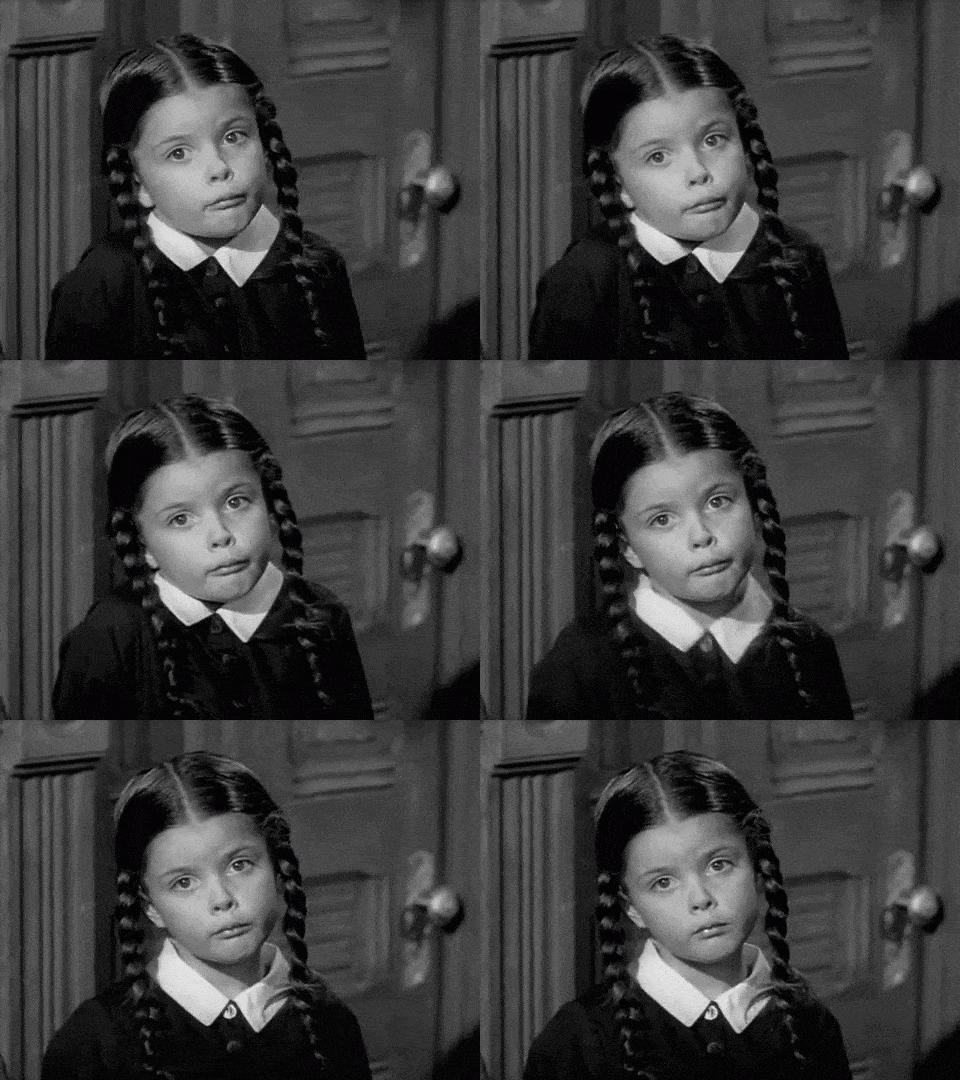
**Expressive Gestures:** Expressive gestures show an inner emotional state, like a desire, idea, or value. It is abstract and symbolic. Expressive gestures are the gestures that can help us communicate abstract ideas and concepts non-verbally. Infusing your performance with expressive gestures helps audiences understand the intention and meaning behind what you are communicating. When used strategically, expressive gestures can be used to emphasize key concepts and provide visual representation of abstract ideas.
(joy, expansion, yellow, night)

## Parts of a Gesture
Gesture is "shape" with a beginning, middle and end
**Beginning:** What is the initiation point? The beginning of your gesture starts a disruption in your neautral stance. What part of the body moves first? Does it start from my elbow? My hand? The tip of my middle finger? These are some questions to ask yourself when developing the the beginning of your gesture. (Point A)
**Middle:** How do I get from Point A to Point B? The middle is where to meat of your gesture lives. You get to choose the journey from your initation to your lasting impression. Is the path simple or complex? Is it light and quick? Slow and heavy? Are there other body parts that get involved? Playing around with things like weight, repition, and size can help fill out the middle of your gesture.
**End:** What is the lasting impression of my gesture? The end of your gesture is a final shape — the image you want to leave your audience with. What is the thesis of my gesture? What is the culmination? What is the final thought of the thing I am trying to convey? (Point B)
***Start by creating a Point A and Point B, and then experiment with different ways to fill the "middle" section.***
## Developing a Signature Gesture
Why should you create a signature gesture? For starters, it creates an interesting physical layer to your character or idea. Signature gestures can be used to deepen your understanding of something abstract, whether it be a project, role, system, etc. A signature gesture helps to identify your idea from others through unique movement. This can be particularly helpful for abstract ideas that are difficult to communicate through language, or for ideas that are not fully fleshed out.
Create a gesture that represents your character/role/project in the Learning Lab.
* Start by identifying the shape you want your gesture to end in -- the lasting impression. What is the output/goal of this idea?
* Identify an origin point. What part of the body initiates your gesture? Does this idea have a small start or a big one? Where and how does it start? What do we already know about this idea? Perhaps it will help to think about how you started at the learning lab, the idea your project started as, or the way you enter a room.
* Find a unique ending for your gesture, an image you want to leave people with. Think about the kind of impact you want your role and/or project to have. How do you want people to feel? Is the impact big or small? Slow growing or quickly implemented?
* Find a unique way to fill the space between the beginning and end of your gesture. What is needed to get from the start to the finish? How do you anticipate this to feel? Is it a slow build or chaotic back and forth?
* Perhaps as you are filling your gesture, you find that you need to make changes to the beginning and ending. Feel free to let these changes take shape.
Side coaching: Play with speed of your gesture, heaviness, repetition, size. Try communicating it very casually and very seriously. Tell this to someone who knows the project very well, then tell it to someone who is hearing this for the first time.
## Gesture Counterpoint Game
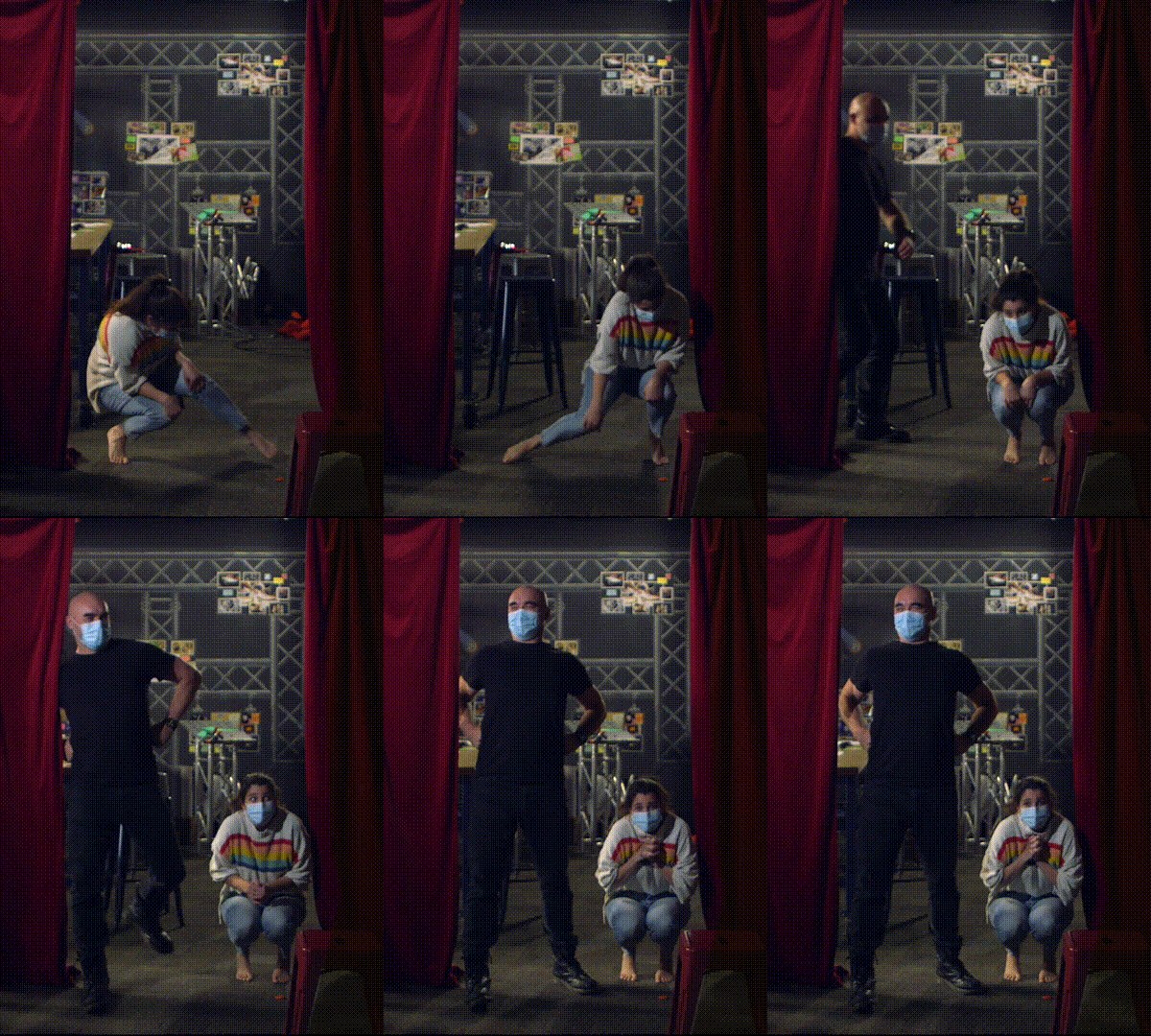
1. Find (or make) a set with wings (the hidden areas to the left and right of the stage where actors wait before they make an appearance).
2. Person 1 will enter stage and introduce themselves (Hi, my name is...) with a particular gesture, using their voice and physicality to match the gesture they give.
3. Person B will enter the stage from the wings, with a gesture that clearly contradicts Person A's gesture. Person A will then match Person B's gesture and introduce their role at Learning Lab (and I am a...) and exit the stage into the wings.
4. Person B will then introduce themselves, and a new person (Person C) will enter the stage with a contradictory gesture to Person B
5. Continue the cycle!
Side coaching: Invite players to experiment with the size and duration of their gesture (e.g. is the gesture just with your hands or your whole body? Does it move while you speak or hold still?) Remind players to think about how ther voice and facial expression and compliment their gesture to give a clear emotional undertone.
 Sign in with Wallet
Connect another wallet
Sign in with Wallet
Connect another wallet