# "Moves of Immersion" Study 21-22
## Introduction to Immersive Experiences
What kind of immersive experiences do we wish to evoke in the learing lab, what are the tasks that can support these experiences, and how can we manipulate the space to facilitate these tasks?
To be **"immersed"** is to involve one's self deeply into an activity or experience.
An **"immersive experience"** pulls a viewer into another real or imagined world, enabling them to manipulate and interact with their environment, making them a participant rather than a viewer.
Making an experience "immersive" involves giving participants opportunities to engage with the space and feel a sense of participation and self-direction. The goal of immersive experiences is to shift your audiences from **observer to participant.**
## Immersive Theatre & other notable examples
Immersive theatre, sometimes referred to as "interactive theatre" or "choose-yourr-own-adventure theatre" differentiates itself from traditional theatre by recoming the stage and immersing audiences within the performance itself. This is often accomplished using a site-specific location, allowing audiences to converse with the actors and interact with their surroundings, which often guides the direction the story goes in.
—————————————————————————————————————————————————
### Sleep No More
Sleep No More is an NYC-based immersive theatre production that adapts Shakespeare's Macbeth in a dimly-lit 1930s-era establishment, inviting audience to move through the settings, interact with the props, or observe the actors at their own pace.

—————————————————————————————————————————————————
### Haunted Houses

—————————————————————————————————————————————————
### Underground parties

In all of the examples above, these artists used carefully designed set, lighting, and acting to get their audiences to move through the space and interact with the set. Although it may feel like a freely chosen adventure for the audience, these experiences are carefully designed to focus their audience's attention on certain areas, objects, and tasks. However, it doesn't necessarily take a high level of production to incorporate immersive experiences into a space or event.
—————————————————————————————————————————————————
### Hospital Wayfinding
Have you ever been in a hospital and noticed the different colored floor pathways? These lines are intended to help visitors naviagte their way around the space, leading to different areas of the hospital. This experience serves a functional purpose, not an aesthetic one, it is a great everyday example of how we use "production elements" to curate a particular experience for participants.

## Study Objectives
Using the Learning Lab as our site-specific location, I'm inviting LLUFs to design their own "immersive experience" using production elements available to us at Bok. This desing study is meant to invite LLUFS to:
* get to know the studio & its modular design
* envisioning ways to create immersive experineces during LL events
* practice using Canva slides
* collaborate on a project with one another
In pairs, we'll invite LLUFs design an immersive experience for students based on the needs and desires of the learning lab. LLUFs will experiment with using different production elements to facilitate these kinds of experiences. Each pair will be assigned a "environmental aim" to we strive for in the learning lab, design a mood board as inspiration, come up with an immersive task/experience to support their assigned aim, and identify at least one way they could use production elements facilitate the task.
Here's how they'll do it!
## Part 1: Mood Boarding the Aims
The overarching goal for each pair is to create an immersive experience for students in a workshop. But what exactly do we want students to be immersed in?
Each pair will be assigned (draw from a hat?) an environmental aim that Marlon has for the Learning Lab. These aims will likely start with something like "to create a sense of..." or "Encourage..."
Examples of an environmental aim might be:
* Encouraging experimentation
* Creating a sense of intimacy
* Encouraging collaboration
* Encouraging risk-taking
* Creating a sense of play
Once they've been assigned a purpose, each pair will take to the canva "moves of immersion" slide deck to create a mood board based on their environmental aim. The will be asked to imagine a space that satisfies their assigned aim. What are the sights, sounds and feelings? And most importantly - what are people ***doing*** in this space? Include both images & text!
Ex: "Creating a sense of community"

## Part 2: Coming up with the experience
Once each pair has designed a mood board for their aim, they can use it as a jumping off point to come up with an immersive experience and/or task that supports their aim.
The task should be actionable, without yet naming the specific supplies or "production elements" they could use the complete the task. Your task might be something as mundane getting students to walk around the whole space, as functional as getting students to gather their own materials, or as creative as getting students to creatively design their own nametag.
LLUFs will start by looking at their mood board and identifying the activities they notice. What are people doing on their mood board, and how can we alter those activities to fit the needs of the learning lab?
This is your first challenge: to come up with a way to achieve your environmental aim *through* or *by* an immersive exprerience.
Your task will likely start with somthing like "getting students to..."
Examples of tasks might be:
* Getting students to gather in one corner of the room
* Getting students to walk across the space multiple times
* Getting students to gather their own supplies from the shelves
* Getting students to divide themselves into two groups
* Getting students to ask questions
* Getting students to experiment with microphones
* Getting students to share their work with each other
* Getting students to collaborate with someone they have never worked with before
Notice that none of these tasks explain "how" I'm going to get students to do those things. That will come next!
Ex: (To be changed with new language)
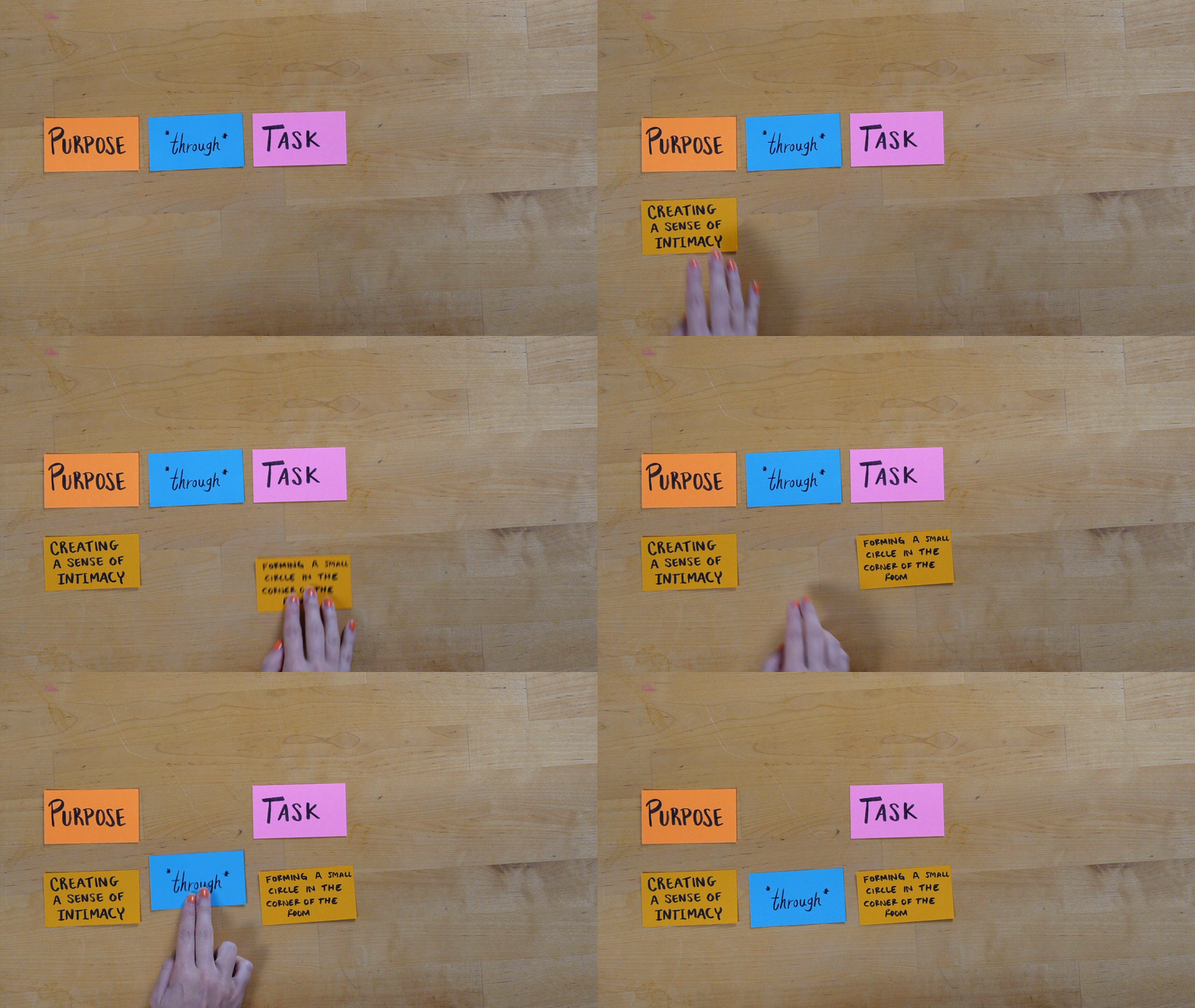
^ Here my aim is to create a sense of intimacy *by* getting students to form a small circle in the corner of the room.
## Part 3: Experiment with "production elements"
Now onto the HOW! How will you facilitate students to engage in your immersive task?
Production elements are any tools that you can use to help students engage with the space in a particular way. These elements could be part of the physical set of the space (chairs, tables, lights, curtains, tape), as well as set of directions (through signage, people, labels, script etc.) Some examples of elements might include:
* light
* curtains
* signage
* instructional script
* floor tape
* colored paper
* people (yes, you!)
* screens
The experience is facilitated *using* your production elements.
See example below:
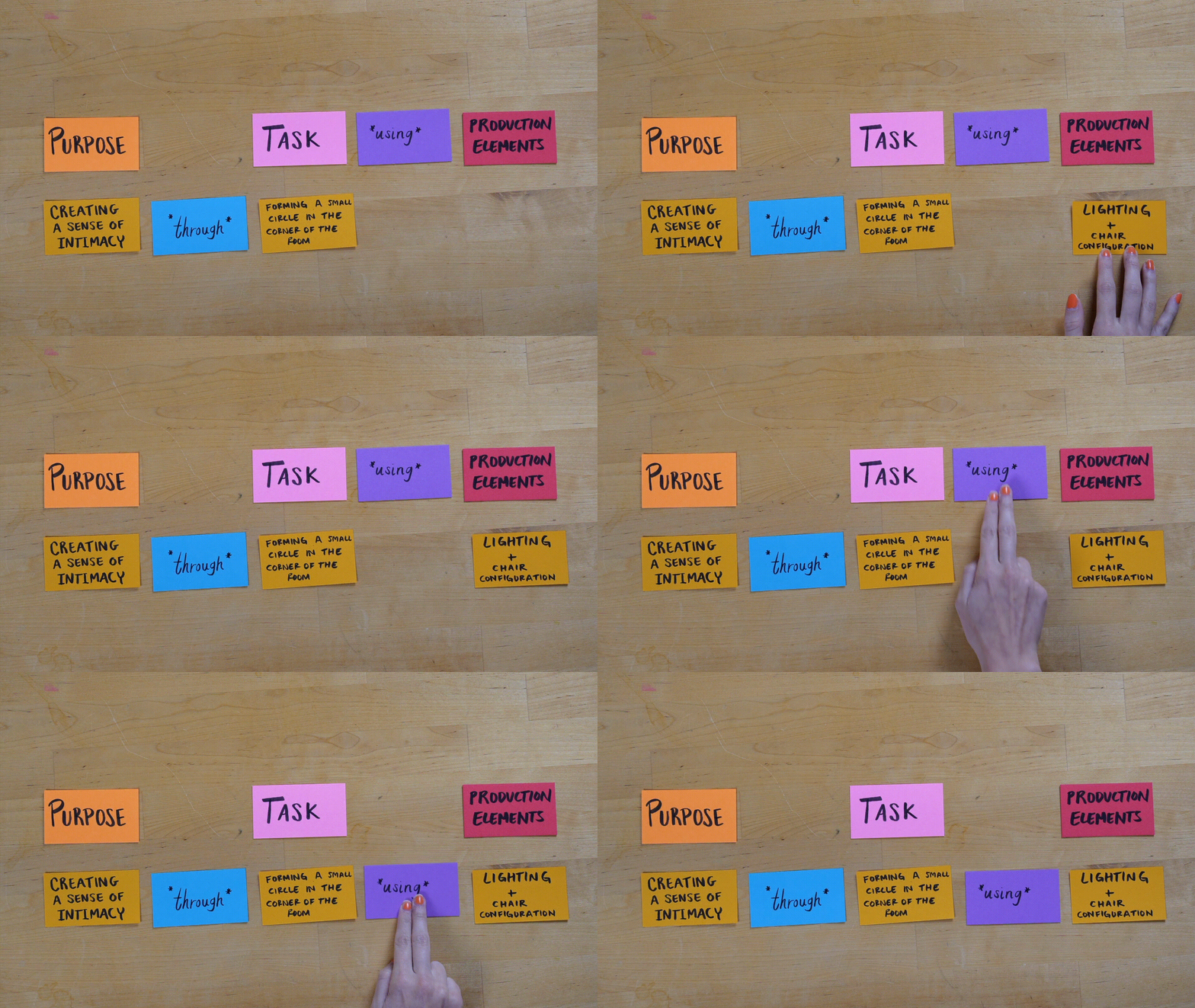
^ Here my design will be to **create a sense of intimacy** through having students **form a small circle in the corner of the room** using **lighting and chair configuration**.
Each pair will come up with at least one way of using production elements to complete their task, though they will be encouraged to consider multiple ways
## Part 4: Mood board a proposal!

______________________________
Experiment with different elements in the Learning Lab in enacting your task for your purpose. Play with different ways of using the elements -- set up curtains, turn on lights, create signs, make pathways on the floor...get creative as you want!
Jessi will be around on Tuesdays from 12-3 and Wednesdays from 10-2 to assist you, and Jordan is around (X).
Test out your study on yourself and on others! Do you seem to achieve the purpose you intended?
Make sure to take pictures of all the different things you try.
**(Check in with Taylor about this)*
Might we also want to include documentation via recording?
The formula:

The example:

Once you feel good about your study, mood board a proposal for us!
Purpose ideas:
* Encouraging the use of materials
* Creating a sense of intimacy
* Encouraging collaboration
* Creating a sense of risk-taking
Tasks ideas:
* Draw attention to one part of the room
* Get students to hang up their coats in a specific area
* Create a sense of inclusion
* Get students to gather their own supplies from the shelves
* Get students to divide themselves into two groups
* (Get students to engage with )
Elements ideas:
* Chair configuration
* Lights
* Curtains
* Floor tapings
* Signage
* Vocal Directions (Script)
 Sign in with Wallet
Connect another wallet
Sign in with Wallet
Connect another wallet