## [234\. Palindrome Linked List](https://leetcode.com/problems/palindrome-linked-list/)
Given the `head` of a singly linked list, return `true`_ if it is a _
_palindrome_
_ or _`false`_ otherwise_.
**Example 1:**

**Input:** head = \[1,2,2,1\]
**Output:** true
**Example 2:**
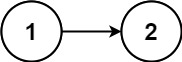
**Input:** head = \[1,2\]
**Output:** false
**Constraints:**
- The number of nodes in the list is in the range `[1, 105]`.
- `0 <= Node.val <= 9`
判斷 linked list 是否有迴文
解法一:遞迴
```cpp=
/**
* Definition for singly-linked list.
* struct ListNode {
* int val;
* ListNode *next;
* ListNode() : val(0), next(nullptr) {}
* ListNode(int x) : val(x), next(nullptr) {}
* ListNode(int x, ListNode *next) : val(x), next(next) {}
* };
*/
class Solution {
public:
bool isPalindrome(ListNode* head) {
ListNode* cur = head;
return helper(head, cur);
}
bool helper(ListNode* head, ListNode*& cur) {
if (!head) return true;
bool res = helper(head->next, cur) && (cur->val == head->val);
cur = cur->next;
return res;
}
};
```
:::success
- 時間複雜度:$O(N)$
- 空間複雜度:$O(N)$
:::
```cpp=
/**
* Definition for singly-linked list.
* struct ListNode {
* int val;
* ListNode *next;
* ListNode() : val(0), next(nullptr) {}
* ListNode(int x) : val(x), next(nullptr) {}
* ListNode(int x, ListNode *next) : val(x), next(next) {}
* };
*/
class Solution {
public:
bool isPalindrome(ListNode* head) {
if (!head || !head->next) return true;
ListNode* slow = head;
ListNode* fast = head;
stack<int> stk;
stk.push(head->val);
while (fast->next && fast->next->next) {
slow = slow->next;
fast = fast->next->next;
stk.push(slow->val);
}
if (!fast->next) stk.pop();
while (slow && slow->next) {
slow = slow->next;
int tmp = stk.top(); stk.pop();
if (tmp != slow->val) return false;
}
return true;
}
};
```
:::success
- 時間複雜度:$O(N)$
- 空間複雜度:$O(N)$
:::
不用 stack,空間複雜度 $O(1)$ 的解法
```cpp=
```
:::success
- 時間複雜度:$O(N)$
- 空間複雜度:$O(1)$
:::
 Sign in with Wallet
Connect another wallet
Sign in with Wallet
Connect another wallet