# Magnetism I - Explain magnetic field lines with contour lines
## Catalog
* I、Short version
* 1-1、Iron balls and balloons
* 1-2、Explain magnetic force
* II、Long version
* 2-1、Magnetic field lines<->Contour lines
* 2-2、Current<->Pressure
* 2-3、Spin of electron<->Twisting force
* 2-4、Interaction between two magnets
## I、Short version
### 1-1、Iron balls and balloons
* Imagine you have a rubber sheet, you put an iron ball on it, the iron ball will make a pit on the rubber sheet.
* If you put a balloon under the rubber sheet, the balloon will make a mountain on the sheet.

* What about two balls?
* If there are two iron balls, they will form two small pits, and merged into a bigger pit later.
* If there are two balloons, they will form two small mountain, and merged into a biggger mountain later.
* If there is an iron ball and a balloon, the iron ball makes a pit, the balloon makes a mountain, the pit and the mountain will repel each other.

### 1-2、Explain magnetic force
* Suppose we have a bar magnet, whose N is at the top, S is at below, then in this case, we can imagine that there is a balloon on the left side, and a iron ball on the right side.
* With this model, we can expain the magnetic force with gravity, much like how we explain electrostatics with gravity. I think this model would be easier for us to understand magnet forces more profoundly.
* As for, why the balloon is at the left, the iron ball is at the right, I'll try to explain that later.

* Here we have four arrangemets of two magnets, you can use the model of rubber sheet, iron ball and balloon to simulate what would happen inside your brain.

* But, in electrostatics, the same charge repel, different charge attract, which is different from the case here
* Although, it seems that the model proposed here is more intuitive to me, same things attract each other, different things repel.
## II、Long version
### 2-1、Magnetic field lines<->Contour lines
* When I try to recall, what I've learned in middle school and high school, I remember seeing pictures like this, showing the magnetic field lines of tow magnets

* This is how I used to understand them. When tow magnets attract each other, there are some lines connecting two magnets, just like the cheeze will have some lines when we pull it up, so gives us the feeling of pull.

* When the two magnets repel each other, the magnetic field lines looks like two fan blowing each other, the flow of air will turn around, so give us the feeling of repel.

* Although the old way to explain the magnetic field lines is quite intuitive already, here I want to use contour lines to explain magnetic field lins.
* Actually, magnetic field lines should be understood as contour lines.

### 2-2、Current<->Pressure
#### Straight conducting wire
* Here is a picture of the magnetic field lines of two conducting wire placed together.You might have seen them before in your text books.

* If we interpret current as pressure, the current flowing into the paper will form a pit, the current flowing out of the paper will form a mountain.
* So you can interpret current flowing into the paper as an iron ball, the current flowing out of the paper as balloon.
* I used math3d.org, to try to draw the 3D picture to show what it might look like in 3D
* Let's first look at the two wires with current both flowing out of the paper.

* Notice there are infinite peaks formed at the place where wires themself are located, but this is because we suppose the wires are infinitely thin, with no cross sectional area. But in real cases, there are no such wires, so there should be two "round-head" mountains. But, to do that, I would have to do a lot more work, so I just ignore them.
* The contour line in 2D is this, which is the "same direction" case on the picture above.

* I think you might have learned before, that two wires conducting currents of same direction will attract each other, which is called the "Amprer's force".
* I think this can be understood with the model I proposed above, as iron balls attract each other, and balloons attract each other.

* Here's the 3D picture of the "opposite direction "case. One flows in, another one flow out, so there should be a mountain and a pit.

* The contour line in 2D looks like this, which is the "opposite direction" on the above picture.

* The ampere's force of two wires conducting currents of different direction will repel each other, which can be understood with the model I proposed above, the pit formed by iron ball will repel the mountain formed by balloon.
#### 環形導線
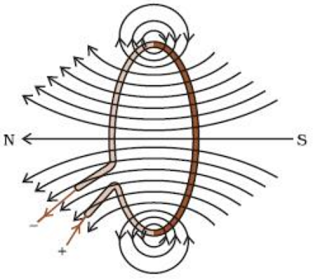
* The cross sectional view of the loop wire looks similar to two wires passing in opposite directions, but the three-dimensional structure is different. It can be regarded as the most basic electromagnetic unit.

#### 螺線管
* If we combine many loop circuits together, it will form a solenoid electromagnet.

* 2d view

* 3d view

* Strengthen the magnetic field,adjust to parallel alignment, it should look more obvious

* It should look like a magnet's magnetic line.

* The magnetic field lines of a bar magnet looks like this

### 2-3、電子自旋<->扭力
* 從上面看起來,磁鐵與螺線管的磁場看起來很像,有什麼關係嗎?
* 電線裡有電子在裡面流動,所以感覺起來有壓力的效果
* 電子的自旋,是最基本的磁場單元,雖然電子不可能是真的在旋轉,因為這樣他的赤道速度會大於光速。
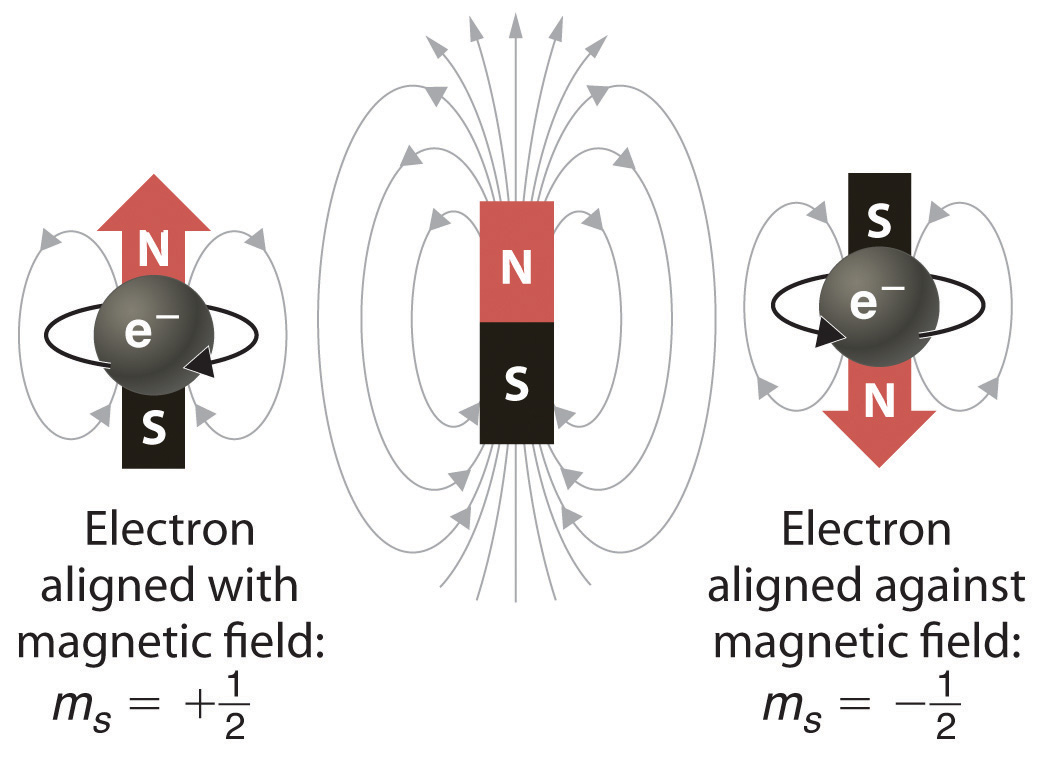
* There are electrons inside all materials, will not be magnetic depending on the way the electrons are arranged, there are paramagnetic, anti-magnetic, anti-magnetic, etc.

* 磁鐵裡面的排列就是很整齊,所以磁力會出來

* 電子的自旋,可以類比於環形導線,磁鐵裡有很多電子自旋,相當於螺線管裡有很多環形線圈,所以兩者的效果很像。我們或許可以理解為,電子自旋是轉動,線圈裡的電子是圓周運動,兩個都會產生扭力。
* 我不清楚電子自旋產生的磁場是怎麼樣,但是我用畢歐沙發定律的形式理解看看
* 3d的扭曲情況會是這樣,這個形狀是我決定,為什麼磁鐵N上S下,左邊是氣球,右邊是鐵球的原因

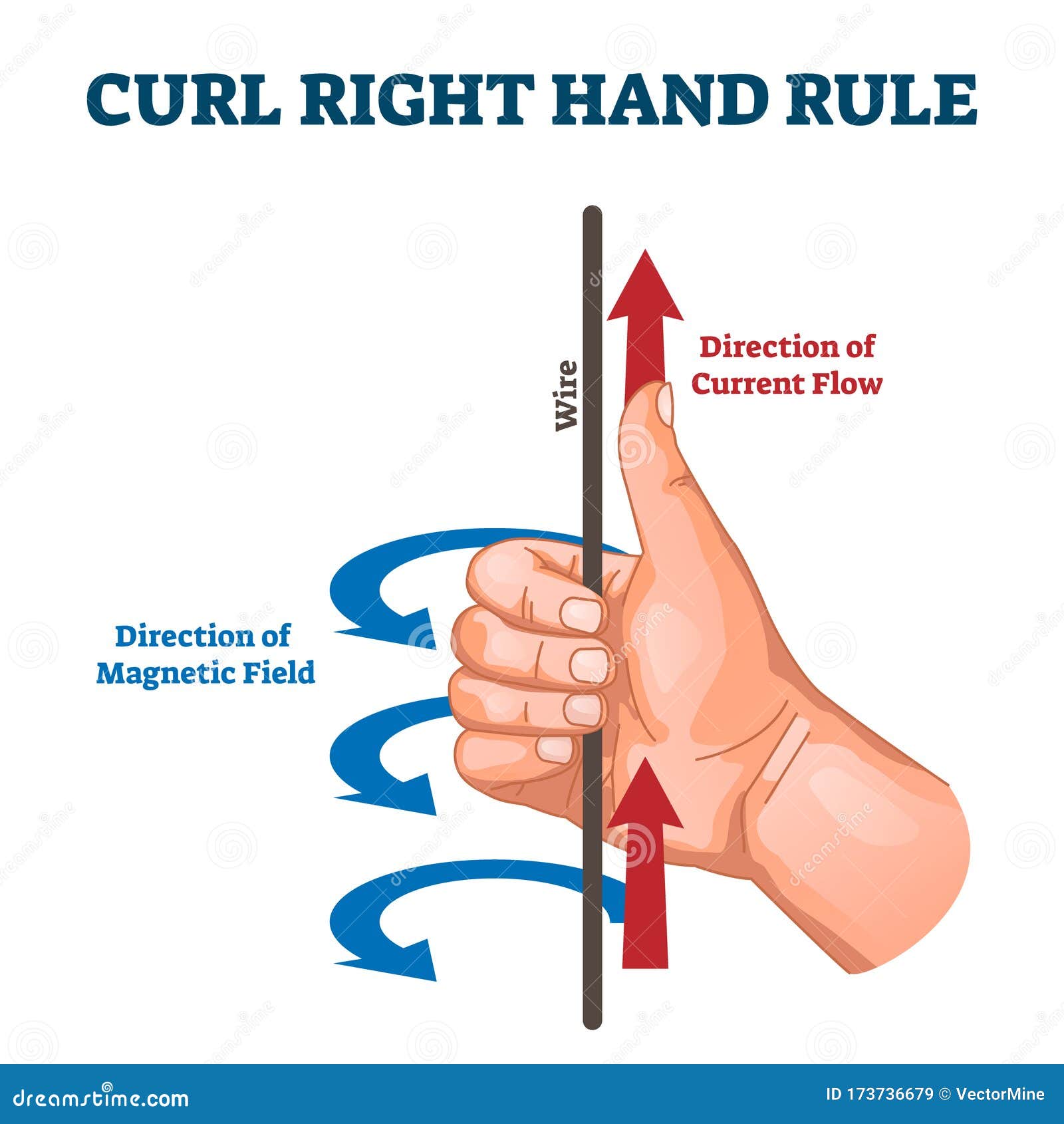
* 因為要符合右手定則
* 2d的等高線看起來大概就是這樣,就跟上面磁鐵的情況很像,不過扁一點

* 到這邊的彩色圖,連結在這邊。
https://www.math3d.org/urMdhXY2a
### 2-4、兩個磁鐵
#### 排一直線,吸引
* 3D,鐵球需引鐵球,氣球吸引氣球,所以兩個會靠近

* 2D,課本圖看起來中間有連線的那個

* 課本圖

#### 排一直線,排斥
* 3D,兩邊的氣球和鐵球都互相排斥,結果就是互相排斥

* 2D,課本圖看起來就是中間有風在互吹的那個

* 課本圖

#### 並排,吸引
* 3D,應該看起來很直覺,中間的兩顆鐵球互相吸引

* 2D

* 課本圖
#### 並排,排斥
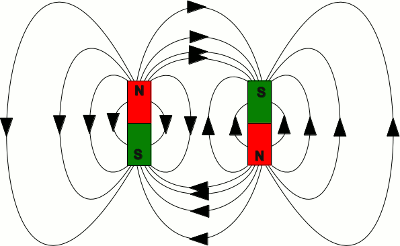
* 3D,中間的鐵球與氣球互相排斥

* 2D

* 課本圖
\

* 兩個磁鐵的連結在這裡
https://www.math3d.org/uwgISuL2C
## 本網頁的連結

* 本網頁PDF版本
https://drive.google.com/file/d/18jXfGRk7iiOfnkjLJB1yjFIXJ1ljRAnh/view?usp=sharing
* 有想法或意見可以寫電子郵件給我(?)
mariokartwii12345678910@gmail.com
* 感謝math3d.org讓我可以輕鬆地畫出這些3D圖
 Sign in via Google
 Sign in via Facebook
 Sign in via X(Twitter)
 Sign in via GitHub
 Sign in via Dropbox
 Sign in with Wallet
Connect another wallet
Sign in with Wallet
Connect another wallet