# Graph Database
[Source](https://neo*.com/)
## What is a Graph Database
Graph database is a database that uses `graph strutures` to represent and store data
It uses nodes to store entities, edges to store relationship

## Graph Data Modeling
### Nodes
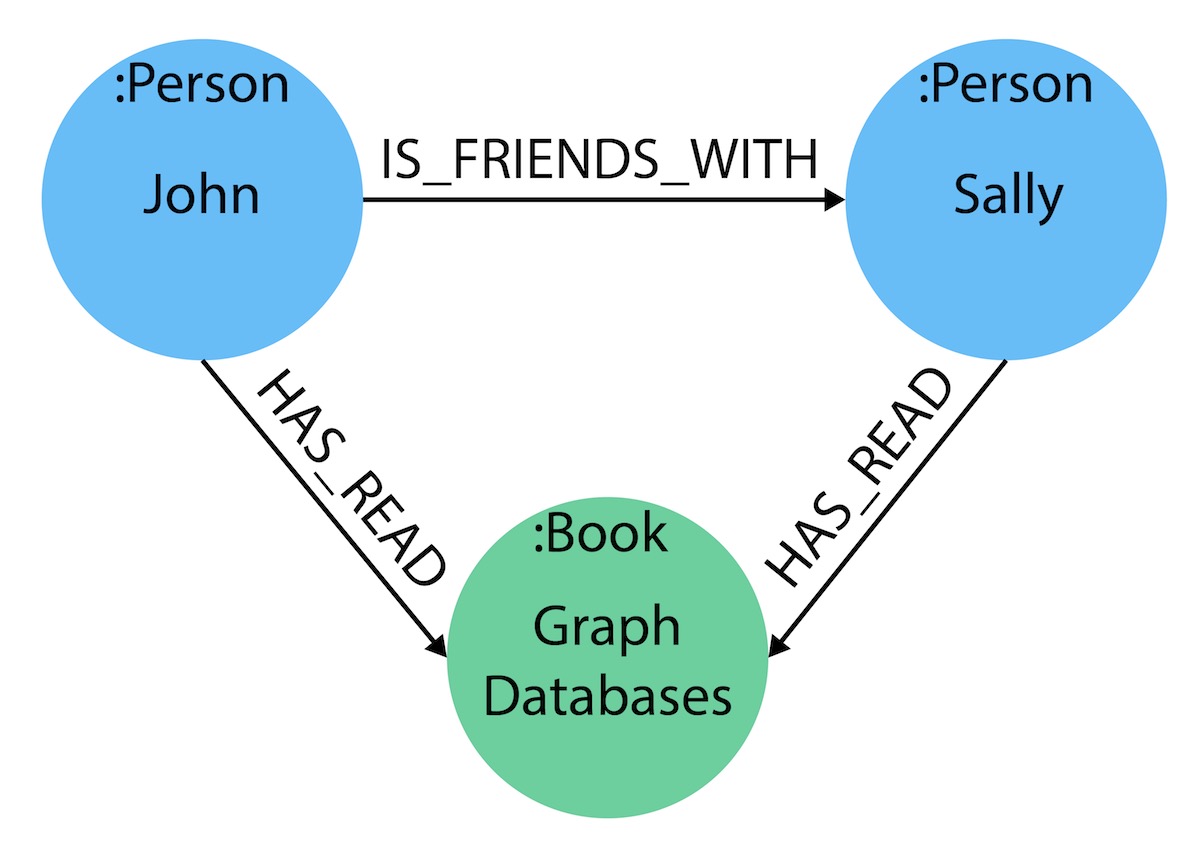
* Nodes are often used to represent entities
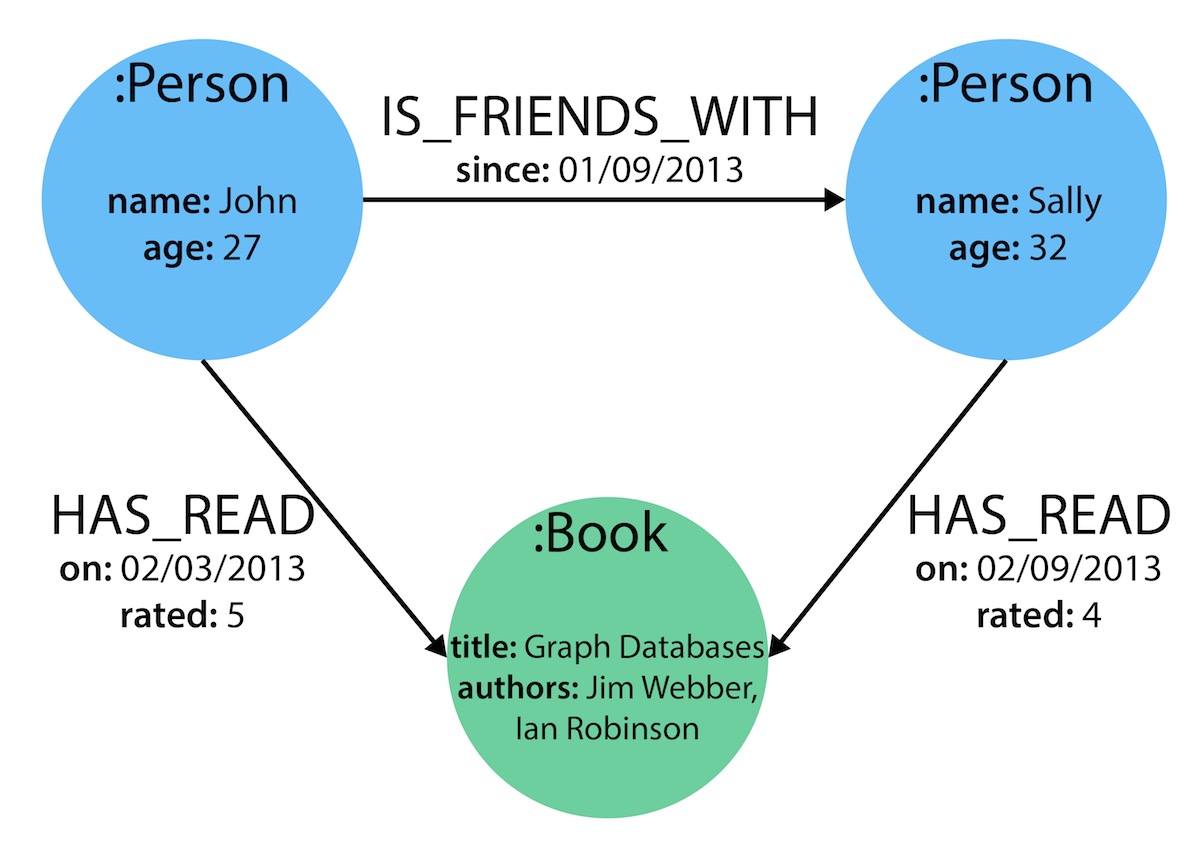
* Nodes can contain properties that hold name-value pair of data and can be assigned roles or types using one or more labels

### Labels
* Label is a named graph construct that is used to group nodes into sets
* A node can be labeled with any number of labels
* Labels make queries easier to write and more efficient

### Relationships
* A relationship connects two nodes and allows us to find related nodes of data
### Properties
* Properties are name-value pairs of data that you can store on nodes or relationships
## When to use Graph Database
### Is Data Highly-Connected?
If the connections within the data are not the primary focus or the graph is sparsely connected, then graph database is not the best fit.
### Is Retrieving the Data more Important than Storing it?
Graph databases are optimized for data retrieval.
A good rule of thumb is, if you don’t intend to use JOIN operations in your queries, then a graph is not a must-have.
### Does Data Model Change Often?
If your data model is inconsistent and demands frequent changes, then using a graph database might be the way to go. Because graph databases are more about the data itself than the schema structure, they allow a degree of flexibility.
## Language
[Cypher](https://neo4j.com/developer/cypher/intro-cypher/): Neo4j's graph query language
 Sign in via Google
 Sign in via Facebook
 Sign in via X(Twitter)
 Sign in via GitHub
 Sign in via Dropbox
 Sign in with Wallet
Connect another wallet
Sign in with Wallet
Connect another wallet