# History Tables AKA Pain
## Unit 1
### Unit 1.1
#### Religious Diversity In China
| Form Of Asian Buddhism | Differences |
| ---------------------- |:------------------------------------------------------------------------------------------------------------------------- |
| Theravada | Focused on personal spiritual growth through silent meditation and self-discipline. It became strongest in Southeast Asia |
| Mahayana | Focused on spiritual growth for all beings and on service. It became strongest in China and Korea |
| Tibetan | Focused on chanting. It became strongest in Tibet |
#### Japan & Feudalism
| Similarity | Difference |
|:---------------------------------------------------------------------- |:----------------------------------------------------- |
| Little social mobility | Daimyo had more power than Nobles in Europe |
| Hereditary Hierarchies | - They had vast lands and stronger than monarchy |
| Serfs | - Europe placed monarchy about nobility |
| 3 Groups | Development of a Shogun |
| - Japan - Daimyo, Samurai, Serf | - Strong leader NOT an emperor with centralized power |
| - Europe - Noble, Knight, Serf | |
| Warrior Code (sort of different) | |
| - Japan - bushido (frugality, loyalty, martial arts, honor unto death) | |
| - Europe - Chivalry (duty to countrymen, God and women) | |
### Unit 1.4
#### Comparing Three American Civilizations
| | Maya | Aztec | Inca |
| -------------------- |:--------------------------------------------------------- |:----------------------------------------------------- |:---------------------------------------------- |
| Region | Mexico/Central America | Central Mexico | Andes in South America |
| Period | 400-1517 | 1200-1521 | 1200-1533 |
| Crops | Corn, Beans, Squash | Corn, Beans, Squash, Tomatoes | Corn, Cotton, Potatoes |
| Trade | Moderate | Extensive | Limited |
| Religion | Polytheistic, some human sacrifice | Polytheistic, Some human sacrifice | Polytheistic, Some human sacrifice |
| Government | Organized city-states, each with a king, Wars for tribute | Powerful king, Wars for captives, System of tribute | Powerful king, Wars for conquest, Mit’s system |
| Technology & Thought | Writing, step pyramids, accurate calendar | Step pyramids, Chinampas, Accurate calendar | Waru waru, Roads, Masonry |
| Reasons for Decline | Drought, Deforestation | European diseases, Subjects rebelled, Spanish attacks | European diseases, Civil War, Spanish attacks. |
#### Comparing Three forms of Slavery
| | Chattel | Domestic | Debt Bondage |
|:------------------------------------------------- |:---------------------------------------------------- |:------------------------------------------------------------------ |:-------------------------------------------------------------------------------------- |
| Description | Slaves were the legal property of the owner | Slaves served as cooks, cleaners, or other household workers | People became slaves, sometimes through mutual agreement, to repay a debt |
| Example | Common in the Americas, 16th century to 19th century | Common in Classical Greece and Rome, and in the Middle East | Common in East Africa before the 15th century and in European colonies in the Americas |
| Was enslavement permanent? | Yes | Often | Not in Theory, although many slaves never regained freedom |
| Were the children of slaves automatically slaves? | Yes | Often | Children often inherited the debts of their parents |
| Did slaves have any rights? | No | Some: laws or customs might prevent a master from selling a slaves | Some: laws or customs might limit how severely a master could punish a slave |
### Unit 1.6
(Identical To Earlier Table)
| Similarity | Difference |
|:---------------------------------------------------------------------- |:----------------------------------------------------- |
| Little social mobility | Daimyo had more power than Nobles in Europe |
| Hereditary Hierarchies | - They had vast lands and stronger than monarchy |
| Serfs | - Europe placed monarchy about nobility |
| 3 Groups | Development of a Shogun |
| - Japan - Daimyo, Samurai, Serf | - Strong leader NOT an emperor with centralized power |
| - Europe - Noble, Knight, Serf | |
| Warrior Code (sort of different) | |
| - Japan - bushido (frugality, loyalty, martial arts, honor unto death) | |
| - Europe - Chivalry (duty to countrymen, God and women) | |
#### Four Types of State-Building c 1200- c. 1450
| Processes | Description | Example |
|:-------------------------------- |:------------------------------------------------------------------------------- |:-------------------------------------------------------------------------------------------------------------------------------------- |
| Emergence of New States | States arise in land once controlled by another empire | Mamluk Empire (formerly Abbasid territory) <br> - Seljuk Empire (formerly Abbasid territory) <br> - Delhi Sultanate (Formerly Gupta territory) |
| Revival of Former Empires | New leadership continues or rebuilds a previous empire with some innovations | Song Dynasty (based on the Han Dynasty) <br> - Mali Empire (based on the Ghana Kingdom) <br> - Holy Roman Empire (based on the Roman Empire) |
| Synthesis of Different tradition | A state adapts foreign ideas to local conditions | Japan (Chinese and Japanese) <br> - Delhi Sultanate (Islamic and Hindu) <br> - Neo-Confucianism |
| Expansion in Scope | An existing state expands its influence through conquest, trade, or other means | Aztecs in Mesoamerica <br> - Incas in South America <br> - City-States in East Africa <br> - City States in Southeast Asia |
## Unit 2
### Unit 2.1
#### Economic Exchange Among Silk Road
| Region | Products Contributed to Silk Road Commerce |
|:------------------------------------------------------- |:------------------------------------------------------------------------------------------------------------ |
| China | Silk, bamboo, mirrors, gunpowder, paper, rhubarb, and ginger. |
| Forest lands of Siberia and Grasslands of Centeral Asia | Furs, walrus tusks, amber, livestock, horses, falcons, hides, tents, saddles, and slaves. |
| India | Cotton textiles, herbal medicine, precious stones, and spices. |
| Middle East | Dates, nuts, almonds, dried fruit, dyes, lapis lazuli, swords. |
| Mediterranean Basin | Gold coin, glassware, glazes, grapevines, jewelry, art works, perfume , wool, linen textiles, and olive oil. |
### Unit 2.3
#### Increased Demand for Specialized Product
| Various Places | Various Goods |
|:---------------------------------------------------- |:-------------------------------------------------------------------------------------------------------------------------------------------- |
| India | High Quality Fabrics(Cotton), Woven Carpets, High-Carbon Steel, Tanned Leather, artisan-crafted stonework. |
| Malaysia & Indonesia | Spice Islands, Nutmeg, cinnamon, cloves, cardamom. |
| Swahili Coastal cities of Mombasa, Mogadishu, Sofala | Enslaved People(Ocran Slave Trade)-Different people from the Atlantic Slave trade and ended up working in seaport communites, Ivory and Gold |
| China | Silk, Porcelain |
| Southwest Asia | Horses, Figs, and Dates |
#### Merchants in Diasporic Communities
| Merchant Community | Region(s) | Products |
|:---------------------- |:---------------------------------------------- |:-------------------------------------------------------------------- |
| Muslim | China, Indian Ocean Basin, Europe | Silk, Paper, Porcelain, Spices, gems, woods, gold, salt, amber, furs |
| Chinese | Southeast Asia, Africa | Cotton, Tea, Silk, Metals, Opium, Salt |
| Sogdian (in Samarkand) | Main caravan merchants along Silk Roads, China | SIlk, Gold, Wine, Linens |
| Jewish | China, India, Europe | Glass beads, Linens, Dyes, Spices |
| Malay | Sri Lanka | Nutmeg, Pepper, Cloves |
### Unit 2.4
#### Comparing Pack Animals
| Animal | Location | Benefits | Drawbacks |
|:------ |:----------------------------------------- |:------------------------------------------------------------------------------------------------------------------------------------------------------------------------------------------------------------------------------------------- |:------------------------------------------------------------------------------------------------------------------------------------------------------------- |
| Camel | Northern Africa & Sub-Saharan West Africa | Able to travel long distances <br> - Can eat thorny plants and drink salty water found in deserts <br> - Has long eyelashes that protect against winds <br> - Only animal that can cross deserts <br> - Does not spook easily <br> - Can carry up to 600 pounds | Requires high level of salt to stay healthy <br> - Can be very aggressive & even vengeful <br> - Cannot be controlled with a bit <br> - Cannot be boarded in a stall |
| Ox | Eurasia & the Americas | Has high level of stamina <br> - Can pull heaviest loads <br> - Unlikely to stray or be stolen <br> - Can survive on local grazing <br> - Tolerates various climates & diets | Moves slowly compared to other pack animals <br> - Requires more water and food than other pack animals |
| Horse | Worldwide | Can run at high speeds <br> - Can be controlled with a bit <br> - Can be used in battle <br> - Can adapt to most climates and terrains | Requires grain to keep fit <br> - Spooks easily <br> - Can be stolen easily <br> - Strays easily <br> - Less sure-footed than other pack animals <br> - Cannot tolerate high heat |
| Llamas | Americas | Maintains traction in mountains <br> - Has calm disposition <br> - Requires little water <br> - Adapts well to cold and mountainous climates | Cannot pull heavy loads <br> - Can carry less than other pack animals <br> - Cannot tolerate high heat |
#### Empires in Western Eurasia & Africa in the 13th Century
| | Mali | Al-Andalus | Byzantine Empire | Kievan Rus |
|:----------- |:-------------------------------------------------------------------------------------------------- |:----------------------------------------------------------------------------------------- |:------------------------------------------------------------------------------------------------ |:----------------------------------------------------------------------------------------- |
| Location | West Africa | Spain | Middle East | Russia |
| Major City | Timbuktu | Cordoba | Constantinople | Kiev |
| Peak Years | 1200s to 1400s | 711 to 1492 | 330 to 1453 | 900-1200s |
| Key Figures | Sundiata - founder who built a strong trade network <br> - Mansa Musa - Political and Religious leader | - Ibn Rushd - Islamic legal scholar and philosopher - Maimonides - Jewish scholar of ethics | Justinian - ruler responsible for the Body of Civil Law <br> - Heraclius - shifted focus to the East | Vladmir I - Converted to Christianity in 989 <br> - Yaroslav I - Codified the Legal System |
| Legacy | Connected West and North Africa through trade and spread Islam through Africa. | Creates a vibrant tolerant society and preserved classical Greek learning. | Fostered Trade between Asia, Europe, and Africa. Would be carried on by Roman legacy. | Developed first large scale civilization in Russia and would spread Christianity Eastward |
### Unit 2.6
#### Cultural Influences of Islam in Afro-Eurasia
| Region | Influences |
|:-------------- |:------------------------------------------------------------------------------------------------------------------------------------------------------------------------------------------------------------------------------------------------------------------------------------------------------------------------------------------------------------------------------------------------------------------------------------------------------------------------------------------------------------------------- |
| Africa | - Swahili language is a blend of Bantu and Arabic and is still widely spoken today <br> - Timbuktu became a center of Islamic learning <br> - Leaders of African states deepened Islamic ties through pilgrimages to Mecca |
| South Asia | - Before Islam, Hinduism and Buddhism were popular - After Islam arrived, Buddhists converted more readily than Hindus because they were disillusioned by the corruption among Buddhist priests <br> - With its emphasis on equality, Islam also attracted lower-caste Hindus <br> - Architure blended Hindu designs with Islamic patterns <br> - Urdu Language had influences from Sanskrit-based Hindi, as well as from Arabic and Farsi, a Persian language <br> - Bhakti poets and missionaries sought links between Hinduism and Islam |
| Southeast Asia | - Muslim rulers on Java combined Mughal Indian features, local traditions, and Chinese-Buddhist and Confucian traits <br> - Traditional Javanese stories, puppetry and poetry absorbed Muslim characters and techniques |
#### Trading Table
| Routes | Trading Cities |
|:------------- |:----------------------------------------------------------------------------------------------------------------------------------------------------------- |
| Silk Roads | - (Chang’an (present-day China) <br> - Samarkand (present-day Uzbekistan) <br> - Aleppo (present-day Syria) <br> - Mosul (Present-day Iraq) |
| Indian Ocean | - Malacca → present-day Malaysia <br> - Calicut → present-day India <br> - Hormuz → present-day Iran <br> - Mombasa → present-day Kenya <br> - Alexandria → present-day Egypt |
| Trans-Saharan | - Gao → present-day Mali <br> - Timbuktu → present-day Mali <br> - Marrakesh → Morocco <br> - Cairo → present-day Egypt |
## Unit 3
### 3.3
#### Religious Schisms Through History
| Religion and region | Schism | Leaders | Nature of Dispute |
| ------------------------------------------- | ------------------------------------------------------------- | -------------------------------------------------------------------------- | ---------------------------------------------------------------------------------------------------------------------------------------- |
| Buddhism in India | Theravada and Mahayana <br> - approximately 300 bce to 100 ce | - Four councils held after the Buddha's death | - Disagreement between emphasis on personal meditation (Theravada) and public rituals and compassion (Mahayana) |
| Islam in Middle East | Sunni and Shia <br> - 632 ce | - Abu Bakr <br> Ali | - Disagreement over the rightful successor to Muhammad as leader of the Islamic community |
| Christianity in Europe and Byzantine Empire | Roman Catholics and Orthodox <br> - 1054 ce | - Pope Leo IX <br> - Patriarch of Constantinople <br> (Michael Cerulairus) | - Disagreement over the role of faifth, issues of salvation <br> - Disagreement over the authority of the pope and difference in rituals |
| Christianity in Europe | Roman Catholics and Protestants <br> - 1517 ce | - Martin Luther <br> - John Calvin <br> - King Henry VII | Disagreements over the rold of faith, the role of the clergy and the pope, how to interpret the bible |
#### Ottoman, Safavid, and Mughal Empires 1450-1750
| | Ottoman Empire | Safavid Empire | Mughal Empire |
| -------- | ------------------------------------------------------------------------------------------------------------------------------------------------------------------------------------------- | ------------------------------------------------------------------------------------------------------------------------------------------------------------------------------ | ------------------------------------------------------------------------------------------------------------------------------------------------------------------ |
| Religion | - Mostly Sunni with some reassure of tolerance under Suleiman <br> - Less tolerance under later rulers | - Mostly Shia <br> - No tolerance; Ismail I made conversion mandatory for Sunni population | - Tolerance under Akbar, but his blend of Islam and Hinduism did not prove popular <br> - Less tolerance under later rulers |
| Taxes | - Taxes on Non-Muslims <br> - Taxes on peasants | - Taxation policies used to encourage adherence to Shi'a Islam | - Taxes on unbelievers were abolished by Akbar but reinstated later <br> - Taxes on peasants |
| Military | - Warriors (often trained Janissaires) were granted villages to provide for their subsistence <br> - The military functioned as a dual authority with central government <br> - Strong Navy | - Warriors were the Qizibash, Turcoman militants who helped establish the empire <br> - Leaders made the military independent of central government <br> - No signifigant navy | - Warriros were granted villages to provide their upkeep <br> - Officials known as zamindars made the military independent of central government <br> - Small navy |
## Unit 4
### 4.1, 4.2
#### Advances in Ships
| Ship | Typical Length | Sails and Masts | Purpose | Primary Users | Centuries of Peak Use | Image |
| ------- | -------------- | ------------------------------------------ | ---------------------------- | ---------------------- | --------------------- | ----- |
| Carrack | 150 feet | - Square and Lateen Sails <br> - 3-4 masts | Trade | Portuguese | 14th to 17th | 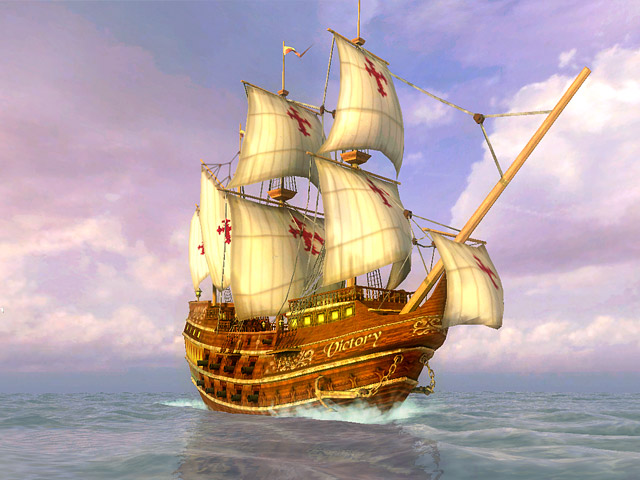 |
| Caravel | 75 feet | - Lateen sails <br> - 2-3 masts | Long voyages at great speeds | Portuguese and Spanish | 15th to 16th |  |
| Fluyt | 80 feet | - Square Sails <br> - 2-3 masts | Trade | Dutch | 16th to 17th |  |
#### Expeditions
| Sponsoring Empire | Explorer | Key Voyages | Purpose | Impact |
| ----------------- | -------------------- | ----------------------------------------- | -------------------------------------------------------------------------------------- | ---------------------------------------------------------------------------------------------------------------------------- |
| China | Zheng he | - India <br> - Middle East <br> - Africa | To open up trade networks with India, Arabia, and Africa and to spread Chinese culture | China decided not to continue exploring |
| England | John Cabot | - North America | To find a sea route to the East going west from Europe | Claimed land in Canada for Britain and established a shorter, more northerly route across the Atlantic than Columbus’s route |
| Portugal | Vasco de Gama | - West Coast of Africa <br> - India | To open a sea route from Europe to India and China | Portugal expanded trade and cultural exchange between India and Europe |
| Spain | Christopher Columbus | - Caribbean Island <br> - Central America | To find a sea route to India and China going west from Europe | Spain led the European exploration and colonization of Americas |
| Spain (again) | Ferdinand Magellan | - South America <br> - Philippines | To demonstrate that Europeans could reach Asia by sailing west | Spain established links between the Americas and Asia across the Pacific Ocean |
## Unit 5
### 5.4
#### Agricultural products for Trade in the 19th Century
| Product | Producers | Users(Finished Products) |
| --------------- | --------------------------------- |:--------------------------------- |
| Wheat | Russia, Britain | Britain - Food |
| Rubber | Brazilian Amazon | Britain - Tires, Footwear, Fabric |
| Palm Oil | West Africa, Indonesia | Britain - Cooking Oil, Soap |
| Sugar | Carribbean Islands, Brazil | Britain - Refined Sugar |
| Cattle and Hogs | United States, Ireland, Argentina | Britain, United States - Meat |
| Cotton | United States | Britain - Textiles |
## Unit 6
### 6.2
#### Comparing Three Types of Imperialism
| Type and Example | Features | Outcomes |
|----------------------------------------------------------------------------------------------------|-----------------------------------------------------------------------------------------------------------------------------------------|-------------------------------------------------------------------------------------------------------------------------------------------------------------------------------------------------------------------------------------------------------|
| State Run Colony<br>- British West Africa<br>- Belgian Congo | - Western institutions slowly replace the local culture<br>- Often defended by claims of helping indigenous population | - Exploitation of indigenous labor<br>- Loss of indigenous culture<br>- Creation of non-native elite and mixed native and non-native middle class<br>- Imperialist countries rule by corporations or states guided by Western Policy |
| Settler Colony<br>- British South Africa, Australia, and New Zealand<br>- French Algeria | - Focus on control & use of land<br>- Settlers remove or dominate the indigenous population<br>- Most common in sparsely populated land | - Loss of indigenous culture<br>- Genocide<br>- Spread of disease<br>- Forced conversion to Western business, political and religious ideas<br>- Exploitation of indigenous labor<br>- Indigenous populations forced into extreme poverty & addiction |
| Economic Domination<br>- British in China<br>- French in China<br>- United States in Latin America | - Commonly based on exploiting raw materials & hiring low-wage labor<br>- Local government remains in control but becomes weak | - Social destabilization based on economic exploitation<br>- Monoculture & lack of agricultural diversity<br>- Soil depletion and environmental damage |
### 6.6
#### Voluntary Migration Patterns in the 19th Century
##### Voluntary
| Years | Home Country | Destination | Reasons for Migrating |
| --------- | ------------ | ------------- |:-------------------------------------------------------------------------------------------------------------------------------------------------------- |
| 1800-1914 | Italy | Argentina | - Argentina had pro-immigration policies <br>- Argentina offered better wages</br> |
| 1868-1907 | Japan | Hawaii | - Japanese sought financial opportunities on sugar cane and pineapple plantations |
| 1850-1880 | China | United States | - The Chinese first sought work in gold mines, then agricultural and factory work <br>There were opportunities to work on Transcontinental Railroad</br> |
| 1820-1910 | Ireland | United States | - Irish were escaping the Irish Great Famine <br>- Irish sought labor opportunities in canal building, lumbering, and civil construction</br> |
##### Coerced or Semi-Coerced
| Years | Home Country | Destination | Reasons for Migrating |
| ----------- | --------------------------- | --------------------------------------------------------------- |:---------------------------------------------------------------------------------------------------------------------------------------------------------------------------------------------------------------------------------------- |
| 1500s-1800s | Africa | - America <br>- Europe</br> | - Forced slavery administered through triangular trade systems <br>- Europeans needed slaves to work on plantations along the southern coast, in the Caribbean, and elsewhere, cultivating cash crops like cotton, rice and tobacco</br> |
| 1788-1868 | Britain (convicts) | - Australia | - Britain transported convicts to penal colonies |
| 1806-1877s | China and India | - Caribbean <br>- Southeast Asia<br>- Africa <br>- America</br> | - The slave trade had been abolished (1806) <br>- The contract labor system was instituted to replace slavery</br> |
| 1834-1916 | India (Indentured servants) | - Africa <br>- Asia<br>- Caribbean</br> | - Slavery was abolished in the British Empire (1833) <br>- The indentured servant system was instituted to replace slavery</br> |
## Unit 7
### 7.4
#### Three Approaches to Modern Industrial Society
| Policy Area | Communism | Capitalism | Fascism |
| -------------------------------- | ------------------------------------------------------------------------------------------- | ------------------------------------------------------------------------------ | --------------------------------------------------------------------------------------------- |
| Economics | Believed that businesses should be owned or managed by the government | Believed that businesses should be owned privately and compete with each other | Believed that businesses should be owned privately and government should restrict competition |
| Internationalism and Nationalism | Supported internationalism by opposing colonialism and calling for global worker solidarity | Supported a mixture of nationalism and internationalism | Supported nationalism strongly by urging each nation to pursue its unique interests |
| War and Peace | Believed that international peace would follow the defeat of capitalism | Expressed mixed attitudes toward war and peace | Opposed peace on the belief that it weakened society |
| Equality | Supported both political and economic equality | Supported political equality but not economic equality | Opposed both political and economic equality |
| Region | Advocated atheism | Allowed individual religious liberty | Use religion to build nationalism |
### 7.8
#### World War 1 Casualites
| Country | Alliance | Dead (in Millions) | Wounded (in millions) | Imprisoned (in millions) |
| --------------- | -------------- | ------------------ | --------------------- | ------------------------ |
| Germany | Central Powers | 1.8 | 4.2 | 0.6 |
| Russia | Allies | 1.7 | 5.0 | 0.5 |
| France | Allies | 1.4 | 3.0 | 0.5 |
| Austria-Hungary | Central Powers | 1.2 | 3.6 | 0.2 |
| Great Britain | Allies | 0.9 | 2.1 | 0.2 |
| Italy | Allies | 0.5 | 1.0 | 0.5 |
| Turkey | Central Powers | 0.3 | 0.4 | Not Known |
| United States | Allies | 0.1 | 0.2 | Fewer than 0.05 |
---
{%hackmd H17XoUBZt %}
###### tags: `Misc`
 Sign in with Wallet
Connect another wallet
Sign in with Wallet
Connect another wallet