# Leetcode刷題學習筆記--Fast Slow Pointers
### [19. Remove Nth Node From End of List(Mediam)](https://leetcode.com/problems/remove-nth-node-from-end-of-list/)
移除singly linked list中從後面數來第N個node。
:::success
通常需要修改linked list第一個node的話,可以新增一個dummy head來改。
:::
```cpp=
ListNode* removeNthFromEnd(ListNode* head, int n) {
ListNode *dummy_head = new ListNode(-1, head);
ListNode *slow = dummy_head;
ListNode *fast = dummy_head;
for(int i = 0; i < n; ++i)
fast = fast->next;
while(fast->next) {
slow = slow->next;
fast = fast->next;
}
slow->next = slow->next->next;
return dummy_head->next;
}
```
### [141. Linked List Cycle(Easy)](https://leetcode.com/problems/linked-list-cycle/)
快慢指針的經典題,判斷linked list是否為cycle。
> 快指針追上慢指針,即為cycle。
```cpp=
bool hasCycle(ListNode *head) {
if(!head || !head->next) return false;
ListNode *s, *f;
s = head;
f = head->next;
while(s != nullptr && f != nullptr) {
if(s == f)
return true;
s = s->next;
if(f->next)
f = f->next->next;
else
return false;
}
return false;
}
```
### 287. [Find the Duplicate Number[Medium]](https://leetcode.com/problems/find-the-duplicate-number/)
給定一個array長度為N+1,其中裡面的數字從只會有[1, N],也就是說至少會有一個重複的數字。題目說,只會有一個重複的數字,並且要找出這個數字。題目還要求不能修改array,並且使用O(1)的額外空間。
解題思路:
> 這題很漂亮,只少有三種解法。
> 1. 因為N+1的長度,而且數字只在[1, N] 所以==如果可以修改array== ,那數字1放在index 0的位置,數字2放在index 1的位置,就可以找出重複的那個。
> 2. 使用binary search。參考這邊的[解法](https://www.cnblogs.com/grandyang/p/4843654.html)。
> 2. 使用bit manipulation。[連結](/3VK0v_k7TpiJwtArT1otxg#287-Find-the-Duplicate-NumberMedium)
> 3. 使用slow fast pointer,這邊主要討論這個解法。
例如array nums=[1, 3, 4, 2, 2],把數字當成是下一個要前往的目的index,就可以達到下面的有向圖。

==所以問題就變成,找出循環的那個點。== 找出循環點可以使用slow fast pointer的解法。當使用slow fast pointer會相遇在meet node。
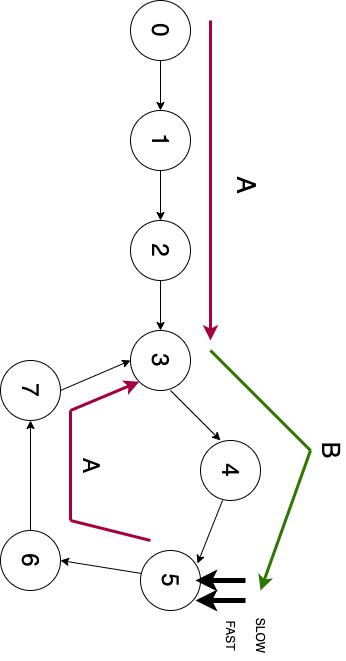
因為從==原點->cyclic node的長度 == meet node->cyclic node的長度。==,所以可以找出cyclic node。
程式碼如下:
```cpp=
int findDuplicate(vector<int>& nums) {
auto n = nums.size();
if(n == 2) return nums[0];
int slow{0};
int fast = nums[slow];
// find meet node
while(1) {
if(nums[slow] == nums[fast]) break;
slow = nums[slow];
fast = nums[nums[fast]];
}
int t = 0;
slow = nums[slow];
// find cyclic node
while(1) {
if(nums[t] == nums[slow]) break;
t = nums[t];
slow = nums[slow];
}
return nums[slow];
}
```
###### tags: `leetcode` `刷題`
for(int i = 0; i < n; ++i)
fast = fast->next;
while(fast->next) {
slow = slow->next;
fast = fast->next;
}
slow->next = slow->next->next;
return dummy_head->next;
}
```
### [141. Linked List Cycle(Easy)](https://leetcode.com/problems/linked-list-cycle/)
快慢指針的經典題,判斷linked list是否為cycle。
> 快指針追上慢指針,即為cycle。
```cpp=
bool hasCycle(ListNode *head) {
if(!head || !head->next) return false;
ListNode *s, *f;
s = head;
f = head->next;
while(s != nullptr && f != nullptr) {
if(s == f)
return true;
s = s->next;
if(f->next)
f = f->next->next;
else
return false;
}
return false;
}
```
### 287. [Find the Duplicate Number[Medium]](https://leetcode.com/problems/find-the-duplicate-number/)
給定一個array長度為N+1,其中裡面的數字從只會有[1, N],也就是說至少會有一個重複的數字。題目說,只會有一個重複的數字,並且要找出這個數字。題目還要求不能修改array,並且使用O(1)的額外空間。
解題思路:
> 這題很漂亮,只少有三種解法。
> 1. 因為N+1的長度,而且數字只在[1, N] 所以==如果可以修改array== ,那數字1放在index 0的位置,數字2放在index 1的位置,就可以找出重複的那個。
> 2. 使用binary search。參考這邊的[解法](https://www.cnblogs.com/grandyang/p/4843654.html)。
> 2. 使用bit manipulation。[連結](/3VK0v_k7TpiJwtArT1otxg#287-Find-the-Duplicate-NumberMedium)
> 3. 使用slow fast pointer,這邊主要討論這個解法。
例如array nums=[1, 3, 4, 2, 2],把數字當成是下一個要前往的目的index,就可以達到下面的有向圖。

==所以問題就變成,找出循環的那個點。== 找出循環點可以使用slow fast pointer的解法。當使用slow fast pointer會相遇在meet node。

因為從==原點->cyclic node的長度 == meet node->cyclic node的長度。==,所以可以找出cyclic node。
程式碼如下:
```cpp=
int findDuplicate(vector<int>& nums) {
auto n = nums.size();
if(n == 2) return nums[0];
int slow{0};
int fast = nums[slow];
// find meet node
while(1) {
if(nums[slow] == nums[fast]) break;
slow = nums[slow];
fast = nums[nums[fast]];
}
int t = 0;
slow = nums[slow];
// find cyclic node
while(1) {
if(nums[t] == nums[slow]) break;
t = nums[t];
slow = nums[slow];
}
return nums[slow];
}
```
###### tags: `leetcode` `刷題`
 Sign in via Google
 Sign in via Facebook
 Sign in via X(Twitter)
 Sign in via GitHub
 Sign in via Dropbox
 Sign in with Wallet
Connect another wallet
Sign in with Wallet
Connect another wallet