---
tags: meeting notes
---
# MDF MEETING NOTES 20210924
completely online! (and next week will be in person)
## AGENDA
1. Show and Tell: labs and projects are starting!
2. Teach and Learn: learn tables in markdown and "scaffolding" (and help us decide on labs :)
## SHOW AND TELL
Labs and projects are getting started! The **Projects** we do for faculty clients and their courses have a certain priority: this is why we get our funding, so we want to satisfy as many of these clients as possible!!
But we don't come up with the skills and ideas we need to help these faculty unless we have zones for experimentation and learning. And this is where labs come in.
For **Show and Tell** today, we have quick updates on a couple of labs that have launched and a faculty project that has just wrapped.
### theatreLab
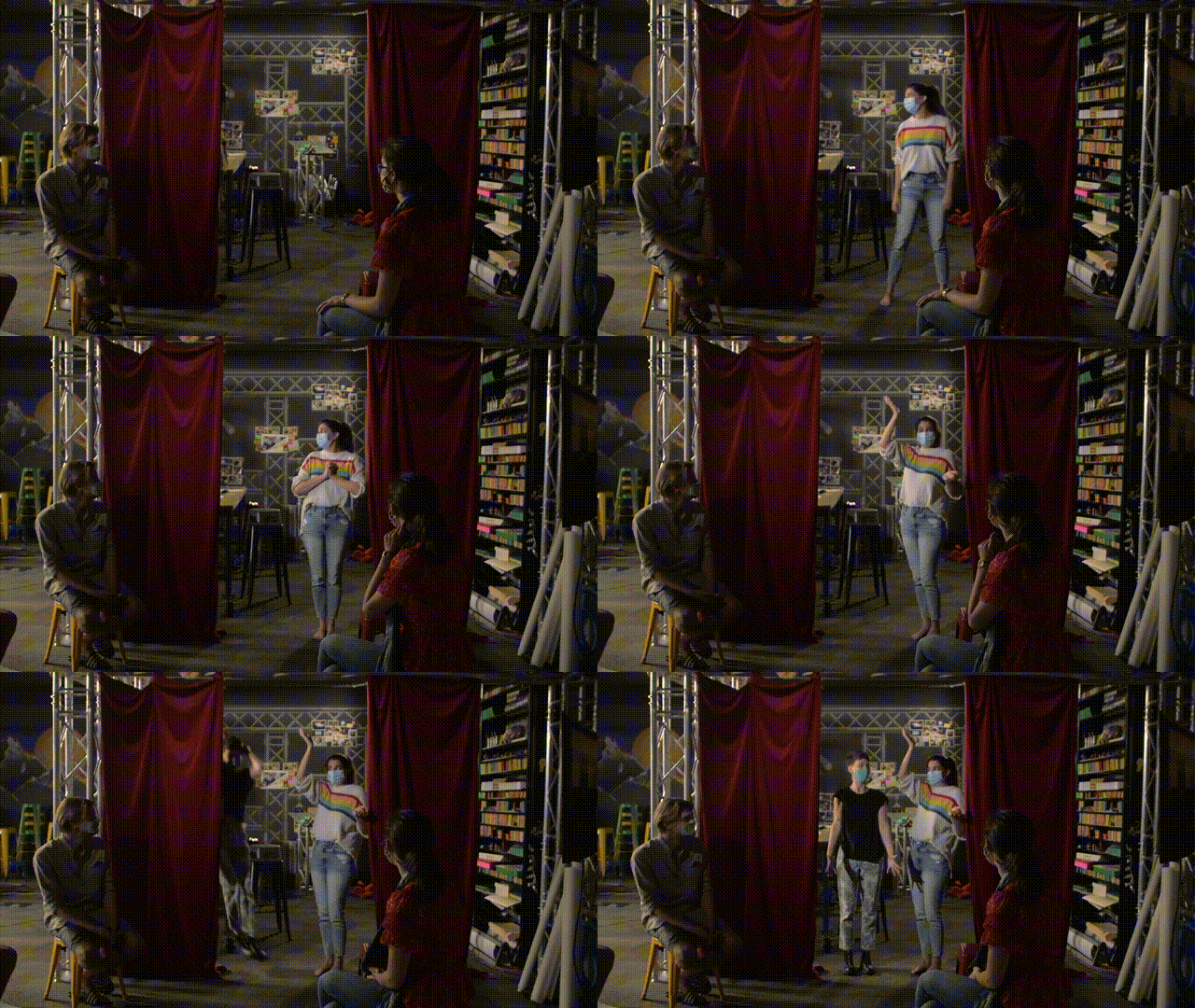
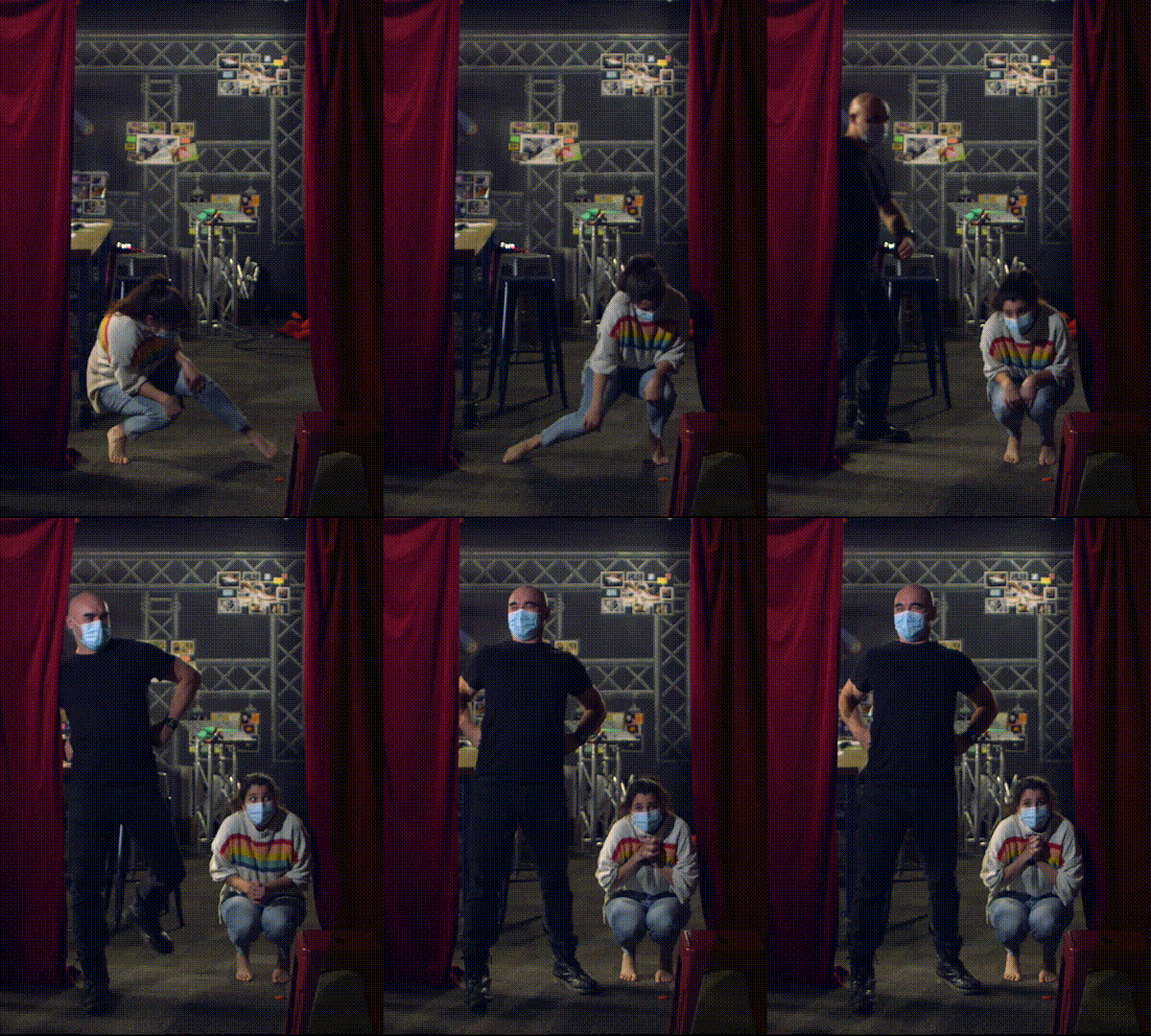
Last week Jessi launched **theatreLab**. She led Marlon, Jordan and Abby through an array of activities intended to expand our gestural vocabularies. In these gifs you can see us performing an improv activity in which each performer needs to enter the stage with a gesture that contrasts markedly with the performer already on stage.
### mapLab
Taylor and Marlon had a great chat about **mapLab**, zeroing in on a potential assignment sequence that would take students from sketching out maps with paper and pencil to using digital tools for a capstone project. Taylor will be making [the notes Marlon took here](https://hackmd.io/Rc39uMt1SeWF2qTo0LPW1w?view) much better over the coming week!
MAP IDEAS!!!
- map as game-board
- map as interpretive illustration of a fictional world
- Students can "map out" a story (or connecting multiple stories) they read as a final project
- map an article (with layers)
- map as an illustration of network and of object/people movement
- map, if overlay-able and recorded as a video, to show changes over time
- map for assignment
- e.g. history of social medicine and epidemics: give students John Snow's cholera outbreak statistics and London city map, and come up with the mapped analysis themselves
- map as digital humanities analysis
- map as an interpretive tool for character development
- map as moral decision-making tool (mattering maps)
- How can we use maps as a tool to track important narratives and values when there is no “right” answer?
- History — lots of maps! Historical maps in 19th century. Maps and narratives. 19th century map of a region of Brazil—a narrative of empire, what the colonial govt would like for that region…the maps were sort of aspirational.
- Contesting maps. Take a historical map and then discuss the theoretical and historical context and change the map to reflect their conversation/historical evidence of what was going on at the time.
- More from Eduarda: I think it could really go well with the example you guys showed of the physical model of the Boston Common, and could be used in the Harvard map idea Marlon was discussing. I think contesting already-existing maps by doodling, tweaking, cutting-up, or pasting ideas into a physical model of them could be a good way for students to 1) think more critically about map-making, and 2) imagine new, creative ways of making maps and representing contested narratives. As a social historian, I was thinking for instance of how the maps I consult in my research do not take into consideration the historical subjects I study the most - common citizens, enslaved workers, indigenous subjects, street workers, religious practitioners, etc. What would it look like if I visually contested a known map as a social historian that centers these subjects' worldviews? What do we do with borders, with streets, mountains, rivers, oceans? There are some interesting articles I have read on that a while ago:
- Benton, Lauren. A Search for Sovereignty: Law and Geography in European Empires, 1400-1900. Cambridge University Press, 2010.
- [Bonilla, Yarimar and Max Hantel, "Visualizing Sovereignty: Cartographic Queries for the Digital Age," sx archipelagos 1, 2016.](https://drive.google.com/file/d/1goZhKU5_yzoS4tHda8ecQh1Tu1TNw5-9/view?usp=sharing)
- This article could give us some food for thought, I think. And it includes lots of visual representation of data.
- [Johnson, Walter, “What do we mean when we say, ‘Structural Racism’? A Walk down Florissant Avenue, Ferguson, Missouri” Kalfou 3, 1, Spring 2016.](https://scholar.harvard.edu/files/wjohnson/files/ferguson_kalfou_published.pdf)
- This one, by Walter Johnson, from the History Dept, is to me a written, contested map of Ferguson. May be interesting to take a look at as well. What would a visual map-version of this article look like?
- Celtic - Mapping folklore and stories, migration and political changes and how they change folklore
More map inspo:
- Jessi's favorite map...[map of Christopher Robin's Hundred Acre Wood] (https://www.pinterest.com/pin/38069559328497850/)
- [LL curated **medium-maps** board on Pinterest](https://www.pinterest.com/learninglabpins/mediummaps/)
### realityLab
Marlon met with Tica, MDF for Computer Science, to brainstorm activities for this year's realityLab (which is all about AR/VR):
* let's think of an array of activities and projects for the Fall term
* it would be great if interested undergraduates could proceed through an array of 4-7 activities that "level up" their skills in tools like Unity, Blender, etc. over the course of the term
* they are, in a sense "testing" the tutorials you might create for a course
* they are ALSO learning to contribute assets to your projects (and maybe even code in certain circumstances)
* great ideas for deliverables include
* proofs of concept of things we can imagine a Harvard course wanting
* AR-enriched experiences of Harvard's campus (where we encounter location-specific stories, images, 3d models that align with a given discipline's content (like History))
* prototypes of things we can imagine doing in museums (virtual tours, AR maps overlain on top of the physical museum, annotations on top of artifacts and paintings)
* examples of potential student AR assignments. If I, as a student were to MAKE an AR installation or world for a course, what might this look like and what would the steps be?
* projects that make the LL Studio better in any way
* AR data on top of LL walls that tells the story of LL projects and people
* the ability to show the results of students' 3D work in the physical studio (i.e. if we run a Blender workshop, how quickly can we get their work "visible" in the physical space)
* game mechanics in the physical space
### Graphical Abstracts Project
In the project zone, many of you are up and running on projects for faculty. Check out this little [markdown doc Katie put together on a project Xiaomeng has performed for MCB80](https://hackmd.io/34lylqAfRbGh-n7m09eTqg?view).
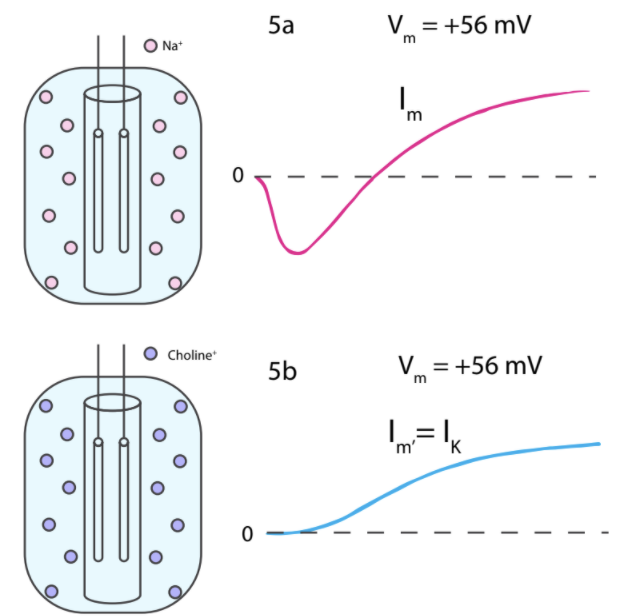
We're going to work with you all over the coming weeks to get your projects for faculty and courses and Departments launched (and to develop proof-of-concept projects in situations where you don't yet have specific projects for faculty). But today we're going to work on a slightly more difficult task that it's better to do together . . .
### Workshops!
This week we had a number of workshops in our space. . .
#### [_AMST201_ Academic Conference of the Future](https://hackmd.io/jzekg36-S4SYm60cXec2GA)
In the graduate tutoral for American Studies and Women and Gender Studies, graduate students have a final capstone project that takes the form of a paper at an academic conference. This year, professor Robert Reid-Pharr is interested in ever so slightly pulling up the boundaries of giving a regular academic paper and exploring some optional interventions of what students can add to elevate the experience.
The LL will be providing coaching similar to coaching given to Harvard Horizons scholars every spring. At their firt workshop at the LL, students pitched their projects and thought through the various audiences they might be addressing at their end-of-term symposium.
#### [_ANE197: Bible and Empire_ Podcasting](https://hackmd.io/7lYd9WouS3GoArFaGkRC4A)
In Julia Rhyder's course _Bible and Empire_ students will be creating podcasts that connect present events with biblical content. They came in for a workshop that helped them break down the elements of a podcast, think about communicating with a general audience, and practice recording audio.
## TEACH AND LEARN
Today you all are going to teach us the labs you want to be part of this term! Or maybe it makes more sense to say we're going by learning the labs together :)
Let's figure this out in a table so that we can learn some new [markdown syntax](https://www.markdownguide.org/extended-syntax/)!
### the big LLUF labs (they'll exist, no matter what)
| Lab | Details | People
|-----|-------|-------
| theatreLab | voice, stage, interaction | **Jessi**, Marlon, Jordan, Abby
| AVLab | Understanding and using all the media production gear in the studio | **Marlon, Casey, Jasper,** lots of LLUFs
| storyLab | telling the story of the Learning Lab, including reports on events that happen here, courses we support, MDF projects, Labs, etc--all using multiple media, modes, tools and genres of communication. | Marlon, lots of LLUFs
| codeLab | beginners codeLab--lots of basics here. Mainly basic js and python scripting. This CAN be absorbed into one of the MDF labs if that group is willing to do some basic (and not just crazy-difficult) activities. | LLUFs
### MDF interests
Let's see if we come up with 3 labs or at least 3 clusters of related interests (and then name the groups later). Here is a list of what we've heard so far (but please add anything we're missing!)
| Lab | Details | People
|-----|-------|-------
| theatreLab | voice, stage, interaction | **Jessi**, Marlon, Jordan, Abby
| mapLab | paper-based maps, digital mapping tools | Taylor, Claire, Eduarda, Juhee, Kangni, Elizabeth
| dataVisLab | js, python, r, d3, tableau?, blender? add databases? | Zane, Kangni, Juhee, Queenie, Claire (perhaps), Elizabeth
| illustrationLab | illustration, animation, graphical abstracts in the sciences, visual explanation | Xiaomeng?, Queenie, Claire (perhaps), Elizabeth, Eduarda
| animationLab | |
| sciCommLab | |
| realityLab | Unity, Unreal, Blender, AR, VR, etc |
| visualEssayLab | video making! | Wesley, Kangni, Eduarda, Juhee
| posterLab? | Abobe for poster presentation, graphic representation of arguments| Eduarda, Claire
 Sign in with Wallet
Connect another wallet
Sign in with Wallet
Connect another wallet