---
tags: report
---
# Victoria Andrews: Media & Design Fellow in HAA
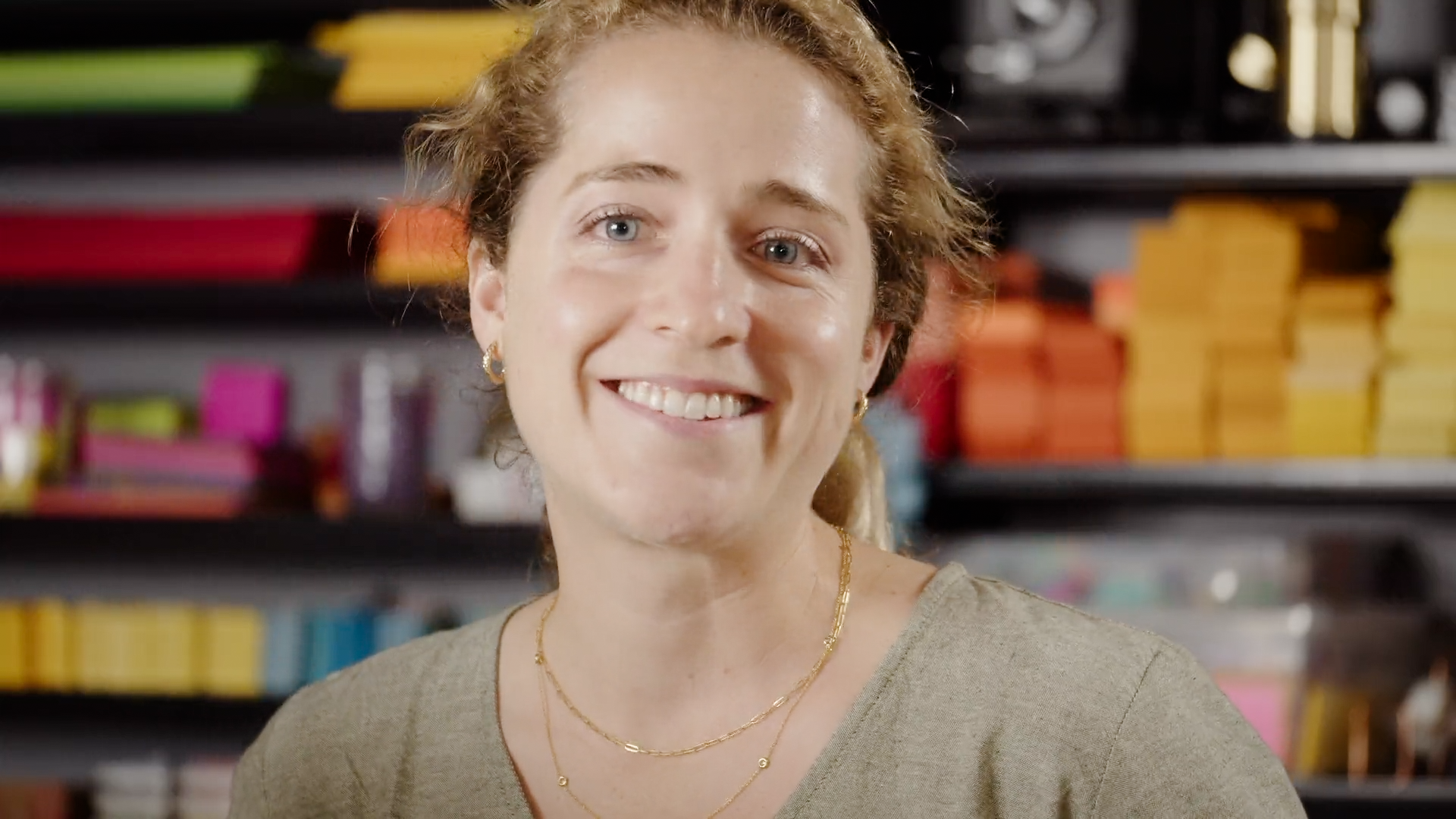
Media & Design Fellows support innovative course development, partnering with faculty and Learning Lab staff to design a variety of digital tools, course materials and content, and assignments for undergraduate courses and their departments. MDFs design interactive, technically complex learning experiences for students that help them grasp the affordances of different media, and they develop workshops and other forms of guidance that help students succeed in using new media to convey their ideas and demonstrate subject-matter expertise.
In this report, you can read about:
* The **training with the Learning Lab** Tori did to get ready to support projects in HAA
* The **courses** Tori supported this year
* The **departmental support** Tori provided
## Learning Lab Training
### Labs/Working Groups
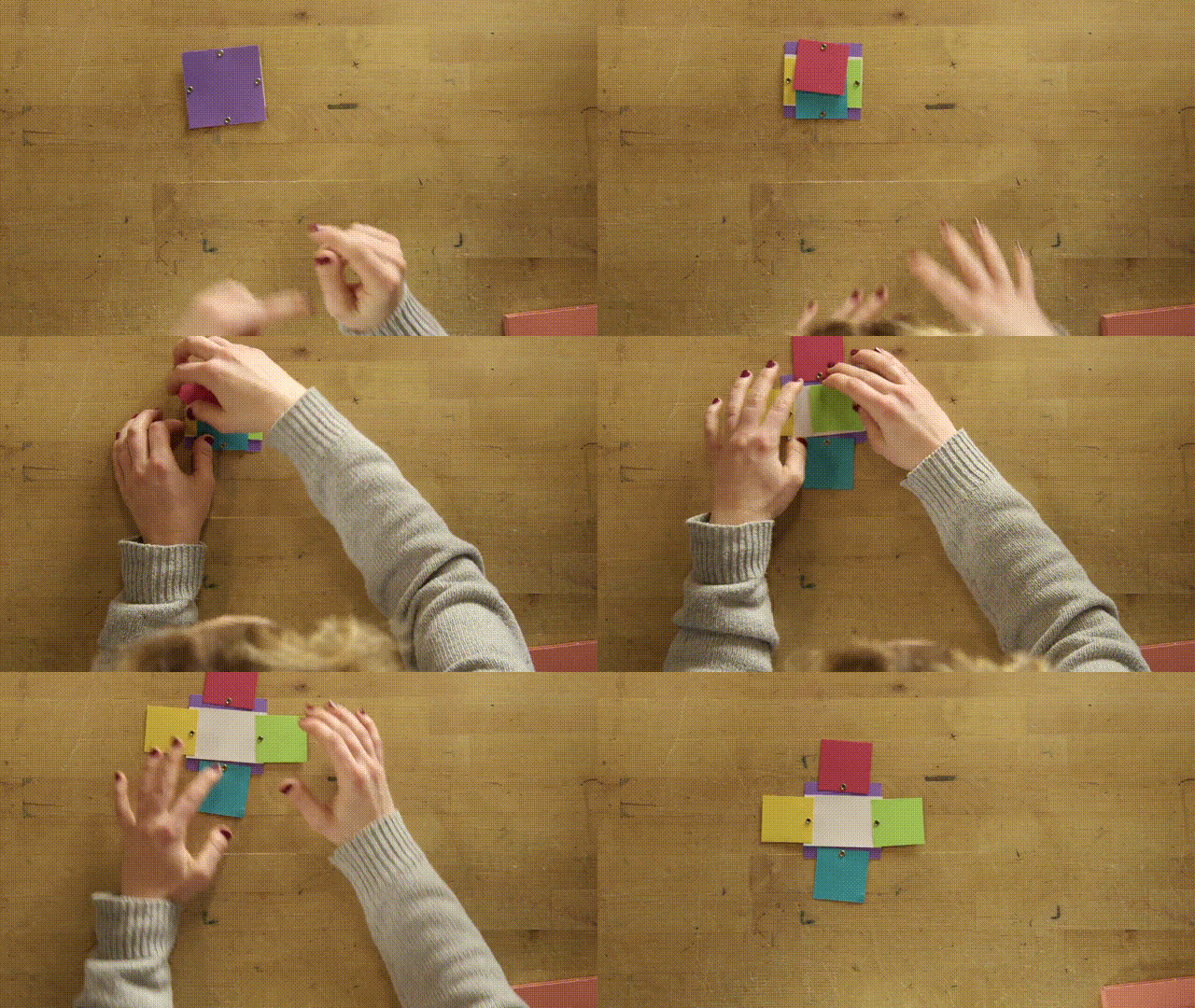
To prepare to support courses and to develop their multimodal pedagogy, MDFs join a "lab". In these labs, MDFs learn the media skills that they need to complete their projects. They undertake an initial learning project that teaches them the core competencies required for their departmental projects.
Tori joined graphicsLab, where the initial learning project was to create a branding package for a course in a particular discipline. Tori has been working on a range of visual materials for art history courses, including for HAA 81: Art of Monsoon Asia. In the image above, Tori demonstrates a learning device she made with paper to teach students about a core course concept. This device uses graphic design principles like color, alignment, and shape to demonstrate the complex concept of the Buddha.
### Pedagogical Training
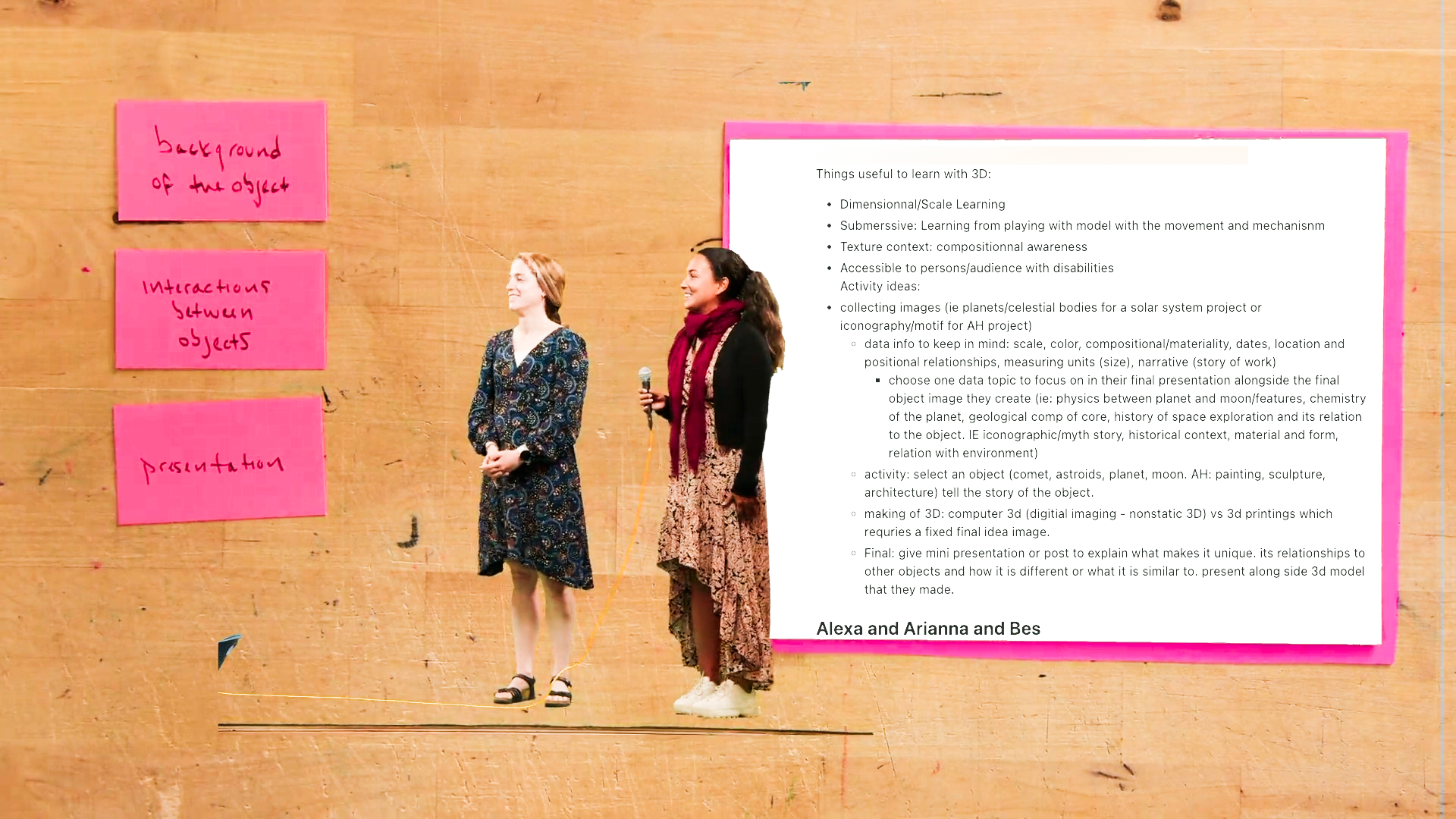
Throughout the year, MDFs develop their multimodal pedagogy, learning during orientation and at biweekly MDF meetings:
* how to design activities, prototype assignments, and create resources that help students in the particular courses they are supporting.
* how to develop their own style of multimodal pedagogy as they think through the specific media that align with their discipline’s methods and means of analyzing data.
* the affordances of different media and what students gain, intellectually and analytically, by engaging with those media forms
## Course Support
### HAA 81: Art of Monsoon Asia
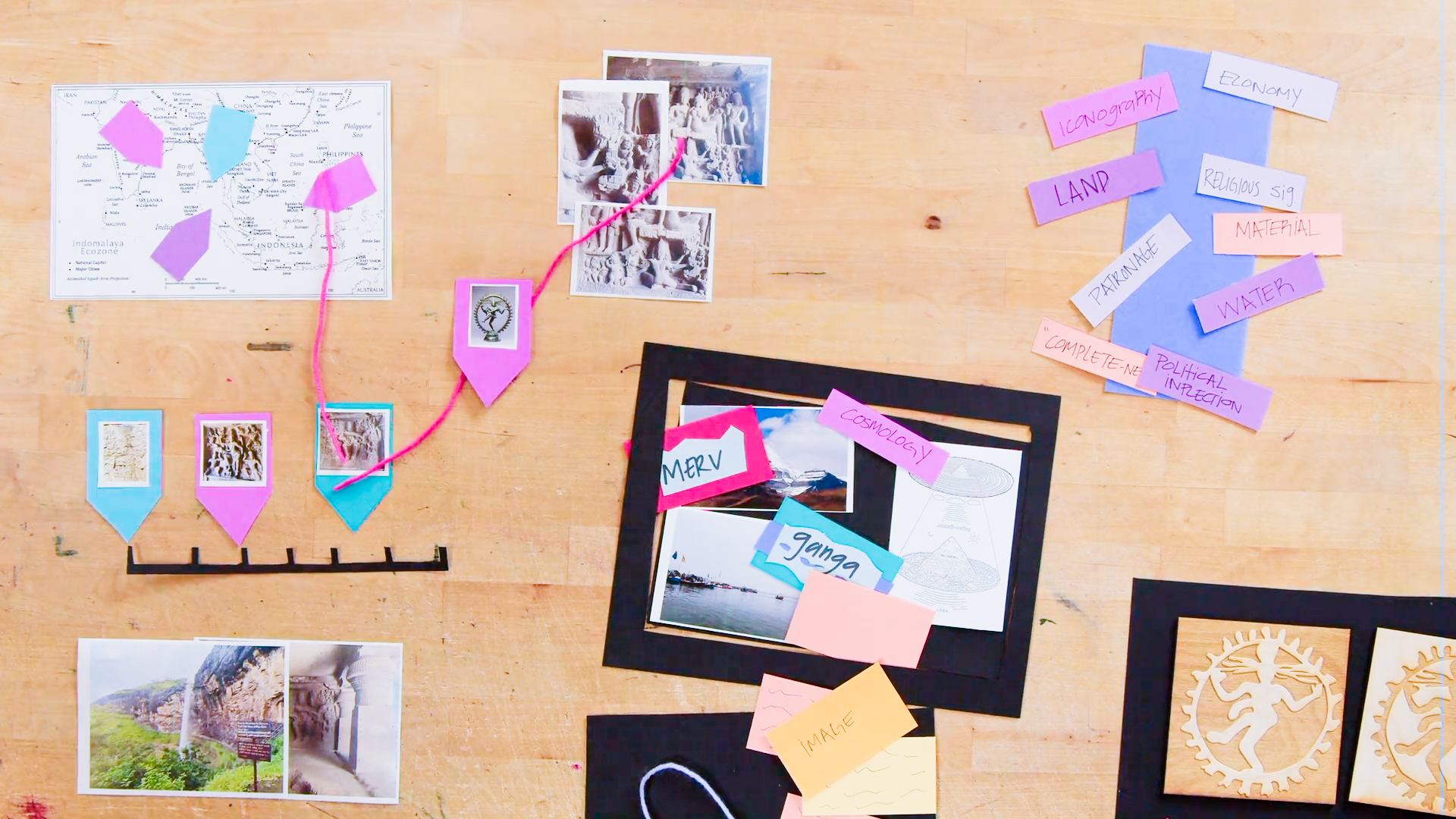
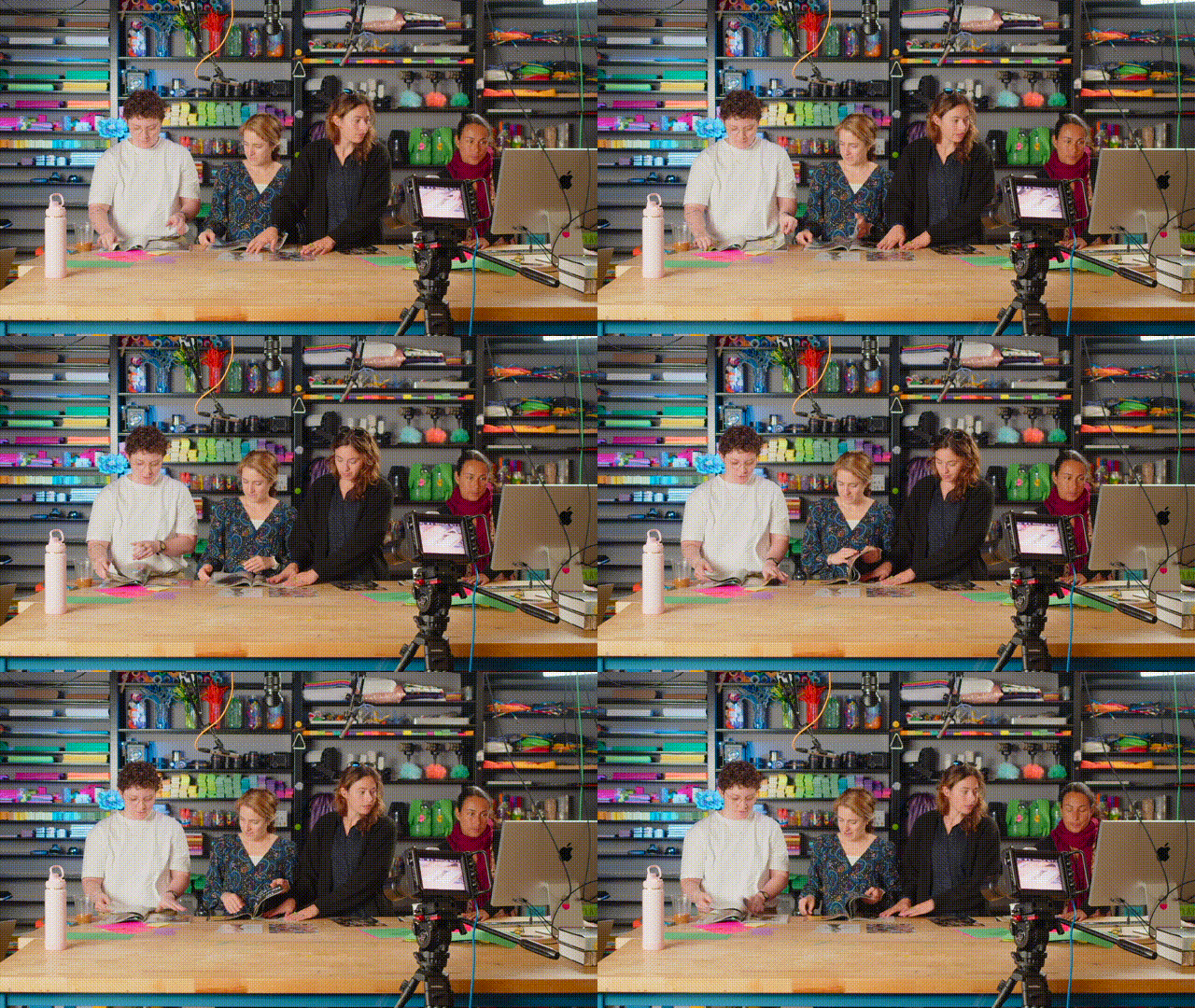
Tori supported HAA 81: Art of Monsoon Asia, developing several opportunties for students to engage with the course material in a new way and develop their proficiency in iconography and visual storytelling. Tori designed a workshop for students, bringing them to the Learning Lab to create paper prototypes of their Scalar websites (a final project the students do in this course). Tori's goals for this workshop were for students to visualize the layout and relationship between the different elements of their websites. Scalar allows for a form of nonlinear thinking and storytelling, where users can move between pages without having to tell a story or write sequentially. It was important for Tori to help students figure out how develop connections between ideas and course themes like they would need to in a digital form in Scalar. Once they designed their paper prototypes, students then presented their ideas, getting some low-stakes feedback and experience in justifying their design choices and project plans. They also designed team logos in Adobe Illustrator, intentionally choosing different icons and images that were significant in the context of the course.
Tori's second workshop for students was an indigo workshop. Tori had students' logos printed with a laser cut and made their designs into woodblock prints. She then brought them to the Materials Lab at Harvard Art Museums to make indigo textiles using a resist dye technique. Tori's goal for this workshop was to give students an appreciation for artisanal knowledge and knowledge of working with one's hands.
Through these workshops, Tori felt that students raelly developed "a feeling of fluency and mastery over iconography: students were creating these images that pulled from what they had been learning in class and then they kind of got to make it their own without the pressure of it being a quiz."
## Other Projects
### Virtual Gallery Prototype
Tori designed a possible alternative assignment for HAA courses: a virtual gallery comprised of objects from the Harvard Art Museums that students would intentionally curate according to a particular theme, time period, genre, region, etc. Tori both developed an assignment sheet that details the different steps students might take as they collect objects for their virtual galleries, as well as curatorial considerations they should make as they determine where to place the objects and write accompanying explanatory and/or interpretive text that is used to contextualize the objects for viewers. Finally, Tori also tested the feasibility of having students model 3D galleries using the industry-standard 3D modeling tool Blender. Tori wanted to see what might be possible for students to build in a tool like this if they didn't have prior 3D modeling experience. Though this assignment has not yet been implemented in a course, Tori is excited to continue exploring this type of assignment and its possible applications in HAA courses.
 Sign in with Wallet
Connect another wallet
Sign in with Wallet
Connect another wallet