---
tags: report
---
# Arianna Lord: Media & Design Fellow in OEB
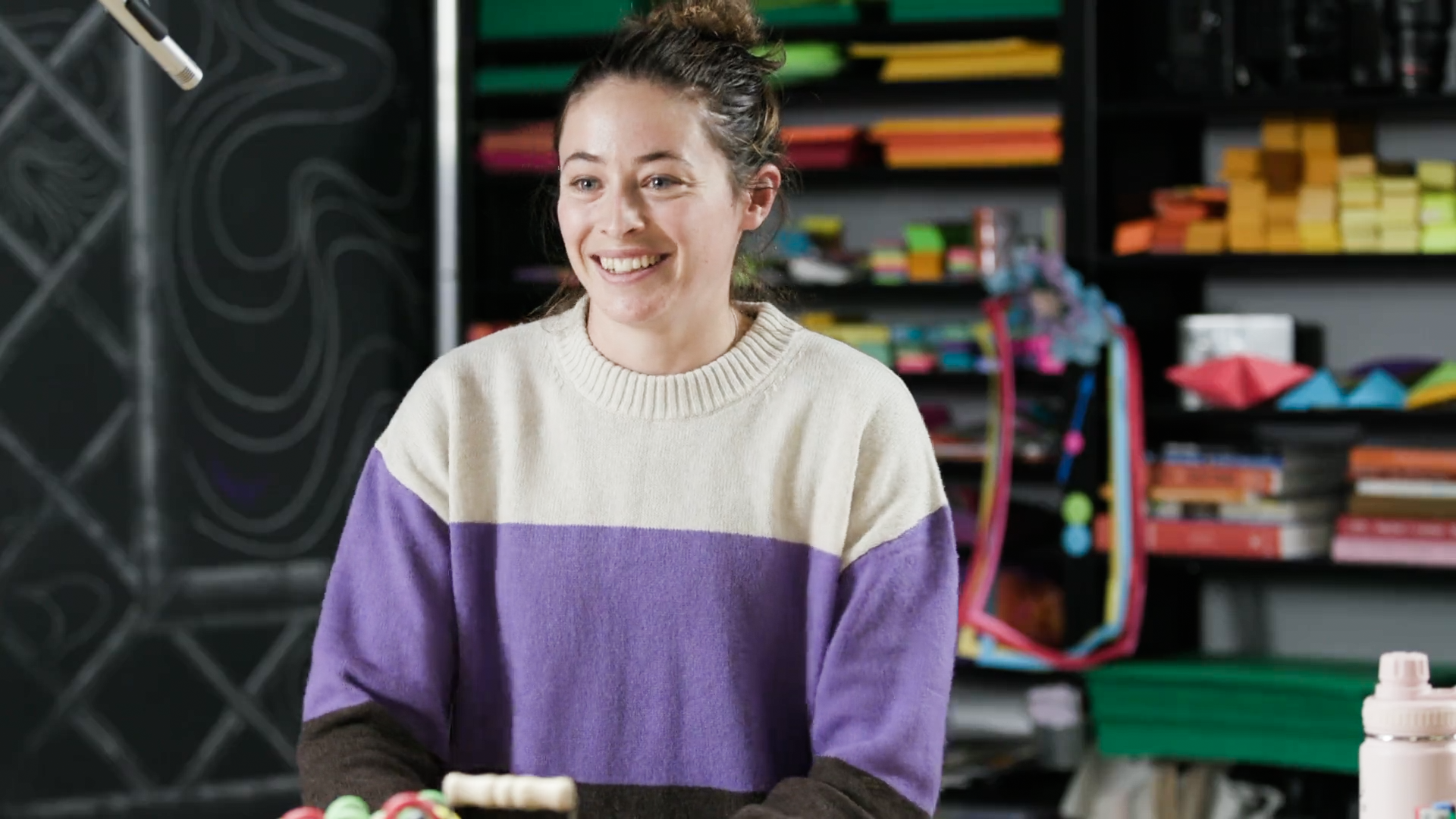
Media & Design Fellows support innovative course development, partnering with faculty and Learning Lab staff to design a variety of digital tools, course materials and content, and assignments for undergraduate courses and their departments. MDFs design interactive, technically complex learning experiences for students that help them grasp the affordances of different media, and they develop workshops and other forms of guidance that help students succeed in using new media to convey their ideas and demonstrate subject-matter expertise.
In this report, you can read about:
* The **training with the Learning Lab** Arianna did to get ready to support projects in OEB
* The **courses** Arianna supported this year
* The **departmental support** Arianna provided
## Learning Lab Training
### Labs/Working Groups
To prepare to support courses and to develop their multimodal pedagogy, MDFs join a "lab". In these labs, MDFs learn the media skills that they need to complete their projects. They undertake an initial learning project that teaches them the core competencies required for their departmental projects.
Arianna chose to join codelab because she was interested in building skills that could be used to design interactive web apps and create virtual galleries. Her goals are to use these skills to develop innovative ways for students to share their work and interact with course content.
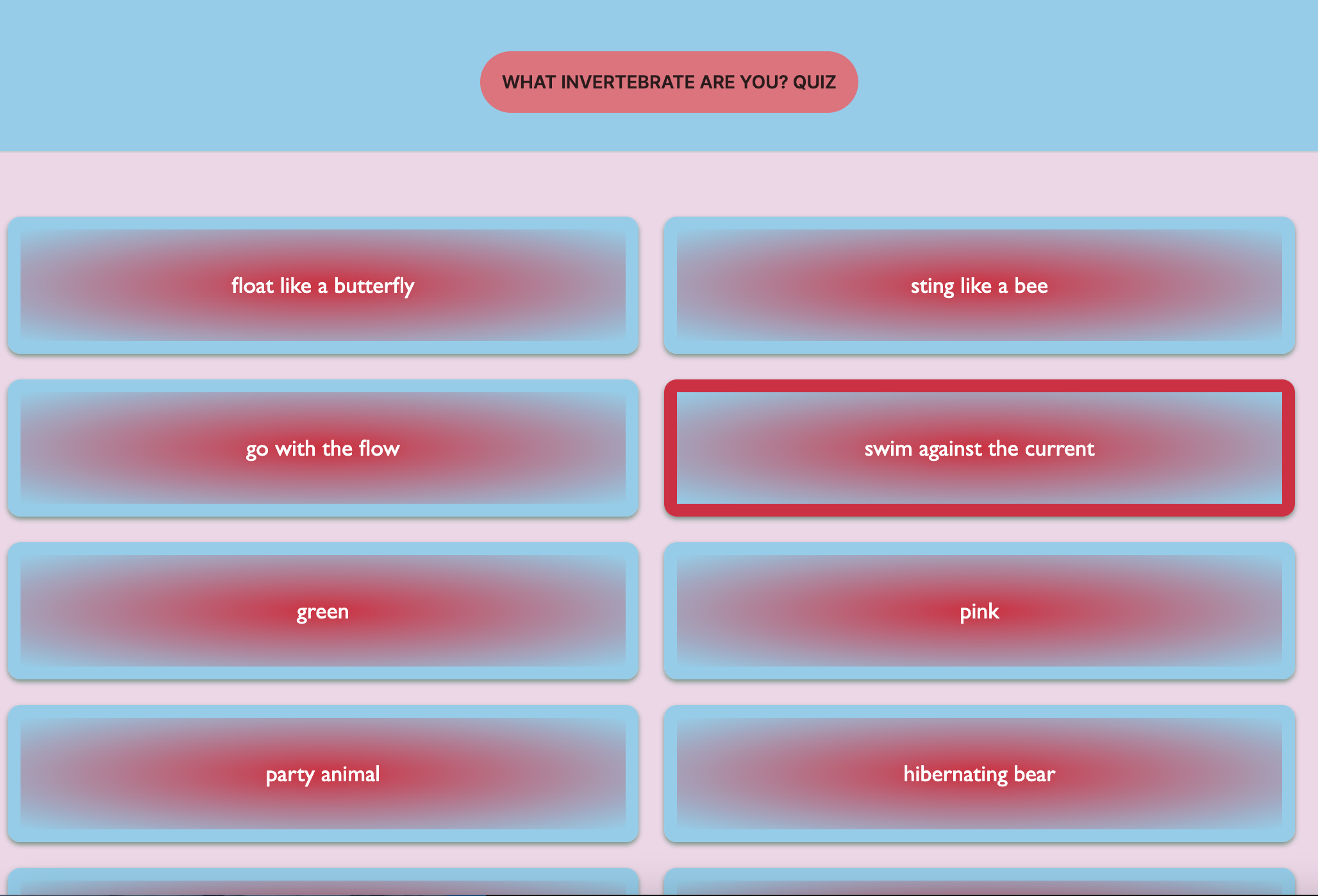
The first project for codelab has been to design an interactive quiz app. For this task Arianna chose to design a quiz that would match the user's answers to characteristics of different invertebrate animals and then tell the user what invertebrate they are most like. In designing this quiz Arianna has been learning javascript, how to build a next.js app and how to integrate airtable with next.js.
### Pedagogical Training
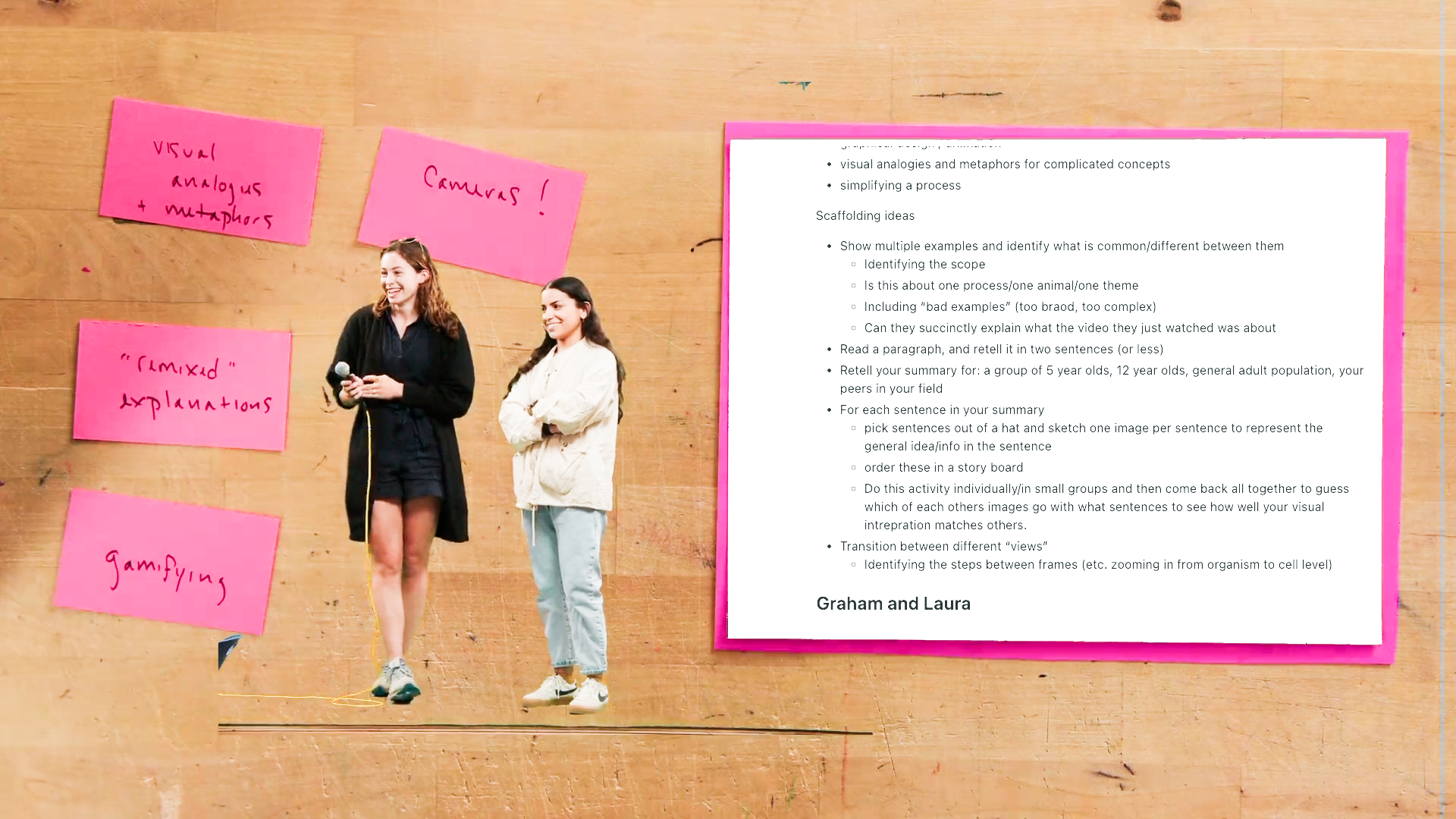
Throughout the year, MDFs develop their multimodal pedagogy, learning during orientation and at biweekly MDF meetings:
* how to design activities, prototype assignments, and create resources that help students in the particular courses they are supporting.
* how to develop their own style of multimodal pedagogy as they think through the specific media that align with their discipline’s methods and means of analyzing data.
* the affordances of different media and what students gain, intellectually and analytically, by engaging with those media forms
## Course Support
### OEB 10: Foundations of Biological Diversity
For OEB 10 Arianna has assisted with designing a set of new assignments for the course focused on reading scientific papers and communicating key findings. These were called "Module Learning Opportunites" (MLOs), and each one aligned with one of the four course content modules. The first three MLOs were designed in part as scaffolding assignments that would help prepare students for the final MLO which was to create a piece of sci comm media to share the findings of a scientific paper with a "non-scientific" audience.
**MLO1:**
The aim of this assignment was for students to practice identifying the key parts of a scientific paper and the main biological question that the paper is addressing. Students were given guidelines to help them read and annotate a scientific paper, and then answered series of reflection questions. The main deliverable for this assignment was to submit the annotated version of the paper they read. The reason for this was to have the students be quite intentional with their reading and ensure they could grasp all the key information presented in the paper.
**ML02:**
For MLO2 students were tasked with thinking about how data analysis and visualization can impact how results are shared in the scientific literature. The aim of this learning objective was to identify the purpose of a scientific figure and interpret its components. Students were first asked to identify what the "elements" of a figure in a paper they had read represent (color, lines, axes, shapes etc.), and then tasked with sketching a new version of the same figure. By asking the students to sketch their own version of the figure we wanted them to really think about what each component of the original figure represented and how the overall pattern in the data could be captured more effectively or in a different, simpler way.
**MLO3:**
The purpose of MLO3 was to have students dig into the methods section of a scientific paper. A clear and detailed methods section is vital to the reproducibility and rigor of a study, however the key details and steps might not always be clear the first time you read a paper. The aim of MLO3 was to have students identify, understand and justify the key methods of a primary literature article. The main deliverable for this assignment was to create a visual representation of methods that could aid a reader in understanding the steps researchers took to produce and analyse their data.This also gave the students a chance to practice "translating" written work into a visual medium.
**MLO4:**
For the final assignment we wanted students to further develop their science communication skills by creating a piece of media to share the results of a scientific paper. In addition to communicating within scientific communities, it is essential for researchers to communicate the impact of their work with broader audiences. Effective science communication is important for informing policy-makers, improving public support of science, and inspiring the next generation of scientists. Therefore for the final assignment, we asked students to create either an infographic, short video for social media, or interactive model to share the findings of scientific paper with an audience of their choice. They were then asked to reflect upon this process of "translating" a paper into visual media for a "non scientific audience".
As part of MLO4 the OEB10 students all attended one of four workshops run by the Learning lab.
### OEB 50: Genetics and Genomics
OEB 50 students develop their skills in public-facing scientific communication, ultimately making science podcasts. Through a workshop at the Learning Lab, OEB 50 students learned various communication skills essential for conveying scientific concepts effectively. A "visual to verbal" station encouraged pairs of students to describe visual diagrams orally, encouraging them to think about the transition from visually conveying data to orally conveying data. This is a crucial aspect of learning to articulate scientific ideas beyond traditional visual mediums like figures. The "Simplify" station aimed to translate complex scientific language from articles into accessible terms, fostering the ability to communicate intricate concepts to a broader audience. Because they make podcasts, students also learned essential editing techniques. At a "Making Connections" station, students were challenged to choose and argue for the particular significance of a scientific discovery.
### OEB 51: Biology and Evolution of Invertebrate Animals
In OEB 51, students learn about invertebrate animals. Arianna designed an interactive virtual gallery that students used to display the different creatures they were studying in the course. She chose Storymaps as the digital tool that students could use to complete this assignment since this tool allows students to tag the regions where invertebrates live. Students collectively added to this gallery over the course of the term, culminating in a curated gallery that reflected what they had learned about a range of organisms.
### OEB 60: Fundamentals of Marine Biology
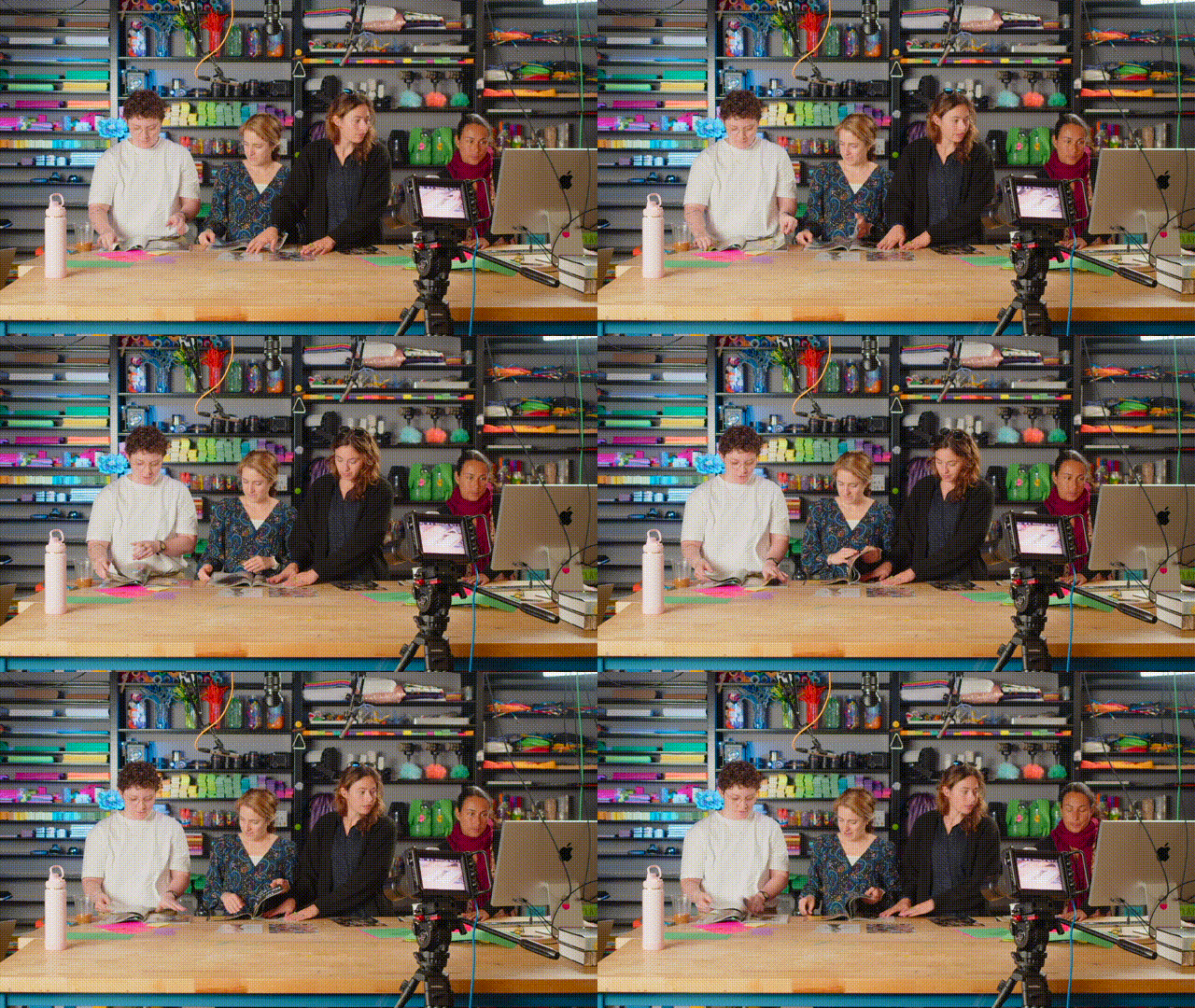
Arianna supported OEB 60 students as they made explainer videos. Arianna visited the course to introduce students to the form of the video explainer and had students reflect on what video can do that traditional academic assessment cannot. Videos can help students internalize what they're learning and allows them to develop their own ways of teaching science to imagined public audiences, thus honing their skills in distilling technical content. Arianna also designed a resource that students could refer to as they worked on their projects outside of class time. Students also came to the Learning Lab studio to practice, with Arianna's assistance and feedback, their video explainers on-camera before recording them on their own. In addition to practicing under the overhead camera, students had ample time to prototype their props and visuals with art supplies and discussed how different types of visuals and movements could convey their video's story.
## Department Support
### Scientific Presentation Workshop
Media & Design Fellow Arianna (OEB) designed a scientific presentation workshop for graduate students in OEB to help them prepare for the department's G4 Symposium. Arianna's workshop helped the department's graduate students develop their presentation, communication and storytelling skills that support sharing scientific research in this particular forum. As a group, they discussed different ways to visualize data and some of the graphic design principles that should be used to ensure that the story about this data comes through to the audience.
 Sign in via Facebook
 Sign in via X(Twitter)
 Sign in via GitHub
 Sign in via Dropbox
 Sign in with Wallet
Connect another wallet
Sign in with Wallet
Connect another wallet