---
tags: jessi
---
# TDM98 Workshop 20230328
**TDM98:** Junior Tutorial
**Instructor:** Phillip Howze
**Teaching Fellow:** Ashley Thomas
**Location:** LL Main Studio
**Time:** Tuesday, March 28, (3:15-5:45PM)
**Number of Students:** 3
## Purpose
The purpose of this workshop was to provide students an opportunity to use digital media tools at each stage of their creative process. Part 1 of the workshop will focus on the doing and capturing - creating/making/performing and the real time capture of those things using cameras, microphones, notes, etc. Part 2 of the workshop will focus on the presenting, and making sense of the documentation - compiling/mixing/collaging the various documents into a creative artifact in itself using video editing and physical collage. Theese two realms of creative process can and often do have a reciprocal relationship, and for the purposes of this workshop we will be breaking them down linearly.
## Outline of Workshop
* [welcome and gather](#wecome-and-gather)
* [part 1: performance and live capture](#performance-and-live-capture)
* [part 2: consolidating, mixing, presenting documentation](#consolidating,-mixing,-presenting-documentation)
### welcome and gather
- introduce names/pronouns, marlon introduce the learning lab
- introduce the plan for today and the rationale:
> We know that a big part of your course this semester has included making physical crafts, as well as going to see shows and reading texts that prompt you for your reflections and responses in a dossier format. We recognize this as the early stages of the development of your senior thesis project, and we want to focus todays workshop using things like cameras and microphones to document your creative process and turning this documentation into some sort of digital artifacts that can be used to support your final project in a number of ways.
### performance and live capture
Students rotated through 3 different roles, each including an element or performance/creation and live capture
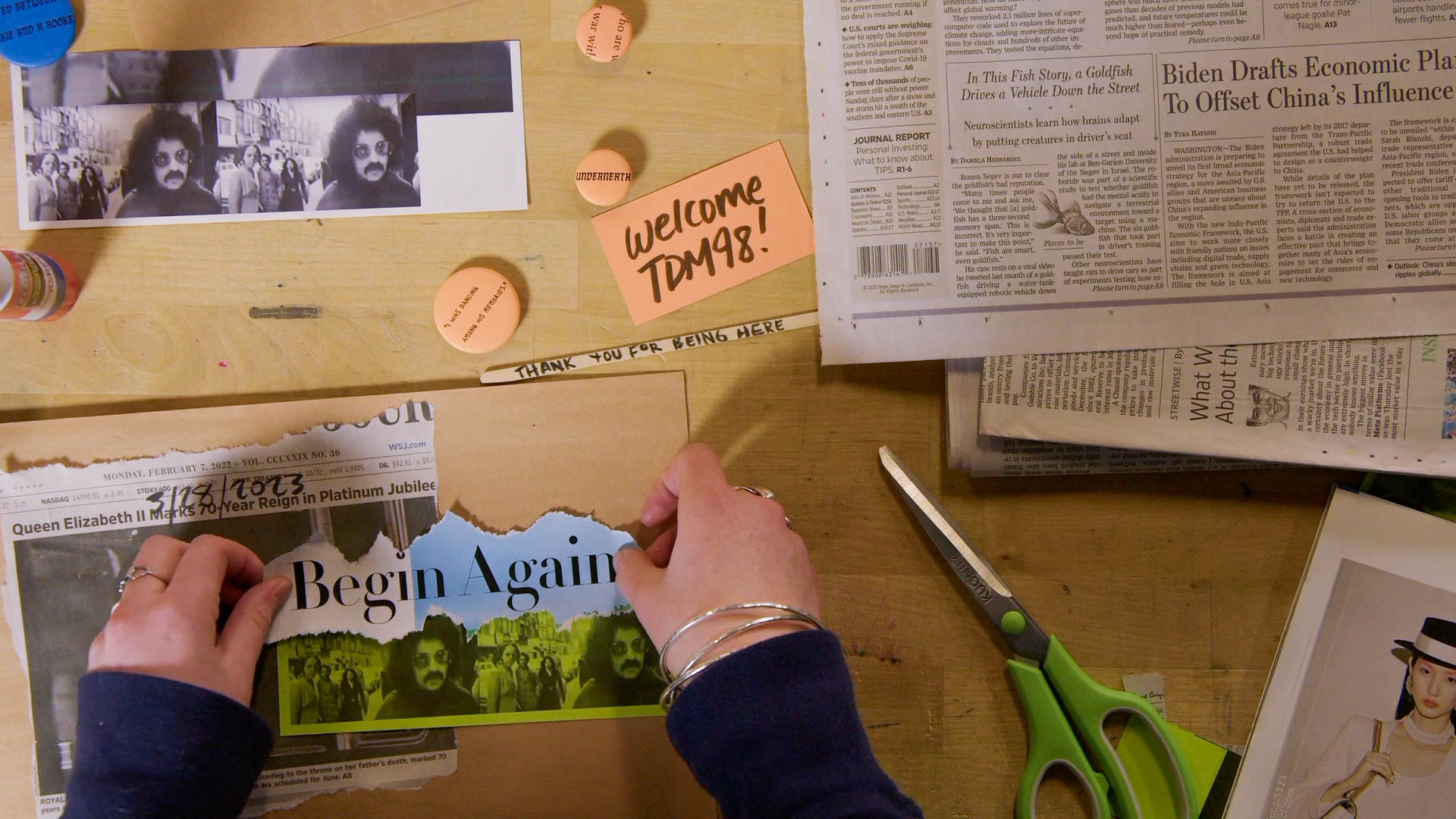
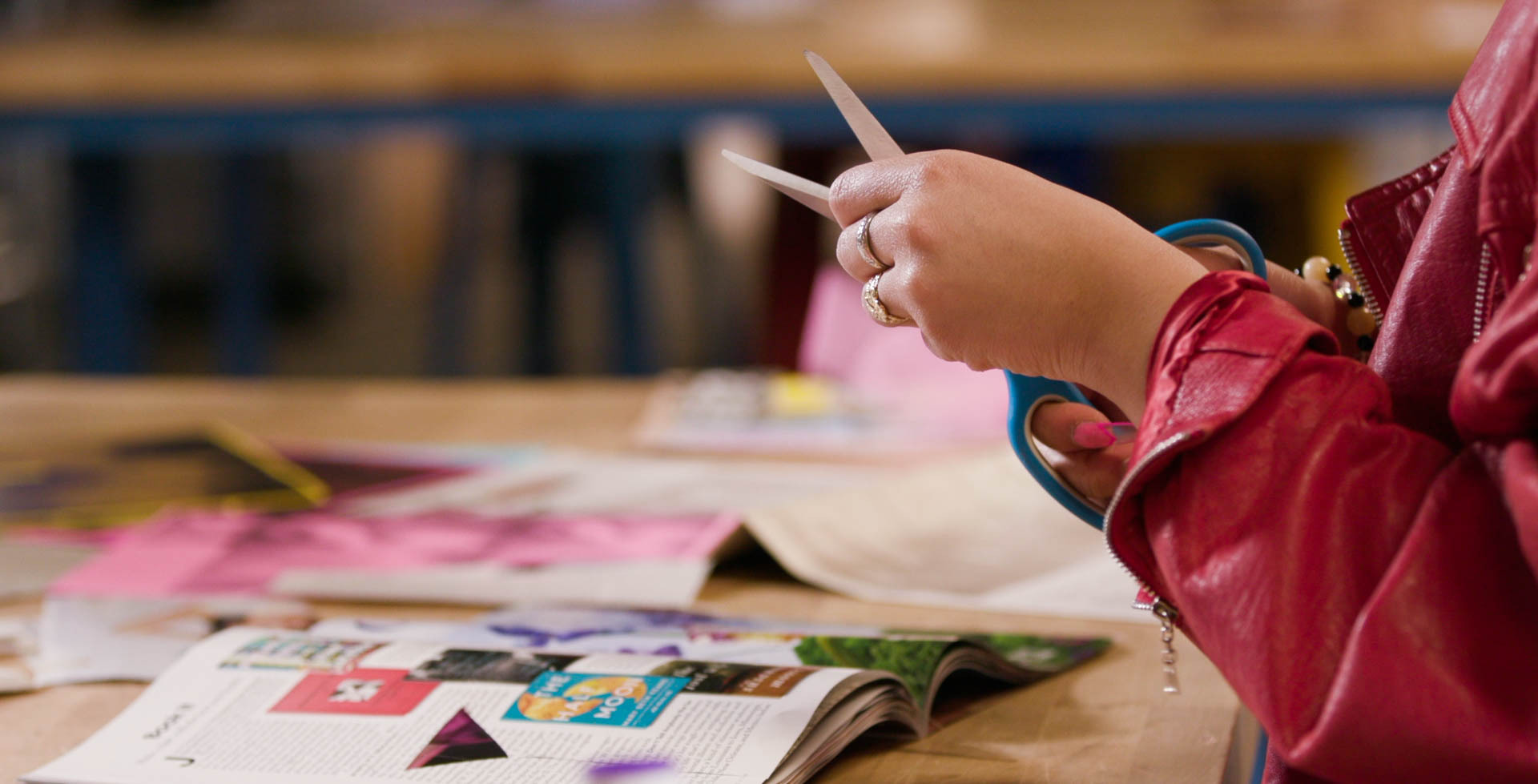
- ***crafting*** station involves building craft in real time that has some connection to the idea they are brainstorming for their senior thesis projects while explaining what they are doing and thinking about.
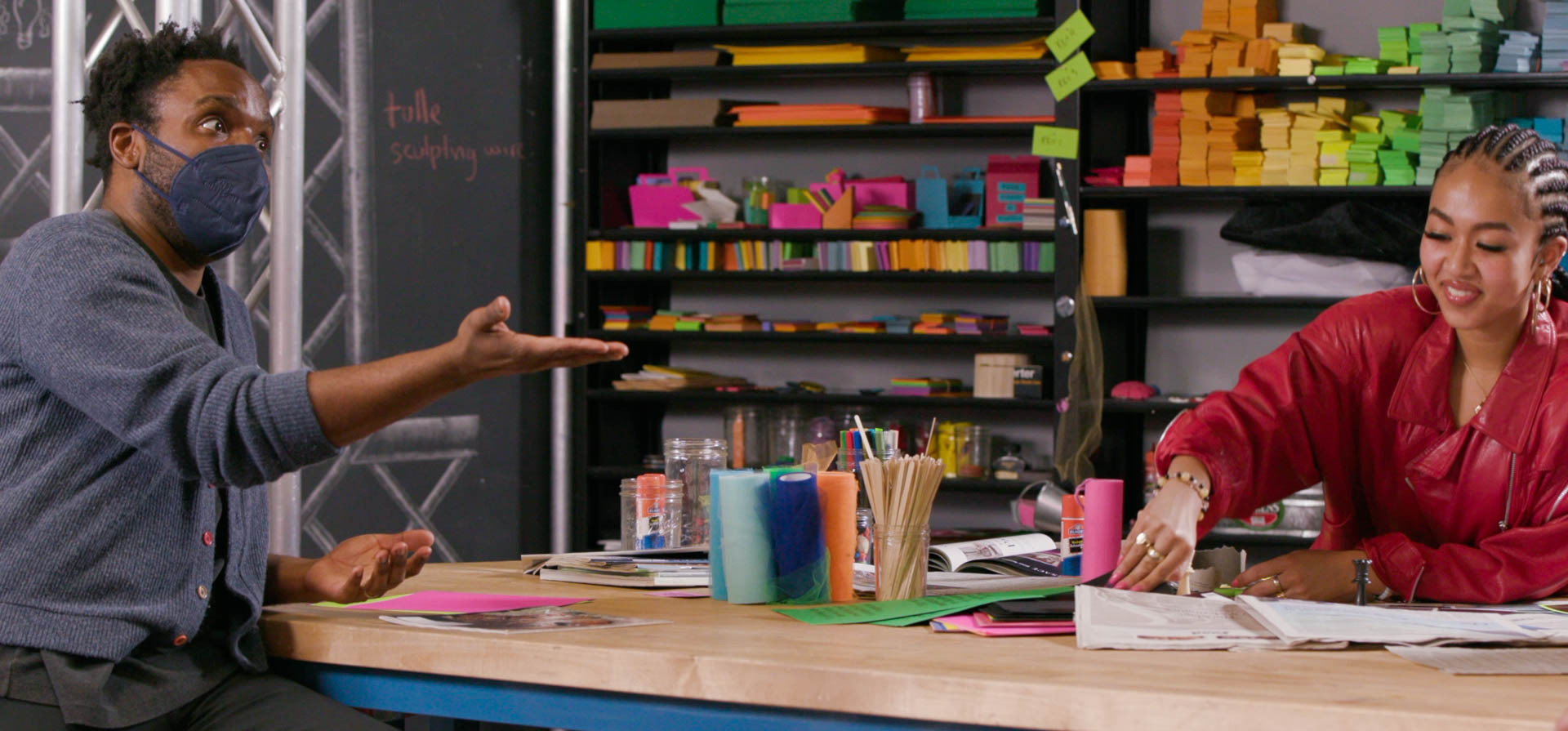
- ***interviewing*** station is prompting questions to the crafter, acting as a temporary dramaturg for their project.
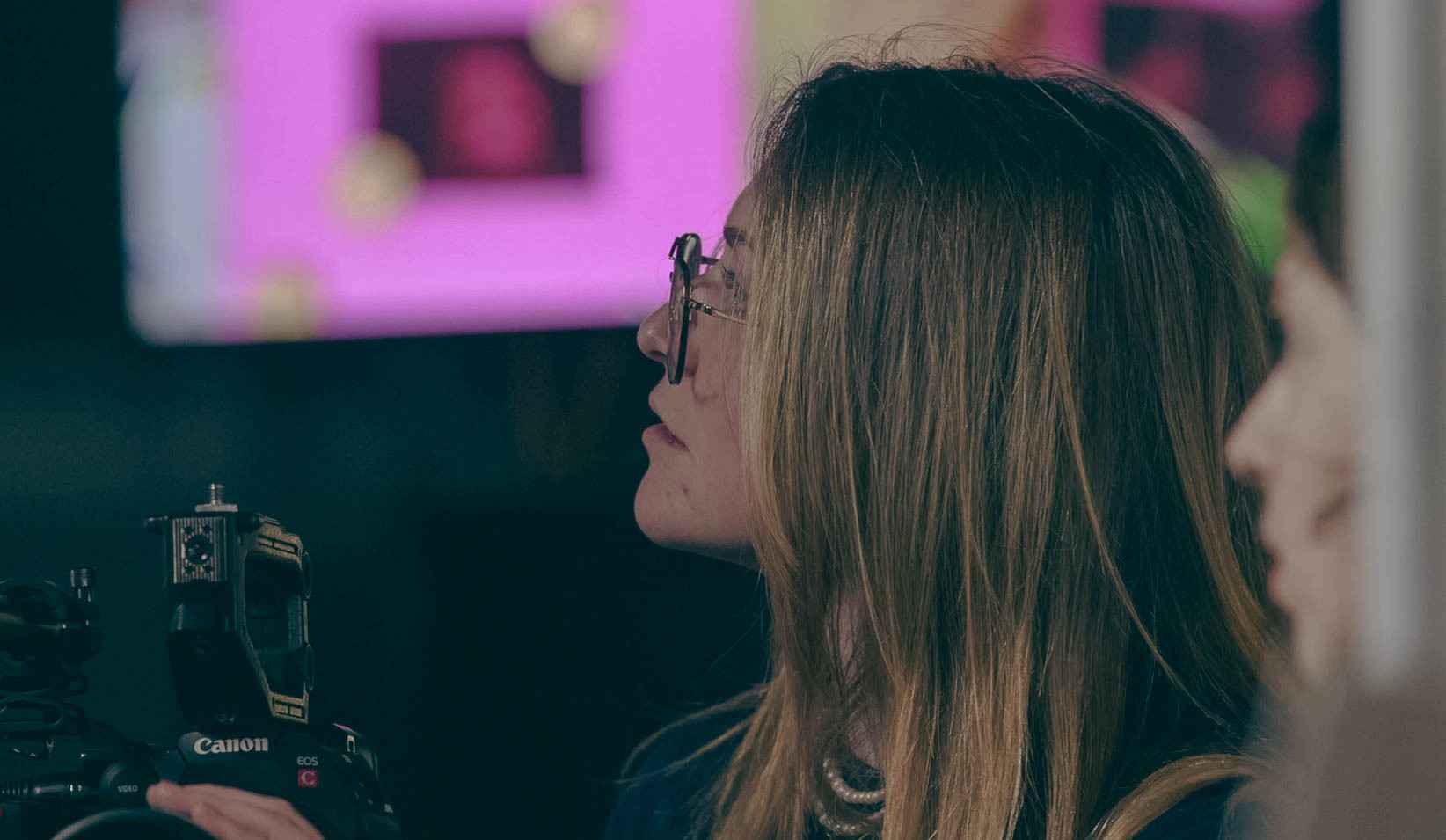
- ***shooting*** station is documenting what is happening behind the scenes of the other stations - demonatrating how things like framing and composition are actively working to a story.
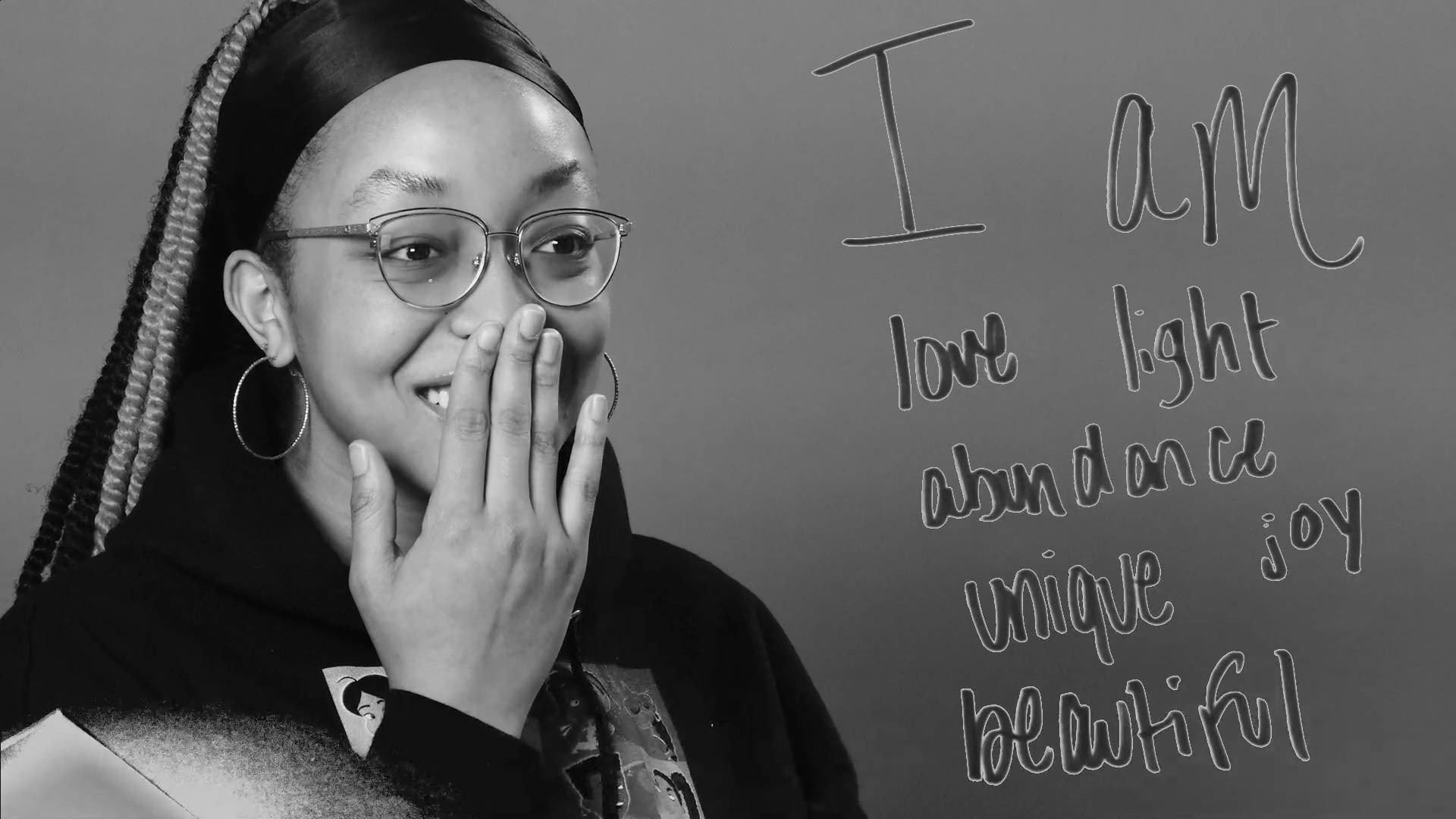
- ***recitation*** station is practicing layering text on top of your speaking image, bringing yourself as a performing in relationship to the cours text.
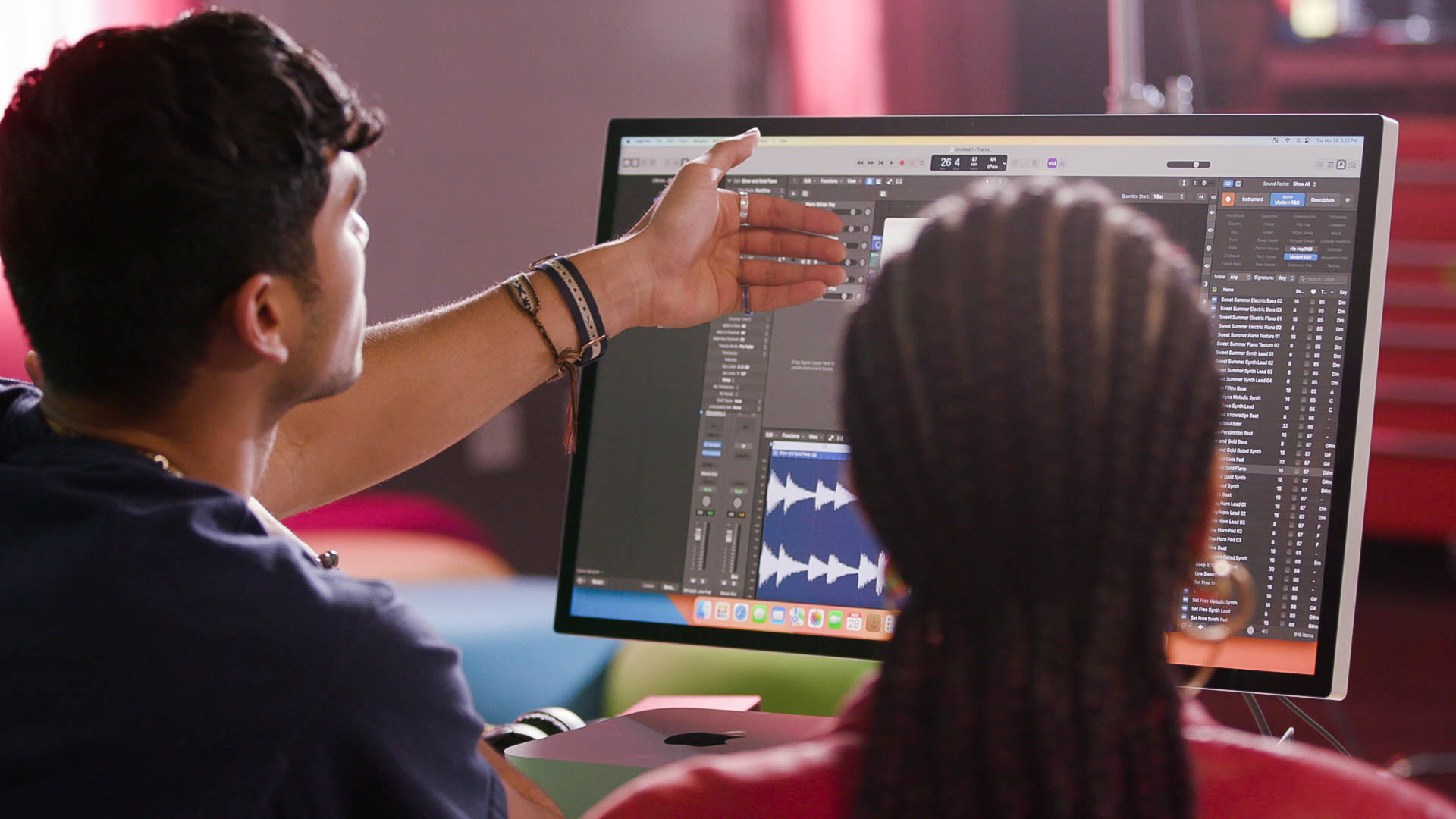
- ***scoring*** staion is introducing them to Logic pro and giving them the basic information they need to built a musical beat
***Halfway through the workshop, MPAs pulled footage for the students to edit with***
### consolidating, mixing, presenting documentation
There are lots of reasons you would assemble something out of the footage or media you have. either to create a composite that manifests on stage, some sort of documentary, some sort of montage that goes in your portfolio. Though we planned for the second half of the workshop to be dedicated to editing the footage from the first half into different composites, we ended up spending longer in the first half to give students enough time to really explore each station.
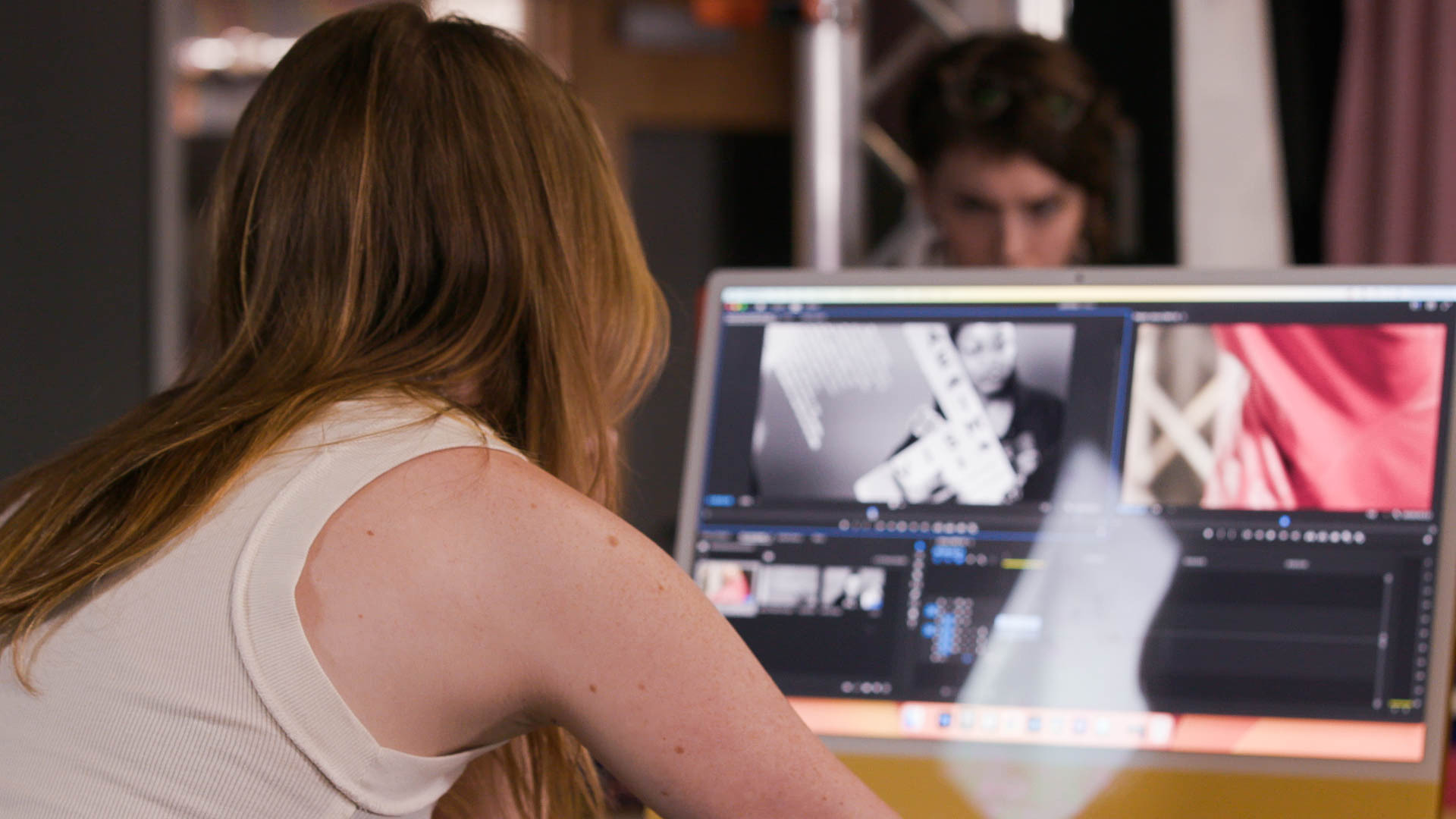
One student did start creating a short montage after a quick tutorial on Premiere Pro.
Since not all students got a chance to try creating something out of the footage, the course instructor assigned each to student to come to Learning Lab office hours to create a 90-second edit out of the workshop footage.
### share-out & thank yous
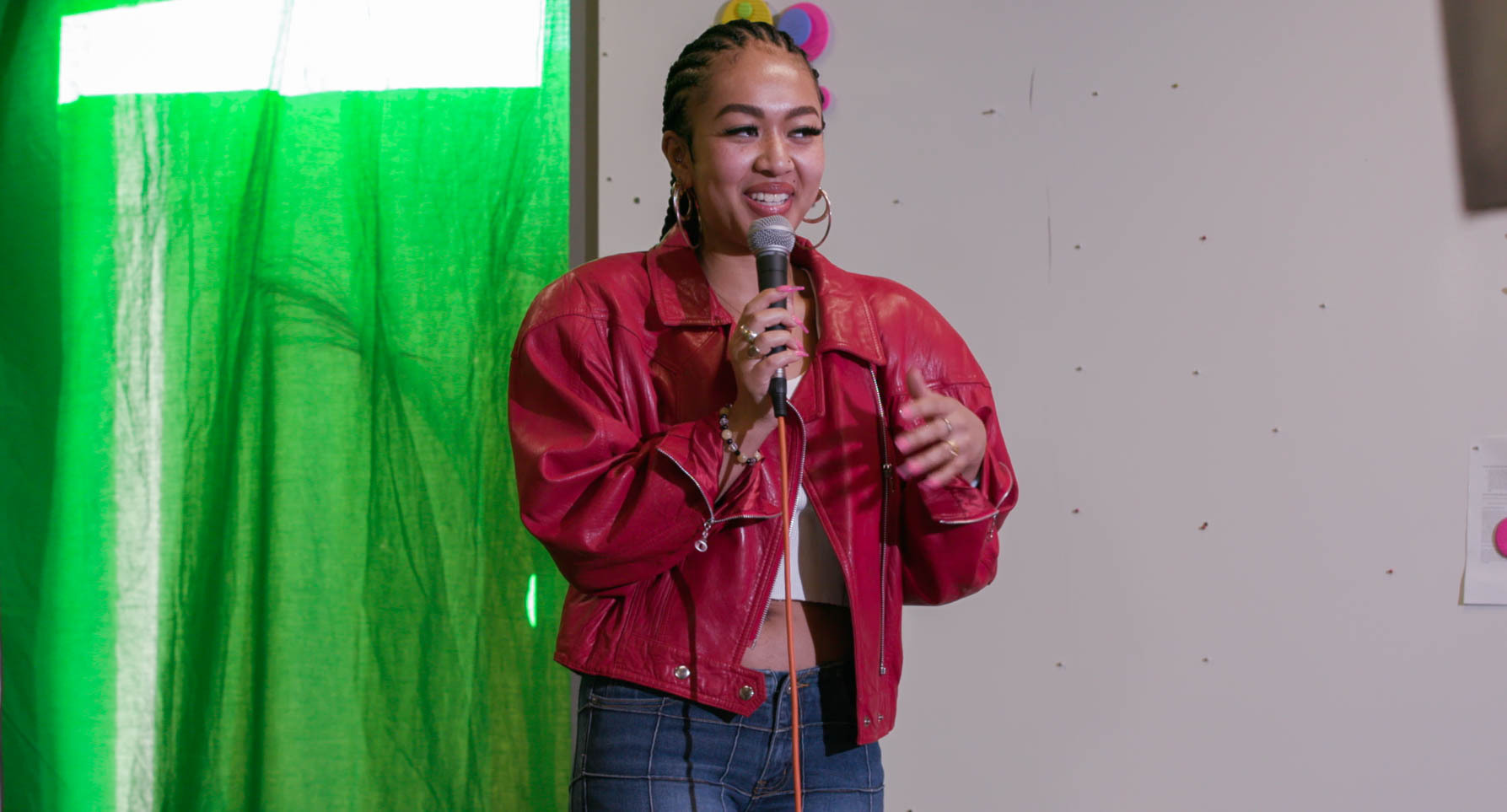
We ended by having the students gave a short, impromptu presentation on the green screen about their collages made in the crafting station.
### reflection & key takeaways
* Visiting the class the week before to learn about the students' individual projects helped us decide which tools would be most helpful for them to generate their ideas, as well as what specific content from their course/personal research we can make available to them.
* Focusing on the tool itself rather than curating what kind of content they use worked best for getting them to explore the form.
 Sign in with Wallet
Connect another wallet
Sign in with Wallet
Connect another wallet