---
tags: jessi
---
# Introduction to Costume Design (LL look book)
TDM 158A Dede Ayite
*An Introduction to Costume Design with an emphasis on Global collaborations. All levels are welcome to take this course. This class explores the design of clothing for the stage: how it can amplify, interpret and extend the message of the production to the viewer through delight, astonishment, and provocation. Together, we will explore how costume design can even assist in changing a cultural narrative.*
## About the Learning Lab
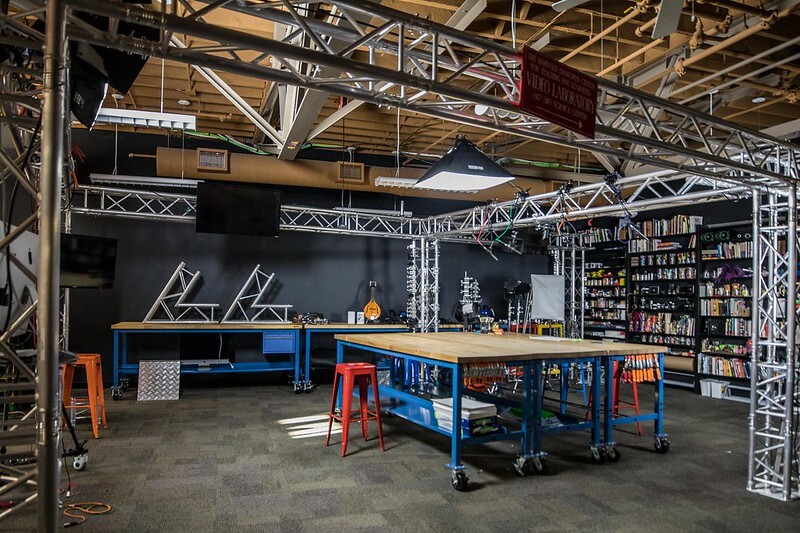
The Bok Center’s Learning Lab is an intergenerational team and a studio space built to support creative approaches to teaching and learning. We typically work with undergraduate courses through a workshop model - we collaborate with faculty to devise tailored workshops that teach students any unfamiliar skills or tools that may be beneficial for course assignments & learning objectives. Below are a number of ideas for assignments/activities we can use to support your course!
## Prototyping
### Physical materials prototyping
The Learning Lab studio is equipped to support miniature prototyping, using paper and other materials to create table-top miniature environments. We can then use our video layer system to interactively explore performances within these miniature spaces.
<left style="margin-bottom: 5px">
<img src="https://files.slack.com/files-pri/T0HTW3H0V-F04A8Q01MU3/20221103_gif10_360.gif?pub_secret=15139f60ae" style="display: inline; width: 715px; margin: 5px" />
## Documentation
### Process capture
We work with courses to develop methods for capturing the processes of creation, either by us, or by the students as "acts of self-documentation" including but not limited to:
* audio capture
* video capture
* capture protocols
- repeting methods
- isolation of details
- slices of time
- perspectives
<center style="margin-bottom: 5px">
<img src="https://files.slack.com/files-pri/T0HTW3H0V-F03BHF0JQG5/ezgif.com-gif-maker__31_.gif?pub_secret=bac1aa1e45" style="width: 800px" />
</center>
### Process display
After capturing elements of the creation process, we can support students in displaying their process through low-stakes but large-scale opportunities to repeat key moves of reflection, analysis, and critical thinking, including:
* social-media posts with micro-reflections
* digital portfolios
* show-and-tells using our live green screen and video-layer work to interact with sketches and paper prototypes
* web-based essays
* mini-installations
<right>
<img src="https://files.slack.com/files-pri/T0HTW3H0V-F03ATKFG3U7/ezgif.com-gif-maker__3_.gif?pub_secret=cf2f6c6718" style="width: 800px" />
</center>
## Additional tools
### Tablescapes
The tablescape tool pairs "table as stage" with ATEM software to create brief table performance, using your hands, props, information cards, and multiple camera angles. These are incredibly effective communication tools to deliver multiple layers of information at once in a polished, recorded presentation.
<left style="margin-bottom: 5px">
<img src="https://files.slack.com/files-pri/T0HTW3H0V-F04A8P8MF9Q/20221103_gif2_360.gif?pub_secret=8b88794bb5" style="display: inline; width: 350px; margin: 5px" />
<left style="margin-bottom: 5px">
<img src="https://files.slack.com/files-pri/T0HTW3H0V-F04A5QXG5SR/20221103_gif3_360.gif?pub_secret=82fe01ceea" style="display: inline; width: 350px; margin: 5px" />
<left style="margin-bottom: 5px">
<img src="https://files.slack.com/files-pri/T0HTW3H0V-F04AMCS5KDX/20221103_gif4_360.gif?pub_secret=b72791de4c" style="display: inline; width: 350px; margin: 5px" />
<left style="margin-bottom: 5px">
<img src="https://files.slack.com/files-pri/T0HTW3H0V-F04AYEJHRB2/20221103_gif5_360.gif?pub_secret=eaee608fcd" style="display: inline; width: 350px; margin: 5px" />
### Meta-cognitive reflective interviews
We have found documentary-style student interviews to be a fun and effective tool for meta-cognitively crystallizing learning objectives and encouraging students to reflect on their goals, progress, and learning in the course. By comparing beginning and end of semester interviews, students are able to better understand the trajectory of their development.
<iframe width="560" height="315" src="https://www.youtube.com/embed/ebZM-YKb3Jk" title="YouTube video player" frameborder="0" allow="accelerometer; autoplay; clipboard-write; encrypted-media; gyroscope; picture-in-picture" allowfullscreen></iframe>
 Sign in with Wallet
Connect another wallet
Sign in with Wallet
Connect another wallet