---
tags: report
---
# Sarah Eisen: Media & Design Fellow in Classics
## Department Support
### Classics Writes
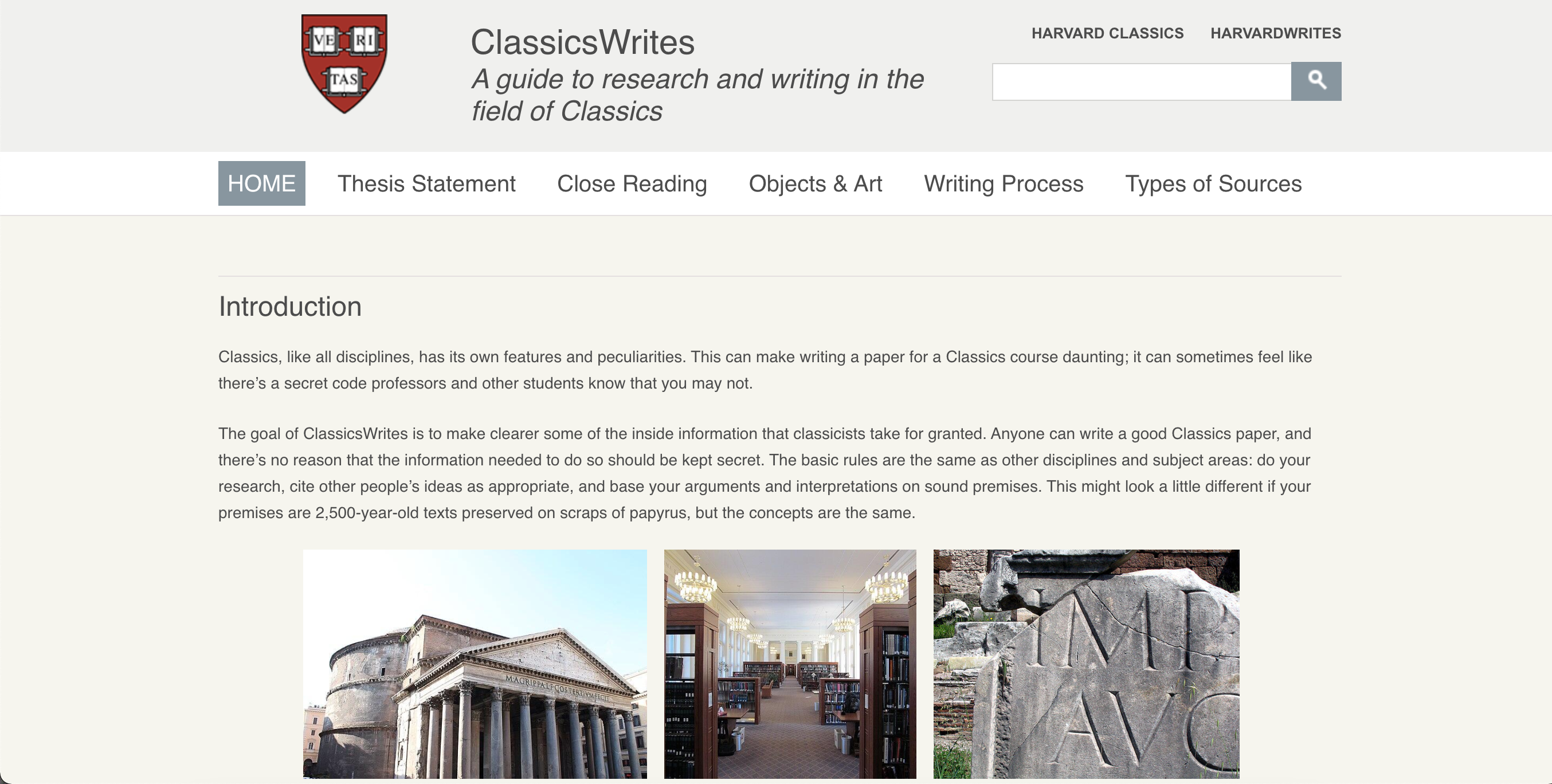
Sarah created ClassicsWrites, a website that the Department has published to teach and guide undergraduate students about writing and research in the field. This guide covers topics including thesis statements, using translations, close reading analysis, and working with artifacts. This guide can be used by undergraduates in any Classics course, especially 97 A/B, 98, and by senior thesis writers, but also the 10/100 level concentrators courses, like Roman Archaeology (11) or Roman Daily life (125). The guide also helps TFs develop lesson plans.
### Visual and Oral Communication Workshop for Classics Students
Classics concentrators learned about visual communication in support of their senior thesis projects. Students learned about the key aspects of graphic design one should consider when giving a presentation and, relatedly, some of the best practices for making a powerpoint for conferences and in-class presentations. Students learned about philology best practices and practiced applying these principles to their own research projects.
### Multimodal Assignment Design
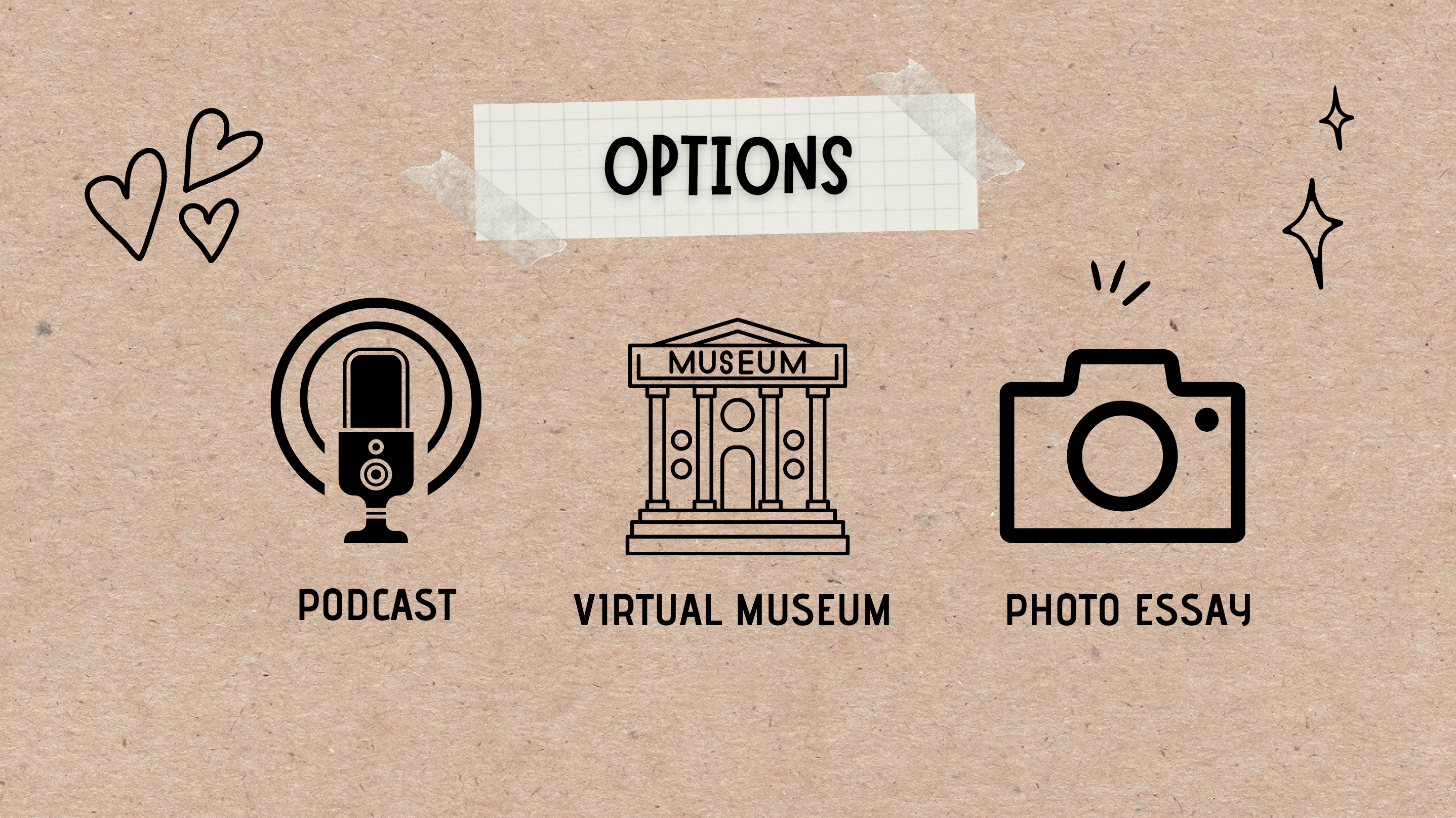
Sarah has developed a range of multimodal assignments geared toward addressing the learning objectives of Classics courses. You can read more about her assignment ideas in this [lookbook Sarah created](https://www.canva.com/design/DAFSsP74WtA/fXJEaLb2-xu8iU5vGnOpXg/view?utm_content=DAFSsP74WtA&utm_campaign=designshare&utm_medium=link2&utm_source=sharebutton#1).
#### Virtual Galleries
Writing an object biography is a common assignment in the 97s and other undergraduate Classics courses. This is an important assignment, as it introduces them to working with art and artifacts, and important skill they will need to work as a classicist, even on the languages and literature track.
This assignment takes the object based approach and puts it in a new form. Rather than writing a paper, student create an interactive gallery on Canva or Powerpoint that is more dynamic than pure text and makes use of embedded links and other moves that allow for human agency and a chose-your-own-adventure style. Alternatively, this assignment can also be modified to look at one object in depth for analysis. This assignment will fulfill many of the same underlying pedagogical goals as a paper, including:
* developing close looking skills
* writing an object description
* conducting object analysis
* think about themes and connections across objects, texts, and various media
#### Podcast
Sarah has developed a podcast assignment that could be used in a range of department courses. This assignment would use the form of the podcast to replace or augment an undergraduate research paper as their final assessment. The basics underlying goals would stay the same: the students will pick a topic to investigate, conduct research on the topic, and present this information with an overlaid argument. The podcast easily allows for multiple perspectives, including alternative arguments and voices. As an assignment, this maintains the basic investigative skills students will need for future academic work, including working with primary and secondary sources; it merely changes the form of content delivery.
#### Photo Essay
Unlike traditional essays, which take a word- and text-first approach, a photo or video essay prioritizes the image, and commenses from there. This can help visually based learners, and can also prompt students to make sure their analysis builds from primary evidence, rather than being formulated, then superimposed on evidence after the fact. This teaches students to "read out", rather than "read in."
## Course Support
### GENED Course Development with Professor Andrews
Working with Professor Meg Andrews, Sarah helped develop a course on Archaeological Fakes and Frauds. This class looks at how and why conspiracy theories develop so commonly and so vehemently around archaeological contexts. Looking at common and popular avenues of information distribution such as news channels, the use of archaeology in video games and comics, and alternative forms of reporting (e.g., podcasts and blogs), you will explore how narratives of archaeology are cross-culturally (mis)appropriated and deployed to craft certain narratives of nationalism, supremacy, and evolution.
## Learning Lab Training
Media & Design Fellows identify key tools they need to learn in order to complete their projects. They join internal labs to receive training and practice using these tools. They also shadow experienced MDFs and Learning Lab staff as they design prompts and lead workshops.
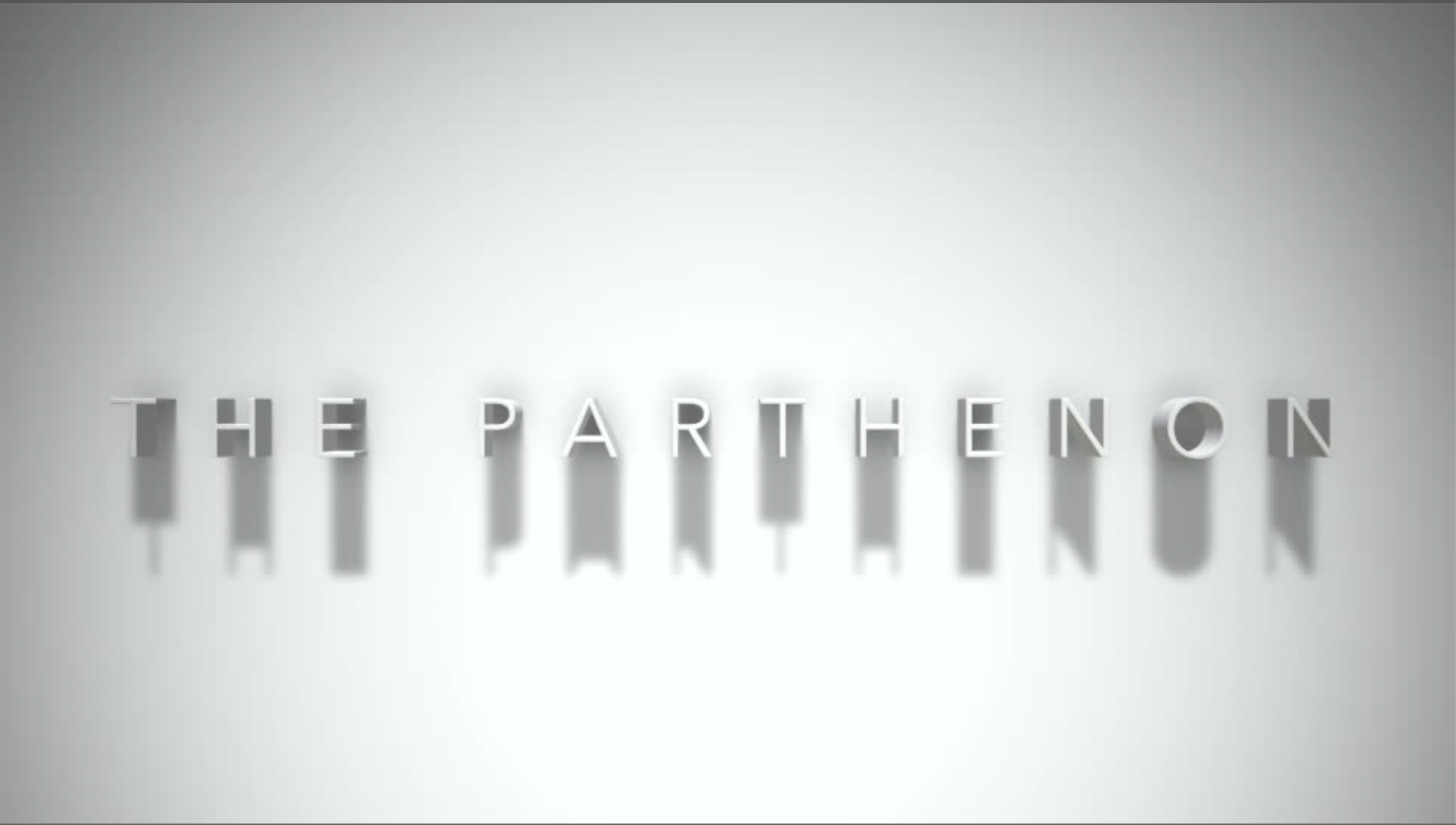
Sarah has docked with audio/visual lab, producing an explainer video prototype about classical monuments. Learning about media asset creating and sourcing, video editing, and voiceover, Sarah learned through making, putting her in a strong position to assist students making video essays in courses. During the fall semester, Sarah chose to focus on learning FinalCut Pro and building animation in Keynote.
 Sign in with Wallet
Connect another wallet
Sign in with Wallet
Connect another wallet