---
tags: scroll-lab
---
# mid-term scroll-lab report
For their initial learning project, scroll-lab explored a range of tools for scrollytelling, producing proofs of concept using both low- and high-code tools. Scroll-lab also interrogated the different moves that constitute scrollytelling, developing a working "best and worst practices" guide to the form. Isolating moves (e.g., redaction, highlighting) that lend themselves to analysis, scroll-lab also thought about some potential activities that students could do using art supplies.
## proofs of concept
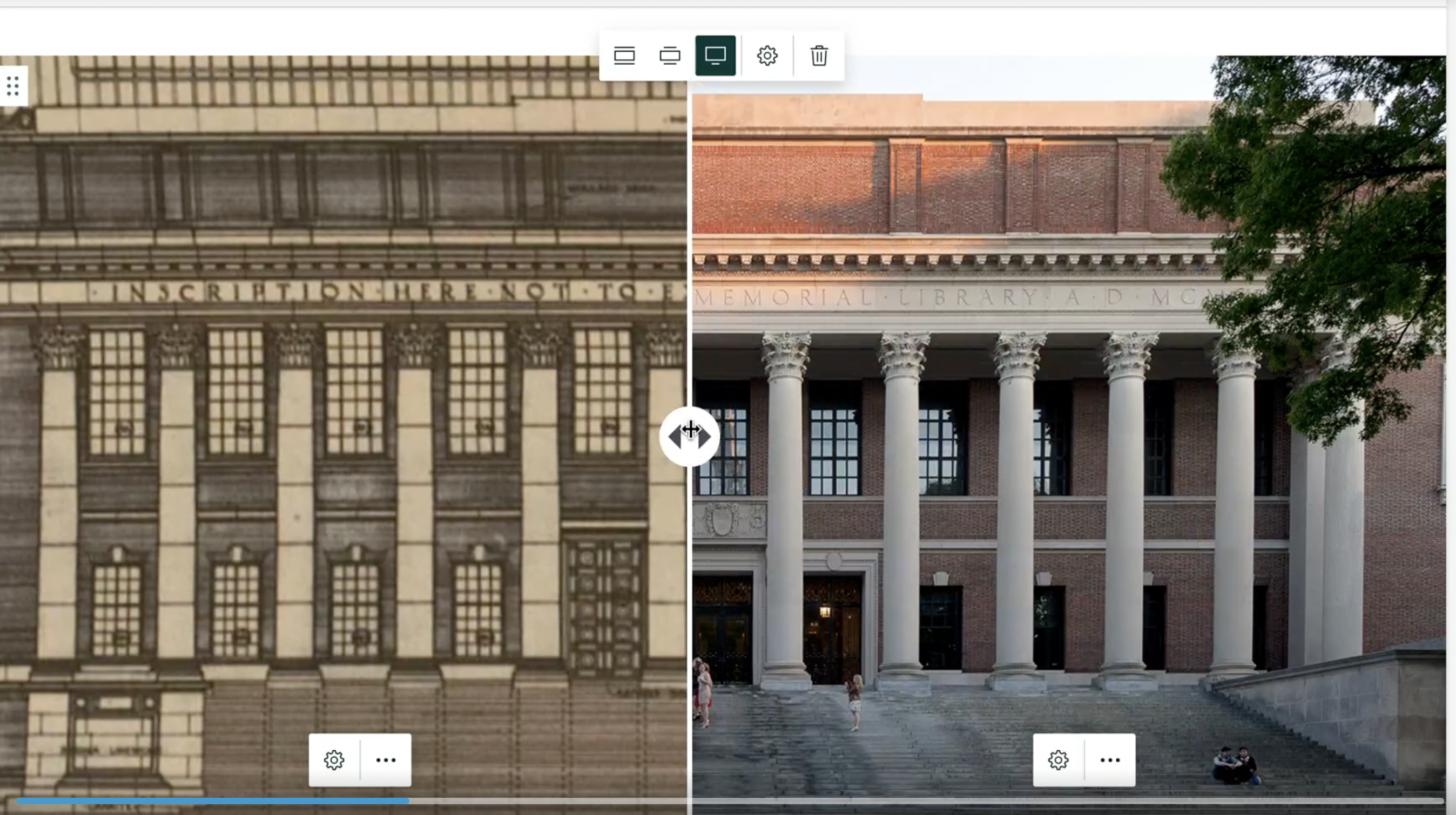
Using two images of Widener library, Carly created a scrolling effect that reveals either a historical rendering of the library or a contemporary photograph.
---
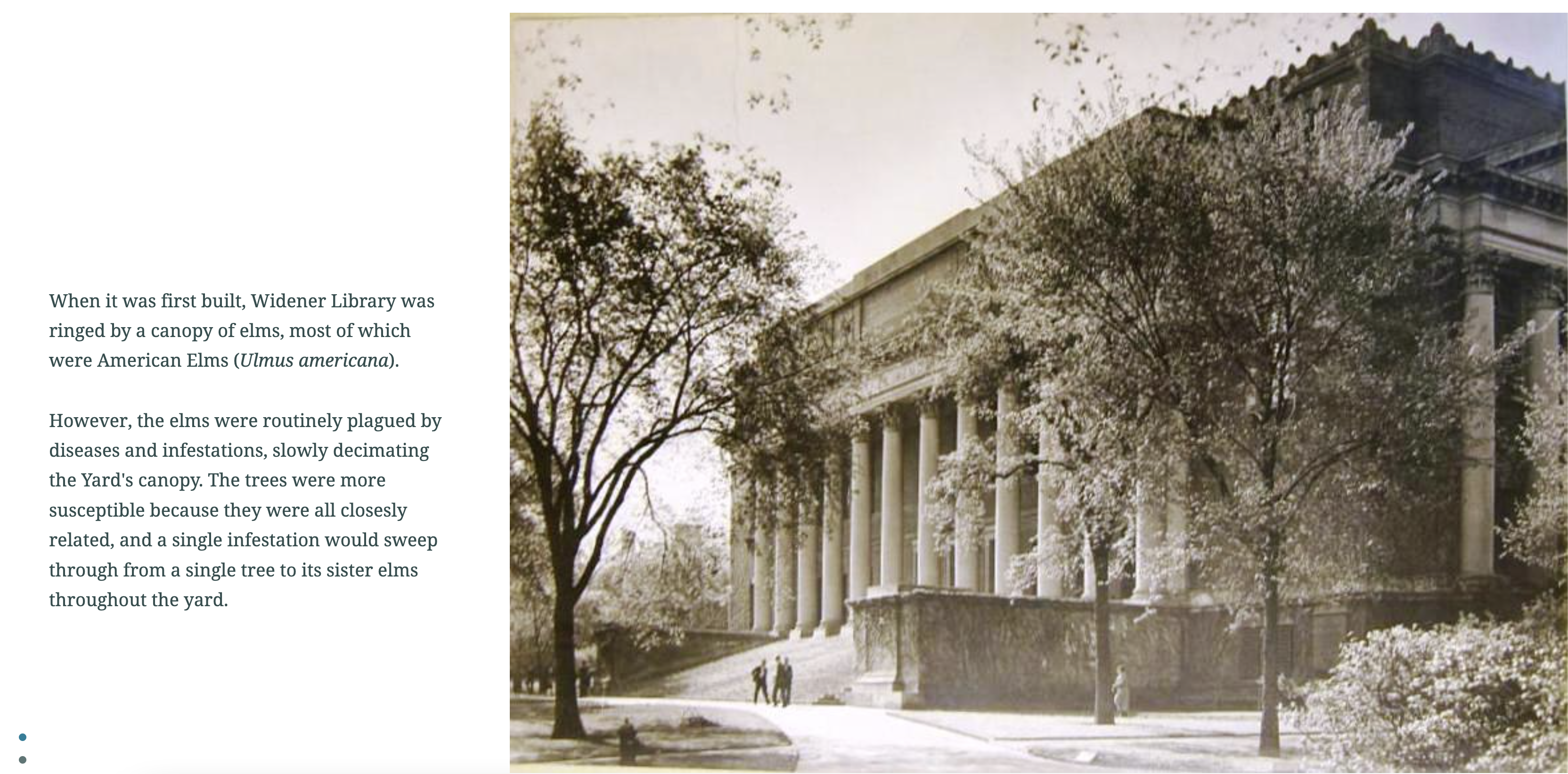
Using arcGIS Storymaps, Celia made [a scrolling story about the trees on Harvard's campus](https://storymaps.arcgis.com/stories/836b308634524f4397627772b839024e). Celia used GIS data to make an interactive map as well.
---
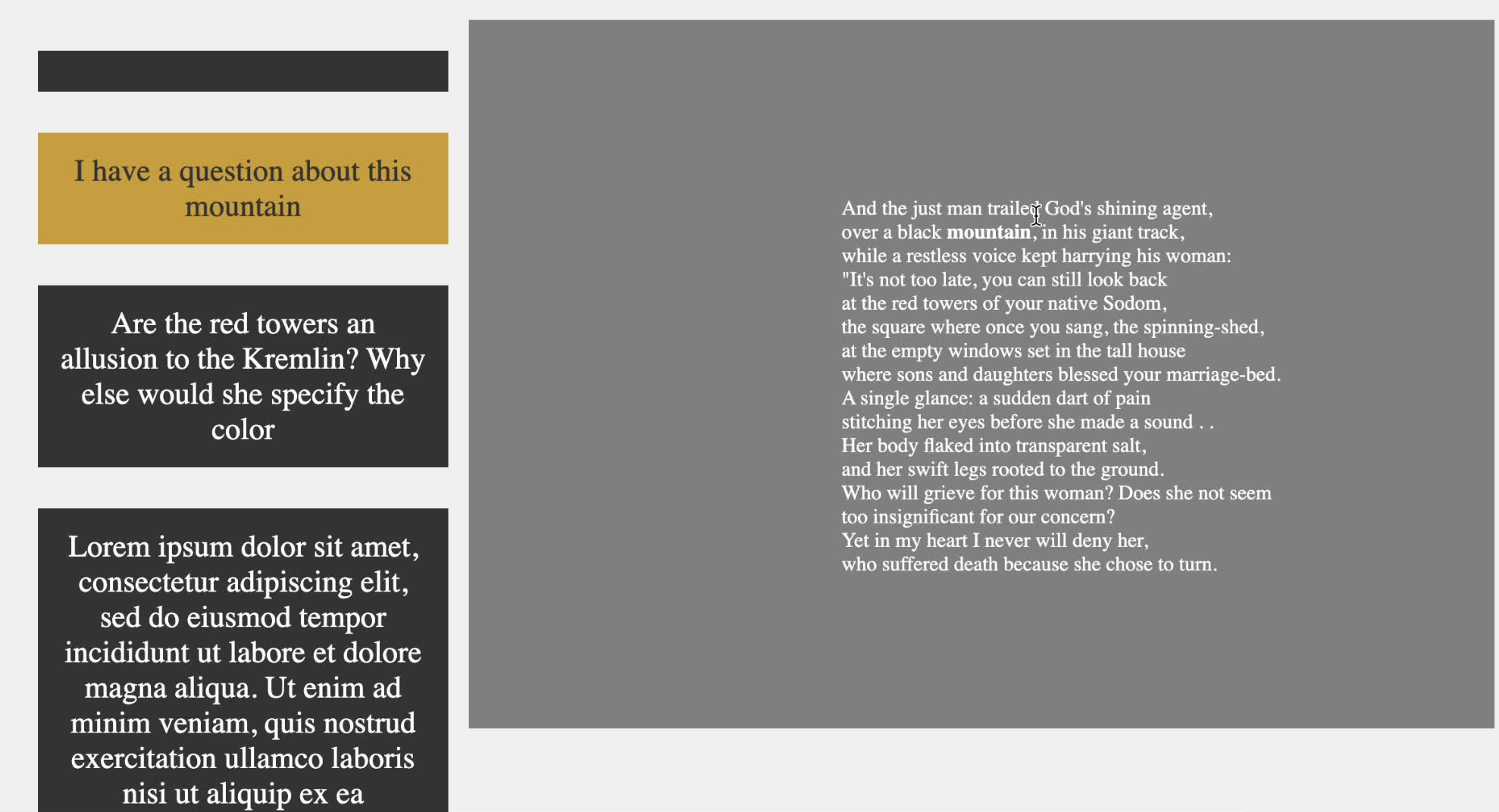
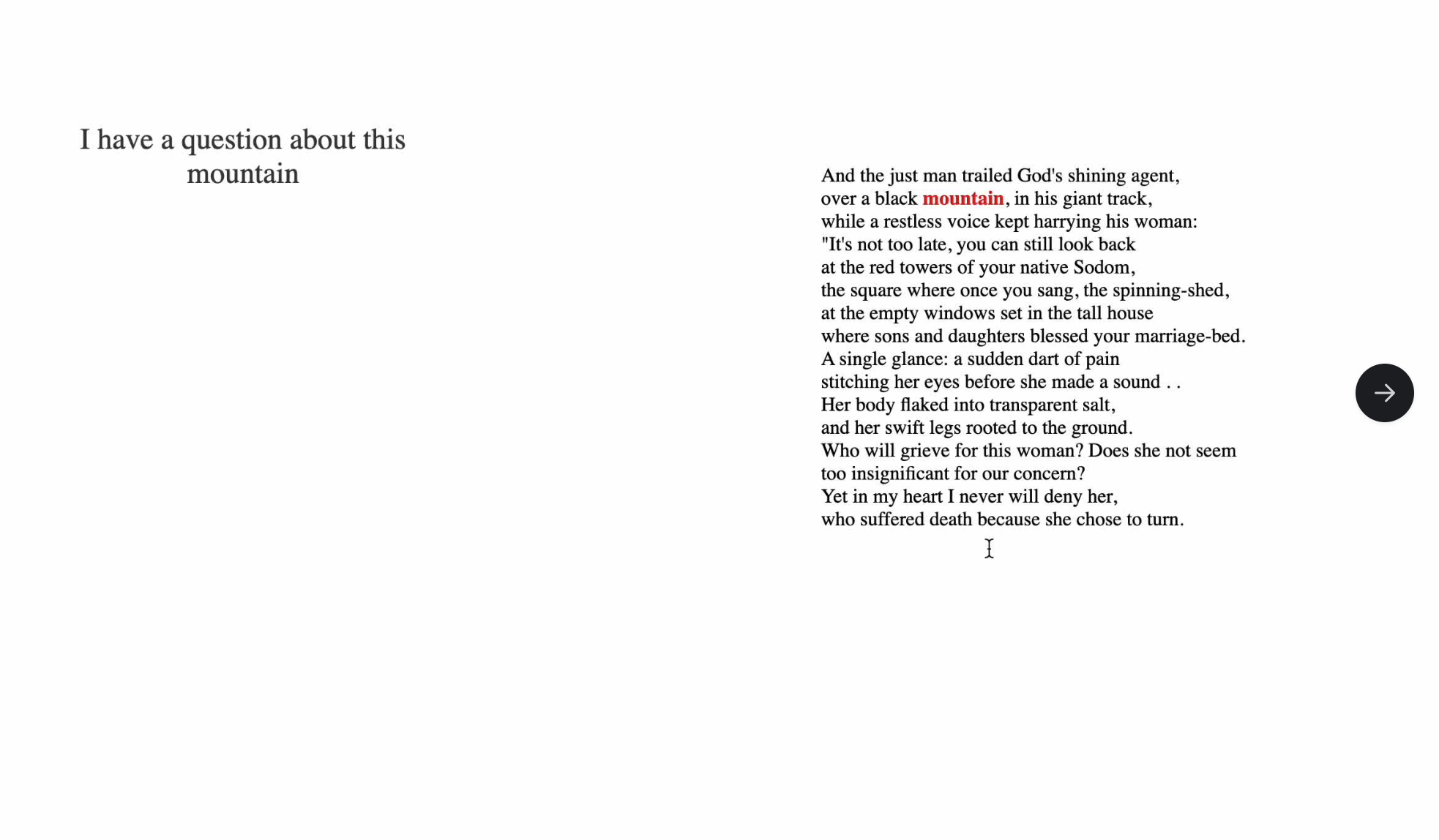
Anna coded a couple of proofs of concept that allow students to analyze poetry and to ask questions about the reading. Anna's goal was to create a way for students to interact with the text as they read it, responding to it and logging their responses.
---
<iframe src="https://cdn.knightlab.com/libs/timeline3/latest/embed/index.html?source=1OJVF9nPPqKUyVHKTAP9obssyooxUtD9PoyiiatKXwjk&font=Dancing-Ledger&lang=en&initial_zoom=2&height=650" width="100%" height="650px" frameborder="0"></iframe>
Using timelineJS, Yue made a proof of concept that performs the move of horizontal scrollytelling, telling the story of change over time.
---
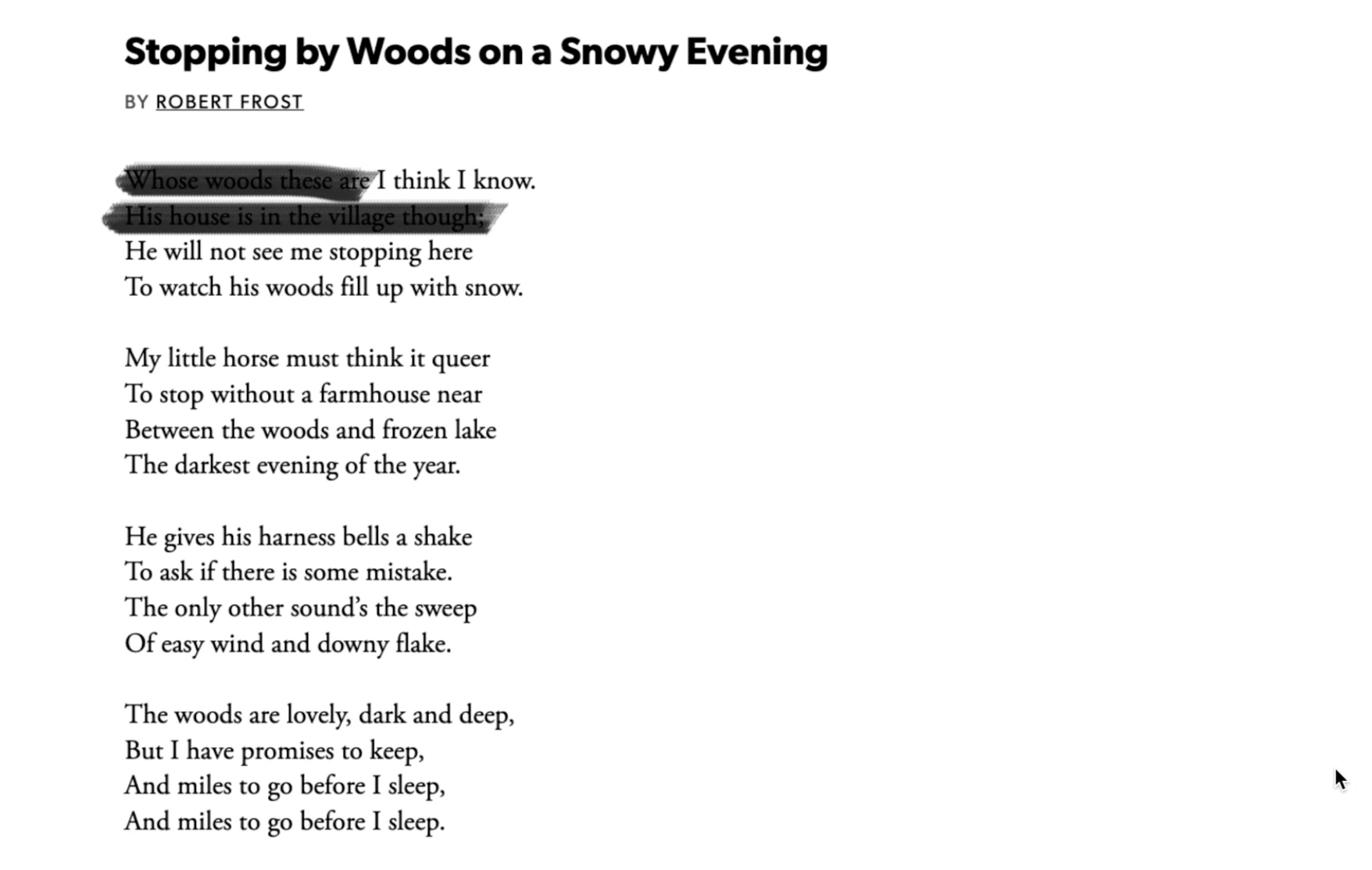
Exploring redaction as a potentially profound analytical move, Carly experimented with a Robert Frost poem, redacting lines and recording this movement so that the redaction happens as one reads. The lab imagined activities that could get students thinking about redaction critically, including an activity that would culminate in students producing a new collective version of a poem constituted from their individual redactions/edits.
---
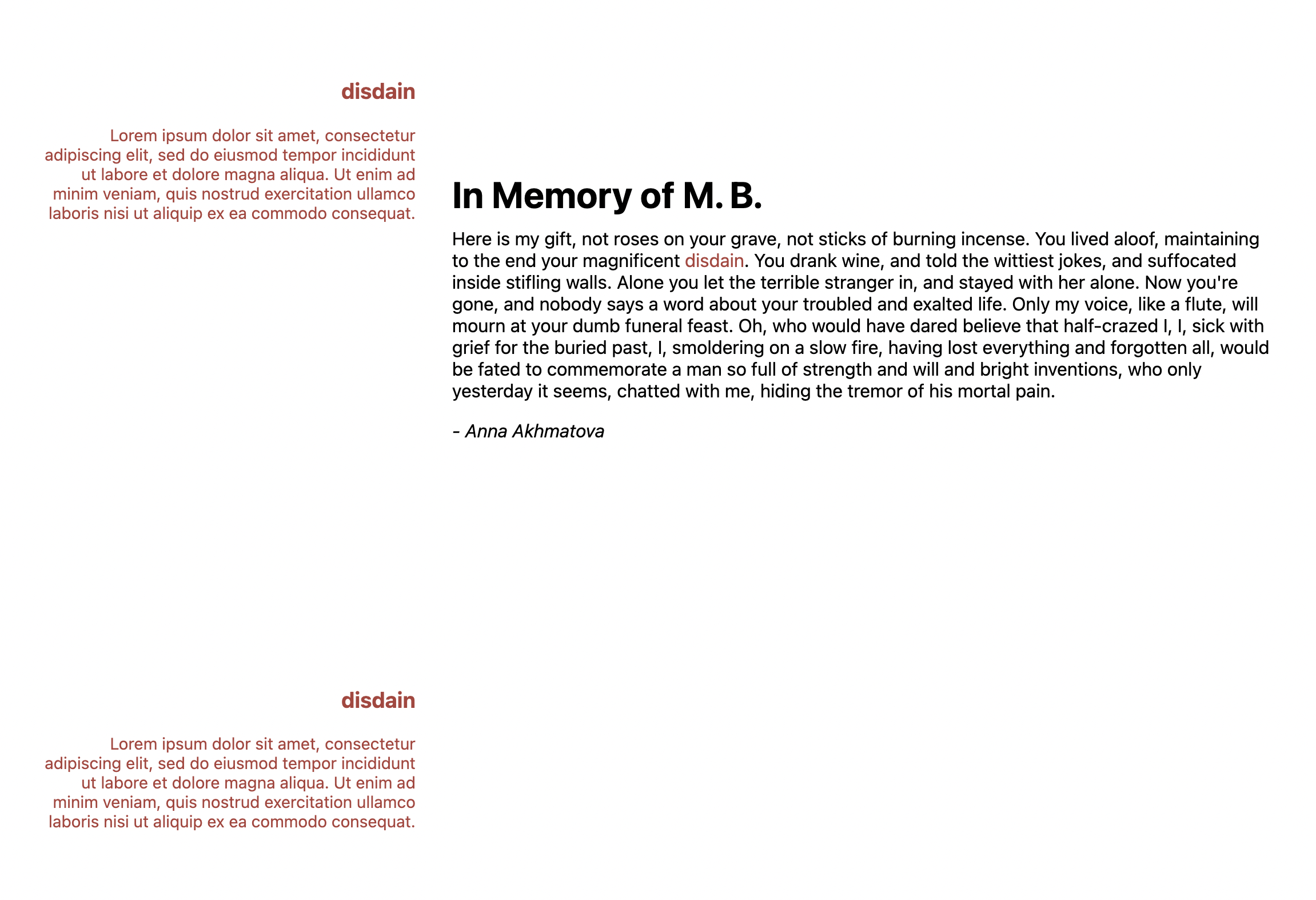
Marlon building off of Anna's proof of concept!
---
## the moves
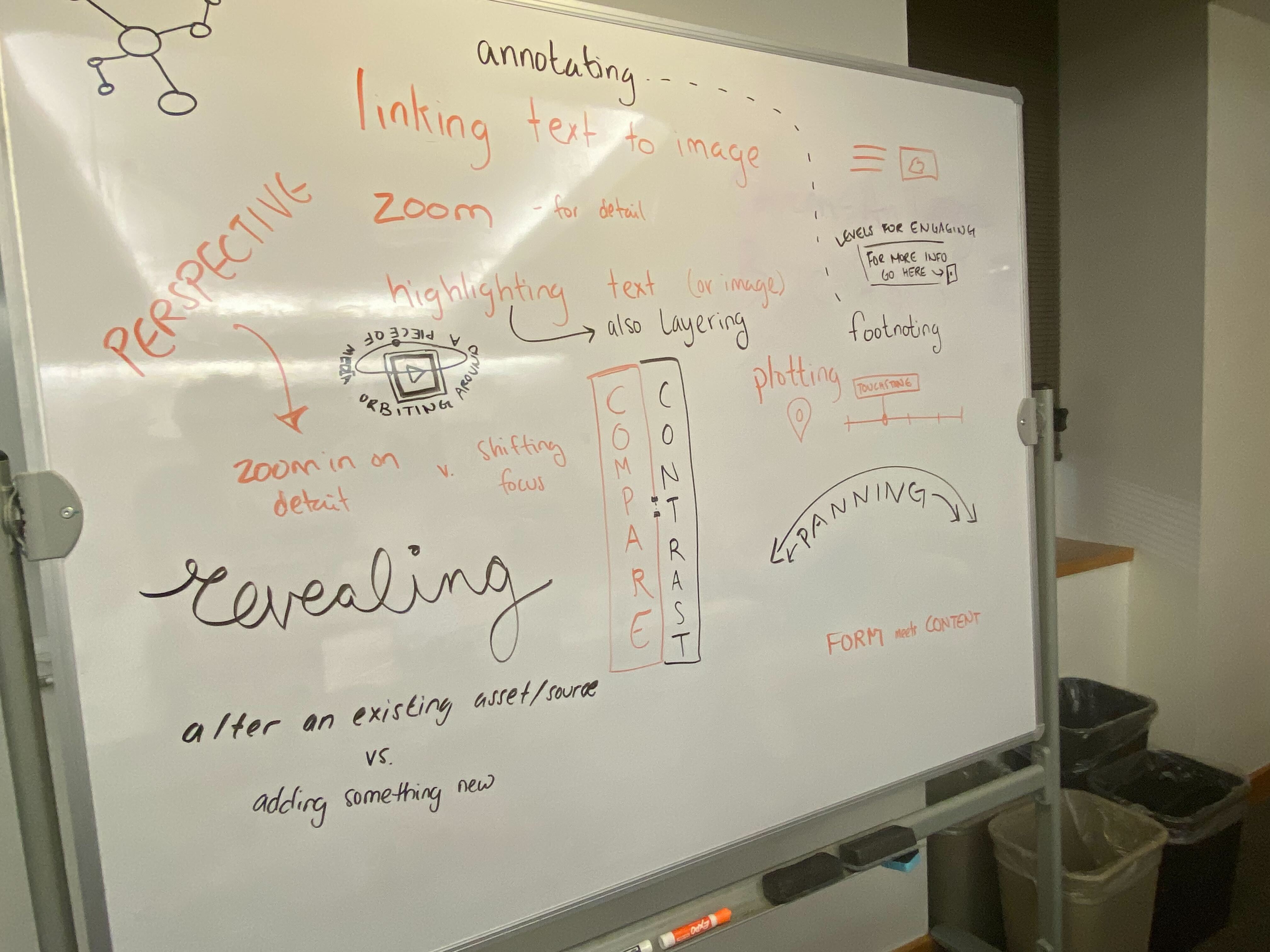
scroll-lab thought about the core "moves" of scrollytelling as a way to unpack the form and think about the types of scroll effects their stories might deploy (and to what analytical end).
 Sign in with Wallet
Connect another wallet
Sign in with Wallet
Connect another wallet