---
tags: lookbook
---
# 2021-2022 Media & Design Fellow Projects
## Exploring Deep History Through Virtual Galleries
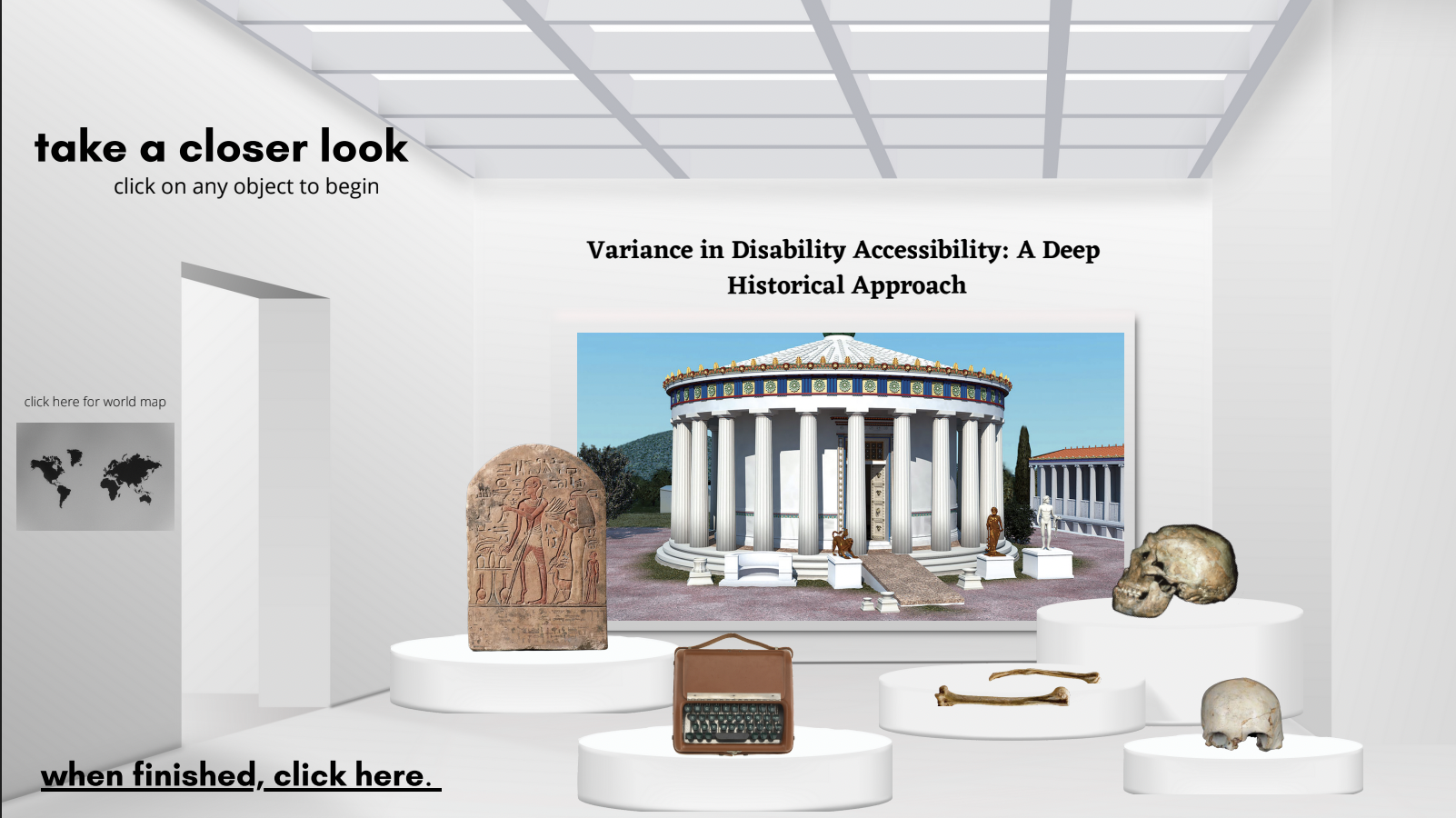
Media & Design Fellow Claire Adams held a series of Digital Gallery workshops and developed other section prototyping for GENED 1044, "Deep History." Claire hosted students in the Learning Lab, leading tutorials in some of the tools that students could use to create their galleries (e.g., Blender, Clip Studio, Canva). These workshops helped students gain familiarity with technical tools and receive feedback on their plans for the assignment. Benefitting from these tutorials, some students asked to return to the Learning Lab with Claire to receive further instruction in the digital gallery tools.
## Mapping the Lives of Saints
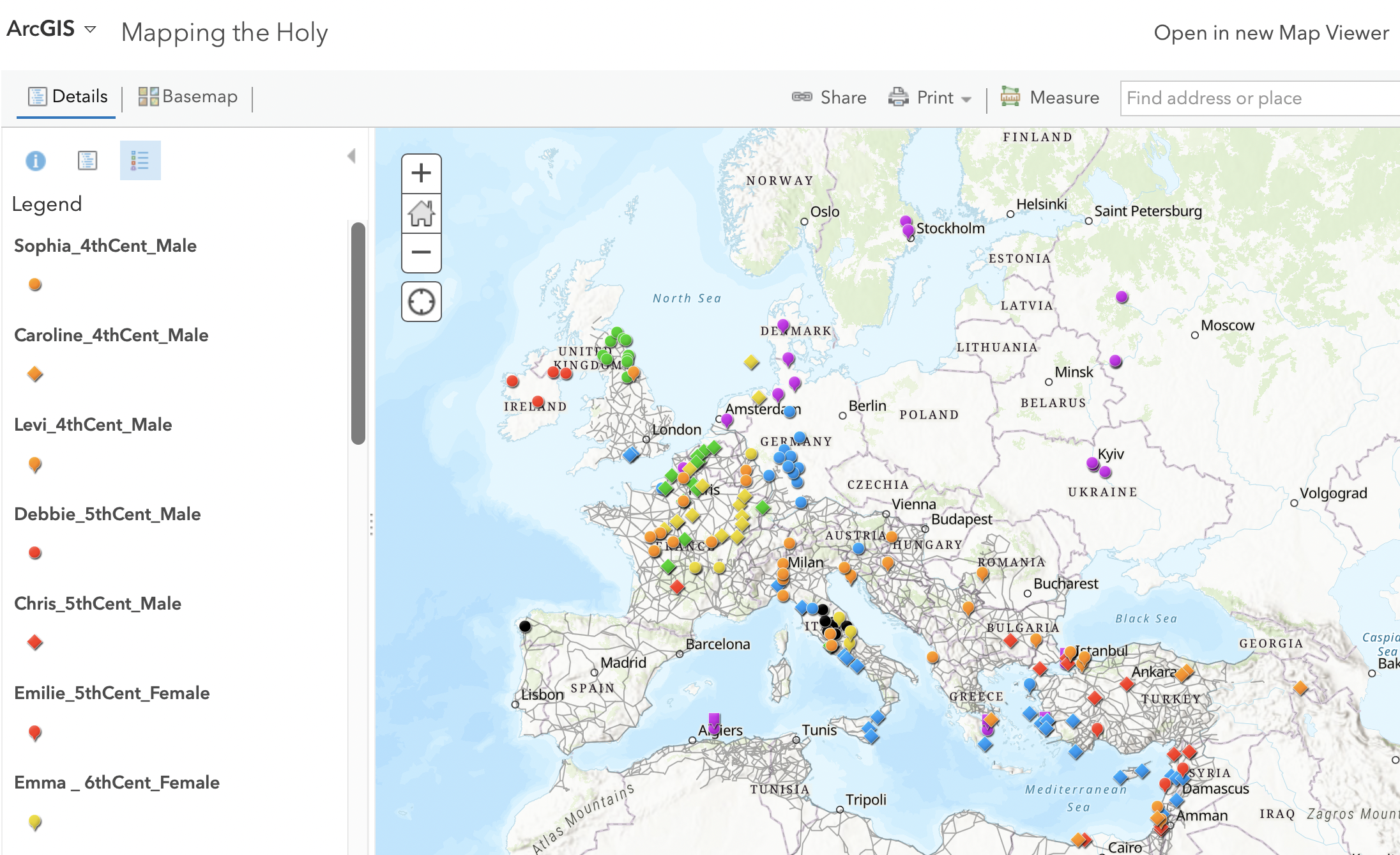
Over the course of two weeks, Claire worked with students in GENED 1160, having students make a list of locations from over 20 Saints' Lives. Claire mapped these locations in ArcGIS's online platform so that the students could then toggle the layers on and off, filter for types of saints' lives or century, and track patterns. This activity introduced students to the basics of geotagging and mapping--skills that were relevant to their final projects (in which students could, as one option, choose to make a map exemplifying a border of some kind).
## GENED 1160: Harvard Gets Medieval Virtual Gallery Workshops and Hackathons
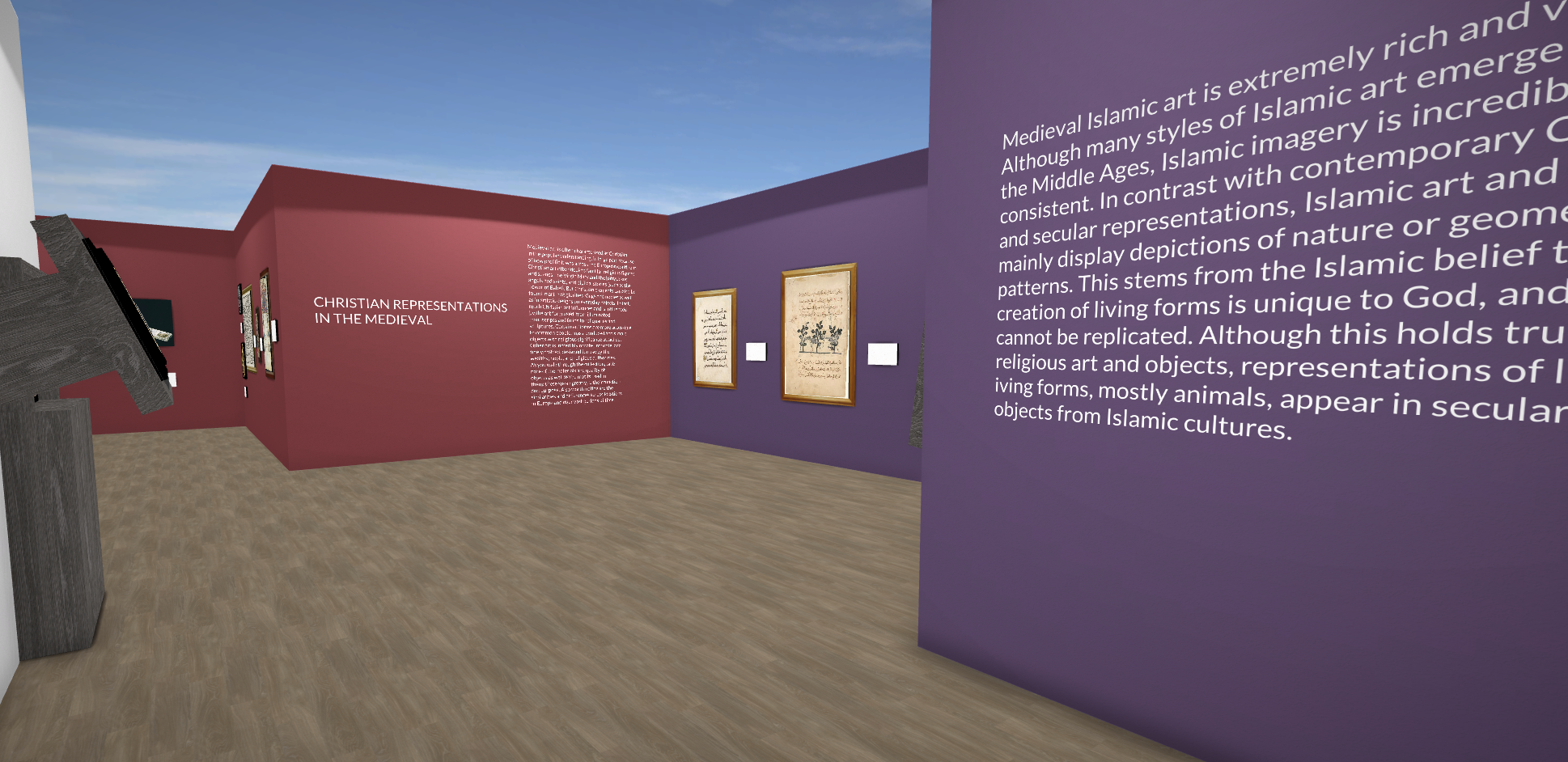
In the spring, Claire hosted students from GENED 1160: Harvard Gets Medieval for workshops and hackathons in support of students' final virtual gallery project. At the workshops, Claire introduced students to the basics of virtual galleries, providing detailed and effective tutorials in tools including Scalar, Omeka, and Canva. Claire made several example virtual galleries using these tools so that students would have models as they thought about the tools' distinct applications and capabilities. Later in the term, students were invited to come to the Learning Lab to receive further assistance and feedback on their virtual gallery projects. These hackathons provide students with a set timeframe during which they can work on their projects and receive feedback from MDFs like Claire, as well as LL staff.
## Comics for MCB 80: Neurobiology of Behavior
To explain a difficult concept that students struggle to understand, Media & Design Fellow Xiaomeng Han developed a two-page comics spread that uses a real-life example to illustrate and explain this concept. Through this project, Xiaomeng has learned how to use comics--a medium that many students are familiar with and enjoy--to instruct students in concepts that can be challenging for them. Through this project, Xiaomeng also developed the capacity to teach undergraduates how to make scientific explainer comics of their own. Being able to explain key scientific concepts using real-life examples helps students strengthen their command of course content. Though this particular project was about concepts from neuroscience, explainer-style comics and graphics can be useful in an array of disciplines.


## 100 Years of Chinese Language Instruction at Harvard
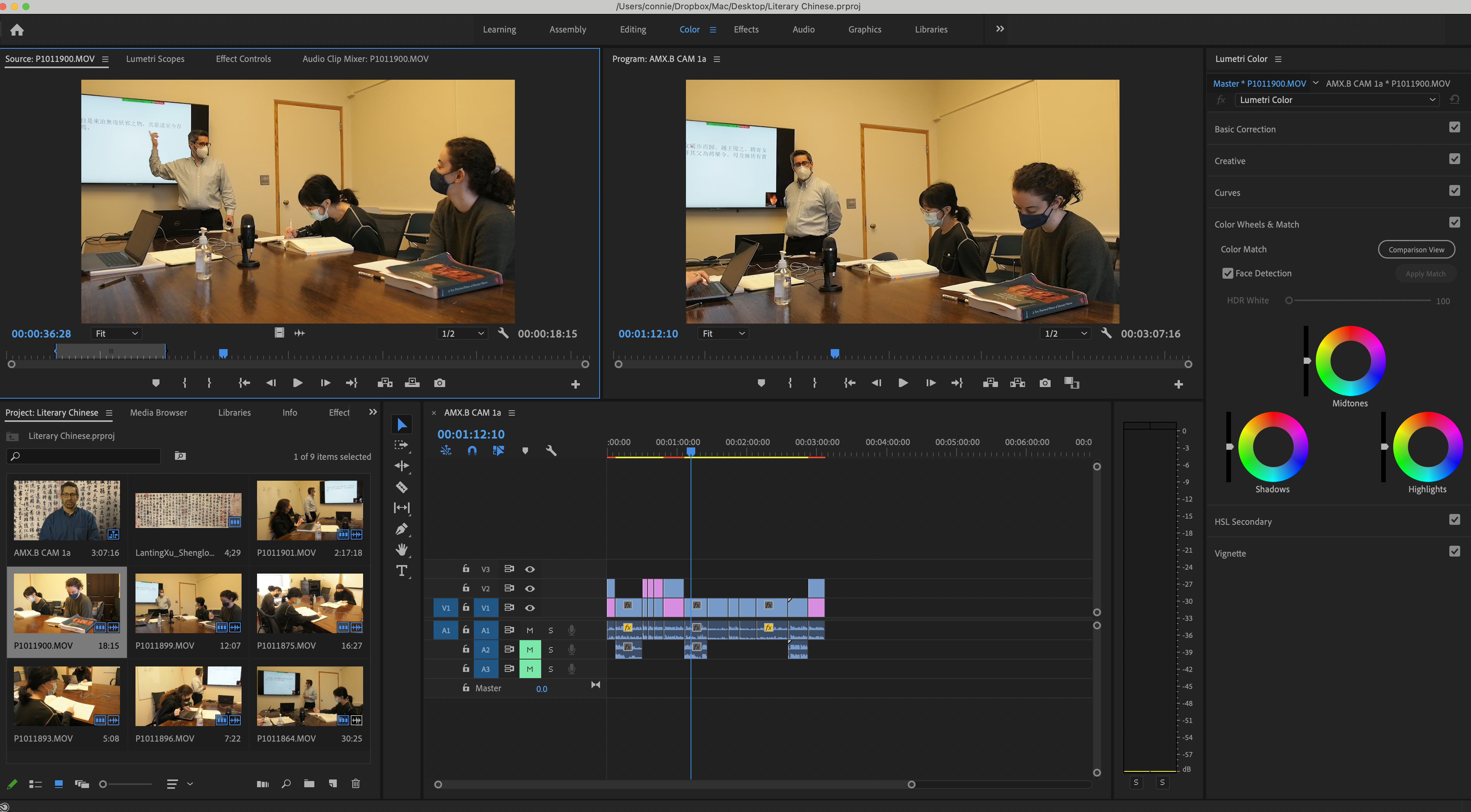
Media & Design Fellow Kangni Huang assisted Professor David Sena (EALC) in the production of a short video about the 100th anniversary of Chinese language instruction at Harvard. Kangni brought Professor Sena into the Learning Lab to film this short video. Then, Kangni edited the footage into a short film. This film will be used to promote language instruction at Harvard.
## Podcast Workshop for Spanish 50
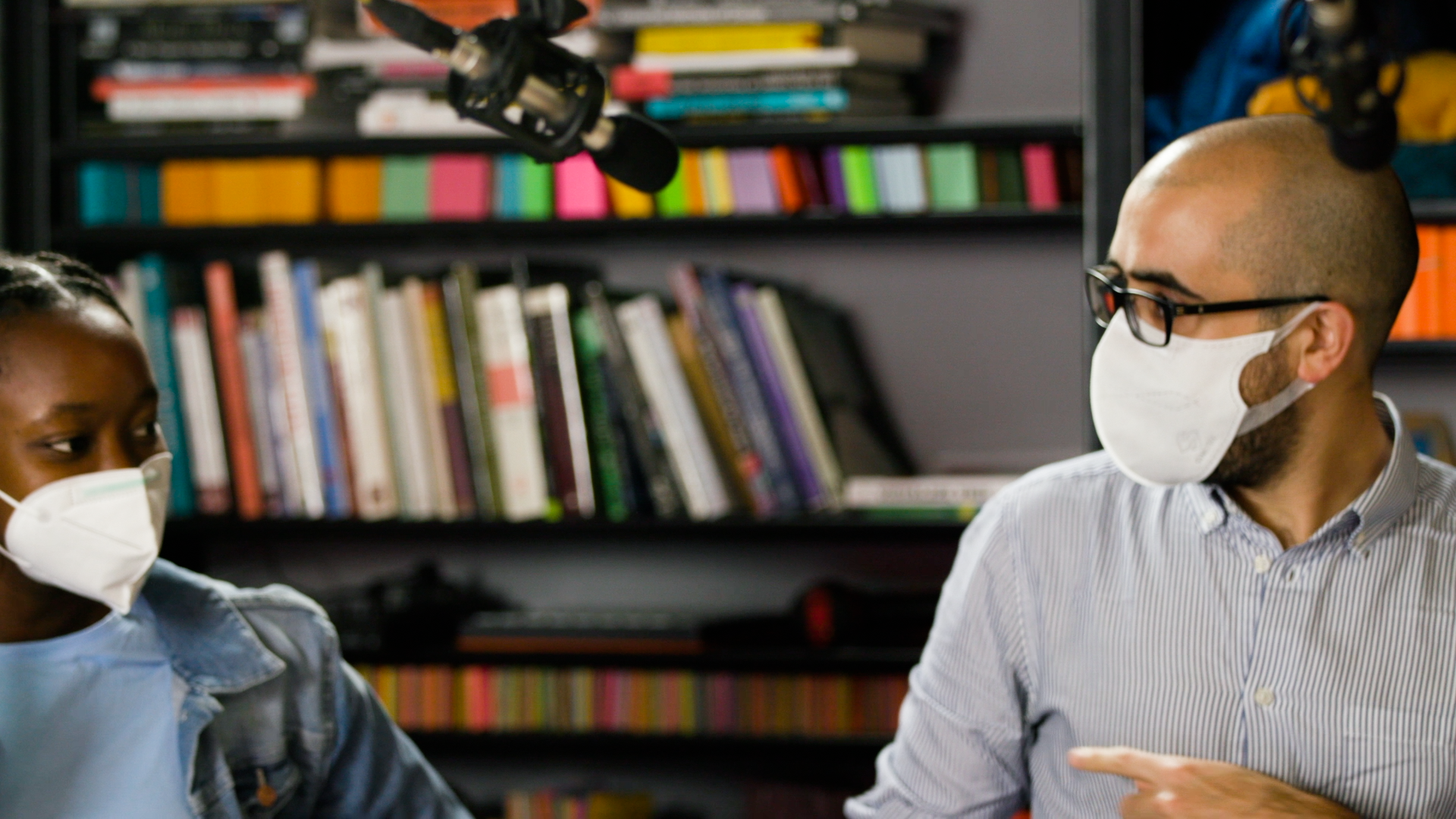
Ignacio organized a podcast workshop for Professor Adriana Gutiérrez's Spanish 50: Creative Writing and Performance course. In a course assignment, students were tasked with using poems and short stories assigned in the course as a way of imagining a conversation that might take place between the characters found in these texts. Students then created a podcast episode that was this imagined conversation between characters, allowing students to discuss themes ranging from love, death, politics, and beyond. Ignacio's podcasting workshop introduced students to the basics of audio capture and editing.
## Reading Scientific Papers

Supporting MCB Professors Jeff Lichtman and Katie Quast, MDF Xiaomeng Han has been developing an interview series that will be compiled into a video about the process of reading scientific papers. This project involves interviewing professors, PIs, post-docs, and students about their reading practices, asking them to reflect on how they read scientific research for comprehension. The goal of this project is to share these videos with students to help them learn how to read the academic research papers assigned in the course. Xiaomeng has completed and edited these interviews, recording in one of the Learning Lab's several studios. A similar video series about methodology could be useful in disciplines beyond the sciences as well.
## Music 207R: Ethnographic Filmmaking
Though not supported by a Media & Design Fellow, Professor Richard Wolf's course, Music 207R: Creative Ethnographic Practice: Sound, Writing, and Film, made use of the types of tools that MDFs often use in support of their home department's courses. For the first half of the term, graduate and undergraduate students enrolled in this course came to the Learning Lab for a series of workshops in support of an ethnographic film project. Students learned the fundamentals of video and audio capture and editing, receiving instruction in camera work, microphones, and performance capture.
## MDF Projects Featured on the Bok Website
To read the longer versions of these articles, see the News section of the Derek Bok Center for Teaching and Learning website or click the hyperlinked titles below.
### [Graphical Abstracts to Teach Neuroscience](https://bokcenter.harvard.edu/news/graphical-abstracts-teach-neuroscience)

In MCB80, The Neurobiology of Behavior, many Harvard undergraduates encounter scientific papers for the first time. As a way to augment students’ understanding of influential research papers in neuroscience, Media & Design Fellow Xiaomeng Han (PhD candidate in Neuroscience) has developed “graphical abstracts”—a form that uses illustration and graphic design to explain, and in a sense tell a story about, key concepts in neuroscience.
### [Science Through Story Podcasts](https://bokcenter.harvard.edu/news/science-through-story-podcasts-oeb50)
In consultation with the faculty, Grace chose podcasting as the medium for the OEB50 project, both for its feasibility in a remote semester and for the ways in which it would push students to present science without relying on diagrams and data visualizations to do the heavy lifting. The audio-only format required students to heighten audience interest by explaining the rationale for and implications of research studies, using sound effects to set the scene, and perhaps most importantly, relating genetics to people through stories.
### [Virtual Labs in OEB](https://bokcenter.harvard.edu/news/lab-3d-success-virtual-labs-oeb-126)
When word came that courses would be moving online for the remainder of Spring 2020, Learning Lab Graduate Fellow Phil Fahn-Lai knew that the science course for which they are a Teaching Fellow would face a particular challenge. Labs in OEB 126: Vertebrate Evolution, taught by Prof. Stephanie E. Pierce, involve visits to the Harvard Museum of Comparative Zoology, where students view and interact with fossil specimens from the Museum’s Vertebrate Paleontology collection. In collaboration with members of the Pierce Lab, Phil spent their last days on campus in mid-March using photogrammetry to scan and create 3D models of as many of the remaining fossil specimens as possible, and then got to work developing a tool to make them viewable. The result is Lab 3D, OEB 126’s online platform for conducting labs. The app consists of three major components: (1) the specimen viewer, where students interact with high quality 3D models hosted on Sketchfab; (2) the text pane, which contains streamlined versions of lab handouts curated for the online environment and links to all of the relevant 3D models; and (3) a phylogeny tree popup that allows students to locate their specimens in an evolutionary context. We’ve created a demo version of the app here, where you can check out the interface and explore some publicly available Sketchfab models.
### [Game Design in the Classroom](https://bokcenter.harvard.edu/news/lessons-game-design-how-should-students-play-your-syllabus)
As a Fellow this year at the Learning Lab, Ceci has focused on 3D modeling, virtual reality, and game design. As a humanist focused on contemporary science fiction and transmedia storytelling, Ceci uses these mediums to develop and design immersive pedagogical experiences and to create resources for digital humanities projects. Ceci also led a Bok Seminar on game design (Let’s Play! What Games Can Teach Us About Motivation and Engagement).
 Sign in with Wallet
Connect another wallet
Sign in with Wallet
Connect another wallet