# Argentina Economic Indicators

## Introduction
For this project I will be examining the economic indicators of Argentina, a devloping country in South America. I will be relying on data reserach, macroeconomic formulas, and my the use of graphs to compare and contrast the economy of Argentina the economy of the United States.
----
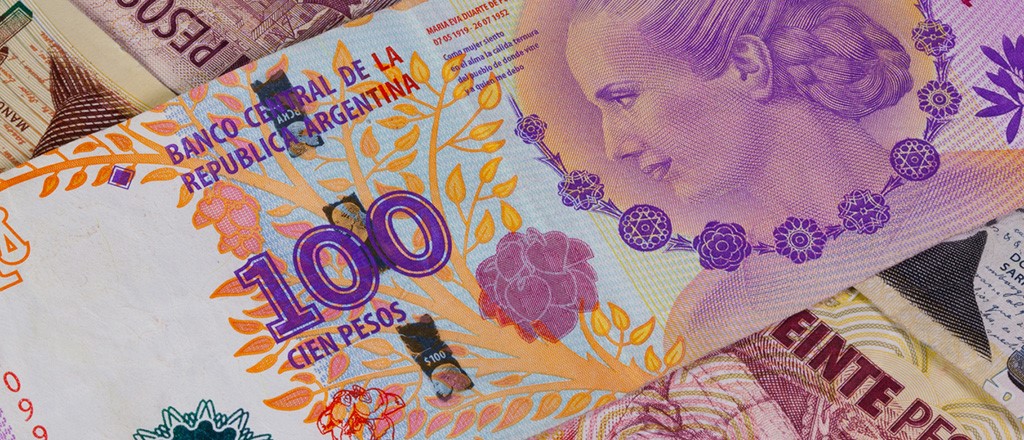
# Part 1: Setting the Economic Stage for Argentina
## GDP
Gross domestic product is accepted by most as the best economic indicator of the current state of a country's economy. It values what a country produces (goods and services) to determine their economic health. The United States has the largest GDP in the world by a large margin so it can be useful to see just how far developing countries are from the very top of the global economic world.
### The United States
In 2021 the United States had a nominal GDP (Current $US) of $22,996,100,000,000. The graph below shows that the US nominal GDP has seen tremendous growth since the year 2000.
<iframe title="US Nominal GDP" aria-label="Interactive line chart" id="datawrapper-chart-1U52Q" src="https://datawrapper.dwcdn.net/1U52Q/1/" scrolling="no" frameborder="0" style="width: 0; min-width: 100% !important; border: none;" height="400" data-external="1"></iframe><script type="text/javascript">!function(){"use strict";window.addEventListener("message",(function(e){if(void 0!==e.data["datawrapper-height"]){var t=document.querySelectorAll("iframe");for(var a in e.data["datawrapper-height"])for(var r=0;r<t.length;r++){if(t[r].contentWindow===e.source)t[r].style.height=e.data["datawrapper-height"][a]+"px"}}}))}();
</script>
### Argentina
In 2021, Argentina had a GDP of $491,490,000,000. A stark difference from our US figures. The GDP growth of the United States has not been mirrored in Argentina. The graph below shows that this developing country has had a turbulent economy despite close to $400 billion in GDP growth from 2002 to 2021.
<iframe title="Argentina Nominal GDP" aria-label="Interactive line chart" id="datawrapper-chart-pn8EQ" src="https://datawrapper.dwcdn.net/pn8EQ/1/" scrolling="no" frameborder="0" style="width: 0; min-width: 100% !important; border: none;" height="400" data-external="1"></iframe><script type="text/javascript">!function(){"use strict";window.addEventListener("message",(function(e){if(void 0!==e.data["datawrapper-height"]){var t=document.querySelectorAll("iframe");for(var a in e.data["datawrapper-height"])for(var r=0;r<t.length;r++){if(t[r].contentWindow===e.source)t[r].style.height=e.data["datawrapper-height"][a]+"px"}}}))}();
</script>
### Putting GDP into Perspcetive
While Argentina is far from competetive with the United States in terms of production, one silver lining from their past 20 years of growth has been the changes in their infant mortality rate. As countries move from the "developing" to "developed" catagorey one statistic economists keep a close eye on is infant mortality rate as it shows how economic progress impacts the lives of a country's residents.
<iframe title="Infant Mortality Rate" aria-label="Interactive line chart" id="datawrapper-chart-tKEpr" src="https://datawrapper.dwcdn.net/tKEpr/1/" scrolling="no" frameborder="0" style="width: 0; min-width: 100% !important; border: none;" height="371" data-external="1"></iframe><script type="text/javascript">!function(){"use strict";window.addEventListener("message",(function(e){if(void 0!==e.data["datawrapper-height"]){var t=document.querySelectorAll("iframe");for(var a in e.data["datawrapper-height"])for(var r=0;r<t.length;r++){if(t[r].contentWindow===e.source)t[r].style.height=e.data["datawrapper-height"][a]+"px"}}}))}();
</script>
## Consumer Spending
Consumer spending is an important indicator of the economic state of a country becuase it values the total amount of goods and services purchased by all its residents. Typically, the higher consumer spending is the better the health of the economy. Poor economic conditions like high interest rates or inflation make savinng more attractive. As a result indivduals will be less likely to spend their discretionary income which will reduce consumer spending.
<iframe title="Consumer Spending" aria-label="Split Bars" id="datawrapper-chart-Hv3b7" src="https://datawrapper.dwcdn.net/Hv3b7/1/" scrolling="no" frameborder="0" style="width: 0; min-width: 100% !important; border: none;" height="766" data-external="1"></iframe><script type="text/javascript">!function(){"use strict";window.addEventListener("message",(function(e){if(void 0!==e.data["datawrapper-height"]){var t=document.querySelectorAll("iframe");for(var a in e.data["datawrapper-height"])for(var r=0;r<t.length;r++){if(t[r].contentWindow===e.source)t[r].style.height=e.data["datawrapper-height"][a]+"px"}}}))}();
</script>
Just as we saw in the GDP figures, the gap between the United States and Argentina is massive in terms of consumer spending. Using this knowledge we can begin to investigate some economic indicators that could correlate to these results.
# Part 2: Investigating Argentina
<iframe title="Inflation" aria-label="Grouped Column Chart" id="datawrapper-chart-rtTO7" src="https://datawrapper.dwcdn.net/rtTO7/1/" scrolling="no" frameborder="0" style="width: 0; min-width: 100% !important; border: none;" height="449" data-external="1"></iframe><script type="text/javascript">!function(){"use strict";window.addEventListener("message",(function(e){if(void 0!==e.data["datawrapper-height"]){var t=document.querySelectorAll("iframe");for(var a in e.data["datawrapper-height"])for(var r=0;r<t.length;r++){if(t[r].contentWindow===e.source)t[r].style.height=e.data["datawrapper-height"][a]+"px"}}}))}();
</script>
As we can see Argentina has inflation rates unlike any economy of developed countries we see in the European Union, the United States, or the world in general. In an inflationary enviorment rising prices leads to the low consumer spending we previously examined.
<iframe title="Real Interest Rate" aria-label="Bar Chart" id="datawrapper-chart-Hy7q1" src="https://datawrapper.dwcdn.net/Hy7q1/2/" scrolling="no" frameborder="0" style="width: 0; min-width: 100% !important; border: none;" height="353" data-external="1"></iframe><script type="text/javascript">!function(){"use strict";window.addEventListener("message",(function(e){if(void 0!==e.data["datawrapper-height"]){var t=document.querySelectorAll("iframe");for(var a in e.data["datawrapper-height"])for(var r=0;r<t.length;r++){if(t[r].contentWindow===e.source)t[r].style.height=e.data["datawrapper-height"][a]+"px"}}}))}();
</script>
Real interest rates can be used to help measure an economy and the attitudes of borrowers. Cosnumers will be less likely to borrow during periods of high interest rates. In the last 10 years Argentina was more likley to have a negative real interst rate than a positive one. There are two reasons why a country would have a negative interest rate.
First, central banks may choose to create negative interest rates to increase borrowing during times of econmoic recession.
Second, real interest rates may be negative when inflation exceeds the interest rate for loans at that time. This is because real interest rates are calculated by:
#### (the nominal interest rate - the Inflation rate)
<iframe title="Unemployment Rate" aria-label="Interactive line chart" id="datawrapper-chart-veolv" src="https://datawrapper.dwcdn.net/veolv/1/" scrolling="no" frameborder="0" style="width: 0; min-width: 100% !important; border: none;" height="371" data-external="1"></iframe><script type="text/javascript">!function(){"use strict";window.addEventListener("message",(function(e){if(void 0!==e.data["datawrapper-height"]){var t=document.querySelectorAll("iframe");for(var a in e.data["datawrapper-height"])for(var r=0;r<t.length;r++){if(t[r].contentWindow===e.source)t[r].style.height=e.data["datawrapper-height"][a]+"px"}}}))}();
</script>
# Part 3: Attempting Our Own Calculations
## Calculating Argentina's GDP
For the final part of this project I will be attmepting to calculate Argentina's GDP on my own and comparing it to available data.
---
Gross Domestic Product (GDP) is calculated by multipying a country's consumption, government expednitures, investment, and net exports together.
### GDP= C x G x I x NX
#### Argentina's consumption:
To find Argentina's consumption I searched the World Bank and found the "Final Consumption Expenditure in $US", or the value of goods and services spent by households, for 270 countries. After isolating Argentina's data I moved it to my excel sheet.
#### Argentina's Investment
Finding Argentina's investment data was not as easy. However I knew that it is also refered to as "Gross Capital Formation" which was also available on the World Bank website.
#### Government Expenditures
The World Bank website also contained data on "General Government Final Consumption Expenditure" which is the total spedning a government spends to procdue and provide goods and services to the public.
#### Net Exports
I was also able to find the Net Exports by taking data on Argentina's exports of good and services and subtracting it by their imports of goods and services.
### NX = Exports of Good and Services - Imports of Good and Services
## Final Results
Unfortunately, I was unable to accurately calculate Argentina's GDP using available data. I credit this failure to the unavailability of net export data on Argentina. However, I was able to calculate Argentina's Real GDP through the following formula:
#### (Nominal GDP / GDP Deflator) = Real GDP
<iframe title="Argentina's Real GDP" aria-label="Table" id="datawrapper-chart-z9JlJ" src="https://datawrapper.dwcdn.net/z9JlJ/1/" scrolling="no" frameborder="0" style="width: 0; min-width: 100% !important; border: none;" height="939" data-external="1"></iframe><script type="text/javascript">!function(){"use strict";window.addEventListener("message",(function(e){if(void 0!==e.data["datawrapper-height"]){var t=document.querySelectorAll("iframe");for(var a in e.data["datawrapper-height"])for(var r=0;r<t.length;r++){if(t[r].contentWindow===e.source)t[r].style.height=e.data["datawrapper-height"][a]+"px"}}}))}();
</script>
 Sign in with Wallet
Connect another wallet
Sign in with Wallet
Connect another wallet