---
tags: mdf-report
---
# Lara Norgaard: Media & Design Fellow in Comparative Literature
Media & Design Fellows provide direct support to specific courses, helping students develop and complete multimodal assignments. MDFs also host workshops in multimodal communication, multimodal storytelling, and presentation techniques. They also provide general support to their departments by developing resources and hosting events that support multimodal scholarship.
In this report, you can read about:
* The **training with the Learning Lab** Lara did to get ready to support projects in Comparative Literature
* The **courses** Lara supported this term
* The **departmental support** Lara provided this term
## Learning Lab Training
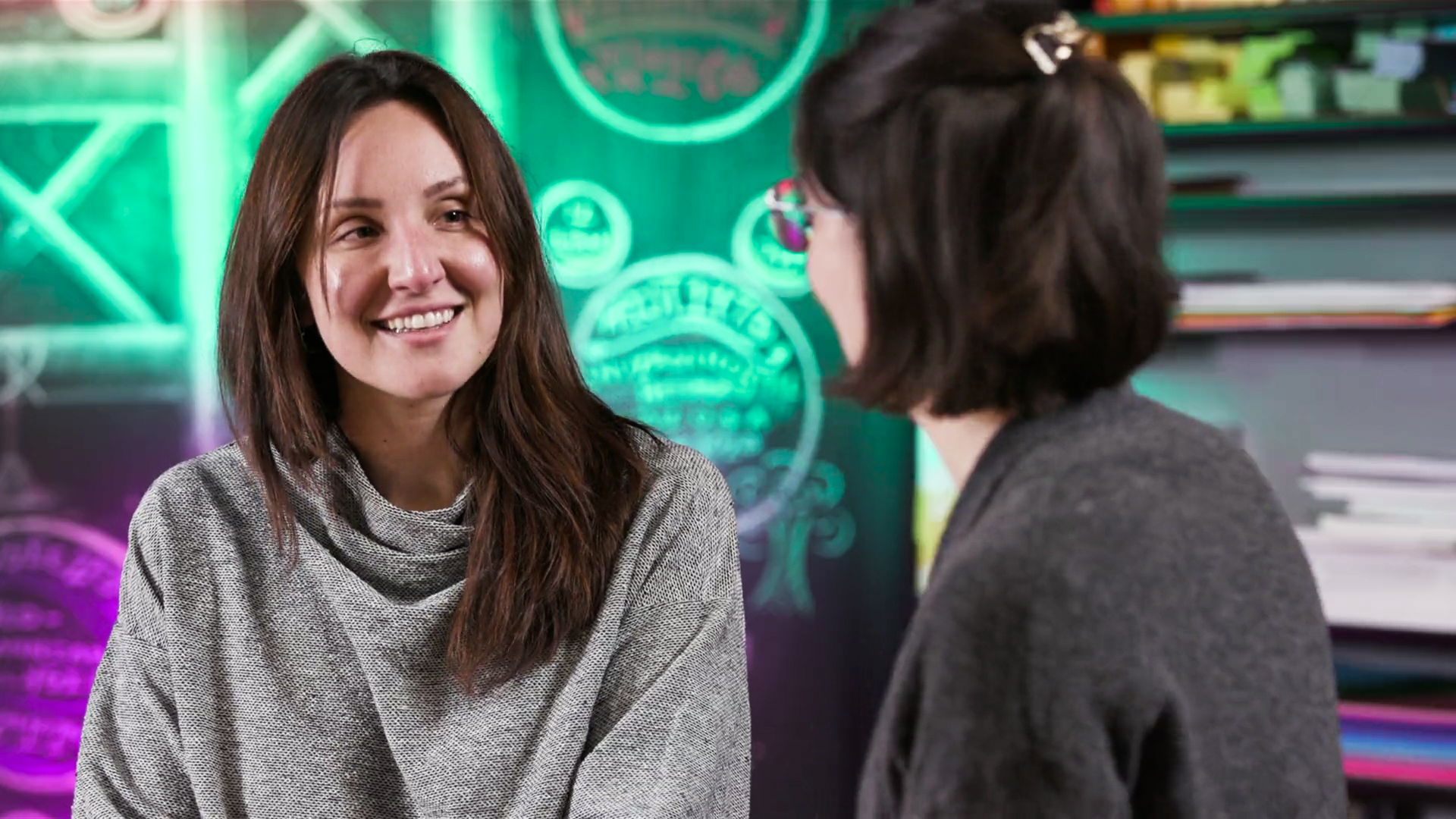
During MDF orientation in August and throughout the bi-weekly fall MDF meetings, Lara learned:
* how to **design activities, prototype assignments, and create resources** that help students in the particular courses they are supporting.
* a set of **multimodal pedagogy and instructional design best practices** and ways of connecting it to their discipline
* **the affordances of different media** and what students gain, intellectually and analytically, by engaging with those media forms
During her time at the Learning Lab, Lara has specialized in a range of tools that have enabled her to support Comparative Literature courses. These include:
* **digital audio workstations** (DAWs) that can be used for editing sound
* **microphones**, including dynamic mics, condenser mics, and cardioid mics, as a way of exploring and understanding their different audio qualities
* **AI tools**, including custom GPTs, Stable Diffusion, and other multimodal AI APIs
* **Canva**, a web-based graphic design and layout tool that can also be used for non-linear analysis (in the form of Anna Tsing's *Feral Atlas*)
* **cameras, lights, and other filmmaking tools** that we use to illustrate cinematic principles and formal choices during filmmaking workshops
## Course Support
### COMPLIT 111X: Breaking Points: Art, Scholarship, and Social Movements
In Professor Matylda Figlerowicz’s course, students explore genres and how those change in response to different social and political needs and priorities. For their final project in the course, students had the option to use any media form to explore an issue, problem, or topic of their choosing. Students considered the genre(s) that had historically been used to (or were otherwise available to) frame their issue and then interrogated what happened when other media/forms were used to exfoliate this same topic. In this sense, the students are undertaking a generic intervention much like those they had studied in the course.
To support this course,
* Lara hosted **a workshop** that introduced students to examples of academic work that moved beyond text alone and deployed different media toward clearly defined rhetorical, theoretical, and political ends.
* Lara led students through a series of **generative learning activities** (e.g., creating concept maps) that helped them develop a sense of alignment between their project goals and the media they might use, ensuring that the students made intentional choices about the form their project ultimately took.
### COMPLIT 207: Theorizing Digital Capitalism
In Professor Moira Weigel’s course, students designed and collectively contributed to a “Museum of Digital Capitalism” over the course of the term.
During the term, students delivered lightning presentations about the different objects that would constitute the exhibit. To help students refine these presentations, Lara and the LL team:
* **designed custom GPTs** inspired by the theorists and literary figures the students were studying.
* These custom GPTs responded to the students’ presentations, and the students then analyzed the bots’ output according to what they knew of that theorist’s philosophy.
* designed and hosted **a capstone event** for the course, where students produced an annotated syllabus in real time, reflecting on what they had learned. This activity integrated AI tools that took student input--from audio, text, and handwriting--and then synthesized it so the class could then have a collective discussion looking back on the term.
### TS 280: Exploring Translation Studies: History, Theories, the State of the Art
As part of their exploration of the landscape of translation studies, students in TS 280 explore the implications of machine learning and AI on the work done in the field.
To support this course, Lara:
* designed **a workshop** that introduced students to AI tools, including custom chatbots, that could be used in the translation process, whether translating prose or poetry.
* Key to this activity was **critical reflection** on these tools and the output they generated (an activity augmented by AI chatbots that produced meta-commentary on the AI-generated translation output). Through this workshop, students critically examined the ways in which AI was shaping the field of translation and considered possible use cases for and the limits of integrating AI.
## Department Support
### Faculty course trailers
To promote their spring courses and prepare for prior-term enrollment, Lara **organized a recording session** for faculty to be recorded on video speaking about their spring courses. Lara created a **resource** for faculty to help them prepare for these interviews, during which they are asked both about the courses they're teaching in the spring and what they think the discipline of comparative literature is.
### CompLit Anniversary Podcast
To celebrate the department’s anniversary, Lara is developing **a series of podcast episodes** that will feature faculty and department alums reflecting on the past, present, and future of comparative literature.
 Sign in with Wallet
Connect another wallet
Sign in with Wallet
Connect another wallet