# ai-reporting-text-fall-24
## resources
* [ChatGPT EDU Interface Guide](/V_7Pu4XfQUmQmpTP1r8duA)
* [Creating Custom GPTs](/9Zz4h1UCRsmwGnqvJwq6Fw)
* [AI Tools for Language Instructors links & resources](/6vl6o3QyTQ-no0SgRL5VHg)
## Faculty consultations
### AFVS 153BR: Intermediate Animation: Intermediate Studio Course (consultation about Stable Diffusion)
The Learning Lab collaborated with Ruth Lingford and the AFVS team to explore integrating AI tools, specifically Stable Diffusion, into the Intermediate Animation course. Faculty consultations addressed selecting accessible, secure tools for AI-generated imagery while adhering to Harvard's software guidelines and considering ethical concerns.
David Lobser proposed leading two workshops for the course. The first session would introduce Stable Diffusion through accessible tools like Automatic 1111, focusing on text-to-image generation and prompting techniques. The second session would cover advanced features such as image-to-image transformations and ControlNet, allowing for more precise control of AI-generated outputs.
Discussions also included potential technical solutions for running Stable Diffusion, such as using ThinkDiffusion, Google Colab, or cloud-based services. AFVS technical director John Koczera offered to assist with setting up accounts and covering costs to support student access. Some students may also explore installing local versions of the tools on their devices.
### ANE 170, Food, Identity, and the Biblical World
After the professor of ANE 170 dropped by one of the summer AI Open Houses at the Learning Lab, where Marlon helped her set up a chatbot to help process course readings, The Learning Lab consulted with her TF to help him with an additional chatbot he was creating for the course. The class encouraged students to create custom GPTs to explore various elements of course content, including ancient recipes and translation of primary sources.
### CHNSE BA: Elementary Modern Chinese
During our consultation with the faculty, we gave them a tour of the chatGPT EDU interface and some demo GPTs. Afterwards, Bok staff communicated with the Head TF over email, providing template prompts and the link to a [Prompting Pal](https://chatgpt.com/g/g-lVLgGnrtB-pedagogical-prompt-pal), which can help teaching staff brainstorm GPTs use-cases and draft prompts**
### EC 10A: Principles of Economics (Microeconomics)
After guidance on textbook use shifted early in the term, Learning Lab staff pivoted with EC 10 teaching support to create two GPTs that handle staff-facing course management: a [Section Leader Guide](https://chatgpt.com/g/g-WoudVmn7q-ec10-section-leader-guide) and a [Weekly Office Hours Scheduler](https://chatgpt.com/g/g-QDlHpWqSk-weekly-office-hours-scheduler).
### GENED 1089: The Border: Race, Politics, and Health in Modern Mexico
Gabriela Soto Laveaga’s GENED 1089 “The Border: Race, Politics and Health in Modern Mexico” where we discussed the possibility of students dealing with primary sources in Spanish and also quantitative data in ways they couldn’t in years past
### GHHP 20: Maternal & Reproductive Health and Health Policy
In this consultation, Learning Lab staff collaborated with Jessica Cohen to explore how AI tools could enhance critical literacy and interactive assignments in the course. Key AI-related discussions included:
- **Incorporating AI in Assignments**: The team brainstormed how AI tools like ChatGPT Edu could be used to analyze personal narratives of pregnancy and childbirth. Potential approaches included leveraging AI to identify patterns across narratives, compare them with scientific research, or design interventions such as public education campaigns or op-eds.
- **Interactive Activities with AI**: Suggestions included using AI to synthesize student-generated content, such as reflections or group work, into word clouds or other visualizations to prompt class discussions. Harvard’s ChatGPT Edu was recommended for analyzing qualitative data generated in real-time during class.
- **Scaffolding Assignments to Discourage Overreliance on AI**: Strategies were discussed for structuring assignments in stages to promote deeper engagement with the material and reduce last-minute, AI-dependent work. This included building early tasks that develop skills like observation and noticing, which would feed into later, more synthetic assignments.
### LS1a: An Integrated Introduction to the Life Sciences: Chemistry, Molecular Biology, and Cell Biology
(consultation re: tutorbot pilot)
### Science 5: An Introduction to Computation for Contemporary Science
Marlon meets with Brendan Meade to discuss ways of "AI-proofing" some of the assignments in SCIENCE 5.
### SCRB 50: Building a Human Body: From Gene to Cell to Organism
After an in-person workshop with the SCRB teaching team, SCRB 50 faculty had several additional consultations with Bok staff to help them brainstorming the ways in which they could integrate AI into their final capstone project for the spring.
### SLAVIC118, Reading Tolstoy’s War and Peace
GPTs will be used in this course to assist students with the translation and interpretation of Russian and French material within War and Peace. Students can also use AI to produce and analyze fanfiction produced around this text.
### SLAVIC 132, Russia’s Golden Age: Literature, Arts, and Culture, Julie Buckler
This course will utilize GPTs to assist students with translation and interpretation of texts from Russia’s Golden Age with more accuracy, flexibility, and personalization than possible in the past. MDF Alex created a resource about possible uses of AI, since this was an option for the final creative project. The resource overviewed some of the moves one might make in working with AI in the context of a course about Russia’s Golden Age writers, primarily working in Harvard’s ChatGPT Edu space.
## workshops for courses
### COMPLIT 207: Theorizing Digital Capitalism
In Professor Moira Weigel’s course, students designed and collectively contributed to a “Museum of Digital Capitalism” over the course of the term.
During the term, students delivered lightning presentations about the different objects that would constitute the exhibit. To help students refine these presentations, Lara and the LL team:
* **designed custom GPTs** inspired by the theorists and literary figures the students were studying.
* These custom GPTs responded to the students’ presentations, and the students then analyzed the bots’ output according to what they knew of that theorist’s philosophy.
* designed and hosted **a capstone event** for the course, where students produced an annotated syllabus in real time, reflecting on what they had learned. This activity integrated AI tools that took student input--from audio, text, and handwriting--and then synthesized it so the class could then have a collective discussion looking back on the term.
### EXPOS 20: Tongue Tied (Taleen Mardirossian)
In this course, students completed a final capstone project by remediating their second essay from Expos into a new medium, transforming complex academic arguments into formats accessible to general audiences without oversimplifying their ideas. As part of their preparation, students participated in a Learning Lab workshop where they condensed their essays into 60-second oral pitches. These pitches were recorded on camera, allowing students to review their performances, receive peer feedback, and refine their communication skills. This iterative process helped students sharpen their arguments and adapt specialized vocabulary for broader audiences. The workshop culminated in a trailer, created with AI tools from the Learning Lab, showcasing standout moments and sound bites from the students’ presentations.
### FYSEMR 65Q: This Is Epic! The World’s Oldest Literature, Then and Now
In this course, students reimagined Gilgamesh in a new form of their choosing, connecting the ancient text to their contemporary lives and exploring creation through multiple media. Final projects ranged from video essays and games to physical 3D dioramas. To support their work, students attended a Learning Lab workshop where they experimented translating Gilgamesh with LLM assistance and also experimented with various AI image generation tools. This workshop encouraged them to reflect on the nature of creativity and how AI has transformed it since the era of the world’s oldest literature, providing inspiration and a starting point for their final projects., where the updated/translated/remixed Gilgamesh or other texts for modern audiences. In our initial consultation with Céline Debourse, we also demonstrated a template for an “Artist’s Statement Assistant” GPT that interviews the students about their final projects for the course.
### GENED 1145: Global Japanese Cinema
We hosted three workshops for sections of Global Japanese Cinema to help students level up their video essay skills. One zone prompted students to quickly prototype the moves of a video essay using paper materials, including theoretical texts from the syllabus, excerpts on technical film production techniques, and printed stills from the films they are studying. A second zone offered students an array of digital tools to explore that might help them apply some of those video essay moves using easy to learn options like Canva to more sophisticated options like adobe premiere and adobe after effects. A third zone challenged students recreate a shot from a film they've studied. In this "learning by doing" activity, they gained insight as makers to help them better articulate their analyses. We also documented visuals and student audio narration through two microphone stations, and utilized OpenAI API and Slack to transcribe, describe, translate into Japanese, and offer the take an imaginary Japanese Film Historian might have on the collective films we were creating over the course of this workshop. We additionally synthesized these materials into Netflix landing pages in the editing zone as a way of students quickly learning the editing interface of Canva.
### HEB 140: The Evolution of Friendship
In this course, students were producing GPTs to assist them in the creation of Research Proposals. We hosted 5 workshops where Madeleine and fellows walked the students through the ChatGPT Edu interface.
### HIST 1206: France and the World Since 1870
In this course, students visually remediated an iconic 1968 poster into a contemporary “meme,” reflecting on the context lost through this process and what was gained by juxtaposing the historical image with its modern counterpart. Prof. Mary Lewis aimed to encourage students to consider both context and the falsification of evidence in an age of artificial intelligence. To support the course, MDF Sophie designed and ran a workshop on creating visual memes, introducing students to technical and artistic tools for production. She also guided students in exploring AI tools for image generation, fostering critical reflection on AI output as a mode of content production. This project deepened students’ understanding of how form shapes content or meaning and emphasized the importance of intentionality in choosing forms. At the term’s end, Sophie provided individual consultations to help students conceptualize the media they integrated into their “Missing Chapter” assignment.
### MOD-HEB 241R: Israeli Cinema and Culture
We augmented our studio with a variety of AI-tools to have live-translation capabilities in our workshop, testing them for the first time during a workshop for the most advanced Modern Hebrew course taught at Harvard. The translation tool enabled our editing team to edit the footage during the event so that students could see their work with the instructor and get feedback on it. In January, we'll be working with the instructor on a case study so we can share out what we learned from the semester with language instructors and others interested.
### MUSIC 280x: Intermedia Composition and Performance
Professor Yvette Jackson from the Music 280x ("Intermedia Composition and Performance") workshop on Tuesday had her students each experiment with an AI tool as part of their process, whether or not they end up including it in their final project
### TDM 98: Junior Tutorial
### TS 280: Exploring Translation Studies: History, Theories, the State of the Art
#### mdf write up version
As part of their exploration of the landscape of translation studies, students in TS 280 explore the implications of machine learning and AI on the work done in the field.
To support this course, Lara:
* designed **a workshop** that introduced students to AI tools, including custom chatbots, that could be used in the translation process, whether translating prose or poetry.
* Key to this activity was **critical reflection** on these tools and the output they generated (an activity augmented by AI chatbots that produced meta-commentary on the AI-generated translation output). Through this workshop, students critically examined the ways in which AI was shaping the field of translation and considered possible use cases for and the limits of integrating AI.
#### mw write up version
On November the 13th, the Learning Lab held a two-hour workshop on "AI and Translation” for TS 280 ([Exploring Translation Studies: History, Theories, the State of the Art](https://complit.fas.harvard.edu/news/new-faculty-new-courses-this-fall/)). This is only the second course offered for Harvard’s new secondary field in Translation Studies. Anchoring a week-long focus on AI and machine translation, the workshop introduced students to a spectrum of tools and techniques for exploring translation processes and evaluating the quality of machine-generated outputs.
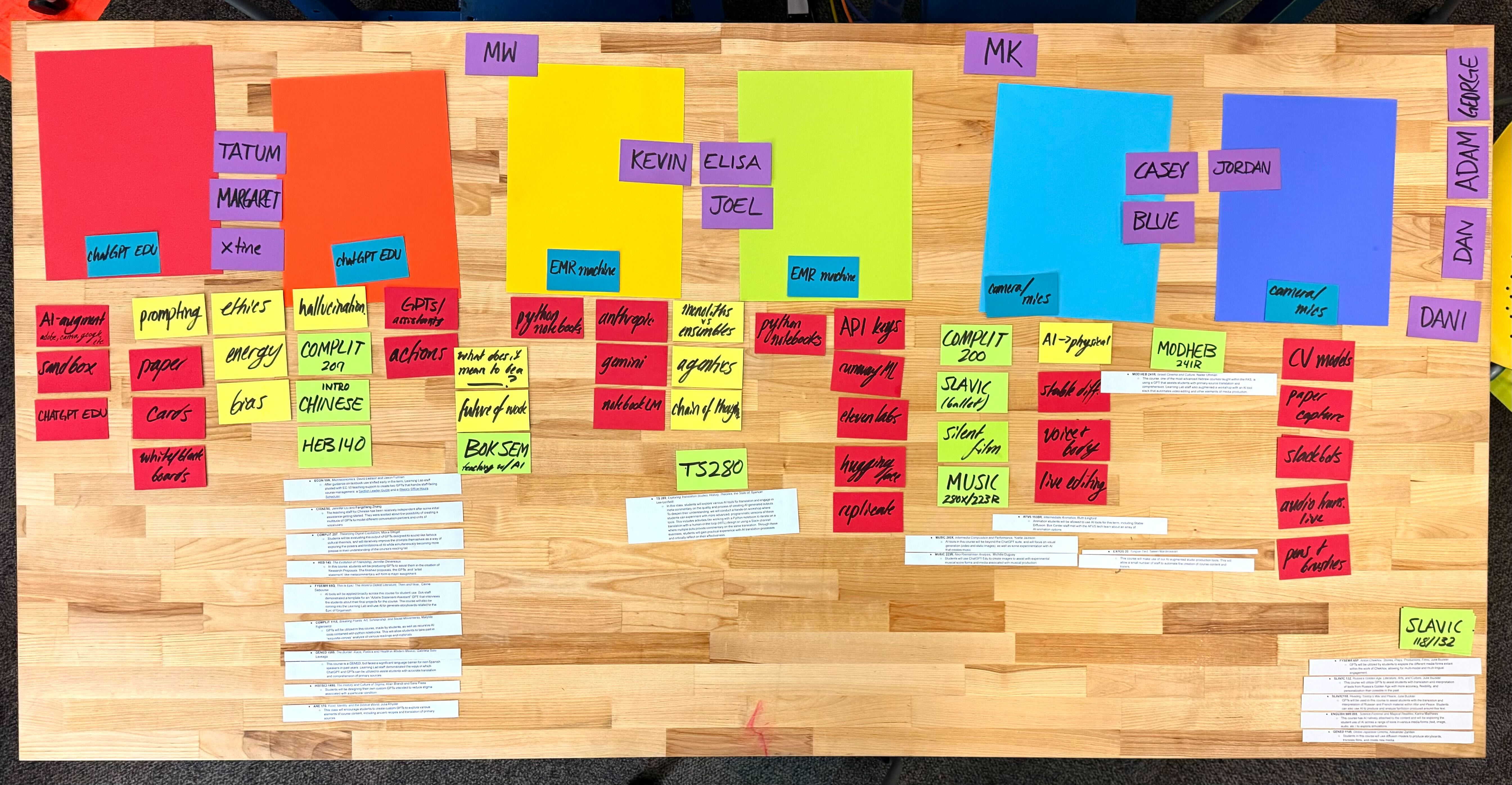
Using the Learning Lab’s "rainbow" mechanic, the session began with accessible, no-code tools like ChatGPT Edu, progressed to low-code platforms such as ElevenLabs and Slack, and culminated in python notebooks. All students worked through a python notebook that translated a given text in 57 languages, before having that new translation read out by AI, using OpenAI APIs. Learning Lab staff and fellows had also developed more advanced “translation machines” in python notebooks, offering a window into applications that harness the scaling and chain-of-thought abilities academics can harness through AI (images from the Learning Lab’s planning session for the creation of these python notebooks are below). This approach allowed students to engage critically with both the theoretical and practical dimensions of machine translation while reflecting on their implications for humanistic study.
Following the workshop, the professor, inspired by the students' enthusiasm and the demonstrated applications to the field, requested a follow-up session for the spring.
## courses where we supported student projects involving AI
### GOV 94OF: Law and Politics in Multicultural Democracies
Learning Lab staff Madeleine and Kevin worked with a student in this course to design and develop four GPTs as part of a negotiation simulation. These GPTs allowed students to engage with different identities and perspectives related to "The Troubles" in Northern Ireland, fostering deeper understanding and critical thinking about the complex political dynamics. The GPTs created include:
- [British Government Negotiation Simulation](https://chatgpt.com/g/g-674b8540554c819182233e091d3aee65-british-gov-gov94of-negotiation-simulation)
- [Irish Government Negotiation Simulation](https://chatgpt.com/g/g-674b888172708191b05cb19ba49e9f1f-irish-gov-gov94of-negotiation-simulation)
- [Ulster Unionist Party Negotiation Simulation](https://chatgpt.com/g/g-674b88d5bc1881919ad2b0cbc53283b5-uup-gov94of-negotiation-simulation)
- [Sinn Féin Negotiation Simulation](https://chatgpt.com/g/g-674b8943f73081919e64e89e6a26cb31-sinn-fein-gov94of-negotiation-simulation)
These GPTs provided a dynamic platform for students to explore negotiation strategies and the interplay of competing political identities in a historical context.
## additional things
### AI Tools for Language Instructors Workshop
The Language Center reached out in October to request a workshop from the Learning Lab, covering the various AI tools used for translation. This dovetailed nicely with the work we were already undertaking in preparation for various Comparative Literature courses.
This workshop explored practical applications of AI in foreign language teaching, including tools for creating tiered readings, facilitating oral assessments, and enhancing engagement with constrained vocabularies. Led by Learning Lab experts and featuring insights from leading researchers, the session provided a hands-on introduction to AI tools, ranging from low-code solutions to advanced approaches. Participants examined ways to integrate AI thoughtfully into their teaching, fostering curiosity, experimentation, and effective pedagogy. The event included opportunities for discussion, collaboration, and Q&A, with a focus on supporting instructors of less commonly taught languages.
### Teaching with Generative AI Bok Seminar
The Bok Seminar on Teaching with AI provided participants with practical skills to integrate artificial intelligence into teaching. Through discussions and hands-on projects, participants explored AI tools, prompt engineering, and ethical considerations for educational use (led by Alison Simmons's Embedded EthiCS team). As a capstone, participants' final projects showcased practical applications of AI designed to enhance teaching and learning.
Participants developed a range of innovative tools tailored to their specific fields:
* Two participants in Germanic and Romance languages proposed GPTs for language learning. One project focused on assisting teaching staff with quickly producing quizzes and vocabulary/grammar homework, while the other was student-centered, creating a “conversation partner” tailored to specific proficiency levels.
* A tool to assist first-year and graduate students with managing writing assignments by creating personalized study schedules. It helps students break down tasks and organize their workload, emphasizing time management and academic integrity.
* A tool to help introductory physics students refine problem-solving skills by assessing the reasonableness of their solutions. Students interact with a tutor bot to explore evaluation methods.
* A tool for graduate students and postdocs to simplify the process of building and tracking SMART goals within their Individual Development Plans (IDPs).
* A tool designed to assist students in understanding and reverse-engineering chemical reactions through explanations and visual representations of molecules.
* A tool to analyze copyright law and intellectual property boundaries, using case law and textbooks to engage students in discussions about legal limitations and AI's role in litigation.
* A tool to handle frequent student inquiries in large classes by using syllabi and class materials, reducing instructor workload while maintaining accuracy.
* A tool to help instructors quickly assess student submissions and identify areas of focus for class discussions.
* An interactive project experimenting with text-to-audio and text-to-image generation inspired by Pauline Oliveros' works, exploring creative uses of AI in music and soundscapes.
* A study aid for a U.S. gun culture course, utilizing student discussion posts as a knowledge base to generate personalized responses and help students prepare for exams.
### T127 Students
This fall, the HGSE's Teaching and Learning Lab is piloting a partnership with the Bok Center that allows HGSE graduate students to get course credit for helping Bok Staff out with significant new projects related to GenAI and teaching. The participants worked with Madeleine to help support our pop-up Information Sessions and Open Houses, and, ultimately to augment this support by helping us design resources and materials for multiple audiences. These students were split across two areas– one focused on demonstrations of generative AI for educators and the other focused on creating chatbots. They help ed support our pop-up Information Sessions and Open Houses, and, ultimately augmented our support by helping us design resources and materials for multiple audiences. Their work culminated in “[Prompts and Play: An AI Showcase](https://www.linkedin.com/posts/megmwolf_thrilled-to-have-co-hosted-prompts-and-play-activity-7262461326105427968-8mVw),” an event where they introduced a range of AI tools, demonstrated custom GPT applications in Harvard’s ChatGPT Edu, and engaged 15+ participants in hands-on experimentation with these GPTs.
## Open Houses
### summer open houses
### AI Open House (Zoom)
MW worked with MK and DD to prepare a [resource document](https://docs.google.com/document/d/1i2_X8kkCMV2_rA9pEGoJHyVmUWQRWzbukR0iIx3Wv00/edit#heading=h.m180zn1matz6). The Zoom format does not lend itself to cover the whole of the rhetorical "rainbow,"" so the meeting consisted mostly of a guided activities during a walkthrough of the interface and the making of a GPT.
While this isn't the most vivacious content, it is a significant need for professors who need a bit more support. MW and MK will work next week to make a plan to record an "idealized" version of this walkthrough in the main studio with a screen cast. These modules can then be posted online with the new website copy.
### Cabot open house
# 20241010-open-house-mk-quick-report
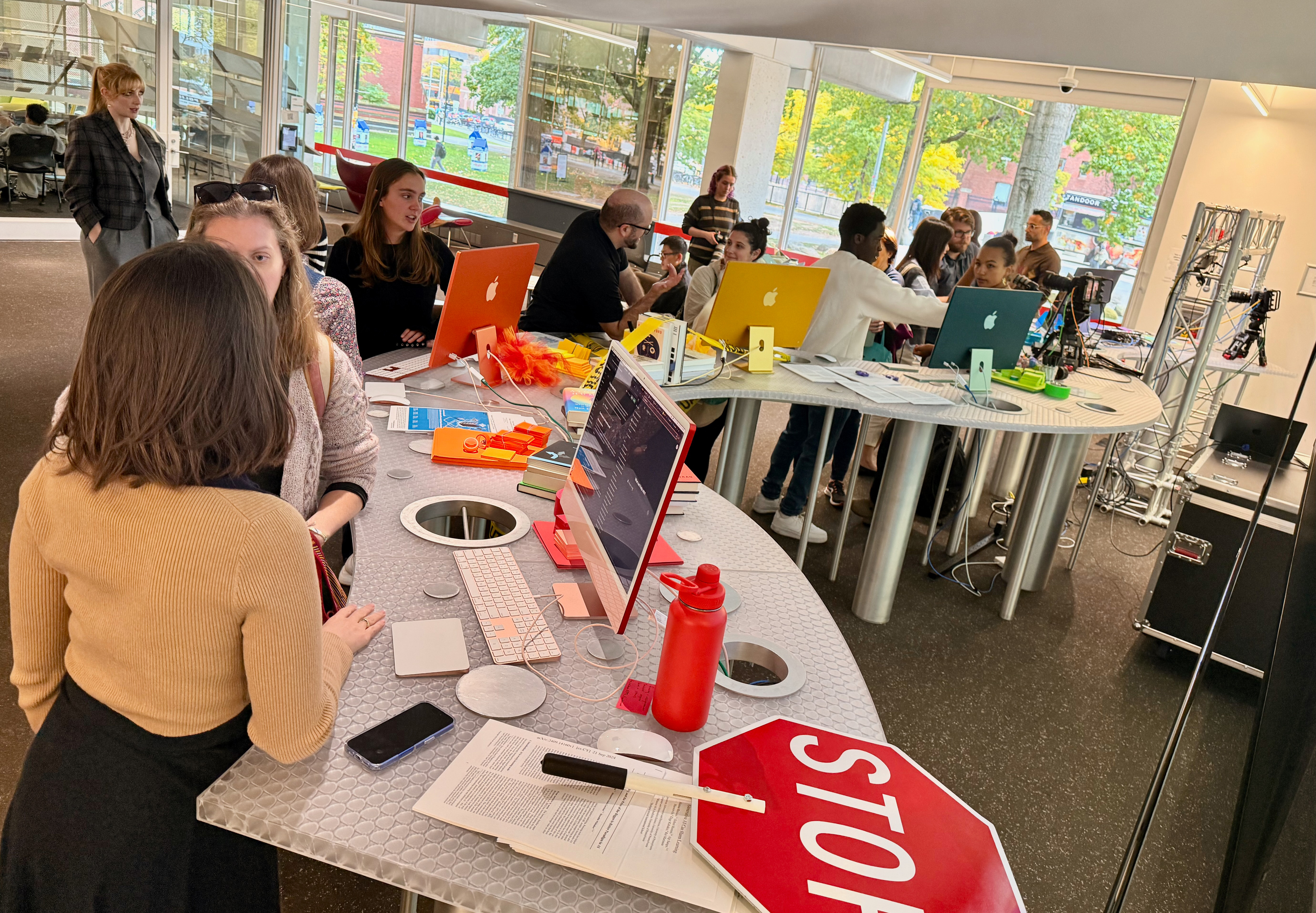
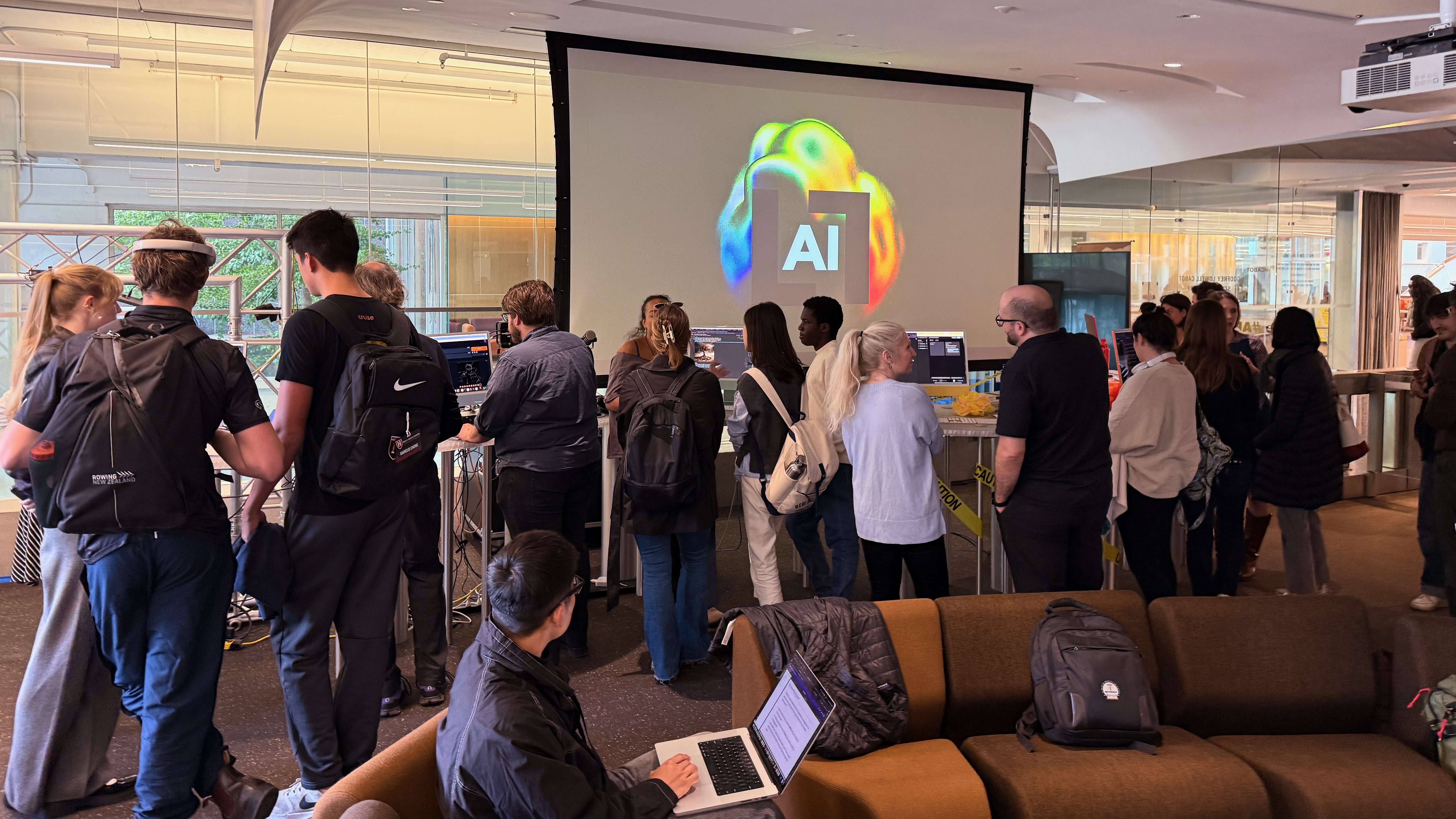
This document outlines the Bok Center's [Thursday, October 10th Information Session on Generative AI](https://bokcenter.harvard.edu/event/integrate-chatgpt-edu-your-academic-routines), from initial planning and preparation, through the event itself and reflections on what we learned. The event was organized around six colorful iMac stations, each offering participants a different way to engage with AI tools and concepts, with a focus on practical demonstrations and ethical discussions. The lessons learned will help shape future events and improve how we present AI in educational settings.
## the plan and prep
We decided to design an installation based around the six colorful iMacs that we have. We took stock of the team members available on the day, the tools we wanted to demonstrate, and various moves and demos based on our work with courses that have used generative AI. We also identified key topics that we wanted to cover, such as AI ethics, prompt engineering, chain-of-thought reasoning, and agents.
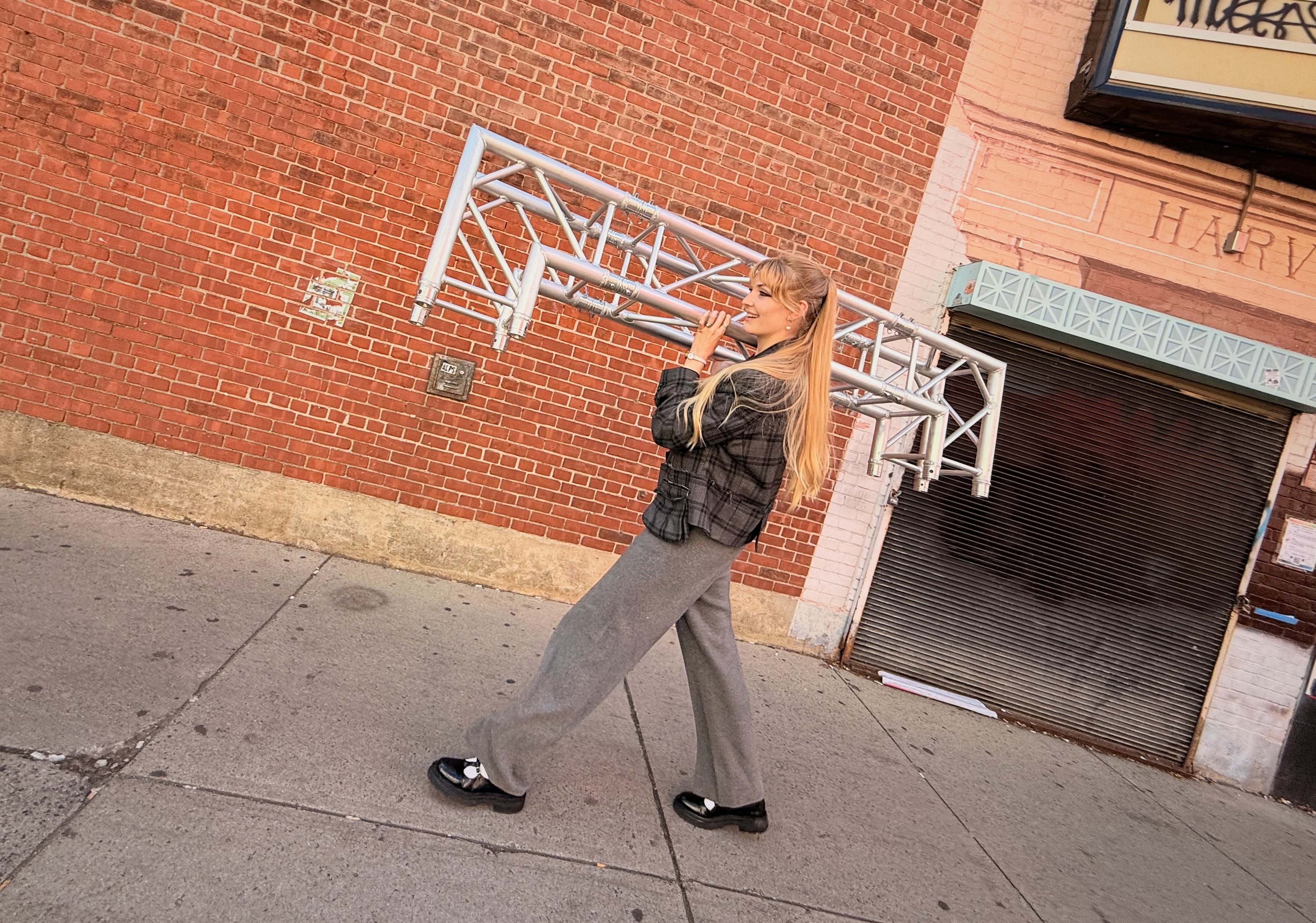
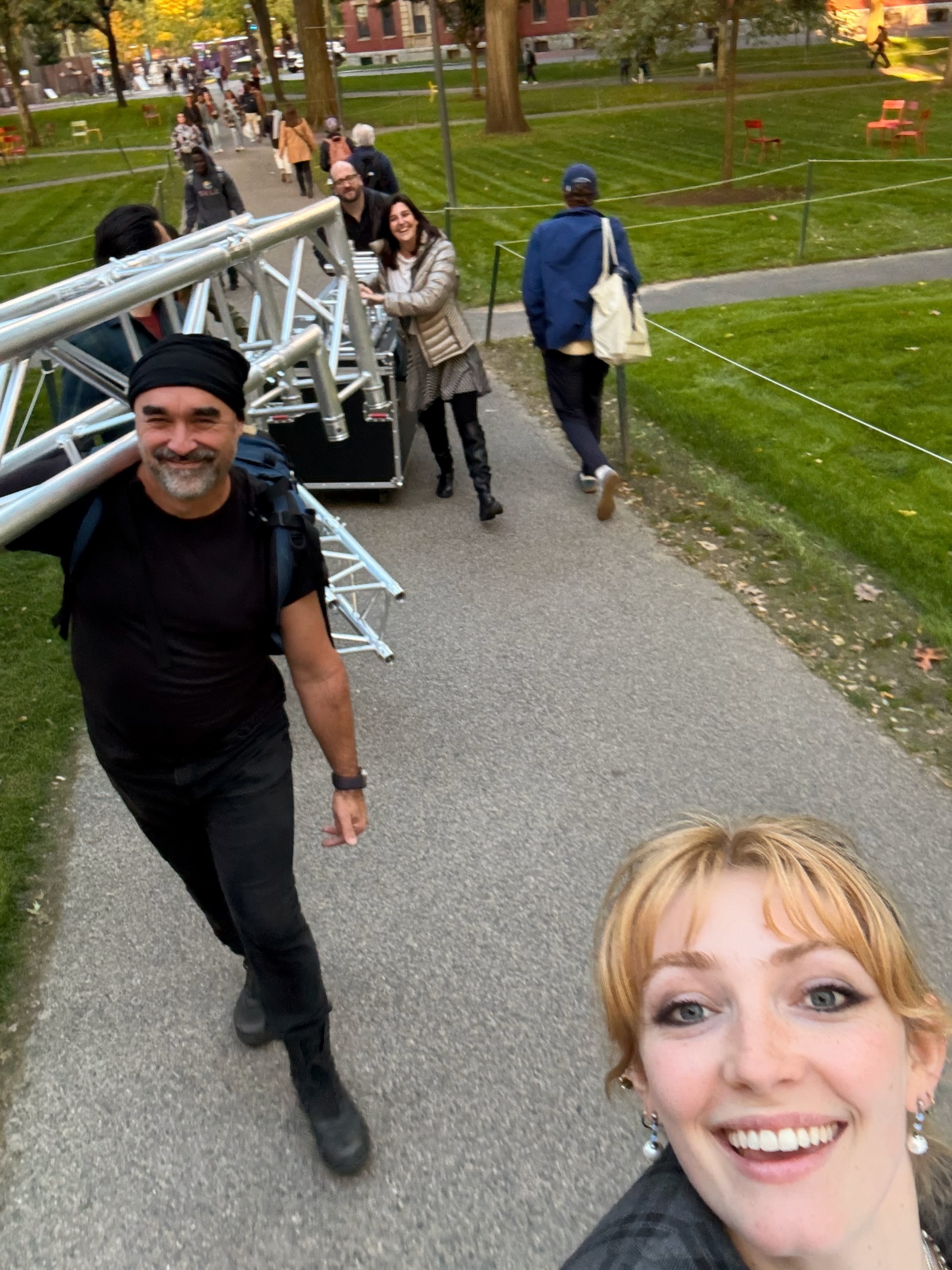
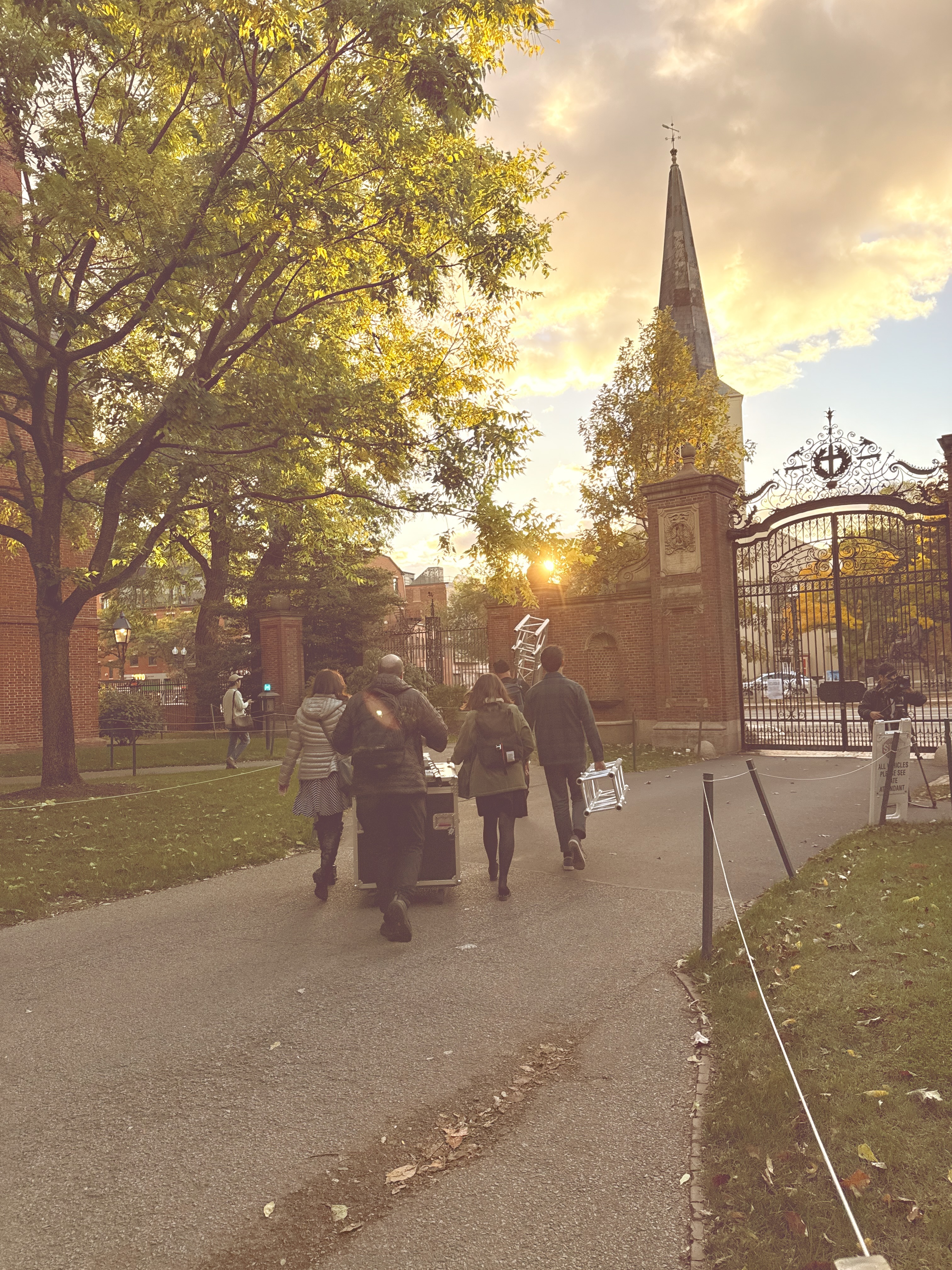
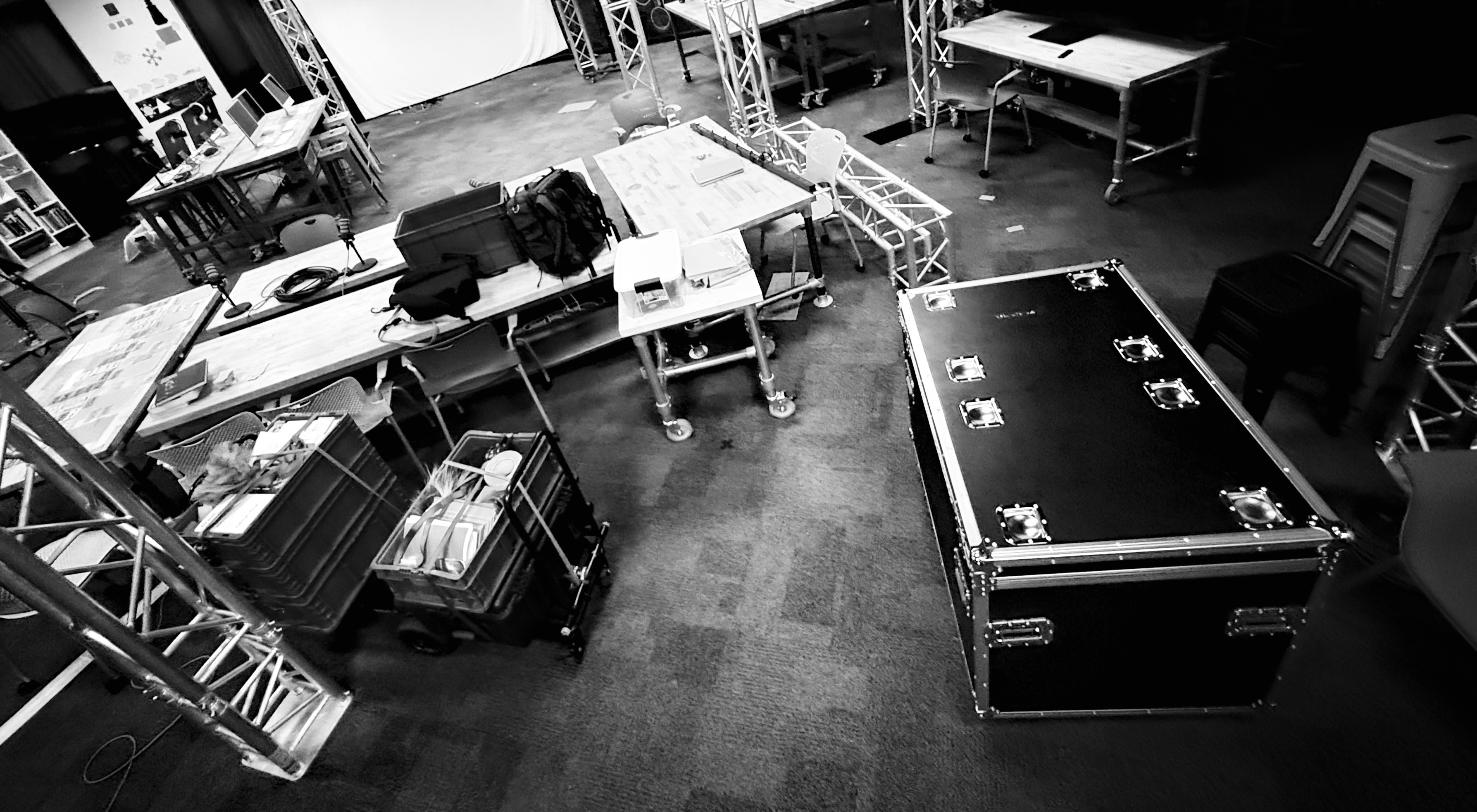
We gathered all the necessary Learning Lab materials and transported them to the Science Center. At one point, Madeleine was seen carrying a piece of truss across Harvard Square, demonstrating our hands-on efforts.
## the event
The event was structured around a series of iMacs arranged in rainbow order, from red to violet, and each station offered participants a unique and progressive experience with generative AI. Our goal was to guide attendees through a logical flow of the stations, while also allowing flexibility for those who needed to engage with specific topics more directly. Madeleine welcomed participants as they arrived, ensuring a smooth entry process.
### red
Getting started with ChatGPT Edu.
Experiment and reflect. What does it get right and wrong? Factually? Ethically?
At the red station, Christine engaged participants with a "stop and reflect" approach. This station introduced users to basic generative AI tools, encouraging them to explore the technology's capabilities and limitations. Christine helped participants, particularly those new to AI, understand factual accuracy, ethical concerns, and the potential biases in AI-generated outputs. Participants tested prompts related to their areas of expertise, allowing them to critically evaluate the system's responses.
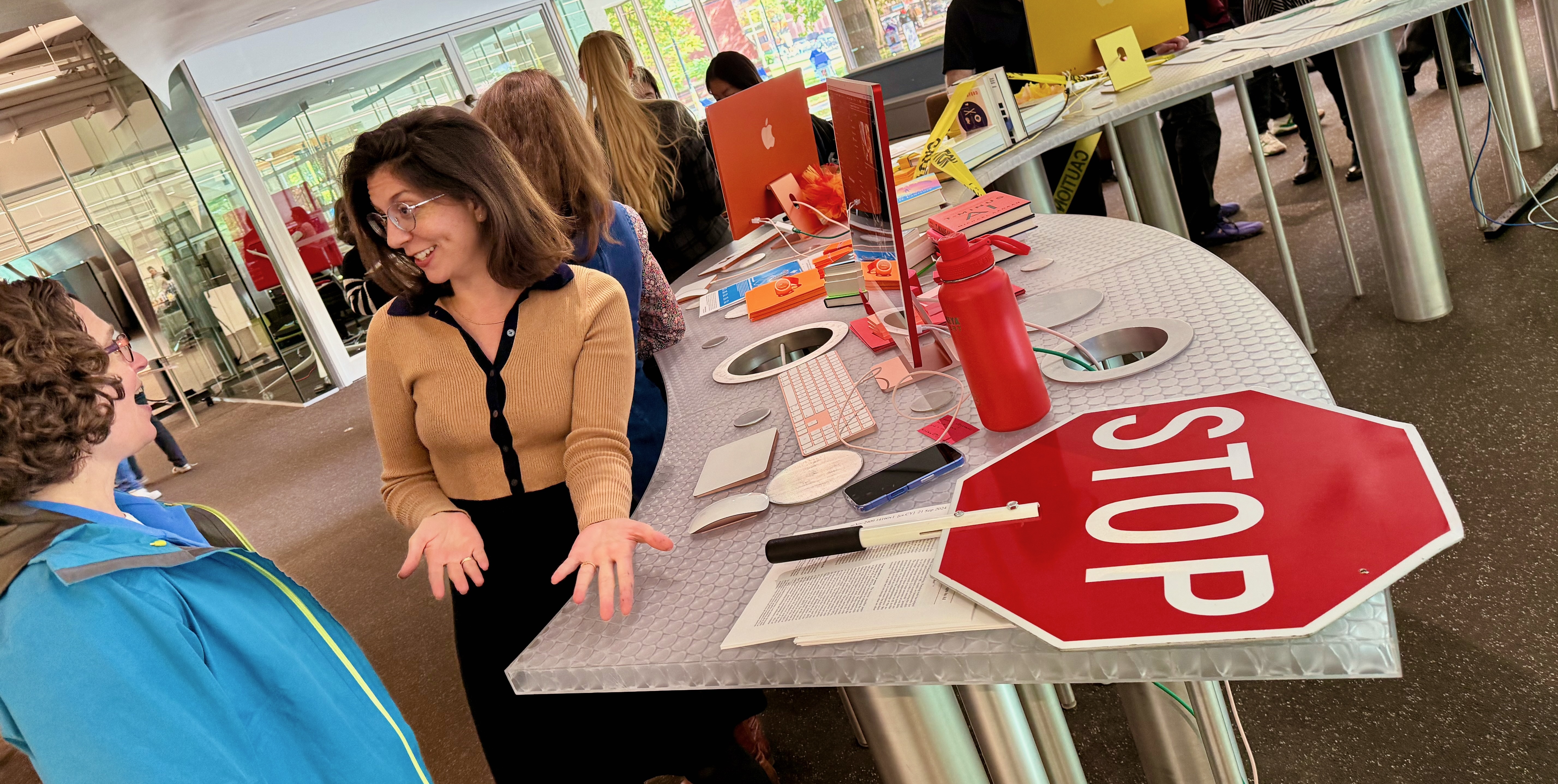
Resources at this station included books and academic papers on AI bias, providing a foundation for further discussion on these critical issues.
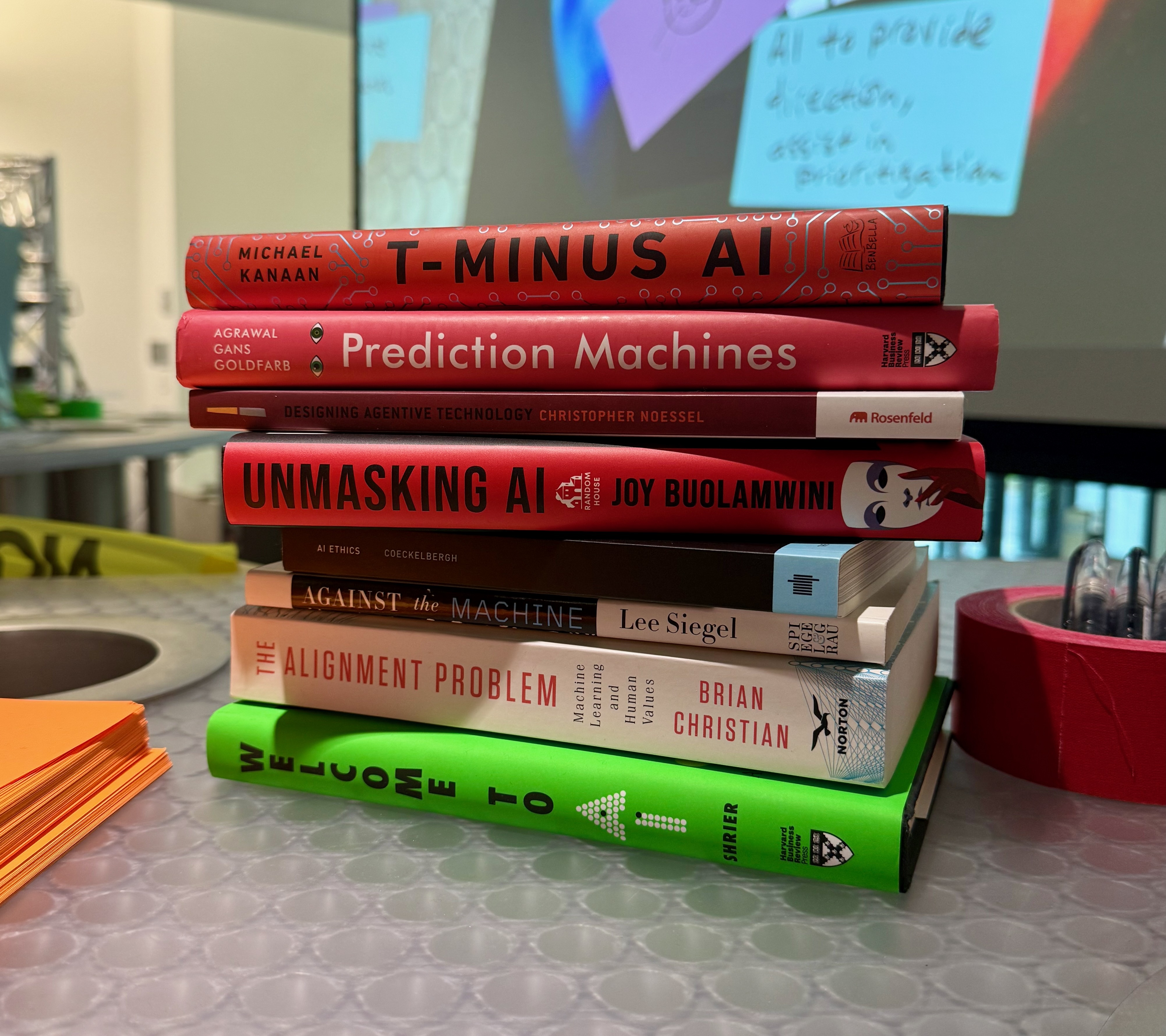
#### articles on bias
* [Fairness and Bias in Artificial Intelligence: A Brief Survey of Sources, Impacts, and Mitigation Strategies](https://www.mdpi.com/2413-4155/6/1/3)
* [How can we manage biases in artificial intelligence systems – A systematic literature review](https://www.sciencedirect.com/science/article/pii/S2667096823000125)
### orange
Next steps.
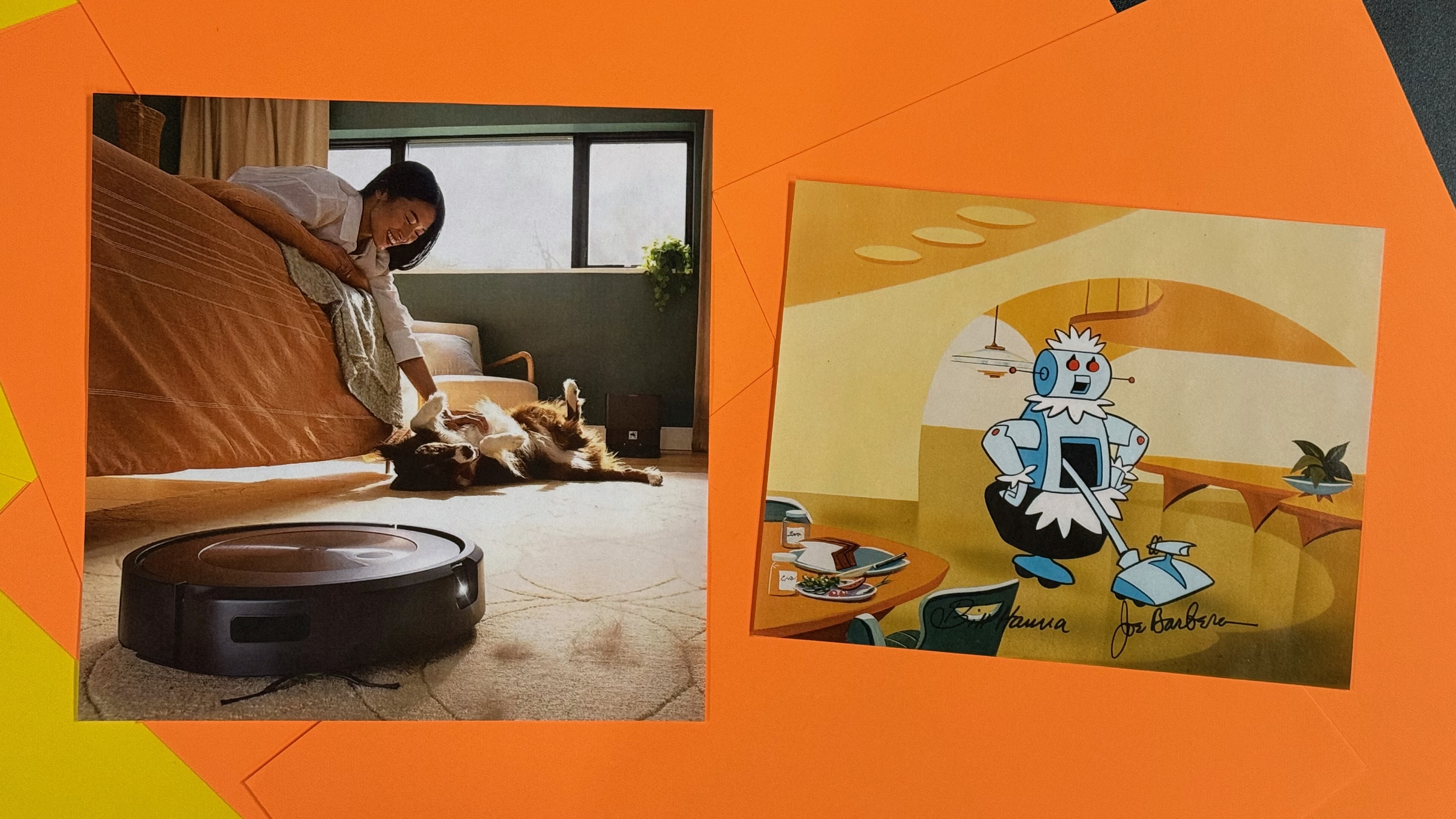
All-in-one teacher/student replacements vs ensemble of unitaskers (Rosey vs Roomba).
The orange station offered a more advanced engagement with AI, facilitated by a representative from the Academic Resource Center. Here, participants were encouraged to reflect on AI’s role in education, particularly how it can either enhance or impede the learning process. To illustrate this, we used a comparison between Rosey, the Jetsons' robot maid, and a Roomba, emphasizing AI's strength in performing discrete tasks rather than replicating human functions in their entirety. The station also introduced the concept of designing custom prompt-based tools (PBTs) for specific tasks, aligning with current research on the development of AI agents.
#### articles on agents
* [Agent AI: Surveying the Horizons of Multimodal Interaction](https://arxiv.org/abs/2401.03568)
* [The Rise and Potential of Large Language Model Based Agents: A Survey](https://arxiv.org/abs/2309.07864)
* [LLM Multi-Agent Systems: Challenges and Open Problems](https://arxiv.org/abs/2402.03578)
* [A Survey on Context-Aware Multi-Agent Systems: Techniques, Challenges and Future Directions](https://arxiv.org/abs/2402.01968)
### yellow
Getting better quality responses.
- comparing Custom GPT RAG to NotebookLM
- comparing models
- looking under the hood
At the yellow station, we introduced participants to more complex AI methodologies, such as chain-of-thought reasoning and retrieval-augmented generation (RAG). A comparison between ChatGPT and NotebookLM showcased the latter’s superior ability to restrict outputs to its source materials, avoiding the hallucinations often seen in other systems. This station, reinforced by academic readings on these topics, emphasized the importance of a cautious approach to AI. We also encouraged discussions on when to avoid AI altogether, advocating for traditional methods like pen-and-paper work or oral presentations where appropriate.
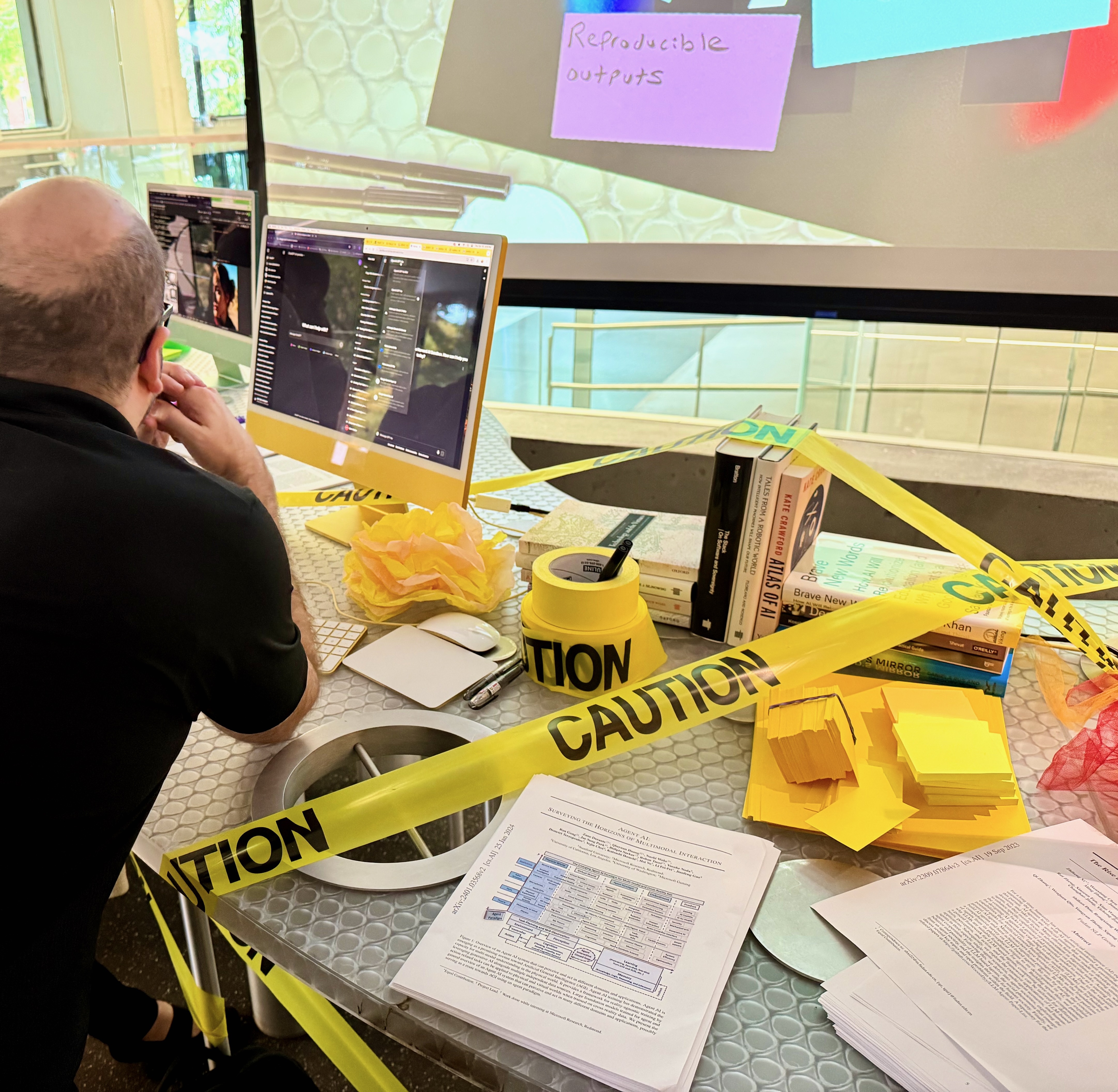
#### articles on chain of thought
* [Navigate through Enigmatic Labyrinth A Survey of Chain of Thought Reasoning: Advances, Frontiers and Future](https://arxiv.org/abs/2309.15402)
### green
Python notebooks.
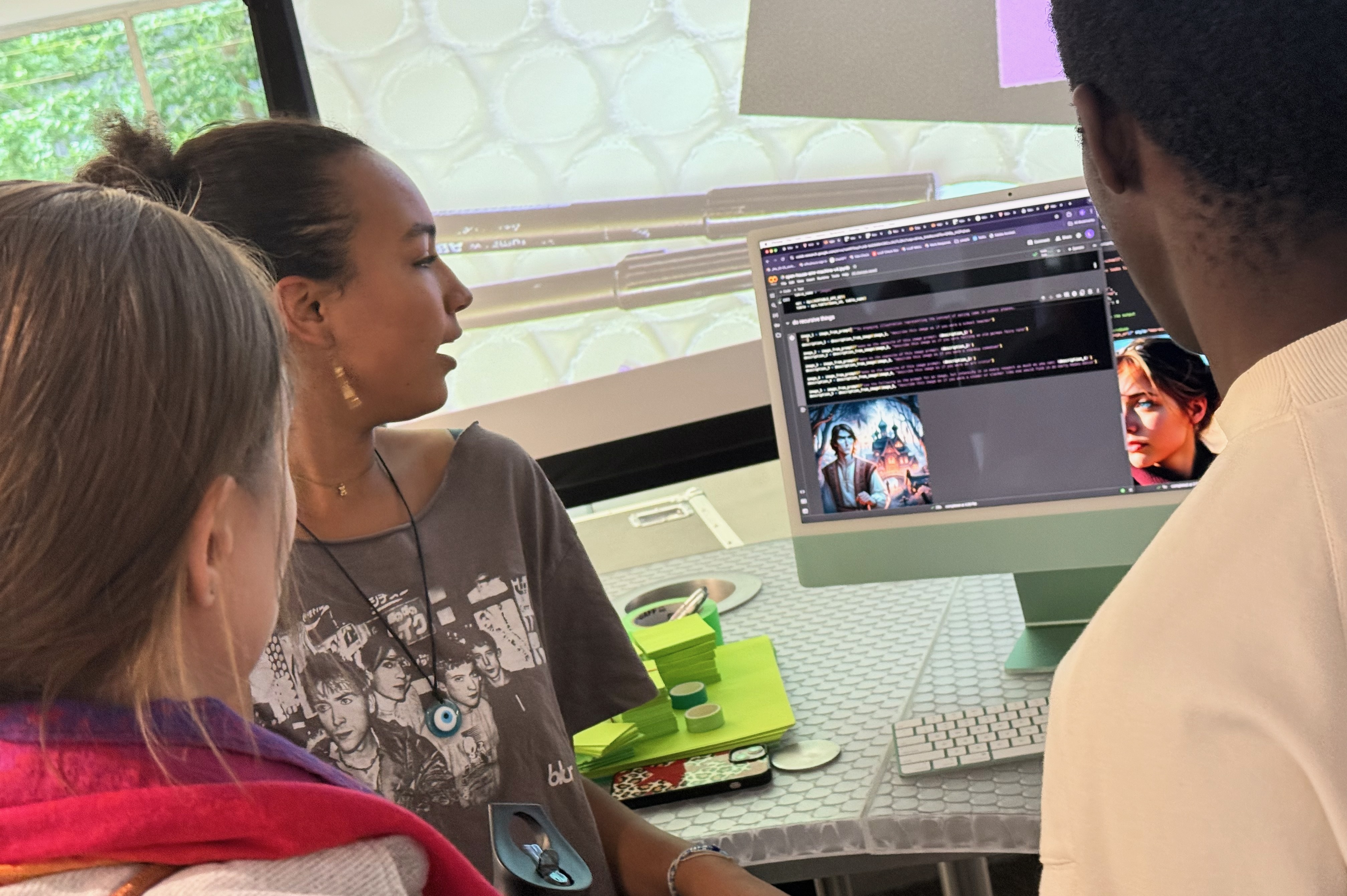
At the green station, we offered a hands-on technical experience, led by Elisa, one of our Specialized Learning Lab Undergraduate Fellows with coding and Generative AI expertise. This station focused on the use of Python notebooks to explore advanced APIs from platforms such as OpenAI, Replicate, Google, and Anthropic. Elisa demonstrated how these cutting-edge developer tools offer more flexibility and control than consumer-facing AI products, allowing participants to experiment with the latest advancements in generative AI technology.
### blue
Audio capture and agents.
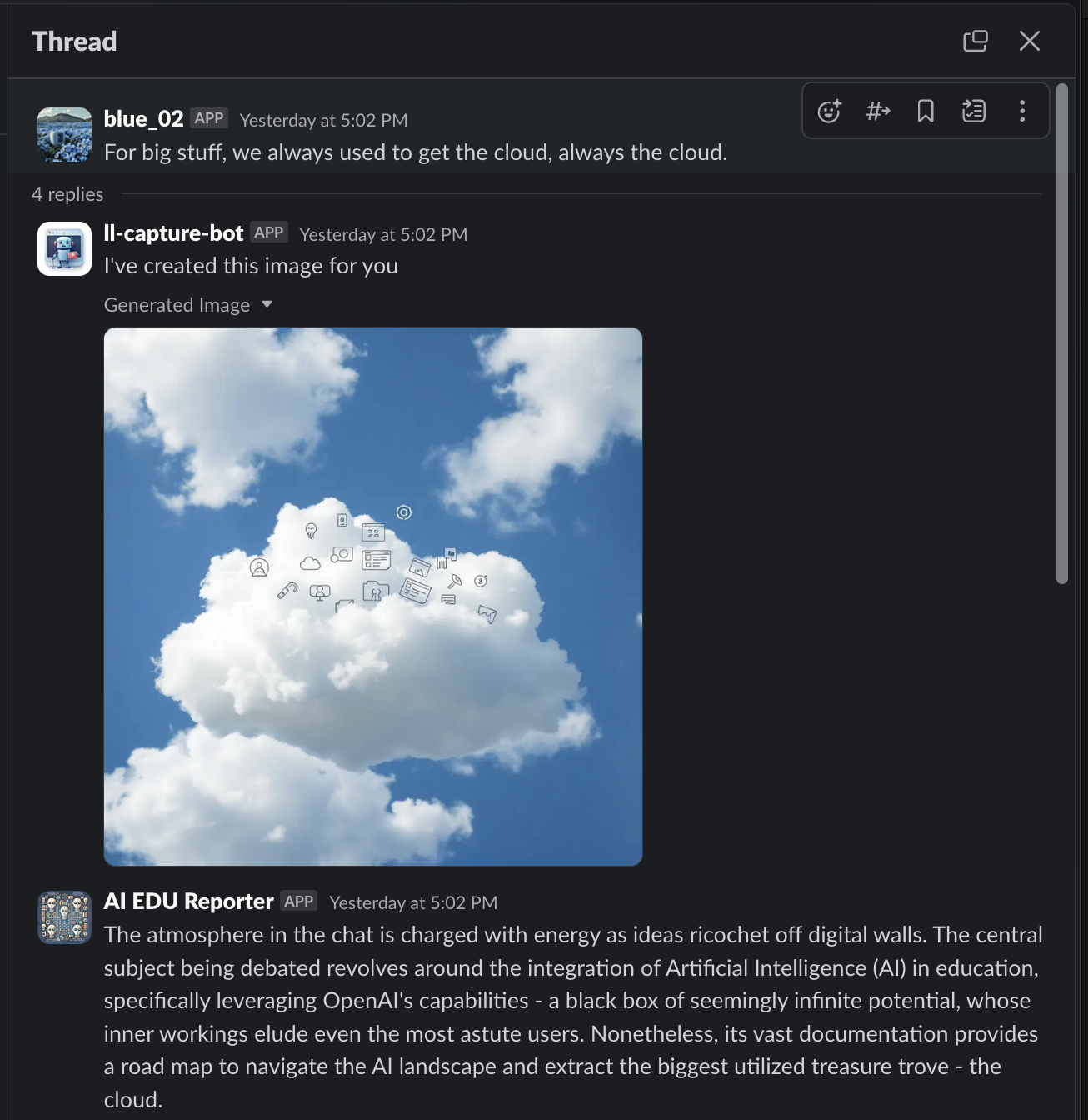
The blue station introduced participants to multimodal AI inputs. Using microphones, we captured participant speech, which was then transcribed and, in some cases, translated or converted into visual content. We also demonstrated how Slackbots could be programmed to perform tasks based on this input. Additionally, bots created news reports and offered counterarguments, allowing for interactive and creative AI engagement. This station highlighted the potential of AI to augment real-world experiences in innovative ways.
### violet
Video capture and image processing.
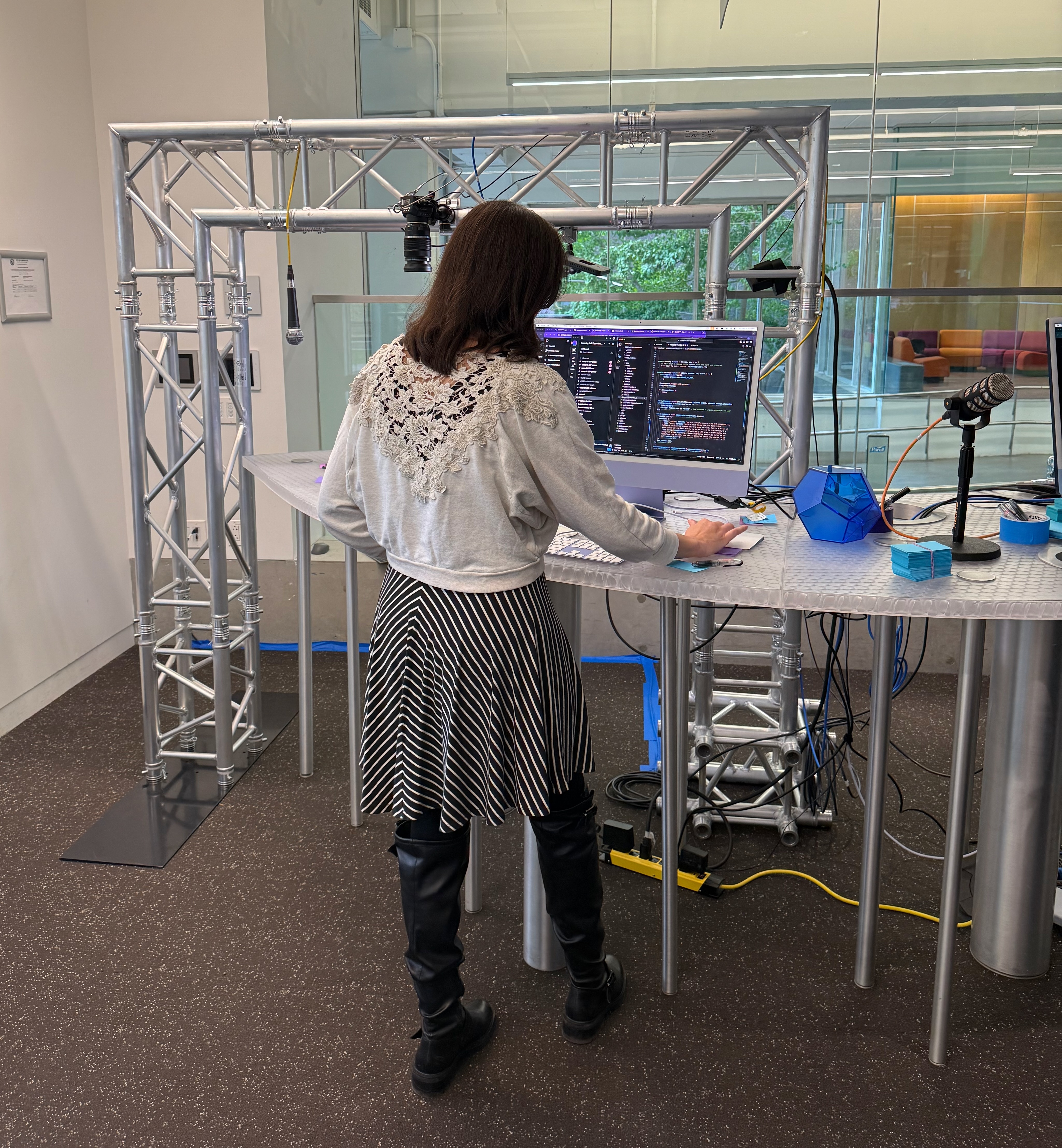
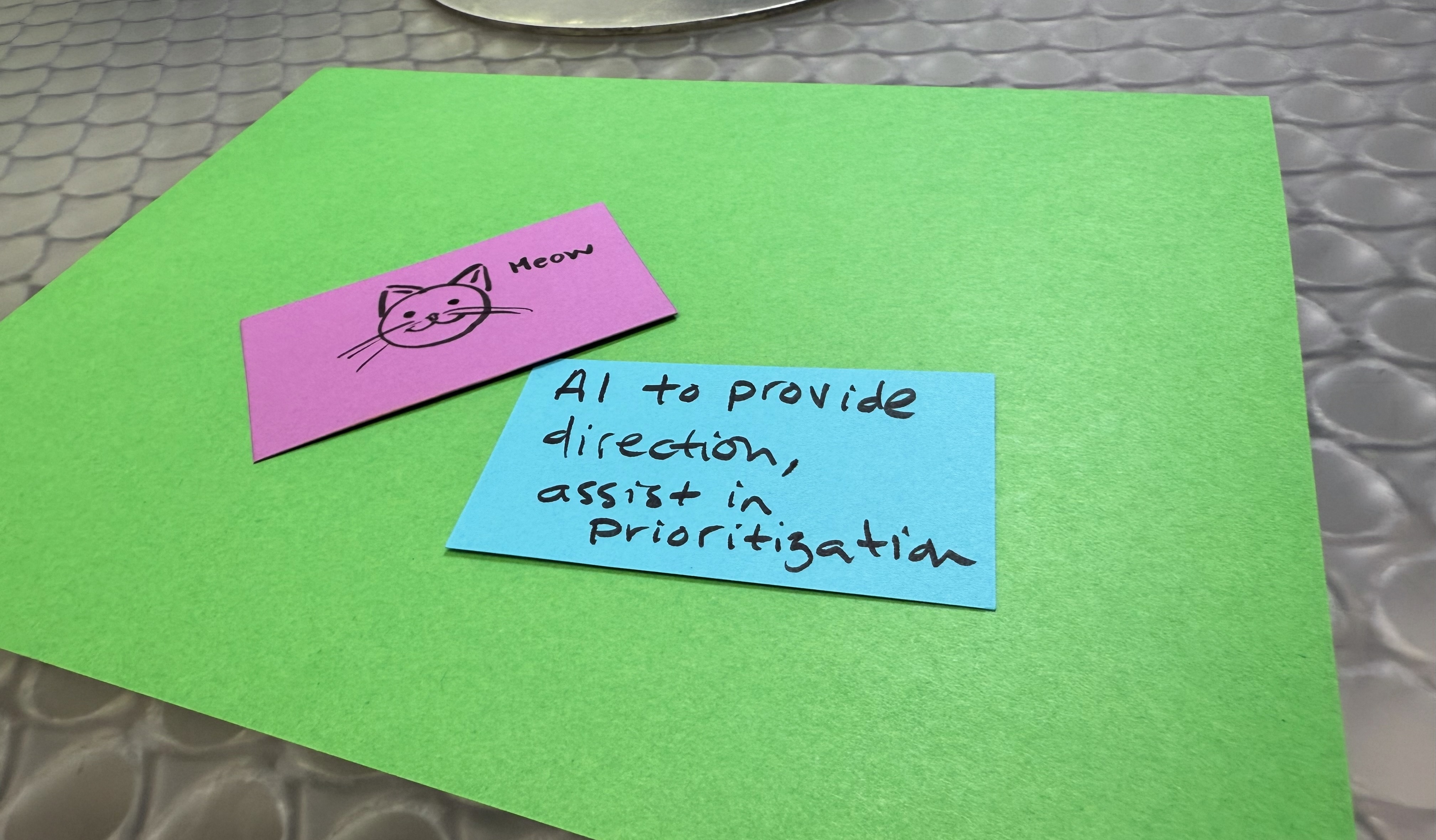
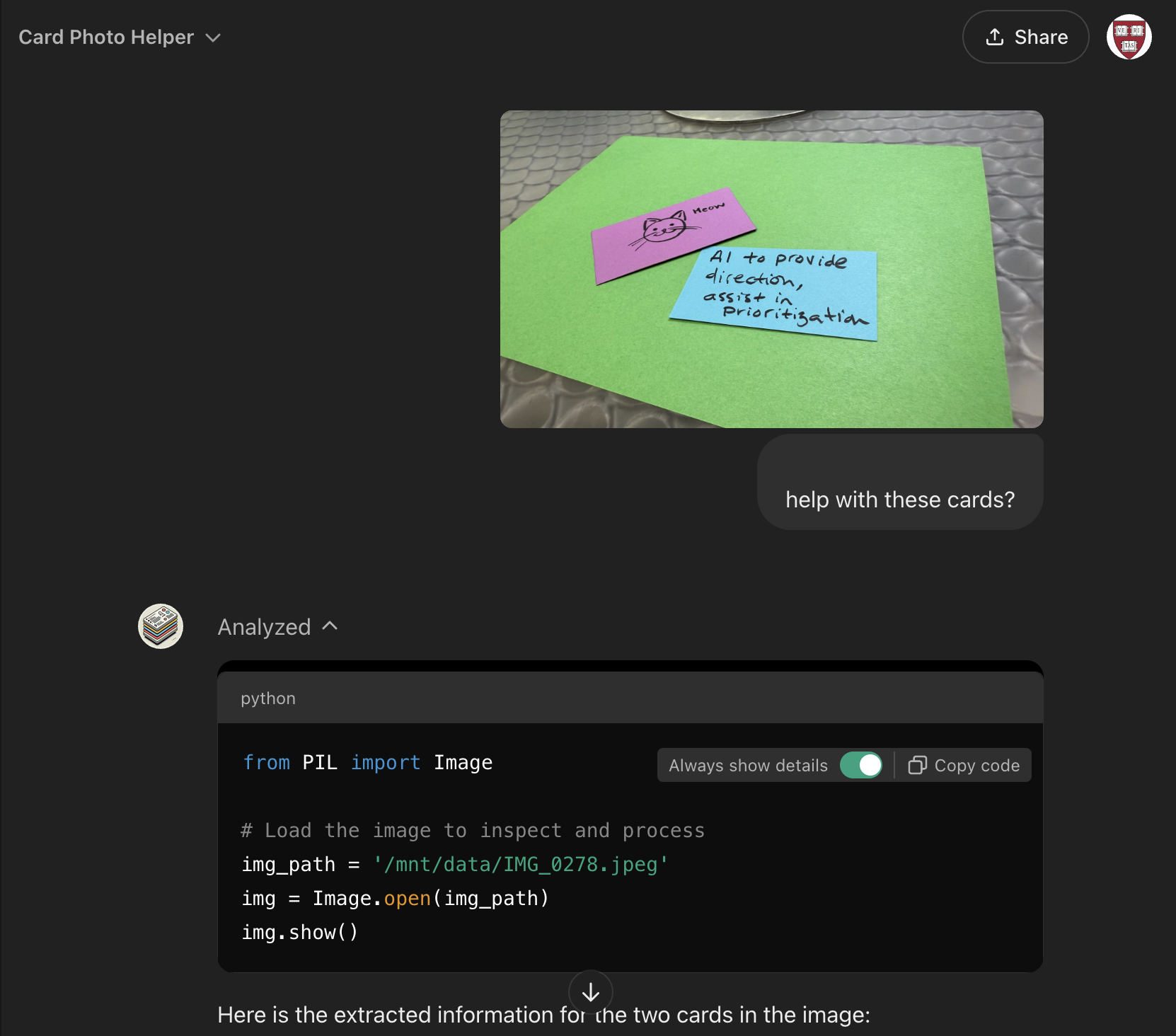
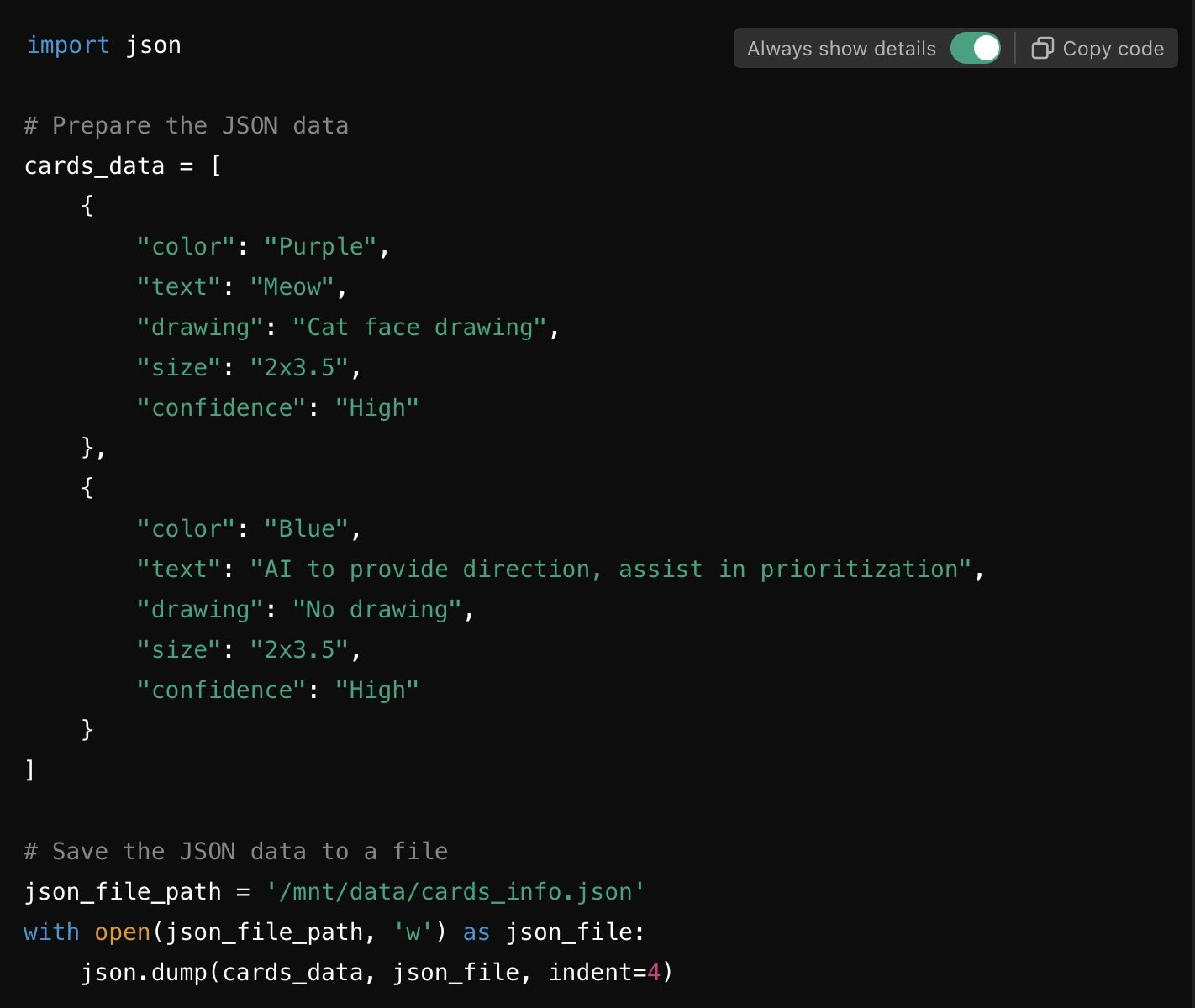
At the violet station, we demonstrated the integration of AI into video capture and low-code/no-code solutions. Participants wrote or drew on index cards, which we then converted into structured data using a custom GPT interface. This example showcased how AI can be applied in educational settings without requiring extensive technical knowledge, providing a practical tool for both instructors and students.
## the aftermath
Following the event, we efficiently packed and returned to the Learning Lab by 5:30 PM. The open house provided us with valuable insights into how to effectively run similar events in the future, both in terms of structure and participant engagement. As we move forward, we plan to refine our approach to balance flexibility with structured guidance, ensuring that complex AI concepts remain accessible and relevant to a wide range of audiences.
### Adams info session
# 20241031 Info Session on AI at Adams House
This document outlines the Bok Center's Info Session on AI held at Adams House, detailing the planning and preparation, the event itself, and reflections on our experiences. The event was set up near the dining hall during lunch hours in an attempt to capture a range of undergraduates, focusing on media asset creation and creativity with a Halloween theme. We also aimed to inform students about ChatGPT Edu and address their questions related to the workspace.
## plan and prep
We decided to design a smaller version of our usual "rainbow iMacs" installation. Considering the team members available, we crafted various demos of AI tools accessable through ChatGPT Edu and more broadly, all *outside* of a strictly academic context.
Our setup featured three stations, each associated with a different medium or modality of AI interaction, increasing in complexity from one station to the next. The Learning Lab media team assisted with camera and audio feeds for two stations, as well as image generation. Elisa, one of our Specialized Undergraduate Fellows (SLUFF), contributed her coding expertise by developing a complex Python notebook for the final station.
## the event
### red station
**Video and Image Feeds**
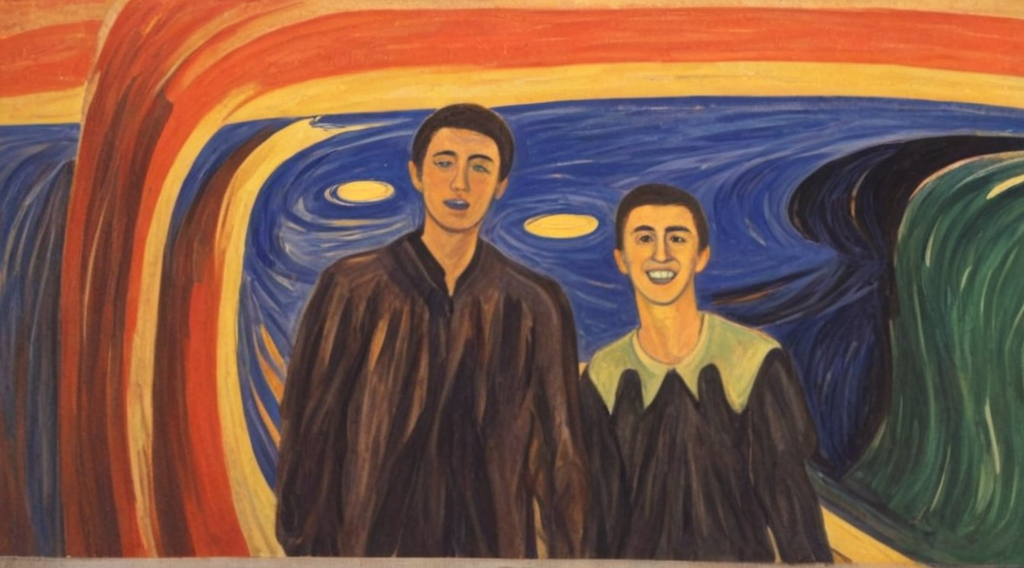
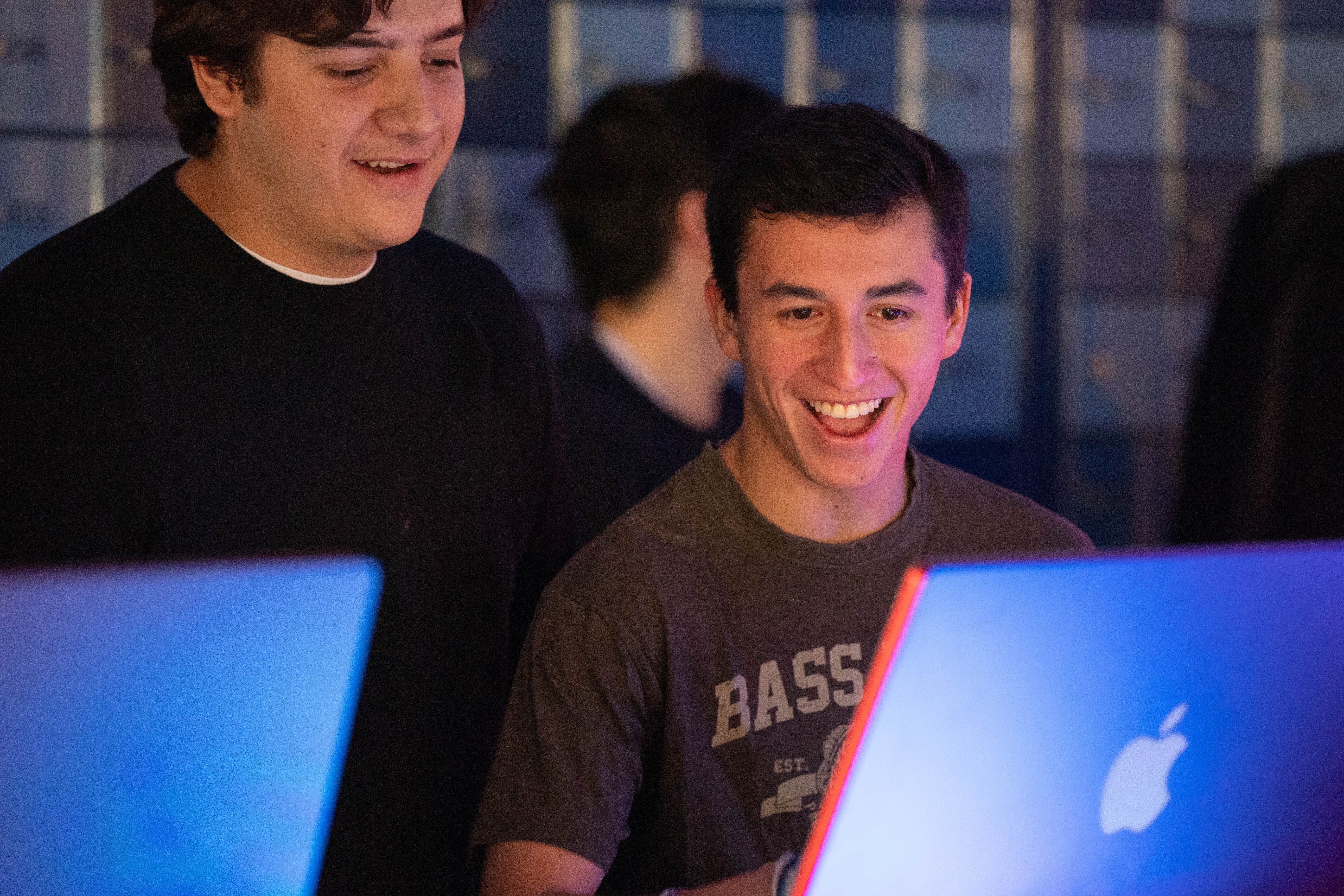
At the red station, students began their exploration of AI through video and image feeds. We introduced them to ChatGPT Edu, highlighting its uses beyond academic courses— particularly relevant for those whose classes had no AI policy or had banned AI tools. Using two cameras, we captured live inputs that were transformed into Halloween-themed images via platforms like Midjourney, DALL·E, Replicate, and Stable Diffusion.
This station also facilitated discussions on the ethics of diffusion model training and the use and transformation of images. Students engaged with questions about the implications of AI-generated content and the responsibilities that come with creating and sharing such media.

### orange station
**Audio Interaction**
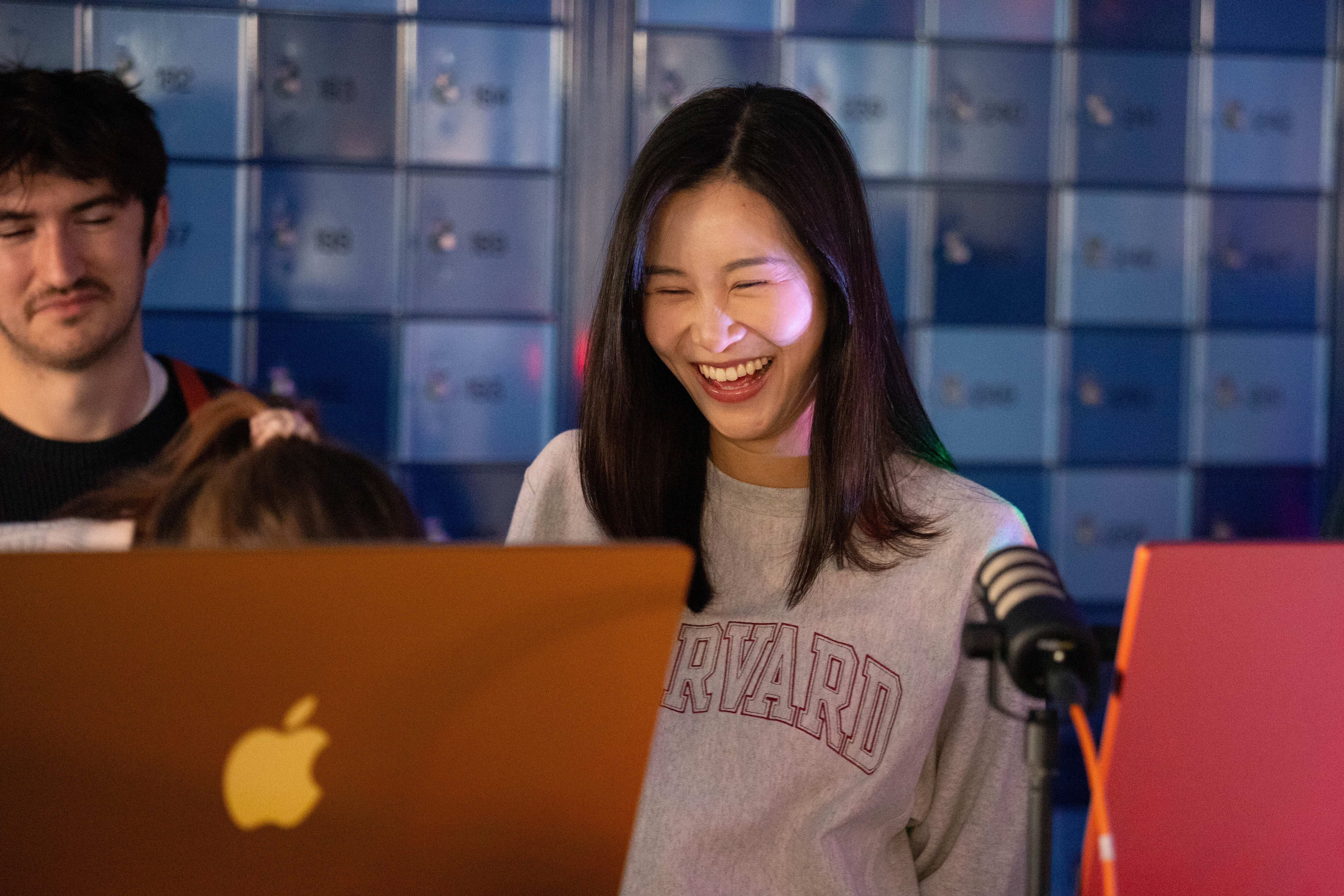
The orange station focused on audio as the primary modality. Students interacted with ChatGPT through the "live API" playground by speaking into a microphone. OpenAI's Whisper function was used to transcribe their speech, which opened avenues for generating new audio content in a python notebook. Utilizing Eleven Labs, students converted text into audio across a range of voices. In preparation for creating audio content, students experimented with text generation in the same python notebooks, crafting Halloween-themed poems.
### yellow station
**Code and Specialized Models**
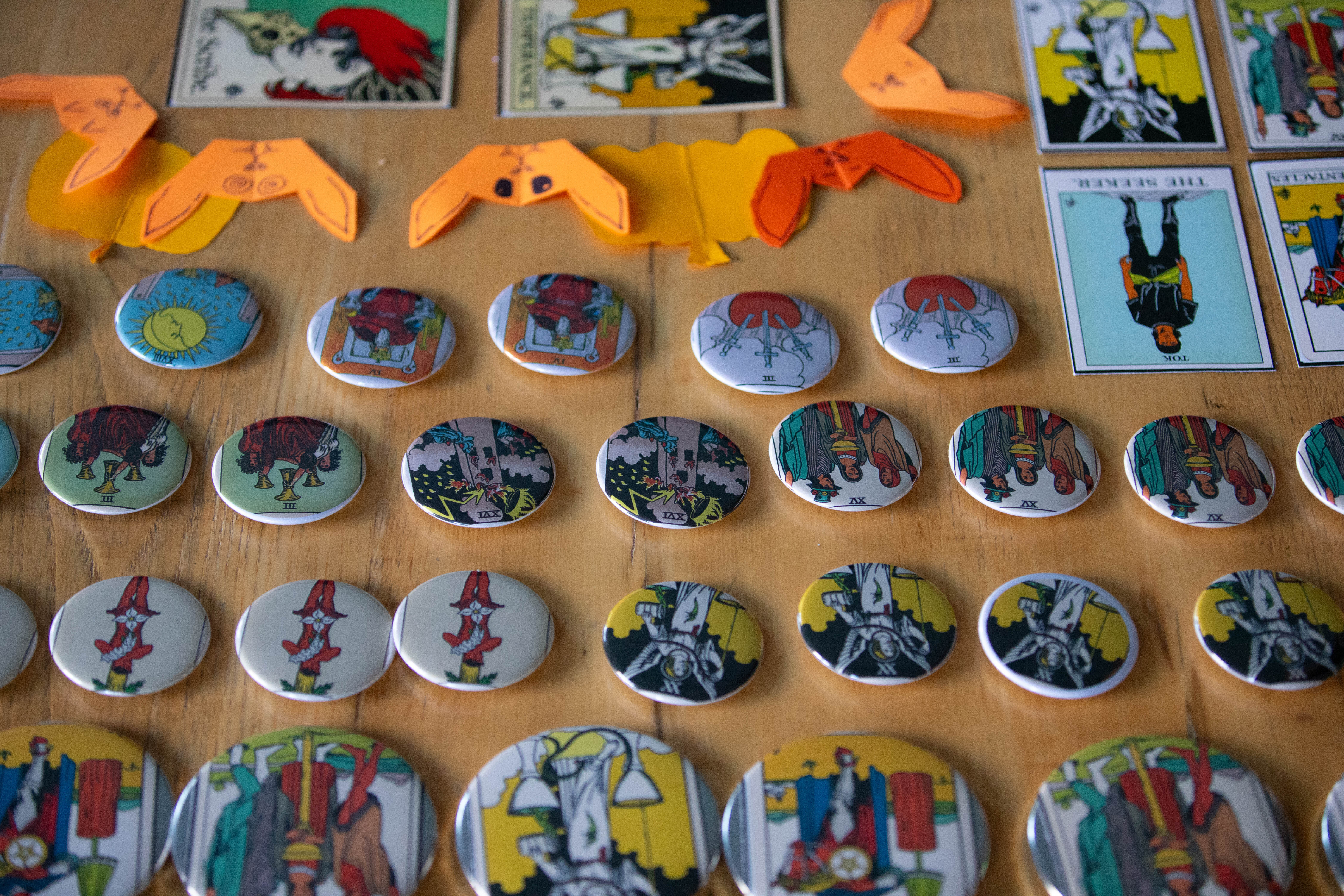
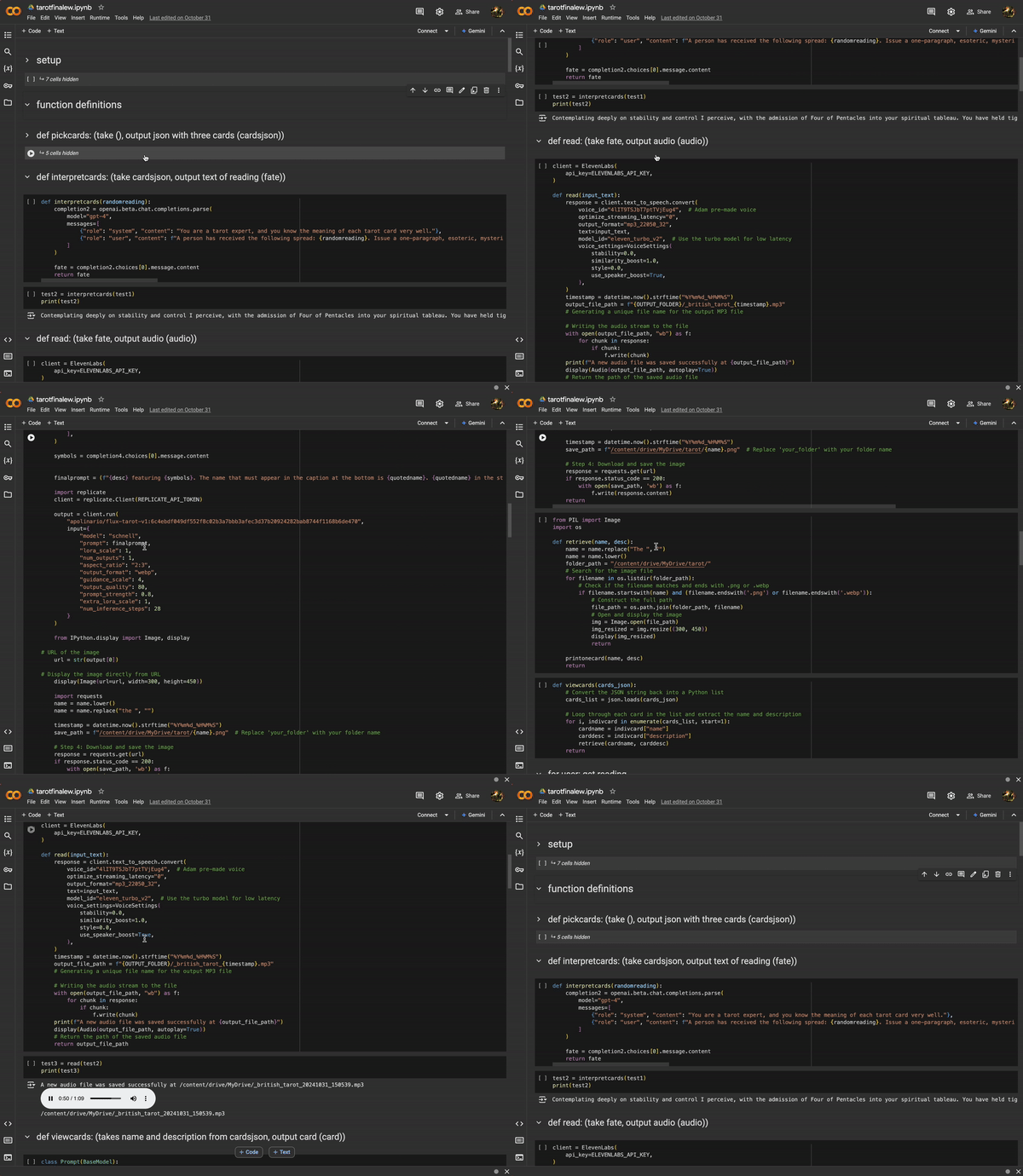
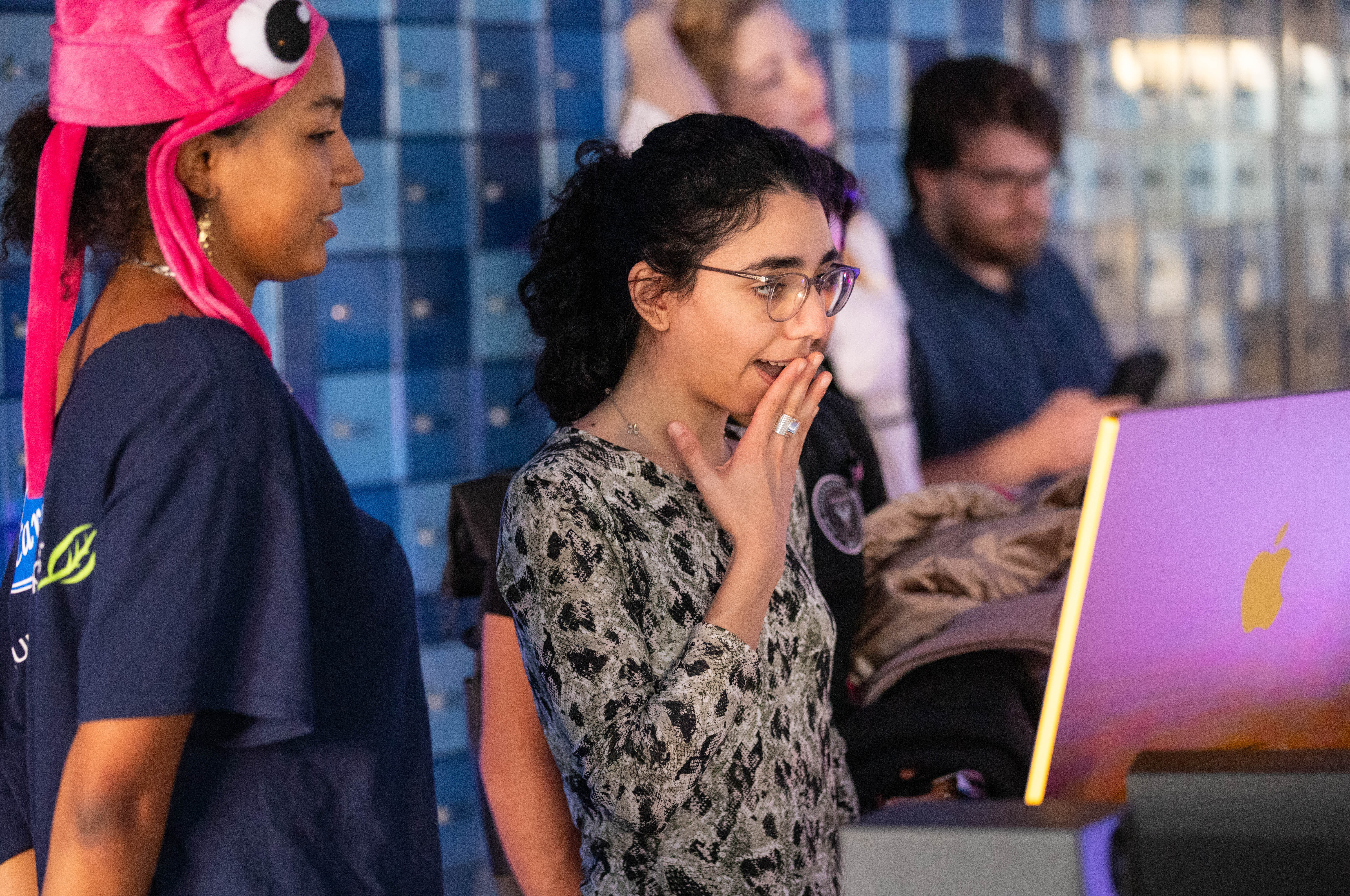
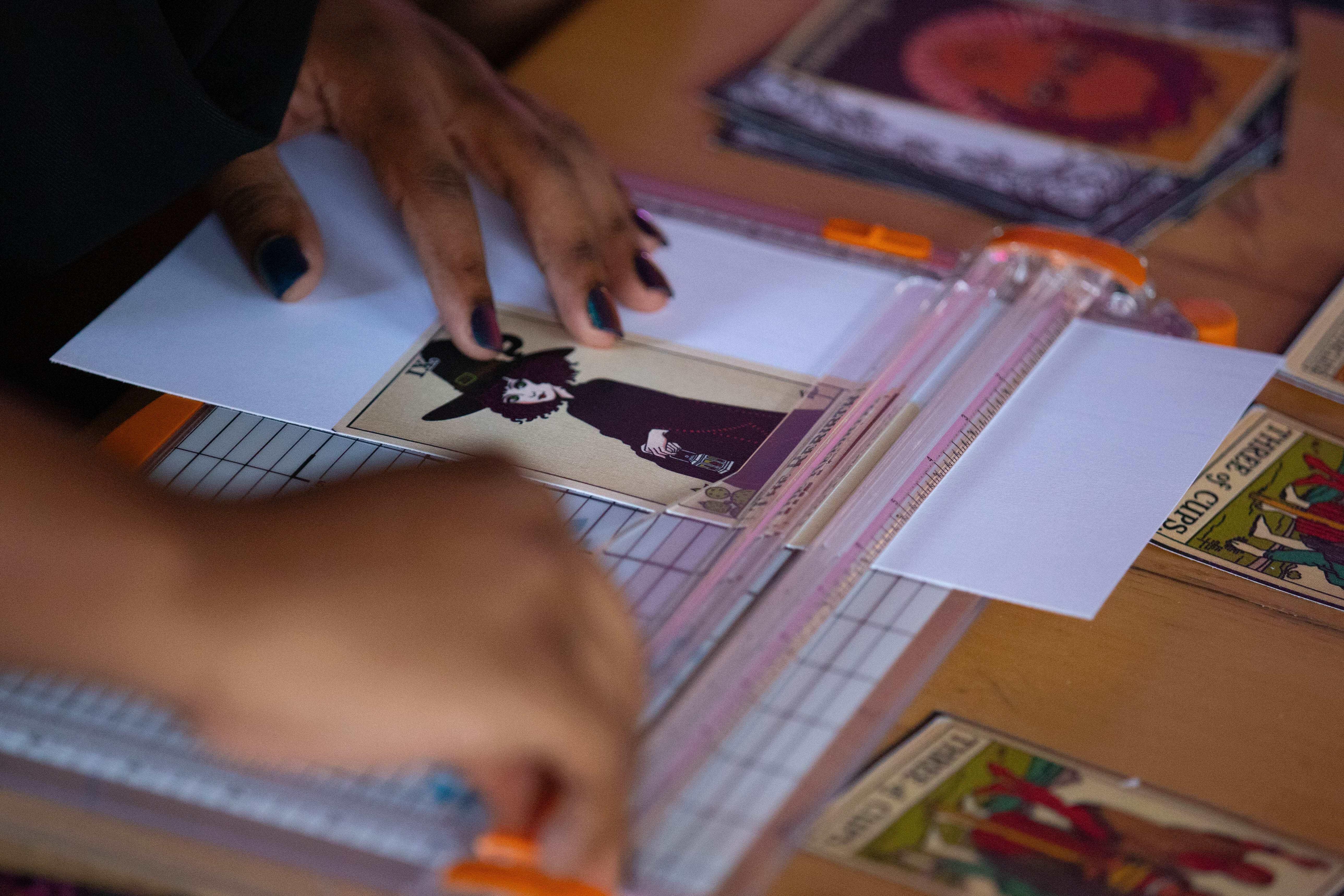
The yellow station focused entriely on python notebooks and the use of specialized, smaller models for specific tasks. In a python notebook, students had cards "drawn" from a traditional tarot deck, and personalized readings were read our with Elevenlabs voices. Building on inputs from the previous stations—visual data from the red station and audio inputs from the orange station— a small, specialized AI model from Replicate generated unique tarot cards representing each visitor.
This station echoed concepts from the "violet" station in our previous open houses, showcasing the multimodal and ambient nature of advanced AI and its capacity to transition between digital and physical realms. As a tangible takeaway, students received printed versions of their AI-generated tarot cards, buttons, and other physical memorabilia.
## aftermath
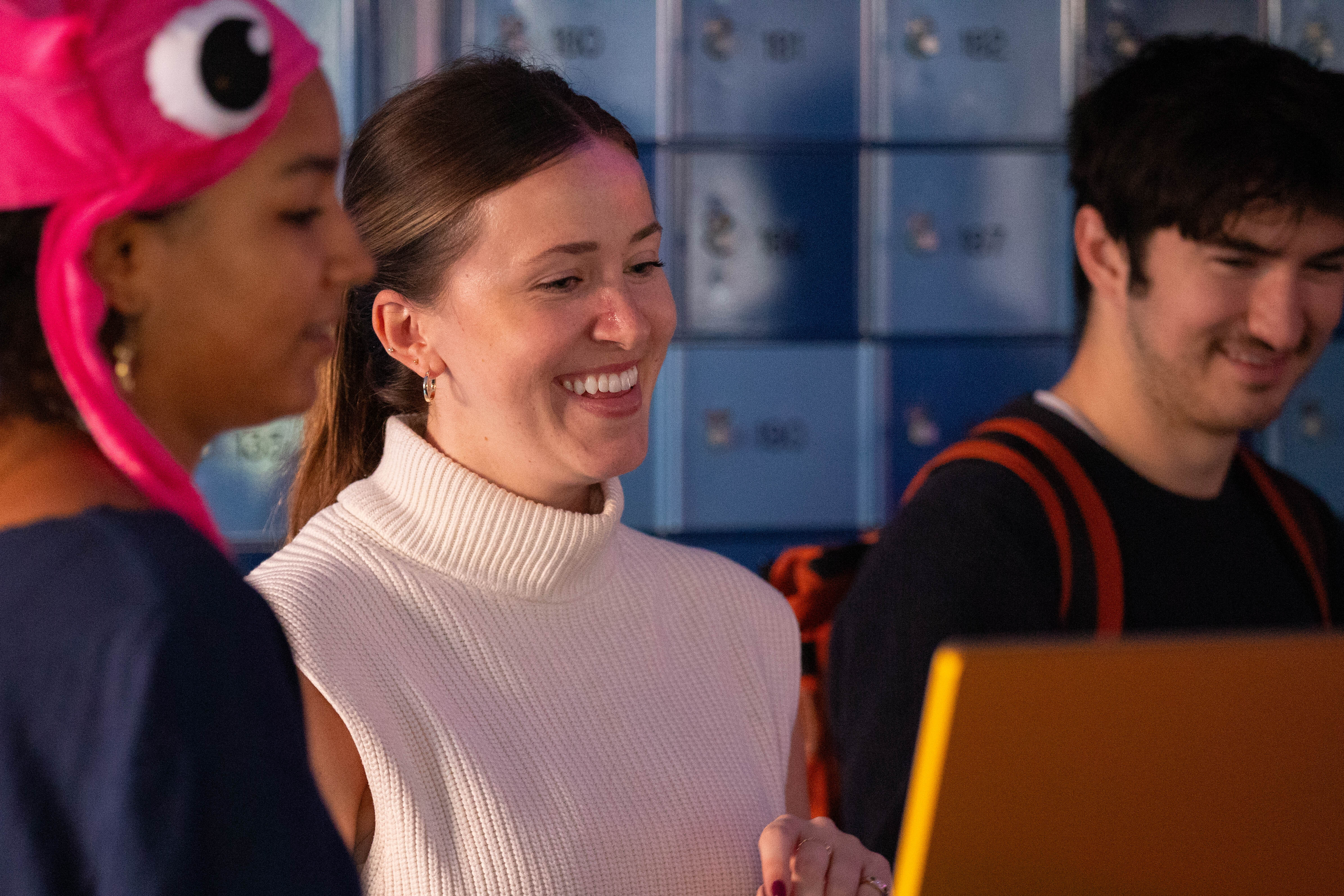
While the event was primarily intended for undergraduate students, we were delighted to engage with a diverse cross-section of the Harvard community, including HUDS workers, administrative staff, and other members of the university. They offered unique perspectives on the impact of AI across different roles within the institution. These interactions underscored the widespread interest in AI technologies throughout the Harvard community.
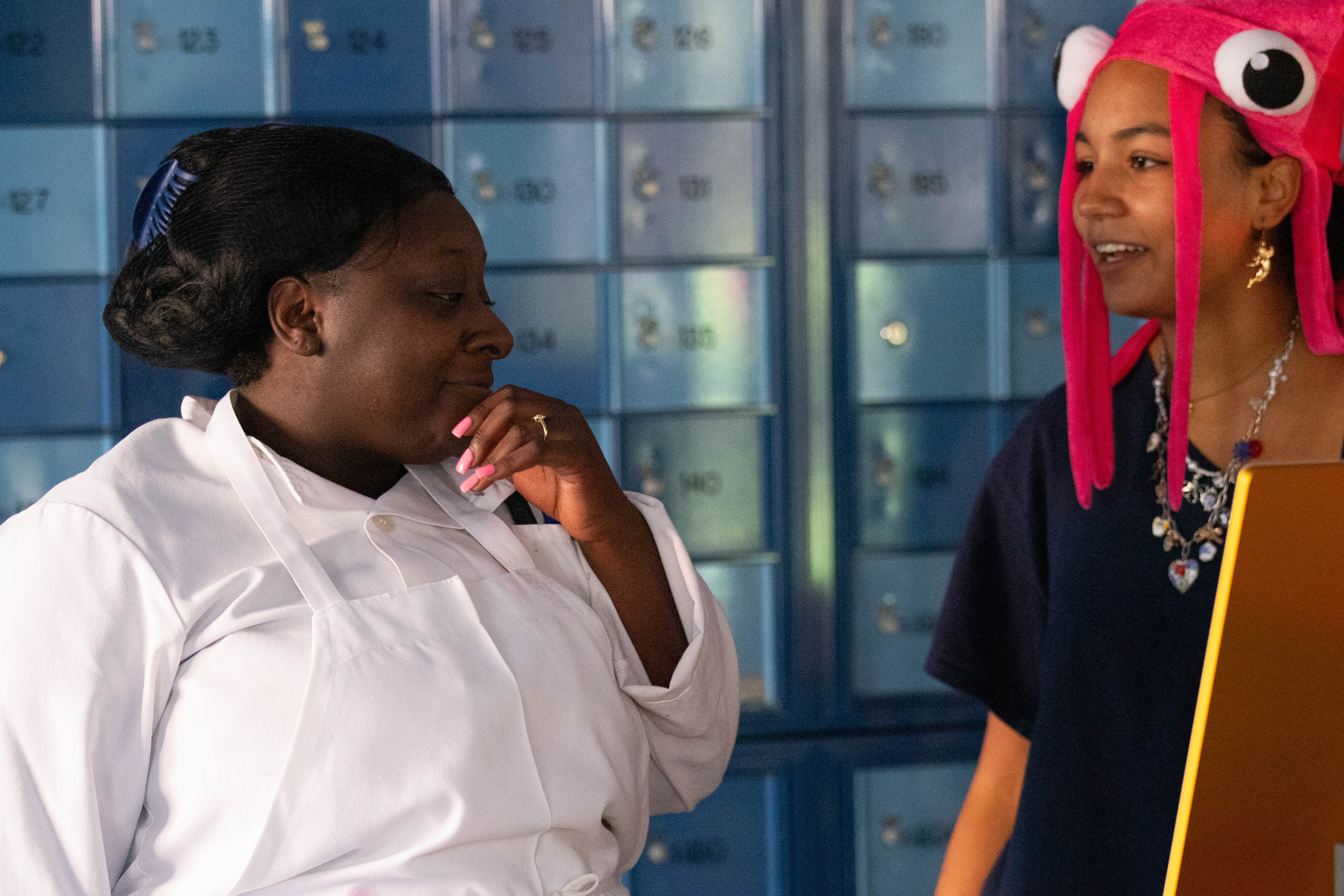
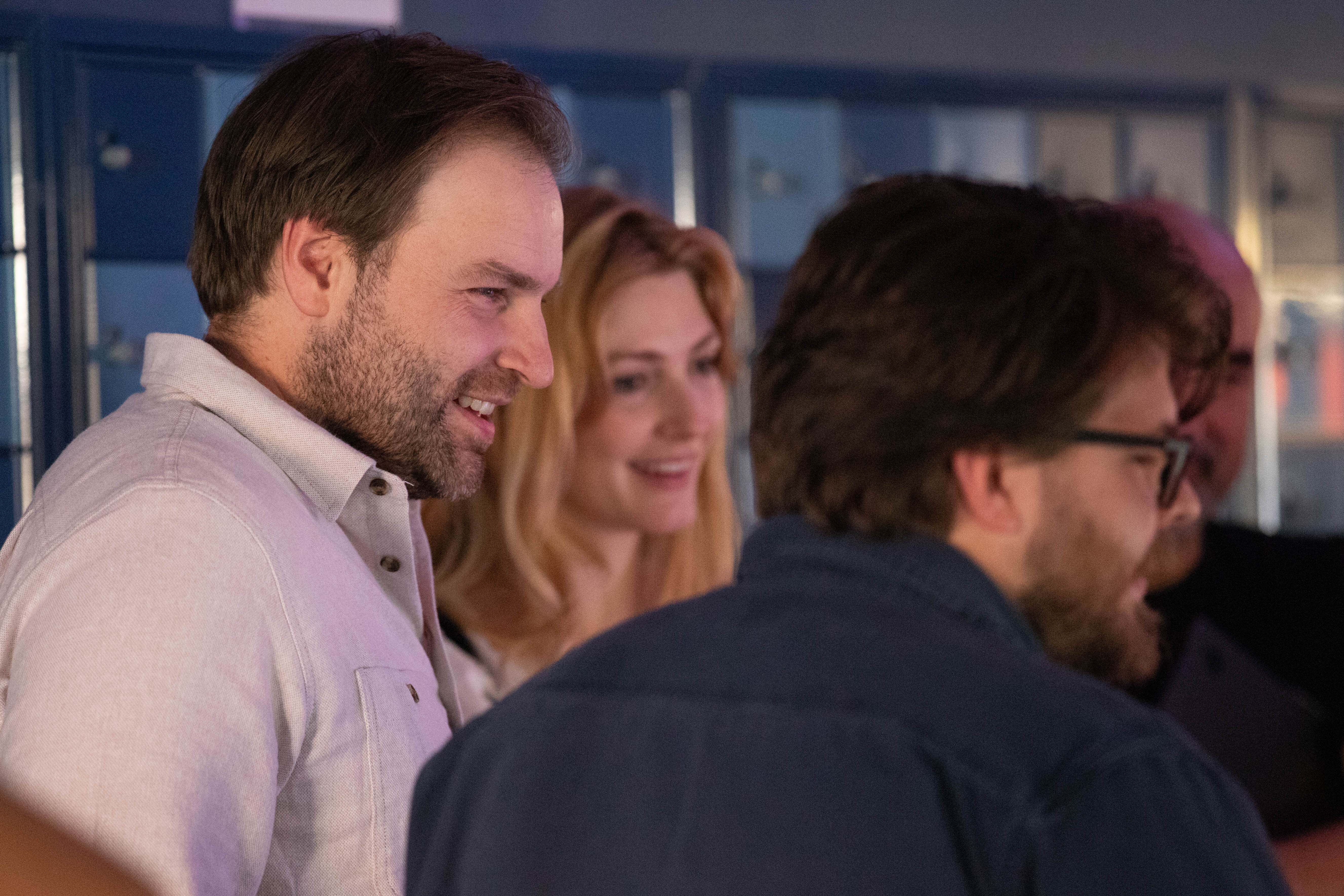
Beyond exposing the event to wider range of Harvard community members, the Residential House environment of the event also fostered a more open dialogue from students regarding their perspectives and experiences with AI. Many expressed a desire for additional workshops in other houses and sought further guidance on navigating AI technologies. Pre-event conversations with Adams House members were equally insightful, revealing varied opinions on Harvard's approach to integrating AI into academic life. An encouraging sign of this engagement is reflected in [a recent opinion piece](https://www.thecrimson.com/article/2024/10/30/knight-AI-harvard-recognize/) by an Adams House student.
 Sign in with Wallet
Connect another wallet
Sign in with Wallet
Connect another wallet