# Key Considerations for Filming with your Phone: Lens Distortion and Angle
## What is lens distortion?
Have you ever seen a smartphone pic of yourself and thought "I do NOT look like that?" There's more to this sensation than just lighting and filters. In fact, the **type of lens, distance from lens, and angle** can make a big impact on a portrait. Although you can observe different versions of this effect in film and professional cameras, this tutorial will focus on the most broadly applicable topic: **smartphone lens distortion** and how to minimize it.
Most modern smartphones have 1-2 wide angle lenses. Some of the fancier ones have telephoto lenses, which are usually used to zoom in on faraway objects. That said, most people taking a selfie or a picture of someone else will be using wide angle lenses.
Wide angle lenses maximize what the camera "sees": it's a wide slice, which is great for a tiny cell phone lens taking a landscape photo.
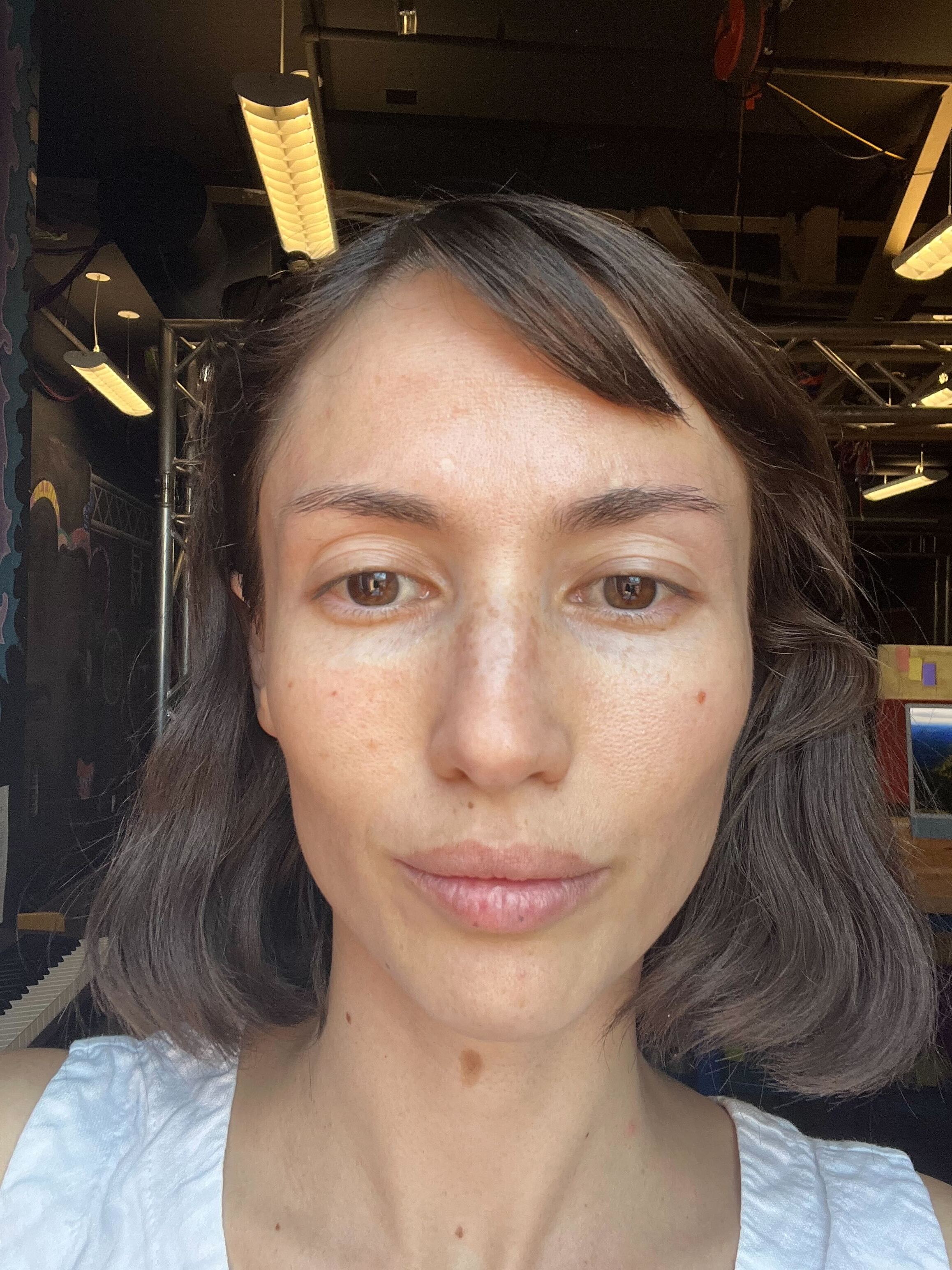
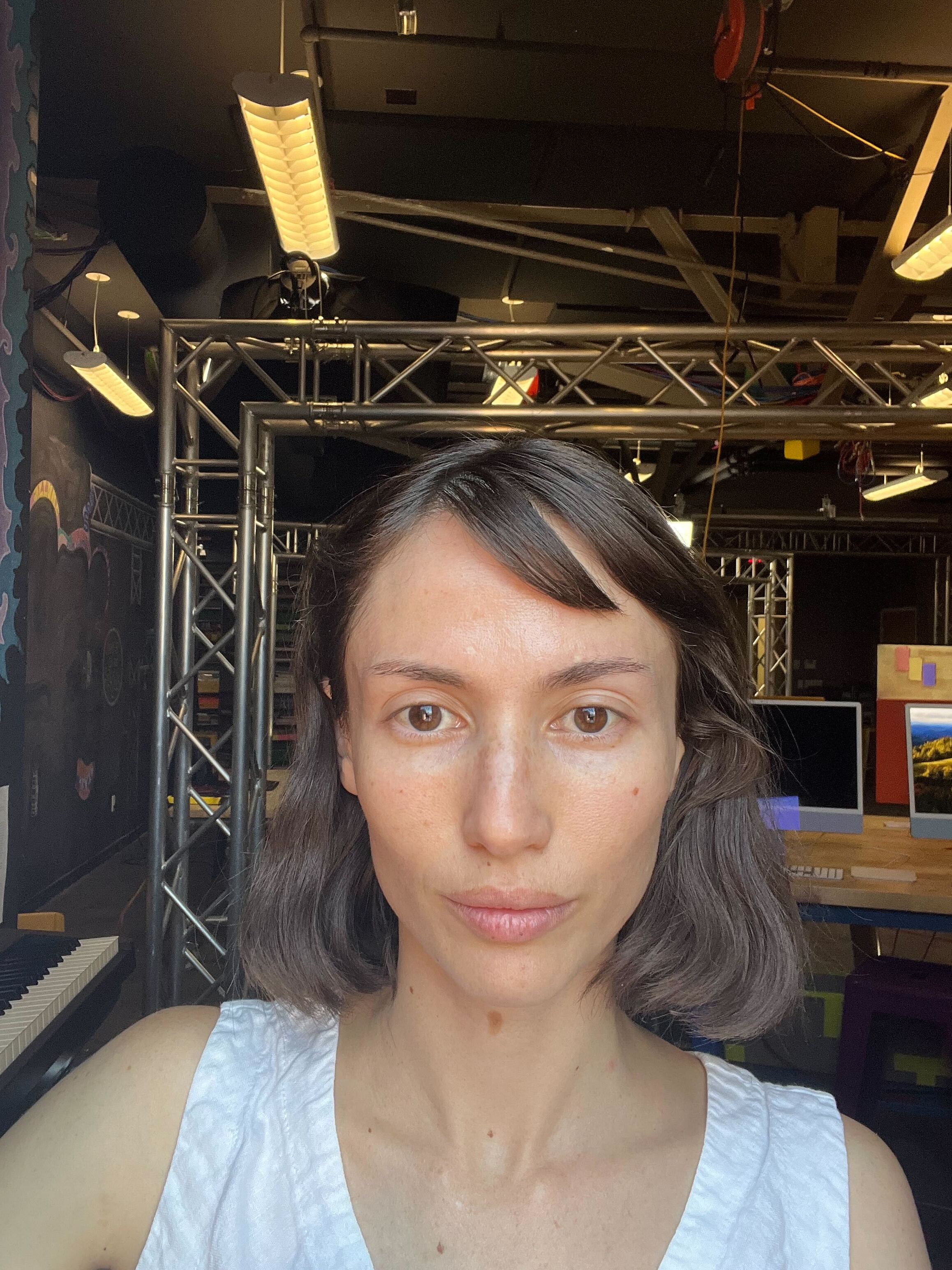
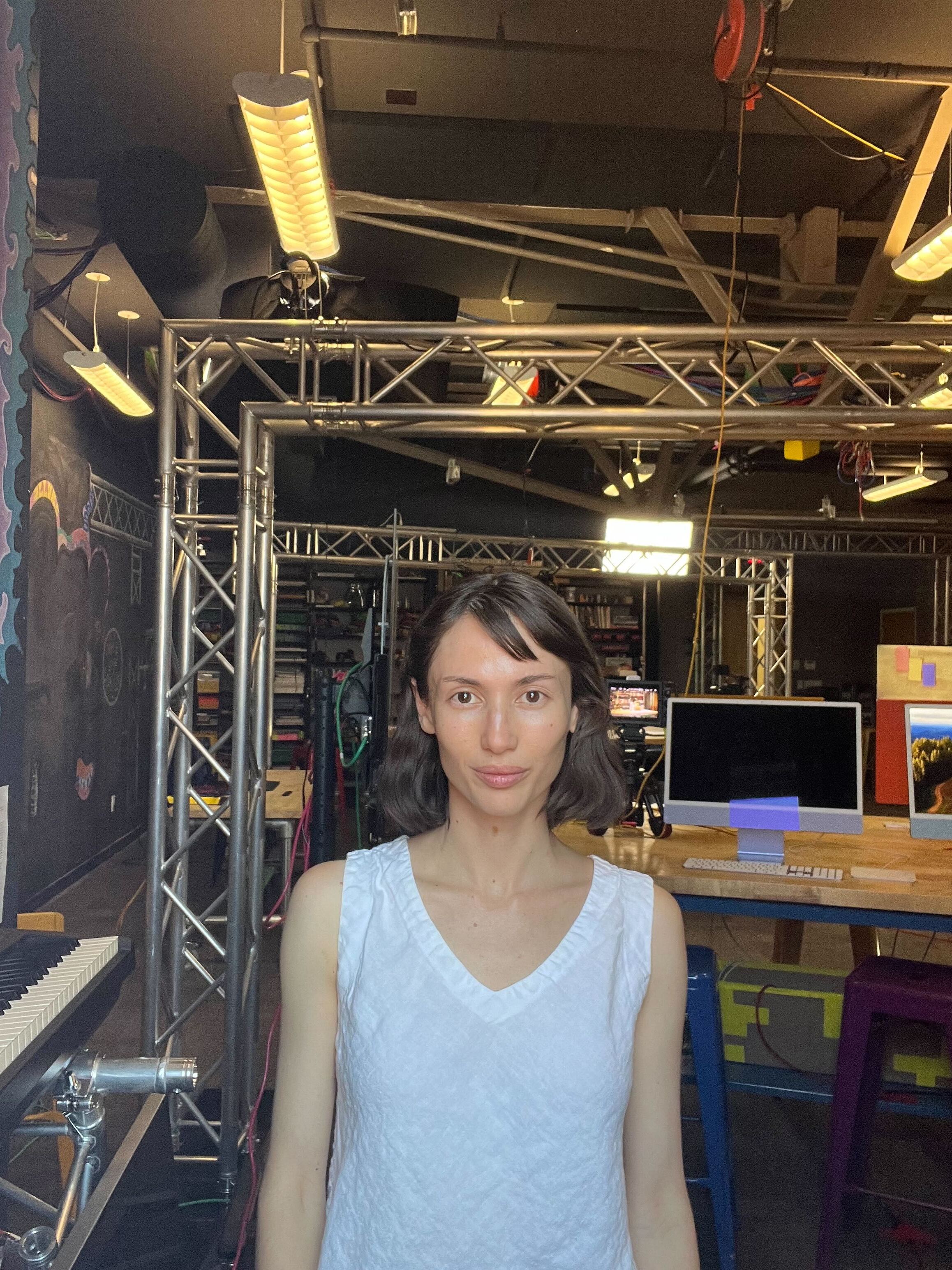
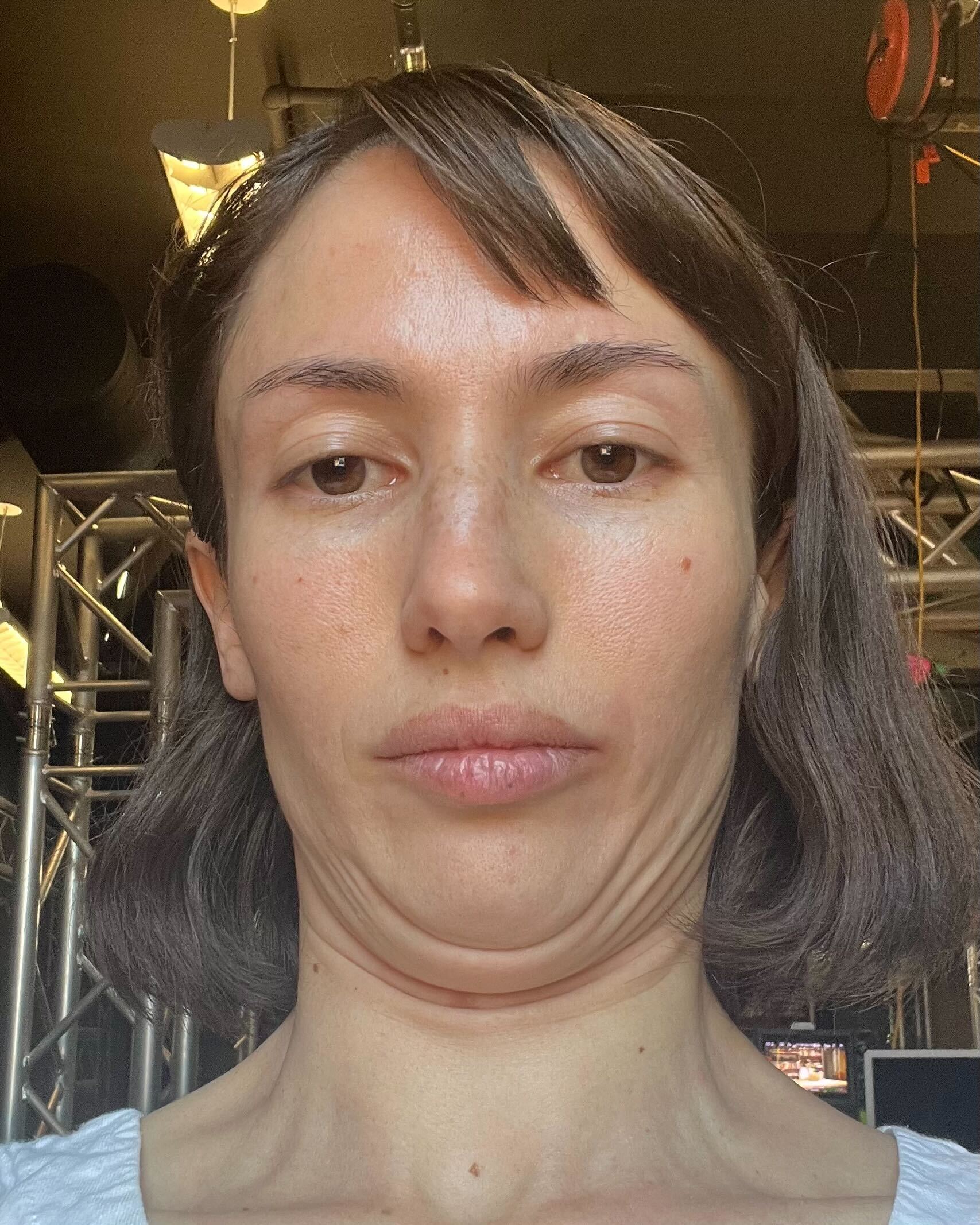
It's not so great for portraits, though. Usually, people want their portrait subject to take up most of the frame. So they end up putting the lens very close to the subject in order to "cut out" the background, which the camera tends to "see" a lot of. However, when the subject is very close, the proportions change. It's a subtle (or not-so-subtle) version of **foreshortening**.
In the following examples, notice how the facial features stand out disproportionately when the lens is very close. However, with increased distance, and keeping the face toward the center of the lens' field of "view," the face looks closer to its appearance in real life.
## Why does the formal composition of my video matter?
* Thoughtful **framing** ensures the subject is the focal point, minimizing distractions and helping the viewer focus on your academic insights.
* **Angles** shape perception and engagement: Camera angles influence how your audience perceives the subject, lending authority, intimacy, or perspective. Choosing the right angle supports your analytical goals, such as emphasizing details or creating emotional resonance.
## Example 1. Distance from the lens changes the appearance of the face. Lens is even with the eyes and not tilted.
| very close lens | selfie at a comfortable distance (elbow slightly bent) | using tripod/about 4 feet away |
| -------- | -------- | -------- |
|  |  |  |
Same photos, but cropped to a classic portrait framing for a closer comparison:
| very close lens | selfie at a comfortable distance (elbow slightly bent) | using tripod/about 4 feet away |
| -------- | -------- | -------- |
|  | 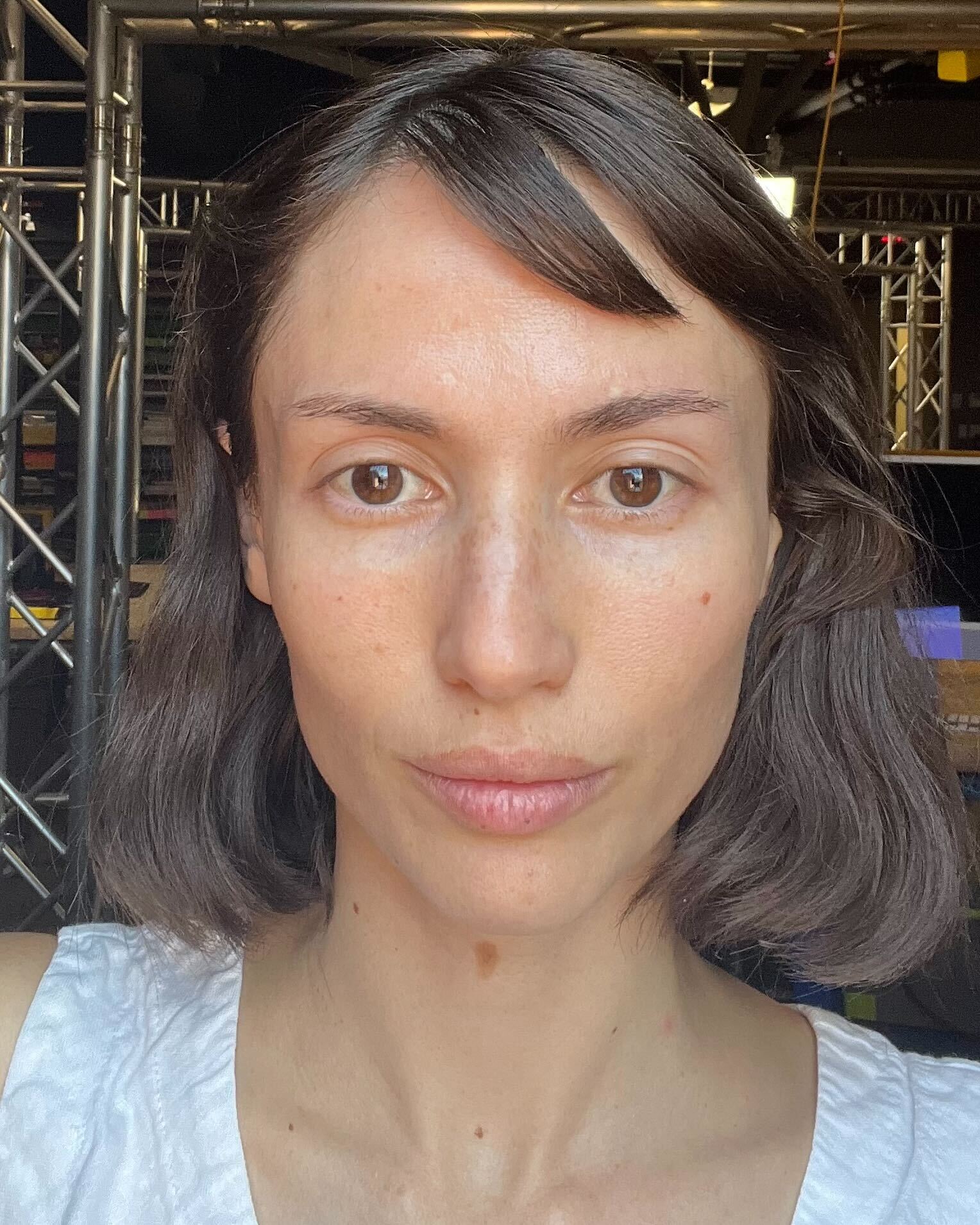 | 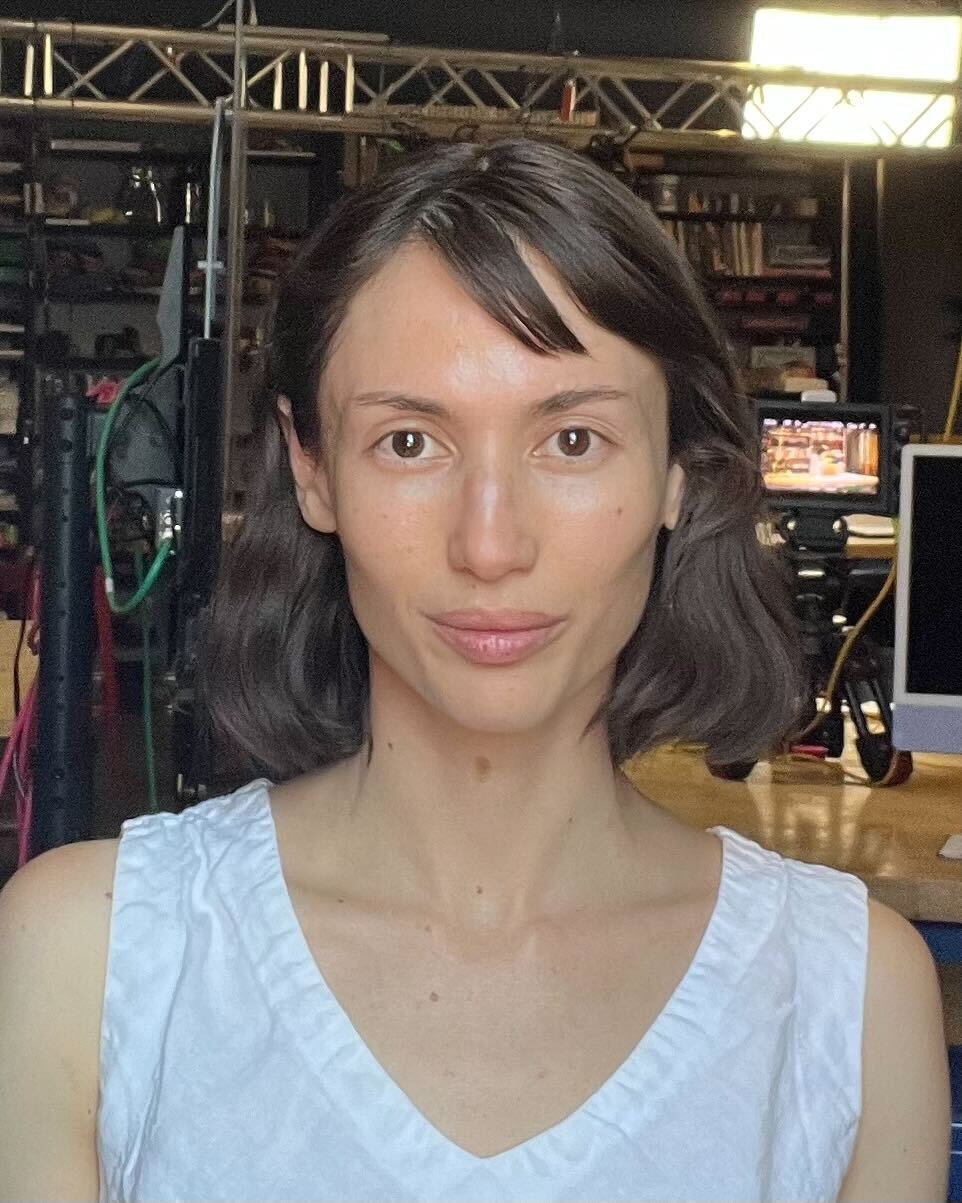 |
Unfortunately, cropping may cause loss of quality (you're zooming in and ending up with a smaller amount of pixels) so when you shoot with a phone camera, you have to compromise between keeping the subject close enough for quality, but not so close that there is a lot of distortion.
## Example 2. Low, middle, and high angles can change the appearance of the face/body. The camera is being tilted, as people naturally tend to do when holding a smartphone.
| very low lens, phone "leaning back" | lens even with face | very high lens, phone "leaning forward" |
| -------- | -------- | -------- |
| 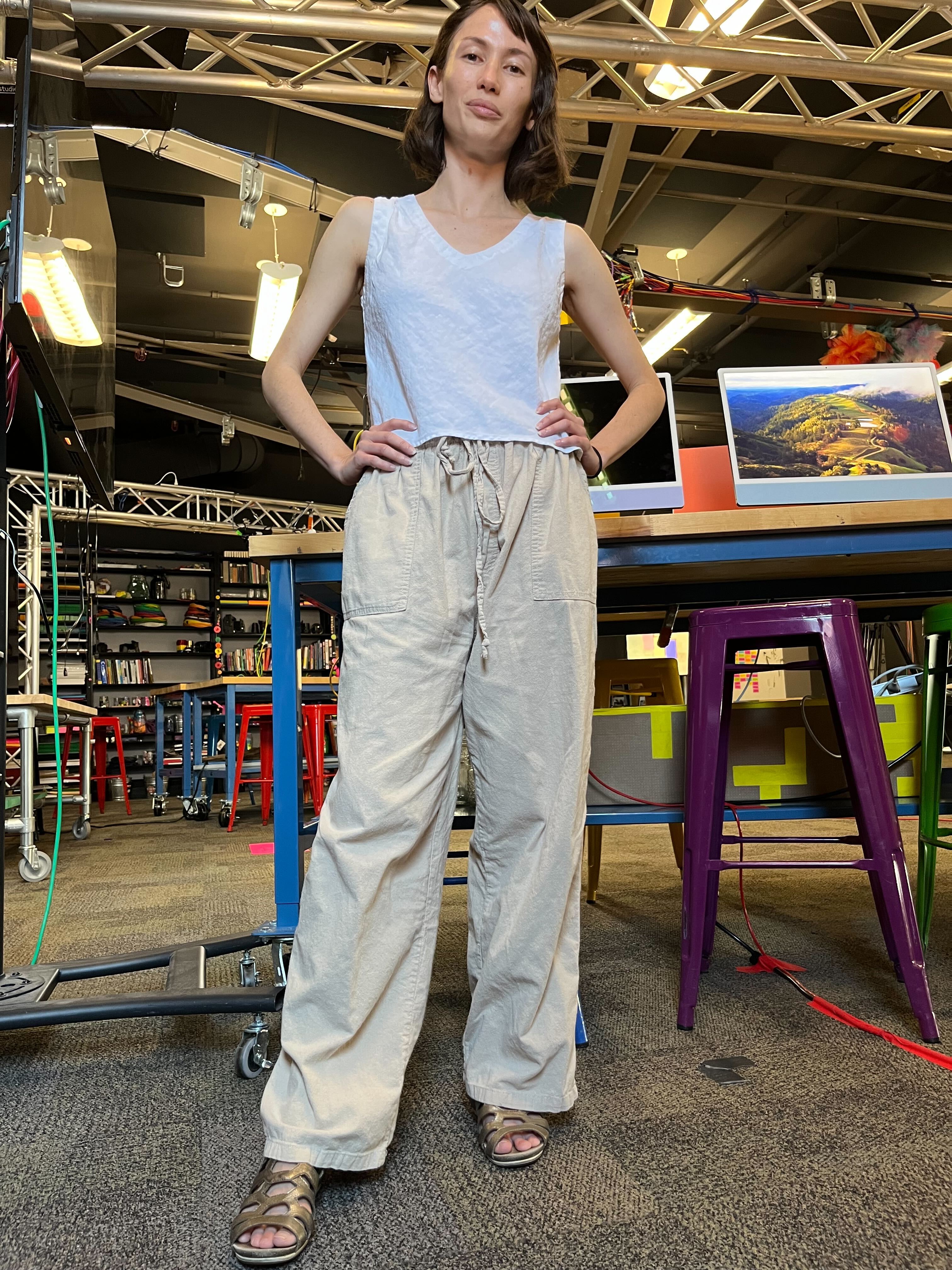 | 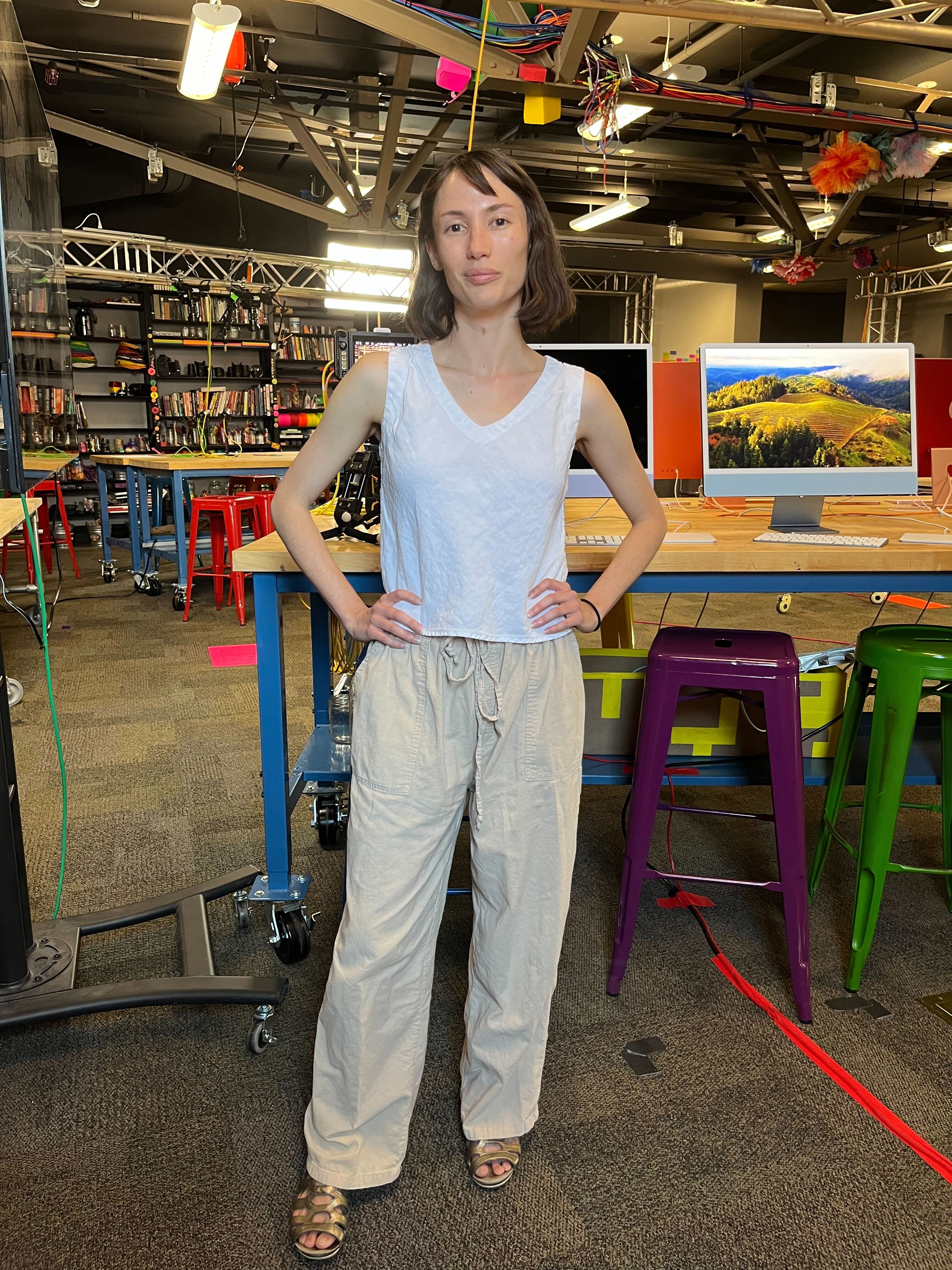 | 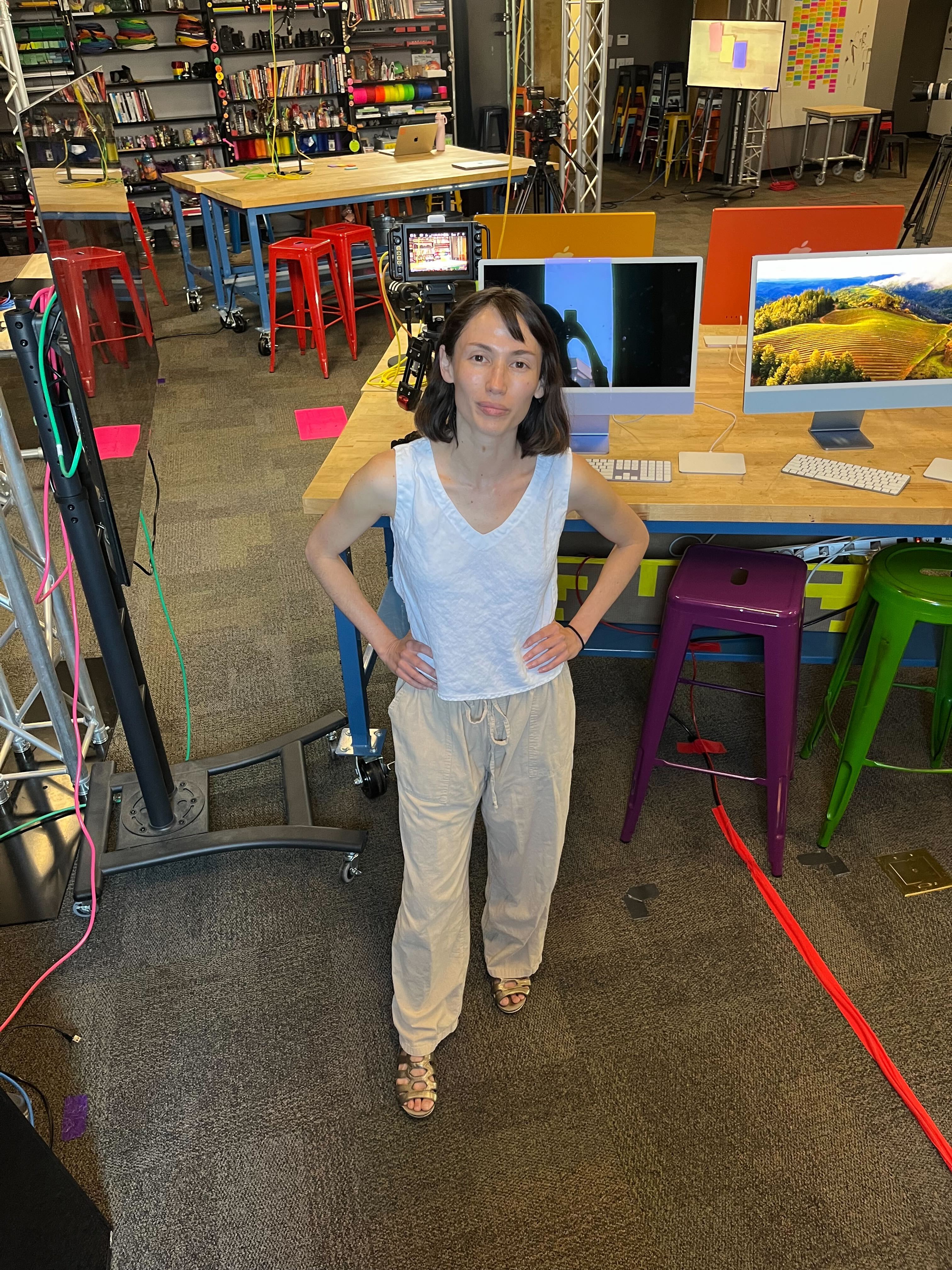 |
You will often see low angles used in high fashion photography, where the aim is usually to elongate the appearance of the body and the legs. The very high angle is common in group selfies where someone needs to hold the phone high in order to capture all subjects. The middle angle is the "vacation snapshot" look, which is the most true to life proportions and the least dramatic.
Experiment with **high, middle, and low levels** but also with **camera tilt**. Don't automatically mimic the posture of your subject with the body of your phone: watch your screen to see if tilting forward/back or not tilting at all changes the proportions.
## Shooting with lens distortion
The most important step is simply to learn to **see distortion**. After that, you will be empowered to play with the angle and distance of your camera in order to minimize (or maximize!) the effect.
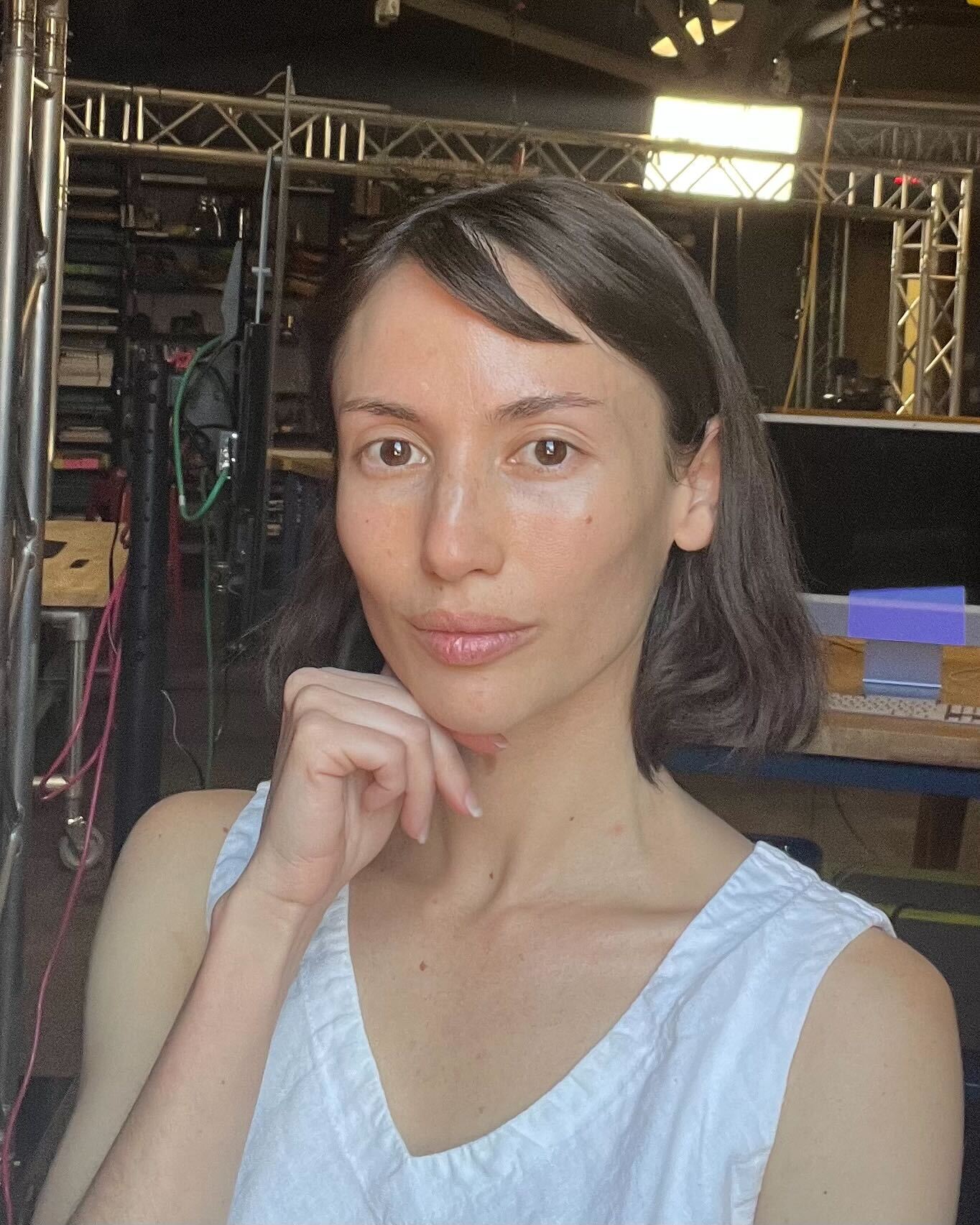
**To minimize distortion, keep the subject medium-distance from the lens and centered.**
After that, you can **crop** the resulting image if you want to try a different framing.
**Note that usually, you need to have the smartphone more than arms'-length away in order to minimize distortion. Most handheld selfies will include distortion.** That's why tripod/ring light setups are so popular with people who do self-shoots on their phones.
## Example 3. It can be fun to see how distance and angle can drastically change the appearance of the subject!
| very close lens, low height, phone "leaning back", subject pulling chin down | cropped, phone level with eyes, more than arms' length away, phone not tilted, subject keeping chin out (the hand position helps with this) |
| -------- | -------- |
|  |  |
# Basic checklist when using your smartphone camera for portraiture
1. **Clean the lens**! Even if that means just wiping it on your shirt.
2. Check the **light** in order to establish the general position for the camera and your subject.
3. Check **distance** between subject and camera. How does getting closer or farther change the proportions in the image? If trying to minimize distortion while taking a selfie, usually you need to be slightly more than arms'-length away from the camera (tripod time!).
4. To minimize lens distortion, keep your subject's **face near the center** of the frame.
5. Check **height of the camera** (high, middle, low) and **tilt** (are you instinctively tilting the lens forward or back? Maybe you need it level).
6. Experiment and have fun!
## Tech equipment resources
Lamont and Cabot Library [lend photo, video, and audio equipment to students](https://guides.library.harvard.edu/multimedia_production?_).
## more tips for recording with your phone (framing and lighting)
* check out [this resource for tips about recording your video using your phone](https://hackmd.io/@lluf-23-24/BJluw2AK6)! it covers the fundamental formal elements of lighting, angles, and shot length.
 Sign in via Facebook
 Sign in via X(Twitter)
 Sign in via GitHub
 Sign in via Dropbox
 Sign in with Wallet
Connect another wallet
Sign in with Wallet
Connect another wallet