---
tags: mdf-report
---
# Arianna Lord: Media & Design Fellow in OEB
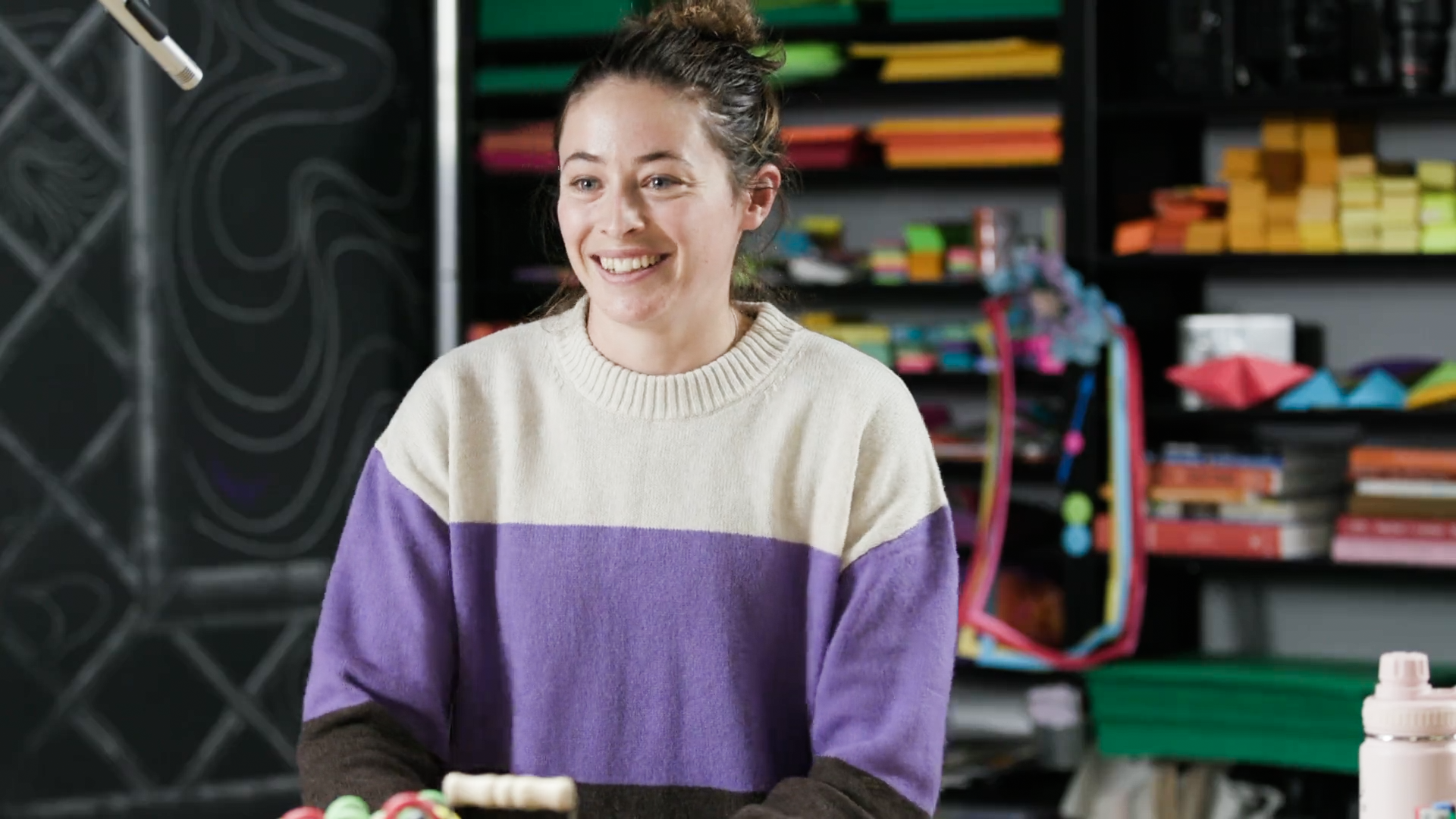
Media & Design Fellows provide direct support to specific courses, helping students develop and complete multimodal assignments. MDFs also host workshops in multimodal communication, multimodal storytelling, and presentation techniques. They also provide general support to their departments by developing resources and hosting events that support multimodal scholarship.
In this report, you can read about:
* The **training with the Learning Lab** Arianna did to get ready to support projects in OEB
* The **courses** Arianna supported this term
## Learning Lab Training
During MDF orientation in August and throughout the bi-weekly fall MDF meetings, Arianna learned:
* how to **design activities, prototype assignments, and create resources** that help students in the particular courses they are supporting.
* a set of **multimodal pedagogy and instructional design best practices** and ways of connecting it to their discipline
* **the affordances of different media** and what students gain, intellectually and analytically, by engaging with those media forms
As a second year media and design fellow, Arianna also helped **design and run a workshop during MDF orientation for incoming first-year MDFs**. The workshop focused on breaking down a piece of academic text and translating the main concepts into visual media--a key move in science communication that has applications for humanists and social scientists, too.
During her time at the Learning Lab, Arianna has specialized in a range of tools that have enabled her to support OEB courses and scicomm initiatives in her department and beyond. These tools include:
* **Final Cut Pro**, a video editing tool that can be used for science explainer video projects
* **Canva**, a web-based graphic design and layout tool that students can use to design assets for their science explainer videos
* **arcGIS Storymaps**, a tool that can be used for multimedia, web-based storytelling and mapping species biodiversity
* **microphones**, including dynamic mics, condenser mics, and cardioid mics, as a way of exploring and understanding their different audio qualities
* **digital audio workstations** (DAWs) that can be used for editing podcasts
## Course Support
### OEB 10: Foundations of Biological Diversity
**Mapping Species Biodiversity Workshop**
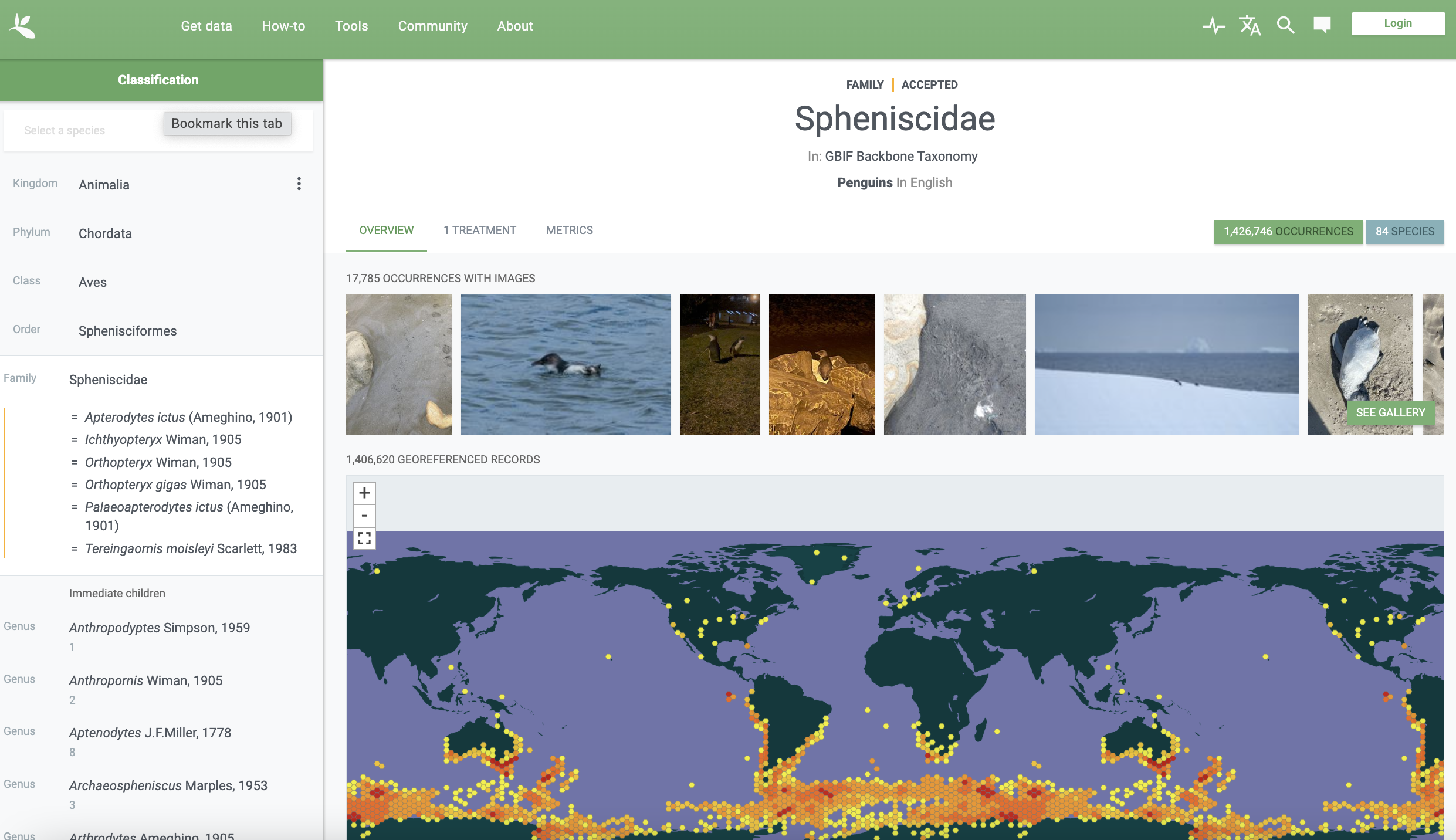
To support an in-class lab assignment where students visualized and mapped species biodiversity using museum databases, Arianna
* **designed a workshop** to teach students how to investigate species biodiversity with tools like MCZBase and the Global Biodiversity Information Facility (GBIF). She carefully selected the Hawaiian land snails dataset for its relevance to conservation topics discussed in class and to introduce students to the data analysis workflows commonly used by scholars in the field.
* To ensure the activity’s success, **Arianna trained the teaching fellows (TFs) to deliver the workshop in their sections**, equipping them with the knowledge and tools needed to guide students through the process. *
* **Collaborating with Belle Lipton of the Harvard Map Collection**, Arianna chose an accessible digital mapping platform that allowed all students, even those with no prior GIS experience, to fully engage with the activity.
This workshop not only supported the course objectives but also gave students hands-on experience analyzing and mapping data in a way that mirrors real scientific practices in this field.
**Science Explainer Video Workshops**
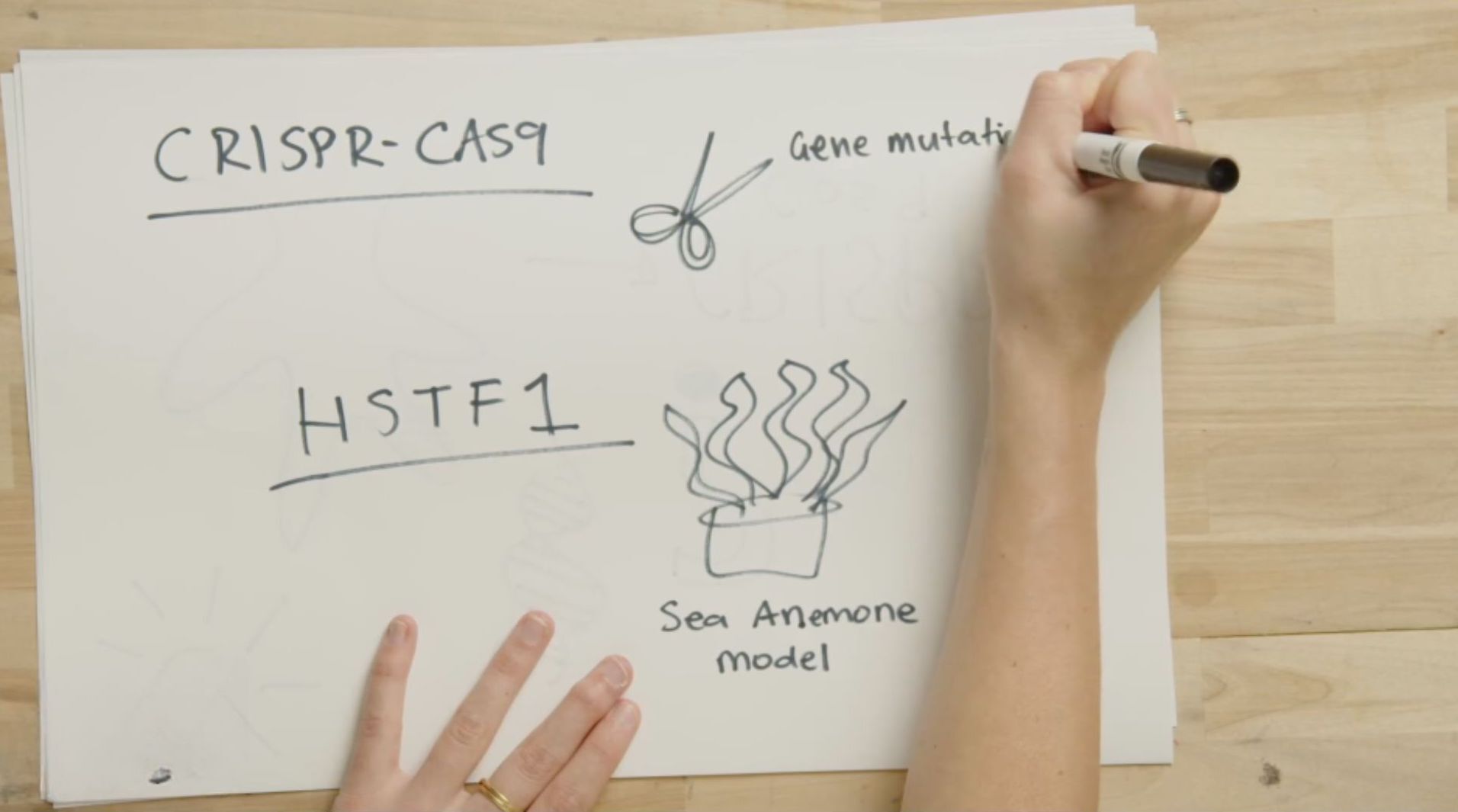
Students in OEB 10 created short explainer videos that communicated the key findings of a scientific paper to a broader public audience. To support this final project, Arianna
* **designed a series of workshops** that introduced students to the fundamental moves of explainer videos, with an emphasis on storyboarding/narrative development and designing key visuals. These workshops encouraged students to consider the unique affordances of explainer videos and how to marshal those effectively to communicate science with confidence and skill.
* Arianna guided students through the process of distilling and communicating the main findings of scientific papers in a clear, engaging format designed for general audiences.
By revising the project’s instructions and providing hands-on guidance--a project she undertook across two academic years as a Media & Design Fellow--Arianna helped students produce more polished final videos that demonstrated a deeper understanding of scientific communication.
### OEB 50: Genetic and Genomics
In OEB 50, students create podcasts that intend to communicate science to a public, non-specialist audience. Arianna contributed to the course’s podcast workshop by **facilitating a station** designed to teach students the importance of precise verbal communication. This station involved an activity where one student described a scientific figure into a microphone while their partner, wearing headphones and unable to see the figure, attempted to recreate it in drawing. The exercise highlighted the challenges of translating complex visual information into clear, descriptive language—an essential skill for creating effective podcasts about technical content. Arianna guided students to think critically about word choice and how to communicate scientific ideas to audiences without shared visual context. The activity also prompted students to reflect on the importance of tailoring their explanations to an audience with potentially less background knowledge.
## Arianna's Spring Projects
### Science Presentation Workshop for OEB Graduate Students
Arianna will host a science presentation workshop for graduate students in OEB to help them prepare for the department's G4 Symposium. This workshop helps the department's graduate students develop their presentation, communication and storytelling skills that support sharing scientific research in this particular forum and that prepares them for their future as scientists who often need to explain research findings to a broader audience of non-specialists.
### OEB 10 Evolution Game Prototype
Arianna will help OEB 10 design and integrate a game about evolution that will help students gain more fluency in the core elements of phylogenetics and evolutionary theory. Feedback from previous years has shown that students could benefit from additional support and practice developing their tree thinking skills. (Tree-thinking skills are the ability to use phylogenetic or evolutionary trees to organize knowledge about biological diversity. It involves understanding how relationships are represented in a tree, being familiar with the terminology, and making predictions based on those relationships.) Arianna will research existing games and source game mechanics that could be incorporated into this game. She’ll then build and beta-test a prototype by designing a low-stakes activity that can be run in the course before preparing the final version of the game.
 Sign in with Wallet
Connect another wallet
Sign in with Wallet
Connect another wallet