---
tags: mdf-report
---
# Sophie Wilkowske: Media & Design Fellow in History

Media & Design Fellows provide direct support to specific courses, helping students develop and complete multimodal assignments. MDFs also host workshops in multimodal communication, multimodal storytelling, and presentation techniques. They also provide general support to their departments by developing resources and hosting events that support multimodal scholarship.
In this report, you can read about:
* The **training with the Learning Lab** Sophie did to get ready to support projects in History
* The **courses** Sophie supported this term
## Learning Lab Training
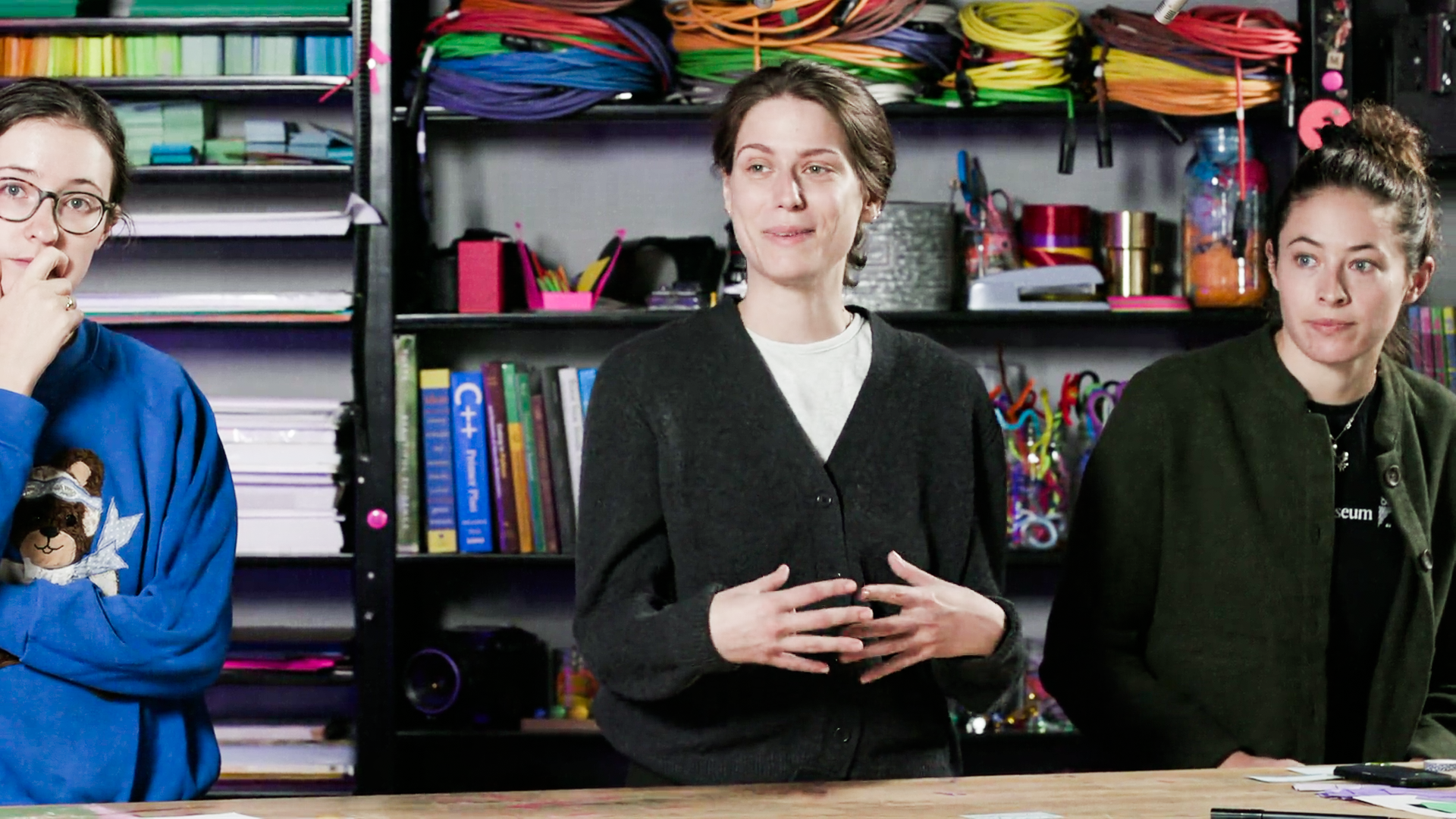
During MDF orientation in August and throughout the bi-weekly fall MDF meetings, Sophie learned:
* how to **design activities, prototype assignments, and create resources** that help students in the particular courses they are supporting.
* a set of **multimodal pedagogy and instructional design best practices** and ways of connecting it to their discipline
* **the affordances of different media** and what students gain, intellectually and analytically, by engaging with those media forms
To get ready to support History courses, the **tools** that Sophie specialized in included:
* **arcGIS Storymaps**, a tool that can be used for multimedia, web-based storytelling
* **Canva**, a web-based graphic design and layout tool that students can use to design posters
* **Adobe Photoshop and Illustrator** for graphic design and photography projects (like creating contemporary updates of historical "memes")
* **cameras, lights, and other filmmaking tools** that we use to illustrate documentation and other photographic principles
* **Final Cut Pro**, a video editing tool used for video essays and other film projects
* **AI tools** including custom GPTs and image generators like Fluxus, Dall-E, and Midjourney
## **Course Support**
### **History 1206: France and the World Since 1870**
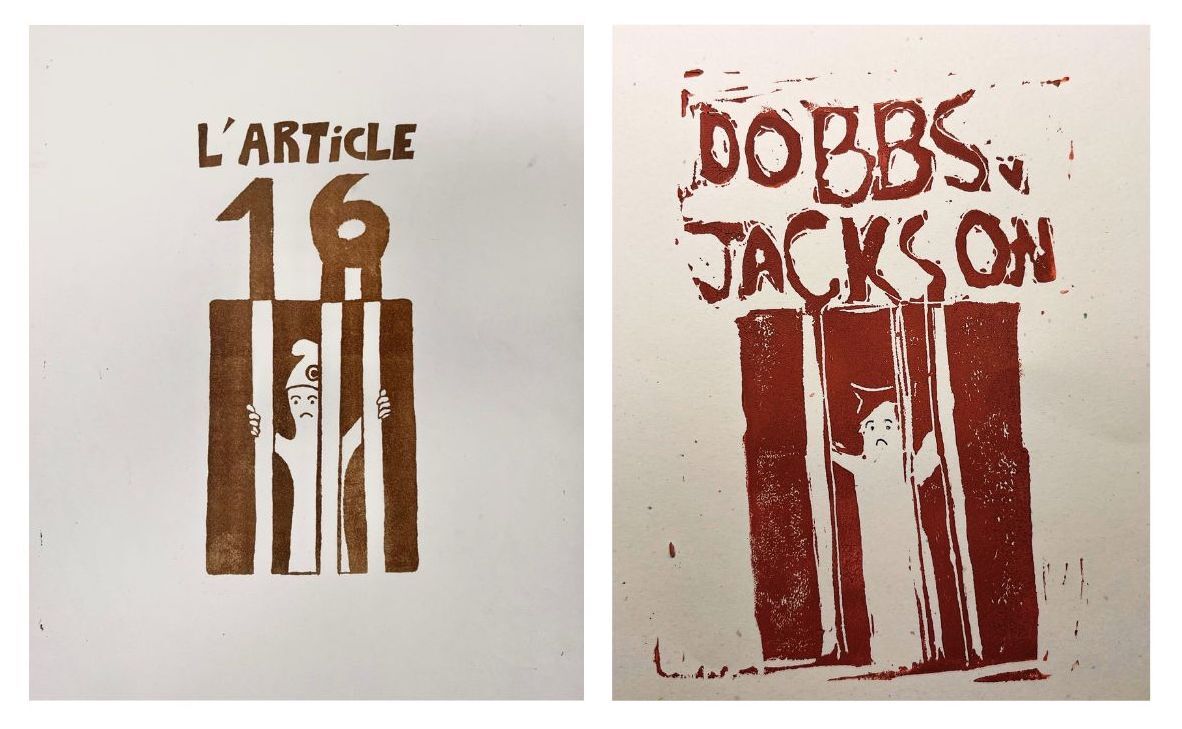
In this course, students visually remediated an iconic 1968 poster into a contemporary “meme,” reflecting on the context lost and gained through this process. Students began by visiting the Houghton Library archives to view original posters from the May 1968 protests in Paris. This visit allowed students to examine the physicality of historical documents, such as the posters’ scale, texture, and aging process. Building on this archival experience, students were tasked with remixing one of the iconic images from the protests, focusing on its iconography and reinterpreting it to address contemporary political or social issues of their choice.
To help students develop "memes" and political iconography of their own--that was in conversation visually with archival materials--Sophie **designed and offered a workshop** where students used a range of tools to adapt images to comment on contemporary concerns like climate change. In this example, students connected the historical themes of labor relations and industrial capitalism with present-day environmental challenges. Because the assignment aimed to develop students' historical imagination by encouraging them to draw parallels between the past and present, **the workshop gave students tools to reflect on the power of images in shaping political movements**.
Sophie's workshop also **emphasized the creation of compelling visual messages**, prompting students to think critically about what is gained and lost in distilling complex ideas into simple, striking visuals. By using tools such as **Canva, Photoshop, or traditional rubber-block printing**, students explored both the creative and analytical dimensions of historical source criticism. This project effectively bridged historical understanding and the role of political iconography in driving social and political change.
Finally, Sophie **explored AI tools** with students, enabling them to critically reflect on AI-generated outputs and understand the implications of AI as a content production method.
---
### **History 1056: The New Science of the Human Past: Case Studies at the Cutting Edge**
In Professor Michael McCormick's course, Sophie supported an assignment designed to teach students how to create scientific posters, an unfamiliar medium for many history students. The class explored traditional historical questions, such as the fall of the Roman Empire, while incorporating cutting-edge scientific methods like spectrography and ice core analysis.
To prepare students for the assignment, Sophie:
* facilitated a series of **workshops** at the Learning Lab that introduced students to **graphic design principles**. Students participated in hands-on exercises using craft supplies to express relationships between concepts visually, such as arranging cards in space to illustrate subordination without text. Students also **reflected on model scientific posters** to determine what worked well conceptually and what could be improved, before using arts supplies to rapidly prototype posters of their own based on course readings.
* **created a resource** detailing digital tools students could use to design their posters.
---
### **History 1473: Environmental History of the United States**
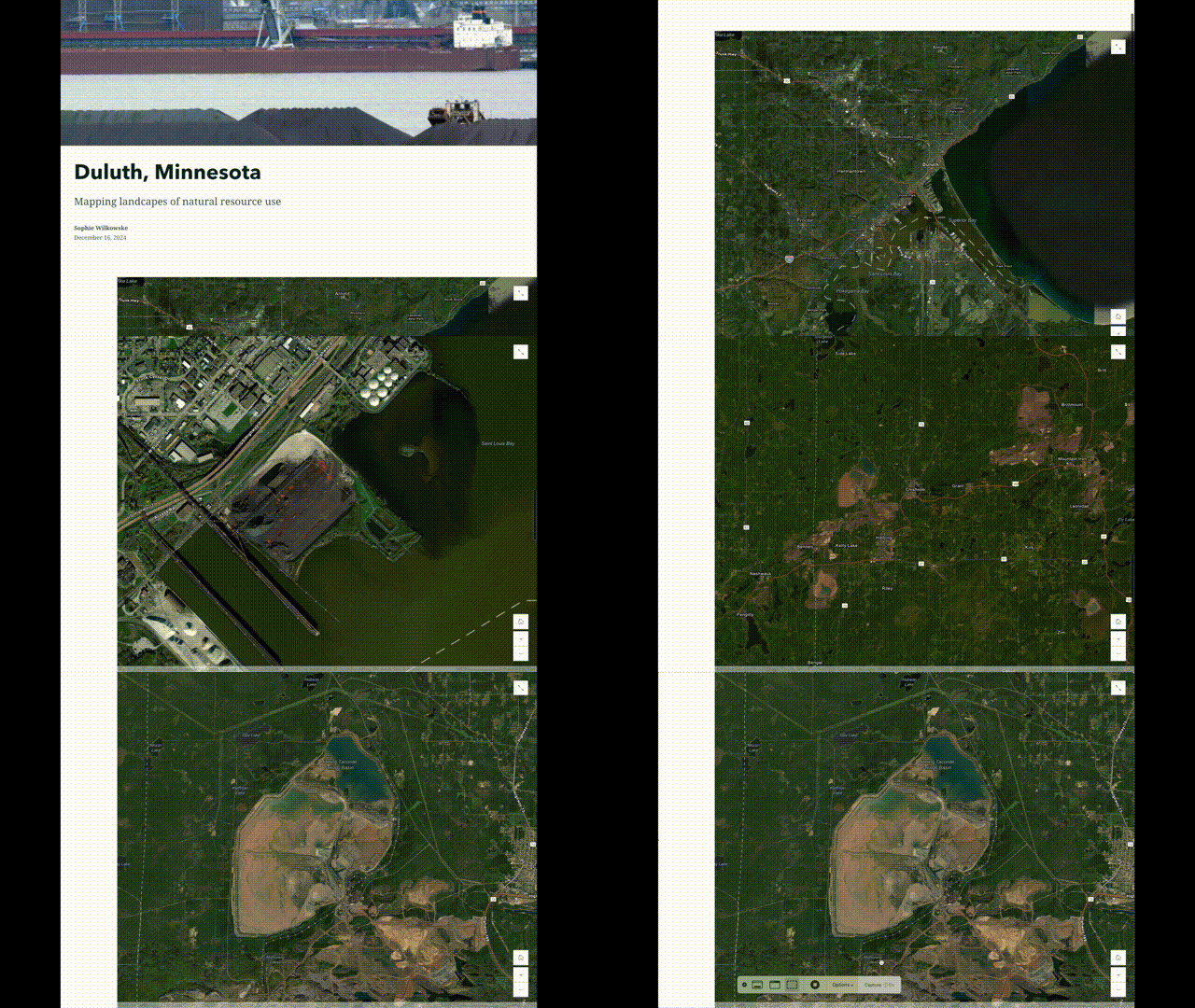
The course focuses on how maps represent and shape our understanding of land and space, both historically and in the present.Sophie supported this course by:
- **Offering a workshop** introducing students to ArcGIS StoryMaps, a tool available through Harvard’s ArcGIS license. Students were tasked with creating maps that told a story about a space they knew well, such as their hometowns. Students explored how map design choices, such as what to emphasize or omit, could significantly influence how a viewer perceives the mapped space. By experimenting with StoryMaps, students engaged with questions about the legibility and subjectivity of maps, gaining insight into how maps have historically been tools for shaping narratives about the environment and society.
 Sign in with Wallet
Connect another wallet
Sign in with Wallet
Connect another wallet