# Parse a text (article, interview transcript, etc.) in order to identify and extract key passages

prompt used: "Parsing a text."
## description
Students can use AI tools like chatGPT to help them parse a text and identify key passages and terms and extract quotes. This type of use might go beyond how you'd like students to interact with a text in your course--if, say, students' ability to parse a text on their own is an important learning goal in the course.
## activity
1. Log into chatGPT using the Harvard AI Sandbox
2. From search bar at the bottom of the page, specify whichever AI tool you'd like to use.
* for this activity, we recommend using chatGPT since it tends to be better suited than the other AI tools in the sandbox for creative tasks.
3. For this activity, you will also use the "upload file" function
* NOTE: with chatGPT 32K, you can also copy and paste the text directly into the chat. However, the file upload will be more efficient.
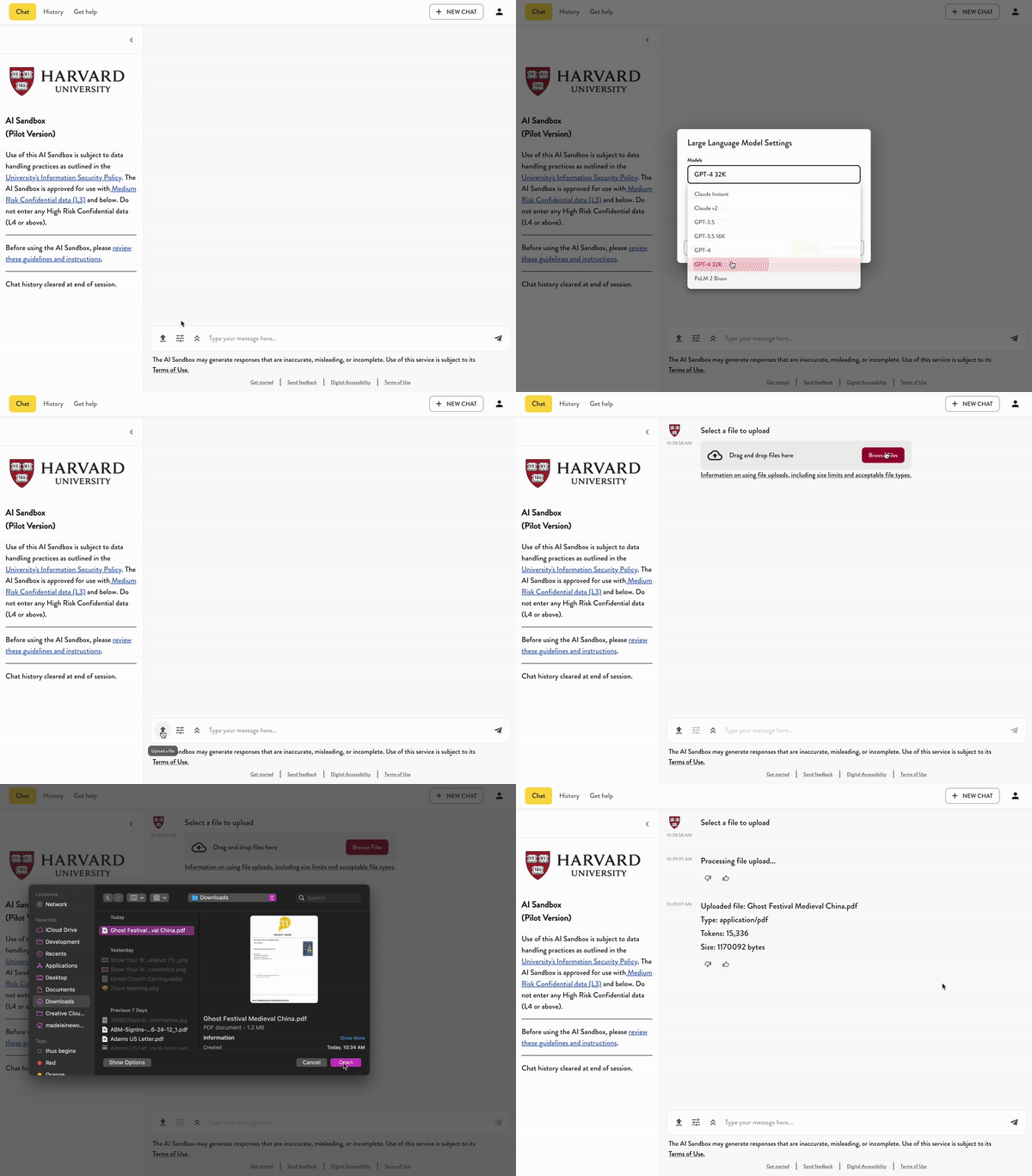
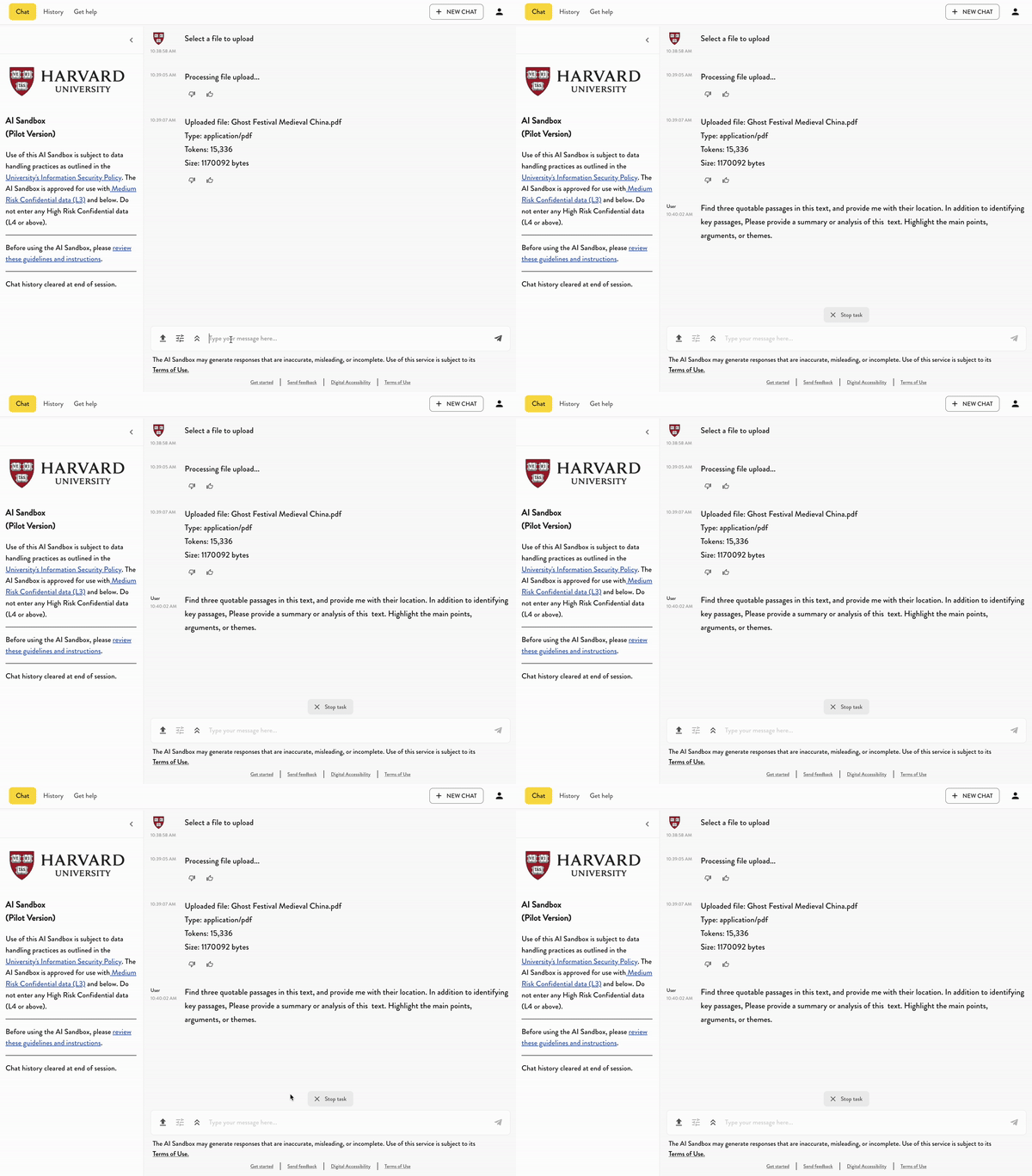
4. Prompt the AI with what you want returned from the text.
* In this case: "Find three quotable passages in this text, and provide me with their location. In addition to identifying key passages, Please provide a summary or analysis of this text. Highlight the main points, arguments, or themes."
---
## Transcript of activity example:
* USER: Find three quotable passages in this text, and provide me with their location. In addition to identifying key passages, Please provide a summary or analysis of this text. Highlight the main points, arguments, or themes.
* AI:
* Sure, here are three quotable passages from the text:
* "The agricultural processes and governmental operations appropriate to each month are described at length in the Yiieh ling ("Monthly Or- dinances"), which forms a section of the early Han ritual book, the Li- chi (Book of Rites)." (Page 28)
* "The observance of a rainy season retreat (Skt.: varsd, Ch.: an-chti) was a common practice among many groups of wandering ascetics in India in the fourth century B.C." (Page 32)
* "The Buddhist church was not the only organized religion to sponsor a festival of ancestral offerings on the first full moon of autumn. Taoists also held a festival on this day, called "chung-yuan" the day on which the "Middle Primordial" descended to earth to judge people's actions." (Page 37)
* The text provides a detailed analysis of the Ghost Festival in Medieval China. It explores the historical, cultural, and religious factors that contributed to the popularity and significance of the festival. The main points and themes include:
* **Historical Context**: The Ghost Festival was celebrated on a grand scale by people from all walks of life during the T'ang times. The spread of the festival in medieval times is attributed to a number of factors, including the influence of Chinese Buddhist mythology and the incorporation of ghost festival rituals into the basic patterns of Chinese life.
* **Pre-Buddhist Celebrations**: The text discusses the precedents for holding celebrations on the fifteenth day of the seventh month, which was a day of renewal in China, with emperors presenting their ancestors with the first fruits of harvest and common people marking the conjunction of death and rebirth.
* **Monastic Schedule**: The Buddhist Sangha in China observed a summer retreat and held rituals of renewal at the end of it, following the model provided by their Western contemporaries in Central Asia and India.
* **Taoist Parallels**: The text also highlights that the Taoist church, around the same time as the Buddhist church, began sponsoring celebrations on the fifteenth day of the seventh month, which was a day of judgment.
* **Synthesis of Traditions**: The Ghost Festival represents a synthesis of different traditions—indigenous ancestral and agricultural patterns, the monastic rituals of Indian Buddhism, and the descent of Taoist gods. This synthesis accounts for the spread of the Ghost Festival throughout medieval Chinese society.
 Sign in with Wallet
Connect another wallet
Sign in with Wallet
Connect another wallet