# Deepen understanding of a concept

prompt used: "Deepen understanding of a concept"
## description
Using an AI tool to test their knowlege, students might use the conversational or tutor-like capacities of chatGPT to ask questions that can help them clarify and thus deepen their knowledge of a particular concept. Because chatGPT is inexhaustable in its ability to answer questions, students can use this tool as a means of gaining foundational insights, asking follow-up questions about unfamiliar terminology or critical debates, and even ask chatGPT to point them to possible topics which they could then research using more conventional academic methods and materials. This approach to using AI requires that students have enough of a foundation and genuine interest in the topics they're studying to prompt the AI to give deep and nuanced responses.
Depending on the course goals, this type of engagement with AI might give students too much information or it could provide overly generalized descriptions of debated terms/ideas/concepts. You might want to set guidelines for appropriate or inappropriate use.
## activity
1. Log into chatGPT using the Harvard AI Sandbox
2. From search bar at the bottom of the page, specify that you'd like to use GPT 4.
* We recommend selecting GPT-4 32K for the best results, especially with long prompts
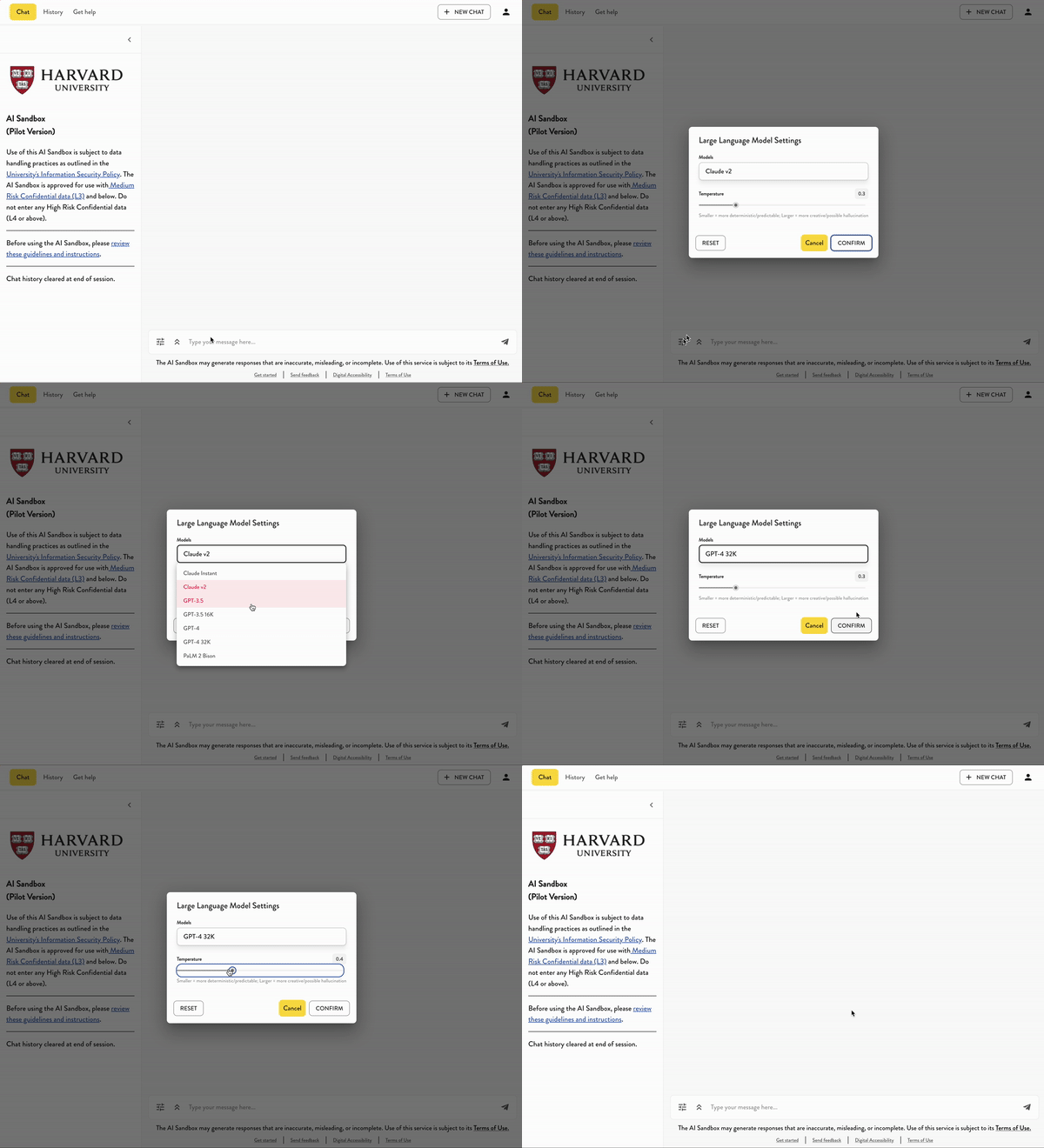
4. Choose a core theory or concept in your field
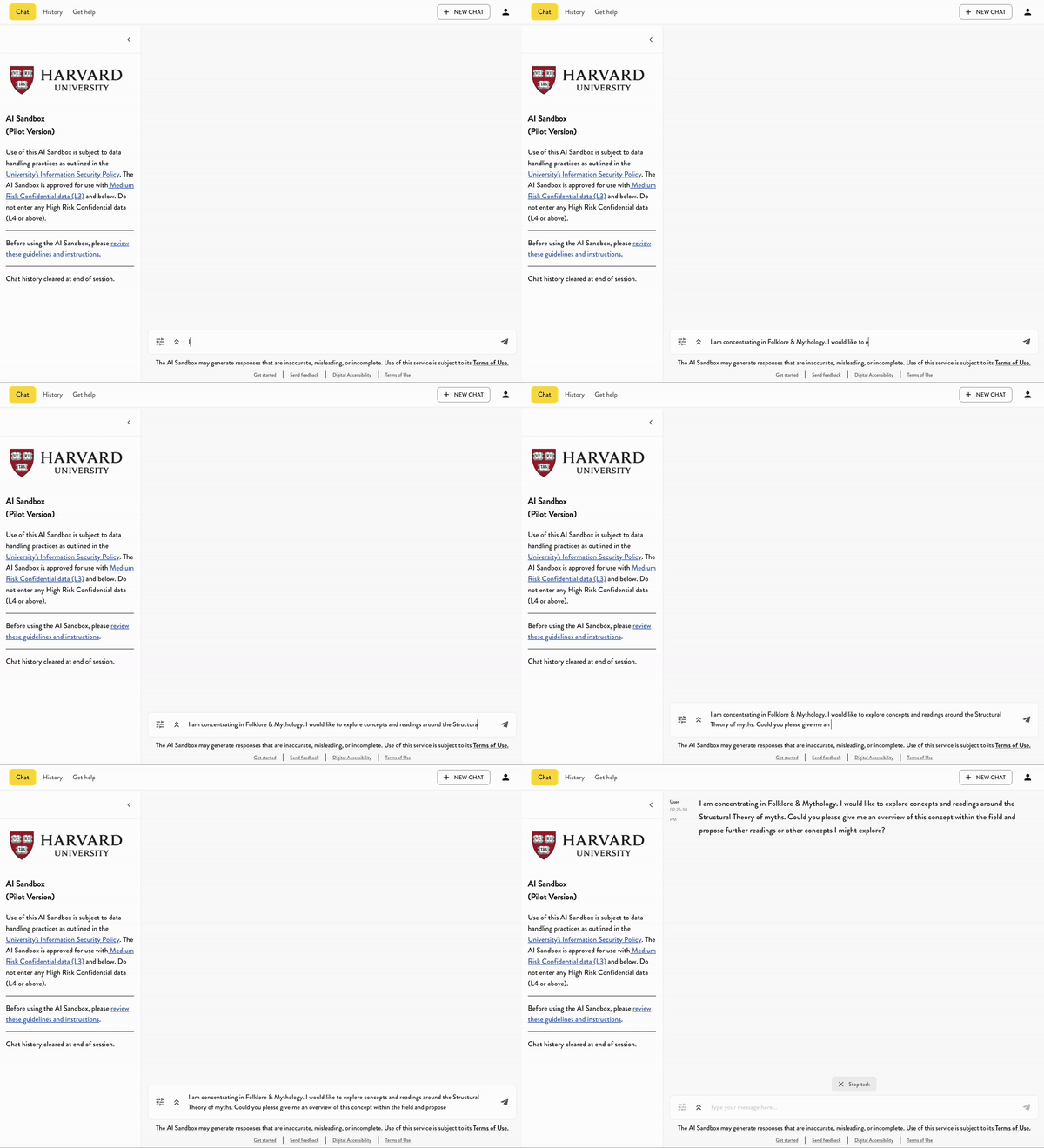
5. Prompt chatGPT to give you an overview of this field, including the key debates among academics/thinkers in this field.
* 
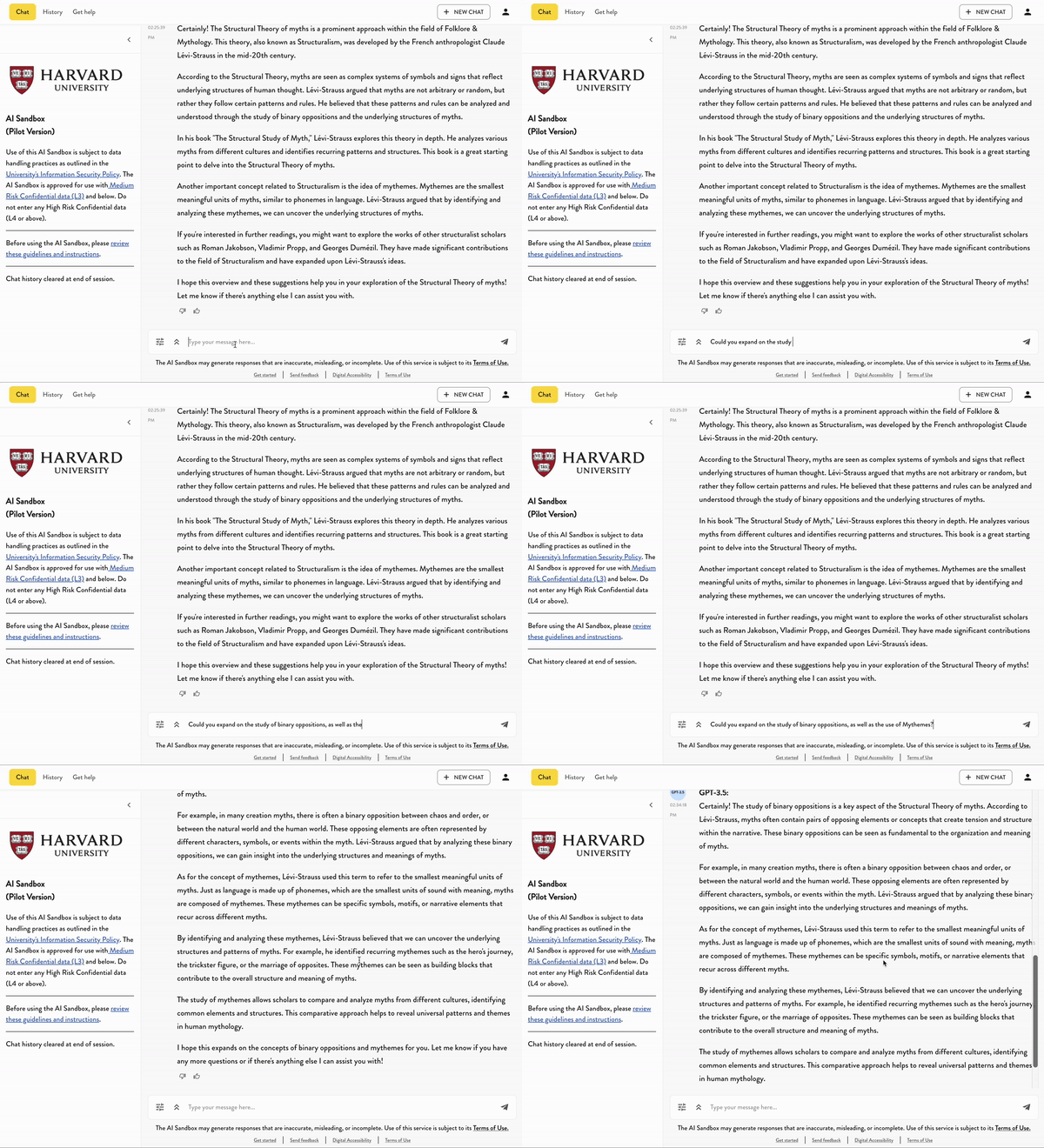
7. Ask chatGPT to give you further information about one of the sub-topics in this field, based on the information it gives you in step 4. You might specify that you'd like some working definitions that will help you do research in this field on your own.
* 
* transcript of example activity can be found at the bottom of this page
## discipline-specific use cases
As students develop baseline competency in a particular field, it can be useful for them to begin to develop proficiency in a particular topic or concept. This has conventionally been one of the goals of the academic essay, namely encouraging students to home in on a particular concept (say, from a theoretical text) and apply that concept to a work or small sampling of works. In a humanities context, this exercise typically intends to help students develop an original insight that is informed by the significant ideas that comprise the critical discourse in a particular domain. In the social sciences and sciences, it might be a means for students to analyze a given dataset and apply that understanding to solving a problem or answering a question.
---
## transcript of activity example:
* USER:
* "I am concentrating in Folklore & Mythology. I would like to explore concepts and readings around the Structural Theory of myths. Could you please give me an overview of this concept within the field and propose further readings or other concepts I might explore?""
* AI:
* "Certainly! The Structural Theory of myths is a prominent approach within the field of Folklore & Mythology. This theory, also known as Structuralism, was developed by the French anthropologist Claude Lévi-Strauss in the mid-20th century.
* According to the Structural Theory, myths are seen as complex systems of symbols and signs that reflect underlying structures of human thought. Lévi-Strauss argued that myths are not arbitrary or random, but rather they follow certain patterns and rules. He believed that these patterns and rules can be analyzed and understood through the study of binary oppositions and the underlying structures of myths.
* In his book "The Structural Study of Myth," Lévi-Strauss explores this theory in depth. He analyzes various myths from different cultures and identifies recurring patterns and structures. This book is a great starting point to delve into the Structural Theory of myths.
* Another important concept related to Structuralism is the idea of mythemes. Mythemes are the smallest meaningful units of myths, similar to phonemes in language. Lévi-Strauss argued that by identifying and analyzing these mythemes, we can uncover the underlying structures of myths.
* If you're interested in further readings, you might want to explore the works of other structuralist scholars such as Roman Jakobson, Vladimir Propp, and Georges Dumézil. They have made significant contributions to the field of Structuralism and have expanded upon Lévi-Strauss's ideas.
* I hope this overview and these suggestions help you in your exploration of the Structural Theory of myths! Let me know if there's anything else I can assist you with."
* USER:
* "Could you expand on the study of binary oppositions, as well as the use of Mythemes?"
* AI:
* "Certainly! The study of binary oppositions is a key aspect of the Structural Theory of myths. According to Lévi-Strauss, myths often contain pairs of opposing elements or concepts that create tension and structure within the narrative. These binary oppositions can be seen as fundamental to the organization and meaning of myths.
* For example, in many creation myths, there is often a binary opposition between chaos and order, or between the natural world and the human world. These opposing elements are often represented by different characters, symbols, or events within the myth. Lévi-Strauss argued that by analyzing these binary oppositions, we can gain insight into the underlying structures and meanings of myths.
* As for the concept of mythemes, Lévi-Strauss used this term to refer to the smallest meaningful units of myths. Just as language is made up of phonemes, which are the smallest units of sound with meaning, myths are composed of mythemes. These mythemes can be specific symbols, motifs, or narrative elements that recur across different myths.
* By identifying and analyzing these mythemes, Lévi-Strauss believed that we can uncover the underlying structures and patterns of myths. For example, he identified recurring mythemes such as the hero's journey, the trickster figure, or the marriage of opposites. These mythemes can be seen as building blocks that contribute to the overall structure and meaning of myths.
* The study of mythemes allows scholars to compare and analyze myths from different cultures, identifying common elements and structures. This comparative approach helps to reveal universal patterns and themes in human mythology.
* I hope this expands on the concepts of binary oppositions and mythemes for you. Let me know if you have any more questions or if there's anything else I can assist you with!"
 Sign in with Wallet
Connect another wallet
Sign in with Wallet
Connect another wallet