# Explain or illustrate a foundational course concept
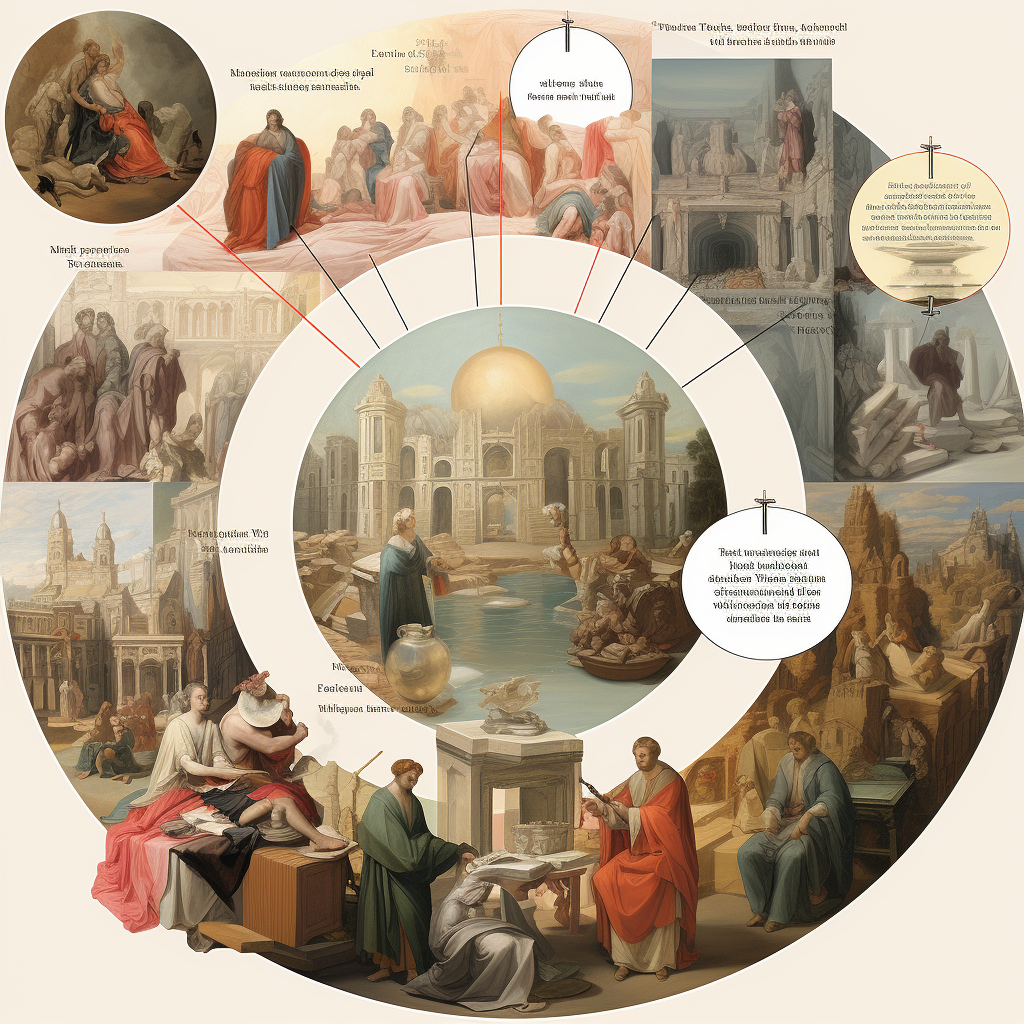
prompt used: "A diagram explaining or defining terms"
## description
Students could use an AI tool to illustrate or explain a foundational course concept, potentially helping them to develop more proficiency in the foundational topics in a course. In the case where they're using an AI tool to make an illustration, students could experiment with creating visual representations of course content, reflecting simultaneously on the aspects of the prompt that seemed to inform the generated image and revising their prompt as necessary to bring forward more salient details.
## activity
### using Harvard AI Sandbox
1. Log in to the Harvard AI Sandbox
2. From search bar at the bottom of the page, specify whichever AI tool you'd like to use.
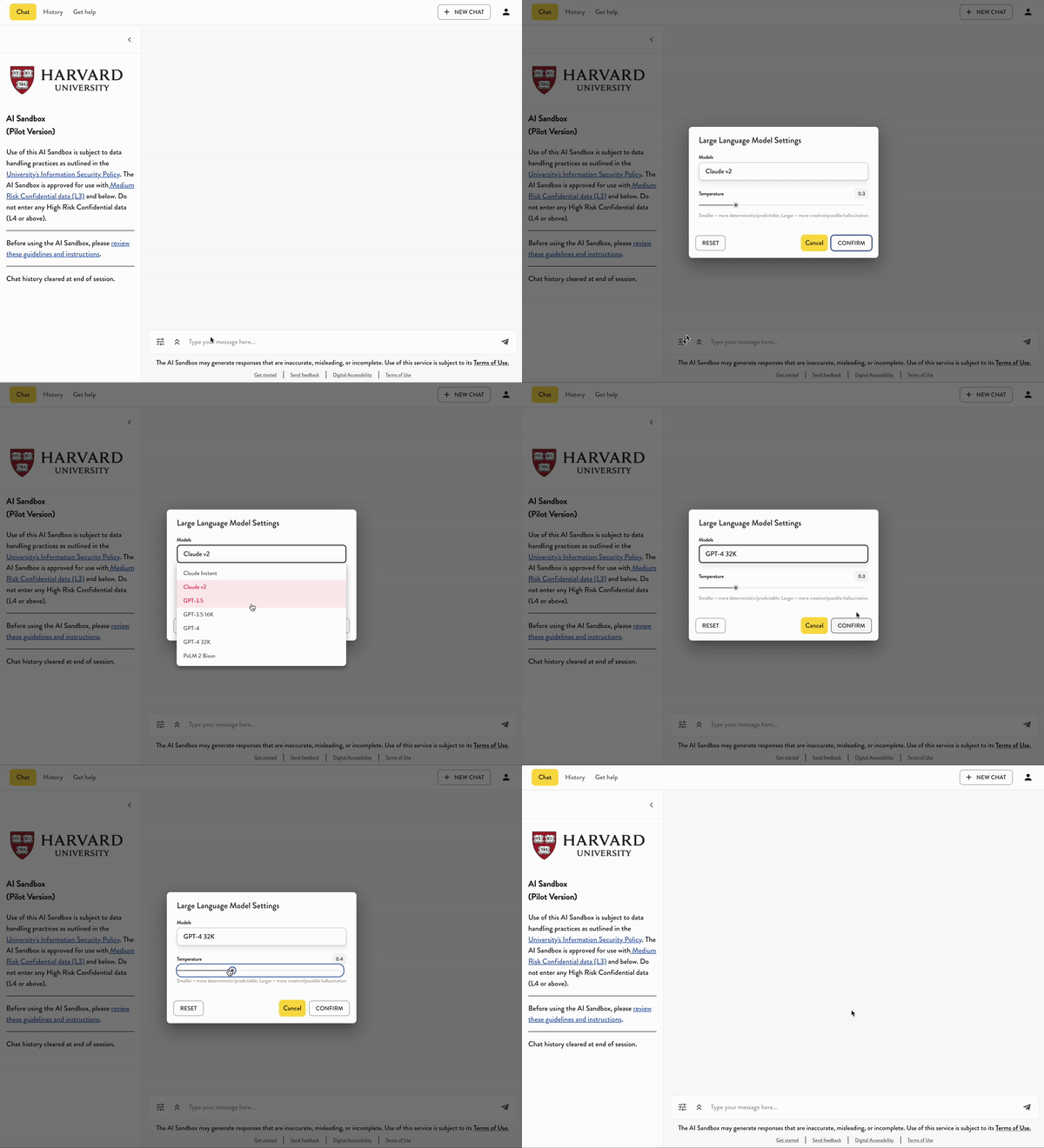
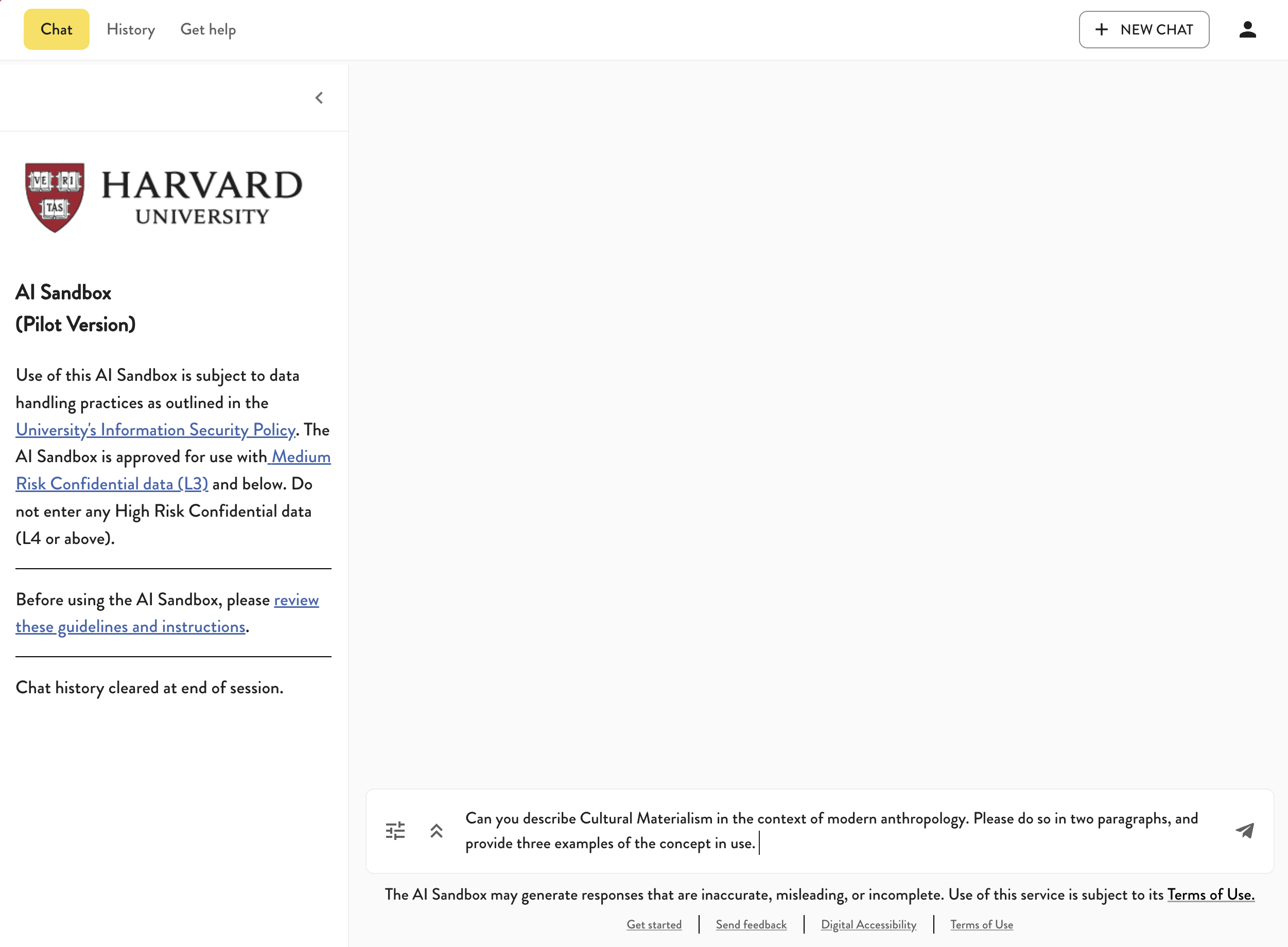
3. Ask the AI tool to explain a foundational concept from your discipline to you, specifying the number of paragraphs and examples you'd like.
### using image generator
1. There are several free image generators available:
* Playground AI
* This option is probably the most accessible, it has up to 1000 images per day, per account. While it has some more advanced tools available to it, it is extremely easy to use without needing them or much of a guide.
* DALL-E
* This option is probably the most popular, and certainly simple to use. It's just a prompt or image uploaded and it gives 4 images in response. It is fairly fast in comparison to some of the options, but it only allows 15 image credits per month.
* Bing Chat
* This option is extremely new, it's an image generator inside an AI Chatbot, where you can have a conversation in which you form your prompt in collaboration with the image generator. The limit is for 30 "turns" per conversation, and a turn is considered either a message request or an image request, so up to 30 images. It’s good to note that this option is currently still frequently under heavy use and occasionally puts the user on a waitlist.
However, we tend to prefer Midjounrney, which is offered as a bot within Discord.
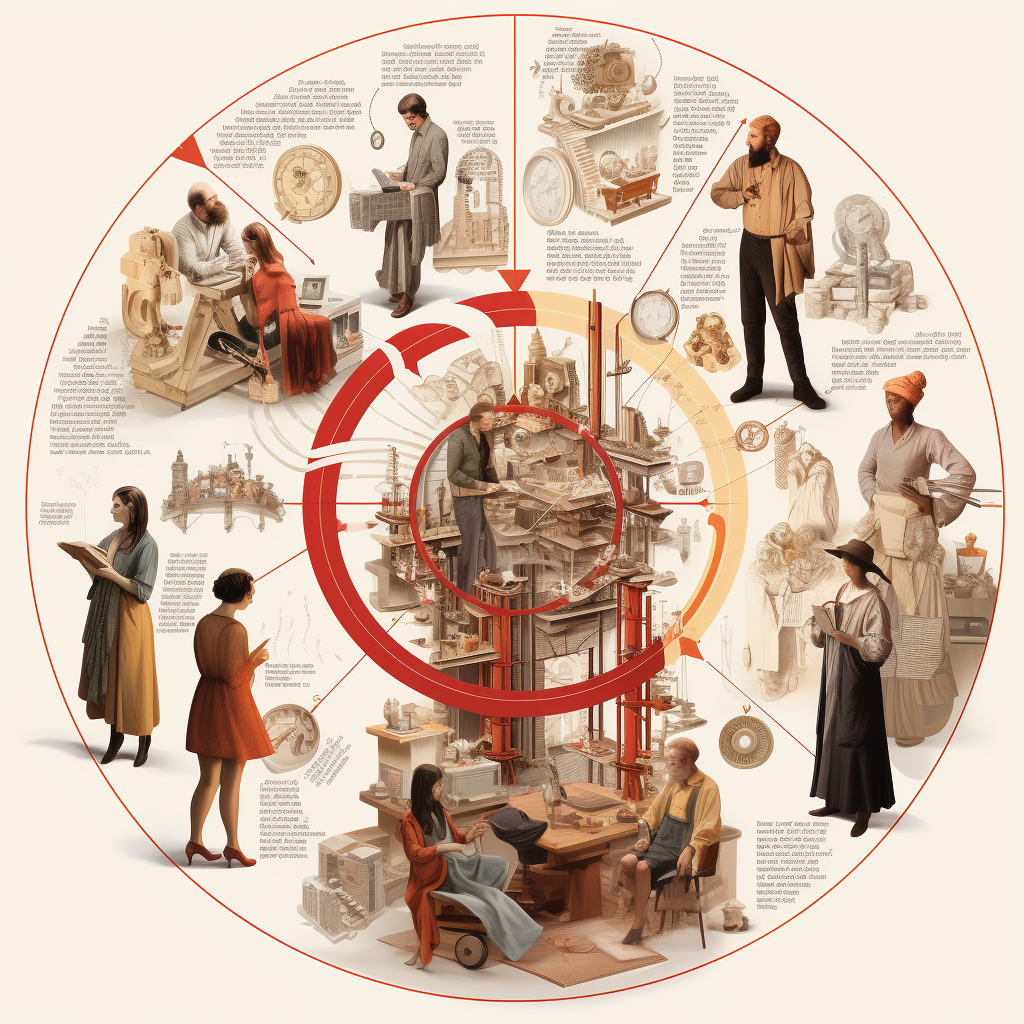
3. Ask the AI tool to illustrate/make an image that represents a foundational concept from your discipline to you, describing what you'd like this image to include.
* We used Midjourney to create this:
---
## Transcript of activity example:
* USER:
* Can you describe Cultural Materialism in the context of modern anthropology? Please do so in two paragraphs, and provide three examples of the concept in use.
* AI:
* Cultural Materialism is a theoretical framework within modern anthropology that seeks to understand the relationship between culture and material conditions. It emphasizes the idea that cultural practices and beliefs are shaped by the material resources available to a society. According to Cultural Materialism, the material infrastructure of a society, such as its technology, economy, and environment, influences the social and cultural aspects of that society.
One example of Cultural Materialism in use is the study of food production and consumption. Cultural Materialists analyze how the availability of certain resources, such as agricultural land or technological advancements, shape the cultural practices and beliefs surrounding food. For instance, in societies with abundant agricultural land, food may be seen as a symbol of abundance and social status, while in societies with limited resources, food may be valued for its practicality and sustenance.
Another example is the study of architecture and urban planning. Cultural Materialists examine how the material conditions of a society, such as the availability of building materials and technological advancements, influence the design and layout of cities and buildings. For example, in areas with limited resources, architecture may prioritize functionality and durability over aesthetics.
Lastly, Cultural Materialism can be applied to the study of technology and innovation. Cultural Materialists explore how the material conditions of a society shape the development and adoption of new technologies. For instance, in societies with abundant natural resources, there may be a greater emphasis on resource-intensive technologies, while in societies with limited resources, there may be a focus on more sustainable and efficient technologies.
In summary, Cultural Materialism in modern anthropology focuses on understanding how the material conditions of a society influence its cultural practices and beliefs. It can be applied to various aspects of human life, such as food production, architecture, and technology, to gain insights into the relationship between culture and material resources.
 Sign in with Wallet
Connect another wallet
Sign in with Wallet
Connect another wallet