---
tags: ai
---
# explain paper
* [link](https://www.explainpaper.com/)
## description
* Generic description:
* auto-sparknotes for research papers. "The Fastest Way to Read Research Papers." Upload a paper, highlight confusing text, get an explanation. Goal of making dense papers easy to read.
* User notes:
* Seems to work well for hard papers, it basically reads the whole thing and then you highlight a small section you don't understand and it tries to explain it
* One shortcoming is it often does that thing where it explains a section in its own terms, so it will define words you have trouble with with the same words which doesn'y really help that much and kind of just restates the original
* One way to help with this is to change the level of the explanation, you can go "5 year old", middle schooler, high schooler, undergrad, graduate, and expert
* Also an important ability to ask follow up questions
* However, it is always necessary to remember that this is run on GPT and it can always be wrong and misrepresent information so it is still not at the level where you can take its word for everything
* You also have the ability to outline the whole paper, but this requires a pro version I was not able to test
## tutorials
Tutorial: (https://www.youtube.com/watch?v=BHT68uqGAUQ)
## prompting tips
Ask for descriptions of different levels, the more simple can miss the point but help define some of the complex vocab which it will just restate at higher levels
* Ask follow up questions, ask to define terms, quote confusing sections back to it
* Always be wary that the follow up is just like asking ChatGPT, so it can be and often is wrong
## examples of creations
I asked it to read a particularly dense reading from Karl Marx's selected writings, specifically from his early "economic and philosophical manuscripts" where he first defines key terms like alienation and exploitation
* I asked it more specifically on sections describing "alienated Labour", which I found very difficult to understand when I first read it
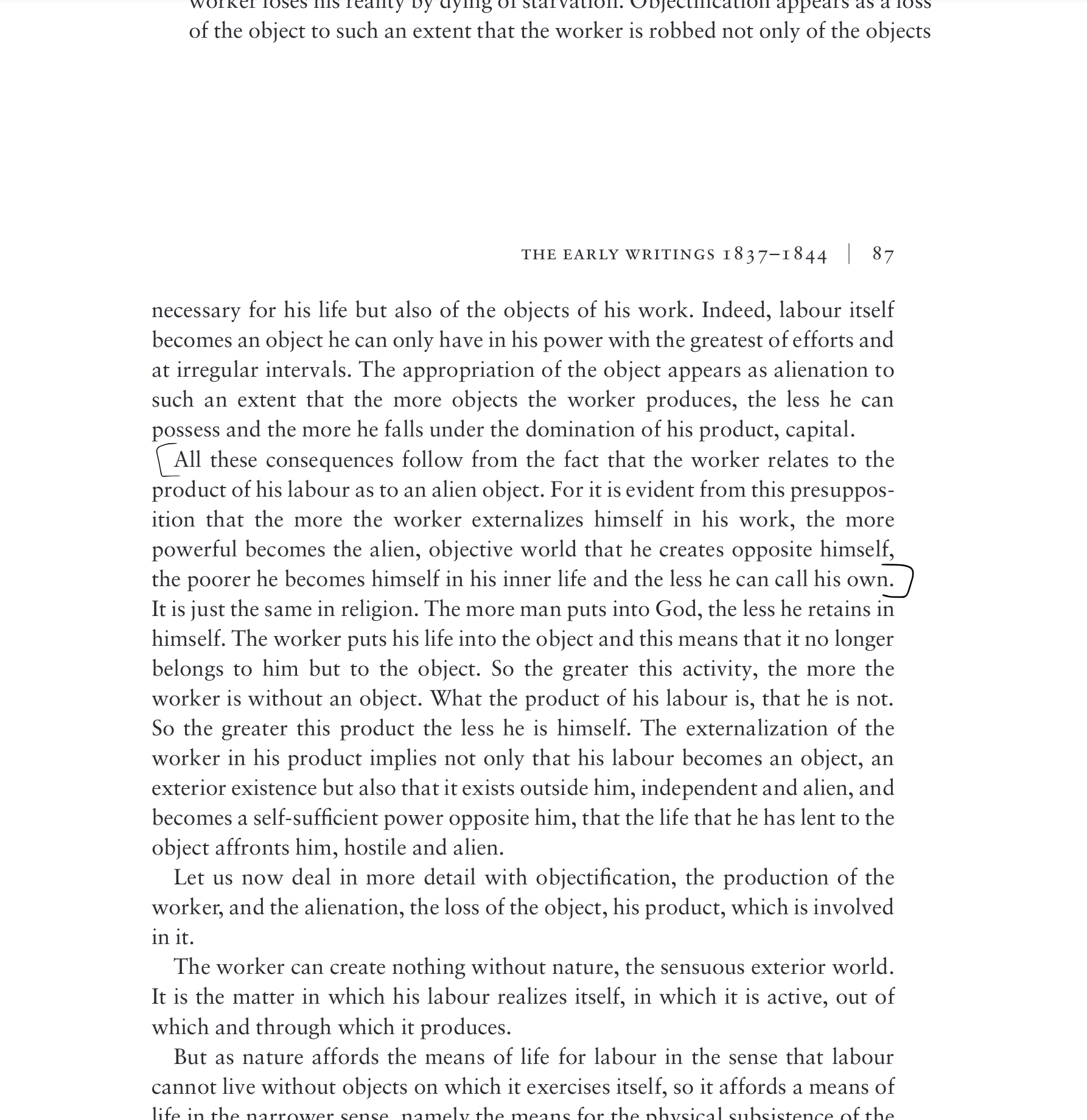
* I went in depth on this small exerpt, which I found difficult to understand
First I asked for an explanation at a middle school level:
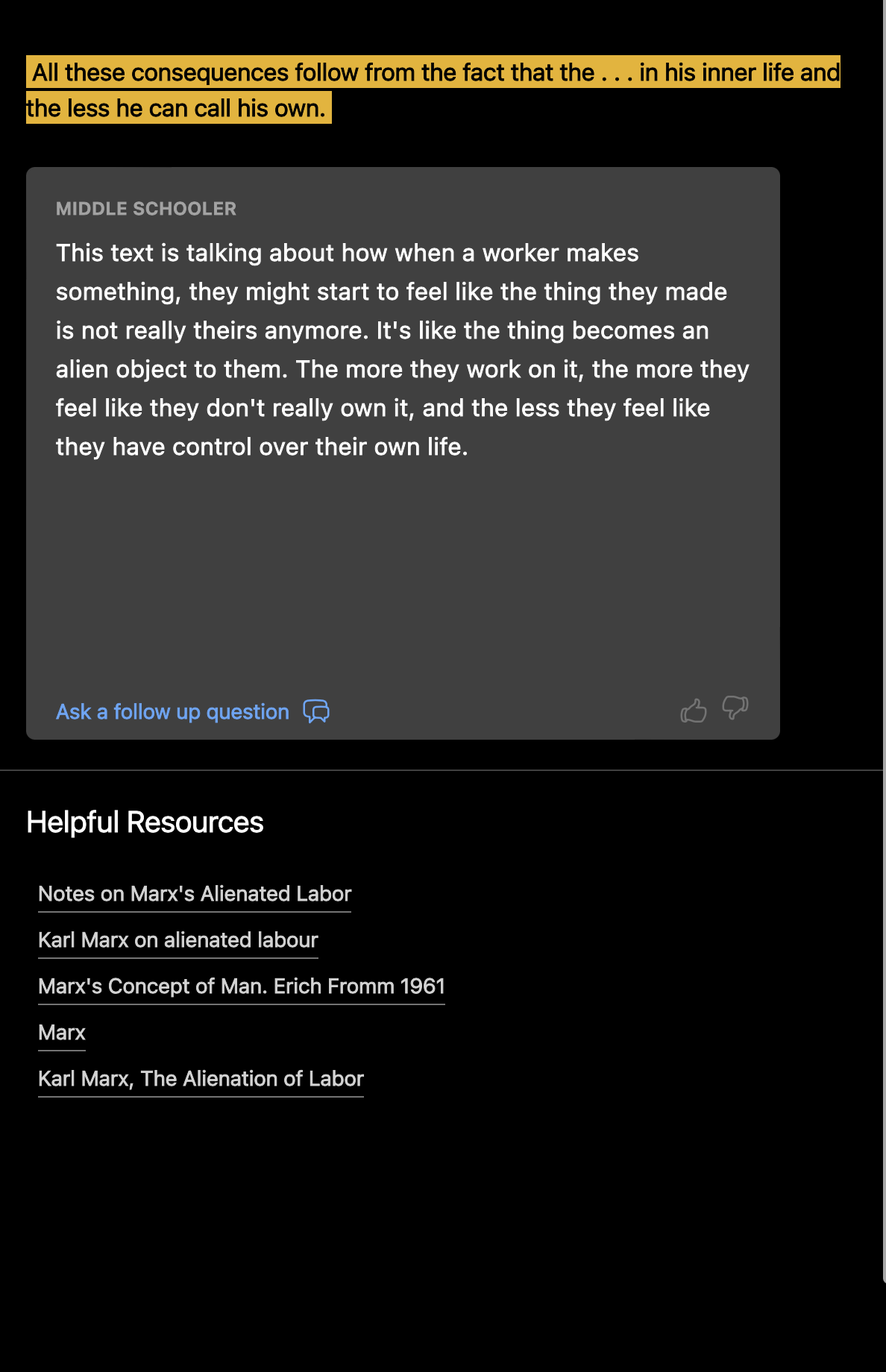
* This allowed me to understand the basic concept without any complex terminology
I then asked for an explanation at an undergrad level to try to actually understand the complex idea
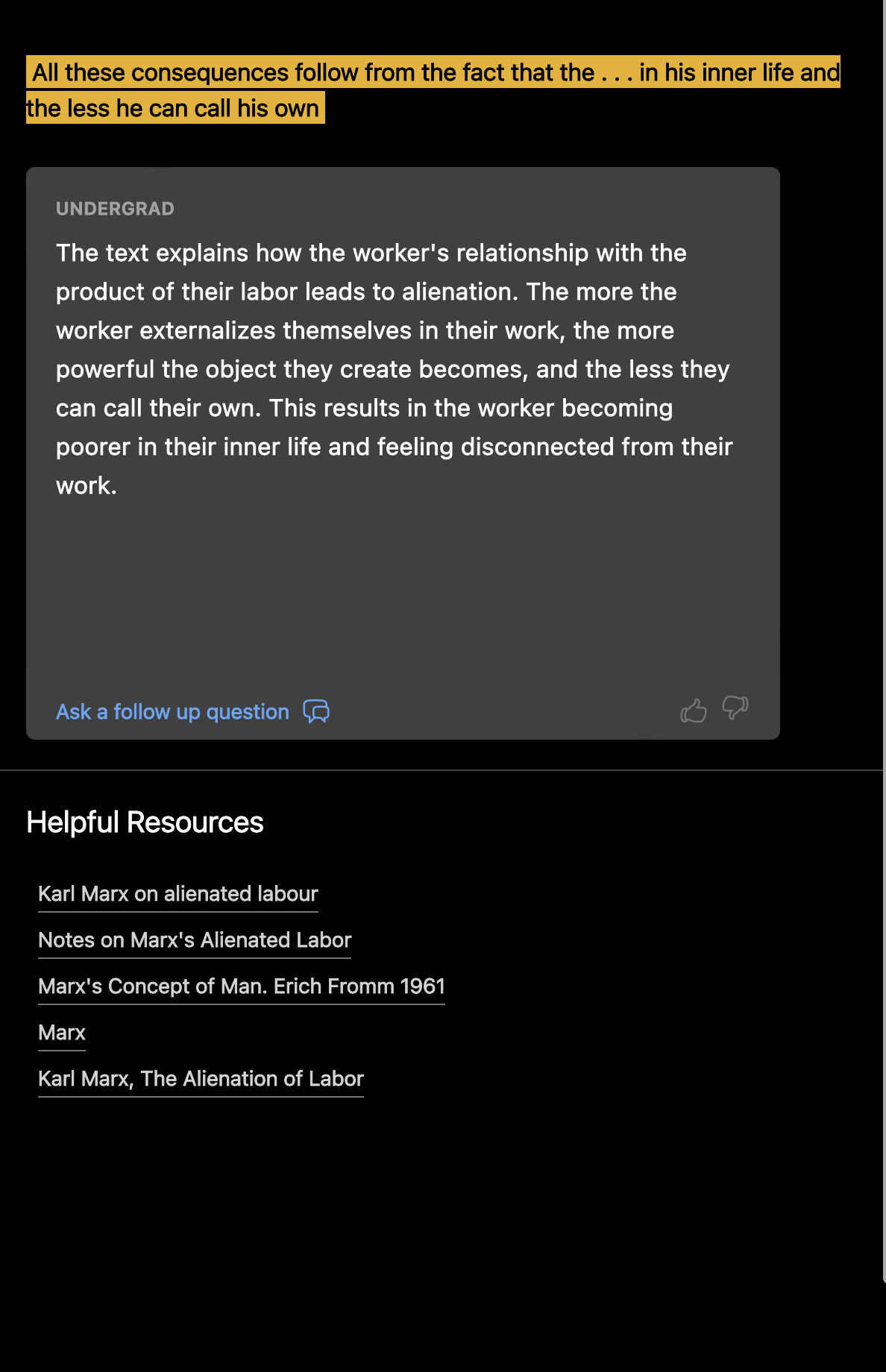
* This would have been difficult to understand without the first, simplistic explanation, but with both it provided the necessary complexity along with the simple idea
* Then I was able to ask follow up questions to fill in the gaps
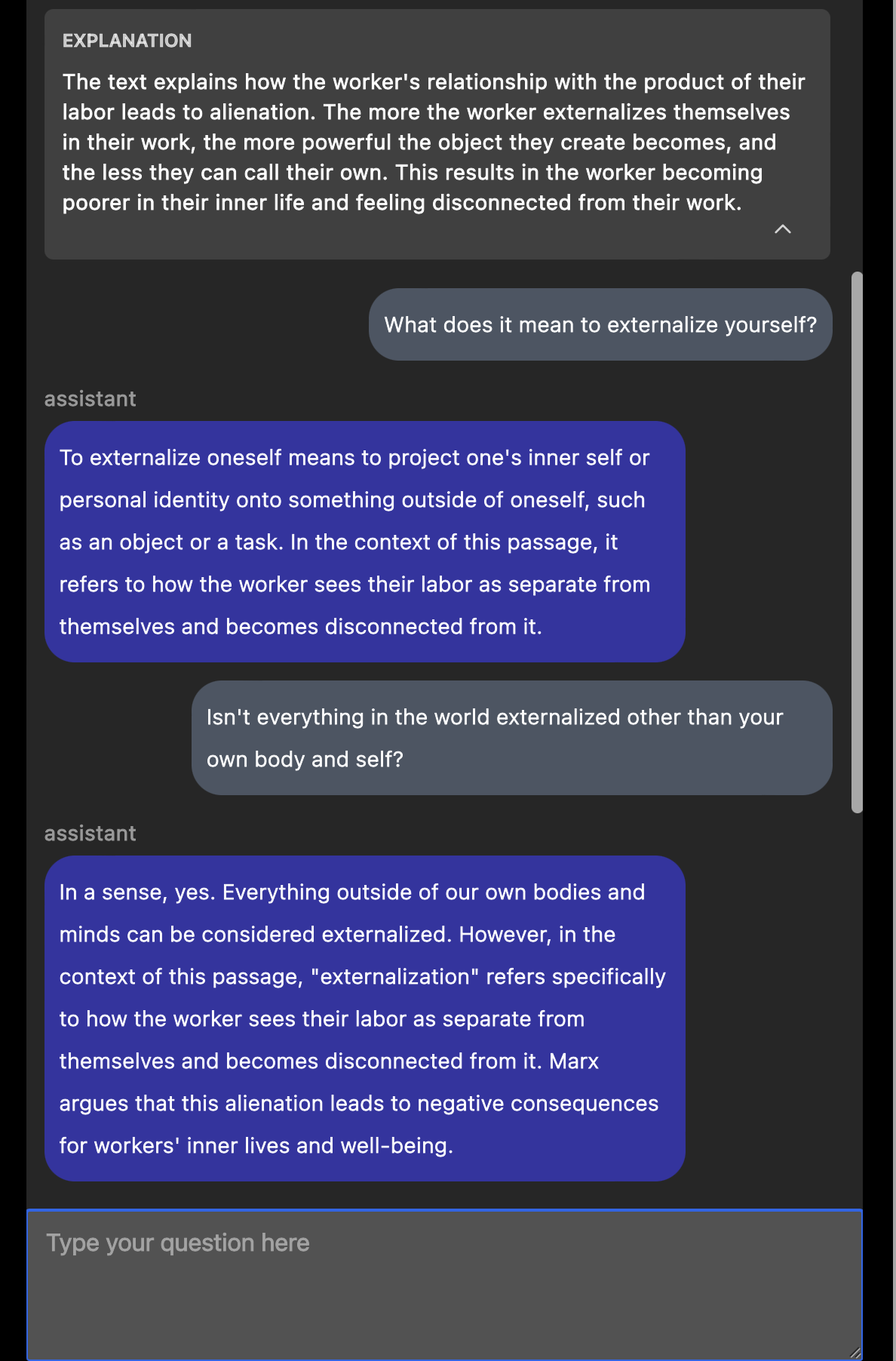
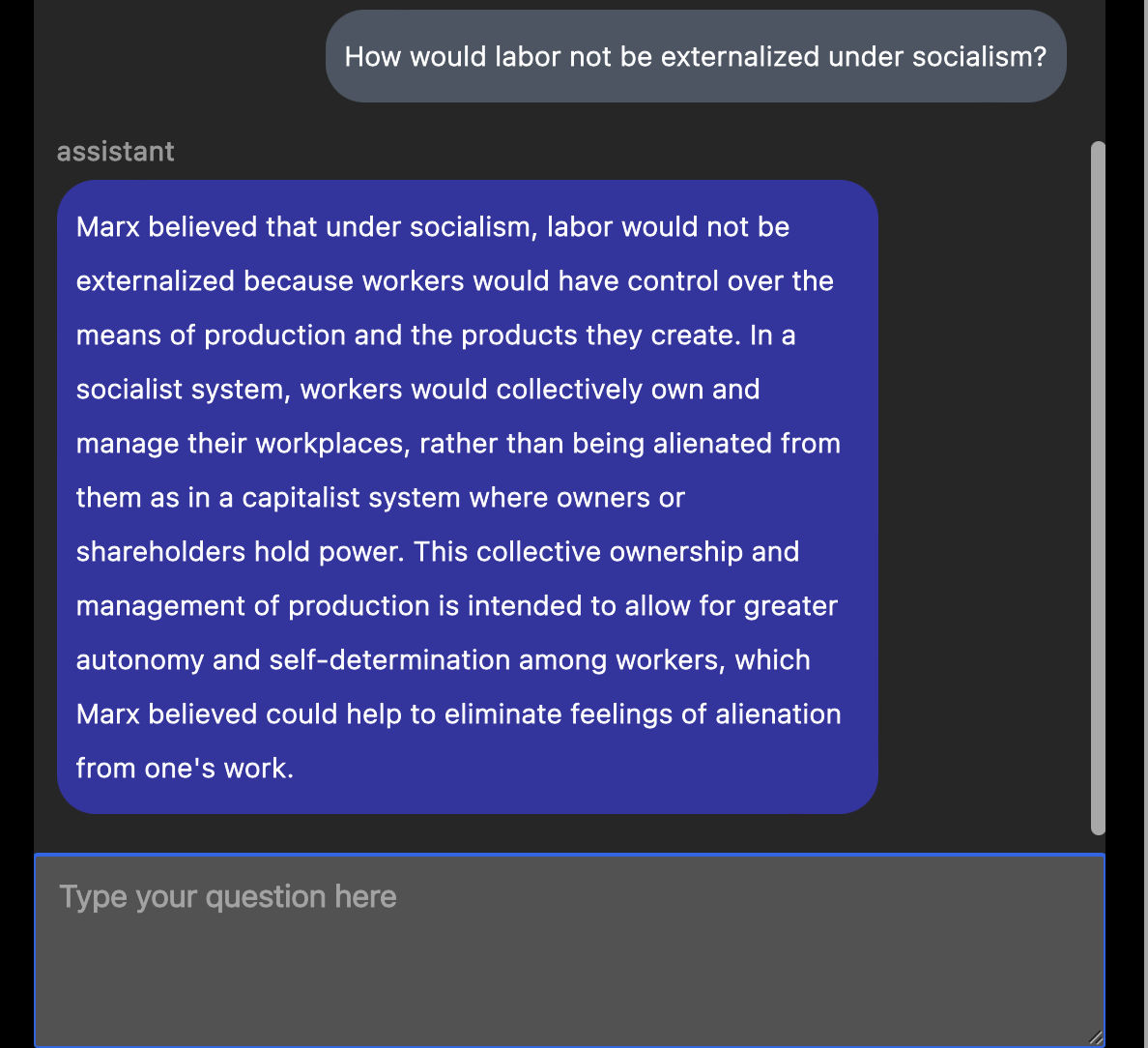
As a whole, this tool allows a student to work their way up through levels of complexity in dense texts and ask important follow up questions along the way
## pedagogical use-case
The pedagogical use here is pretty clear. For especially dense readings in most fields, from social sciences to natural sciences, it provides simplistic explanations of complex content, and then allows the students to increase the level of complexity of the explanation to understand the actual idea.
As an undergrad, I know that sometimes when a text seems too difficult to comprehend, it is easy to just give up and try to get the idea in lecture. However, with this tool a student can work through these complex ideas and dense language level by level (see example above).
* The greatest danger with this tool is its propensity to misrepresent information and potentially get stuff wrong. Multiple times I have realized ChatGPT is just kind of making up parts of a text that aren't actually there, and this uses the same model, especially in the follow up question section
* Students must be wary of this, because there is no way to research whether a source is reliable like in traditional research methods
* In my opinion tools like this must be accompanied with technological literacy training and working literacy to teach students to check these facts and not just take the tool at its word
* Another potential worry for teachers would be students avoiding reading the actual text to use these tools, but I don't see this as legitimate. As an undergrad who focuses in the Social Sciences and Humanities, I know that students who don't want to read the text won't, and that tools that allow simpler explanations only increase accessibility and allow students who can't read the whole thing to get at least some understanding.
* Also, this tool is much more effective than traditional summarizing tools like sparknotes which are stagnant because its dynamic nature allows students to work up in levels of complexity and actively engage with the information, instead of passively reading simplified summaries.
* This encourages synthesization of content and allows students to push back on terms and phrases they don't understand instead of just memorizing and regurgitating explanations they do not actually understand.
 Sign in with Wallet
Connect another wallet
Sign in with Wallet
Connect another wallet