# Parsing a reading in the humanities

prompt used: "ask questions of a reading, talking to a reading; create visual representations of key concepts in the open-access article"
## description
Students can use a generative AI tool to produce quick summaries of a reading, as a form of reference material. Students can submit an open-source article and ask for a summary of the piece, specifying pertinent themes, concepts, and other content the student deems necessary or helpful. Using this summary, the student could prepare for class discussion by formulating questions on their own or even using the AI tool to help develop questions.
Depending on the course goals, this type of engagement with AI might give students too much content, or it might mitigate against their deep engagement with course readings. You might want to set guidelines for appropriate or inappropriate use.
## activity
1. Log into chatGPT using the Harvard AI Sandbox
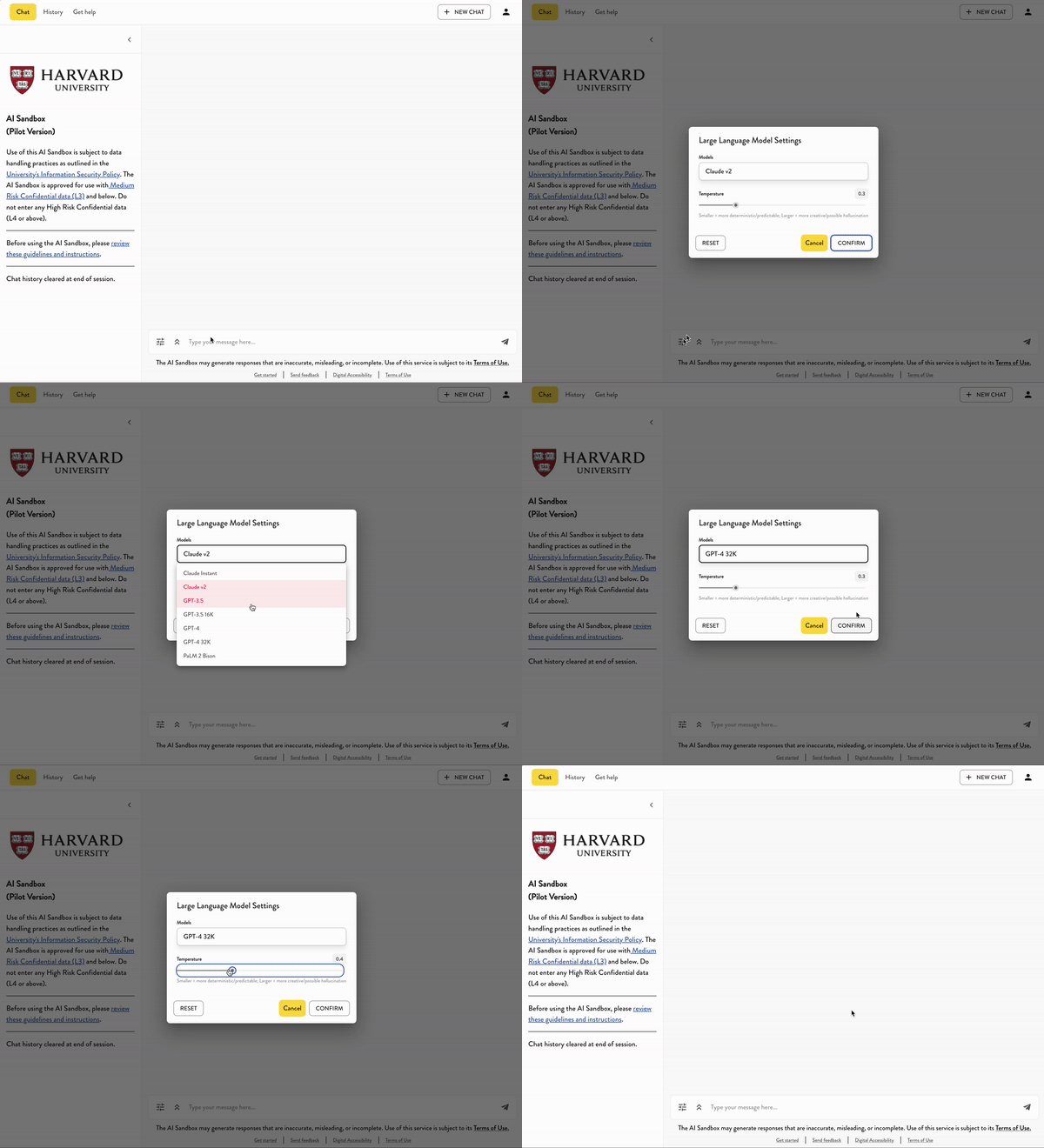
2. From search bar at the bottom of the page, specify that you'd like to use GPT 4.
* We recommend selecting GPT-4 32K for the best results, especially with long prompts
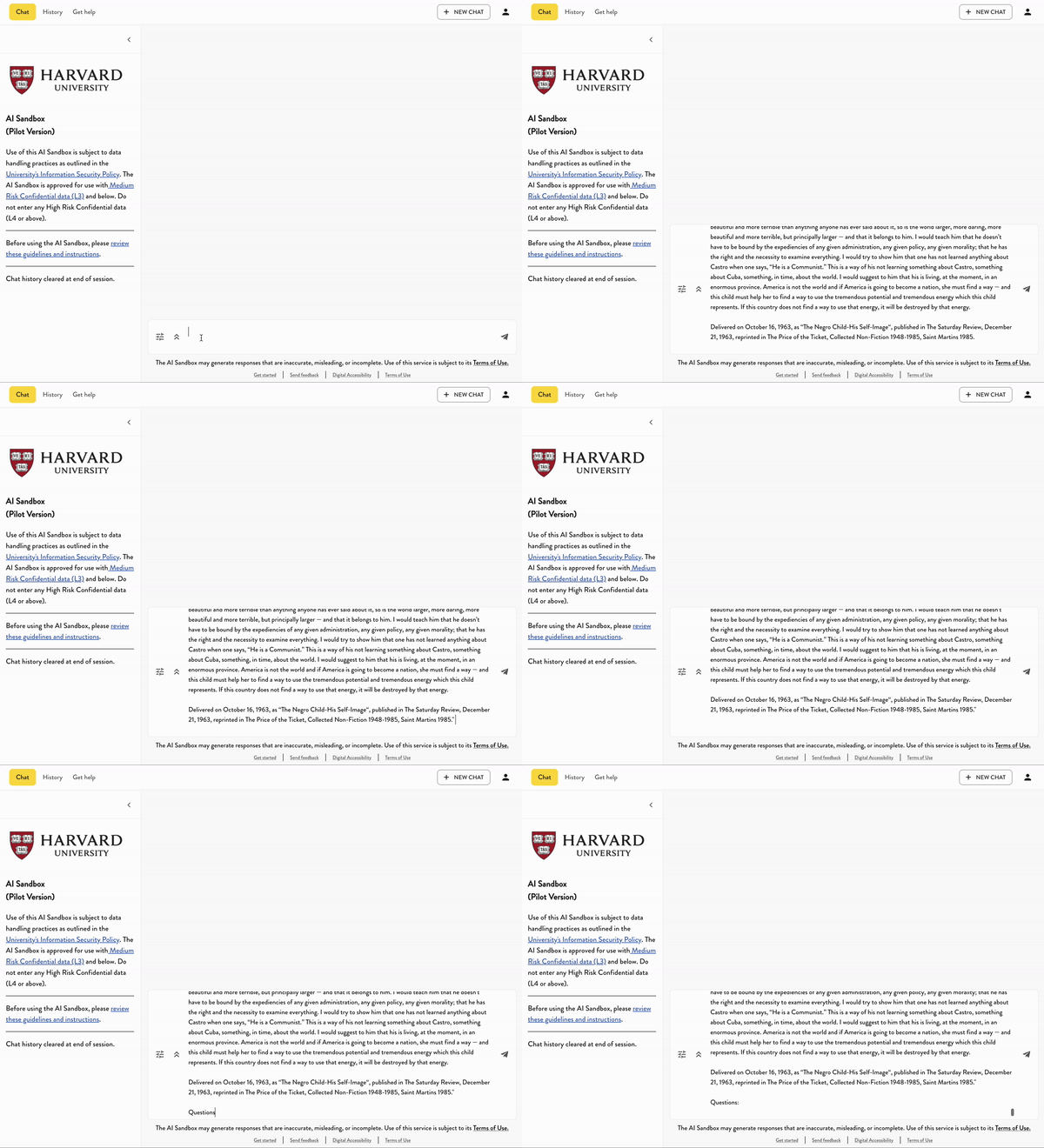
4. Hit Shift + Enter to type questions below the quoted text.
* If you only hit Enter or Return, this will automatically submit your prompt.
* You can also add three ticks (''') to indicate a paragraph break if you prefer.
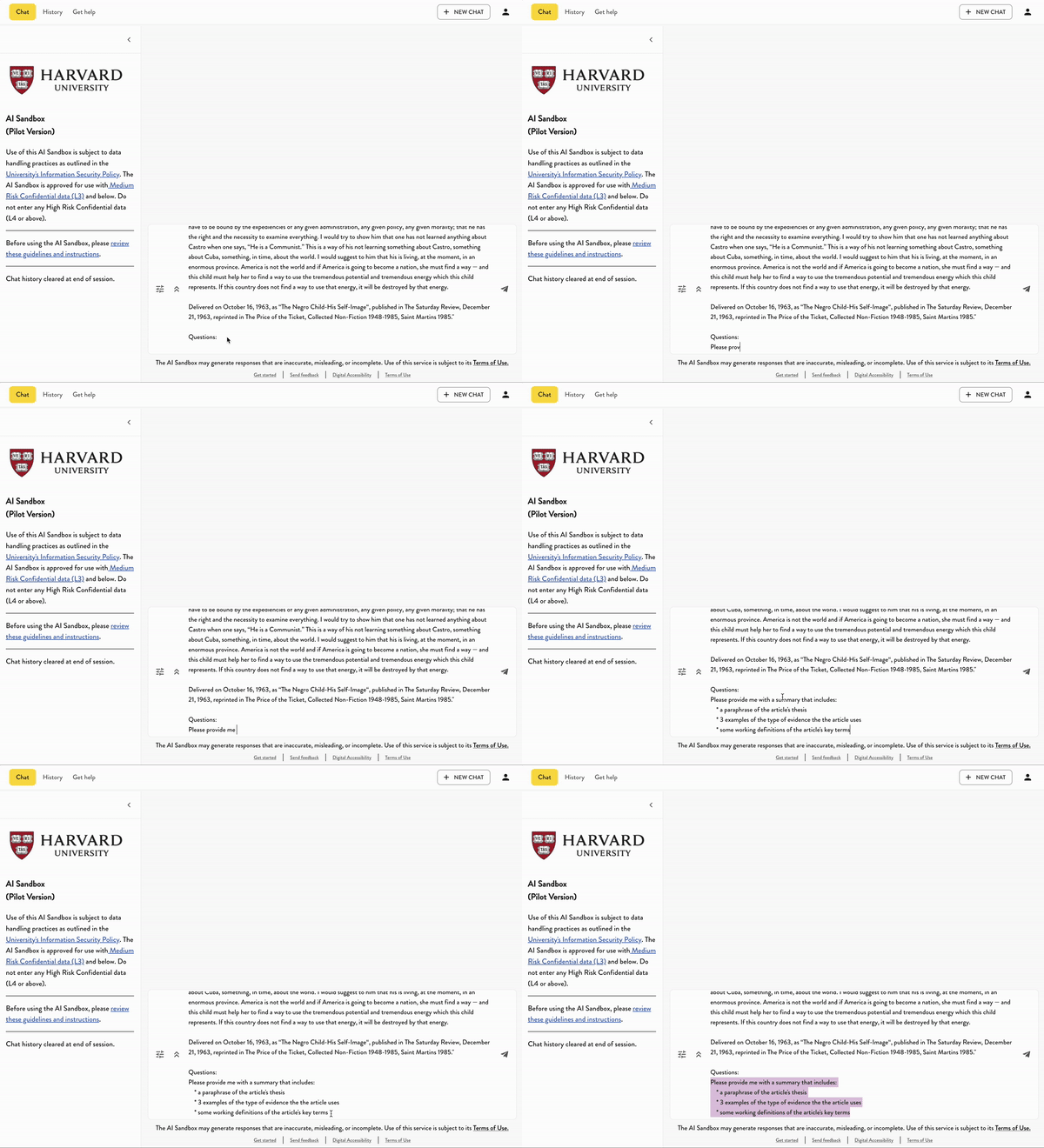
5. Ask chatGPT to provide you with a summary that includes:
* a paraphrase of the article's thesis
* 3 examples of the type of evidence the the article uses
* some working definitions of the article's key terms
6. Wait for the interface to give you a response.
* This may take a moment.
* You may then copy and paste the response for your own use or reference.
7. Once you have a response from chatGPT, you can prompt it with follow-up questions about the reading.
---
## Transcript of activity example:
Submitted Reading Example: [A Talk to Teachers, James Baldwin. October 16, 1963](https://www.zinnedproject.org/materials/baldwin-talk-to-teachers)
### chatGPT 4 response, as prompted by questions in the activity:
* Thesis Paraphrase:
* The author posits that the American educational system and societal structures are inherently designed to perpetuate a status quo that systemically marginalizes and oppresses African Americans. The author contends that education should ideally be a conduit for nurturing independent thought, fostering a sense of social responsibility, and challenging societal norms and prejudices. However, it often serves to reinforce these very prejudices and uphold societal norms that are detrimental to marginalized groups. The author advocates for a radical reassessment and transformation of these systems, urging individuals, particularly African Americans, to challenge and strive to reform the societal structures that have been unjustly arrayed against them.
* Evidence:
* **Historical Context**: The author invokes the historical context of the Third Reich as an exemplar of how education can be weaponized to serve the nefarious aims of a society, even when those aims result in dehumanization and destruction.
* **Personal Experience**: The author utilizes his personal experiences and observations as a lens to highlight the stark racial and economic disparities that pervade American society. For instance, his first encounter with New York City and the glaring contrast between Harlem and downtown areas serve as potent illustrations of these disparities.
* **Societal Observations**: The author underscores the pervasive myths and misconceptions about African Americans that are propagated by American society. He argues that these harmful stereotypes are perpetuated and reinforced by key societal institutions such as the education system and the media.
* Key Terms:
* "**Revolutionary Situation**": This term refers to a state of societal affairs where radical change becomes a necessity due to the prevalence of systemic injustices and inequalities.
* "**Paradox of Education**": This term encapsulates the contradiction that while education should ideally serve as a tool for fostering independent thought and social responsibility, it often ends up reinforcing societal norms and prejudices.
* "**Schizophrenic**": In this context, the term refers to the psychological dissonance experienced by African Americans who are indoctrinated to believe in the American ideals of liberty and justice, while simultaneously being subjected to racism and discrimination.
* "**Negro Revolution**": The author uses this term to refer to the civil rights movement and the broader struggle for racial equality in America. It encapsulates a collective pushback against systemic racial oppression."
 Sign in with Wallet
Connect another wallet
Sign in with Wallet
Connect another wallet