---
tags: cd
---
# RLL Media & Design Fellow - Ignacio Azcueta
### Projects
Ignacio has taken on a range of projects that use audio, visual, textual, and other modes. Ignacio has been excited to learn different media and tools and support departmental priorities as they arise. Some of Ignacio's projects included:
**Supporting AFVS 169S Remapping Latin American Cinema: Chilean Film/Video 1968-2022**
This class explores multiple perspectives on Chilean cinema from 1968 to today, looking closely at the political engagement of documentary and narrative filmmakers while also exploring the rich dialogue between film and the other arts that has long animated filmmaking in the Southern Cone nation. A key goal is to locate Chile on an alternate map of Latin American cinema defined less by national borders than by transnational currents at work across the region.
This hybrid making and film studies class co-taught by Chilean filmmaker Dominga Sotomayor and film scholar Haden Guest will include filmmaker visits and interactive workshop.
As part of his work for this course, Ignacio developed his skills in video editing by learning how to add subtitles to some of the course's films. This made the films more accessible for students, while it also allowed the course to introduce students to lesser-known films.
**Podcast Workshop for Spanish 50**
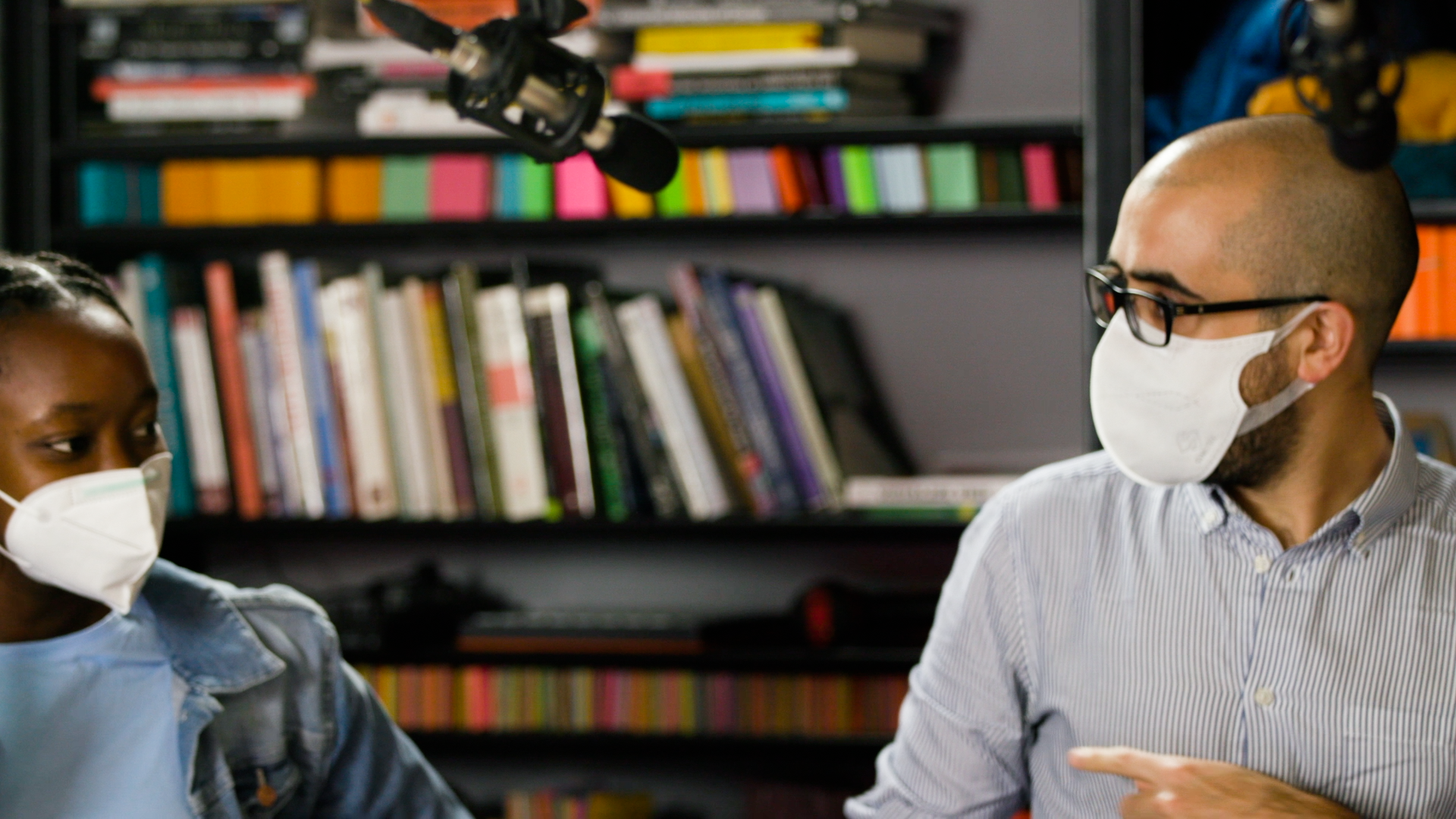
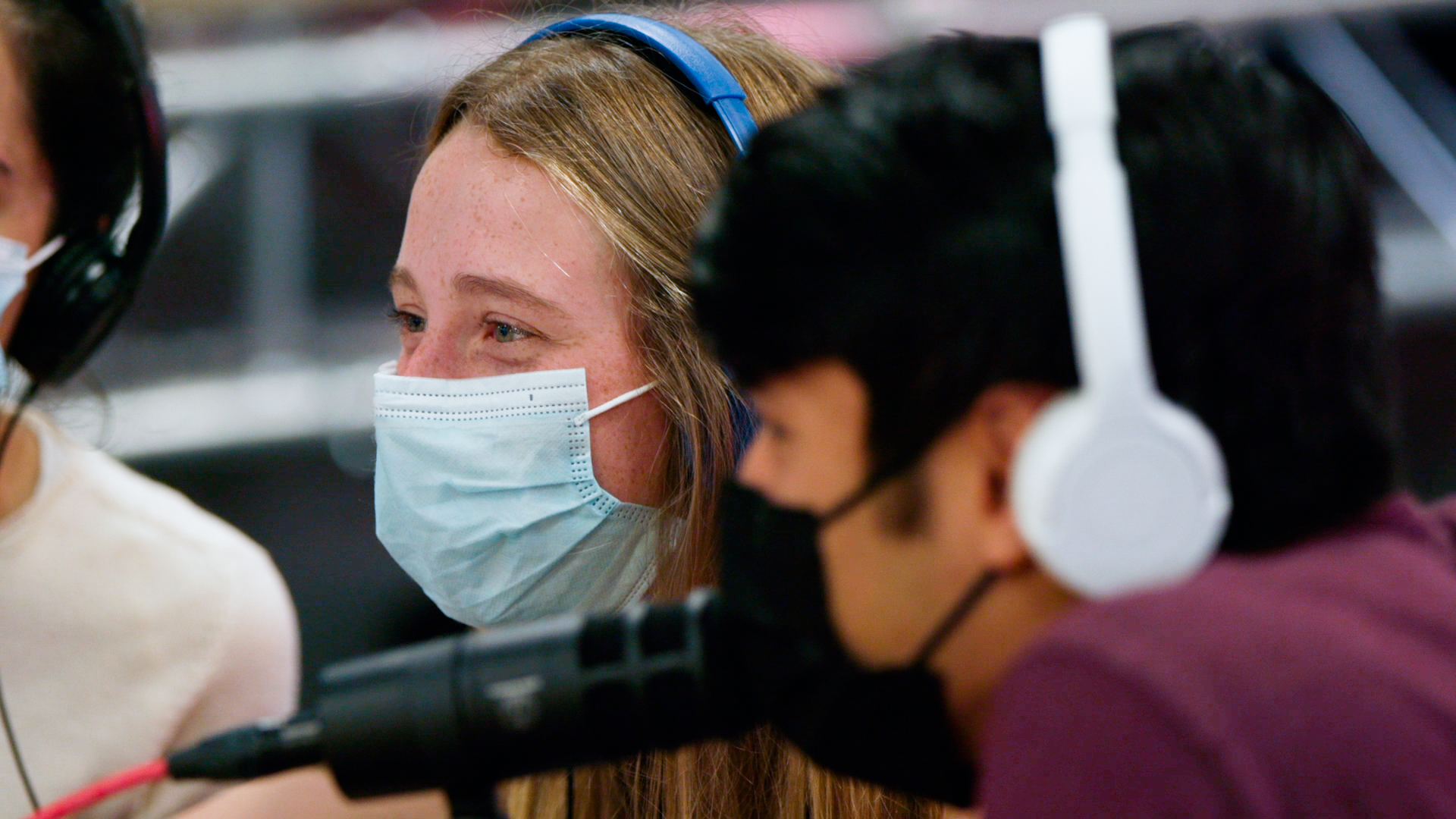
Ignacio organized a podcast workshop for Professor Adriana Gutiérrez's Spanish 50: Creative Writing and Performance course. In a course assignment, students were tasked with using poems and short stories assigned in the course as a way of imagining a conversation that might take place between the characters found in these texts. Students then created a podcast episode that was this imagined conversation between characters, allowing students to discuss themes ranging from love, death, politics, and beyond. Ignacio's podcasting workshop introduced students to the basics of audio capture and editing.
**The Future Thinking Series**
Ignacio developed the Future Thinking Series, a collaboration with Nicole Mills, Senior Preceptor in Romance Languages and Literatures. As part of this project, Ignacio planned a series of workshops that he also recorded and edited. The Future Thinking project comprises a series of conversations around urgent topics in teaching: the future of interaction, the future of translation, the future of the textbook, and the future of the classroom. Ultimately, the short clips Ignacio has edited from these discussion will be uploaded to the RLL Facebook page.
The Future Thinking series featured four roundtables.
The first, "The future of interaction," featured guest speakers Dr. W. Lewis Johnson, Michael Wheeler, Chris Dede, and it was moderated by Nicole Mills. This roundtable asked the question: How will new and emerging technologies transform interactions in the language classroom? What are their implications for the future of language teaching and learning? This Future Thinking discussion session included panelists from various academic backgrounds (linguistics, computer science, education, and negotiation) who discussed their perspectives on the future of interaction. This panel was followed by a discussion of the potential implications of emerging technologies on the future of interaction in the teaching and learning of languages.
The second, "The future of translation,"" featured guest speakers Sonia Colina, Isabelle Drewelow & Xabier Granja Ibarreche, Holly Langstaff & Charlotte Ryland. Emily Linares served as moderator. What does it mean to be able to translate? Within the language classroom, translation was once understood as a means to drill grammatical rules. The adoption of communicative approaches largely moved translation “to the dungeons of language teaching history” (Pennycook, 2008, p. 35). However, researchers have begun to envision a brighter future for translation in language education. Panelists in this Future Thinking session discussed their perspectives on the evolving place of translation in language learning in secondary and higher education. The panel featured a service-learning project and creative multilingual initiatives that involve translation, followed by a discussion of the potential implications of emerging pedagogies on the future of translation in the teaching and learning of languages.
The third, "The future of linguistic communities," featured guest speakers Josh Prada and Maria Luisa Parra. This roundtable probed into the definition of linguistic community and its implications for second language teaching: how to approach the idea of linguistic community at a time when one of its main driving forces, the nation-state, is in crisis? How do heritage speakers interact and negotiate their learning with their enviroments? What guides the creation of pedagogical tools once these naturalized frames of reference are put into question?
The last event, "The future of textbooks," featured guest speakers Carl Blyth (UT College of Liberal Arts) and Pau Bori (University of Belgrade). The Covid-19 pandemic challenged the organization of higher education. One of the aspects in which this situation manifested itself has to do with the access to pedagogical materials and barriers copyright laws imply. This session explored different modes of creation and circulation of pedagogical materials for second language teaching and learning, and the challenges and oportunities new and old legal frameworks suppose to the mission of SLA professors.
**Translation Support at the Learning Lab**
Ignacio assisted the Learning Lab in a translation assignment, translating from Spanish to English an interview with a visiting musician, who recorded a performance/interview in the studio. In addition, Ignacio went through the transcript of the interview to create timecodes that are crucial to film editors.
 Sign in with Wallet
Connect another wallet
Sign in with Wallet
Connect another wallet