---
tags: story
---
# ll-story-charlie-wesley-film-dubbings
**Charlie's writing**
This is a project that has worked to make foreign language films accessible for people with visual impairments. Practically speaking, this involves recording the English translation into a voiceover in Adobe Premiere or Final Cut Pro. It requires me to pay attention to the progression of dialogue, tone of voice, and perspective on screen. Using the audio effects in Premiere, some audio was panned left or right or set into the background to match what was appearing on screen. We have dubbed Jean Vigo’s L’Atalante and Agnès Varda’s Cléo de 5 à 7, and will also complete Michelangelo Antonioni’s L’Avventura before the end of the semester.
Read more in the AFVS70: Film Dubbing project journal https://hackmd.io/@HVbiPT2QSG-ZrlC3ic1P-A/HJbLmAPZ9
## story draft
### dd edit2:
When a need arises in a course, our intergenerational, collaborative team at the Learning Lab is a unique resource for the Harvard community to draw on.
In Spring 2022, Media & Design Fellow (MDF) in the department of Art, Film, and Visual Studies Wesley Simon encountered an accessibility need in AFVS70: Art of Film. Though the foreign films taught in this course were subtitled, these subtitles were not accessible for students with visual impairments. Teaming up Charlie McNamara, a Learning Lab Undergraduate Fellow (LLUF), Wesley developed a film dubbing project.
The flexibility, dynamism, and responsiveness required for this type of a project is built into both undergraduate and graduate Learning Lab fellow positions. Departmental MDFs support their home departments, identifying and supporting the courses those departments offer. Their discplinary expertise and specific standpoint, coupled with the extensive training they receive from the Learning Lab in multimodal communication and assignments, make the MDFs especially capable of solving any number of problems that emerge in the space of teaching, media, communication, and creativity. LLUFs, on the other hand, are employed to user test assignments, projects, and workshops and are trained in a broad range of media. This is how Wesley, in his capacity as an MDF, proposed a film dubbing project in which he was able to bring on LLUF Charlie McNamara to dub three films taught in AFVS 70: Jean Vigo’s *L’Atalante*, Agnès Varda’s *Cléo de 5 à 7*, and Michelangelo Antonioni’s *L’Avventura*.
Wesley and Charlie worked together with the support of LL staff to design and test out a dubbing workflow using Final Cut Pro, Adobe Premiere, and a professional microphone. Charlie would record independently and then meet with Wesley for feedback. Then, they would refine their workflow accordingly. One particular technical challenge Charlie and Wesley encountered came when Charlie was dubbing the final 30 minutes of *Cléo de 5 à 7*. This scene features a conversation between two characters whose dialogue is rapid and overlapping. When Charlie first recorded, she tried to swap constantly between the two in one take. Realizing that this was not effectively conveying the film's content, Charlie went back and voiced each character's dialogue individually before editing them together.
Charlie reflected, "Once I had re-recorded the audio, I used the Effect Controls panel to pan audio from Cléo and the officer to the left and right. I was pleased with this accomplishment because Cléo’s audio would appear in your left ear when she was speaking on the left then when they swapped positions and she appeared on the right, her audio would sound in your right ear. I also panned background audio to the left or right and made it quieter so it sounded like background. These changes took an hour or two but I think it was really worth it for the difference it made to the finished product. I’m really proud of the final version of *Cléo de 5 à 7*."
As with so much of our Learning Lab work, the value of this project extends well beyond the (crucially important) deliverables of three dubbed films needed for students in AFV70 and a workflow for supporting this kind of project in the future. This collaboration had a significant impact on Charlie's own trajectory as a Harvard College student - it was through Wesley's mentorship that Charlie honed analytical and technical skills and ultimately decided to concentrate in AFVS and French.
We are proud to support this kind of unique collaboration, which achieves outcomes and magic that we, as Bok Center staff members, can't always predict and also simply can’t achieve on our own. We don’t have the rich context of the disciplinary knowledge that Wesley, a PhD candidate and Media & Design Fellow in AFVS, brings to the project; nor do we have the student insight that Charlie has. This is precisely why we are an intergenerational hub that fosters these types of experiences and collaborations, which allow us to respond to a variety of teaching and learning needs in the Harvard community.
If you are interested in working with the Learning Lab or learning more about how our fellows programs can support you, please reach out to learninglab@fas.harvard.edu.
### dd edit2:
When a need arises in a course, our intergenerational, collaborative team at the Learning Lab is a unique resource for the Harvard community to draw on.
In Spring 2022, Media & Design Fellow (MDF) in the department of Art, Film, and Visual Studies Wesley Simon encountered an accessibility need in AFVS70: Art of Film. Though the foreign films taught in this course were subtitled, these subtitles were not accessible for students with visual impairments. Teaming up Charlie McNamara, a Learning Lab Undergraduate Fellow (LLUF), Wesley developed a film dubbing project.
The flexibility, dynamism, and responsiveness required for this type of a project is built into both undergraduate and graduate Learning Lab fellow positions. Departmental MDFs support their home departments, identifying and supporting the courses those departments offer. Their discplinary expertise and specific standpoint, coupled with the extensive training they receive from the Learning Lab in multimodal communication and assignments, make the MDFs especially capable of solving any number of problems that emerge in the space of teaching, media, communication, and creativity. LLUFs, on the other hand, are employed to user test assignments, projects, and workshops and are trained in a broad range of media. This is how Wesley, in his capacity as an MDF, proposed a film dubbing project in which he was able to bring on LLUF Charlie McNamara to dub three films taught in AFVS 70: Jean Vigo’s *L’Atalante*, Agnès Varda’s *Cléo de 5 à 7*, and Michelangelo Antonioni’s *L’Avventura*.
Wesley and Charlie worked together with the support of LL staff to design and test out a dubbing workflow using Final Cut Pro, Adobe Premiere, and a professional microphone. Charlie would record independently and then meet with Wesley for feedback. Then, they would refine their workflow accordingly. One particular technical challenge Charlie and Wesley encountered came when Charlie was dubbing the final 30 minutes of *Cléo de 5 à 7*. This scene features a conversation between two characters whose dialogue is rapid and overlapping. When Charlie first recorded, she tried to swap constantly between the two in one take. Realizing that this was not effectively conveying the film's content, Charlie went back and voiced each character's dialogue individually before editing them together.
Charlie reflected, "Once I had re-recorded the audio, I used the Effect Controls panel to pan audio from Cléo and the officer to the left and right. I was pleased with this accomplishment because Cléo’s audio would appear in your left ear when she was speaking on the left then when they swapped positions and she appeared on the right, her audio would sound in your right ear. I also panned background audio to the left or right and made it quieter so it sounded like background. These changes took an hour or two but I think it was really worth it for the difference it made to the finished product. I’m really proud of the final version of *Cléo de 5 à 7*."
As with so much of our Learning Lab work, the value of this project extends well beyond the (crucially important) deliverables of three dubbed films needed for students in AFV70 and a workflow for supporting this kind of project in the future. This collaboration had a significant impact on Charlie's own trajectory as a Harvard College student - it was through Wesley's mentorship that Charlie honed analytical and technical skills and ultimately decided to concentrate in AFVS and French.
We are proud to support this kind of unique collaboration, which achieves outcomes and magic that we, as Bok Center staff members, can't always predict and also simply can’t achieve on our own. We don’t have the rich context of the disciplinary knowledge that Wesley, a PhD candidate and Media & Design Fellow in AFVS, brings to the project; nor do we have the student insight that Charlie has. This is precisely why we are an intergenerational hub that fosters these types of experiences and collaborations, which allow us to respond to a variety of teaching and learning needs in the Harvard community.
If you are interested in working with the Learning Lab or learning more about how our fellows programs can support you, please reach out to learninglab@fas.harvard.edu.
### cd edit:
When a need arises in a course, our intergenerational, collaborative team at the Learning Lab is a unique resource for the Harvard community to draw on.
In Spring 2022, Media & Design Fellow in AFVS Wesley Simon encountered an accessibility need in AFVS70: Art of Film. Though foreign films taught in this course were subtitled, these subtitles were not accessible for students with visual impairments. Teaming up Charlie McNamara, a Learning Lab Undergraduate Fellow, Wesley developed a dubbing project.
The flexibility and dynamism required for this type of a project is built into both Learning Lab fellows positions, with Media & Design Fellows identifying and serving departments and the courses those departments offer. The Learning Lab's fellows are therefore especially capable of working to solve any number of problems that emerge in the space of teaching, media, communication, and creativity. This is how Wesley, in his capacity as an MDF, proposed a film dubbing project to LLUF Charlie McNamara to dub three films taught in AFVS 70: Jean Vigo’s *L’Atalante*, Agnès Varda’s *Cléo de 5 à 7*, and Michelangelo Antonioni’s *L’Avventura*.
Wesley and Charlie worked together with the support of LL staff to design and test out a dubbing workflow using Final Cut Pro, Adobe Premiere, and a ? microphone (--if can we find out which mic they actually used--). Charlie would record independently and then meet with Wesley for feedback. Then, they would refine their workflow accordingly. One particular technical challenge Charlie and Wesley encountered came when Charlie was dubbing the final 30 minutes of Cléo de 5 à 7. This scene features a conversation between two characters whose dialogue is rapid and overlapping. When Charlie first recorded, she tried to swap constantly between the two in one take. Realizing (**in consultation with Wesley??**) that this was not effectively conveying the film, Charlie went back and voiced each character's dialogue individually (**as in, Charlie recorded one character speaking at a time and then edited these recordings into a conversation?).
Charlie reflected, "Once I had re-recorded the audio, I used the Effect Controls panel to pan audio from Cléo and the officer to the left and right. I was pleased with this accomplishment because Cléo’s audio would appear in your left ear when she was speaking on the left then when they swapped positions and she appeared on the right, her audio would sound in your right ear. I also panned background audio to the left or right and made it quieter to it sounded like background. These changes took an hour or two but I think it was really worth it for the difference it made to the finished product. I’m really proud of the final version of *Cléo de 5 à 7*."
As with so much of our Learning Lab work, the value of this project extends well beyond the deliverables of three dubbed films needed for students in AFV70 and other courses studying these films. It was through Wesley's mentorship that Charlie honed analytical and technical skills and ultimately decided to concentrate in AFVS and French. This collaboration had a significant impact on Charlie's own trajectory as a Harvard College student.
We are proud to support this kind of unique collaboration, which achieves outcomes that we, as Bok Center staff members, simply can’t achieve on our own. We don’t have the rich context of the disciplinary knowledge that Wesley, a PhD candidate and Media & Design Fellow in AFVS, brings to the project; nor do we have the student insight that Charlie has. This is precisely why we are an intergenerational hub that fosters these types of experiences. These collaborations help us respond to the needs that arise throughout our Harvard community.
### JK's edit:
When the unexpected arises, our intergenerational team and the system of collaboration built within the Learning Lab offer a unique resource to the Harvard community.
In Spring 2022, Media & Design Fellow Wesley Simon encountered an accessibility need in AFVS70: Art of Film when it became clear that the subtitling of the foreign films the class was watching would not be sufficient for students with visual impairments.
Given the particular flexibility and dynamism built into their role, the Learning Lab's Media & Design Fellows (MDFs) are especially capable of working to solve any number of problems that emerge in the space of teaching, media, communication, and creativity. So Wesley, in his capacity as an MDF, proposed a film dubbing project in which he enlisted Learning Lab Undergraduate Fellow (LLUF) Charlie McNamara to dub three films - Jean Vigo’s L’Atalante, Agnès Varda’s Cléo de 5 à 7, and Michelangelo Antonioni’s L’Avventura.
Wesley and Charlie worked together with the support of LL staff to design and test out a dubbing workflow using Final Cut Pro, Adobe Premiere, and a ? microphone (--if can we find out which mic they actually used--). Charlie would record independently and then meet with Wesley for feedback. One particular technical challenge they encountered was that the final 30 minutes of Cléo de 5 à 7 is a conversation between two characters whose dialogue is rapid and overlapping. When Charlie first recorded, she tried to swap constantly between the two in one take. They realized this was not effectively conveying the film, so she went back to voice each one individually.
Charlie reflected, "Once I had re-recorded the audio, I used the Effect Controls panel to pan audio from Cléo and the officer to the left and right. I was pleased with this accomplishment because Cléo’s audio would appear in your left ear when she was speaking on the left then when they swapped positions and she appeared on the right, her audio would sound in your right ear. I also panned background audio to the left or right and made it quieter to it sounded like background. These changes took an hour or two but I think it was really worth it for the difference it made to the finished product. I’m really proud of the final version of Cléo de 5 à 7."
This collaboration was so valuable, not only for the deliverable of three dubbed films that were needed this semester and also will be available for any future students in AFVS70 or other classes studying the same films. But this is a collaboration that can achieve things that we as Bok Center staff members just can’t achieve on our own. We don’t have the rich context of either the disciplinary knowledge that Wesley the teacher brings to bear, or the student experience that Charlie brings to bear. And so we are grateful to be an intergenerational hub where these types of experiences can come to fruition, and can help us respond to the bespoke accesibility needs that arise unexpectedly within our Harvard community.
---
extra sentences
> While Charlie had already learned the basics of these tools, it was through Wesley's mentorship that she honed her skills, and ultimately decided to concentrate in AFVS and French!
>
> As with so much of our Learning Lab work, the value of this project extends well beyond the deliverables of three dubbed films needed for students in AFV70 and other courses studying these films. This is a collaboration that can achieve things that we as Bok Center staff members just can’t achieve on our own. We don’t have the rich context of either the disciplinary knowledge that Wesley the teacher brings to bear, or the student experience that Charlie brings to bear. And it is through our unique position as an intergenerational hub, where these types of experiences can come to fruition, that allows us to provide Harvard with bespoke responses to unexpected needs.
>
> dani try-
> As with so much of our Learning Lab work, the value of this project extends well beyond the deliverables of three dubbed films needed for students in AFV70 and other courses studying these films. It was through Wesley's mentorship that Charlie honed analytical and technical skills and ultimately decided to concentrate in AFVS and French! We are proud to support this kind of unique collaboration can achieve things that we as Bok Center staff members just can’t achieve on our own. We don’t have the rich context of either the disciplinary knowledge that Wesley the teacher brings to bear, or the student experience that Charlie brings to bear. So we are grateful to be an intergenerational hub where these types of experiences can come to fruition, and can help us respond to needs that arise within our Harvard community.
dani's first draft:
---
While Harvard provides extensive resources to address accessibility needs, there will always be issues that arise unexpectedly. The Learning Lab's job within Harvard’s Bok Center for Teaching and Learning is to respond when it becomes apparent that there’s not a unit or department currently positioned to solve a problem. Given the particular flexibility and dynamism built into their role, the Learning Lab's Media & Design Fellows (MDFs) are especially capable of working to solve any number of problems that emerge in the space of teaching, media, communication, and creativity.
In Spring 2022, MDF Wesley Simon encountered a real accessibility need in AFVS70: Art of Film when it became clear that the subtitling of the foreign films the class was watching would not be sufficient for students with visual impairments. So Wesley, in his capacity as an MDF, proposed a film dubbing project in which he enlisted Learning Lab Undergraduate Fellow (LLUF) Charlie McNamara to dub three films - Jean Vigo’s L’Atalante, Agnès Varda’s Cléo de 5 à 7, and Michelangelo Antonioni’s L’Avventura.
Charlie and Wesley worked together to test out their workflow and get Charlie comfortable with the software (Final Cut Pro and Adobe Premiere) and the microphone in which she would record her English translations. This process required her to pay attention to the progression of dialogue, tone of voice, and perspective on screen. Using the audio effects in Premiere, some audio was panned left or right or set into the background to match what was appearing on screen. Charlie would record independently and then meet with Wesley for feedback. One particular technical challenge they encountered was that the final 30 minutes of Cléo de 5 à 7 is a conversation between two characters whose dialogue is rapid and overlapping. When Charlie first recorded, she tried to swap constantly between the two in one take. They realized this was not effectively conveying the film, so she went back to voice each one individually.
Charlie reflected, "Once I had re-recorded the audio, I used the Effect Controls panel to pan audio from Cléo and the officer to the left and right. I was pleased with this accomplishment because Cléo’s audio would appear in your left ear when she was speaking on the left then when they swapped positions and she appeared on the right, her audio would sound in your right ear. I also panned background audio to the left or right and made it quieter to it sounded like background. These changes took an hour or two but I think it was really worth it for the difference it made to the finished product. I’m really proud of the final version of Cléo de 5 à 7."
This collaboration was so valuable, not only for deliverable of three dubbed films that were needed this semester and also will be available for any future students in AFVS70 or other classes studying the same films. But this collaboration of teachers and learners, of the graduate student TF Wesley and the undergraduate learner/proxy for the learner, Charlie, is a special experience that both teaches and makes learners out of both parties on it's own - and this is a collaboration that can achieve things that we as Bok Center staff members just can’t achieve on our own. We don’t have the rich context of either the disciplinary knowledge that Wesley the teacher brings to bear, or the student experience that Charlie brings to bear. And so we are grateful to be an intergenerational hub where these types of experiences can come to fruition.
If you are interested in working with the Learning Lab, please reach out to learninglab@fas.harvard.edu.
## potential media:
* this shows the tools and the process, which is cool...but it's not the best shot. We could try editng, or even recreating this shot if that would be easier?
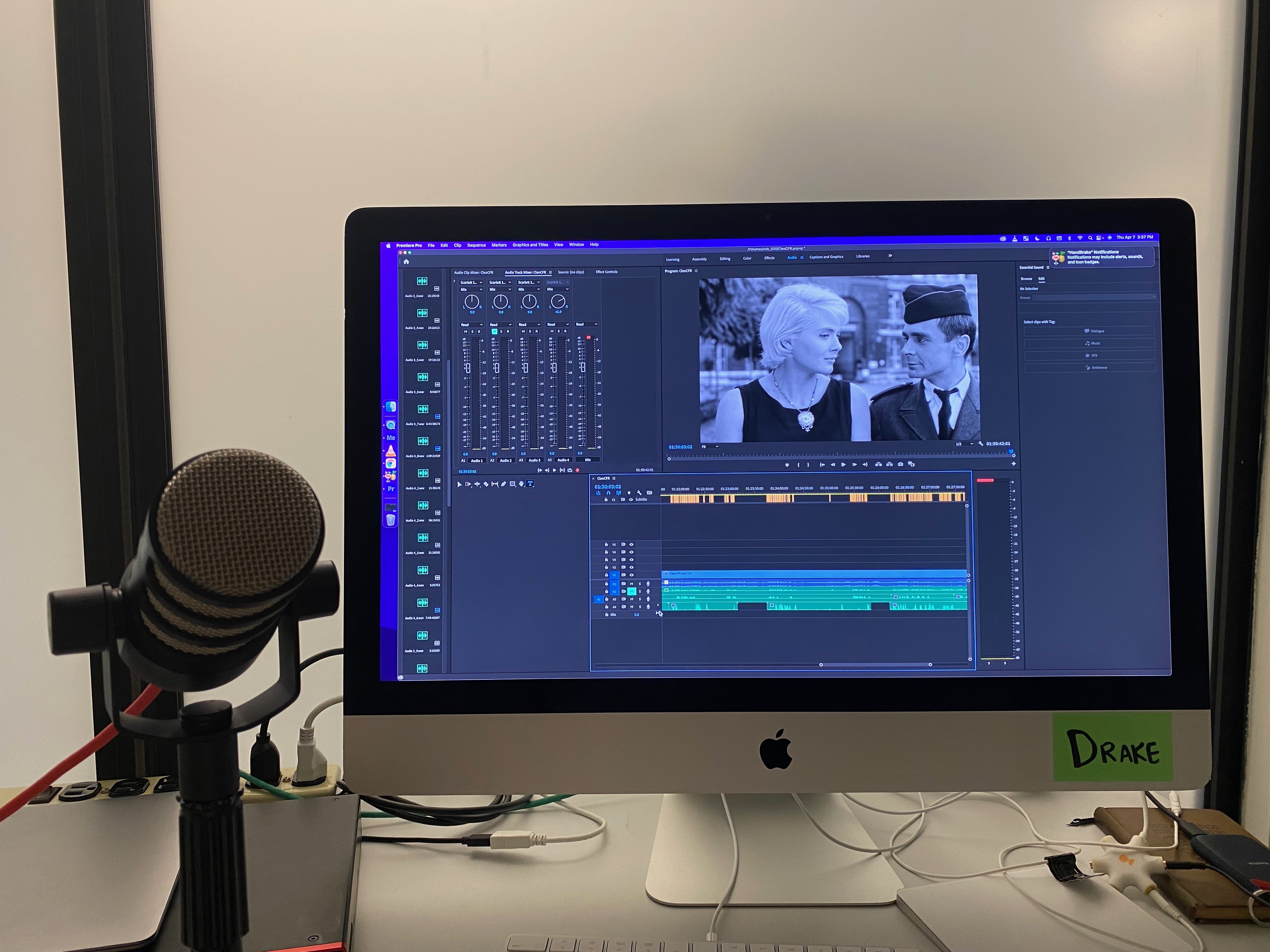
* maybe charlie? it's not ideal to not be abe to show charlie AND wesley...
* maybe a more general "LL intergenerational team" shot?
 Sign in with Wallet
Connect another wallet
Sign in with Wallet
Connect another wallet