###### tags: `CDA`
# Reading Response (Set 1)
### Sep 16 Fri - Superconnected
The chapter "More Benefits and Hazards of 24/7 Superconnectedness" in Mary Chayko's book, "Superconnected", begins explaining how being in a digital age has allowed people to stay in contact with one another regardless of whether they are close or far. Before industrialization, people would often remain close to their homes to be in contact with their friends, family, and neighbors. Nowadays, for example, I can be in Boston, 1600 miles away from home, and still be perfectly connected with my family whether it be through text messages, phone calls, facetime, or any social media platform. Not to mention, this way of communicating is instantaneous unlike having to wait weeks for a letter to arrive.
This may sound like something that is only positive, however, people that are in a "superconnected" society can come to depend not only on the devices but also the convenience that they bring. People are able to communicate with one another whenever, wherever they want but this also means that people don't feel a need to plan ahead or be conscious of other people's time since the same way they can make plans they can cancel plans, last minute. This also ties into people taking schedules more loosely and why people are late more often. Something I see a lot is that when making plans and the person invited may say "I will let you know" and often says they won't make it last minute or they just arrive late because there is less formality than if no "superconnected" communication were involved.
Also, people can not only be "superconnected" with others through messaging but also through entertainment. People are able to connect and/or bond through things like gaming, activities, and other interests. People can also connect with themselves and do things that they find entertaining, however, they can also disconnect and find themselves jumping through apps or mindlessly scrolling through social media. This also connects to the idea of multitasking where people often believe they can do many things at once and don't focus on one specific thing at a time. The chapter say's, "To persist in trying to multitask-,which, again, is not only difficult but impossible for some people-can result in an individual giving continuous partial attention to many things at once". I used to believe I was most efficient when multitasking since "I would get more things done in a shorter period of time". I would come to realize that when multitasking I would simply be mindlessly doing things with little to no focus. People who are "superconnected", however, often feel the need to be constantly up to date with everything that is happening in the news, on social media, or even amongst other people. This leads to going through every you can, often multi-tasking, in order not to miss anything which is also known as FOMO (Fear of Missing Out). I believe that it is very difficult for people who are "superconnected" to disconnect even for one day because of this fear of missing out.
Although being "superconnected" has its many benefits, there are still many downsides. There are issues that are directly related to being connected but even issues that are indirectly related that are equally large. Superconnectedness is what people may call a double-edged sword
---------
### Sep 27 Tue - Learning
Learning how to learn sounds contradictory. However, learning how to learn is more about what strategies are more effective when taking the approach of learning. The idea for this concept is based on “learning better and remembering longer”.
When studying for an exam, for example, a popular way of doing so is cramming as much information as possible to remember for the day of the exam. If you take this approach, you might do well on the exam, but there is a big possibility that by “memorizing” just for the exam, you will probably forget once it has passed. At this point, have you really learned anything at all?
Memorizing is often misinterpreted as a good way of learning when in reality it is a poor strategy. This happens because it may obtain good results for short-term learning, but when it comes to long-term learning (or actually learning/knowing), it is probably the worst strategy to take. Memorizing something without actually understanding it and knowing it is useless. For instance, you may memorize the answers to something but if you are asked to elaborate or put it into practice and are unable to, then the memorization is essentially meaningless.
Retrieval practices are a much better strategy for learning since the material sticks with you for a much longer period of time and it becomes something you know rather than something that comes and goes. These strategies may consist of things such as self-quizzing/testing, spacing out practice, or using learning techniques such as interleaving.
Retention of information is essential for learning. This idea is closely related to the phrase, “practice makes perfect”. Although very cliche and for the most part impossible, the notion that one gets better through practice is very true and equally true when it comes to learning. The more you analyze and go over something, the more it becomes an imprint in your memory.
Is there a right way of learning, though? Since many people “learn differently”, how is it that the book states that there are right and wrong strategies for learning?
---------
### Oct 04 Tue - Cooperation
*Why do we cooperate, and when and why do we fail to do so? How might the concepts you read about apply to what we see online?*
Why people cooperate is quite obvious. People cooperate because the cost in doing so is smaller than the benefit it brings. Costs can come in the form of things such as time, work, money, resources, or other things. Now, according to Martin Nowak, there are five mechanisms in which people collaborate. The first mechanism is *repetition* where an individual will offer to help or do something with the expectation of getting something in return. The second is *reputation* where an individual's behavior towards others is good and that individual hopes the same from others. The reputation that comes from doing good for others will likely attract others that do good for you. The third mechanism is *spatial selection* where individuals interact more often than others and these individuals can benefit from helping each other. The fourth mechanism is *multilevel selection* where cooperation works well if there are many small groups rather than a few large groups. Finally, *kin selection* is where individuals "look after their own", or in other words, cooperate with people they are close to.

There are also many experiments that demonstrate how people also cooperate in order to not be punished or to get rewarded. However, in the reading there is a quote from Albert Einstein that says, "If people are good only because they fear punishment, and hope for reward, then we are a sorry lot indeed". People should want to cooperate for the greater good, as it is something that is morally right to do. However, this is not always the case.
Often times individuals fail to cooperate. This seems illogical to do since cooperating results beneficial for everyone, however, there are many reasons why people don't cooperate. To begin with, one major reason is greed or selfishness. There are instances where people believe they can get the benefits of other individuals' cooperation without having to cooperate themselves. Another reason can be because they don't want to cooperate with a certain individual or group because that group or individual didn't cooperate with them in the past or perhaps because of differences between the two parties. One thing that is obvious, however, is that when people cooperate, they tend to do better than people who don't (defectors).
When thinking about the relationship between the concepts in Nowak's book and what we see online I thought about Reddit. Reddit has a vast array of online communities where people can cooperate with each other. There is one popular subreddit called [r/NeedAdvice](https://www.reddit.com/r/needadvice/) where people post about things they need help with or advice about.

I feel this subreddit really portrays well the cooperation between online communities. Here most people that respond give genuine and helpful answers. There is also the factor that giving good answers benefits the person commenting in terms of upvotes or awards. In a certain sense, this relates to the mechanism of *reputation* where "if I scratch your back someone else will scratch mine". If you help others, people tend to help you. Also, if someone decided to participate in a negative manner or give unhelpful answers people will downvote the comment which results in bad karma. Negative karma can also result in punishments such as your comment being deleted or being banned from commenting.
Although this setting is very different, people still have the opportunity of cooperating with one another in a different way.
---------
### Oct 07 Fri - Social networks
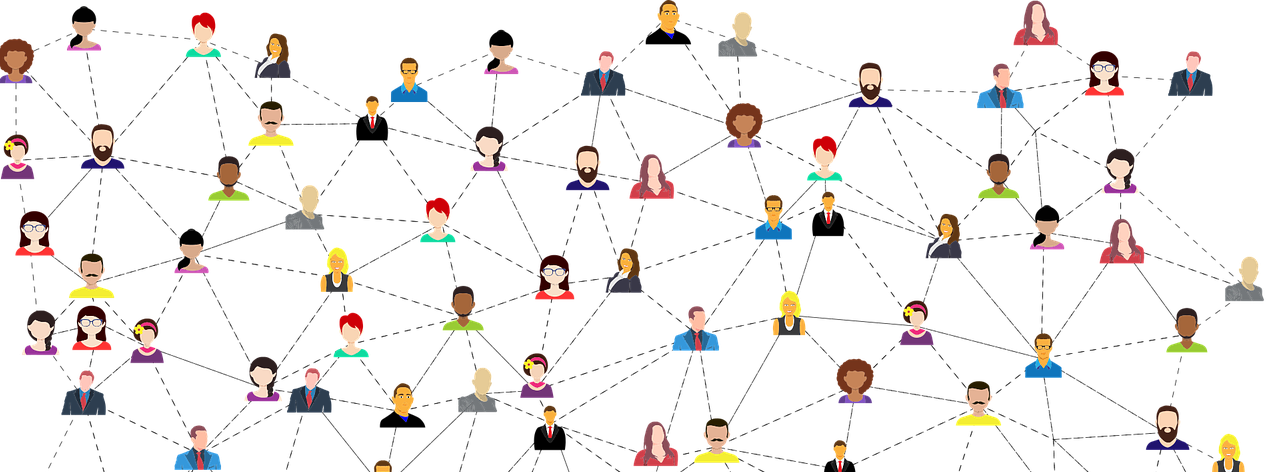
Rheingold’s “Social Has a Shape: Why Networks Matter” is an in-depth analysis of how social networks work. He combines his personal experiences and social interactions with several theories to try and make sense of the assumptions around a technologically connected world. At first, the reading seems like a general discussion, but it takes a technical turn when it starts explaining several theories in passing that are supposed to build on his argument. However, he maintains command of the subject matter throughout the reading and gives sufficient background information to understand his ideas. Notably, the reference to Sarnoff’s Law, Metcalfe’s Law, and Reed’s Law makes sense of the capacity of networks to create value and expand. Also, he uses Social Network Analysis to explain the effects of the centrality, degree, and bridging of networks to track the characteristics of networks.
I understood that the bridging nodes in networks have the maximum effect in building large networks. He also described networked individualism - where someone can conveniently access the networks that serve their unique needs. His explanation of this concept made me realize how I am also individually networked. Still, a select group of people stands out in this relatively new way of networking online. People who have created brands of themselves or those with a vast online following are particularly good at it. In addition, people who know how to maintain boundaries in online interactions thrive in this cyberspace. Having strong networks creates social capital.
Also, social capital is directly influenced by the shared economic, political, and social norms of the parties in a network. Rheingold insists that trust and reciprocity are the factors that build social capital that can provide tangible value.
---------
### Oct 21 Fri - Gender, Communication, and Contribution
In 2017, Adam Rogers and Megan Molteni published an article that seeks to deconstruct Demore’s Google Memo that he published to an internal discussion group. The article, in every sense, dismisses Demore’s claims that psychological differences in women and men, which are caused by underlying biology, cause men to love working with "things" and women with "people".
The authors negate Demore’s ideologies on two major fronts. First, they address the incoherency problem in science. The difference between women and men is a subject that has been explored in psychology for quite some time, and some of the smartest scientists keep finding inconsistent results. Rogers and Molteni state that “personality traits are nebulous, qualitative things, and psychologists still have a lot of different, often conflicting or contradictory, ways to measure them".
Demore seems to pick a study that fits his ideology and intentionally avoids other studies with contradictory results. The authors prove that Demore is wrong to the extent that he is contradicted by a scientist whose research he cites. Schmitt discovered that some traits, such as neuroticism, agreeableness, and extraversion, are greater in women. However, he does not understand how that relates to women's inability to perform at Google.
The two writers further deconstruct the nature-versus-nurture model used by Demore to assert his claims. The idea that nature hardwires the differences between men and women is completely outdated. Although there are slight differences in cognitive traits between sexes,
studies have indicated that a mix of environmental, social, epigenetic, and genetic factors can
influence the traits. Education, for example, is a powerful tool that can be used and has been used to help men and women improve their abilities.
I think scientists should avoid what Demore did in establishing an ideology and look for every possible way to justify it. Demore employs every effort to avoid the nurture side that can often override nature. I disagree with Demore and feel that women are just as capable as men and gender should not be a determinant of job placement within the technology industry.

 Sign in via Facebook
 Sign in via X(Twitter)
 Sign in via GitHub
 Sign in via Dropbox
 Sign in with Wallet
Connect another wallet
Sign in with Wallet
Connect another wallet