# Bok AI Lab Experimental Workshop Series: Media Production with AI: Pre-Production (Session 1 of 3)
*The Bok Center’s AI Lab Experimental Workshop Series invites faculty, staff, and students into the Lab’s prototyping process—hands-on sessions where academic, technical, and creative practices meet. Each week we test new workflows, reflect on their implications, and explore how AI might extend scholarly production and media design in real time.*
## 🎥 October 8: Pre-Production
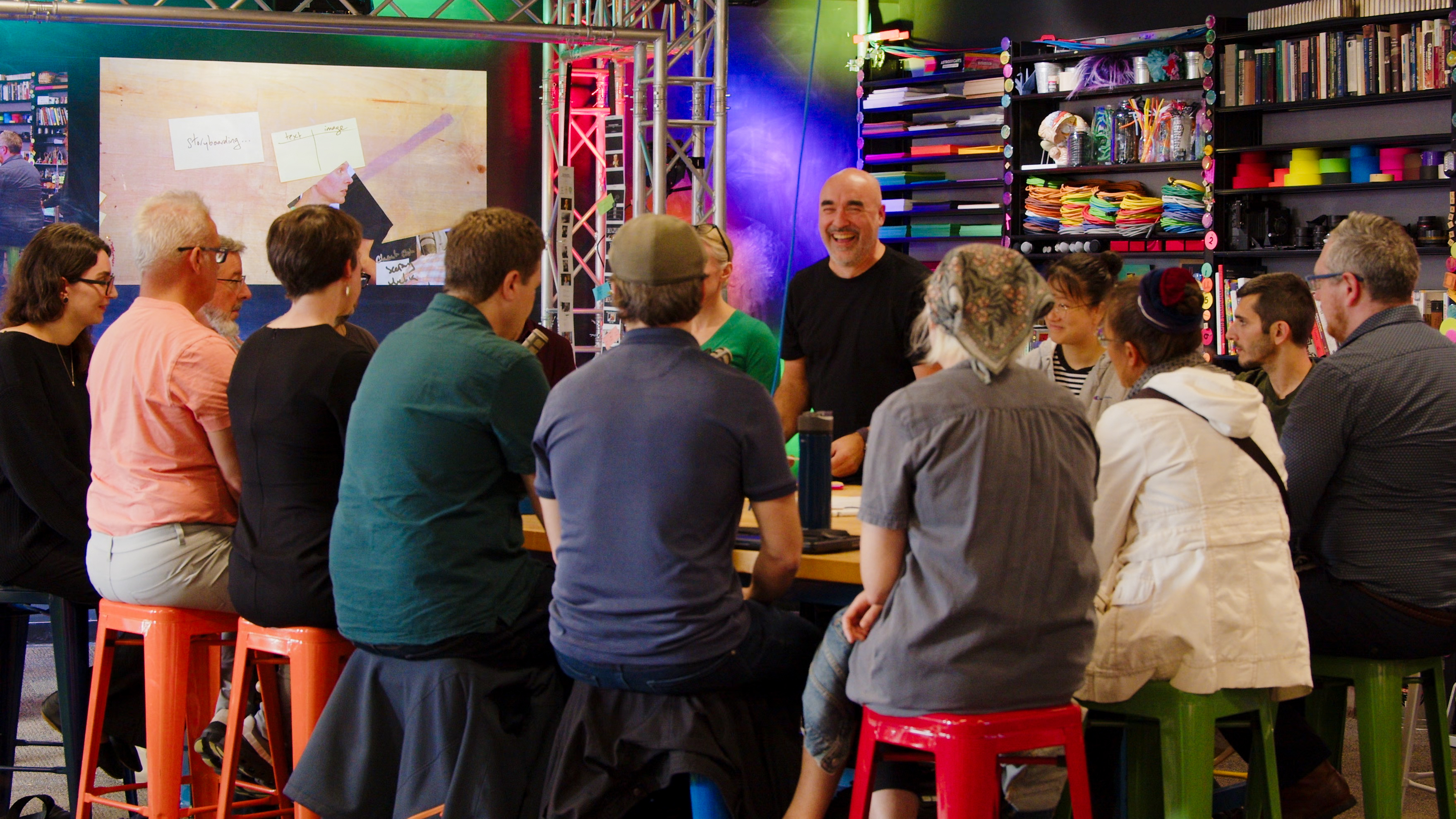
This session, co-hosted with **VPAL**, launched our three-part series on **Media Production with AI**, focusing on how generative tools can support pre-production—everything that happens before a single camera rolls. Participants from across Harvard’s media and research teams joined to explore how AI can assist in planning, visualization, and early-stage research for complex projects.
### 🧠 Activity 1: Collaborative Brainstorm
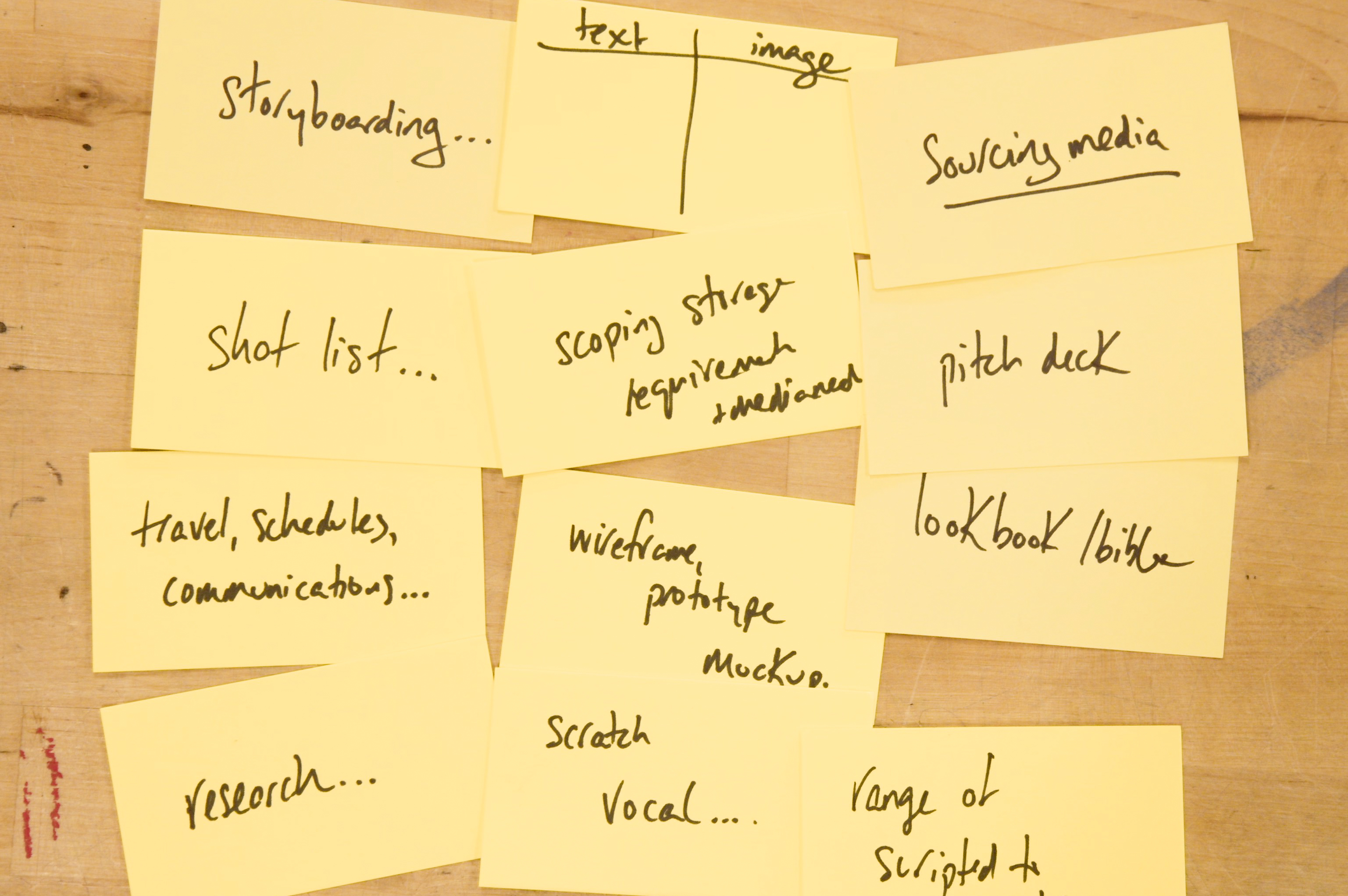
We started by mapping the ways participants already use AI in their work—capturing a wide spectrum of creative and technical practices. From coding and data visualization to storyboarding and scheduling, the group identified how AI is already integrated into their production pipelines. The discussion surfaced shared interests in coding, image generation, logistics, and research support—showing how AI already threads through diverse stages of production.
### 🎨 Activity 2: Image Experiments

Next, participants tested **Gemini** and **Midjourney** as visual sketchpads, translating written ideas into storyboards, lookbooks, and mood references. Like scratch vocals in music production, these quick drafts gave participants something concrete to react to before refining their ideas. The emphasis wasn’t on polished outputs but on process—how quick iterations can clarify tone, structure, and direction. The emphasis wasn’t on polished outputs but on process—how quick iterations can clarify tone, structure, and direction. These exercises highlighted how AI can act as an early creative collaborator, helping visualize concepts before production begins.
### ✍️ Activity 3: AI as a Research Assistant
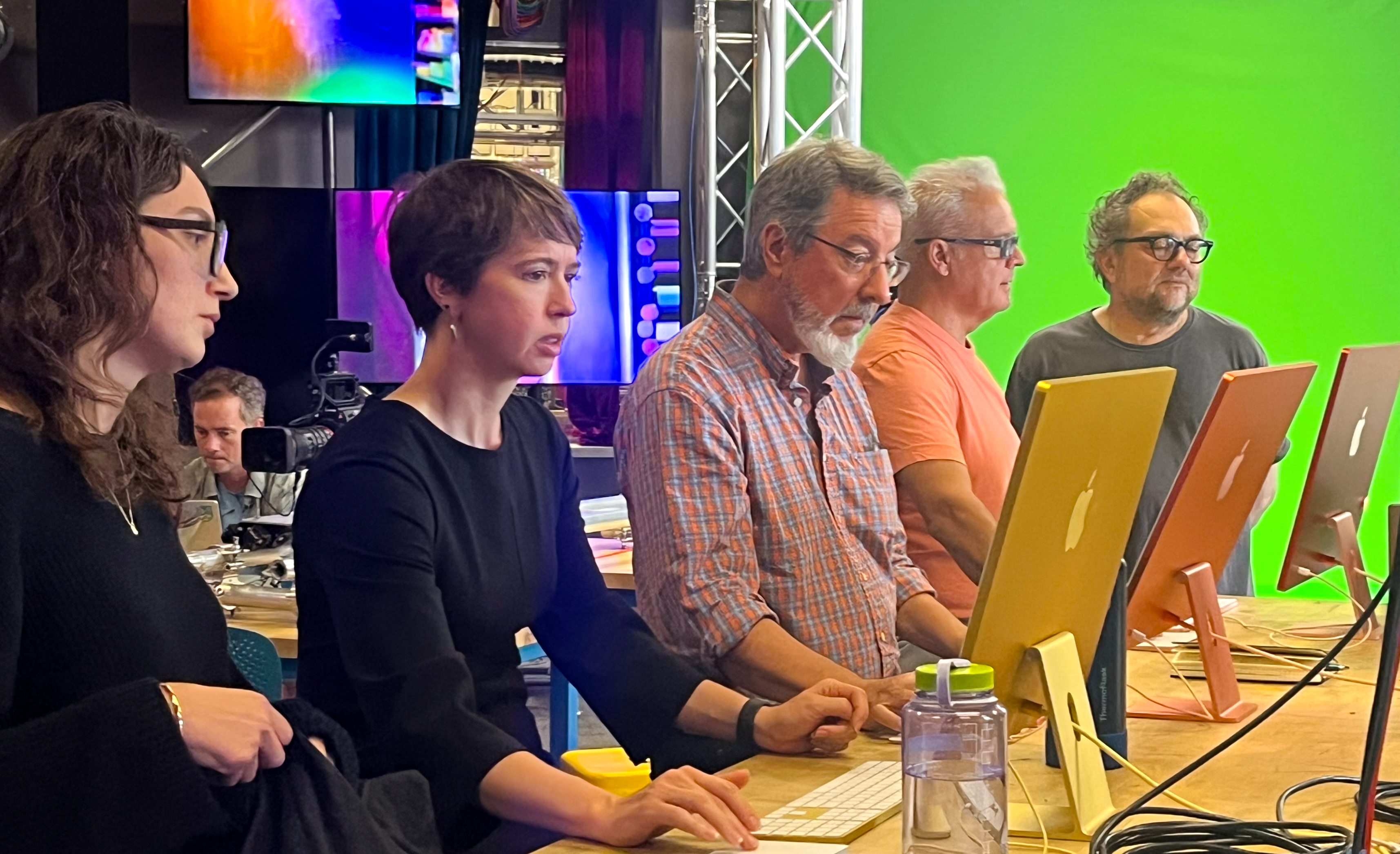
Finally, we uploaded an academic dissertation PDF and used AI to draft interview questions, connecting research and media planning. This exercise bridged the academic and production sides of storytelling, showing how AI can assist with early analysis, framing, and idea generation—functions often handled by a junior producer or researcher. It also illustrated how academic reading and creative production can inform each other, revealing AI’s potential to link interpretation with design.
## 🔄 What’s Next
Next week’s workshop, **Media Production with AI: On Set**, will extend these experiments into live studio environments—testing real-time transcription, logging, and augmented prompters with VPAL. The final session in the VPAL series, **Media Production with AI: Post-Production** (November 5), will explore transcript-based editing, AI-generated graphics, and scripting workflows for tools like Blender and After Effects.
Beyond the VPAL series, [upcoming *Experimental Workshops*](https://bokcenter.harvard.edu/generative-ai-events) will continue to open the Lab’s process to the Harvard community, inviting participants to co-develop and critique how AI is reshaping creative, scholarly, and pedagogical practice.
 Sign in with Wallet
Connect another wallet
Sign in with Wallet
Connect another wallet