# ai-lab-wednesday-workshop-plan
[ai-lab-wednesday-for-humanities](/Ib0A3o5MQxSj06mVdPMLng)
3–4:30pm, 50 Church Street, Suite 374
The Wednesday Workshops are the AI Lab’s public design sessions: hands-on experiments where teaching, research, and media practices are reimagined in real time. These aren't introductory trainings we've practiced dozens of times; rather, they are intended to be structured explorations at the edge of what’s possible with AI. Each week we test emerging tools and workflows—coding, writing, data analysis, or media production—and invite participants to build alongside us. The aim is to surface practices that are not yet standard, but that could soon transform scholarly and creative work.
By opening the Lab’s prototyping process to the Harvard community, we create a space where rigor and experimentation reinforce one another. Faculty, students, and staff will not only learn practical skills but also participate in shaping the future of academic uses of AI. These sessions are designed to ensure that when new demands arrive, the Lab and its collaborators are already prepared—with tested methods, critical insights, and a community ready to extend them.
or:
The Wednesday Workshops are live experiments in teaching, research, and media with AI. Each week we prototype new tools and methods with the Harvard community, blending rigor with exploration to stay ahead of emerging needs.
## October 1: Vibe Coding
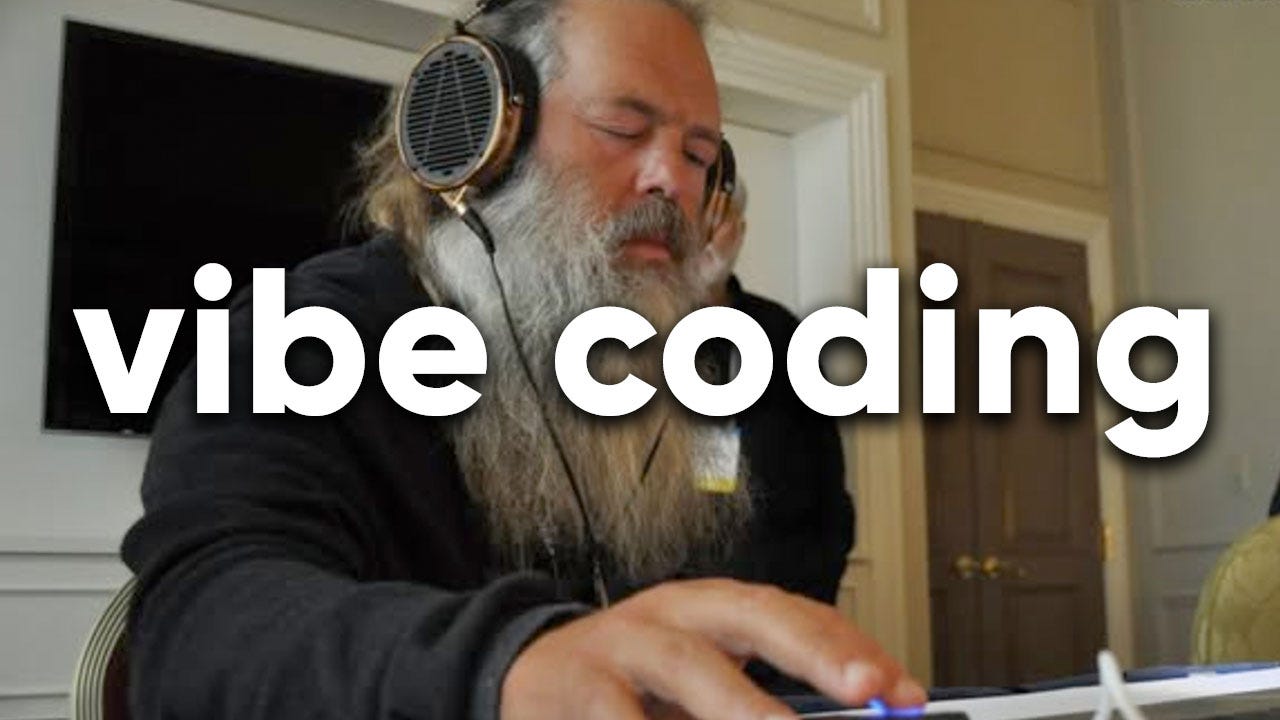
An introduction to what AI/ML Rockstar Andrey Karpathy and noted Gen X record producer Rick Rubin have termed ["the timeless art of vibe coding"](https://www.thewayofcode.com/)--which involves talking to your LLM of choice in natural language and letting it handle all the python or js syntax. It's magically easy, even if you've never coded anything in your life. But there are better and worse ways of going about it, and this workshop is designed to get you on the right path. We'll explore the coding tools within the major AI chat interfaces (ChatGPT, Claude, Gemini) as well as the more advanced apps for building more complex apps than we can manage in the chat interface (VS Code, Cursor, Windsurf). We'll even think about how we can use vibe-coding apps for academic writing.
**Tagline:** *Vibe your way into coding — from zero experience to academic applications.*
---
## October 8: Media Production with AI: Prep (Session 1 of 3)
The first of three workshops on AI in media production, focused on pre-production. Participants will experiment with using AI for research, scheduling, and planning, as well as image generation for previs and storyboarding. Co-hosted with VPAL, this session introduces how AI can support the earliest stages of a project.
**Tagline:** *Plan smarter: AI for storyboarding, scheduling, and creative prep.*
---
## October 15: Qualitative Analysis Field Trip
This session combines fieldwork and analysis. Participants will visit nearby sites---museums, public spaces, or campus locations---to gather observational data. Back in the Lab, we’ll use AI tools to transcribe, code, and analyze the responses, exploring how qualitative insights can be structured and transformed with machine assistance.
**Tagline:** *From field notes to patterns — exploring place-based data with AI.*
---
## October 22: Media Production with AI: On Set (Session 2 of 3)
The second workshop in the VPAL media series takes participants into the studio. We’ll experiment with live logging, real-time transcription, and AI-augmented tools for producers and interviewers. Expect demos of augmented prompters, interview bots, and workflows that connect live capture directly to AI-driven analysis.
**Tagline:** *Lights, camera, algorithms — AI on set in real time.*
---
## October 29: AI & Translation
We’ll explore the current state of AI translation, both its surprising strengths and persistent weaknesses. Through hands-on experiments, participants will evaluate quality at scale, test prompt-chaining strategies, and imagine future agentic systems that support more nuanced, scholarly translation work.
**Tagline:** *Beyond Google Translate — smarter strategies for AI-assisted translation.*
---
## October 31: Halloween Experiments
An experimental day devoted to playful AI artmaking. We’ll generate ghost stories with structuralist twists, recursive image sequences, cloned voices, AI-composed music, and eerie visuals. Participants are encouraged to bring a spirit of fun and improvisation to this creative holiday session.
**Tagline:** *Spooky code and spectral media — an AI Halloween jam.*
---
## November 5: Media Production with AI: Post (Session 3 of 3)
The final session in the VPAL media series explores AI in postproduction. We’ll practice transcript-based editing, experiment with AI-generated VFX and graphics, and explore scripting in Python, Houdini, Blender, and After Effects. Participants will leave with strategies for integrating AI into professional editing pipelines.
**Tagline:** *From transcripts to timelines — editing and effects with AI support.*
---
## November 12: Context Engineering & Distant Reading
This workshop looks at how context and prompt engineering shape large-scale literary analysis. We’ll loop through datasets, chain prompts, and experiment with distant reading techniques, while also developing strategies to evaluate, synthesize, and elevate initial AI outputs into more rigorous forms of analysis.
**Tagline:** *Reading at scale — teaching machines to think with texts.*
---
## November 18: AI for Teaching Media Production (Special Session)
A special evening session (5–6:30pm) in collaboration with the AFVS Department. We’ll explore how instructors can integrate AI into media production teaching, from assignment design to student support. The focus will be on pedagogy: practical ways to connect traditional production training with AI-augmented methods.
**Tagline:** *Bringing AI into the classroom studio — teaching media differently.*
---
## November 19: Paper & AI
This session explores how AI can intersect with the oldest tools of learning: paper, chalk, and voice. Participants will experiment with analog note-taking and sketching, then use AI to process, expand, and remix those materials. The emphasis is on how low-tech inputs can spark high-tech insights.
**Tagline:** *From paper margins to machine expansions — blending analog and AI.*
---
## November 24–26: Data Visualization & Vibe Coding Physics Sims
A hands-on session at the intersection of coding, visualization, and simulation. Participants will use AI to build simple physics sims, explore data visualization techniques, and practice “vibe coding” approaches to graphics and modeling. The goal is to make complex technical workflows accessible and playful.
**Tagline:** *See the patterns, feel the physics — visualizing with AI.*
---
## December 3: Celebration
Our closing event brings together the semester’s work in an experimental showcase. We’ll set up installations, alt-video projections, interactive docs, and curated galleries of participant projects. This is both a party and a public lab, where everyone can share their explorations in a creative, convivial setting.
**Tagline:** *Install, project, celebrate — a showcase of AI Lab creations.*
 Sign in with Wallet
Connect another wallet
Sign in with Wallet
Connect another wallet