---
title: การบ้าน ผว.
---
:::success
# Envisioned output
To keep things manageable, a preliminary list of 9 areas (in no particular order)
1. [**Agriculture policy**](#1-Agriculture-policy) ==Pin==
2. [**Labour market**](#2-Labour-market) ==Pang et al.==
3. [**Social protection**](#3-Social-protection) social insurance and social assistance ==Pang et al.==
4. [**Education**](#4-Education) ==Pang et al.==
5. [**Household finance**](#5-Household-finance) ==Prae==
6. [**Productivity & competition**](#6-Productivity-amp-competition) ==Archawa==
7. [**Fiscal**](#7-Fiscal) ==Pang et al.==
8. [**International trade policy**](#8-International-trade-policy) ==MPG==
9. [**Green transition**](#9-Green-transition) ==Bee==
10. [**Government**](#10-Government) efficiency/bureaucratic/corruption ==Tae==
11. [**Health**](#11-Health)
For each area, structure in 3 parts, 2 slides:
1. **Slide 1**: context/motivation of the key issues with data support
2. **Slide 2** (in bullet form):
1. gaps in current policy approach (ie. how present policy setting is not addressing the underlying problem)
2. pointed policy question
:::
# 1. Agriculture policy
## Context/motivation
*
## Gaps in current policy approach
*
## Policy questions
*
# 2. Labour market
## Context/motivation
- real wages in Thailand rarely increase after the 1997 crisis, but increase only after MW or 2014 bachelor degree
- wage over time by education (sym 2019, p.31) or wages P'Namwarn (by occupation)
- real wages decreased over time- MW helped to only 'sustain' the real wage level
- college ed- real wage increase in 2014 by policy
- social security labor (PPang Blog) and age discrimination (Lekfuangfu et al. 2016-)
MW over time---
* 1) low wages for majority of workers (?) but do wages already reflect low productivity?
what if MW > labor productivity?
- firms ก็อาจจะส่งผ่านต้นทุน ไปให้ลูกจ้างอยู่ดี [งานไทยของ อ ตี๋](https://www.pier.or.th/files/dp/pier_dp_137.pdf) (หรือใคร) ที่บอกว่าทำให้ firms ลดพวก non-wage fringed benefits ต่าง ๆ มี check references) --> found that workers (at all wage level) supply more labor (on intensive margin. i.e. work hours) for the big jump. and also found disemployment of foreign workers but not for thai workers (for gradual jump, firms usually reduce other things like overtime hours)
ของ ตปท มี Clemen [(JEP 2021)](https://pubs.aeaweb.org/doi/pdf/10.1257/jep.35.1.51) How Do Firms Respond to Minimum Wage Increases? Understanding the Relevance of Non-Employment Margins (aeaweb.org)
- what if employers resist?
เมื่อปี 2012-2013 ที่ MW ขึ้น 40% ประกันสังคมต้องลด contribution ให้พักนึง [see here](https://www.social-protection.org/gimi/gess/RessourcePDF.action?ressource.ressourceId=53893) เราต้องทำอย่างนั้นอีกหรือไม่ ประกันสังคมก็มีสถานะทางการเงินไม่ดีอยู่แล้ว
- effects could vary by firm size. eg. small enterprises maybe more affected, while large firm with monopsony power can adjust easier.
- can show fraction affected by M-W laws by firm sizes
* discrimination by age, gender especially low and middle skills
## Gaps in current policy approach
* why wages actually have not been increasing
* bargaining power of firms
* actual low productivity by workers
* market mismatch over supply
* what are the effects of MW on workers and firms?
## Policy questions
* if we don't know the answer to why low wage growth, how can we make a policy that solves the problem?
* มีนโยบายช่วยเหลือคนชายขอบ (previously low wage with unstable jobs) ที่ได้รับผลกระทบอย่างไร (need to show the stylized facts that these people are affected...)
*
* เตรียมรับมือกับต้นทุนการผลิตที่เพิ่มขึ้นของบริษัทอย่างไร (ราคาสินค้าในประเทศน่าจะเพิ่มขึ้นตามมา)
# 3. Social protection
> social insurance and social assistance
## Context/motivation
* Fragmented programs lead to no national strategy and inefficiency (cited ILO, WB, Symposium 2021, summary of Pension reform forum)
* SS problem (unfair for those joining A39, no indexation)
* SS fiscal status (ILO, Symposium 2021, harder to increase with NPF coming along)
* inadequate income and savings
* existing programs don't reflect the labor market structure where people move in and out of formal sector
## Gaps in current policy approach
* Pension: each fund does its own reform
* Subsidizing to formal vs. informal
* Better targeting; data
## Policy questions
* แนวทางการ harmonize different systems
* แต่ละระบบย่อย fits ตรงไหนของภาพรวม
* ในภาพรวม เราต้องการระบบที่ตอบโจทย์ในมิติไหน (redistribution/mortality risk/adequacy) เท่าไหร่
# 4. Education
## Context/motivation
* WB report :
* Spending per student has been rising but has not been translated to children's achievement.
* PISA scores either stagnent or lower over time. And lower than other countries with similar spending level.
* learning loss during COVID period (DP อ วีระชาติ)
* [Paweenawat et al. (Symposium 2019)](https://www.pier.or.th/files/conferences/2019/pier_symposium_2019_1_1_paper.pdf):
* Higher education has not led to higher earnings --> mismatched? education doesn't reflect skill?
## Gaps in current policy approach
* summer is a chance to recover
## Policy questions
*
# 5. Household finance
## Context/motivation
* หนี้ครัวเรือนไทยสูงเกือบ 90% ของ GDP มาตั้งแต่ปี 2563
* 37% ของคนไทยมีหนี้ และมีมูลค่าหนี้เฉลี่ยต่อคนอยู่ที่ประมาณ 527,000 บาท
* 69% ของบัญชีหนี้ครัวเรือเป็นสินเชื่อส่วนบุคคลและบัตรเครดิต ซึ่งอาจเป็นสินเชื่อที่ไม่สร้างรายได้ (non-productive loan)
* 23% ของคนที่มีหนี้มีหนี้เสีย
* หนี้ส่วนใหญ่อยู่กับกลุ่มผู้กู้ที่มีปัญหาด้านความสามารถในการจ่ายคืนหนี้ ได้แก่ กลุ่มวัยเริ่มทำงาน เกษตรกร และผู้มีรายได้น้อย
* คนไทยเป็นหนี้เร็ว เป็นหนี้นาน เป็นหนี้เกินตัว เป็นหนี้ไม่จบไม่สิ้น
* เกษตรกรมีรายได้ไม่พอใช้จ่าย รายได้ไม่สม่ำเสมอและไม่แน่นอน
* 90% ของครัวเรือนเกษตรมีหนี้ มีหนี้จากหลายแหล่ง และมีหนี้คงค้างเฉลี่ยกว่า 400,000 บาท
* 41% ของชาวนาผู้ปลูกข้าวอยู่ในโครงการพักหนี้มาแล้วมากกว่า 4 ปี
* การศึกษาพบว่าการเข้าโครงการพักหนี้อาจนำไปสู่การสะสมหนี้เพิ่มขึ้นได้ในระยะยาว โดยเฉพาะอย่างยิ่งสำหรับกลุ่มผู้กู้ที่มีหนี้ปานกลาง ผู้กู้ที่เข้าร่วมโครงการพักหนี้หลายโครงการหรือเข้าร่วมมาเป็นระยะเวลาหลายปี และผู้กู้ที่มีแนวโน้มสามารถกู้เพิ่มขึ้นได้อีกเรื่อย ๆ
* โควิด 19 ทำให้มีคนเป็นหนี้เพิ่มขึ้นและมีหนี้เสียเพิ่มขึ้น
## Gaps in current policy approach
* การแก้ปัญหาหนี้ของเกษตรกรเน้นไปที่การพักหนี้ และยังไม่มีนโยบายที่จะสามารถแก้ปัญหาได้อย่างยั่งยืนในระยะยาว
* นโยบายเน้นการสร้างรายได้ ซึ่งเป็นสิ่งที่ดี แต่ดูเหมือนยังขาดด้านการจัดการความเสี่ยงจากภัยพิบัติหรือ shock ต่างๆ ในภาคเกษตร การประกันรายได้อาจช่วยด้าน price shock แต่อาจยังไม่สามารถแก้ปัญหาได้อย่างยั่งยืน
* การออกมาตรการแบบเหวี่ยงแหให้กับคนวงกว้างนานเกินไป ทำให้ สง. ไม่สามารถนำทรัพยการไปช่วยผู้ที่เดือดร้อนหนักกว่าได้
* ขาดเจ้าภาพหลักที่จะมองภาพรวมและบูรณาการการทำงานของหลากหลายภาคส่วนได้ ธปท. กำกับดูแล 4 ใน 5 ของหนี้ครัวเรือนในระบบ จึงต้องใช้ความร่วมมือจากหน่วยงานอื่นที่เกี่ยวข้อง และอาจเกิด regulation leakage
* นโยบายไม่ได้สร้างแรงจูงใจที่ถูกต้อง นโยบายกระตุ้นการจับจ่ายใช้สอย เช่น นโยบายรถคันแรก นโยบายการให้สินเชื่อดอกเบี้ยต่ำโดยไม่ได้มีการติดตามผู้กู้ต่อ และนโยบายพักชำระหนี้ที่อาจทำให้วินัยทางการเงินแย่ลง ผู้กู้คาดหวังที่จะได้รับความช่วยเหลือเรื่อย ๆ และผู้กู้ที่จริง ๆ แล้วสามารถจ่ายหนี้ได้อาจเลือกที่จะไม่จ่ายหนี้ดีกว่า (moral hazard)
* การให้ความรู้ทางการเงินที่ผ่านมาเป็นเพียงกลุ่มย่อย ๆ ทำโดยหลายหน่วยงาน ขาดการให้ความรู้ทางการเงินในวงกว้าง เช่น การบรรจุในหลักสูตรการศึกษา
## Policy questions
* นอกจากการพักหนี้ที่เหมือนผลักปัญหาไปในอนาคตแล้ว จะแก้ปัญหาหนี้ของเกษตรกรได้ด้วยมาตรการใด
* มาตรการใดที่สามารถช่วยรองรับ production shock และ/หรือ price shock ได้
* มาตรการแก้หนี้ใดที่จะช่วยแก้หนี้เก่าที่มีปัญหาในขณะเดียวกันก็ไม่ลดโอกาสในการเข้าถึงสินเชื่อสำหรับคนที่มีศักยภาพ
* ใครควรเป็นเจ้าภาพในการแก้หนี้
# 6. Productivity & competition
## Context/motivation
* Since the AFC in 1997, the investment rate in Thailand has been consistently low, even lower than some developed countries.
* Possible explanations:
* Market power
* Uncertainty
* Debt overhang
* Zombie firms
* Surprisingly, though, aggregate TFP growth in Thailand has been relatively high.
* Could this finding be due to the structural change from Agri sector to Manufacturing and Service? But, at the same time, sluggish TFP growth at the firm level? Need to find out.
* Revenue growth of Thai corporate sector has slowed down in recent years, especially the contribution from the high-growth young firms, which used to be the main source of growth.
* Possible explanations
* Size-dependent policies
* Aging labor market
* Young firms are less likely to survive than mature firms, and the survival gap has recently been widening.
* Size-dependent policies, aiming to support Thai SMEs regardless of their performance, create disincentives for firms to grow.
* Average market power of Thai corporate has been increasing.
## Gaps in current policy approach
* นโยบายสนับสนุน SMEs ในปัจจุบัน มีลักษณะเป็น size-dependent policies ทำให้ SMEs ขาดแรงจูงใจที่จะ graduate ไปเป็น large firms
## Policy questions
* จะมีนโยบายที่ช่วยให้ SMEs not just survive, but also thrive ได้อย่างไร
* what are the expected outcomes of current SMEs policies?
# 7. Fiscal
## Context/motivation
* **ปริมาณหนี้สาธารณะต่อ GDP ปรับสูงขึ้น**จาก 41.1% ของ GDP ปี 2019 เป็นประมาณ 60% ณ สิ้นปี 2022 นอกจากนี้หากมองไปข้างหน้า การเพิ่มขึ้นของประชากรสูงวัยจะสร้างแรงกดดันเพิ่มเติมกับภาคการคลังจาก (1) ฐานภาษีรายได้บุคคลธรรมดาที่สัดส่วนลดลง และ (2) เงินให้หลังเกษียณประเภทต่าง ๆ และสวัสดิการด้านสุขภาพที่จะปรับสูงขึ้น
* จากงานศึกษาของ WB (forthcoming) **รายรับภาครัฐ (tax + non-tax revenues) ไทยอยู่ในระดับต่ำ**ที่ 21% ของ GDP ปี 2019 ต่ำกว่าประเทศที่มีระดับการพัฒนาใกล้เคียงกัน (i.e. GDP per capita ใกล้ไทย) โดย peers ใน upper middle income countries มีรายรับที่ ~30% GDP และกลุ่มประเทศ OECD อยู่ที่ ~40% GDP
:::info
* **สาเหตุหลัก**: การมีเศรษฐกิจนอกระบบขนาดใหญ่ ทำให้ไทยพึ่งพา direct taxes น้อย (e.g. คนจ่ายภาษีรายได้บุคคลธรรมดาอยู่ที่ประมาณ 4 ล้านคน จากประชากรวัยทำงานประมาณ 40 ล้านคน) ทั้งยังมีสิทธิประโยชน์ทางภาษีมาก
* **ผลกระทบ:** รายรับที่น้อยเป็นหนึ่งในข้อจำกัดสำคัญที่ทำให้การใช้จ่ายและลงทุนภาครัฐอยู่ในระดับต่ำเมื่อเทียบกับ peer (เทียบกับประเทศที่มี GDP per capita ระดับเดียวกัน)
* **Room for improvement**: WB ประเมิน tax gap (tax collection capacity - actual collection) อยู่ที่ 5.6% GDP การปิด gap จะช่วย meet fisal spending need + รักษา fiscal sustainability
:::
* การคัดกรองการให้ประโยชน์ transfer ต่าง ๆ (เช่น เบี้ยผู้สูงอายุ และบัตรคนจน) ช่วยลดภาระการคลัง ขณะที่ยังรักษาความสามารถในการลดความยากจนได้
## Gaps in current policy approach
* มี gaps ในการประเมินนโยบายจากภาพใหญ่ที่พิจารณา (1) ผลระยะสั้นและระยะยาวของแต่ละนโยบาย (2) ข้อจำกัดทางด้านงบประมาณ (3) ความทับซ้อน และความสอดคล้องของนโยบายจากแต่ละหน่วยงาน
---
* Lack evaluation of overall redistribution of fiscal resources across income/age/formality groups to have a big picture of how resource are currently used considering multiple overarching benefits and transfers
* Assess relative marginal return to different categories of government spending/investment in short/medium/long run
## Policy questions
* ควรใช้เงินกับอะไรก่อน/หลัง มาก/น้อย ให้มีประสิทธิภาพสูงสุด เมื่อพิจารณาถึง tradeoffs ต่อไปนี้
* (1) **รายจ่ายลงทุน** ดีต่อโครงสร้างเศรษฐกิจ ผลิตผล และความสามารถในการแข่งขันระยะยาว vs **การแจกเงินเพิ่ม** แก้ปัญหาเฉพาะหน้าได้เร็วกว่า
* (2) ให้เงินทุกคน แต่ละคนได้น้อย vs ให้เงินบางคน (เฉพาะคนที่ต้องการ) แต่ละคนได้มาก
* (3) คนจ่าย (ภาษี) กระจุก vs คนรับ (สวัสดิการ เงินโอน สิทธิประโยชย์) กระจาย
* (4) รายจ่าย <= รายรับ --> มีเสภียรภาพ vs รายจ่าย > รายรับ สะสมหนี้ประเทศ
* (5) Progressivity of fiscal policy: reduce inequity/poverty vs reduce incentive and more burden on the rich
* มีแนวทางการเพิ่มรายรับภาครัฐอย่างไรให้เพียงพอกับแนวโน้มรายจ่ายที่เพิ่มขึ้น และเป็นธรรมกับทุกคน (ใน vs นอกระบบ; จน vs รวย)
---
* วิสัยทัศน์ต่อ optimal compositions ของรายจ่ายภาครัฐแบ่งตามมิติต่าง ๆ เป็นอย่างไร ปัจจุบันดีแล้วหรือไม่ หาไม่ ควรลด/เพิ่มตรงไหน ด้วยเหตุผลอะไร โดยคำนึงถึง budget constraint
* by spending function (social protection/education/public order & safety, etc)
* by economic classification (เงินเดือนข้าราชการ\ใช้จ่ายภาครัฐ\capital expenditure\transfer\etc)
* จากวิสัยทัศน์ข้างต้น อะไรเป็น first-, second-, third-order priorities
* วิสัยทัศน์ต่อการ redistribute fiscal resources ระหว่าง income groups ควรเป็นอย่างไร มากน้อยแค่ไหน และควรปรับจากการ redistribute ที่เป็นอยู่อย่างไร ==(Tradeoffs: One side is reducing poverty and inequity, the other side is promoting efficiency and economic incentives)==
* วิสัยทัศน์ต่อ function of Thai government ในอุดมคติเป็นอย่างไร (เช่น บน spectrum ของ fully-plan to fully-voluntary state, welfare state?) เหตุใดจึงประเมินเช่นนั้น และการไปถึงจุดนั้นได้หมายถึงอะไรในแง่ของบทบาทภาครัฐที่ต้องเปลี่ยนแปลงไปจากปัจจุบัน ==(e.g. Nordic model focuses on welfare state -- e.g. equal opportunity and equitible distribution of wealth, broader scope of public services -- which comes at a cost of high overal tax burdens ~45% GDP given very low informality)==
* วิสัยทัศน์ต่อปัญหา informal sector ที่มีขนาดใหญ่ ควรนำนายจ้างและลูกจ้างเข้าสู่ formal sector มากน้อยขนาดไหน หากที่เป็นอยู่ยังไม่ดีพอ มีแนวทางปรับเปลี่ยนอย่างไร
* Deficit
# 8. International trade policy
::::warning
เคยมีคุณพิมพ์ชนก วรขอพร มาบรรยายที่ ธปท. เกี่ยวกับเรื่อง trade policy ของไทย อาจจะไปย้อนฟังดูได้ ประเด็นประมาณว่า เมืองไทยยังไม่มี "ยุทธศาสตร์" การทำ FTA ฯลฯ เท่าไหร่ เวลาเจรจาเลยไม่มี "เป้าหมาย" ชัดเจน หรือไม่เคลียร์ว่าควร put effort สำหรับการเจรจาไหน
:::danger
Need to check all of the below
:::
* FDI ของไทยไม่โตเหมือนเมื่อก่อน เมืองไทยไม่เป็นที่ดึงดูด อาจจะด้วยค่าแรงที่เพิ่มขึ้น ฯลฯ
* นอกจากเรื่อง factor of production แล้ว สิ่งนึงที่นักลงทุนมองเวลาเลือก destination คือ tariff benefits จากการตั้งฐานการผลิตในประเทศนั้น ๆ
* [เทียบ FTA ไทยกับเวียดนาม](https://www.pier.or.th/blog/2021/0301/) ไทยมี FTA กับ 17 ประเทศ covering 34% of world GDP ขณะที่เวียดนามมี FTA กับ 53 ประเทศ covering 60% of world GDP
* ลองเอา FTA utilization rate มาดู ว่าคนที่ส่งออก ใช้สิทธิ์ FTA ไปเยอะแค่ไหน มีความเหลื่อมล้ำมั้ย
* Who bears the burden of import tariffs? What's the price elasticity?
::::
## Context/motivation
*
## Gaps in current policy approach
*
## Policy questions
*
# 9. Green transition
## Context/motivation
* Thailand's SME sector contribution to GDP is roughly 45 percent but they have limited access to funding in general. Thailand is a bank based system which accounts for roughly 61percent of total financial assets (2018), however, there are few financial products that will help SME's during the transition.
* Transitioning to a low carbon economy requires funding to not only upgrade exisiting companies/factories to improve efficiency but to also comply with more stringent international standards. This requires a vast amount of funding. UNDP report estimates that to make the transport sector resilient alone requires 13-14 billion thb.
* Vulnerable groups are more prone to the effects of climate change and have less resources (social costs of air pollution alone average around 10,000thb per year per person excluding additional costs such as loss of income from less tourism, healthcare costs or long term cognitive impairment)
* Ignoring the green transition with highlight/make worse the existing fragilities in Thailand's economy (HH indebtedness, wealth gap)
## Gaps in current policy approach
* Overreliance on private sector money to fund the transition. More funds need to be allocated and infrastructure projects designed to ensure resilience to physical risks and transition of vulnerable groups
* Fragmented strategies and implementation with no clear institution overseeing the entire transition. for example, air pollution authority has no authority to penalize or impose restrictions on polluting entities, no coheisve awareness raising campaign to those involved.
* Existing regulations and rules should be revised to ensure alignment with transition goals.
* Currently no long term goals on how to adapt and live. For example, transforming Bangkok into a green city. (SG is redesigning their city and hasnew underwater cooling systems)
*
## Policy questions
* How to balance short term growth with long term goals?
* how can we align the objectives and poicies of various government entities and ensure that policies and plans are implemented.
* What are the main obstacles to implementation of policies? (vested interests?)
# 10. Government
> efficiency/bureaucratic/corruption
## Context/motivation
*
## Gaps in current policy approach
*
## Policy questions
*
# 11. Health
> e.g., impact of PM2.5, road safety
## Context/motivation
* อัตราความชุกผู้มีอาการซึมเศร้า และ anxiety เพิ่มขึ้น 25 % หลังจากโควิด [WHO](https://www.who.int/news/item/02-03-2022-covid-19-pandemic-triggers-25-increase-in-prevalence-of-anxiety-and-depression-worldwide)
## Gaps in current policy approach
*
## Policy questions
*
-------
:::::::spoiler {state="open"} Format เดิม
# General Discussion
* จุดประสงค์ของงานนี้คือ เพื่อทำให้นโยบายพรรคการเมือง align ไปในทางที่ถูกที่ควร ไม่ใช่แข่งกันให้
* หัวข้อที่เป็นไปได้ (เดี๋ยวเอาไปใส่ข้างล่าง)
* [**💸 หนี้ครัวเรือน**](#💸-หนี้ครัวเรือน) ==(พี่ปิ่น)==
* Stylized facts เอาเปเปอร์เก่ามาเล่าให้ฟัง
* Panel discussion
* [**⚙ Productivity, investment & growth**](#⚙-Productivity) ==(พี่อาชว์)==
* Investment rate in Thailand hasn't been recovered since AFC in 1997
* Declining growth in corporate sector, especially contribution from the high-growth young firms
* [**👷🏽 Labor**](#👷🏽-Labor) ==(กิฟต์)==
* นโยบายประชานิยม เช่น minwage, UC
* Min wage: stylized facts of fraction affected by min wage (eg. by firm size, or region)
* [**🏦 Fiscal sustainability**](#🏦-Fiscal-sustainability) ==(อ๊อบ + พี่แป้ง)==
* ภาพรวม revenue + expenditure
* projections ไปในอนาคต
* ฐานภาษี
* [**🛠️ Government efficiency**](#🛠️-Government-efficiency) ==(อ๊อบ + พี่แป้ง)==
* ภาครัฐใหญ่ ข้าราชการเยอะ cost เยอะแค่ไหน
* Selection effect เป็นยังไง
* การใช้งบประมาณตอนนี้มีปัญหายังไง
* การประสานงานระหว่างกระทรวง
* [**🏡 คุณภาพชีวิต**](#🏡-คุณภาพชีวิต) ==(อาร์ต)==
* ชนชั้นกลางเป็นกลุ่มหลักที่ต้องโดนเก็บภาษีเพิ่ม แต่ยังไม่มีมาตรการอะไรออกมาตอบโจทย์
* Brain drain
* [**🌾 Agricultural sector**](#🌾-Agricultural-sector) ==(พี่ปิ่น et al.)==
* [**🌏 Sustainability**](#🌏-Sustainability) ==(พี่บี๋)==
* Climate change / sustainability / energy / cost of living / tourism sector
* [**🎂 Corruption**](#🎂-Corruption) ==(เต้)==
* ด้านสังคม เช่น อายุที่เข้าผับได้
* Optional: Education
* Concerns
* เปลืองตัว ไม่กล้าขัด
* แต่ถ้าเป็นการ "จุดประเด็น" อาจจะพอได้อยู่
# Intended outcomes
* อาจจะจัดเป็น FB live events โดยเลือกหัวข้อหลัก ๆ โดย format ของ events คือ
* เรื่องละประมาณ 1 ชม เป็น FB events แยกกัน
* เชิญ panel 2-3 คน และ moderate โดยนักข่าว
* pattern ของแต่ละ session อาจจะตาม format ข้างต้น 1) context 2) gaps? 3) policy questions [reassess เมื่อเชิญ panel มาคุย outline]
1. พาดหัว: สศป. ตั้ง 5 คำถามที่พรรคการเมืองต้องตอบ!!!
* แทรก stylized facts/intro ลงไปในคำถาม
* วิธีที่จะทำให้เกิดขึ้น
* จัด event ที่ effective และ efficient
* เอานักวิชาการมาคุยจุดประเด็นกัน
* สามารถเอา paper ตั้งต้นมาเล่า stylized facts ก่อน แล้วตามมาด้วย panel discussion ได้
* Infographics
* ลง column หนังสือพิมพ์ เป็น series เช่น คอลัมน์แจงสี่เบี้ย
2. Provide bullet ให้นักการเมืองตรวจสอบ policy กันเอง
# Topics
:::success
📌 Format คือ stylized facts ตามด้วยคำถาม
:::
## 💸 หนี้ครัวเรือน
:::danger
Moved up to [Household debt](#Household-debt)
:::
## ⚙ Productivity, investment & growth
::::warning
**สิ่งที่คุยกันไปเมื่อวันจันทร์**
* การลงทุนที่ผ่านมาอยู่ในระดับต่ำ
* growth contribution ที่ตัวเล็กที่เคยเป็นตัว drive growth ไม่โตเท่าเดิม
* สาเหตุที่เป็นไปได้
* Market power
* มี literature บอกอยู่ว่าบางที large firm ก็ดี i.e. large firm ไม่ได้ imply market power
* Uncertainty
* Debt overhang
* Zombie firms
* remove market frictions, allowing fitest firms to thrive
* GDP per cap อยู่ในระดับกลาง ๆ
* แต่ TFP growth ไม่ได้ต่ำเมื่อเทียบกับประเทศอื่น ๆ เป็น puzzle อยู่ว่าทำไมเป็นแบบนั้น
:::info
💡 **คำถามสำหรับพรรคการเมือง:** นโยบายที่ว่าจะ support SME อยากรู้ว่านโยบายคืออะไร
:::
* Revenue growth in corporate sector ถูก drive ด้วย top 1%
* บริษัทอายุมาก ไม่ค่อยมี net contribution (คือ net out within age group)
* หลัง ๆ มา บริษัทอายุไม่มากก็ growth ลดลง... survival rate ของ young firm ก็ลดลงเหมือนกัน
* พี่ปอเคยทำ: tax incentive ของ firm ดึงดูด low tech firms ไม่ได้ดึงดูด high tech firms (details in past symposium)
* พี่ต้า: คนที่มาทำ high tech หายาก อาจจะไม่เกี่ยวกับว่า incentive มัน focus สำหรับ low tech firms
* พี่แป้ง: ยกตัวอย่างเพื่อนที่ทำ silicon valley เพราะไม่มีงานทำในเมืองไทย
* จดลิขสิทธิ์ยาก ไม่มี incentive ที่จะ innovate มี fixed cost สูง (มีงานวิจัยที่เคยทำไว้รึป่าว?)
::::
## 👷🏽 Labor
### Stylized facts
#### Minimum wage
* fraction affected by M-W laws by firm sizes, (& region?)
* wage growth & firm size (employment) before after MW in 2012
#### UC
* P'Yuwi's paper
* uhc improved the number of people reported too ill too work
* IHPP papers
* Townsend (infant mortality improves)
### Questions
* มีนโยบายช่วยเหลือคนชายขอบ (previously low wage with unstable jobs) ที่ได้รับผลกระทบอย่างไร
* เตรียมรับมือกับต้นทุนการผลิตที่เพิ่มขึ้นของบริษัทอย่างไร (ราคาสินค้าในประเทศน่าจะเพิ่มขึ้นตามมา)
## 🏦 Fiscal sustainability
::::warning
**สิ่งที่คุยกันไปเมื่อวันจันทร์**
* จะมี report ของ WB เกี่ยวกับ fiscal sustainability (แต่ยัง confidential อยู่)
* ค่อนข้าง relevant กับการหาเสียง
* อาจจะเอามาขยายต่อได้
* Key messages
* Revenue to GDP ค่อนข้างต่ำ เทียบกับประเทศอื่น ๆ
* Th: 20%
* Lower-middle 30%
* OECD 40%
* Tax gap มีเยอะ i.e. มี potential ที่จะหา revenue ได้มากกว่านี้ เช่น VAT เราต่ำเกือบที่สุด ขณะที่ efficiency สูง ดังนั้น ถ้าเพิ่มแล้วก็น่าจะเก็บ revenue ได้มากขึ้น
* Personal income tax มี deduction เยอะ อาจจะลดลงได้ (เช่น SSF deduction)
* Q: เป็นเรื่องของฐานภาษี หรือเรื่อง rate ภาษี
* ฐานภาษี เป็นเรื่องระยะยาว
* พี่อาร์ต: ต้องดู 3 อย่าง คือ revenue spending และ GDP มั้ย เพื่อเปรียบเทียบระหว่างประเทศได้
* พี่แป้ง: ควรจะมี outcome ให้เห็นด้วย (GDP เป็น outcome ก็ได้)
:::info
💡 เอา World Bank มาร่วมใน event ที่จะจัดกับ TDRI ด้วยดีมั้ย?
:::
::::
💡 **ถามเพิ่ม** : Audience target คือกลุ่มไหน เช้น สาธารณะ academic หรือ government ? key message ที่อยากสื่อคืออะไร
### Stylized facts
*
### Questions
*
## 🛠️ Government efficiency
### Stylized facts
*
### Questions
*
## 🏡 คุณภาพชีวิต
### Stylized facts
* มีมาตรการที่มุ่งเน้นกลุ่มผู้มีรายได้น้อยค่อนข้างมากแล้ว เนื่องจากเป็นกลุ่มที่เป็นฐานเสียง มีประชากรเยอะ ซึ่งสิ่งเหล่านี้จำเป็น ควรทำ
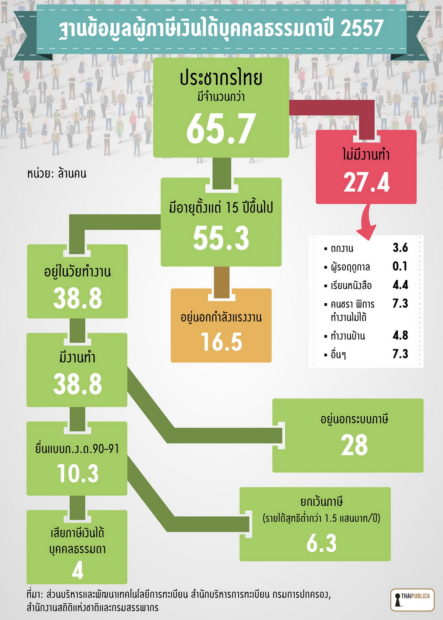
* มีคนไทยที่เสียภาษีเงินได้ประมาณ 4 ล้านคน เงินที่คนเหล่านี้จ่าย [คิดเป็น ~13% ของงบประมาณรัฐบาลแต่ละปี](https://progressivemovement.in.th/article/common-school/7936/) ในกลุ่มนี้ คนรายได้ปานกลาง ["แบกรับภาระภาษี"](https://www.moneybuffalo.in.th/economy/tax-structure-and-exemption-policy) หนักกว่าคนรายได้เยอะ จากทั้ง
* คนรายได้น้อย (ที่เสียภาษี) ไม่มีเงินเหลือให้ไปลดหย่อนภาษี
* คนรายได้เยอะสามารถไปจัดตั้งบริษัทเพื่อนำมาลดหย่อนภาษีแบบไม่มี cap ได้ การจัดตั้งพวกนี้มี fixed cost เยอะ ไม่ viable สำหรับคนรายได้ไม่เยอะมาก
* คนกลุ่มนี้อาจจะ argue ได้ว่าเป็นกลุ่มที่มีศักยภาพในการพัฒนาประเทศ ฯลฯ แต่มาตรการ/โนยบายที่จะมาตอบโจทย์คนกลุ่มนี้กลับมีไม่เยอะมาก
* สิ่งที่คนเหล่านี้อยากได้ **อาจจะไม่ใข่อะไรที่ specific to ชนชั้นกลาง แต่เป็นการทำให้คุณภาพชีวิตโดยรวมดีขึ้น** (as opposed to มาตรการที่เห็นบ่อย ๆ ที่อาจไปเน้นทำให้ชีวิตคนรายได้น้อยดีขึ้นเท่านั้น เช่น จ่ายเงินให้คนจน (ได้ externality from less poverty, but not directly))
* มาตรการด้านคุณภาพชีวิตเหล่านี้ จะ benefit คนทุกกลุ่ม
* หากไม่มีมาตรการพวกนี้ คนที่มีศักยภาพก็อาจจะ select ตัวเองออกไปที่ที่เค้ารู้สึกว่ารัฐบาลใช้จ่าย make sense กว่า เกิด brain drain, etc. ขึ้น
### Questions
* โจทย์สำคัญที่ต้องตอบ คือ
1. จะทำให้การใช้งบประมาณมัน efficient ขึ้นได้ยังไง (อาจจะเกี่ยวกับ [Government efficiency](#🛠️-Government-efficiency))
2. สามารถออกแบบนโยบายอะไรที่จะพัฒนาคุณภาพชีวิตคนไทยโดยทั่วไปได้บ้าง
:::info
จริง ๆ ตรงนี้ดูเหมือนจะใช้เป็น motivation to other topics มากกว่า เพราะมันก็จะเยอะมาก พวก ระบบการศึกษา คอร์รัปชัน สาธารณสุข การออกแบบเมือง ฯลฯ
:::
## 🌾 Agricultural sector
## 🌏 Sustainability
### Stylized facts
* ความเสียหายของการเปลี่ยนแปลงสภาพภูมิอากาศซ้ำเติมความเปราะบางทางเศรษฐกิจ และลดความสามารถในการแข็งขันของประเทศ
* การประเมินความเสียหายในภาพรวม หรือค่าใช้จ่ายในการปรับเปลี่ยนเศรษฐกิจยังไม่มี โดย UNDP ประเมินว่าไทยต้องการใช้เงินสำหรับแค่ภาคขนส่งอย่างเดียว 13-14 ล้านบาท
* ความเสียหายจาก PM2.5 2.173ล้านบาท ณ ปี 2562 และหากรวมทุกสารมลพิษ เท่ากับ 4.616 ล้านๆ บาท ซึ่งตัวเลขนี้ ยังไม่รวมความเสียหายทางเศรษฐกิจจาก loss income จากการท่องเที่ยวที่ลดลง การเสียโอกสาษในการทำงาน หรือค่าใช้จ่ายในการรักษา รวมถึง generational affects ที่ส่งผลให้ประชากรรุ่นหลังเสียโอกาสจากสุขภาพที่แย่ลง หรือ ผลกระทบต่อ cognitive skills
* ภาคการท่องเที่ยวไทยเท่ากับประมาณ 20% ของการจ้างงานทั้งหมด และ 11% of GDP ซึ่งจะได้รับการเสียหายจากการเปลี่ยนแปลงของสภาพภูมิอากาศ
* นโยบายไทยหลายอย่าง สวนทางกับความยั่งยืน เช่น การเก็บภาษีรถยนต์ ที่ปัจจุบัน incentivize ให้มีรถเก่าซึ่งเทคโนโลยีเก่า และมีมลพิษเยอะ
* กลุ่มเปราะบางเสียเปรียบเมื่อต้องรับต้นทุนจากปัญหาสิ่งแวดล้อม เช่น ค่าใช้จ่ายในการดูแลสุขภาพ พืชที่ได้ความเสียหายจากภัยแล้ง หรือน้ำท่วม
![Uploading file..._a9febwk65]()
https://eoimages.gsfc.nasa.gov/images/imagerecords/146000/146293/seasiadrought_smap_202038.png
![Uploading file..._edli4tzfx]()
blob:https://storymaps.arcgis.com/a59dbeb7-1804-4753-b8d5-4046cd154489
****
### Questions
* จะทำอย่างไรให้มี balance ระหว่าง long-term vs shortterm goals (climate change ได้รับผลกระทบในระยะยาวจากกิจกรรมในปัจจุบัน)
* priority ควรเริ่มที่ไหน การบูรณการกระบวนการแก้ไขปัญหา การออกนโยบาย การติดตาม หรือ การ set เป็น government priority (ทั้งในการสื่อ และการ implement)
* accountability ควรอยู่ที่ใคร ควรมีหน่วยงานที่มีอำนาจในการจัดการอย่างทาวร() ปัญาหาไม่ด้อยู่ที่ เทคโนโลยี หรือ แผน แต่ที่การ implement)
## 🎂 Corruption
### Stylized facts
* ดัชนี Corruption Perceptions Index ประจำปี 2022 (CPI 2022) จัดทำโดยหน่วยงาน Transparency International ชี้ให้เห็นว่า
* ประเทศไทยได้ 36 คะแนน และอยู่ในอันดับ 101/180 แม้จะดีขึ้นมาเล็กน้อยจากปีก่อน (1 คะแนน) **แต่ค่าเฉลี่ยที่ผ่านมาใน 10 ปียังคง "ย่ำอยู่กับที่" (36.2 คะแนน)**
* คะแนนย่อยในหมวดการใช้อำนาจรัฐเพื่อผลประโยชน์ส่วนตนของข้าราชการเจ้าหน้าที่ฝ่ายบริหาร ฝ่ายนิติบัญญัติ ฝ่ายตุลาการ ฝ่ายทหาร และตำรวจ (World Justice Project Rule of Law Index) **ลดลงด้วย** (ป.ป.ช. อธิบายว่าเป็นเพราะเจ้าหน้าที่ของรัฐยังรับรู้และถือปฏิบัติเรื่องการแยกแยะผลประโยชน์ส่วนบุคคลและส่วนรวมไม่มากเท่าที่ควร และเปิดโอกาสให้เจ้าหน้าที่ของรัฐใช้ดุลยพินิจในการปฏิบัติหน้าที่)
https://www.transparency.org/en/cpi/2022/index/tha
* TDRI (อ.เดือนเด่น) ทำงานวิจัยในโครงการ “ประมวลองค์ความรู้ด้านการเสริมสร้างธรรมาภิบาลและการลดคอร์รัปชัน” โดยใช้กรอบสำคัญคือ กรอบแนวคิด “สมการคอร์รัปชัน” ของ Robert Klitgaard ซึ่งนิยามว่า
* **Corruption = Monopoly (การผูกขาดอํานาจการเมืองและธุรกิจ) + Discretion (การใช้อํานาจแห่งดุลยพินิจ) – Accountability (การตรวจสอบ)**
* **การผูกขาด** : งานวิจัยชี้ให้เห็นปัญหาการผูกขาดสองเรื่อง ได้แก่
* การผูกขาดอํานาจการเมือง ระบบพวกพ้องและการแสวงหาผลประโยชน์ และ
* การผูกขาดทางเศรษฐกิจ ในกรณีรัฐวิสาหกิจและการให้สัมปทานเอกชน
* **การใช้อํานาจการแห่งดุลยพินิจ** : งานวิจัยชี้ว่ามีสามเรื่องที่สําคัญของไทย ได้แก่
* การใช้ดุลยพินิจขององค์กรกํากับดูแลตลาดหลักทรัพย์และตลาดโทรคมนาคมแห่งชาติ ซึ่งเกิดจากการแทรกแซงของกลุ่มผลประโยชน์
* การใช้ดุลยพินิจในการจัดซื้อจัดจ้าง ซึ่งเกี่ยวข้องกับงบประมาณมูลค่าหลายล้านล้านบาทต่อปี และ
* ดุลยพินิจในกระบวนการยุติธรรม อันได้แก่ ตํารวจ และ ศาลยุติธรรม
* สําหรับเจ้าหน้าที่ตำรวจ ปัญหาสำคัญคือ ปัญหาการขาดธรรมาภิบาลในการแต่งตั้งและโยกย้ายข้าราชการตํารวจ
* สุณีย์ กัลยะจิตร และคณะ (2556) พบว่า 2 ปัญหาหลัก ได้แก่ ปัญหาโครงสร้างขององค์กรตำรวจ และปัญหาระบบการแต่งตั้งและโยกย้ายที่ไม่ชัดเจน ในปัญหาโครงสร้างขององค์กรตํารวจนั้น สํานักงานตํารวจแห่งชาติไม่ปลอดจากการแทรกแซงทางการเมือง นอกจากนี้การทํางานของตํารวจยังขาดการถ่วงดุลอํานาจในการตรวจสอบและประเมินผลจากภายนอก
* **การตรวจสอบรัฐ** : กลไกในการตรวจสอบและถ่วงดุลอํานาจของภาครัฐแบ่งเป็น 4 ระดับ
* ระบบการตรวจสอบภายในขององค์กรหรือหน่วยงานของรัฐแต่ละแห่ง
* การตรวจสอบโดยองค์กรอิสระตามรัฐธรรมนูญ ซึ่งโดยมีสํานักงานคณะกรรมการป้องกันและปราบปรามการทุจริตแห่งชาติ สํานักงานการตรวจเงินแผ่นดิน และ
สํานักงานผู้ตรวจการแผ่นดิน เป็นหน่วยงานหลัก
* การตวรจสอบถ่วงดุลโดยรัฐสภา และ
* การตรวจสอบโดยสื่อมวลชนและภาคประชาชน
https://tdri.or.th/wp-content/uploads/2017/07/final-TRF-3-7-2017-with-covers.pdf
### Questions
* มีผู้กล่าวว่า คุณธรรมจริยธรรมไม่สามารถแก้คอร์รัปชันได้ เนื่องจากเป็นเรื่องจับต้องยาก แล้วจะทำอย่างไรให้การแก้ไขปัญหาคอร์รัปชันในประเทศไทยมีประสิทธิผลจริง? [Link](https://www.thairath.co.th/business/feature/2610805)
* จะทำอย่างไรให้องค์กรต่อต้านคอรัปชั่นที่มีมากมายในประเทศไทยมีบทบาทมากขึ้น? [Torplus' paper](https://so05.tci-thaijo.org/index.php/saje/article/view/250488)
* ยิ่งกระจายอำนาจยิ่งทำให้เกิดการกระจายการโกงหรือไม่? [Link](https://progressivemovement.in.th/movement/unlock-local-administration/7848/)
:::info
อาจนำไปเป็น subtopic อยู่ใน Government Efficiency หรือจะเพิ่มประเด็นเรื่องการผูกขาดเป็น big topic เลยก็ได้มั้ย?
แต่ถ้าเป็น topic ในตนเอง คิดว่าเอานักวิจัย TDRI คนนึงมาเปิด (อ.สมเกียรติเองยังได้ และเป็น moderator ของ session นี้ด้วย) แล้ว discussants อาจเป็น คุณบรรยง พงษ์พานิชย์ ผศ.ดร.ต่อภัสร์ ยมนาค
:::
:::::::
 Sign in with Wallet
Connect another wallet
Sign in with Wallet
Connect another wallet