Bio Notes
===
1. Energy relationships
1. Intro
1. A constant supply of enerfy is essential for cells to perform all of their processes
2. Cells use energy to manifacture needed substances and tear down others
3. Energy is needed to maintain homeostasis
2. Autotrophs and Heterotrophs
1. Organisms are classified into 2 groups by how they obtain their energy
1. Autotrophs - make their own food by capturing energy
2. Heterotrophs - Depend on other organisms for food
3. ATP - energy currency in cells
1. Cells contaion molecules with large amounts of energy - too much to be used at once
2. Energy must be converted into smaller usable units
3. This unit is called ATP- Adenosaine triphosphate
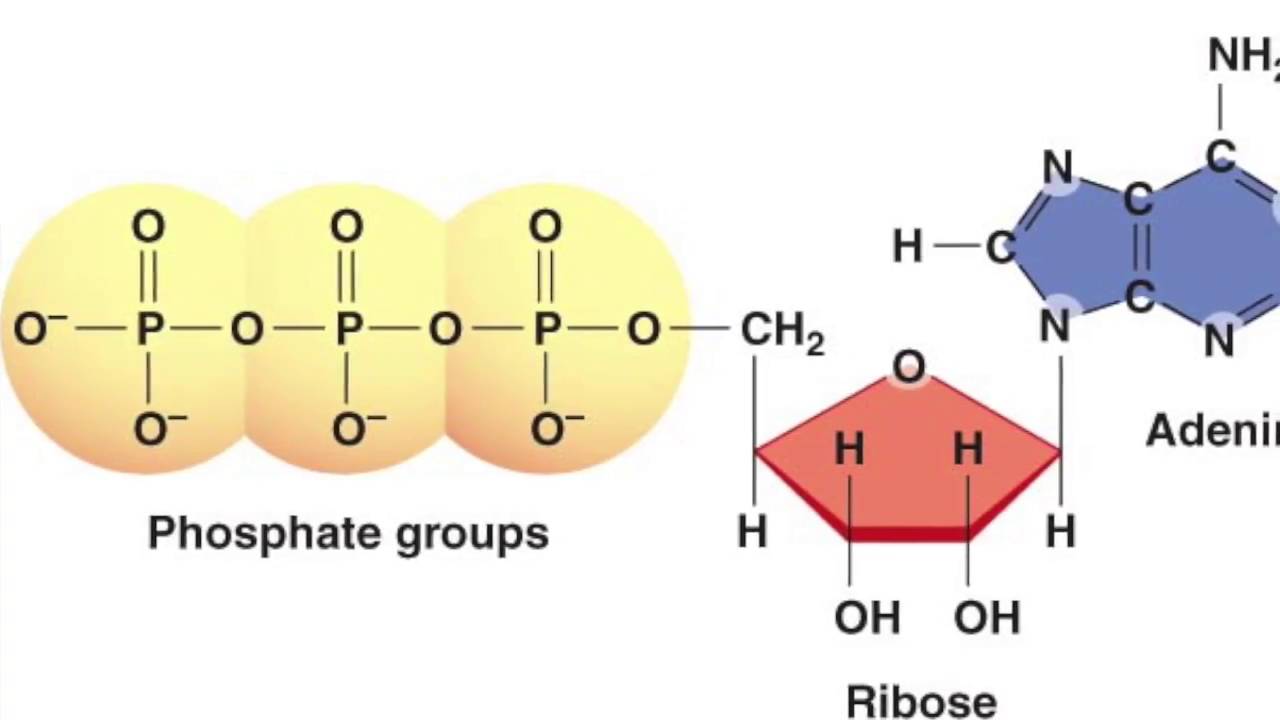
4. Structure of ATP
1. Adenosine
1. Backbone of ribose (5 carbon)
2. Adenine - DNA base
2. Chain of 3 phosphate groups - attached to ribose
5. Key to how ATP stores energy is found by the bonds between the 3 phosphate groups - bound by unstable, high-energy covalent bonds
6. When the bonds are broken, large amounts of energy are released
7. Ususally the P group on the end is broken off, and this reaction produces ADP, a free P, and energy
8. An ATP molecule can be reused - ADP+P+Energy can recombine to make ATP
9. ATP must be constantly made by every cell
10.
2. Life processes
1. Intro
1. Metabolism is the sum of all chemical processes in an organism - photosynthesis, movement, growth, etc
2. Different organisms carry on different kinds and quantities of the metabolic pathways
3. Metabolic pathways of cels must change to maintain the organisms homeostasis since the environmental situations change
2. Anabolism and Catabolism
1. anabolism - processes that build molecules and store energy
2. Catabolism - Processes that break down molecules and release energy
DNA and protein synthesis
1. The code of Life
1. Intro
1. Almost every cellular and extracellular substance made by a cell is or contains a structural protein
2. Cells are controlled by enzymes which are proteins
3. There are several thousand different proteinsw found in every cell
4. A protein is a twisted and looped polypeptide of amino acids
2. DNA
1. DNA is the molecule that stores the information of life
2. The sequence of the 4 base pairs in DNA determine the sequence of the different amino acids found in the proteins
3. The codecan be compared to the letters in the alphabet
4. The 4 base pairs - ATGC can be called the alphabet of life
5. All words are 3 letters long and become the code for a particular amino acid
6. These triplets of bases are called codons
7. the total number of combinations is 64
8. Because there are only 20 amino acids, some have more than one codon
9. There are some special codons that signal start and stop of the protein making process
2. Building proteins
1. Transcription - synthesis of the messenger RNA
1. DNA unzips and one copy of one side of the DNA is made
* This new strand contains U instead of T
2. This new single stranded copy is called messenger RNA
1. Introns - sections of the mRNA that don't contain info for the protein being made so they are cut out of the RNA before it leaves the Nucleus
2. Exons - sections of mRNA that do contain imfo about the protein so they are included in the final version of the mRNA
3. The newly transcribed mRNA leaves the nucleus with the protein code to go to the ribosome for the assembling of the protein
2. Types of RNA
1. Messenger RNA
1. The mRNA contains the code for amino acid chain and carries the code from the DNA in the nucleus to the ribosomes where the code is read
2. Transfer RNA
1. Consists of a chain of nucleotides that form seceral loops giving it a clover shape
2. At 1 loop are 3 unattached bases called the anticodons
3. Anticodons are compliments of the codon bases
Ex. Codon on mRNA - GAC
Anticodon on tRNA - CUG
4. An amino acid attaches to the opposite end of tRNA
5. Bonding of an amino acid to tRNA requires 1 molecule ATP
3. Ribosomal RNA (rRNA)
1. rRNA combines with various proteins in the cytoplasm to form ribosomes
2. Forms 3 binding sites
1. 1 For mRNA so codons can be read
2. 2 For tRNA to be held in place while anticodons pair with mRNA codons
3. Translation - the process of assembling proteins
1. Begins when mRNA leaves the nucleus through nucear pores
2. The mRNA arrive at a ribosome and translation of a protein begins with the codon AUG (start codon) which codes for the amino acid methionine
3. tRNA picks up amino acids in the cytoplasm and takes them to the ribosomes to be assembled
4. THe ribosome holds the mRNA in place so tRNA anticodon can line up with the codon on the mRNA
5. The aa will be attached to the opposite end of the tRNA
6. Once codon and anticodon are lined up, the ribosome moves down the mRNA and the next codon is read
7. ANother tRNA will line up with this codon with the proper aa attached
8. As the two tRNA are held in place, the two amino acids will bond together forming peptide bonds
9. The first tRNA no longer bonded to the AA it brought in, so it leaves the ribosome
10. THe ribosome moves down the mRNA to the next codon
11. THe procoess continues until a stop codon is read
12. Stop codons - UAA, UAG, UGA
CH 7
1. Photosynthesis
1. Intro
1. The sun's energy must be converted into chemical energy to be used by living organisms
2. This process is called photosynthesis. It is one of the most important biological processes
3. Photosynthesis provices energy for plants and almost every living thing, but also produces oxygen.
4. 6CO2 + 6H2O + light => C6H12O6 + 6O2
2. Chlorophyll
1. Chlorophyll is the primary catalyst of photosynthesis
2. It is a pigment that absorbs energy from the sun and energizes electrons (green)
3. Occurs in two stages
1. Light-dependent phase
1. Light energy is absorbed by chloroplasts and used to energize electrons in chlorophyll molecules. Chlorophyll splits water molecules to produce high-energy electrons and H+
2. Energized electrons leave the chlorphyll and pass through the electron transport chain (series of proteins)
3. As electrons pass through the etc, some of their energy is used to form atp, but there is still energy left in the electrons
4. THe electrons then bind to a special e- carrier molecule called NADPH that stores energy for later use
.PNG&f=1&nofb=1)
2. Light-independent phase (calvin cycle)
1. Takes place in stroma of chloroplasts where necessary enzymes and other reactants are located
2. The ATP and NADPH from the electron transport chain and CO2 from the air drive this phase of photosynthesis
3. CO2 and water are turned into glucose through a series of many steps
4. Intermediate products and enzymes include RuBisCO and G3P
5. It takes 9 ATP molecules and 6 NADPH molecules to produce 1 G3P molecue. It takes 2 G3P molecules to make 1 glucose molecle
4. Overview of Photosynthesis
1. Light energy, water, and CO2 enter the chloroplasts, where the light dependent and Calvin Cycle work together using ATP, ADP, and electron carrier molecules. Oxygen and G3P which are used to make sugars are the final products.
5. Conditions for Photosynthesis
1. Adequate quantities of light - the right wavelength and intensity
2. Sufficient amount of CO2
3. Proper temperature
4. Water
2. Cellular respiration
1. Intro
1. Cellular respiration- breaking down a food substance into usable energy in the form of ATP
2. In most cells glucose is the primary food substance; however, lipids, other monosaccharides and protein can be used
3. There are two types of cellular respiration
1. Aerobic - requires O2
2. Anaerobic (fermentation) - no O2 required
2. Process
1. Glycolysis - 1st part of all types of cellular respiration
1. Takes place in the cytoplasm
2. Has 3 main steps
3. Involves the breakdown of glucose into 2 pyruvic acid, H+. and electrons
4. What happens next depends on the type of cell and whether oxygen is present
2. Aerobic Respiration - Oxygen present
1. 2 Phases
1. Citric Acid Cycle (Kreb's Cycle)
2. H and e- transport chain (in cristae of mitochondria)
2. C6H12O6 + 6O2 -> 6H2O + 6CO2 + ATP
3. Output of Aerobic respiration
1. From glycolysis = 2 ATP
2. From Citric Acid Cycle = 2 ATP
3. H and e- transport chain = 32/34 ATP
4. Total - 36/38 ATP
* All from one glucose molecule
* Still a loss of about 60% of glucose' energy
3. Anaerobic Respiration
1. Cellular fermentation
2. 2 different pathways depending on how the cell modifies pyruvic acid
1. Alcoholic Fermentation - Pyrubic acid is converted to a molecule of ethyl alcohol - carried on by certain bacteria and yeasts
2. Lactic acid fermentation
1. Pyruvic acid converted to lactic acid
2. Bacteria that form yogurt and cottage cheese use it
3. When necessary animals and humans use it
3. Output of cellular fermentation
Cell Division
Chromosomes and Genes
Chromosomes- Stryctyres consisting DNA and supporting proteins called histones. Think of it as a spool of thread with DNA being the thread and the histones being the spool.
Genes- sections of DNA within a chromosome that code for a specific protein to create a certain characteristic in an organism.
Genes are the basic unit of heredity.
Genetics is the study of heredity.
3. Chromatid- one-half of the duplicated chromosomes that is created before cell division.
4. Centromere- the attachment point of the two chromatids in a duplicated chromosome.
*Centromeres are very important during cell division.
5. Kinds of Chromosomes
Sex Chromosomes determine whether an organism will be male or female. They also carry a few genes for other traits.
In Humans, X and Y. The X chromosome significantly larger than Y and carries more genetic information. XX=Female and XY=Male
Autosomes- chromosomes that don’t determine the sex of the organism. They contain most of an organism’s genes.
Humans have 44 that pair up to form 22 sets.
Karyotype- adapted picture or illustration for the purpose of lining up chromosome pairs according to their overall size.
*Scientists use size, banding patterns, and centromere position to match up the chromosomes.
6. Chromosome pairs
1. Homologous pairs - 2 chromosomes that have the same kinds of genes in the same order (1 per parent)
1. Diploid - having the normal number of chromosomes in each cell. Having homologous pairs
2. Haploid- having only 1 set of chromosomes or half the number of a diploid cell (n)
*Egg and Sperm are haploid cells
2. Cell Cycle - one of the 2 types of cell division involving the duplication and separation of a cellś chromosomes. There are 3 stages - interphase, mitosis, and cytokinesis
1. Interphase: period between cell divisions - 3 phases
1. G1 - time of cell metabolism and organelles duplicate
2. S - DNA duplicates; sister chromatid held together by centromere
3. G2- ATP produced
2. Mitosis
1. Prophase - 1st phase
1. Centrioles divide and migrate to opposite poles of the cell
2. Spindle fibers form between centrioles
3. Chromosomes condense
4. Nuclear membrane disintegrates
5. Nucleolus disappears
2. Metaphase
1. Mitotic spindle fibers attach to centromere of chromosomes
2. Chromosomes migrate to equator of cell
3. 46 duplicated chromosomes line up single file
3. Anaphase
1. Centromeres separate
2. Chromosomes are pulled apart towards the poles by spindles
4. Telophase
1. Chromosomes arrive at poles
2. A new nucleus forms around them at each pole
3. Chromosomes unravel to become chromatin
3. Cytokinesis
1. Plasma membrane constrics at center of cell and cytoplasm divides
2. Two identical daughter cells are formed each with its own organelles, proteins, and chromosomes.
3. Meiosis - cell division involving the reduction of chromosomes from diploid to haploid. This process must occur in such a manner as to ensure that all chromosomes are represented equally in each cell
1. Intro
1. In the formation of egg and sperm cell, the chromosome number is reduced in hald, or only one set of each type of chromosome. This is called haploid.
2. When haploid sperm unites with the haploid ovum, a diploid cell called the zygote is formed. It has 23 pairs of chromosomes.
3. Once the zygote is formed, mitotic divisions
2. Stages of Meiosis
1. First division
1. Prophase 1
1. Homologous pairs together - tetrad XX
2. Chromosomes in tetrads exchange genes in a process called crossing over
2. Metaphase 1 - Tetrads line up at equator
3. Anaphase 1 - Homologous pairs separate
4. Telophase 1 and Cytokinesis - same as mitosis except chromosomes don't unravel
1. Second division
1. Prophase 2, Metaphase 2, Anaphase 2, Telophase 2
4. Terms
1. Gametes - sex cells
2. Fertilization - Union of gametes to form zygote
3. Spermatogenesis- forming of sperm cells
4. Oogenesis - forming of ovum. One cell always receives less cytoplasm during meiosis 1 and 2 called polar bodies (results in 1 ovum, 3 polar bodies)
5. Sexual reproduction - uniting of 2 haploid gametes (1/2 chromosomes per parent)
8B
1. Mendelian genetics
1. Gregor mandel
1. Father of Genetics
2. Austrian Monk
3. Resaearch on garden peas
2. Mendel's experiments - observed 7 sets of opposing characteristics in peas
1. Self-pollination
2. cross-pollitation
3. True plant - self pollinated (always produce same characteristics)
4. Generation terminology - P1 (parents)
1. F1 - first gen
2. F2 - offspring of 2 F1
5. Mendel's results
1. True tall x true short -> p1
2. F1 - all tall plants
3. F2 - 3:1 tall to short
2. Mendel's laws
1. Law of Dominance - One gene prevents the appearance of the trait controlled by the other gene
1. Trait that expresses itself when 2 opposing traits are present - represented by capital letter
2. Recessive - a trait that is masked/hidden when 2 opposing traits are present (lowercase)
2. Law of Segregation - during gamete formation, the pair of genes for a trait seperate so that each gamete has only 1 set of genes for that trait
3. Law of Independent assortment - as gametes are formed, the varios traits seperate independently of one another
3. Genetic Terms
1. Phenotype - physical expression of an organism's genes
2. Genotype - actual genes of an organism
3. Locus - particular site on a chromosome where a gene is located
4. Allele - Different form of the same gene - T or t
5. Homozygous - TT or tt
6. Heterozygous - Tt
7. Punnett Square - way of depicting fenetic crosses to determine the probability of the offsprings genotype and phenotype (male on top)
8. Monohybrid cross - test cross dealing with only 1 set of alleles or 1 set of opposing characteristics
9. Dihybrid cross - dealing with 2 sets of alleles
Types of Gene Inheritance
1. Simple dominance
1. in humans, free earlobes are dominant to attached
F- free
f- attached
F F
+----+----+
F | FF | FF |
+----+----+
f | Ff | Ff |
+----+----+
chapter 11
1. Need to Classify
1. When studying living things, placing them in similar suited groups is helpful for comparison. They are grouped according to similar characteristics
2. The science of classifying organisms is called taxonomy
3. Aristotle was the 1st attempt to classify organisms
1. A system based on physical characteristics - artificial classification system
2. divided into plants and animals only - each with 3 groups
3. Problematic, but userd for ~2000 years
4. In the mid 1700s, a sweedish naturalist named Carolus Linnaeus devised a new more detailed system
1. Still used today w/ some modifications
2. Creationist who believed that species was same as Bible's use of kind
5. Today's system of Classification
* Hierarchy - levels
Kingdom \ King Philip climbed on fiber glass stairs
Phylum
Class
Order
Family
Genus
Species
6. Domain is one level above the kingdom -3
2. Domains
1. Archaea - 1 kingdom of the same name
* All Prokaryotic
* Have cell walls
* Live in extreme or harsh conditions - extremophiles
* Unicellular or colonial
* Heterotrophic or chemosynthetic
* Heat resistant
* Asexual reproduction
Thermophiles, acidophiles, halophiles, methanogens
2. Bacteria
1. Projaryotic
2. Cell walls with peptidoglycan
3. can cause disease
4. unicellular or colonial
5. asexual reproduction
6. heterotropic or autotrophic
7. Most abundant on earch since they're so small and reproduce quickly
3. Eukarya
1. Kingdom - chromista
* plant like and fungus like
* Asexual reproduction with conjugation
* Unicellular colonial and multicellular
* Mostly autotrophic
* Have cell walls of cellulose
Algae, water molds, diatoms
2. Kingdom- protozoa
* Animal like
* motile as adults
* aquatic
* unicellular or colonial
* most heterotrophic
* asexual with conjugation
Parmecium, amoeba, euglena
3. Fungi
1. Cell walls made of chitin
2. Unicellular, colonial, multicellular
3. Heterotrophic
4. Digest food externally
5. Most asexual
6. Most are terrestrial (land)
7. Sessile - no locomotion
yeast, mold, mushrooms
4. Plantae
1. Cell walls made of cellulose
2. Sessile
3. All autotrophic - photosynthesis
4. Multicellular
5. mostSexual reproduction
6. Contain plastids
7. Most terrestrial
8. ferns, grass, moss, grains, trees
5. Animalia
1. no cell walls
2. multicellular
3. most have locomotion
4. heterotrophic
5. sexual reproduction mostly
6. most species
worms, sponges, coral, insects, vertebrates
3. Scientific names
1. Common names- names given to organisms that are easy to remember and are descriptive of behavior or appearance
hognose snake, blowing viper, hissing head = same snake
1. Can be confusing since people from different areas know it by different names
2. This is a bigger problem when the animal is found in many countries
2. Binomial Nomenclature - two name naming system
1. System of naming living things by using 2 names
2. Latin
1. dead language
2. known by scholars
3. highly descriptive
3. Genus - species name
1. Always underlined or italic
2. Capitalized
3. Species always lower case
3. Genus - Group of similar organisms
4. A group with members that resemble each other and can produce fertile offspring
1. Problems with definition
1. Many organisms reproduce asexually
2. Interbreeding may be disastrous so God hinders it
5. The Biblical Kind
1. God's primary purpose in creating different irganisms was to have them perform specific functions
1. Gen 1:21-22 to multiply
2. Gen 1:28-29 to submit to man's dominion
3. Gen 3:21 furnish clothing after the fall
4. Gen 4:1-6 offering
5. Gen 9:2-3 supply food after flood
2. specific animal examples
horses, spiders, crab
3. The Biblical kind is based on Gen 1:9-25
1. It appears that God established the biblical kind as the natural grouping of organisms and the ability to reproduce as the criteria
2. Wolf, dog, coyote all same genus but different species in current system but they can interbreed so they're the same kind
dog- canis familiaris wolf-canis lupus coyote - canis latrans
6. ecotype - organisms of the same species that appear the same but are suited for one environment rather than anoher
1. Arctic terns only breed with terns 1 location highter or lower
2. Grass frogs - Florida and Michigan
7. Varieties - diffent forms or types of the same species
Dogs, beagles, boxer, lab
8. Migration - movement of organisms from one area to another
* can result in separation of traits or behaviors to the extent that 2 groups become ecotypes
---
1. ?
1. phylogyny- deals with constructing the evolutionary history of organisms
2. Cladistics - reclassifying organisms by their evolutionary history
2. Classification in a secular world
1. instead of comparing new organisms to similar creatures they group according eo evoolutionary history
2. .
3. Lots of disagreement on organisms evolutionary ancestry
4. Tree broken into clades or branches
1. Dots reperesent divergence. Where 2 similar species become more and more different. Divergence is usually marked by the appearance of a derived trait

3. Classification and a Biblical Worldview
1. Baraminology - looking at life on the basis of created kinds
1. Use both genetics and physical features to figure out which species belong within a kind
2. Potential for great diversity not evidence for evolution but a sign that God included a loit of information in the cells of each of His creatures
2. New species and varieties but kinds remain the same
* dog kind didnt give rise to cats
3. Divergence occurs only within a kind
* quick process
plant classification
* nonvascular bryophytes
* mosses
* liverworts
* seedless vascular
* ferns
* horstails
* gymnosperms - naked seeds
* pine trees
* angiosperm - enclosed seeds
* produce flowers
plant tissue
* dermal - outside
* vascular - transport
* Xylem - ^ carries water/minerals from roots
* phloem - v food from leaves
* ground- most tissue (makes surgars)
* Meristematix - growth by mitosis
leaves
* 
1. simple
1- leaf
1 - petiole
roots
* tap (carrot) one main
* fibrous - network
* growth
* primary- length
* secondary - width
stems
* functions
* transport
* support
* classification
* herbaceous
rely on turgor pressure, only live a year
* woody
* live several years
* annual rings (xylem/phloem)
* bark
*cambium, phloem
* wood- xylem
Life cycles
* alternation of generations
* gametophyte - gametes
* sporophyte - the plant
* thatemerges - after germination
* produce spores
* pollination
* Fertiliuxation
* pollen grain prodocues
* pollen tube- sperm
* fertilizzeas ovule
* germination
* growth of embryonic plant
* good soil
* water
* proper temperature
* Friut0 mature ovary with seeds
flower

anther- produces pollen
hormones
5 diff
usually work together
tropisms - a growth response caused by a hormone action
* phototropism - a growth response to light
* geotropism - response to gravity
* thigmotropusm - response to tough
* chemotropisnm - response to chemicals
* hydrotropism - water
 Sign in with Wallet
Connect another wallet
Sign in with Wallet
Connect another wallet