# Lab Exercise 15 (Iterator Pattern)
## Task
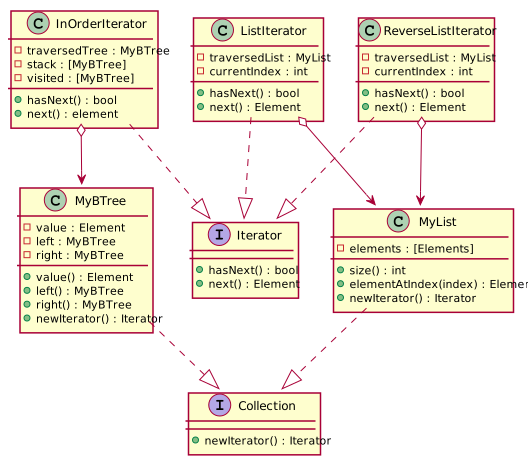
For non built-in collections, you can create an iterator that does the traversal for you. On the bare minimum these iterators will realize some `Iterator` abstraction that contains the methods, `next()`, and `hasNext()`. From these methods alone you can easily perform complete traversals without knowing the exact type of the collection:
```python
i = collection.newIterator()
while i.hasNext():
print(i.next())
```
```python
from abc import ABC,abstractmethod
class Iterator(ABC):
@abstractmethod
def next(self):
pass
@abstractmethod
def hasNext(self):
pass
class Collection(ABC):
@abstractmethod
def newIterator(self):
pass
class MyList(Collection):
def __init__(self, elements):
self.__elements = elements
def size(self):
return len(self.__elements)
def elementAtIndex(self,index):
return self.__elements[index]
def newIterator(self):
return ListIterator(self)
class ListIterator(Iterator):
def __init__(self, list):
self.__traversedList = list
self.__currentIndex = 0
def next(self):
self.__currentIndex += 1
return self.__traversedList.elementAtIndex(self.__currentIndex-1)
def hasNext(self):
return self.__currentIndex < self.__traversedList.size()
#OPTIONAL
"""
class MyBTree(Collection):
def __init__(self,value:int,left:'MyBTree' = None,right:'MyBTree' = None):
self.__value = value
self.__left = left
self.__right = right
def left(self):
return self.__left
def right(self):
return self.__right
def value(self):
return self.__value
def newIterator(self):
return InOrderIterator(self)
"""
c:Collection = MyList([1,2,3,4])
iter:Iterator = c.newIterator()
while(iter.hasNext()):
print(iter.next())
```
The `hasNext()` method, returns a boolean value that indicates whether or not there are more elements to be traversed. The `next()` method, returns the next element in the traversal.
A collection can have more than one `Iterator`s, if it makes sense for the collection to be travsersed in more than one way. Despite this possibility, a collection must have a default iterator which will be the type of the new instance returned in the factory method, `newIterator()`
> Note: `MyBTree` and its iterator is optional
**Complete the system using the iterator pattern**
## Assessment Criteria
- Completeness of the pattern - 40
- Elegance of method and attribute naming - 10
 Sign in with Wallet
Connect another wallet
Sign in with Wallet
Connect another wallet