###### tags: `CDA`
# Reading Responses (set 2)
- Checklist for five
- [x] First
- [x] Second
- [x] Third
- [x] Fourth
- [x] Fifth
## Reading responses
### March 9th - Context Collapse
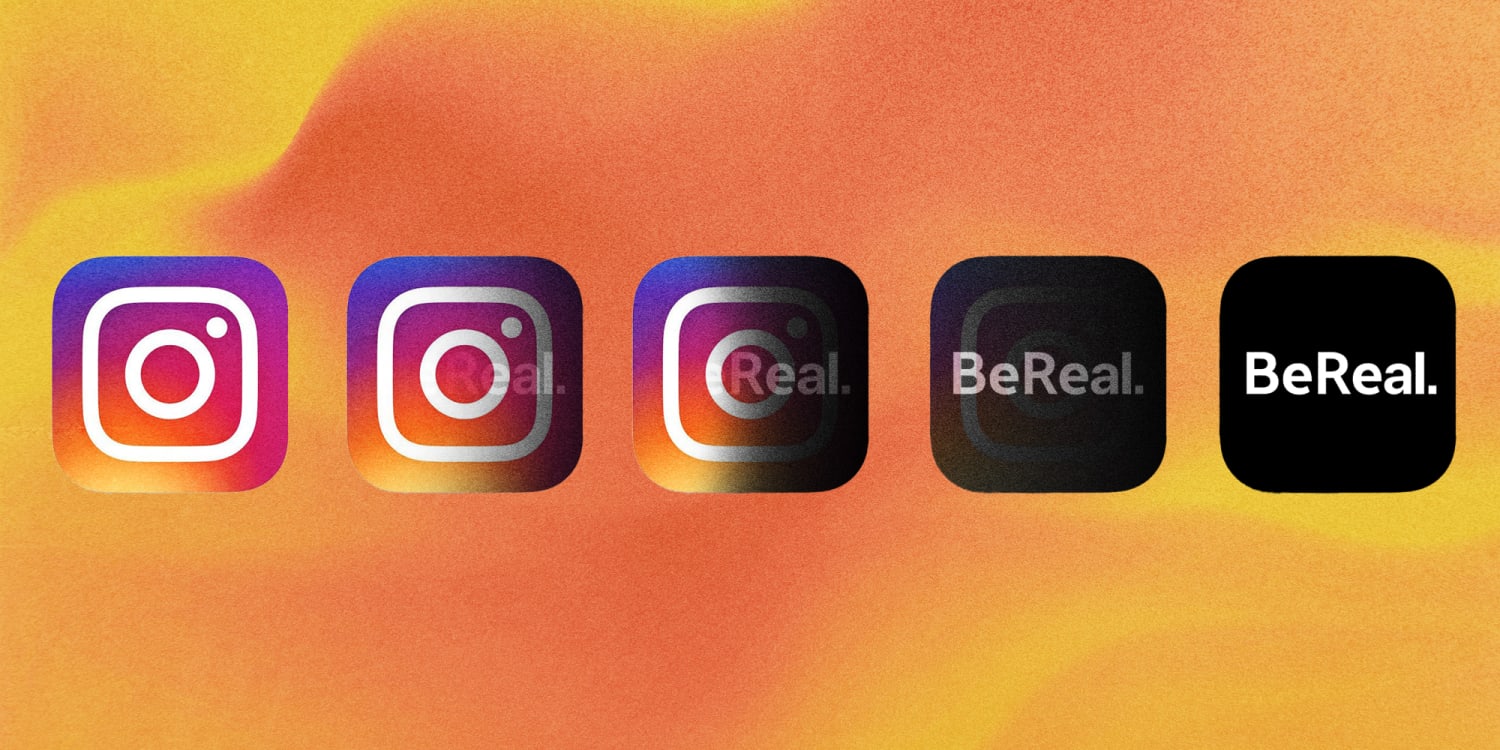
Quick! You only have two minutes! - was quite a frequent phrase I heard when BeReal was still big. The app that combined two words that were never spoken in the same sentence - authenticity and social media - saw its downfall sooner than it anticipated. As Brooke Erin Duffy and Ysabel Gerrard’s Wired article states, performativity-shaming was baked into the app’s design. As users had only two minutes to take a dual-camera picture of their current activities, the app promoted a “No Bullshit. No ads.” stance to increase spontaneity on social media platforms. I believe, if they had accounted for context collapse, they would have had a longer run.
Danah Boyd and Alice E. Marwick discuss context collapse as different social groups that are normally separate merging into one on online platforms. Like twitter, BeReal’s discovery tab combined the users audience into one. This was an obstacle as the theory of self-presentation suggests that individuals tend to change their behaviour according to the person they are interacting with. On social media platforms, this isn’t possible. To address a singular audience, users apply self-censorship - where they avoid posting certain topics because they might hurt their reputation - and balance - where they mix informative and personal posts to show multiple versions of themselves - hence negating authenticity.
Even though BeReal used the timer to try and solve this issue, they failed. As Kiana and Ria explain in the Wired article, when the timer comes at a bad time, they send a blank picture or ignore it altogether. “Thats the way it is, people use it in a way it isn’t made to be used”, they said, proving that we as humans will always care about what another person thinks, we will always put on an act wherever we can. This makes me wonder how this topic may be related to indirect reciprocity or gossip - does our online presence influence our reputation? If so, to what extent?
[Google Document Link](https://docs.google.com/document/d/1vciCsIoVaXJQuiArCx9atXCSXMZ_q8tu1R_UG8ylc9s/edit?usp=sharing)
### March 17th - Online Dating
“As we all know, the Internet is a great place to pretend to be someone you’re not” (Rudder, 2010). Online dating has been the “it” trend for decades now - but Gen Z has finally started cancelling it. Robyn Vinter’s Guardian article details that more than 90% of the Gen Z population is frustrated with dating apps. Even Tinder saw a drop in its users by 5% in 2021. “The apps are algorithmic doom barrels”, said a user who recently split from a long term relationship. So what changed?
Self-misrepresentation is a leading cause for individuals' distrust in dating apps today. A study on the app OkCupid revealed the three most common things lied about are a person's salary, height, and pictures. Every woman desires a man taller than her, but when he says he’s ‘6 ft tall’, data shows he’s probably 2ft shorter than he claims. They lie because there is a correlation between how tall a man is and how many messages he gets, they are incentivised, and rightfully so. The same is true for individuals' salaries and pictures - the higher the salary and the prettier the pictures, the higher correlation with number of messages received. Similarly, the Guardian article explains how the underlying tension of being just ‘10 swipes away from the love of your life’ can bring forward all the insecurities that one has kept bottled up, making the apps seem more like a job than something fun.
A question that bothers me, is even though society seems to be valuing in-person dates more, it still stems from an online interaction. People are still scarred from the era of online dating, and are gradually reverting back, but we’re not there yet. Your first interaction with someone is likely to be on instagram or snapchat, if not dating apps, which then eventually turns into a first date. When are we going to start approaching people in real life? And how do we make that happen?
:max_bytes(150000):strip_icc()/how-online-dating-affects-mental-health-and-behavior-5114576-FINAL-8345e3e2259b4b6c89e6cd5272435502.png)
[google doc link](https://docs.google.com/document/d/1vciCsIoVaXJQuiArCx9atXCSXMZ_q8tu1R_UG8ylc9s/edit?usp=sharing)
### March 20th - Ad's
A single sentence, “Let’s go to Puerto Rico for spring break!”, prompted my Instagram feed to be filled with “5 best finds in PR!” and “Must visits for PR!”. I believe creepy is an appropriate adjective to describe the privacy breach that the digital world promotes today. The seemingly harmless ads that constantly fill our screens are doing more than just annoy us. Robe Stokes details in his book ‘eMarketing’ how online advertisements can track exactly who sees their ads, clicks them, and buys. They gain vital data about where their customers are located, their behaviours, and their interests — but is it in the customers interests to be tracked?
Well, if we don’t want the internet to feel like we’re talking to Finding Dory every time we reload a page, these advertisements, or more specifically cookies, help sites retain basic information about us as users. The problem occurs, as Cleo Abrams says in Vox’s video, when advertisements on one site, where you accept cookies, are present on sites you may not have. They still have the power to track your behaviour and information, and are called third-party cookies. Recently, a few search engines have begun to block third party cookies — like google, but big corporations that make money off of these practices will always find a loophole.
A question that troubles me is why the government isn’t taking action against this issue. This is clearly an extreme breach of privacy that hinders the safety and privacy of their citizens, shouldn’t it be a matter of state? Why is it just profit-minded search engine companies taking action, and not the people-oriented government?

[google doc link](https://docs.google.com/document/d/1vciCsIoVaXJQuiArCx9atXCSXMZ_q8tu1R_UG8ylc9s/edit?usp=sharing)
### March 24th - Manipulated
“Give us a 5 star review and we’ll give you a discount” is what a tech repair store told me and my mom, and of course, we did. Geoffrey Fowler details in his Washington Post article how 30-40% of all online reviews are fake today. What’s even more concerning, is the availability of businesses dedicated to writing and posting AI generated fake reviews. Transparency has decreased tenfold due to the emergence of these companies, and trust isn’t just an issue in the online dating world anymore, but the online shopping world too.
To combat this issue, The Federal Trade Commission (FTC) has declared that each fake review will be fined up to $50,000 each time a customer views it. This is the biggest step the FTC has taken, and a vital one, as Joseph Reagle explains that comments aren’t just random noise, they help reduce information asymmetry between buyer and consumer. They exploit trust for profit and turn comments into commodities. Though this has been the biggest step FTC has taken, it doesn’t affect big companies such as Google, Yelp, or Amazon. These companies have the most information regarding who’s posting fake reviews, but cannot be directly linked to them and hence cannot be penalised. Moreover, there are many loopholes within these new rules. Businesses are still allowed to ask their customers to leave a review - like the repair shop - still leaving space for untrue reviews.
A question that I have, is why the FTC fails to recognize, or rather act upon, the role of bigger social media companies. If they have access to vital data, they are aware of the crime occurring and could easily help prevent them. If holding them accountable is not possible, why can’t the FTC work with them to help stop these acts?
{%youtube 3qpKuUVbisg%}
[google doc link](https://docs.google.com/document/d/1vciCsIoVaXJQuiArCx9atXCSXMZ_q8tu1R_UG8ylc9s/edit?usp=sharing)
### March 27th - Bemused
“First!!” is a comment that I often see when my friends post on their instagram. It’s commented, as the word suggests, to showcase that they were the ‘first ones here’. Joseph Reagle’s book Reading the Comments details how this is actually a phenomenon, and the first step to several levels of bemusement that one experiences online. The second step is star rating. Especially on platforms such as Amazon, where our judgments are compressed into a single number between 0-5. Though made to be simpler to understand, they lead to more confusion when ratings lie in the middle ground. Bemused, defined as “puzzled, confused, or bewildered” is a feeling that Reagle argues comments make us feel, beyond informing or alienating.
He details that a comment is hypotextual, shedding context as it travels across the internet, hence creating that WTF effect. When a comment is read far from its place of context, it’s unlikely it makes sense, leading to assumptions and wild connections. Apart from the baffling effect, it can also have serious repercussions. Discussing the example of the hacked AP twitter account, where a simple false report resulted in a loss of over $100 billion from the S&P 500, Reagle highlights how drastically fake information can affect the real world as well. Though hate and false information have always existed, the internet has made them much more prevalent.
I wonder how the race to be the first comment, first like, first view in the digital world translates to human psychology and behaviour. Individuals aren’t exactly contributing anything meaningful by racing to be first, yet why do they do it? Is it for attention? A sense of accomplishment? And if so, is it healthy for the digital world to be promoting these feelings and habits?

[google doc link](https://docs.google.com/document/d/1vciCsIoVaXJQuiArCx9atXCSXMZ_q8tu1R_UG8ylc9s/edit?usp=sharing)
 Sign in via Google
 Sign in via Facebook
 Sign in via X(Twitter)
 Sign in via GitHub
 Sign in via Dropbox
 Sign in with Wallet
Connect another wallet
Sign in with Wallet
Connect another wallet