###### `Front-End` `React` `Next.js` `Router`
# 【學習筆記】Next.js 路由系統:App Router vs Page Router
[](https://hackmd.io/Q8Wd_vHkSzCVXgtSVZw0Vw)
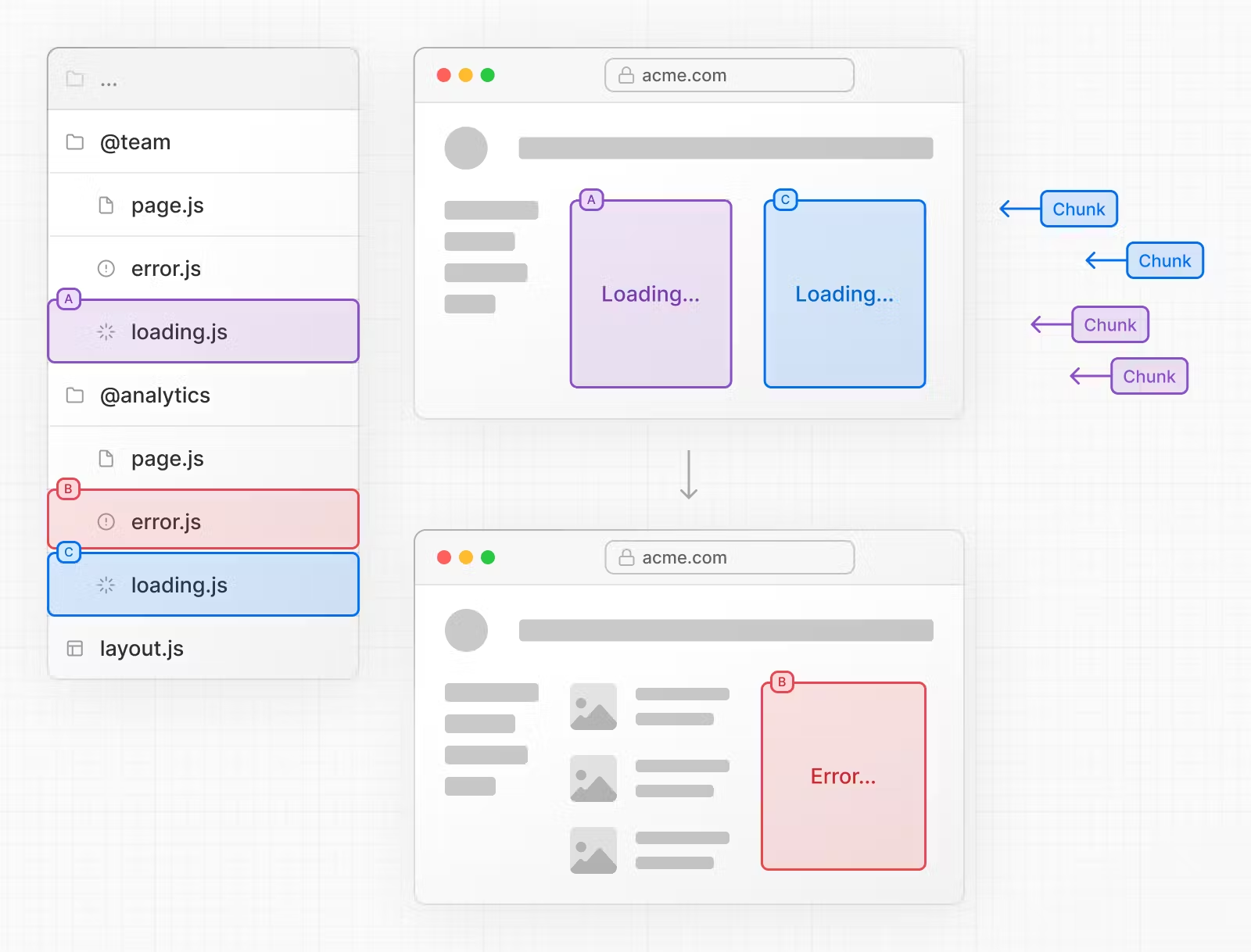
> Ref: [Next.js - Parallel Routes](https://nextjs.org/docs/app/building-your-application/routing/parallel-routes#streaming)
[toc]
## 前言
接續上篇文章 [【學習筆記】談談 Next.js:基於 React 的 SSR 框架](https://heidiliu2020.github.io/next-react-ssr/),初步瞭解 Next.js 這套框架的特性以及網頁渲染方式,本篇將實際建立 Next.js 專案,以及介紹 Page Router 與 APP Router 兩種路由系統的差異。
## Getting Started
詳細步驟可參考[官方文件](https://nextjs.org/docs/getting-started/installation),注意目前版本的 Next.js v14 需要安裝 [Node.js v18.17](https://nodejs.org/) 或以上版本才支援。
### nvm:Node Version Manager
若已經安裝過 Node.js 卻顯示版本不符,可透過 [nvm](https://github.com/nvm-sh/nvm) 這項 Node.js 版本管理工具,在不同專案中切換 Node.js 版本。
首先在終端機輸入下方指令安裝 nvm:
```
$ curl -o- https://raw.githubusercontent.com/nvm-sh/nvm/v0.39.1/install.sh | bash
```
接著透過下方指令,即可安裝與套用指定版本的 Node.js:
```=
$ nvm install v18.17.0
// 安裝指定版本 Node.js
$ nvm use v18.17.0
// 套用指定版本的 Node.js
```
也可透過以下指定確認目前版本,以及已安裝的版本:
```=
$ node -v
// 確認目前 Node.js 版本
$ nvm ls
// 列出所有本機端已安裝的 Node.js 版本
$ nvm ls-remote
// 列出目前遠端可使用的 Node.js 版本
```
### 專案建置
依照下方指令建立 next 專案,在後方加上 `--ts` 或 `--typescript` 即可支援 TypeScript 語法:
```=
$ npx create-next-app
or
$ npx create-next-app --ts
```
接著會依序出現下列幾個提問,分別如下:
```=
What is your project named? my-app
// 專案名稱,格式需為英文小寫
Would you like to use TypeScript? No / Yes
// 是否支援 TypeScript
Would you like to use ESLint? No / Yes
// 是否使用 ESLint(用來規範 Coding Style 的套件)
Would you like to use Tailwind CSS? No / Yes
// 是否使用 Tailwind CSS
Would you like to use `src/` directory? No / Yes
// 是否在 /app 外加一層 src 資料夾
Would you like to use App Router? (recommended) No / Yes
// 是否使用 App Router
Would you like to customize the default import alias (@/*)? No / Yes
// 是否自訂 alias 調整預設的 baseURL 匯入路徑
What import alias would you like configured? @/*
// alias 預設使用 @ 是否修改
```
建置完成後,初始專案架構主要分成以下三大類:
+ app:放置 components、pages 與 api 等檔案
+ layout.tsx:在多個頁面之間定義共用 UI,其狀態將會被保存,如:nav、header、footer 等元件
+ page.tsx:在資料夾底下需包含 `page.tsx` 檔案,才會被定義為一個 route segment,如:`app/blog/page.tsx`
+ globals.css:定義全域樣式
+ public:放置靜態檔案,如圖片等
+ 需要引入 `/public/next.svg` 檔案時,路徑可直接指向 `/next.svg`
+ 設定檔:包含 `next.config.js`、`tsconfig.json`、`package.json` 等用於設定專案配置的檔案
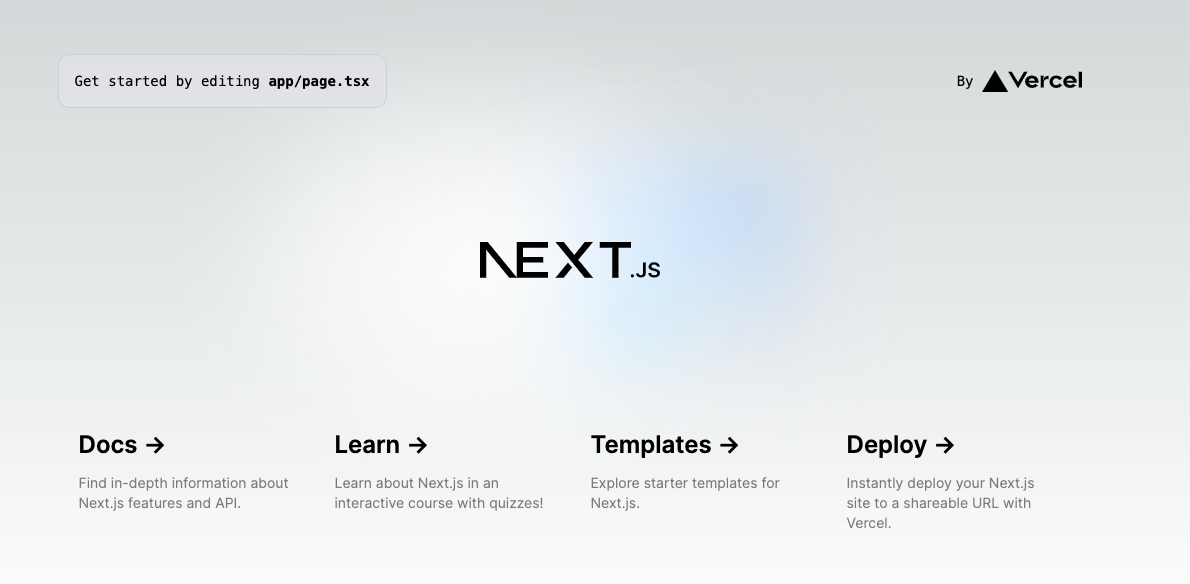
接著輸入 `cd my-app` 指令移動到專案根目錄,再以 `npm run dev` 指令運行開發伺服器,進入 `http://localhost:3000/` 即可看到初始頁面如下,也就是 `app/page.tsx` 的內容:
## Router System 路由系統
過去我們在 React 專案中,曾使用 `react-router-dom` 這項套件來實現路由功能,詳細可參考這篇筆記:[[week 22] React:用 SPA 架構實作一個部落格(一)- Router](https://heidiliu2020.github.io/react-router/)。
由於 Next.js 使用基於檔案系統的路由(file-system based router),會依照專案的檔案結構自動定義路由。
而根據版本不同,Next.js 提供兩種管理頁面路由的方式,分別是舊版本適用的 Pages Router 以及 v13 後推出的 App Router,兩者差異在於:
+ Pages Router
+ 定義頁面層級的路由
+ 所有元件為 React Client Component(客戶端元件)
+ 只能使用 Next.js 提供的預設規則,如:檔案名稱即為路徑
+ App Router
+ 定義應用程式層級的路由
+ 所有元件預設為 React Server Component(伺服器端元件)
+ 可自定義路由規則,如:使用正則表達式匹配特定路徑
如上所言,在 App Router 中所有元件預設為 React Server Component(RSC),意思是由伺服器將 React Component 準備好,再傳給 Client 顯示在畫面上。
而 RSC 的優缺點如下:
+ 優點
+ 整合後端操作,如存取資料庫(DB)、讀取檔案(File System)
+ 降低資料間的依賴關係,改善請求瀑布流(Waterfall)導致的效能問題
+ 降低 JS Bundle Size 以提升頁面效能
+ 缺點
+ 無法使用 React Hooks
+ 無法使用瀏覽器 API
+ 無法操作 DOM 事件監聽
面對上述缺點,Next.js 可依照使用情境不同,將元件定義為 Server Component 或 Client Component。舉例來說,當某個元件需要使用 Hooks 管理時,可透過在程式碼開頭加上 `'use client'` 來標示元件類型,該元件底下的子元件也會自動視為 Client Component。
但也因為如此,相較於 Page Router,新版的 App Router 學習曲線會較高,需瞭解 Server 如何運作,以及判斷哪些元件適合放在 Server 或 Client 端,在使用時須特別注意。
介紹完 Page Router 和 App Router 之間的差異,接著談談兩者專案架構,以及對應路由的方式。
### Page Router:基於檔案的路由系統
檔案架構示意:
```
└── pages
├── index.tsx
├── login.tsx
├── api
│ └── user.tsx
├── posts
│ └── [id].tsx
└── blog
├── index.tsx
└── setting.tsx
```
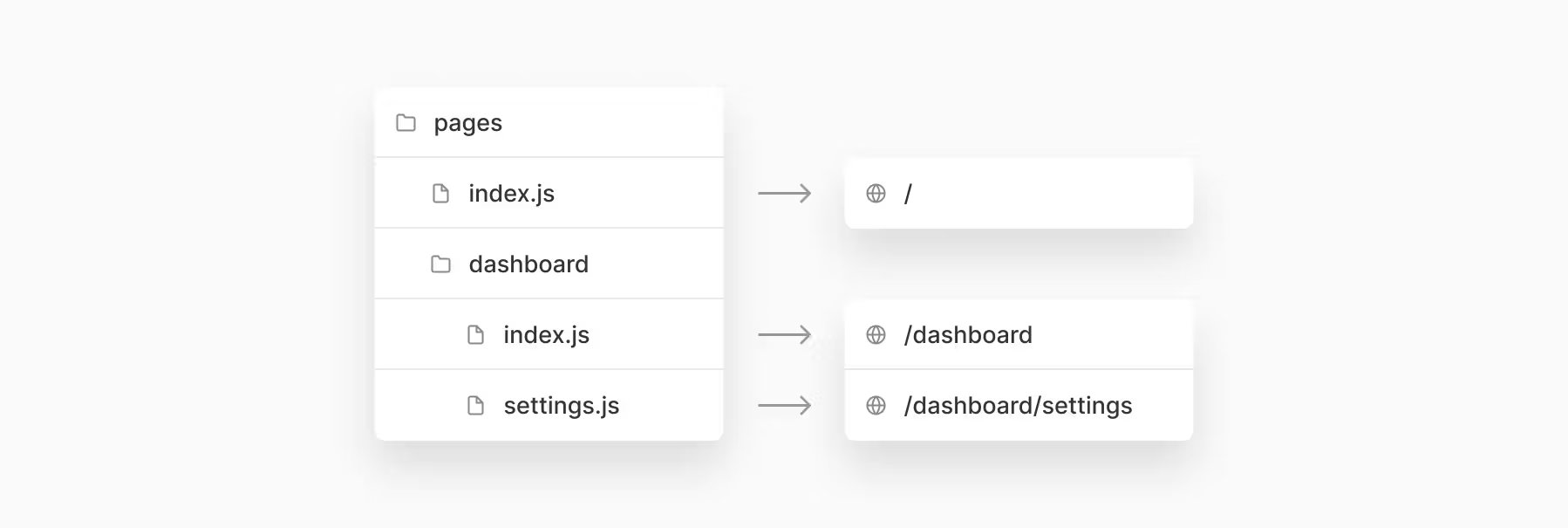
檔案與對應的頁面路由如下:
+ `pages/index.tsx` → `/`
+ `pages/blog/index.tsx` → `/blog`
+ `pages/blog/setting.tsx` → `/blog/setting`
+ `pages/posts/[id].tsx` → `/posts/[id]`
+ 檔名可作為動態路由的參數,透過 [useRoute](https://nextjs.org/docs/pages/api-reference/functions/use-router) 這個 Hook 取得 route 相關資訊
+ 呼叫 API:`page/api/user.tsx`
可參考官方部落格的這篇文章[《Layouts RFC》](https://nextjs.org/blog/layouts-rfc),包含以下檔案對應頁面路由的示意圖:
### App Router:基於目錄的路由系統
目錄架構示意:
```
└── app
├── blog
│ └── [slug]
│ └── page.tsx
├── login
│ └── page.tsx
├── @analytics
│ ├── page.tsx
│ ├── error.tsx
│ └── loading.tsx
├── api
│ └── user
│ ├── index.ts
│ └── route.ts
├── components
│ ├── loading.tsx
│ └── button.tsx
├── globals.css
├── layout.tsx
└── page.tsx
```
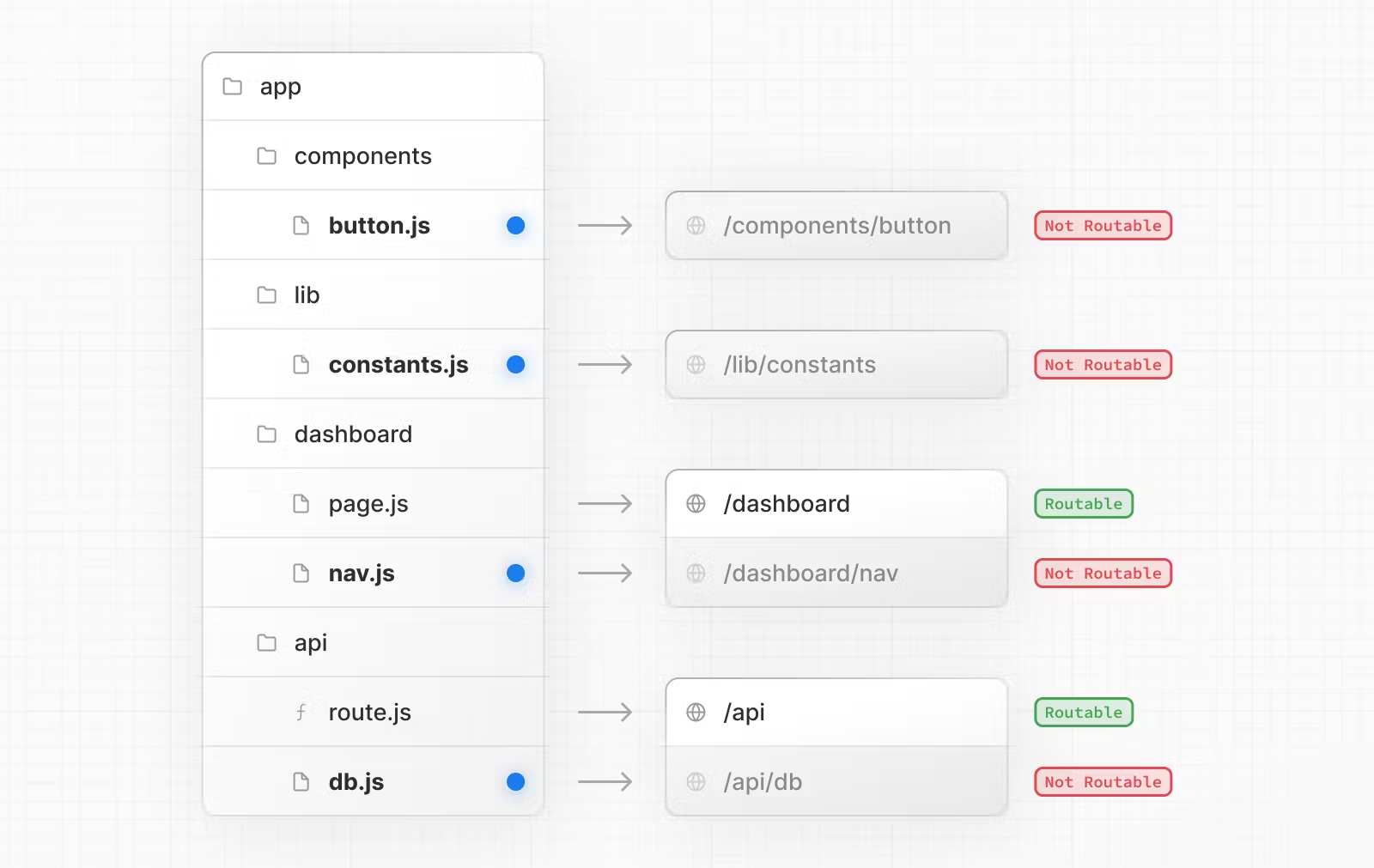
文件目錄與對應的頁面路由如下:
+ `app/page.tsx` → `/`
+ `app/login/page.tsx` → `/login`
+ `app/blog/[slug]/page.tsx` → `/blog/[slug]`
+ 目錄可作為動態路由的參數,並以 props 傳入元件
+ 呼叫 API:`app/api/user/route.tsx`
+ `@` 開頭的 folder 不會對路由造成影響:
+ `app/@analytics/page.tsx` 實際渲染的路由為 /,這個特殊的檔案夾是用來切分同一個路由底下的不同邏輯區塊。
可參考[官方文件](https://nextjs.org/docs/app/building-your-application/routing),以下是目錄對應頁面路由的示意圖:
## File Convention 檔案規則
詳細的路由架構,可參考[官方文件](https://nextjs.org/docs/app/building-your-application/routing),也可以直接在頁面左上方切換查看 App Router 或 Page Router。
此外,Next.js 有設定[保留字](https://nextjs.org/docs/app/building-your-application/routing#file-conventions)給特殊檔案,以建立具有特定行為的 UI,以下副檔名為 `.js`、`.jsx`、`.tsx` 可視專案而定:
+ [layout.js](https://nextjs.org/docs/app/api-reference/file-conventions/layout):定義共用 UI 元件
+ [template.js](https://nextjs.org/docs/app/api-reference/file-conventions/template):類似 layout,處理需要重新渲染的 Layout UI
+ [page.js](https://nextjs.org/docs/app/api-reference/file-conventions/page):建立路由的主要 UI,並使路徑可公開存取
+ [route.js](https://nextjs.org/docs/app/api-reference/file-conventions/route):建立伺服器端 API 端點
+ [loading.js](https://nextjs.org/docs/app/api-reference/file-conventions/loading):在載入時顯示載入中 UI
+ [not-found.js](https://nextjs.org/docs/app/api-reference/file-conventions/not-found):處理 notFound error(HTTP 404)或任何未知路徑錯誤
+ [error.js](https://nextjs.org/docs/app/api-reference/file-conventions/error):顯示錯誤 UI,必須為 Client Components
+ [global-error.js](https://nextjs.org/docs/app/building-your-application/routing/error-handling):全域錯誤 UI
+ [default.js](https://nextjs.org/docs/app/api-reference/file-conventions/default):處理 [Parallel Routes(平行路由)](https://nextjs.org/docs/app/building-your-application/routing/parallel-routes) 遇到渲染問題時,用來替代顯示的 UI(fallback UI)
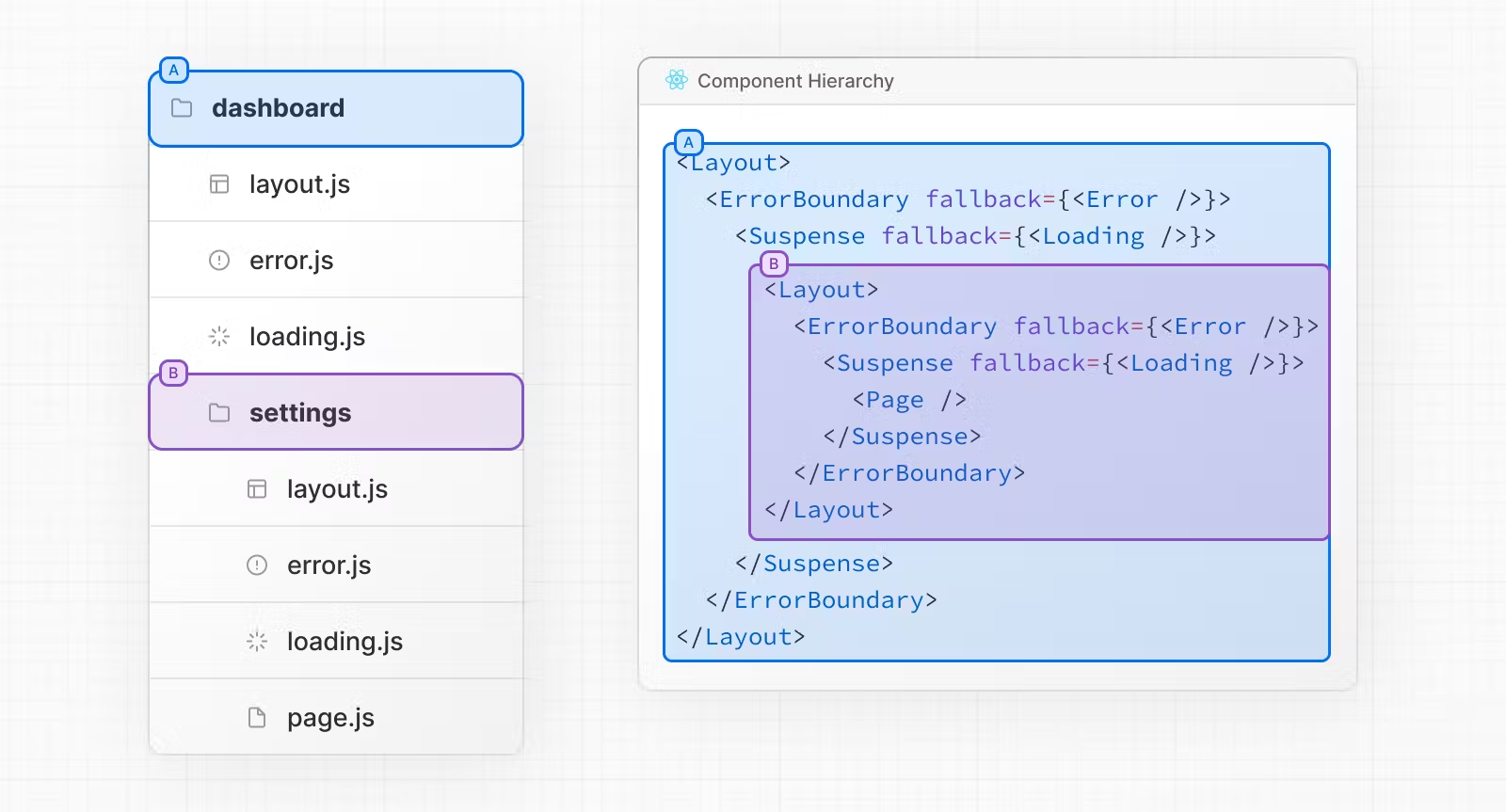
以下是官方文件提供的路由範例架構,可以看到父層和子層均有 layout、error 以及 loading 元件,用來處理各自的邏輯:
## 結語
在查路由相關的資料時,會發現因為 App Router 是 Next.js v13 後才推出的路由系統,架構上和 Page Router 不相容,規則也有所差異,因此特別列出來進行比較,實際開發時使用預設的 App Router 即可。
接下來預計會實作一個的部落格,希望包含簡易的登入機制、API 串接、顯示文章列表等功能。
## 參考資料
+ Next.js 官方文件:[App Router](https://nextjs.org/docs/app/building-your-application) & [Page Router](https://nextjs.org/docs/pages)
+ [快速入門 Next.Js 13 App Router, RSC(React Server Component), SEO相關說明](https://blog.typeart.cc/nextjs13-quick-guide/)
+ [Day 19 - Parallel Routes 路由的平行宇宙 - iT 邦幫忙](https://ithelp.ithome.com.tw/articles/10334425)
 Sign in via Google
 Sign in via Facebook
 Sign in via X(Twitter)
 Sign in via GitHub
 Sign in via Dropbox
 Sign in with Wallet
Connect another wallet
Sign in with Wallet
Connect another wallet