# Dance on/for camera Tablescape
## History of dance + cameras
Filming dance is as old as cinematography itself.
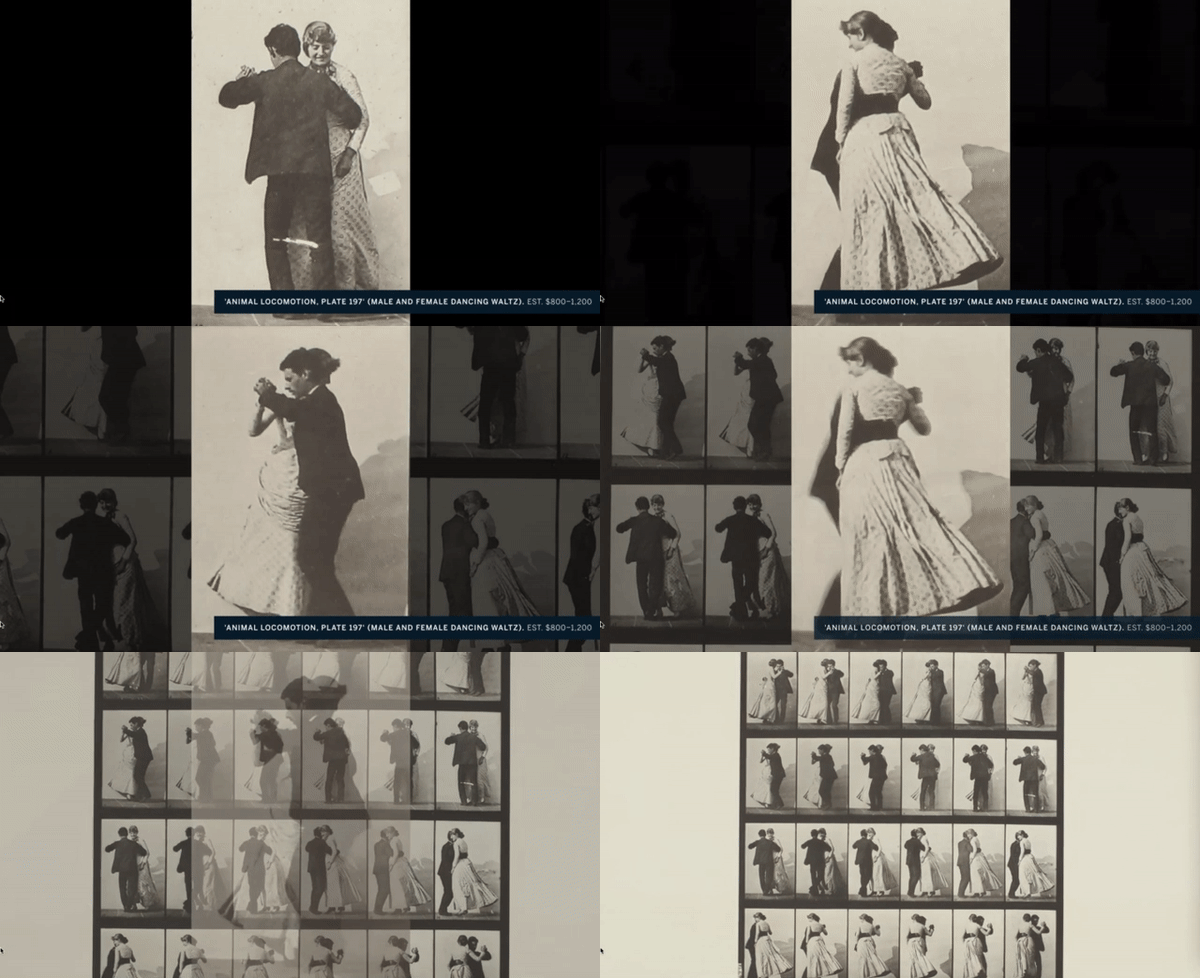
In the late 1800s, Edward Muybridge, a photographer, began a project on the study of motion through photographic documentation, in which he was attempting to "record" movement through capturing a rapid series of photographs, which is what film really is. His first studies were of walking, horsebackriding, and dance.
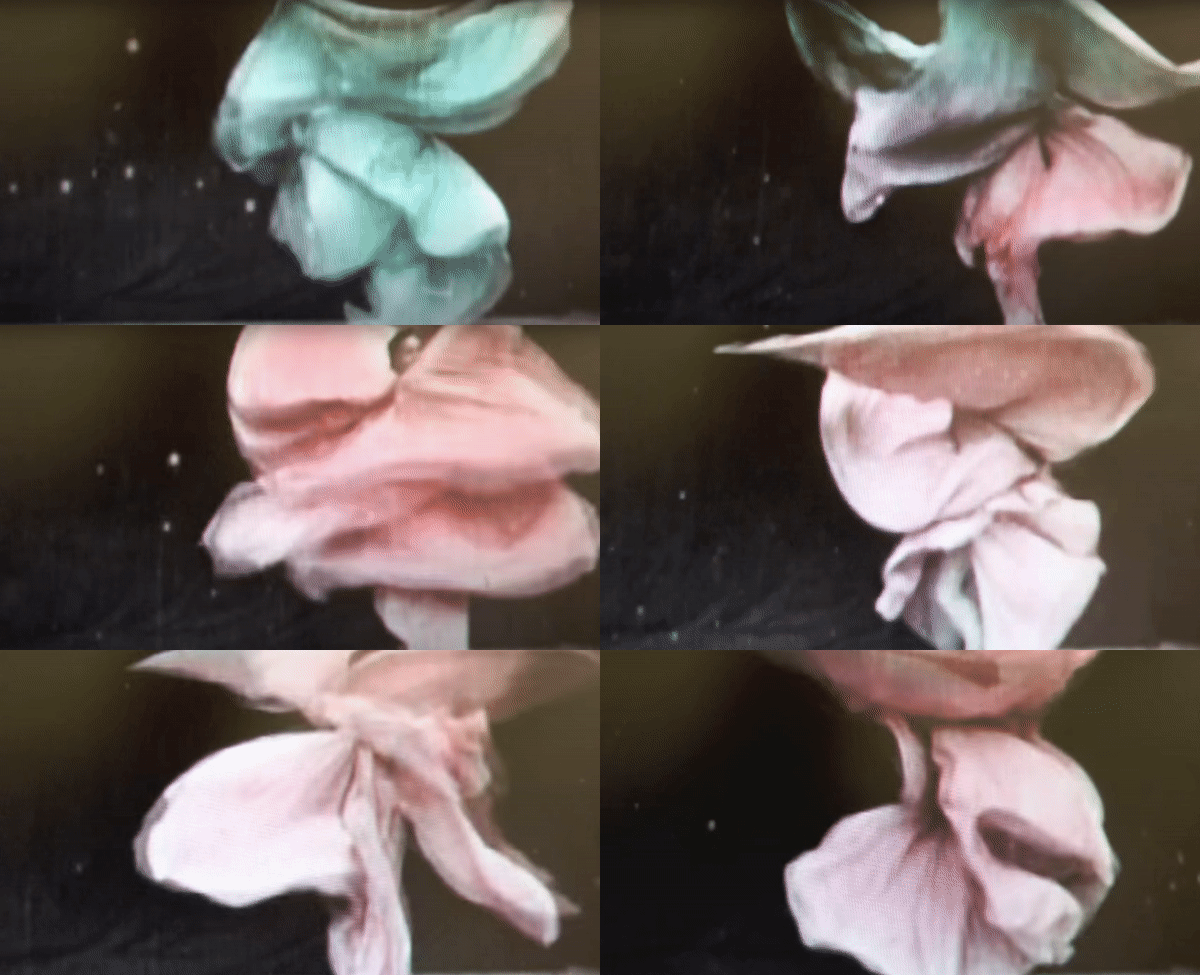
Roughly ten years later, Loie Fuller, an American actress and dancercombined extravagant silk costumes with multi-coloured lighting in her famed Serpentine Dance, and a rendition of the dance was captured by the Lumière brothers in 1896.
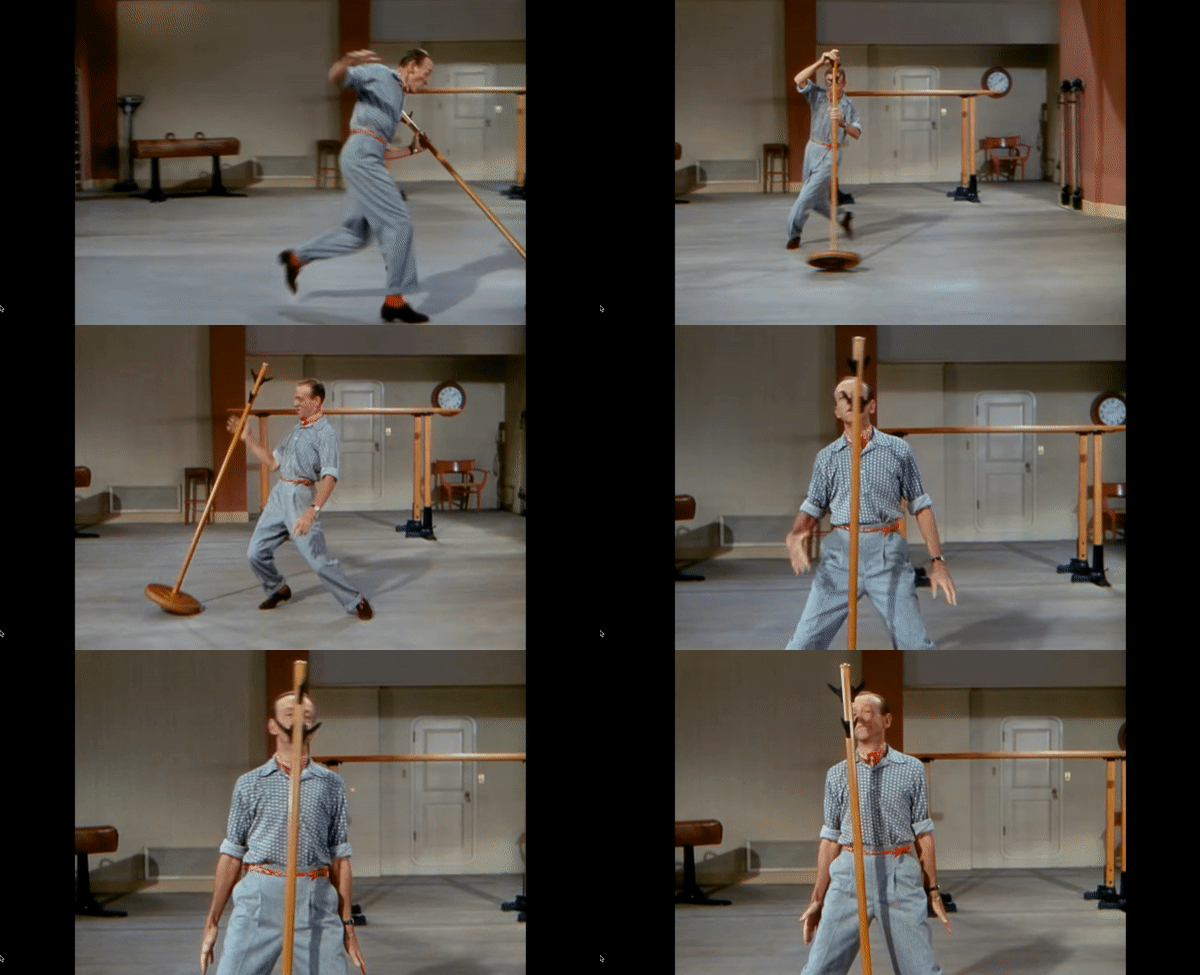
Fast forward to the golden age of cinema, we see dance on camera being mainstreamed through popular movies with dancers like Gene Kelly, Fred Astaire & Ginger Rogers. Fred Astaire also had a particularly strong influence on the way his dances were filmed: he is said to have told his cameraman, “Either I’m gonna dance, or the camera’s gonna dance—and I’m gonna dance.” In most of his films, Astaire’s dance sequences seem as though they’re filmed in one long take, giving the sense that the audience is watching a live performance.
In 1945, Maya Deren, a Ukranian Filmmaker, produced a groundbreaking avant-garde film entitled "[A Study in Choreography for Camera](https://youtu.be/Dk4okMGiGic?t=12)." The dancer, Talley Beattly, performs a dance sequence in a variety of settings. Deren's aim was to direct the camera as if it were a dancer, expertly using cutes, carying film speeds, and backwards motion to create a dance that could only exist on film.
In 1980s, Anne Teresa De Keersmaeker created a piece entitled "[Rosas Danst Rosas](https://youtu.be/oQCTbCcSxis?t=19)" a piece originally made for stage that was then adapted for a dance film.
Fast forward to present day - a huge surge in dance for camera work, partially due to the pandemic
2020 - [Rift by Flock](https://vimeo.com/424294899)
When the COVID-19 Pandemic hit, Co-choreographers Alice Klock and Florian Lochner (FLOCK) found themselves out of work as their performances, workshops, and residencies were all cancelled. Florian had to go back to Germany, and Alice was here in Boston. They decided to use film as a medium through which to collaborare, and have since leaned into the world of dance for camera. Through a series of tasks we co-created the movement, explored the possibilities of our locations, and found ourselves taping our phones to ceilings and propping them up on stacks of books to self-film.
Dance ON Camera:
[Revelations on stage](https://youtu.be/kDXerubF4I4?t=980)
https://youtu.be/TYdp99FGKa4?t=4
Dance FOR Camera:
[Revelations site-specific](https://youtu.be/J3eO7xD8gmo?t=15)
Experimental/Digital Technologies:
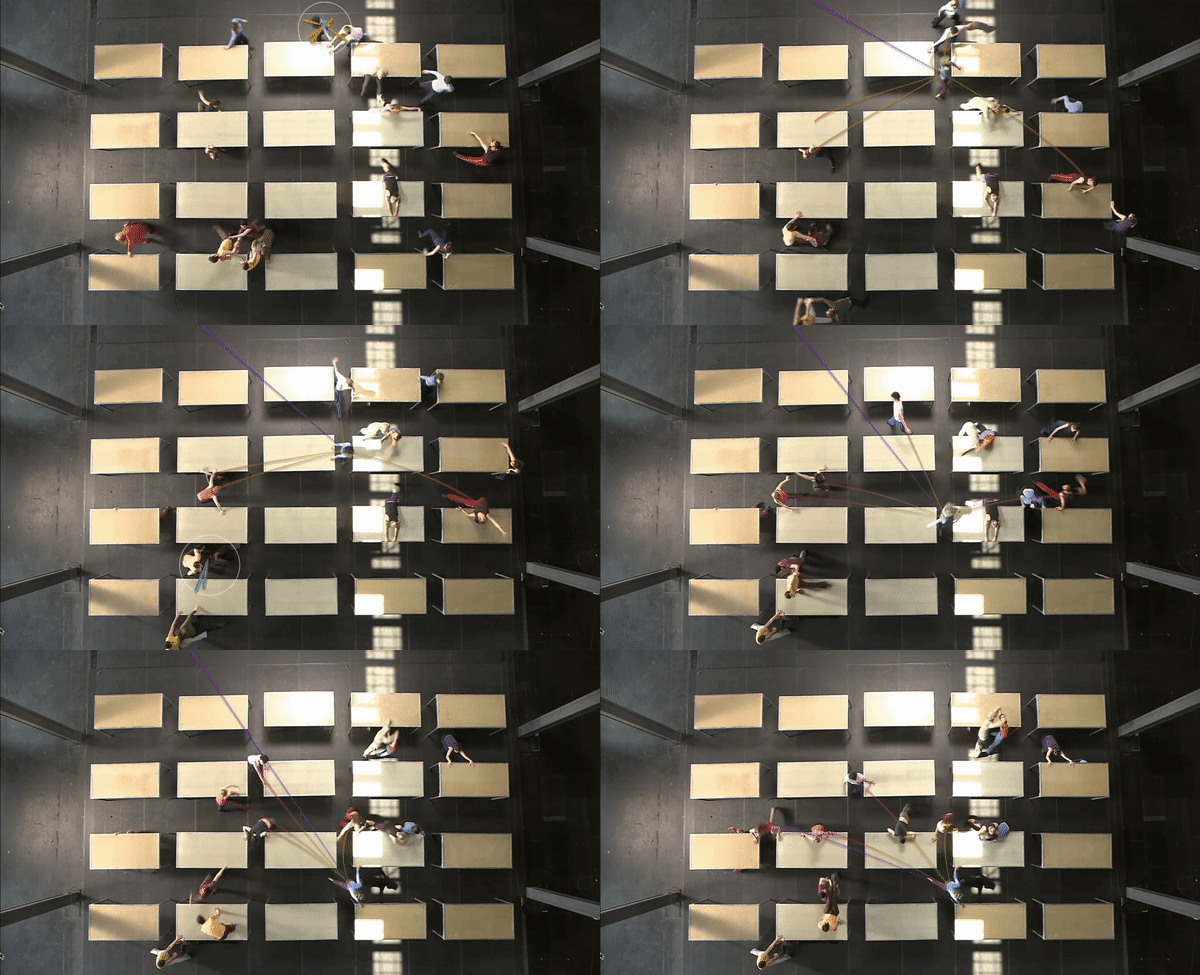
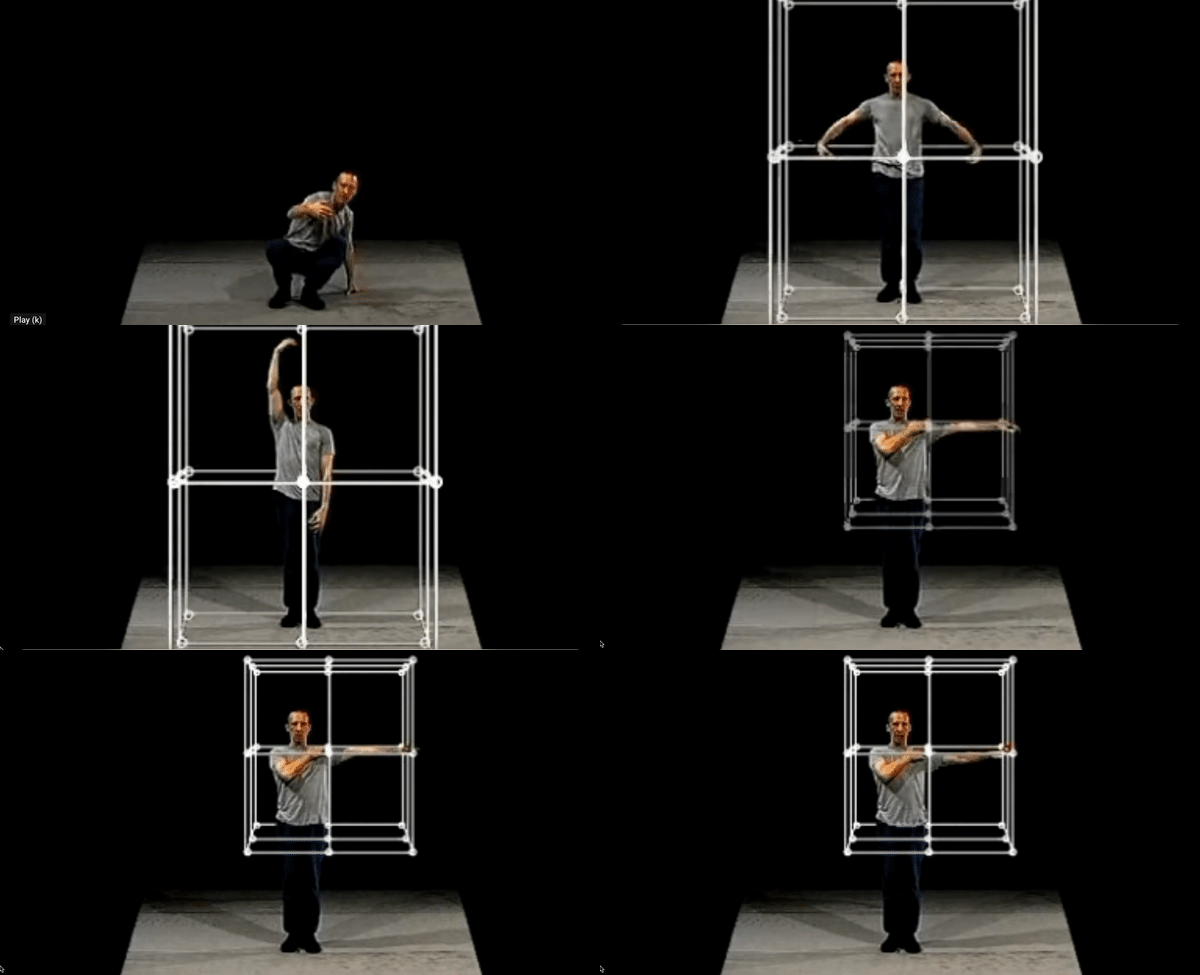
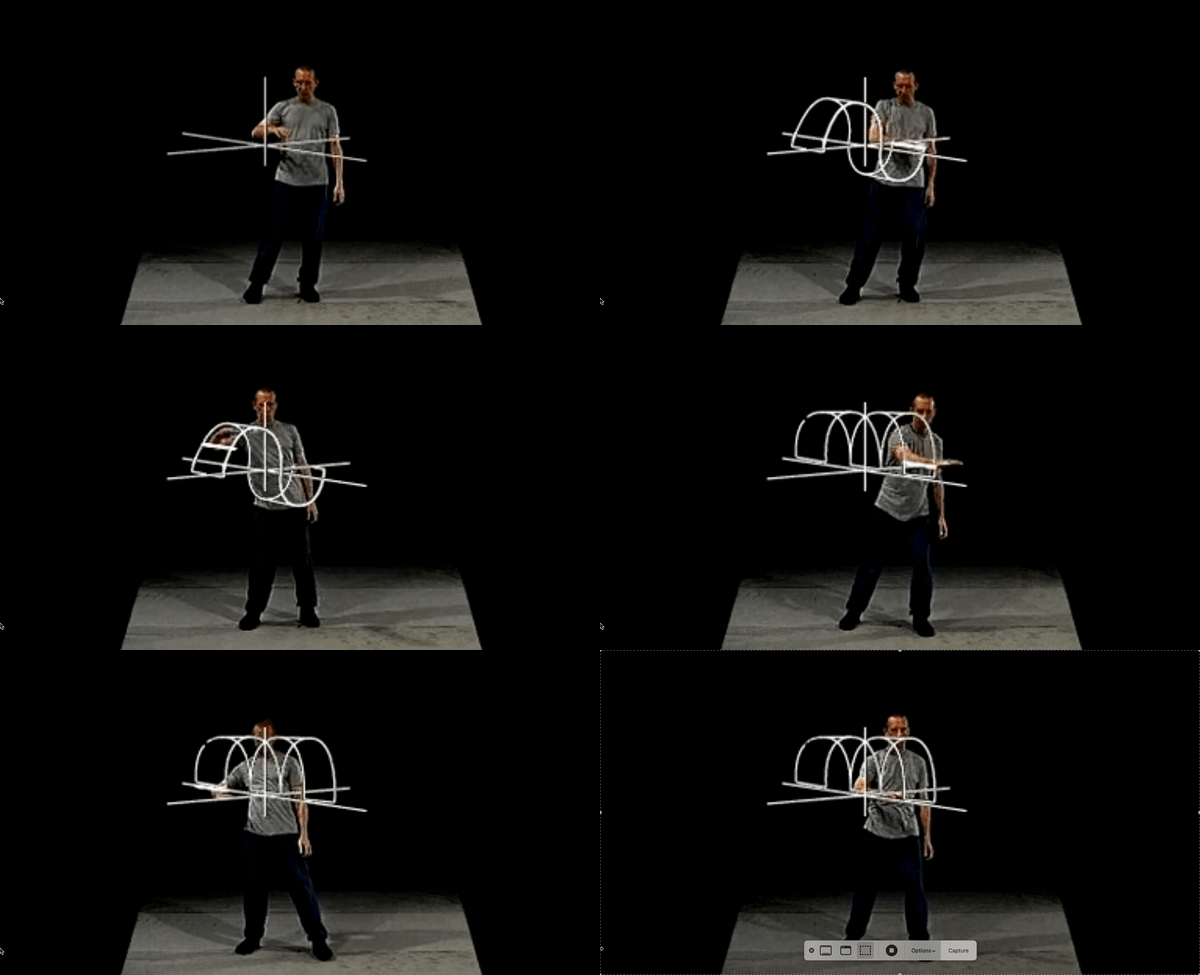
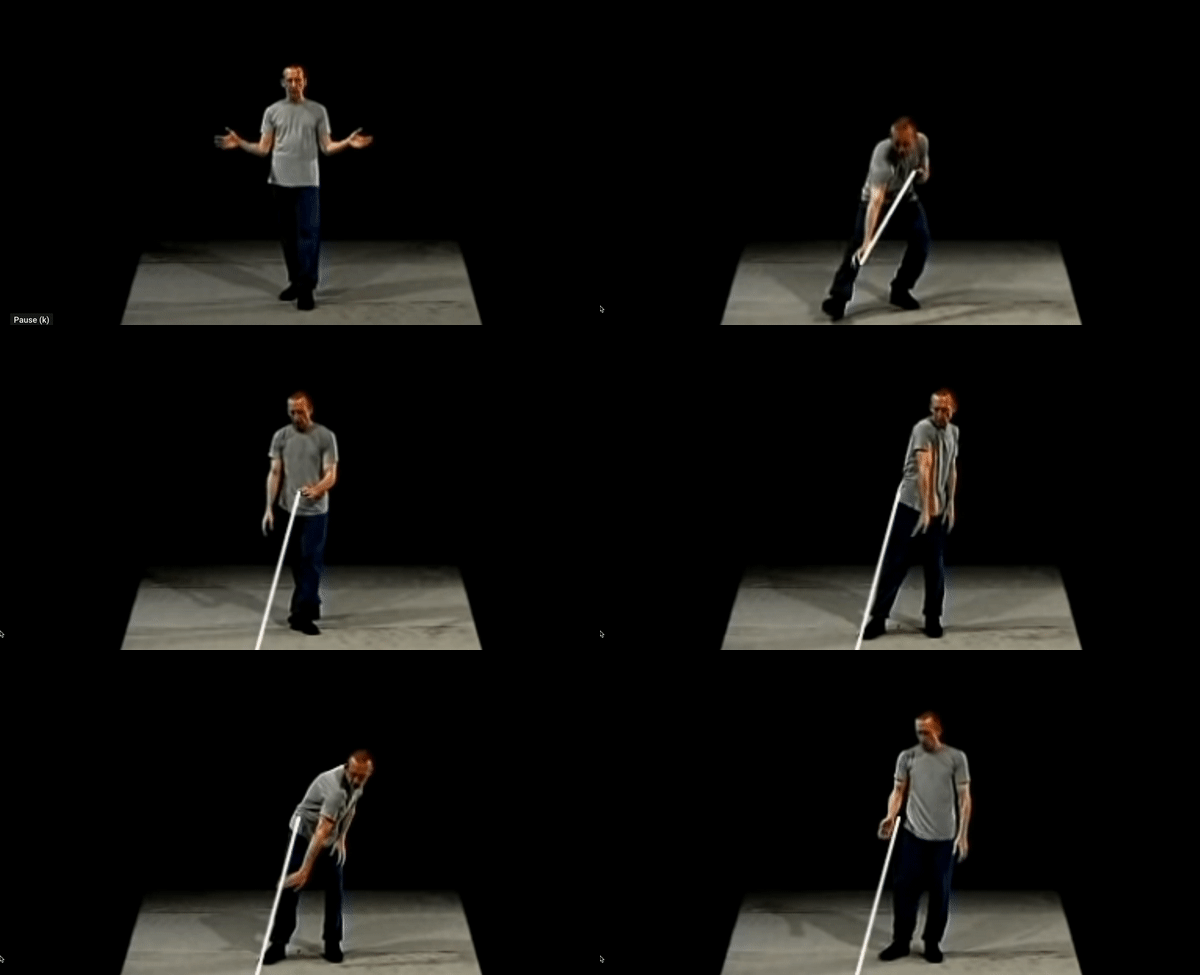
In performance: https://youtu.be/1X9isPzMDXk?t=16
Today's workshop we'll be thinking about how to adapt the movement language we've been developing in LROD's piece for the camera in two different ways. In order to prepare us for this design challenge, we'll start by giving you tools for different kinds of film and shots. We have two stations:
Station 1 with Marlon:
Static shots at different levels & angles
Station 2 with Casey:
Moving shots that follow movement
The first bears similarity to something like the Rosas Danst Rosas, taking the particular phrases LROD created and adapting them for the camera through different kinds of angles, lengths, and motion. The aim of this challenge is to create & recreate the phrase in it's current narrative, using different shots and layering them on top of one another to create a fuller product.
The second breaks down the phrase into its invidual gestures, creating a sort of "dictionary" for the phrase, defining where one movement ends and another begins, and what length & angle of shot *best* captures the gesture. Consider: What is the most important part of this movement? Where do I want the focus to be?
 Sign in with Wallet
Connect another wallet
Sign in with Wallet
Connect another wallet